


Most people think being a forex affiliate is just slapping a link on a blog and watching the cash roll in.

David van der Merwe
متداول الأسواق الناشئة ·  South Africa
☕ 9 دقائق قراءة
ما ستتعلمه:
- 1What Exactly Is a Forex Affiliate? (It's Not What You Think)
- 2The South African Rulebook: FSCA and Why It Matters to You
- 3Real Numbers: How Much Can You Actually Make?
- 4Setting Up for Success: Your First 90-Day Plan
- 5The Landmines: Common Mistakes That Will Sink You
- 6Leveling Up: From Side Hustle to Real Business
Most people think being a forex affiliate is just slapping a link on a blog and watching the cash roll in. I thought that too, back in 2015. I wasted six months promoting the wrong brokers to the wrong audience before I made my first real commission. The truth is, in South Africa, this is a serious business with real regulations and real money on the line. Let's cut through the hype and talk about what it really takes to build a sustainable income stream as a forex affiliate here.
At its core, a forex affiliate is a partner who refers new traders to a brokerage. When that trader deposits and trades, you earn a commission. Simple, right? Well, not quite.
There are different models, and picking the right one is your first major decision. The Revenue Share model is the most common for long-term building. You get a percentage of the broker's revenue generated from your referred client's trading activity - typically 20% to 50% of the spreads they pay. If you refer a busy trader, this can become a nice monthly paycheck. I have one client from 2018 who still generates about $150 a month for me, just from his regular scalping strategy.
The CPA (Cost Per Acquisition) model pays a flat fee, say $400 to $1,000, once your referral makes a qualifying deposit and maybe places a few trades. The cash comes faster, but the relationship ends there. No recurring income.
Then there's the Hybrid model, which combines a smaller upfront CPA with a lower ongoing revenue share. This is what I prefer now; it gives you some instant capital to reinvest in your marketing while keeping a stake in your client's future.

Warning: Many "get rich quick" affiliate schemes promise unrealistic CPA payouts. If an offer seems too good to be true (like $2000 CPA), the broker probably has terrible conditions that will cause your referrals to blow up their accounts quickly. You'll burn your audience's trust.
You can't play the game if you don't know the rules. In South Africa, the Financial Sector Conduct Authority (FSCA) calls the shots. Ignoring them isn't just risky; it can end your affiliate career before it starts.
FSCA Licensing for Affiliates
If you're acting as an Introducing Broker (IB) - meaning you're more hands-on, maybe handling client queries or even guiding them - you likely need an FSCA license. This isn't for the guy with a simple review site. It's for when you're actively intermediating. The fines for non-compliance can hit R1 million. I learned this the hard way early on by being too "coachy" with referrals, which blurred the line. Now, I stick to education and let the brokers handle the execution advice.
Broker Regulation is Your Shield
This is the most critical point for your credibility. Only promote FSCA-licensed brokers to a South African audience. Why? Because those brokers must segregate client funds, adhere to the 30:1 use cap for retail clients, and operate with transparency. When you send your friend, your cousin, or your blog reader to a broker, you're putting your reputation on the line. If that broker disappears with their deposit, that's on you.
I made this mistake once, promoting an offshore broker with a fancy website but shaky regulation. A referral lost R15,000 in a platform "glitch" that was never resolved. I didn't just lose the commission; I lost a friend's trust. Now, I only work with brokers like IC Markets or Pepperstone who have strong local licensing. It's non-negotiable.

Pro Tip: Always check the broker's FSCA license number on the regulator's official website. Don't just trust the badge on their homepage.

💡 نصيحة وينستون
An affiliate link is a promise. If the broker behind it treats clients poorly, you break that promise. Vet your partners like your reputation depends on it - because it does.
“Promoting an unlicensed broker exposes your referrals to potential fraud and leaves them without the protections of local law.”
Let's talk numbers, because the fantasy figures online are nonsense. According to industry benchmarks, the average forex affiliate in South Africa with a decent setup makes around $5,000 a month from about 50 active referrals. That's the average, not the top.
When I started taking it seriously, my first full year (2017) brought in about R85,000. It wasn't life-changing, but it proved the model worked. Last year, from a mix of revenue share and hybrid deals, I netted just over R400,000. It's a grind, not a lottery.
Here’s a breakdown of what different models can look like in Rands:
| Model | Payout Example | Good For | The Catch |
|---|---|---|---|
| Revenue Share (25%) | Client generates R2000 in spread fees/month. You earn R500/month recurring. | Long-term, passive income building. | Takes time to build up; clients may become inactive. |
| CPA (R7,500) | Client deposits R10,000 and trades 5 lots. You earn R7,500 once. | Quick cash injection. | No future earnings. High pressure to find new clients constantly. |
| Hybrid (R1500 + 15%) | As above. You earn R1,500 upfront + R300/month (15% of R2000). | Balances immediate and future income. | Lower percentages than pure revenue share. |
Your earnings depend entirely on the quality of your referrals. A few active swing trading clients are worth more than a hundred people who deposit R500 and never trade again. Your job is to attract the right people.

Example: Let's say you refer 10 traders in a month via a 30% revenue share deal. If each trader averages R1,500 in monthly spread costs (a realistic figure for an active trader), you'd earn R450 per client, per month. That's R4,500/month in recurring income from just those 10. The power is in the repeat business.
Don't quit your job tomorrow. Start this as a side project. Your goal for the first 90 days isn't to make money; it's to build a foundation that can make money.
Step 1: Pick Your Niche and Broker. Don't try to attract "everyone who wants to trade." That's a sure way to attract no one. Are you going to teach complete beginners? Focus on a specific strategy like gold (XAU/USD) trading? Target young professionals? Your content and broker choice will flow from this. If your niche is beginners, you need a broker with excellent educational resources and a user-friendly platform.
Step 2: Build a Simple Home Base. You need a website or a serious social media page. It doesn't have to be fancy. A simple WordPress site with honest broker reviews, some basic trading guides (like explaining a pip definition), and a clear about page is enough. I spent R8,000 on a flashy site initially; my current one, which makes most of my money, cost R2,000 to set up. Content beats design every time.
Step 3: Create Value-First Content. This is the engine. Write or make videos that solve real problems. "How to avoid a margin call on your first trade." "A comparison of spreads on EUR/USD across South African brokers." Your affiliate links should be a natural, helpful next step, not a screaming sales pitch.
Step 4: Track Everything. Your affiliate portal will show you clicks, conversions, and earnings. Learn what content drives the best-quality referrals. Maybe your article on the MACD indicator brings in consistent traders, while your "get rich quick" post brings in people who deposit R100 and vanish. Double down on what works.
💡 نصيحة وينستون
The best content doesn't sell. It explains. Teach someone how to use an RSI indicator properly, and they'll trust you to recommend where to trade it.
“A few active swing trading clients are worth more than a hundred people who deposit R500 and never trade again.”
I've stepped on most of these. Learn from my errors.
Promising Trading Results: You are an affiliate, not a fund manager. Never, ever suggest that if someone signs up through you, they'll make money. You're providing access to a platform, not a guaranteed outcome. The moment you imply otherwise, you're in dangerous ethical and legal territory.
Promoting Unregulated or Shady Brokers: The short-term commission is never worth the long-term reputation damage. If a broker offers you a 70% revenue share (some, like RoboForex, do), scrutinize their regulation and client feedback even more closely. High commissions can sometimes be a red flag for poor client treatment.
Neglecting Compliance and Taxes: Your affiliate income is taxable. Keep records. Speak to an accountant. That R100,000 you make in a year isn't R100,000 in your pocket; it's subject to income tax. Plan for it.
Spending Before Earning: Don't pour money into Google Ads before you know your conversion rate from organic traffic. I burned R5,000 on ads in my second month, acquiring leads that cost me R500 each but were worth R50. Start free: SEO, YouTube, engaging in honest discussions on forums.
Getting Greedy with use Talk: Since the FSCA capped use at 30:1, promoting brokers that offer South Africans sneaky back-door access to 500:1 is a fast track to getting your partners in trouble and your referrals wiped out. Stick to the rules of the game.
Once you have a steady trickle of income, you can think about scaling. This is where the real work - and rewards - begins.
Refine Your Tools: As your referred traders become more sophisticated, your content should too. Talking about advanced concepts like order flow or using a position size calculator religiously shows depth. This is where tools for serious traders become relevant. For example, managing risk for multiple trades is a common headache.
Diversify Your Broker Partnerships: Don't put all your eggs in one basket. Have a primary broker for most referrals, but establish relationships with one or two others. Maybe one is better for scalping (tight spreads), and another is better for beginners (better education). This makes your review site more authentic and protects you if one broker's terms change.
Build a System: At some point, you can't do everything yourself. You might hire a freelance writer to help with content, or use more advanced tracking software. The goal is to systemize the parts that aren't uniquely "you" - the content calendar, the technical SEO - so you can focus on strategy and building relationships.
The forex affiliate path in South Africa is a marathon. It's about consistent, honest effort, playing by the FSCA's rules, and genuinely helping people navigate a complex world. Do that, and the commissions become a natural byproduct of your credibility, not the desperate goal of a salesperson.
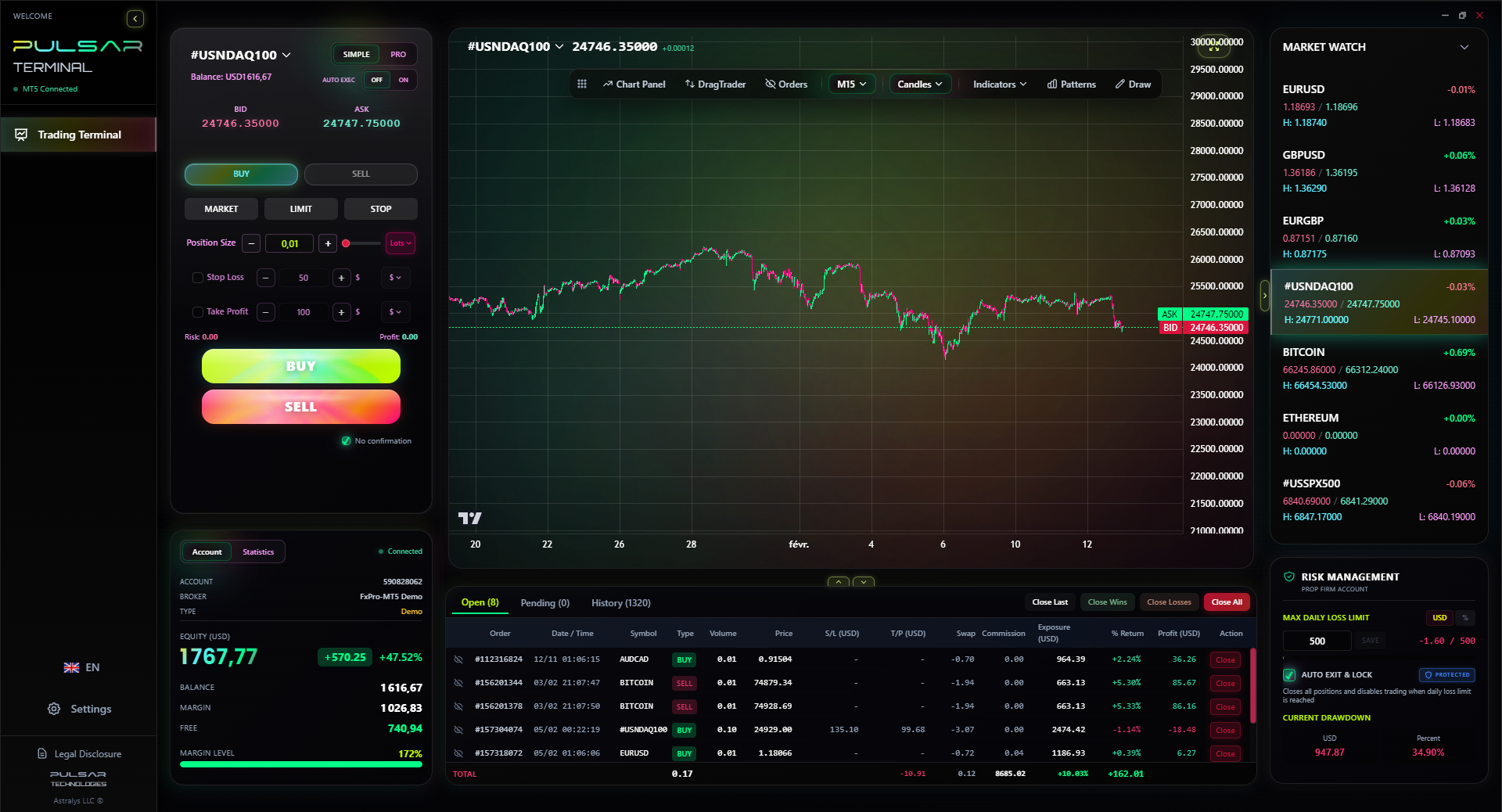
When your referred traders advance, they need professional tools; Pulsar Terminal's drag-and-drop orders and multi-TP/SL management on MT5 help them trade more efficiently, which keeps them active in the markets longer.
Pulsar Terminal
أداة MT5 الشاملة: أوامر سحب وإفلات، متعدد TP/SL، تريلينج ستوب، تداول الشبكة، Volume Profile وحماية البروب فيرم. يستخدمها أكثر من 1000 متداول يومياً.
FAQ
Q1Do I need a license to be a forex affiliate in South Africa?
It depends on your activities. If you're just running a website with reviews and affiliate links, you typically don't need an FSCA license. However, if you're acting as an Introducing Broker (IB) - actively onboarding clients, handling queries about trading, or managing client relationships - you likely do need to be licensed. When in doubt, it's best to consult with a financial services lawyer and always operate with full transparency.
Q2How do I get paid as a forex affiliate, and in what currency?
Payments are usually made monthly by the broker directly into your bank account or via e-wallets like PayPal or Skrill. Most international brokers pay in US Dollars (USD), so you'll be subject to the USD/ZAR exchange rate and your bank's forex fees. Some local brokers may offer payment in Rands. Always check the payment thresholds (e.g., minimum $100 payout) and methods before signing up for a program.
Q3What's the single most important trait of a successful forex affiliate?
Patience. This isn't a quick cash scheme. It takes months to build traffic, gain trust, and start seeing meaningful recurring revenue. The most successful affiliates I know are those who focused on creating genuine value for 6-12 months before they saw significant income. They built an audience that trusted their opinion, which made the affiliate recommendation a natural, helpful next step.
Q4Can I promote international brokers not regulated by the FSCA?
You can, but you shouldn't if your audience is primarily South African. It's a major risk to your reputation and could have legal implications. The FSCA requires brokers marketing to South Africans to be licensed by them. Promoting an unlicensed broker exposes your referrals to potential fraud and leaves them without the protections of local law (like the 30:1 use cap and client fund segregation). Stick to FSCA-licensed entities like Exness or XM who have local operations.
Q5Is it better to focus on CPA or Revenue Share?
For long-term, sustainable income, Revenue Share is superior. It rewards you for referring traders who have longevity. CPA is useful for quick cash to fund your marketing efforts, but it turns you into a perpetual client hunter. I recommend starting with a Hybrid model if you can find one, or a solid Revenue Share program, and building your asset base - those recurring monthly commissions.
Q6How do I track which of my content is driving the most referrals?
Use tracking links provided by your affiliate network. Most platforms allow you to create unique tracking IDs for different links (e.g., one for your YouTube description, one for a specific blog post). Your affiliate dashboard will then show you exactly which link generated the click and the subsequent conversion. This data is gold - it tells you what your audience actually finds valuable enough to act on.
درس البروفيسور وينستون
النقاط الرئيسية:
- ✓Only promote FSCA-licensed brokers to South Africans.
- ✓Revenue share builds long-term wealth; CPA is just short-term cash.
- ✓Your first R100k affiliate income is taxable. Plan for it.
- ✓Patience over 6-12 months is non-negotiable for success.
ما مدى فائدة هذا المقال؟
انقر على نجمة للتقييم
رؤى التداول الأسبوعية
تحليلات واستراتيجيات أسبوعية مجانية. بدون رسائل مزعجة.
عن المؤلف
David van der Merwe
متداول الأسواق الناشئة
متداول مقيم في جوهانسبرغ مع 11 عاماً في عملات الأسواق الناشئة. متخصص في أزواج ZAR والتداول المنظم من FSCA وتحليل السوق الجنوب إفريقي.
التعليقات
تحذير من المخاطر
ينطوي تداول الأدوات المالية على مخاطر كبيرة وقد لا يكون مناسبًا لجميع المستثمرين. الأداء السابق لا يضمن النتائج المستقبلية. هذا المحتوى لأغراض تعليمية فقط ولا ينبغي اعتباره نصيحة استثمارية. قم دائمًا بإجراء بحثك الخاص قبل التداول.
قد يعجبك أيضًا

Cara Trading Forex Sukses: 7 Prinsip dari Trader Profesional
Cara trading forex sukses dengan 7 prinsip trader pro: manajemen modal, disiplin, journal trading, backtest. Data nyata, bukan janji profit palsu.
Jam Trading Forex Terbaik untuk Trader Indonesia: Panduan Lengkap dengan Tabel Waktu
Panduan jam trading forex untuk trader Indonesia. Tabel 4 sesi dunia, jam emas 20:00-00:00, sesi mana yang harus dihindari. Data akurat + tips dari trader berpengalaman.
Top 5 Sàn Forex Uy Tín Nhất 2026: Review Jujur dari Trader Indonesia
Top 5 sàn forex uy tín 2026 untuk trader Indonesia. Review jujur: spread, deposit, withdraw, dukungan lokal. Exness, XM, IC Markets & lebih.
احصل على Pulsar Terminal
جميع هذه الحاسبات مدمجة في Pulsar Terminal مع بيانات حية من حساب MT5 الخاص بك.
احصل على Pulsar Terminal