


I remember staring at my screen in late 2023, watching USD/INR hit 83.45.
Rajesh Sharma
محلل فوركس أول ·  India
India
☕ 14 دقائق قراءة
ما ستتعلمه:
- 1The Legal Landscape: What You Can Actually Trade
- 2The Real Minimum Deposit: It's Not Just One Number
- 3Broker Comparison: Fees That Eat Your Profits
- 4The Offshore Broker Trap: Why Those Low Minimums Are Dangerous
- 5The True Cost Structure: Taxes and Charges Breakdown
- 6The GIFT City Option: A Legal Path to Global Markets
- 7A Practical Guide: How Much Should You Really Start With?
- 8Managing a Small Account: Strategy Adjustments
I remember staring at my screen in late 2023, watching USD/INR hit 83.45. The chart was screaming for a short, but my account with a local broker was frozen because I hadn't accounted for the GST on my brokerage fee. I was ₹500 short of the maintenance margin. That missed trade taught me more about the real cost of trading in India than any textbook ever could. The forex trading minimum deposit isn't just about that first payment - it's about understanding all the fees, taxes, and regulations that determine whether you can actually stay in the game.
Let's get this straight first, because getting it wrong can land you in serious trouble with the RBI. Forex trading is legal in India, but with very specific rules. You're mainly allowed to trade pairs that include the Indian Rupee. Think USD/INR, EUR/INR, GBP/INR. That's your playground on the domestic exchanges.
Some cross-currency pairs like EUR/USD are also permitted, but here's the catch: you can only trade them on recognized Indian exchanges like the NSE, BSE, or MSE through a SEBI-regulated broker. Going offshore to use a global broker for EUR/USD? That's a big no-no under FEMA rules. The RBI is very clear about not sending money abroad for speculative forex trading under the LRS scheme.
There's one exception that's gaining traction: GIFT City. The RBI has opened a window allowing you to use the LRS to fund an account with an IFSC-registered broker there to access global markets. It's a legal path, but it comes with its own set of complexities and minimums.

Warning: Using an offshore broker like Exness or IC Markets from India for spot forex (like trading EUR/USD directly) is prohibited. Those tempting ads for 500:1 use? That use is a major red flag and one reason why these platforms are illegal for residents. Stick to the regulated path.

💡 نصيحة وينستون
Your first deposit isn't trading capital - it's tuition fee. Expect to lose it while learning. The real minimum is what you deposit after you've proven you can trade profitably on paper.
When brokers talk about a minimum deposit, they're usually referring to the smallest amount you can fund your account with to start trading. But in India, the real 'minimum' is what you need to actually place and sustain a trade after all costs.
For SEBI-Regulated Domestic Brokers
Brokers like Zerodha, Upstox, and Angel One don't typically have a high barrier to entry. You can often open an account with ₹0 as a minimum deposit. But that's misleading. To actually trade one lot of USD/INR futures (which is $1000), you need margin. At 10:1 use (the max allowed here), that's about ₹8,300 as margin, plus you need extra buffer for mark-to-market losses.
I learned this the hard way. I once funded my Zerodha account with exactly ₹10,000, thinking it was plenty for one lot. I entered a USD/INR trade, but didn't factor in the daily brokerage of ₹20 per order, the exchange transaction charges, and the GST. When the price moved slightly against me, I got a margin shortfall alert because the charges ate into my buffer. The real minimum to trade one lot comfortably? I'd say ₹15,000.
The Hidden Cost of 'Free' Accounts
Those zero-deposit accounts? They make money from you in other ways. Every order has a fee. For intraday trades, it's typically ₹20 or 0.03% (whichever is lower) per executed order. Then add GST of 18% on that brokerage. Then add SEBI turnover fees (0.0001%), exchange charges, and stamp duty. It adds up faster than you think.

Example: Let's say you make 5 intraday trades in USD/INR with a turnover of ₹8 lakh total. Your costs look something like this:
- Brokerage: 5 trades × ₹20 = ₹100
- GST on Brokerage: ₹18
- Exchange Transaction Charge: ~₹50 (varies)
- SEBI Fee: ~₹0.80
- Stamp Duty: ~₹24 Total costs: ~₹192.80
That's nearly 2% of a ₹10,000 account gone just in fees. This is why your forex trading minimum deposit needs to account for more than just margin.
For swing trading or holding positions overnight, you also need to consider the STT (Securities Transaction Tax) of 0.025% on the sell side for intraday or 0.1% for delivery. It's why using a position size calculator is non-negotiable - you need to know your true cost per trade.
“Trading with less than ₹50,000 in India means you're basically working for the broker and tax department.”
Not all SEBI-regulated brokers are created equal. While they all follow the same tax structure, their brokerage plans and platform fees can make a big difference to your effective minimum deposit.
Here's a quick comparison of what you might encounter:
| Broker | Account Opening Min | Intraday Brokerage | Key Platform Feature | Good For |
|---|---|---|---|---|
| Zerodha | ₹0 | ₹20/order or 0.03% | Kite platform, low cost | Active intraday traders |
| Upstox | ₹0 | ₹20/order or 0.03% | Upstox Pro, good charts | Beginners, mobile traders |
| Angel One | ₹0 | ₹20 per executed order | Smart API, research | Those who want research |
| ICICI Direct | ₹0 | Percentage-based (higher) | Integrated banking | Bank customers wanting convenience |
Notice a pattern? The 'discount' brokers have standardized around that ₹20 per order fee. The full-service brokers like ICICI Direct or HDFC Securities often charge a percentage of turnover, which can be more expensive for larger trades.
What most beginners miss is the impact of these fees on small accounts. If you're trading with ₹25,000 and paying ₹23.60 per trade (including GST), you're losing nearly 0.1% of your capital on each entry and exit. Make 10 trades a day? That's 1% gone before you've even made a profit.
My personal rule? I don't trade with less than ₹50,000 in my account anymore. That gives me enough buffer to absorb fees and small losses without immediately facing a margin call. When I started with ₹15,000, I was basically trading just to pay brokerage.

Pro Tip: Always calculate your 'breakeven pip cost.' For USD/INR, one pip is ₹0.0025 per dollar. For a $1000 lot, that's ₹2.50 per pip. If your total fees per trade are ₹40, you need the market to move 16 pips in your favor just to break even. That changes your entire risk management approach.
Now let's talk about the elephant in the room. You've probably seen ads for brokers offering '$10 minimum deposits' and '500:1 use.' Platforms like XM, Exness, and Pepperstone market aggressively to Indian traders. Here's the truth: while their minimum deposits sound attractive, using them puts you on the wrong side of Indian law.
These offshore brokers aren't regulated by SEBI or the RBI for forex spot trading by Indian residents. Sending money to them violates FEMA rules. I've known traders who had their bank accounts flagged for making repeated international transfers to forex brokers.
But let's say you're still tempted. Look at the real costs. That '$10 minimum deposit' with 500:1 use? With $10 at 500:1, you can control $5,000. If EUR/USD moves just 20 pips against you (a normal daily fluctuation), you've lost your entire account. Actually, you'd likely get stopped out before that due to margin requirements.
The spreads on these platforms tell another story. While a XM review might show tight spreads on some accounts, their standard accounts often have spreads of 2.0 pips on EUR/USD. Compare that to the effectively zero spread on USD/INR futures on NSE (you pay brokerage instead). When you add the currency conversion fees from INR to USD to fund the account, and back again to withdraw, the 'low minimum' becomes expensive quickly.
The worst part? You have zero legal recourse if something goes wrong. If the broker delays withdrawals or has platform issues, you can't complain to SEBI or Indian courts. I learned this from a friend who lost ₹2 lakh with an offshore broker during a platform 'glitch' - he had nowhere to turn.
If you're determined to trade global pairs, the legal route is through GIFT City brokers. Their minimums are higher (often $1000 or equivalent), but you're protected by IFSC authority regulations. It's the only way to sleep well at night.
💡 نصيحة وينستون
Add up all the fees for your first 10 trades. Multiply by 20. That's your real monthly 'cost of doing business.' If it's more than 5% of your account, your minimum is too low.
“That '$10 minimum deposit' with offshore brokers costs you legal protection, sleep, and eventually, your entire account.”
Let's break down exactly where your money goes when you trade legally in India. Most beginners are shocked when they see their first monthly statement.
1. Brokerage: This is what your broker charges. Usually ₹20 per executed order for intraday. Remember, 'executed order' means both entry and exit count separately. So one round trip is ₹40 before GST.
2. GST: 18% on brokerage. So that ₹40 becomes ₹47.20. This is where I got caught short on that USD/INR trade I mentioned earlier.
3. Exchange Transaction Charge: Paid to NSE, BSE, or MSE. For currency derivatives, it's around ₹5 per ₹1 lakh of turnover. So a ₹8 lakh trade would be about ₹40.
4. SEBI Turnover Fee: Tiny but there: 0.0001% of turnover. On ₹8 lakh, that's ₹0.80.
5. Stamp Duty: Varies by state, but around 0.003% for intraday futures. On ₹8 lakh, about ₹24.
6. Securities Transaction Tax (STT): This one hurts. For intraday equity and currency futures, it's 0.025% on the sell side only. But for delivery-based trades (if you're swing trading), it's 0.1% on both buy and sell. On a ₹8 lakh sell trade, that's ₹200 for intraday.
Add it all up for one round trip intraday trade with ₹8 lakh turnover:
- Brokerage + GST: ₹47.20
- Exchange Charge: ₹40
- SEBI Fee: ₹0.80
- Stamp Duty: ₹24
- STT: ₹200 Total: ₹312
That's why your forex trading minimum deposit needs to be substantial. If you're trading with ₹25,000, that single trade cost you 1.25% of your capital. Win or lose, that money is gone.
When I teach new traders, I make them paper trade for a month and calculate these exact costs for every simulated trade. Most realize they need at least ₹50,000-₹100,000 to make the numbers work. Trading with less means the house (the government and brokers) takes too big a percentage of your potential profits.
This cost structure also affects your strategy choice. For scalping strategy with many trades per day, these fees are devastating. Swing trading with fewer, larger trades makes more sense from a cost perspective, though it requires different skills.
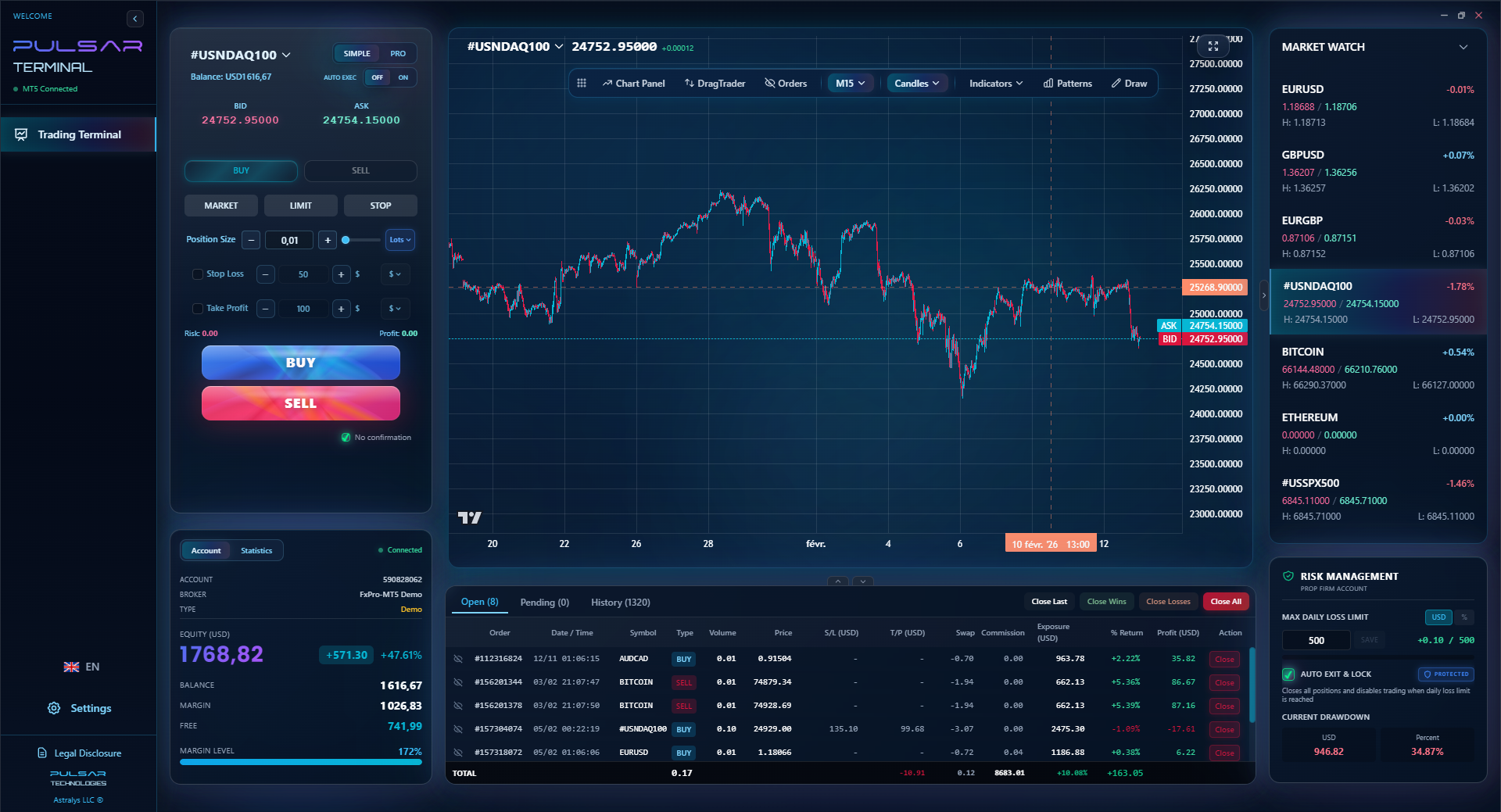
When every pip and rupee counts, especially with smaller accounts, having precise order management tools like Pulsar Terminal's drag-and-drop orders and multi-TP/SL features helps maximize what little capital you start with.
Pulsar Terminal
أداة MT5 الشاملة: أوامر سحب وإفلات، متعدد TP/SL، تريلينج ستوب، تداول الشبكة، Volume Profile وحماية البروب فيرم. يستخدمها أكثر من 1000 متداول يومياً.
So you want to trade EUR/USD or gold legally? GIFT City (Gujarat International Finance Tec-City) is your answer. The RBI allows this under the LRS scheme. Here's how it works and what it costs.
You can remit up to $250,000 per financial year under LRS to invest in securities in GIFT City. You open an account with an IFSC-registered broker there, fund it via LRS, and then you can trade global instruments including forex pairs, commodities, and international indices.
Minimum Deposits: These are typically higher than domestic brokers. Most GIFT City brokers require a minimum of $1,000 (about ₹83,000) to open an account. Some might go as low as $500, but $1,000 is more common.
Cost Structure: Different from domestic trading. You'll pay spreads instead of brokerage. For example, EUR/USD might have a 1 pip spread. You'll also pay overnight financing charges if you hold positions. The good news? No STT, no Indian GST on trades (though GST may apply on brokerage services), and no stamp duty.
The Catch: Funding and withdrawing isn't instant. LRS transfers take time, and you need to provide documentation each time. There's also the currency risk - your account is in USD, so if the rupee strengthens, your capital value in INR terms decreases even if your trades break even in USD.
I tested this with a ₹1 lakh ($1200) account last year. After currency conversion fees (about 1% each way), I started with about $1180. The trading costs were lower per trade than domestic, but the psychological barrier of trading in dollars was real. Also, finding good educational resources specific to GIFT City trading is harder.
If you're considering this route, start with the minimum $1000 and treat it as a learning expense. The regulatory comfort is worth the higher entry point.
“Your capital is your ammunition in trading. Going into battle with ₹20,000 is like bringing a knife to a gun fight.”
Based on everything we've covered, here's my honest recommendation for different types of traders.
For complete beginners wanting to learn: Start with a domestic broker like Zerodha or Upstox. Deposit ₹10,000-₹15,000. But here's the key: trade only one micro lot of USD/INR. On NSE, the minimum is $1000 (about ₹83,000 at current rates), but some brokers offer mini or micro contracts in other formats. If not, use their virtual trading feature until you're consistently profitable on paper. Don't trade live until you understand the fee impact.
For serious beginners with some experience: ₹50,000 should be your absolute minimum. This lets you trade one standard lot of USD/INR with proper risk management. With this amount, you can risk 1% per trade (₹500), which at ₹2.50 per pip gives you a 200 pip stop loss - reasonable for swing trading. After fees, you still have breathing room.
For experienced traders moving to India: If you're used to trading global markets, allocate ₹2-5 lakh. Open both a domestic account for INR pairs and a GIFT City account for global pairs. Split your capital based on your strategy. The domestic portion gives you quick access and lower absolute costs for INR trades. The GIFT City portion gives you global exposure legally.
My biggest mistake when starting? I deposited ₹25,000 thinking it was 'enough.' I blew through ₹5,000 in two weeks just on fees and tiny losses. I should have started with ₹50,000 and traded half as much. Your capital is your ammunition - don't go into battle with just a few bullets.
Pro Tip: Whatever amount you decide on, only deposit 70% of it initially. Keep 30% in your bank as a reserve. When (not if) you make mistakes, you can fund your account without emotional pressure. This saved me three times in my first year.
💡 نصيحة وينستون
The best indicator for minimum deposit size? Your monthly living expenses. Your trading account should be at least 6 months of expenses, completely separate. If you're worried about rent money, you're undercapitalized.
Let's say you only have ₹20,000-₹30,000 to start. It's not ideal, but you can make it work with strict adjustments.
1. Trade less frequently. Every trade costs you 0.5-1% of a small account in fees. Instead of trying to catch every move, wait for high-probability setups. I went from 10-15 trades a week to 2-3 when I had a small account, and my profitability improved dramatically.
2. Use wider stops. This sounds counterintuitive, but hear me out. With a small account, you can't afford to be stopped out by noise. If you're risking 1% (₹200 on ₹20,000), and your fees are ₹150 per trade, you need the trade to move 1.75% just to break even. Instead, risk 0.5% with a wider stop, aiming for a 3-4% reward. Fewer trades, bigger winners.
3. Focus on USD/INR. The spreads are effectively zero (you pay brokerage instead), and you understand the fundamentals better as an Indian. When I focused solely on USD/INR for six months, I learned its personality - how it reacts to RBI announcements, oil prices, and dollar flows. Check our EUR/USD guide for comparison, but stick to your home turf initially.
4. Track every cost manually for the first 100 trades. Use a spreadsheet. Note brokerage, taxes, net P&L. You'll quickly see which times of day or which strategies get eaten by costs. I discovered my afternoon scalping was losing money even with a 60% win rate - the fees killed me.
5. Reinforce with profits only. Don't add more personal money once you've started. If your account drops 20%, go back to paper trading. Only add from profits once you've withdrawn your initial deposit. This mental shift changes everything.
Remember, a small account is a learning tool, not a wealth-building tool. Your goal with ₹30,000 isn't to make ₹1 lakh. It's to learn how to not lose ₹30,000. Once you can do that consistently for six months, then think about adding more capital.
FAQ
Q1What is the minimum deposit for forex trading in India with legal brokers?
For SEBI-regulated domestic brokers like Zerodha or Upstox, you can often open an account with ₹0 minimum deposit. However, to actually start trading one lot of USD/INR comfortably, you need at least ₹15,000-₹20,000 to cover margin and fees. For serious trading with proper risk management, ₹50,000 is a more practical minimum.
Q2Can I trade with just ₹5,000 in India?
Technically yes, but practically it's very difficult. With ₹5,000, the fees per trade (₹150-₹300) represent 3-6% of your capital. You'd need the market to move significantly in your favor just to break even. You're better off using a broker's paper trading feature to learn until you can save more capital.
Q3Is forex trading legal in India with international brokers like Exness?
No. Using international brokers for spot forex trading is prohibited under FEMA regulations. The only legal way for Indian residents to trade global forex pairs is through IFSC-registered brokers in GIFT City, which requires a higher minimum deposit (typically $1,000 or about ₹83,000).
Q4What happens if I use an offshore broker from India?
You violate FEMA rules, which can lead to penalties from the RBI. Your bank might flag international transfers to forex brokers and block them. You also have zero legal protection if the broker has issues with withdrawals or platform stability. It's not worth the risk for lower minimum deposits.
Q5How much does each trade actually cost in India?
For one round-trip intraday trade with ₹8 lakh turnover, expect around ₹300-₹350 in total costs including brokerage (₹20 × 2 = ₹40), GST (18% on brokerage), exchange charges (₹40), SEBI fee (₹0.80), stamp duty (~₹24), and STT (0.025% on sell side = ₹200). This is why small accounts struggle.
Q6What's better for beginners: domestic INR pairs or GIFT City for global pairs?
Start with domestic INR pairs. The minimum deposit is lower, you understand the fundamentals better, and there's no currency conversion risk. Once you're consistently profitable with ₹50,000+ capital, then consider GIFT City for diversification. Jumping straight to global pairs adds complexity most beginners aren't ready for.
Q7Can I start trading forex in India with ₹10,000?
You can open an account, but you'll be limited to very small positions or might not be able to trade standard lots at all. The fees will consume a large percentage of your capital. If you're determined, use ₹10,000 to learn on a demo account for 3-6 months while saving another ₹40,000. Then start live trading with ₹50,000 total.
درس البروفيسور وينستون
النقاط الرئيسية:
- ✓Legal minimum for serious trading: ₹50,000
- ✓Fees consume 1-2% of small accounts per trade
- ✓Offshore brokers = legal risk + no protection
- ✓GIFT City requires $1000 minimum
- ✓Track all costs for first 100 trades
ما مدى فائدة هذا المقال؟
انقر على نجمة للتقييم
رؤى التداول الأسبوعية
تحليلات واستراتيجيات أسبوعية مجانية. بدون رسائل مزعجة.
عن المؤلف
Rajesh Sharma
محلل فوركس أول
أكثر من 10 سنوات في تداول الأسواق الهندية وجنوب آسيا. بدأ بالمشتقات النقدية في NSE قبل الانتقال إلى الفوركس الدولي. متخصص في USD/INR وأزواج الأسواق الناشئة.
التعليقات
تحذير من المخاطر
ينطوي تداول الأدوات المالية على مخاطر كبيرة وقد لا يكون مناسبًا لجميع المستثمرين. الأداء السابق لا يضمن النتائج المستقبلية. هذا المحتوى لأغراض تعليمية فقط ولا ينبغي اعتباره نصيحة استثمارية. قم دائمًا بإجراء بحثك الخاص قبل التداول.
قد يعجبك أيضًا

Cara Trading Forex Sukses: 7 Prinsip dari Trader Profesional
Cara trading forex sukses dengan 7 prinsip trader pro: manajemen modal, disiplin, journal trading, backtest. Data nyata, bukan janji profit palsu.
Jam Trading Forex Terbaik untuk Trader Indonesia: Panduan Lengkap dengan Tabel Waktu
Panduan jam trading forex untuk trader Indonesia. Tabel 4 sesi dunia, jam emas 20:00-00:00, sesi mana yang harus dihindari. Data akurat + tips dari trader berpengalaman.
Top 5 Sàn Forex Uy Tín Nhất 2026: Review Jujur dari Trader Indonesia
Top 5 sàn forex uy tín 2026 untuk trader Indonesia. Review jujur: spread, deposit, withdraw, dukungan lokal. Exness, XM, IC Markets & lebih.
احصل على Pulsar Terminal
جميع هذه الحاسبات مدمجة في Pulsar Terminal مع بيانات حية من حساب MT5 الخاص بك.
احصل على Pulsar Terminal