


You've probably seen the ads promising quick money from trading dollars and pounds.

Olumide Adeyemi
رائد التداول في غرب أفريقيا ·  Nigeria
☕ 11 دقائق قراءة
ما ستتعلمه:
- 1The Forex Market: It's Just a Global Bazaar
- 2The Nuts and Bolts: Pairs, Pips, and That Double-Edged use
- 3How You Actually Make (and Lose) Money Trading Forex
- 4The Nigerian Forex Scene: Regulations, Taxes, and Realities
- 5Getting Started: Choosing a Broker and Your First Trade
- 6Mistakes I Made (So You Don't Have To)

You've probably seen the ads promising quick money from trading dollars and pounds. Or maybe your guy on WhatsApp is always posting screenshots of his 'wins.' But you're smart enough to ask: how does forex work, really? What's actually happening when you click 'buy' on EUR/USD? Let me break it down for you, not with confusing jargon, but like I'm explaining it to my cousin at a buka. We'll talk about what the market is, how you make (and lose) money, the Nigerian angle, and the cold, hard numbers you need to know before putting down a single kobo.
Forget the fancy charts for a second. At its core, forex (foreign exchange) is simply the business of swapping one currency for another. Think of it like the airport bureau de change, but on a planetary scale and running 24/5. The entire 'how does forex work' question starts here.
Instead of buying a physical thing, you're buying the value of one economy versus another. When you trade EUR/USD, you're betting on whether the Eurozone will strengthen or weaken compared to the United States. The market price is the world's collective opinion on that relationship at that exact millisecond.
It's the largest financial market on earth, with about $7.5 trillion traded daily. That volume is why spreads can be so tight and why you can get in and out of positions fast. It's a decentralized 'over-the-counter' (OTC) market, meaning there's no single physical exchange like the Nigerian Stock Exchange. Instead, it's a network of banks, institutions, brokers (like the ones we use), and traders all connected electronically.

Example: Let's say the EUR/USD rate is 1.0850. That means 1 Euro costs 1.0850 US Dollars. If you believe the Euro will get stronger, you 'buy' (go long) the pair. If it rises to 1.0900, you've made a profit. If it falls, you have a loss. The change in that fourth decimal place (0.0001) is one standard pip, which is how we measure movement. Check out our full guide on pips to see exactly how that translates to your account balance.
This global nature means news from Europe at 8 AM Lagos time, or US jobs data at 2:30 PM, can cause massive swings. Your job as a trader is to anticipate or react to those moves.
Understanding Currency Pairs
Every trade involves two currencies: the base and the quote. In GBP/NGN, the British Pound is the base, the Naira is the quote. The price tells you how much of the quote currency you need to buy one unit of the base. If GBP/NGN is 1800, it costs ₦1,800 to buy £1.
Pairs are categorized:
- Majors: Involve the USD and other big currencies (EUR/USD, USD/JPY). They have the tightest spreads.
- Minors/Crosses: Don't involve the USD (EUR/GBP, AUD/CAD).
- Exotics: Pair a major with a currency from a smaller or emerging economy, like USD/NGN or EUR/TRY. Spreads are much wider here.
What is a Pip, Really?
A pip is usually a 0.0001 change for pairs like EUR/USD. For USD/JPY, it's a 0.01 change. It's the standard unit of price movement. Your profit or loss is calculated based on how many pips the market moves for or against you. A 50-pip move on a standard lot (100,000 units) is a $500 change. That's why using a position size calculator is non-negotiable.
The use Trap (and Tool)
This is where most new Nigerian traders get burned. use is borrowed capital from your broker. It lets you control a large position with a small deposit. Your broker might offer 1:500. That means with $100 margin, you can control a $50,000 position.
Sounds amazing, right? Here's the reality check. That 50-pip move we talked about? On a $50,000 position, that's a $250 profit or loss. With only $100 of your own money in the trade, a $250 loss wipes you out and triggers a margin call. I learned this the hard way in 2015. I put $200 on a USD/CHF trade with 1:400 use. The Swiss National Bank removed its currency peg, and the pair crashed 1,000 pips in minutes. My account was gone before I could even blink. Poof.

Warning: High use is not a magic profit multiplier. It's a risk amplifier. It magnifies losses just as fast as gains. Treat it with extreme caution. Starting with 1:10 or 1:20 is far smarter while you're learning.

💡 نصيحة وينستون
The market doesn't care about your rent, your bills, or your ego. Trade the price you see, not the price you hope for.
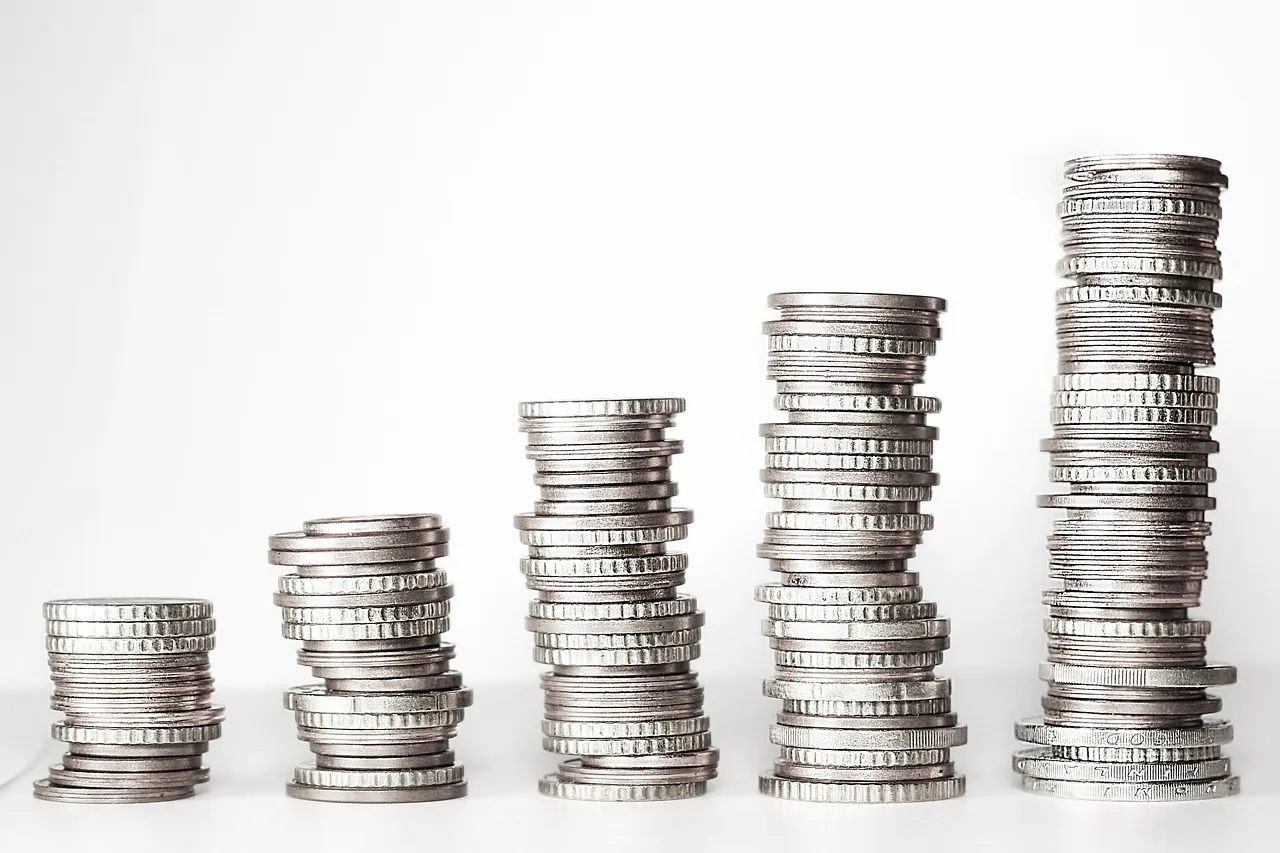
“Your first goal is to survive for 6 months, not to buy a Range Rover.”
Your profit comes from the difference between your entry and exit prices. But it's not free money. You pay costs, and the market is a zero-sum game. For every winner, there's a loser on the other side of the trade.
The Two Main Costs
- The Spread: This is the difference between the buy (ask) and sell (bid) price. It's the broker's primary fee. If EUR/USD is quoted as 1.0850 / 1.0852, the spread is 2 pips. Your trade starts 2 pips in the red. You need the market to move in your favor by more than the spread just to break even. Brokers like IC Markets and Pepperstone offer raw spreads from 0.0 pips, but charge a small commission per lot instead.
- Swap/Rollover Fees: If you hold a position past 5 PM New York time (about 10 PM or 11 PM in Nigeria, depending on daylight savings), you may pay or earn a small interest fee based on the difference between the two currencies' interest rates. It's usually minor unless you're holding for weeks or months.
Trading Styles: Finding Your Fit
How you approach the market defines your life as a trader.
- Scalping: Taking dozens of tiny profits (5-10 pips) throughout the day. It's intense, requires total focus, and costs (spreads) are your biggest enemy. You need a solid scalping strategy and a broker with ultra-low latency.
- Day Trading: Opening and closing all positions within the same day. You're avoiding swap fees and sleeping peacefully without overnight risk. You might aim for 20-50 pip moves.
- Swing Trading: Holding trades for days or weeks, aiming for larger moves of 100+ pips. This suits people with day jobs better. You need to understand broader economic trends. Our guide on swing trading covers the patience this requires.
My personal edge came from swing trading. I'm not glued to the screen. In early 2023, I went long on XAU/USD (gold) at $1815 based on a weekly chart support level and held it for three weeks. I closed at $1960 for a 145-pip move, which was a tidy profit on a modestly leveraged position. The key was patience and ignoring the daily noise.
Trading forex as an individual in Nigeria is perfectly legal. No one will arrest you for trading GBP/USD. But the regulatory landscape for the brokers serving us is... let's call it 'developing.'
Who's in Charge?
The Central Bank of Nigeria (CBN) regulates forex for banking and monetary policy. The Securities and Exchange Commission (SEC) is getting more involved in overseeing capital markets, including forex. However, most Nigerian traders use internationally regulated brokers that accept Nigerian clients. This is legal, but it means your primary protection comes from a foreign regulator like the FCA (UK) or ASIC (Australia).
The Tax Man Cometh
This is critical. Your forex trading profits are considered capital gains. According to the Federal Inland Revenue Service (FIRS), you are liable for a 10% Capital Gains Tax on your net profits. I know, I know - everyone says they don't pay. But as the market matures, compliance will tighten. Keep detailed records of all your trades. It's not just about legality; it's about knowing your true, post-tax profit.
Deposits and Withdrawals
This is the daily hassle. Funding your international broker account typically involves:
- Using a domiciliary account and an international wire transfer (slow, with bank fees).
- Using crypto (fast, but price volatility adds another layer).
- Using specialized payment processors that accept Naira deposits.
Brokers like Exness and XM have worked hard to integrate local payment solutions. Withdrawal times can vary from a few hours to several business days. Always check a broker's specific deposit/withdrawal page for Nigeria before you sign up.

Pro Tip: Before you fund an account, do a test withdrawal. Deposit a small amount (say, $20), then immediately request to withdraw it. This tests the broker's process and speed for your specific payment method without risking serious capital.
💡 نصيحة وينستون
Your first 100 trades are for learning, not for profit. If you break even after 100 trades, you're a prodigy. Keep a journal for every single one.
“If you lose 50% of your account, you need a 100% return just to get back to breakeven.”
Picking Your Broker
Don't just go with the one with the flashiest Instagram ads. Here’s your checklist for a Nigerian trader:
- Regulation: This is your safety net. Look for ASIC, FCA, FSCA, or CySEC licenses.
- Naira Accounts/Deposits: Does the broker offer NGN accounts or easy Naira deposit methods?
- Spreads & Commissions: Compare costs on the pairs you'll trade most. For EUR/USD, anything under 1.0 pip on a standard account is decent.
- use Offered: Can you set it to a sane level (like 1:30) even if they offer 1:1000?
- Platform: Most use MetaTrader 4 or 5 (MT4/MT5). Is it stable?
Based on my experience and community feedback, brokers like Pepperstone (great execution), IC Markets (low raw spreads), and XM (low minimum deposit) are consistently reliable options for Nigerians.
Your First Steps Are Not Trades
- Open a Demo Account: Practice for at least 2-3 months. Treat the virtual $50,000 as real money. Your goal isn't to double it, but to not blow it up.
- Learn One Strategy: Master it. Whether it's using RSI divergence or MACD crossovers on the 4-hour chart, know it inside out.
- Start Absurdly Small: When you go live, start with a cent account or a micro lot (0.01). Your first goal is to survive for 6 months, not to buy a Range Rover.
Let me give you a real first-trade example from my early days. On demo, I was killing it. I went live with $500. I got a 'sure' signal on GBP/USD and, pumped with adrenaline, put on a 0.5 lot position (way too big). The trade went 15 pips against me, and I panicked and closed it. Loss: $75. That was 15% of my account gone in minutes because of poor position sizing and emotion. I had to rebuild from $425, a much harder task. Start small.
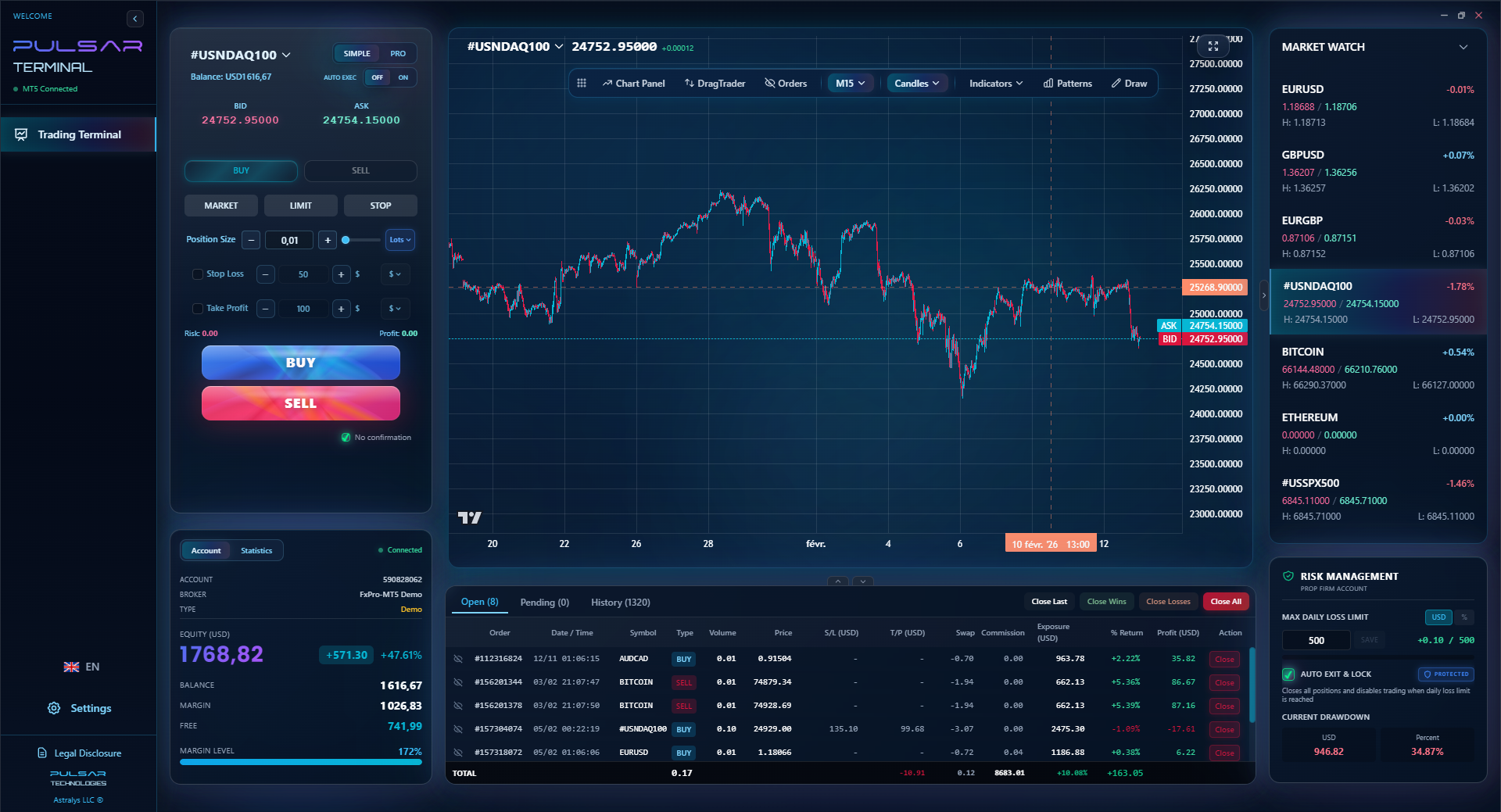
Managing multiple trades and setting precise stop-losses is key to survival, and tools like Pulsar Terminal automate this directly on your MT5 platform.
Pulsar Terminal
أداة MT5 الشاملة: أوامر سحب وإفلات، متعدد TP/SL، تريلينج ستوب، تداول الشبكة، Volume Profile وحماية البروب فيرم. يستخدمها أكثر من 1000 متداول يومياً.
We learn more from losses than wins. Here are the classic Nigerian trader errors I've made and seen a thousand times.
1. Chasing 'Surefire' Signals: That WhatsApp group charging ₦50k for 'daily signals' is a business, not a charity. I paid for one in 2019. The guy would post 10 signals, and if one hit, he'd blast the screenshot. The 9 losers were ignored. You must develop your own analysis skill.
2. Trading Without a Stop-Loss: This is suicide. 'I'll just watch it closely,' you say. Then NFP news hits, and EUR/USD drops 60 pips in 10 seconds. Your 'small' loss is now a catastrophic one. Always, always use a stop-loss. It's not a suggestion; it's a seatbelt.
3. Over-leveraging on Exotics: The temptation to trade USD/NGN is real. You feel you understand it. But the spreads are huge (sometimes 50-100 pips!), and the CBN can intervene unpredictably. The cost to enter and exit is so high you need a massive move just to break even. Stick to majors like EUR/USD or XAU/USD when starting.
4. Ignoring the Math: If you lose 50% of your account, you need a 100% return just to get back to breakeven. Protecting your capital is job number one. A 2% risk per trade means you can have a string of 10 losses and still be in the game. Risk 10% per trade, and two bad trades can end you.
5. Letting Greed Overtake a Good Plan: You're in a trade, up 30 pips. Your plan says take profit at 40 pips. But you think, 'It's going to 100!' You move your target. The market reverses, and you end up at breakeven or a loss. This hurts more than a straight loss. Execute your plan. A small, consistent profit is a fortune over time.
💡 نصيحة وينستون
The most dangerous trade is the one after a big win. Overconfidence is a silent account killer. Stick to your risk rules, especially when you're 'hot.'
FAQ
Q1Is forex trading legal in Nigeria?
Yes, it is completely legal for individuals to trade forex in Nigeria. The activity itself is not prohibited. However, you must pay a 10% Capital Gains Tax on your profits to the FIRS. The brokers you use are often regulated internationally, as the local regulatory framework for online retail forex is still evolving.
Q2How much money do I need to start forex trading in Nigeria?
You can start with very little. Many international brokers have minimum deposits as low as $5 (about ₦7,000) or even $0. However, starting with a very small amount often leads to over-leveraging just to see meaningful gains. A more practical start is $100-$200 (₦140k-₦280k), which allows for sensible position sizing on a cent or micro account. Your first investment should be in education, not capital.
Q3What is the best time to trade forex in Nigeria?
The most volatile (and opportunity-filled) sessions for a Nigerian trader are the London session (1 PM - 10 PM Nigerian Time) and the overlap with the New York session (2 PM - 5 PM Nigerian Time). This is when the highest volume trades, leading to stronger trends and better liquidity. The Asian session (11 PM - 8 AM) is typically quieter.
Q4Can I trade the Naira (NGN) in forex?
You can find pairs like USD/NGN or GBP/NGN offered by some brokers, but I generally advise against trading them as a beginner. They are exotic pairs with very wide spreads (often 50+ pips), making them expensive to trade. The market can also be thin and subject to direct Central Bank of Nigeria (CBN) interventions, which can cause sudden, unpredictable spikes.
Q5How do I withdraw my forex profits in Nigeria?
Withdrawal methods are the reverse of your deposit. If you funded via a wire transfer to your domiciliary account, profits can be sent back there. If you used a crypto or local payment processor, you withdraw through that same channel. Always use the same method for deposit and withdrawal where possible to avoid delays. Processing times range from a few hours to 5 business days.
Q6What's more important: technical analysis or fundamental analysis?
You need both, but they serve different purposes. Technical analysis (charts, indicators) helps you find entry and exit points - the 'when' to trade. Fundamental analysis (interest rates, GDP, news) helps you understand the 'why' behind long-term trends. For day trading and scalping, technicals are heavier weighted. For swing trading, fundamentals provide the context for the bigger moves.
درس البروفيسور وينستون
النقاط الرئيسية:
- ✓Forex is a global OTC market for exchanging currencies, open 24/5.
- ✓You profit from price changes in currency pairs, measured in pips.
- ✓use amplifies both gains and losses; use it cautiously.
- ✓Nigerian traders pay 10% Capital Gains Tax on net profits.
- ✓Always use a stop-loss and risk a maximum of 2% per trade.
ما مدى فائدة هذا المقال؟
انقر على نجمة للتقييم
رؤى التداول الأسبوعية
تحليلات واستراتيجيات أسبوعية مجانية. بدون رسائل مزعجة.
عن المؤلف
Olumide Adeyemi
رائد التداول في غرب أفريقيا
أحد أنشط معلمي تداول الفوركس في نيجيريا. 8 سنوات من الخبرة في التداول من لاغوس. متخصص في استراتيجيات رأس المال المنخفض وتحديات شركات البروب للمتداولين الأفارقة.
التعليقات
تحذير من المخاطر
ينطوي تداول الأدوات المالية على مخاطر كبيرة وقد لا يكون مناسبًا لجميع المستثمرين. الأداء السابق لا يضمن النتائج المستقبلية. هذا المحتوى لأغراض تعليمية فقط ولا ينبغي اعتباره نصيحة استثمارية. قم دائمًا بإجراء بحثك الخاص قبل التداول.
قد يعجبك أيضًا

Cara Trading Forex Sukses: 7 Prinsip dari Trader Profesional
Cara trading forex sukses dengan 7 prinsip trader pro: manajemen modal, disiplin, journal trading, backtest. Data nyata, bukan janji profit palsu.
Jam Trading Forex Terbaik untuk Trader Indonesia: Panduan Lengkap dengan Tabel Waktu
Panduan jam trading forex untuk trader Indonesia. Tabel 4 sesi dunia, jam emas 20:00-00:00, sesi mana yang harus dihindari. Data akurat + tips dari trader berpengalaman.
Top 5 Sàn Forex Uy Tín Nhất 2026: Review Jujur dari Trader Indonesia
Top 5 sàn forex uy tín 2026 untuk trader Indonesia. Review jujur: spread, deposit, withdraw, dukungan lokal. Exness, XM, IC Markets & lebih.
احصل على Pulsar Terminal
جميع هذه الحاسبات مدمجة في Pulsar Terminal مع بيانات حية من حساب MT5 الخاص بك.
احصل على Pulsar Terminal