


Thinking about trading forex futures because the 'regulated' exchange sounds safer than the wild west of spot forex brokers? You're not alone.

David van der Merwe
Schwellenland-Trader ·  South Africa
☕ 10 Min. Lesezeit
Was Sie lernen werden:
- 1Futures vs. Spot Forex: It's Not What You Think
- 2The Real Costs on the JSE (SAFEX)
- 3Margin & use: The Rules Change Everything
- 4Why Most Traders Lose on Futures (The 3 Killers)
- 5Who Should Actually Trade Forex Futures?
- 6Getting Started in South Africa: A Pragmatic Path
- 7The Final Verdict for a South African Trader
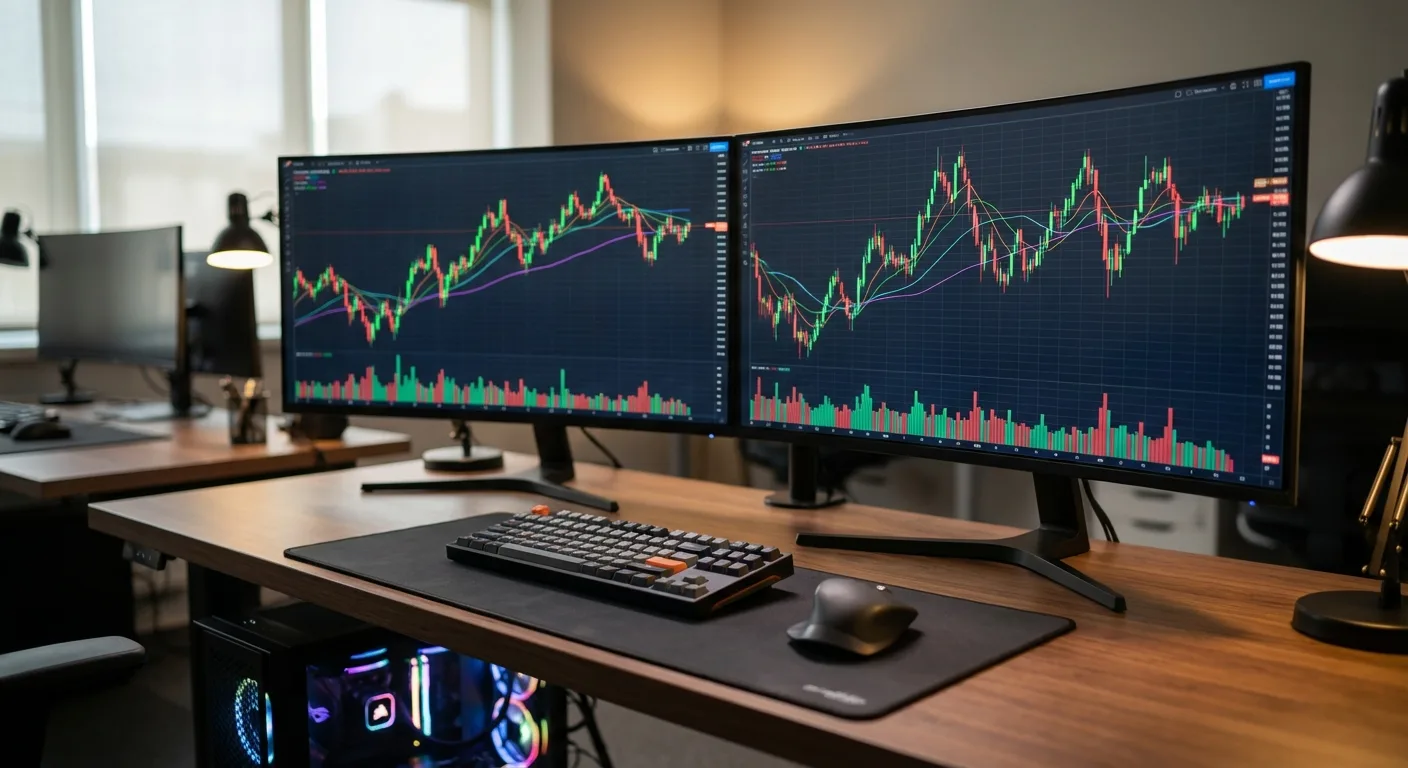
Thinking about trading forex futures because the 'regulated' exchange sounds safer than the wild west of spot forex brokers? You're not alone. Most South African traders I've mentored start there, convinced the Johannesburg Stock Exchange's SAFEX platform is the responsible choice. I was too, back in 2012. I blew R15,000 in three months on USD/ZAR futures before I understood the game. Let's cut through the institutional marketing. This isn't about which is 'better.' It's about which one will drain your account slower while you learn, and which structural realities you can't ignore.
The biggest lie in finance is that futures are 'less risky' than spot forex. They're different, not safer. The risk is in you, not the product.
A forex future is a standardised contract to buy or sell a currency at a set price on a future date. You're trading a contract listed on an exchange like the JSE's SAFEX or the CME. Spot forex is an immediate transaction in the over-the-counter (OTC) market. The difference isn't just timing; it's about structure.
Think of it like buying a car. Spot forex is buying a used car privately - you negotiate the price directly with the seller. Forex futures is buying a new, base-model car from a dealership - the features, size, and delivery date are fixed. You get certainty on specifications, but you pay a premium for that standardisation and you're stuck with what the exchange offers.
For South Africans, the key futures contract is the USD/ZAR Future on SAFEX (Code: SSF). Each contract controls a fixed $1,000 of exposure. If you want to trade EUR/USD? You're looking at international exchanges, which adds another layer of complexity and cost.

Warning: Don't choose futures because you think they're 'safer.' Choose them only if their specific structure - central clearing, expiry dates, larger contract sizes - aligns with a specific strategy you have. Most retail traders don't have such a strategy.

This is where the fantasy of 'safety' meets the reality of your bank balance. The exchange isn't a charity. Its fees will eat you alive if you're trading small.
Let's use the USD/ZAR Future (SSF). Assume the USD/ZAR rate is 18.50. One contract gives you exposure to $1,000, which is R18,500 notional value.
The Fee Breakdown (Estimates, as broker fees vary):
| Cost Type | Approximate Fee | Notes |
|---|---|---|
| Broker Commission | R20 - R50 per side | You pay this to open AND close. A round turn costs R40-R100. |
| JSE Clearing Fee | ~R2.50 per contract | The exchange's cut. |
| SA Investor Levy | ~R0.20 per R1,000 traded | A tiny government fee. |
| Stamping Duty | Possibly R50 per contract | This one's a killer. Not always charged, but when it is, it's brutal for small trades. |
Here's my painful lesson: In 2014, I scalped 10 SSF contracts, aiming for a 50 pip move. I made my 50 pips (about R500 profit on the move). My broker commission was R35 per side. Clearing fees were R25. Before I even saw the profit, R95 in fees was gone. My 'R500 profit' was actually R405. Then the market reversed on the next tick and took out my stop-loss. I paid another R95 in fees for the privilege of losing. I paid nearly R200 to lose my own money. That's the hidden grind of futures.
The minimum move (tick size) for SSF is 0.001 ZAR per USD. That's a R1 change per contract. If your round-turn fees are R60, you need the market to move 60 ticks just to break even. That's 60 pips. In spot forex, with a good broker like IC Markets, your break-even point can be under 2 pips.

Example: Trade 1 SSF contract, in and out.
- Profit on trade: 30 pips = R30
- Broker Fees (R30 x 2 sides): R60
- Clearing Fees: R2.50
- Net Result: LOSS of R32.50 You can be right on direction and still lose money because of the cost structure. This is why a solid position size calculator is non-negotiable; you must know your break-even before you enter.

💡 Winstons Tipp
If your trading account is under R100k, the JSE's fee structure is your enemy, not the market. Focus on reducing friction first.
“The 'safety' of the exchange is a mirage for the small trader.”
use in spot forex is a conversation between you and your broker. use in futures is a rulebook written by the exchange. It's much less flexible.
On SAFEX, initial margin for USD/ZAR futures is set by the exchange and changes daily. It's typically a few thousand Rand per contract. This isn't 'use' in the 500:1 sense you see with offshore Exness accounts. It's more like 10:1 or 20:1. They do this on purpose. The exchange's primary goal is to ensure the integrity of its clearing house, not to help you get rich.
Maintenance margin is the real trap. If your loss for the day brings your equity below the maintenance margin level, you will get a margin call. Not an email tomorrow. A phone call right now. You have hours, sometimes minutes, to deposit more funds or they will liquidate your position at the market price. There's no negotiation. I've seen it close a position at the absolute worst possible tick.
In spot forex, a margin call usually means your broker automatically closes your worst losing position to free up margin. It's brutal but often partial. In futures, it can be a total account liquidation event. The 'safety' of the clearing house is for the system, not for you.
The Prop Firm Angle
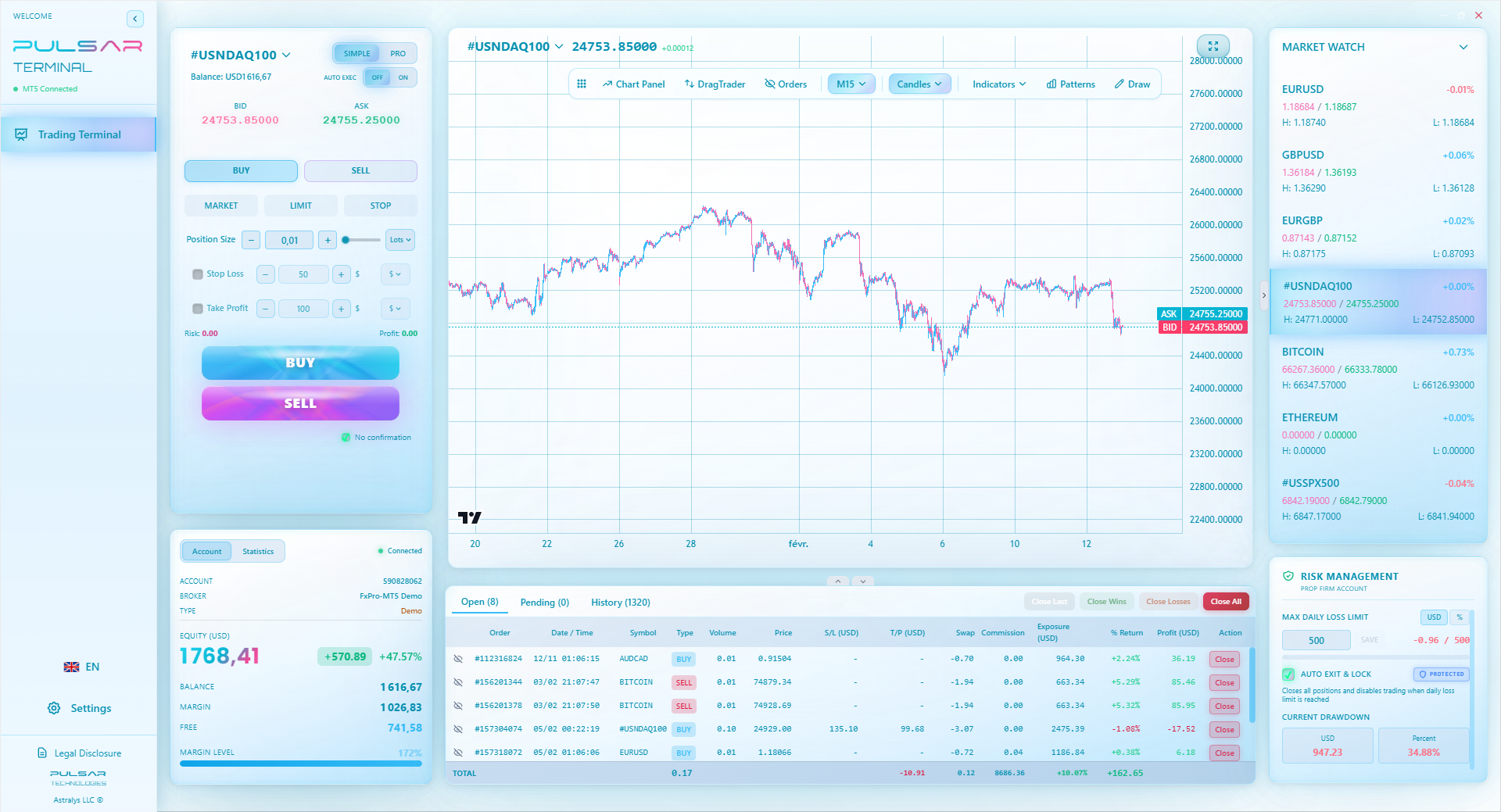
This rigidity is exactly why prop firms use simulated spot forex accounts for their challenges. They can set custom, firm-specific rules for daily loss limits. Managing this manually is a headache, which is why tools exist to automate it. Passing a prop firm challenge requires strict loss management, which Pulsar Terminal handles automatically.
Managing the rigid risk rules of futures trading is complex, but tools like Pulsar Terminal automate stop-losses, trailing stops, and daily loss limits directly on your MT5 platform.
Pulsar Terminal
Das All-in-One MT5-Tool: Drag-and-Drop-Orders, Multi-TP/SL, Trailing Stop, Grid Trading, Volume Profile und Prop-Firm-Schutz. Täglich von 1.000+ Tradern genutzt.
After coaching hundreds of traders, I see the same three killers for futures traders, especially in South Africa.
-
Trading Too Small: Because contract sizes are fixed ($1,000 for SSF), traders with R20,000 accounts think, 'I'll just trade one contract.' They don't factor in the fixed fees. As our example showed, fees as a percentage of your capital and potential profit are enormous on small trades. You're fighting an uphill battle from the start. In spot, you can trade a 0.01 lot on EUR/USD with a $1,000 account and your fees (the spread) might be $0.20.
-
Ignoring Expiry: A futures contract has a life. It expires. You can't buy an SSF contract and 'hold for 5 years.' You must roll it over to the next contract month before expiry, which incurs another set of fees. This adds a layer of administrative complexity that spot traders never face. It also affects the price (term structure), which most retail traders completely ignore.
-
Misunderstanding Liquidity: The JSE's USD/ZAR future is liquid during SA hours. But try trading the EUR/USD future on the CME from Cape Town at 3 PM local time? The liquidity can be thinner, spreads can widen, and your fills can get slippage. You're not trading 'the forex market' anymore; you're trading a specific derivative on that market, with its own quirks. Spot forex liquidity, especially on majors like EUR/USD, is almost always deeper.
My own killer was #1. I was scalping, trying to make R100 here and R100 there. The fees turned my winning strategy into a statistical loser. I only realised after printing out three months of statements and adding up all the 'R45' and 'R22' lines. It was a bloodbath of a thousand cuts.
💡 Winstons Tipp
Before you trade a single futures contract, calculate your break-even point in ticks. If it's more than 20, you're already at a severe disadvantage.

“I paid nearly R200 in fees for the privilege of losing my own money. That's the hidden grind of futures.”
Given all this, who are futures actually for? They're a specialist tool.
- Hedgers: A South African importer who needs to lock in a USD/ZAR rate for a shipment in December. They buy a December SSF contract. This is the original purpose of futures, and it works perfectly.
- Large-Capital Speculators: If you have R500,000+ to deploy, the fixed fees become a rounding error. The exchange's clearing and transparency become valuable. You can put on meaningful size without worrying about broker solvency.
- Institutional-Arbitrage Strategies: If you're running a strategy that exploits tiny price differences between the futures contract and the spot market, the fixed, known costs are a key input.
If you're a retail trader trying to make a monthly income from price movements, you're not in this list. For you, the spot forex market - with its flexible position sizing, lower transactional costs, and 24-hour liquidity - is almost always the more efficient sandbox to learn in. Start with a strategy like swing trading where costs matter less, not scalping where they determine your success.
If you've read this and still want to proceed, here's how to do it without lighting your money on fire in the first week.
-
Find a JSE-licensed broker that offers derivatives trading. Major banks (FNB, Standard Bank) have platforms, as do specialists like GT247.com or EasyEquities (for their derivatives product). Don't just look at the advertised commission. Ask for their full fee schedule in writing, including stamp duty policy.
-
Paper trade for at least 3 months. But not just to test your 'strategy.' Paper trade to internalise the fee impact. Keep a log of every simulated trade: intended profit, fees, net result. If your net result isn't consistently positive, your strategy is already bankrupt.
-
Start with ONE contract. Even if you have the capital for more. Your first goal is not to make money. Your first goal is to navigate the platform, understand the settlement process, and experience the daily margin statement without panic.
-
Forget about other currency pairs initially. Master the dynamics of the USD/ZAR future. It's the most liquid local contract and is driven by factors you likely understand (SA politics, US Fed, commodity prices). Don't jump to EUR/USD on the CME until you're consistently not-losing on the JSE.

Pro Tip: Use your spot forex account as your primary learning lab. Use a futures demo account as a side experiment. After 6 months, compare your simulated performance in both, factoring in all costs. The data will tell you which battlefield suits your style.
💡 Winstons Tipp
Your first ten futures trades should have one goal: to understand the fee statement. Profit is a secondary concern.

“Don't start on hard mode. The market is hard enough.”
Here's the blunt truth I wish someone had given me.
Forex futures, particularly on the JSE, are a professional's arena disguised as a public market. The high fixed costs, rigid contract sizes, and margin rules are designed to favour large, infrequent transactions for hedging or large-scale speculation. They were not built for a retail trader in Sandton trying to scrape out a few hundred Rand a day.
The 'safety' of the exchange is a mirage for the small trader. Yes, your counterparty risk is lower. But your risk of death by a thousand fee-cuts is exponentially higher. Your risk of a catastrophic margin call due to a momentary spike is more present.
Your journey should start in the spot forex market. Learn about MACD divergences and RSI overbought signals there, where the cost of being wrong is lower. Understand what a pip really means to your bottom line. Get your risk management ironclad. If, after a few years and a consistently profitable track record, you find your capital base has grown to the point where the benefits of futures (transparency, no broker conflict) outweigh their costs, then make the transition.
Don't start on hard mode. The market is hard enough. Start where the friction is lowest, learn the game, and then decide if you need a different playing field. I didn't, and it cost me R15,000 and a year of confidence. You don't have to make the same mistake.
FAQ
Q1What is the minimum amount needed to start trading USD/ZAR futures in South Africa?
Technically, the initial margin can be as low as R2,000-R4,000 per contract. But practically, with fees considered, starting with less than R50,000 is a recipe for quick ruin. You need enough capital so that the fixed fees are a tiny fraction (<1%) of your trade size and account balance.
Q2Can I trade forex futures on MetaTrader 5 in South Africa?
Yes, but not directly on the JSE through MT5. Some international brokers on MT5 offer futures on global exchanges like the CME. For JSE SAFEX futures, you'll likely use a proprietary platform from your local broker (like the bank's trading platform or GT247's platform).
Q3Are profits from JSE forex futures taxable in South Africa?
Yes. The South African Revenue Service (SARS) views profits from futures trading as income, not capital gains, if you're deemed to be trading regularly. This means it's added to your other income and taxed at your marginal rate. Keep careful records of all trades and fees.
Q4Is the spread better on futures or spot forex?
On the liquid JSE USD/ZAR future during SA hours, the spread can be very tight, often 1 tick (0.001 ZAR). However, this is misleading. The true cost is commission + clearing fee. In spot forex, the spread is the main cost. A tight futures spread with a R50 commission is far more expensive than a 2-pip spread on spot with no commission.
Q5What happens if I hold a futures contract until expiry?
For a retail speculator, this is a disaster. You don't want physical delivery of $1,000. Your broker will automatically close your position (at a cost) before expiry, or force you to roll it over. If you somehow end up with an expiring contract, you'll face cash settlement or a complicated physical settlement process. Always close or roll your position well before the expiry date.
Q6Can I use the same technical analysis for futures as for spot forex?
Broadly, yes. Support/resistance, trends, and indicators like RSI work. However, you must be aware of 'gaps' that can occur between contract months when you roll over. The chart for a continuous futures contract is spliced together, which can sometimes distort indicators. Always know which contract month you're looking at.
Prof. Winstons Lektion
Wichtige Erkenntnisse:
- ✓Futures fees require a 60-pip move on JSE just to break even.
- ✓Spot forex offers 100x smaller trade sizes than futures contracts.
- ✓Margin calls on futures are immediate, with hours to deposit.
- ✓Start with >R50k capital if you insist on trading JSE futures.
Wie nützlich war dieser Artikel?
Klicken Sie auf einen Stern
Wöchentliche Trading-Einblicke
Kostenlose wöchentliche Analysen & Strategien. Kein Spam.
Über den Autor
David van der Merwe
Schwellenland-Trader
In Johannesburg ansässiger Trader mit 11 Jahren Erfahrung in Schwellenländerwährungen. Spezialisiert auf ZAR-Paare, FSCA-regulierten Handel und Analyse des südafrikanischen Marktes.
Kommentare
Risikohinweis
Der Handel mit Finanzinstrumenten birgt erhebliche Risiken und ist möglicherweise nicht für alle Anleger geeignet. Vergangene Ergebnisse garantieren keine zukünftigen Renditen. Dieser Inhalt dient ausschließlich Bildungszwecken und stellt keine Anlageberatung dar. Führen Sie immer Ihre eigene Recherche durch, bevor Sie handeln.
Das könnte Sie auch interessieren

Cara Trading Forex Sukses: 7 Prinsip dari Trader Profesional
Cara trading forex sukses dengan 7 prinsip trader pro: manajemen modal, disiplin, journal trading, backtest. Data nyata, bukan janji profit palsu.
Jam Trading Forex Terbaik untuk Trader Indonesia: Panduan Lengkap dengan Tabel Waktu
Panduan jam trading forex untuk trader Indonesia. Tabel 4 sesi dunia, jam emas 20:00-00:00, sesi mana yang harus dihindari. Data akurat + tips dari trader berpengalaman.
Top 5 Sàn Forex Uy Tín Nhất 2026: Review Jujur dari Trader Indonesia
Top 5 sàn forex uy tín 2026 untuk trader Indonesia. Review jujur: spread, deposit, withdraw, dukungan lokal. Exness, XM, IC Markets & lebih.
Pulsar Terminal herunterladen
Alle diese Rechner sind in Pulsar Terminal mit Echtzeit-Daten Ihres MT5-Kontos integriert.
Pulsar Terminal herunterladen