


Here's a fact that'll make your head spin: in the week ending December 6, 2024, the Naira gained nearly 9% against the US dollar.

Olumide Adeyemi
Pionier des Tradings in Westafrika ·  Nigeria
☕ 11 Min. Lesezeit
Was Sie lernen werden:
- 1The Battlefield: Understanding the Nigerian FX Market
- 2Who Are The Speculators and How Do They Operate?
- 3CBN Weapons Against Speculation (And How Traders React)
- 4Trading the Naira (USD/NGN): A Practical Guide
- 5Brokers, Regulation, and the Offshore Reality
- 6Risk Management: The Only Non-Negotiable
- 7Future Outlook: What's Next in the FX War?
Here's a fact that'll make your head spin: in the week ending December 6, 2024, the Naira gained nearly 9% against the US dollar. And within hours, a swarm of speculators were already placing bets against it. That's the Nigerian forex market for you. It's not just charts and indicators, it's a full-blown economic tug-of-war where every attempt at naira appreciation faces fierce resistance by forex speculators. I've traded this chaos for over a decade, and I'm telling you, understanding this battle is the only way to not get wiped out.
Forget what you know about orderly forex markets. Trading the Naira is like trading in a market with three different price tags for the same product, and everyone's trying to arbitrage the hell out of it. Until recently, you had the official CBN rate, the NAFEX (Investors & Exporters) window rate, and the parallel (black) market rate. The gap between them was a speculator's paradise.
The CBN's big move, the Revised Guidelines for the Nigerian Foreign Exchange Market (NFEM) launched in late 2024, was supposed to end this. It collapsed everything into a single, unified official market. On paper, brilliant. In practice, old habits die hard, and liquidity doesn't magically appear. The new Enhanced Foreign Exchange Market System (EFEMS) is the digital platform meant to run this show, using Bloomberg's matching engine. It's a step towards transparency, but it's also a new arena for the same old game.
Why does this matter to you, the trader? Because the market's structure is the primary indicator. When the CBN announces a new rule, you're not just reading regulatory text, you're reading a potential price catalyst. The struggle for naira appreciation and the resistance by forex speculators is baked into this very architecture. I learned this the hard way in early 2024, betting on convergence between the windows. I got the direction right but the timing completely wrong, watching a 1.5% paper gain turn into a 3% loss as liquidity dried up at a key level. My position size calculator got a serious workout that day, saving me from a much bigger disaster.
“Trading the Naira is not just charts and indicators, it's a full-blown economic tug-of-war.”
When we talk about speculators resisting the Naira, we're not just talking about some guy in a basement with a MetaTrader account (though that's part of it). It's an environment.
The Big Players: Banks and Corporates
Authorized dealer banks are the whales. They have direct access to the official market. Pre-2024 reforms, a common play was for a bank to access dollars at the official rate, then sell them to importers at a much higher NAFEX or near-parallel rate. That arbitrage is harder now with a unified window, but it's been replaced by timing and inventory games. They can slow-walk fulfilling client FX requests if they believe the Naira will weaken, effectively shorting the currency by holding dollars.
The Street-Level Army: Bureau de Changes (BDCs)
Ah, the BDCs. The CBN's frenemy. In May 2024, the CBN revoked the licenses of over 4,100 BDCs for not playing by the rules. Then, in a stunning reversal in February 2026, they let them back into the official market. Why? Control. It's easier to monitor a regulated entity than a pure black market.
The new rules are a speculator's straightjacket, designed to prevent hoarding: buy up to $150k/week, sell or use it within 24 hours, only 25% in cash. This forces BDCs to be turnover machines, not storage units. But trust me, where there's a rule, there's a workaround. The 24-hour rule just compresses the speculation timeline, it doesn't eliminate it.
The International Crowd: Prop Firms and Hedge Funds
These guys trade the Naira via derivatives like NDFs (Non-Deliverable Forwards) offshore. They don't touch the physical market. Their game is purely macroeconomic: betting against the Naira when they see falling reserves, high inflation, or political uncertainty. Their massive orders in the offshore NDF market create a psychological headwind for the onshore spot rate. Their activity is a pure, high-octane form of naira appreciation resistance by forex speculators with deep pockets.

Warning: Don't confuse speculation with manipulation. Most of this is legal market activity, just with very sharp elbows. Assuming every price move is a 'manipulation' is a fast track to conspiracy theories and bad trades.

💡 Winstons Tipp
In a war between speculators and a central bank, the central bank has the printing press. Never bet your entire account on them being wrong in the short term.

“The market's immediate reaction to a new CBN circular is often wrong. Wait for the London session to open.”
The CBN isn't just sitting there. They have a toolkit, and each tool sends a specific signal.
Interest Rate Hikes: The classic move. Jack up rates to make holding Naira assets more attractive. In theory, hot money flows in, demand for Naira rises. In practice, it also crushes the real economy. Traders watch these decisions like hawks. A surprise hike can cause a short-term Naira spike, followed by a sell-off if the market thinks it's unsustainable. It's a scalping strategy dream event.
Direct FX Intervention: The CBN dipping into its reserves to sell dollars directly into the market. This is a blunt instrument. It can provide a hard floor for the Naira... until the reserves look thin. I remember a specific intervention in Q3 2023 where the CBN sold heavily around 890 NGN/USD. It held for a week, creating a beautiful double bottom on the chart. I went long, targeting a 2% move back to 875. It worked, but I got out at 880 because the volume on the rally was pathetic. The intervention had stopped the fall, but it hadn't created real buying demand.
Regulatory Rule Changes: This is their most potent weapon now. The Nigeria Foreign Exchange Code (FX Code) of 2025 sets the ethical and operational rules. The BDC reintroduction in 2026 is a tactical maneuver to absorb street demand. The March 2026 rule letting International Oil Companies (IOCs) access 100% of their export earnings instantly? That's a liquidity injection play, trying to get more dollars into the official system.

Pro Tip: The market's immediate reaction to a new CBN circular is often wrong. Wait for the London/New York session to open after a major announcement. That's when the big offshore money weighs in, and you get the 'real' price direction. I've been whipsawed too many times jumping in on Lagos session noise.
“The market's immediate reaction to a new CBN circular is often wrong. Wait for the London session to open.”
You can't directly trade the official Nigerian spot rate unless you're an authorized entity. So how do you play this? You trade the proxy: the offshore Naira futures (NDFs) or, more commonly for retail, you trade the macroeconomic pairs that move with Naira sentiment.
The Indirect Playbook
When there's strong pressure against the Naira (i.e., speculators are winning), what happens? Nigerian yields rise, risk sentiment falls, and capital flies to safety. This often shows up in other markets.
- Gold (XAU/USD): Political and economic instability in a major emerging market like Nigeria is a classic driver for gold. A crashing Naira can be part of a broader EM fear story. Watch for correlation during crisis periods. My guide on XAU/USD covers these safe-haven flows.
- EUR/USD & USD Strength: A strong US dollar is kryptonite to the Naira. If the DXY is roaring because of Fed hawkishness, the pressure on the Naira is immense. Trading the broader dollar trend via EUR/USD is a cleaner way to express a 'weak Naira' view without touching its volatile proxy.
Technicals in a Manipulated Market?
They still work, but you have to adapt. Support and Resistance levels aren't just technical, they're often psychological levels where the CBN might step in or where corporate demand emerges.
- Volume is King: In a market with potential intervention, low-volume breakouts are traps. Wait for confirmation with sustained volume. The MACD indicator can help gauge momentum shifts, but pair it with volume analysis.
- Time Your Day: The most volatile periods are during Lagos business hours (7 AM - 4 PM GMT) when local news hits and the CBN operates. London overlap (8 AM - 12 PM GMT) brings in offshore interest. For a calmer, trend-following approach, consider swing trading on the daily charts to avoid intraday noise.
- Mind the Gap: The spread on Naira-related instruments or EM proxies can be wide. A 50-pip spread means you're down 50 pips the second you enter. Factor this into your risk. Brokers like IC Markets and Pepperstone often have tighter spreads on major pairs that act as proxies.
💡 Winstons Tipp
The most valuable chart in an emerging market isn't the price chart; it's the chart of the central bank's foreign reserves. When the line goes down for too long, something breaks.
“Your trade does not directly affect the Naira's spot rate. You're a spectator in the war, not a soldier.”
Let's be crystal clear: if you're a retail trader in Nigeria, you are almost certainly trading with an international broker regulated outside Nigeria. The local SEC hasn't set up a specific framework for online forex trading yet. This isn't necessarily bad, but you must understand the implications.
Your broker in Cyprus, Australia, or the Seychelles is not offering you a direct pipe into the Nigerian interbank market. You're trading CFDs or derivatives based on the broker's quoted price, which they derive from liquidity providers and the broader offshore market sentiment.
This means:
- Your trade does not directly affect the Naira's spot rate. You're a spectator in the war, not a soldier. This actually simplifies your job: focus on price action, not on whether your 0.1 lot order will move the market.
- Your protection is the broker's home regulator. Choose brokers with strong oversight. Exness (CySEC) and XM (multiple int'l licenses) are popular choices among Nigerian traders for a reason: they are known entities.
- Beware of 'Local' Broker Promises. Any firm promising you direct Naira trading with huge use is a massive red flag. It's likely unregulated bucket shop operations.
The upside? You get access to global markets, clean execution, and use. The downside? You're exposed to currency risk on your own capital if you fund in Naira and the currency devalues further. Always calculate your true risk per trade, including the funding currency drift, using a trusted position size calculator.
“Your trade does not directly affect the Naira's spot rate. You're a spectator in the war, not a soldier.”
Trading around this kind of market insanity without ironclad risk management is financial suicide. I'm not being dramatic.
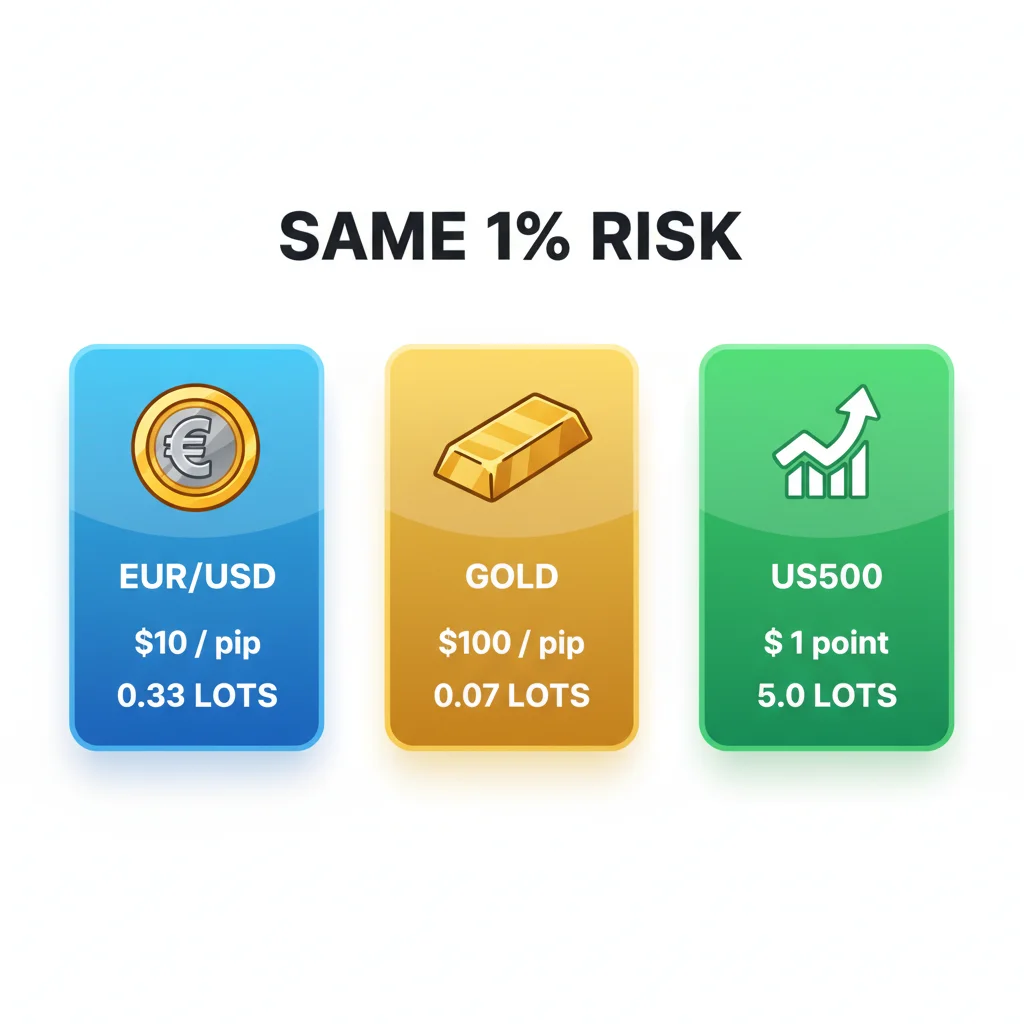
Volatility is Not Your Friend: It's your risk parameter. The average true range (ATR) on a Naira proxy can be 5x that of EUR/USD. If you usually risk 1% per trade on majors, you should be risking 0.2% or 0.3% on these instruments. A 50-pip stop loss on EUR/USD might need to be a 250-pip stop on an EM currency pair, which completely changes your position size math.
use is a Poisoned Chalice: Nigerian traders often seek high use to make up for smaller account sizes. This is the #1 account killer. The CBN's rules for BDCs (24-hour turnover) should be a lesson: in volatile markets, you need to be quick and light, not over-leveraged and slow. A 2% move against you on 100:1 use wipes out 200% of your margin. It happens in minutes.
The Psychology of Trading Against 'The Machine': When you know there's a powerful central bank and active speculators on the other side, it's easy to get paranoid or stubborn. You'll hold a losing trade thinking 'the CBN will intervene any minute.' Or you'll close a winning trade too early out of fear. The only cure is a mechanical plan. Define your entry, stop loss, and take-profit before you click buy. Use tools to enforce discipline.

Example: You have a $1,000 account. You want to trade a volatile EM pair where a sensible stop loss is 200 pips. You decide to risk 0.5% of your account ($5). The pip value for a micro lot (0.01) is $0.10. Your position size = ($5 risk) / (200 pips * $0.10 per pip) = 0.25 micro lots. That's it. Not 1 lot. Not even 0.5 lots. A quarter of a micro lot. That's the discipline this market demands.
💡 Winstons Tipp
If you can't explain which specific inefficiency or flow you're trying to capture in a volatile market like this, you're not trading, you're gambling with a fancy charting package.
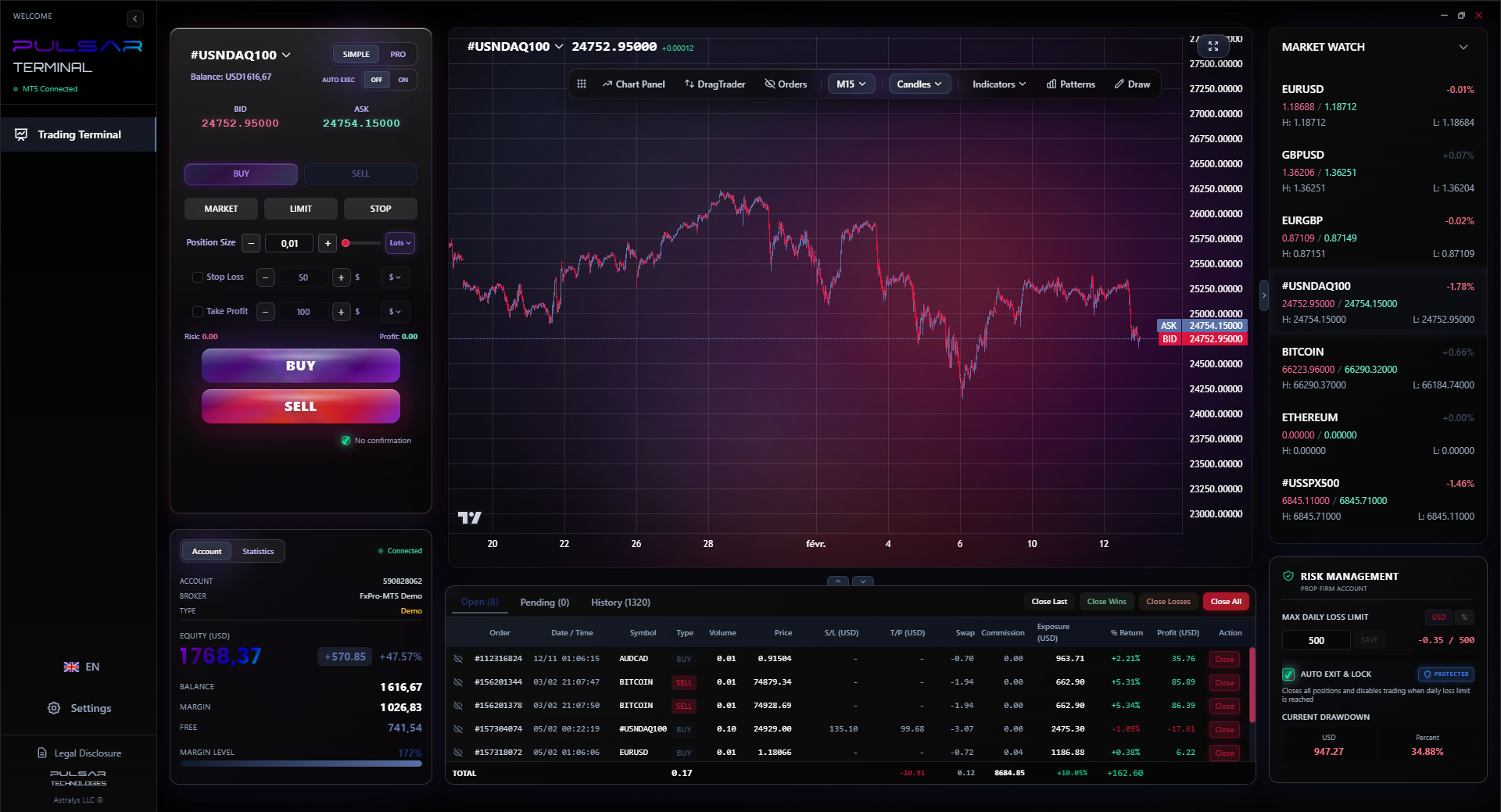
When trading volatile markets where emotions run high, automating your exit strategy with a trailing stop is non-negotiable, and Pulsar Terminal builds this discipline directly into your MT5 platform.
Pulsar Terminal
Das All-in-One MT5-Tool: Drag-and-Drop-Orders, Multi-TP/SL, Trailing Stop, Grid Trading, Volume Profile und Prop-Firm-Schutz. Täglich von 1.000+ Tradern genutzt.
“The war between naira appreciation and resistance by forex speculators is a permanent feature. It won't end.”
The war between naira appreciation and resistance by forex speculators is a permanent feature. It won't end. But the battlefield will evolve.
The CBN's current strategy is clear: formalize, digitize, and monitor. The EFEMS platform and the new FX Code are about bringing transactions into the light. The goal is to build enough liquidity and credibility in the official market that the parallel market becomes irrelevant.
The speculators' counter-strategy will be to find the new inefficiencies. Maybe it's in the timing gaps between the EFEMS and international markets. Maybe it's in the nascent cryptocurrency P2P markets, which have become a new frontier for dollar access. The reintroduction of BDCs is a wild card; will they behave as conduits or will they find ways to build speculative positions despite the 24-hour rule?
For you, the trader, the key is to watch liquidity metrics above all else. Are Nigeria's external reserves growing or shrinking? Are daily turnover volumes on the official market increasing? True, sustainable naira appreciation will only come when the official market is so deep and liquid that speculating against it becomes prohibitively expensive. Until then, volatility is the only sure bet. Keep your stops tight, your position sizes small, and always know which side of the war your trade is on. Is it a bet on CBN policy effectiveness, or a bet on speculative pressure? Confusing the two is the quickest path to a margin call.
FAQ
Q1Can I directly trade the Nigerian Naira (USD/NGN) as a retail trader?
Not the physical, onshore spot rate. That's restricted to authorized dealers and banks. Retail traders access Naira exposure through offshore derivatives like Non-Deliverable Forwards (NDFs) offered by some international brokers, or more commonly, by trading proxy assets like gold (XAU/USD) or major USD pairs that correlate with emerging market stress and Naira sentiment.
Q2What was the point of the CBN letting BDCs back into the market in 2026?
It was a tactical move to co-opt and control. By bringing BDCs under strict rules ($150k/week limit, 24-hour sell rule, 25% cash settlement), the CBN aims to channel street-level dollar demand into the visible, regulated system. It's an attempt to drain liquidity from the parallel market and starve it, while using BDCs as controlled pressure valves instead of having them as outright enemies outside the system.
Q3How do interest rate hikes by the CBN affect the Naira and my trades?
Hikes aim to attract foreign capital by offering higher yields on Naira assets, increasing demand for the currency. This can cause a short-term spike in the Naira's value. However, if the market views the hikes as desperate or harmful to economic growth, the rally can reverse quickly. For traders, this creates high-volatility events perfect for short-term strategies, but you need to be ready to exit fast as the initial move often fades.
Q4Is forex trading legal in Nigeria?
Yes, but with a big caveat. There is no specific Nigerian regulation for online retail forex trading. The CBN and SEC regulate the institutional and capital markets. Therefore, Nigerian traders legally use international brokers regulated abroad (e.g., by CySEC, ASIC, FCA). Your activity is legal, but you are protected by the broker's foreign license, not local Nigerian law. Always verify your broker's international credentials.
Q5What's the biggest mistake traders make when trying to profit from Naira volatility?
Using excessive use. The volatility is extreme. A move that would take EUR/USD a week can happen in an hour with the Naira or its proxies. Traders see the big swings and use high use to try and capture them, but a tiny move against them wipes out their account. The correct approach is to drastically reduce position size and use, treating the volatility as increased risk, not increased opportunity per dollar.
Q6How does the parallel market rate affect the official rate?
It creates a powerful psychological anchor and a practical benchmark. If the parallel market rate is significantly weaker (e.g., NGN 1,700/$) than the official rate (NGN 1,535/$), it signals a lack of confidence and insufficient dollar supply in the official window. This encourages hoarding and speculative attacks on the official rate, as participants believe the official rate is artificially strong. The CBN's reforms aim to narrow this gap until it disappears, eliminating the arbitrage opportunity that fuels speculation.
Prof. Winstons Lektion
Wichtige Erkenntnisse:
- ✓Market structure is your primary indicator in regulated FX battles.
- ✓Reduce position size by at least 60% for volatile EM currencies.
- ✓Central bank rules are price catalysts, not just bureaucracy.
- ✓Always know if you're betting on policy or betting on speculation.
Wie nützlich war dieser Artikel?
Klicken Sie auf einen Stern
Wöchentliche Trading-Einblicke
Kostenlose wöchentliche Analysen & Strategien. Kein Spam.
Über den Autor
Olumide Adeyemi
Pionier des Tradings in Westafrika
Einer der aktivsten Forex-Trading-Ausbilder Nigerias. 8 Jahre Trading-Erfahrung aus Lagos. Spezialisiert auf Strategien mit geringem Kapital und Prop-Firm-Challenges für afrikanische Trader.
Kommentare
Risikohinweis
Der Handel mit Finanzinstrumenten birgt erhebliche Risiken und ist möglicherweise nicht für alle Anleger geeignet. Vergangene Ergebnisse garantieren keine zukünftigen Renditen. Dieser Inhalt dient ausschließlich Bildungszwecken und stellt keine Anlageberatung dar. Führen Sie immer Ihre eigene Recherche durch, bevor Sie handeln.
Das könnte Sie auch interessieren

Cara Trading Forex Sukses: 7 Prinsip dari Trader Profesional
Cara trading forex sukses dengan 7 prinsip trader pro: manajemen modal, disiplin, journal trading, backtest. Data nyata, bukan janji profit palsu.
Jam Trading Forex Terbaik untuk Trader Indonesia: Panduan Lengkap dengan Tabel Waktu
Panduan jam trading forex untuk trader Indonesia. Tabel 4 sesi dunia, jam emas 20:00-00:00, sesi mana yang harus dihindari. Data akurat + tips dari trader berpengalaman.
Top 5 Sàn Forex Uy Tín Nhất 2026: Review Jujur dari Trader Indonesia
Top 5 sàn forex uy tín 2026 untuk trader Indonesia. Review jujur: spread, deposit, withdraw, dukungan lokal. Exness, XM, IC Markets & lebih.
Pulsar Terminal herunterladen
Alle diese Rechner sind in Pulsar Terminal mit Echtzeit-Daten Ihres MT5-Kontos integriert.
Pulsar Terminal herunterladen