


I was scrolling through a Nigerian forex forum in late 2023 when I saw the pitch for the hundredth time.

Olumide Adeyemi
Pionier des Tradings in Westafrika ·  Nigeria
☕ 10 Min. Lesezeit
Was Sie lernen werden:
- 1What Exactly is Tradera Forex?
- 2The $99 Question: Cost vs. Real Value
- 3Why the MLM Model is a Dangerous Trap for Nigerian Traders
- 4The Real Costs of Forex Trading in Nigeria (Spoiler: It's Not $99/Month)
- 5A Safer, Cheaper Path for the Nigerian Trader
- 6Final Verdict: Should a Nigerian Trader Use Tradera Forex?
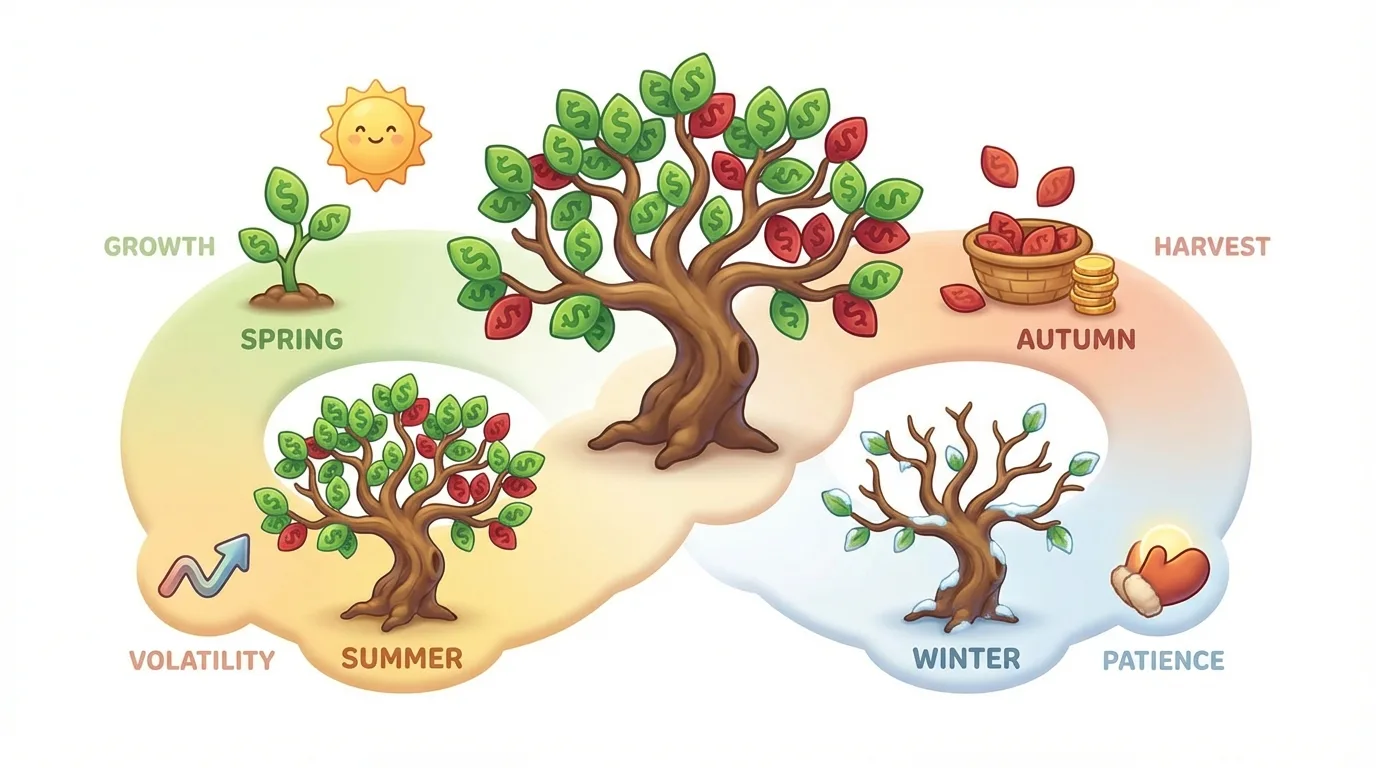
I was scrolling through a Nigerian forex forum in late 2023 when I saw the pitch for the hundredth time. 'Join Tradera Pro, learn the secrets, build your team.' The promise was a six-figure income in USD, all from your phone in Lagos or Port Harcourt. A week later, a guy I'd mentored messaged me, heartbroken. He'd paid the $99 monthly fee for three months, recruited two cousins, and was now down 450,000 Naira on the trades he'd copied from their 'head analyst.' His story isn't unique. Let's strip away the hype and look at what Tradera Forex really is, especially for a Nigerian trader navigating a market full of opportunity and peril.
Let's be clear from the start: Tradera Forex is not a broker. You cannot deposit Naira and trade EUR/USD directly with them. Tradera (Tradera.org, Tradera Pro) is a US-based online academy launched in 2019. They sell subscription access to forex and crypto education, trading signals, and market forecasts.
The core product is a membership that costs $99 every 28 days. For that, you get educational videos, webinars, and a stream of trade ideas. On the surface, that's not inherently evil. Education has value.
The critical twist, and the source of most controversy, is their business model: Multi-Level Marketing (MLM). This means your subscription fee isn't just for education, it's your buy-in to a system where you can earn commissions by recruiting other members. Your income potential becomes tied not just to your trading skill, but to your ability to build a downline. This creates an immediate conflict of interest. Is the primary goal to teach you to trade, or to turn you into a recruiter?

Warning: An MLM structure fundamentally changes the incentive. The company makes money from recurring subscriptions, not from your trading success. Their survival depends on member acquisition, not member profitability.
In Nigeria's vibrant but often speculative trading scene, this model finds fertile ground. The dream of passive income from recruitment can be more seductive than the hard graft of learning price action. I've seen traders focus more on their recruitment links than their MACD indicator settings.

💡 Winstons Tipp
A mentor should make themselves obsolete. If their business model requires your perpetual subscription, they're a vendor, not a teacher.
“The MLM aspect preys on specific socio-economic pressures in Nigeria.”
Let's do the math a Nigerian trader should do. $99 every 28 days. At an exchange rate of roughly 1,500 Naira to the dollar (as of early 2026), that's about 148,500 Naira per month. Over a year, you're committing nearly 1.8 million Naira.
For that money, what are you actually getting?
The Education: The content is often generic. You can find equally complete, if not better, structured courses on price action, risk management, and indicator use for a one-time fee or even free. The foundational knowledge needed for swing trading or understanding a pip definition is publicly available.
The Signals: This is the big sell. 'Follow our expert analysts.' Here's my firsthand experience with similar services: In 2020, I tracked a premium signal service for three months. Their win rate was a decent 62%. But their risk-reward was abysmal. They'd risk 50 pips to make 15. A string of two losses would wipe out the profits of ten wins. They never talked about position size. Without a position size calculator, you're flying blind, even with a 'winning' signal.
The Community: Access to a group can be valuable for morale. But an MLM community often becomes an echo chamber of positivity and recruitment talk, not critical trade analysis. Dissenting voices or questions about losing streaks get drowned out.
Compare this to the cost of a direct market access account with a broker like IC Markets. Your cost is the spread and commission, paid only when you trade. Your education can be curated from free, high-quality sources. The 1.8 million Naira you'd spend on Tradera in a year? That's a serious trading capital that, with proper management, could generate its own signals.

“Your first real investment is in your trading capital.”
This is where the rubber meets the road for most Tradera members. The MLM aspect preys on specific socio-economic pressures in Nigeria.
The Recruitment Pressure
Once you're in, the narrative subtly shifts from 'learn to trade' to 'build your team.' You're shown screenshots of recruitment bonuses that dwarf potential trading profits. For a young graduate facing unemployment or a civil servant with a stagnant salary, the allure is powerful. I've had clients admit they spent 70% of their time trying to recruit on WhatsApp and Instagram, and only 30% actually studying charts.
The problem? It turns trading, a skill-based profession, into a sales job. And it mathematically cannot work for everyone. For every person earning big recruitment bonuses, dozens at the bottom of the pyramid are just paying the monthly fee. Their $99 is funding the bonuses above them.
The Conflict with Actual Trading Psychology
Real trading requires discipline, patience, and the ability to accept loss. MLM culture is built on unshakeable optimism, 'hustle,' and portraying constant success. This creates psychological dissonance. When your trade hits a margin call, but your social feed needs to show you're a successful Tradera leader, you start hiding losses. You might even over-use to try and make a quick win to post about. It's a recipe for blowing up your account.
The Regulatory Gray Zone
Tradera, as an educational MLM, operates in a nebulous space in Nigeria. The SEC and CBN regulate brokers and securities, not necessarily educational subscription schemes. This lack of clear oversight means if you have a dispute about the service, your recourse is limited. Compare that to funding an account with XM, which operates under international regulators like the IFSC. There's a clearer complaints pathway.

Pro Tip: If an 'education' platform's income plan looks more complex than its trading plan, your alarm bells should be deafening. Your primary focus must be the chart, not a compensation matrix.
💡 Winstons Tipp
The most expensive education is the one you pay for monthly but never apply. Free knowledge applied with discipline beats premium knowledge consumed passively.

“Your goal for the first year is not to make money. Your goal is to not lose money.”
Let's talk about the actual, unavoidable costs of trading forex as a Nigerian. Forget subscription fees. Your real expenses are with your broker.
1. The Spread: This is the difference between the buy and sell price. It's how many brokers make money. On a major pair like EUR/USD, a good raw spread might be 0.1 pips. On a standard account, you might see 1.2 pips.
2. Commissions: Some brokers, especially ECN brokers, charge a commission per lot traded instead of (or in addition to) a wider spread. This is often more transparent.
Here’s a realistic comparison of where your money should go:
| Cost Type | Tradera Model | Traditional Broker Model |
|---|---|---|
| Monthly Access Fee | ~148,500 NGN ($99) | 0 NGN |
| Cost Per Trade | Not directly stated (but signals may lead to overtrading) | $4 - $8 per standard lot (Spread + Commission) |
| Primary Payout To | The company & upline recruiters | Your own trading account (on winning trades) |
| Profit Motive | Sell subscriptions & recruit | Execute profitable trades |
3. The Cost of Capital: This is the big one nobody talks about. The minimum deposit for many reputable international brokers can be as low as $100 (150,000 NGN). But to trade properly, without insane use, you need meaningful capital. Risking 1% per trade on a $100 account means your stop-loss is $1 - that's a few pips. It's not feasible. Your first real investment is in your trading capital.
4. The Cost of Education (The Right Way): Buy a few key books (maybe 20,000 NGN total). Use free YouTube courses from reputable educators (not signal sellers). Practice on a demo account for 6 months. This one-time or low-cost investment builds a foundation that a recurring subscription can't match.

“Your goal for the first year is not to make money. Your goal is to not lose money.”
So, if not Tradera, what should you do? Here’s a blunt, step-by-step guide that won’t cost you 1.8 million Naira a year.
Step 1: Choose a Regulated Broker, Not a Guru. Your first relationship is with your broker, not your educator. Prioritize brokers with strong international regulation. Exness and Pepperstone are popular for good reason - they are regulated by top-tier authorities. This protects your deposit. Open a demo account first. Get used to the platform.
Step 2: Learn the Basics for Free. Understand what a spread definition really means for your profitability. Learn one strategy deeply, like a simple scalping strategy based on support/resistance, instead of jumping between 10 indicator-based methods from a video library.
Step 3: Paper Trade with Extreme Discipline. Treat your demo account like real money. Use a position size calculator for every single trade. I don’t care if it’s ‘fake’ money. The habit is everything. My biggest early mistake was treating demo as a game. When I switched to live, my discipline vanished because I never built the muscle memory.
Step 4: Start Small with Live Capital. When you go live, start with an amount you can afford to lose. Not $99 a month for signals, but a single lump sum of capital you will trade. Your goal for the first year is not to make money. Your goal is to not lose money. To break even is a massive success. This mindset alone will put you ahead of 90% of traders, including those chasing signals.
Step 5: Analyze Your Own Trades, Not Theirs. Keep a journal. Every trade. Why did you enter? Where was your stop? Did you follow your plan? This self-analysis is worth more than 100 generic signal alerts. It forces you to confront your own psychology - the real battlefield.
💡 Winstons Tipp
Your trading capital is your army. Never siphon it off to pay for generals who won't be in the trench with you when the trade goes wrong.

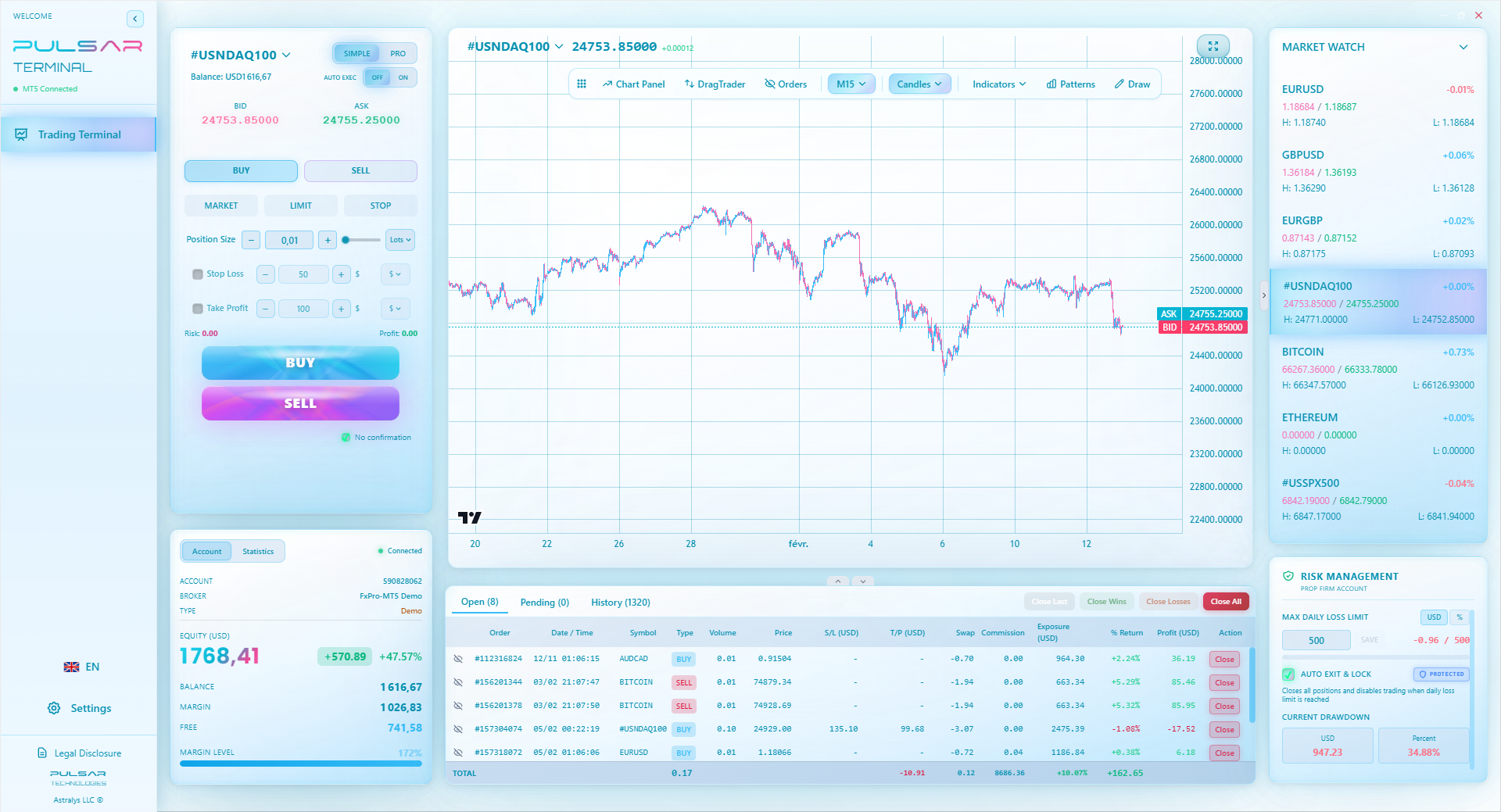
Executing your own trading plan with precision requires tools that don't distract you, which is why a clean, powerful terminal like Pulsar is essential for focused trading.
Pulsar Terminal
Das All-in-One MT5-Tool: Drag-and-Drop-Orders, Multi-TP/SL, Trailing Stop, Grid Trading, Volume Profile und Prop-Firm-Schutz. Täglich von 1.000+ Tradern genutzt.
“Build a skill, not a downline.”
Here's my straight opinion, based on 12 years of seeing these models come and go.
For the vast majority of Nigerian traders, Tradera Forex represents a costly distraction. The $99 monthly fee is a significant drain on capital that could be used for actual trading. The MLM component introduces toxic incentives that are diametrically opposed to the solitude and discipline required for trading success.
Could you theoretically ignore the recruitment side and just use the education? Maybe. But you're paying a premium price for material that is not unique. You're also buying into an environment designed to pull you toward recruitment. It's like trying to do homework in the middle of a loud party.
The recent developments in Nigeria's space - the rise of AI-generated scam ads, unlicensed platforms like Quotex, and the regulatory ambiguity - make it more critical than ever to keep things simple and direct. Your path should be: Regulated Broker → Personal Education → Disciplined Practice.
Invest your 148,500 Naira monthly into a savings plan until you have real trading capital. Invest your time into learning one instrument, like XAU/USD, inside and out. Build a skill, not a downline. In the long run, the market pays for skill. It has no pity for recruitment quotas.
I learned this the hard way early on, chasing a 'mentor' who charged a monthly fee. I was so focused on getting my money's worth from his signals that I never learned to see the market for myself. The day I canceled that subscription and faced the charts alone was the day my real education began.

FAQ
Q1Is Tradera Forex a scam?
It's not a classic 'send us your money and disappear' scam. It's a legitimate company selling a subscription service. The danger lies in its Multi-Level Marketing (MLM) structure, which can be exploitative. The high monthly fee for generic education, combined with pressure to recruit others, often leads traders to lose more money on subscriptions and poor signal-based trades than they ever make back.
Q2Can I make money with Tradera Forex signals in Nigeria?
It's possible, but highly unlikely and unsustainable. Following any signals without understanding the underlying strategy, risk management, and proper position sizing is gambling. Even if signals are occasionally profitable, the $99 monthly fee erodes your profits. Also,, network issues common in Nigeria can cause signal delays, leading to missed entries or worse, late exits on losing trades.
Q3What are the alternatives to Tradera Forex for learning?
Start with free resources. YouTube has reputable educators (focus on those teaching concepts, not selling signals). Read classic trading books from the library or online. Then, choose a regulated broker like IC Markets or Pepperstone and use their free demo account to practice. This approach builds self-reliance and costs a fraction of a single month's Tradera fee.
Q4Is the MLM part of Tradera illegal in Nigeria?
Multi-Level Marketing itself is not illegal in Nigeria. However, it operates in a regulatory gray area, especially when combined with financial education. The concern is that it blurs the line between a legitimate educational service and a pyramid scheme, where income depends more on recruiting new members than on the value of the core product (trading education).
Q5How much do I really need to start forex trading in Nigeria?
You can open an account with as little as $50-$100 with some international brokers. However, to trade seriously with sensible risk management, a more realistic starting capital is at least $500-$1000 (750,000 - 1,500,000 Naira). This allows you to risk 1% per trade ($5-$10) and place stop-losses at reasonable technical levels without being stopped out by normal market noise.
Q6Are Tradera's payments secure for Nigerians?
They likely use standard international payment gateways. The security risk isn't primarily about payment theft. The financial risk is the recurring $99 debit from your card or wallet every 28 days for a service that may not improve your trading outcomes. It's a continuous capital drain.
Prof. Winstons Lektion
Wichtige Erkenntnisse:
- ✓Tradera's $99/month fee costs ~1.8M NGN/year.
- ✓MLM incentives conflict with trading discipline.
- ✓Real cost is the broker's spread & commission.
- ✓Start with a regulated broker, not a guru.
- ✓Free education + demo practice is foundational.
Wie nützlich war dieser Artikel?
Klicken Sie auf einen Stern
Wöchentliche Trading-Einblicke
Kostenlose wöchentliche Analysen & Strategien. Kein Spam.
Über den Autor
Olumide Adeyemi
Pionier des Tradings in Westafrika
Einer der aktivsten Forex-Trading-Ausbilder Nigerias. 8 Jahre Trading-Erfahrung aus Lagos. Spezialisiert auf Strategien mit geringem Kapital und Prop-Firm-Challenges für afrikanische Trader.
Kommentare
Risikohinweis
Der Handel mit Finanzinstrumenten birgt erhebliche Risiken und ist möglicherweise nicht für alle Anleger geeignet. Vergangene Ergebnisse garantieren keine zukünftigen Renditen. Dieser Inhalt dient ausschließlich Bildungszwecken und stellt keine Anlageberatung dar. Führen Sie immer Ihre eigene Recherche durch, bevor Sie handeln.
Das könnte Sie auch interessieren

Cara Trading Forex Sukses: 7 Prinsip dari Trader Profesional
Cara trading forex sukses dengan 7 prinsip trader pro: manajemen modal, disiplin, journal trading, backtest. Data nyata, bukan janji profit palsu.
Jam Trading Forex Terbaik untuk Trader Indonesia: Panduan Lengkap dengan Tabel Waktu
Panduan jam trading forex untuk trader Indonesia. Tabel 4 sesi dunia, jam emas 20:00-00:00, sesi mana yang harus dihindari. Data akurat + tips dari trader berpengalaman.
Top 5 Sàn Forex Uy Tín Nhất 2026: Review Jujur dari Trader Indonesia
Top 5 sàn forex uy tín 2026 untuk trader Indonesia. Review jujur: spread, deposit, withdraw, dukungan lokal. Exness, XM, IC Markets & lebih.
Pulsar Terminal herunterladen
Alle diese Rechner sind in Pulsar Terminal mit Echtzeit-Daten Ihres MT5-Kontos integriert.
Pulsar Terminal herunterladen