


Let's cut through the noise.

David van der Merwe
Emerging Markets Trader ·  South Africa
☕ 10 min read
What you'll learn:
- 1What Exactly is a Forex Affiliate? (It's Not What You Think)
- 2The South African Reality: Rand, Regulations, and Referrals
- 3How Affiliates *Actually* Make Money (The Playbook)
- 4Forget the Hype: Let's Calculate Real Earnings
- 5Red Flags: How to Spot a Shady Affiliate (As a Trader)
- 6If You Still Want to Try: The (More) Ethical Path
- 7The Final Verdict: Should You Get Involved?
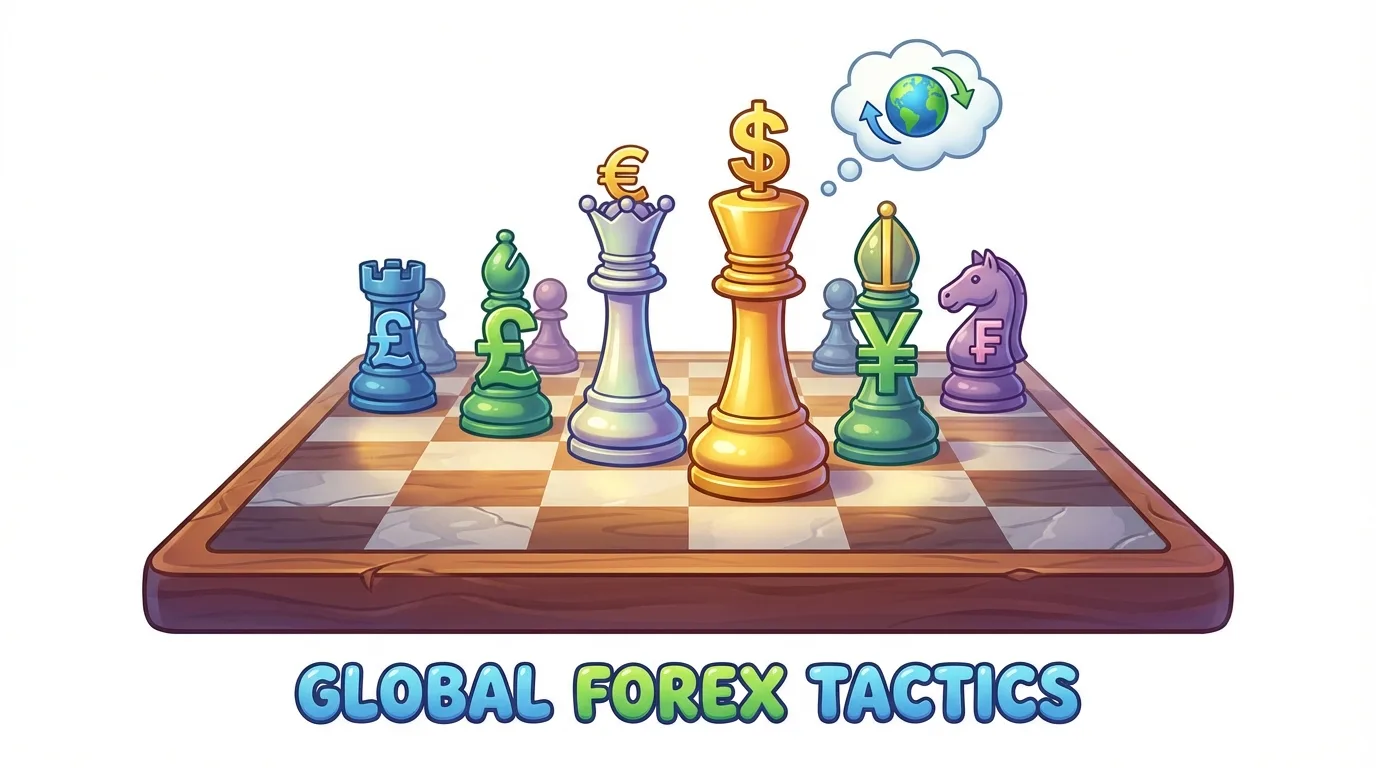
Let's cut through the noise. You've seen the ads: 'Earn R50,000 a month from home as a forex affiliate!' It paints a picture of easy money, just for sharing a broker link. Having been on both sides of this fence - as a trader and someone who's looked into these programs - I can tell you the reality is a lot more complicated, and frankly, a bit grimy. Most guides are written by the affiliates themselves, so they're basically sales pitches. I'm here to give you the trader's perspective on afiliados forex in South Africa: what's legit, what's a scam, and how it actually impacts you and the people you might refer.
At its core, a forex affiliate is a promoter. You sign up for a broker's program (like those offered by Exness, IC Markets, or XM), get a unique referral link, and earn a commission when someone uses your link to open an account and trade. Sounds simple, right? Here's the twist that changes everything.
There are two main commission models, and your ethics as a promoter hinge on which one you choose. The first is a Cost Per Acquisition (CPA). You get a flat fee, say R800 or $50, once your referral makes their first deposit. Your job is done. The second, and far more common, is Revenue Share. This is where it gets murky. You earn a percentage of the spread or fees generated by your referral's trading activity - for the lifetime of their account. Think about that. Your income is directly tied to their trading volume and, crucially, their losses.

Warning: The Revenue Share model creates a perverse incentive. The more your referral trades (and potentially loses), the more you earn. This is the dirty secret of many afiliados forex programs. It's why you see so many 'gurus' pushing high-frequency scalping strategies to newbies - it generates massive spread volume, lining the affiliate's pocket while the trader bleeds out.
I learned this the hard way early on. I referred a friend to a platform, lured by the 'lifetime revenue' promise. He deposited R5,000, got overconfident, and blew the account in two weeks trading gold (XAU/USD) with huge use. I made about R420 in commission from his frantic trading. He lost R5,000. Our friendship hasn't been the same since. That was the last time I ever promoted a revenue-share link without full, brutal disclosure.

💡 Winston's Tip
An affiliate's first loyalty is to their commission, not your P&L. Always vet a broker independently, never just click a link.
Trying to run an afiliados forex business from South Africa comes with its own set of local challenges. First, the currency. Most international brokers pay commissions in USD or EUR. That means your earnings are subject to exchange rate fluctuations. A nice $1,000 commission could be R18,500 one month and R17,200 the next when it hits your Standard Bank account. You have to factor this volatility into your income projections.
Then there's regulation. The Financial Sector Conduct Authority (FSCA) is cracking down on unlicensed financial services promotion. While simply sharing an affiliate link might fly under the radar, if you're presenting yourself as an expert, running paid signals groups, or giving investment advice to get referrals, you could be stepping into illegal territory. You're not just a blogger anymore; you're a financial promoter.
The Tax Man Cometh
This is the big one everyone forgets. That affiliate income is not free money. In the eyes of SARS, it's taxable income. You need to declare it on your annual return. If it becomes a significant side hustle, you might need to register as a provisional taxpayer. I know a guy in Cape Town who got a nasty surprise audit because his affiliate income from Pepperstone paid for a fancy car, but he never declared it. The penalties and back-taxes were brutal.

Pro Tip: Open a separate, high-interest savings account (like a TymeBank GoalSave) just for your affiliate earnings. Immediately move 25-30% of every commission payment into it. That's your tax money. Don't touch it. This one habit will save you a world of financial stress come tax season.
“Your income is directly tied to their trading volume and, crucially, their losses.”
Forget the 'build a website and wait' fantasy. The successful afiliados forex in SA use aggressive, multi-channel tactics. Here’s the real playbook:
- Content & SEO: They create 'review' sites ranking for terms like 'best forex broker South Africa'. These reviews are almost always biased towards their highest-paying affiliate programs, not the best brokers for traders. They'll use demo accounts to create 'proof' of profits.
- Social Media & YouTube: This is the big one. Flashy car thumbnails, screenshots of 'profit' statements (often from demo or prop firm accounts), and promises of easy wealth. They offer 'free' webinars that are 90-minute sales pitches for their broker link and a paid course. They often use RSI indicator or MACD indicator crossovers as their 'secret strategy' to seem legitimate.
- Prop Firm Links: A huge growth area. They partner with proprietary trading firms. You use their link to pay for a $100,000 challenge. If you pass and get a funded account, they get a cut of your fee. If you blow the account (which over 90% do), they still got their commission from your challenge fee. It's a win-win for them, a often-lose for you.
Here’s a brutal comparison of what they sell vs. reality:
| What They Promise | The Likely Reality for the Referred Trader |
|---|---|
| "Copy my trades for 80% win rate!" | The trades are posted after they happen (cherry-picked) or are on a demo account. You follow real-time and get stopped out. |
| "This broker has the lowest spreads!" | They're pushing the broker that pays the highest rev-share, not the one with the best execution. A wider spread means more commission for them. |
| "My strategy works on any pair!" | A vague strategy that encourages over-trading to generate commissionable volume. |
The key takeaway? An affiliate's primary customer is the broker paying them, not the trader following them. Their loyalty is to the commission, not your success.
Let's get practical and pessimistic, which is the only safe way to model this. Say you manage to refer a relatively cautious retail trader in Johannesburg.
- Broker: A typical international broker offering 30% revenue share on spreads.
- Trader Deposit: R20,000
- Average Trade Size: 0.5 lots (a $5 per pip move on EUR/USD)
- Monthly Trading Volume: 20 trades (this is low for an active retail trader)
- Average Spread Cost: 1.2 pips on EUR/USD

Example: Calculation per trade: 0.5 lots * $5 per pip * 1.2 pips = $3 spread cost for the trader. Broker's revenue from that trade is $3. Your 30% share is $0.90.
For 20 trades a month: 20 * $0.90 = $18. At an exchange rate of R18.5/$, that's R333 per month, per active trader.
To make that advertised R50,000 a month? You'd need 150 actively trading referred clients each doing that volume. And that's assuming none of them blow up their accounts, go on vacation, or switch to swing trading with one trade a week. The math shows why the hype is so extreme - they need you to believe in an impossible outcome so you'll sign up under them and become their source of revenue.
My own foray into this saw me spend 6 months building a small trading education blog. I referred 11 people. Only 3 made a deposit. One traded for 3 months. My total earnings after 6 months of work? $127. About R2,300. Hardly a life-changing side hustle.
💡 Winston's Tip
If 25% of your affiliate income isn't sitting in a separate savings account for SARS, you're not running a business, you're courting a headache.
“To make R50,000 a month as an affiliate, you'd need 150 actively trading referred clients who never blow up.”
As a trader in SA, you need to protect yourself from being someone else's commission cow. Here are the dead giveaways:
- The 'Bentley in the Thumbnail' Guy: If their primary marketing is wealth flaunting, they're selling a dream, not a service. Real traders are focused on charts, not car rentals.
- No Real Name or Face: Anonymous 'experts' with no verifiable trading history. If they won't stand behind their advice with their identity, run.
- Pressure to Use a Specific Broker: A true educator teaches concepts that work on any platform. If they're obsessed with you using their link to one particular broker, their allegiance is clear.
- Overcomplication for Newbies: Pushing brand-new traders towards complex strategies or prop firms with high failure rates. It's about generating activity, not building skill. They want you trading, not necessarily winning.
- No Talk of Risk Management: This is the biggest one. If their content is all about entries and never about position size, stop losses, or margin calls, they are dangerously irresponsible. Your loss is their gain in a revenue-share model.
I fell for a few of these early in my career. One 'mentor' had me opening 5-10 trades a day on a tiny account to 'practice'. I now realize he was just maximizing his spread revenue from my inevitable losses. My account was a snack for him.
If you're evaluating trading educators, look for those who use professional tools for clear risk management, like setting multi-level take-profits and stop-losses—features that Pulsar Terminal provides directly on your MT5 chart.
Pulsar Terminal
The all-in-one MT5 companion: drag-and-drop orders, multi-TP/SL, trailing stop, grid trading, Volume Profile, and prop firm protection. Used by 1,000+ traders daily.

Look, I'm not saying all affiliate marketing is evil. If you have a genuine audience and want to monetize it, there are ways to do it with less conflict of interest.
- Promote CPA-Only Programs: Actively seek out brokers that offer a flat fee for a verified deposit. Your incentive is to get them to try the platform, not to trade themselves into the ground. Your job ends when they deposit. This aligns your goal (a happy new user) with theirs (starting to trade).
- Be Brutally Transparent: Disclose your affiliate relationship in bold text at the top of every page, every video description, every post. Say 'I earn a fee if you sign up here.' It's the law in many places, and it's just honest.
- Promote Tools, Not Just Brokers: Consider promoting educational resources, books, or trading software. The conflict is lower. For instance, promoting a good position size calculator helps people avoid blowing accounts, which is good for everyone.
- Focus on Real Value First: Build an audience by solving real problems for traders. Talk about managing psychology, how to backtest, how to read economic calendars. Become a trusted resource first. The monetization can come later, and your audience will trust your recommendations.
The core principle is this: align your success with the success of the person you're referring. If they succeed and become long-term traders, you should benefit. If they fail quickly, you should not. That's the only sustainable model.
💡 Winston's Tip
The most valuable thing you can promote is risk management. Anyone pushing entries without stops is farming you for spread revenue.

“The core principle is this: align your success with the success of the person you're referring.”
As a trader looking for extra income? Tread very, very carefully. The market is saturated, the ethical pitfalls are deep, and the real earnings for most are a tiny fraction of the hype. The mental energy you'll spend marketing could be spent refining your own trading edge, which has a much higher potential payoff.
As a trader evaluating a 'guru'? Be supremely skeptical. Use the red flags above. Assume anyone heavily promoting a specific broker link has a vested interest in your trading volume, not your profitability. Do your own broker research independently.
The world of afiliados forex is built on a fundamental misalignment. For the vast majority of South Africans looking at it, the dream of easy money is just that - a dream. The real money in forex is still made the hard way: on the charts, through discipline, risk management, and a solid strategy. Focus your energy there. Let the affiliates fight over the scraps from the tables of losing traders. Don't be the scrap, and don't kill yourself trying to collect them.
FAQ
Q1Is being a forex affiliate legal in South Africa?
Yes, but with major caveats. Simply sharing a referral link is generally legal. However, if you present yourself as a financial advisor, give trading advice, or run a signals service without an FSCA license, you are breaking the law. The legal risk increases with the level of 'financial advice' you appear to give to get referrals.
Q2How much can I realistically earn as a forex affiliate in South Africa?
For most people, very little. Our calculation showed about R333 per month per actively trading client. To earn a substantial side income (e.g., R10k/month), you'd need a large, consistently active referred client base of 30+ traders, which requires massive audience reach and constant marketing. Most affiliates earn sporadic small amounts in USD, which then gets whittled down by exchange rates and taxes.
Q3What's the difference between CPA and Revenue Share?
CPA (Cost Per Acquisition) pays you a one-time flat fee when someone you refer makes a deposit. Your relationship ends there. Revenue Share pays you a ongoing percentage of the trading costs (spreads/fees) generated by your referral. CPA is more ethical as your goal is a deposit. Revenue Share ties your income to their trading activity, which can incentivize you to encourage excessive trading.
Q4Do I pay tax on forex affiliate earnings in South Africa?
Absolutely, yes. SARS views this as ordinary income. You must declare it on your annual tax return (ITR12). If your total annual income from all sources exceeds the tax threshold (around R95,750 for 2024/25), you will pay tax on it. Keep careful records of all payments in USD/ZAR.
Q5As a trader, how do I know if a review site is a genuine review or just an affiliate?
Look for clear, upfront disclosure statements like "We may earn a commission if you sign up through our links." Be wary of sites that only 'review' brokers with affiliate programs, or that rank the highest-paying broker as the 'best'. Genuine reviewers will discuss pros AND cons, including brokers that don't have affiliate programs. If every link is an affiliate link, assume the content is biased.
Q6Can I promote prop firm challenges as an affiliate?
Yes, this is very common. However, understand the dynamic: you earn a commission when someone pays for a challenge using your link. Since the vast majority of traders fail these challenges, you are primarily earning from their failure fees. It's a profitable model for the affiliate, but a tough one to promote with a clear conscience unless you are supremely confident in your audience's skill level.
Prof. Winston's Lesson
Key Takeaways:
- ✓Revenue Share affiliates profit from your trading volume, not your profits.
- ✓Realistic earnings are ~R333/month per active trader, not R50k.
- ✓Always disclose affiliate links. It's the law and it's honest.
- ✓Promote CPA models, not Revenue Share, for ethical alignment.
- ✓SARS will tax your affiliate income. Set aside 25% immediately.
How useful was this article?
Click a star to rate
Weekly Trading Insights
Free weekly analysis & strategies. No spam.
About the Author
David van der Merwe
Emerging Markets Trader
Johannesburg-based trader with 11 years in emerging market currencies. Specializes in ZAR pairs, FSCA-regulated trading, and South African market analysis.
Comments
Risk Disclaimer
Trading financial instruments carries significant risk and may not be suitable for all investors. Past performance does not guarantee future results. This content is for educational purposes only and should not be considered investment advice. Always conduct your own research before trading.
You Might Also Like

Cara Trading Forex Sukses: 7 Prinsip dari Trader Profesional
Cara trading forex sukses dengan 7 prinsip trader pro: manajemen modal, disiplin, journal trading, backtest. Data nyata, bukan janji profit palsu.
Jam Trading Forex Terbaik untuk Trader Indonesia: Panduan Lengkap dengan Tabel Waktu
Panduan jam trading forex untuk trader Indonesia. Tabel 4 sesi dunia, jam emas 20:00-00:00, sesi mana yang harus dihindari. Data akurat + tips dari trader berpengalaman.
Top 5 Sàn Forex Uy Tín Nhất 2026: Review Jujur dari Trader Indonesia
Top 5 sàn forex uy tín 2026 untuk trader Indonesia. Review jujur: spread, deposit, withdraw, dukungan lokal. Exness, XM, IC Markets & lebih.
Get Pulsar Terminal
All these calculators are built into Pulsar Terminal with real-time data from your MT5 account. One-click position sizing, automatic risk management, and instant calculations.
Get Pulsar Terminal