


I lost ₦450,000 in a single week back in 2017.

Olumide Adeyemi
West African Trading Pioneer ·  Nigeria
☕ 10 min read
What you'll learn:
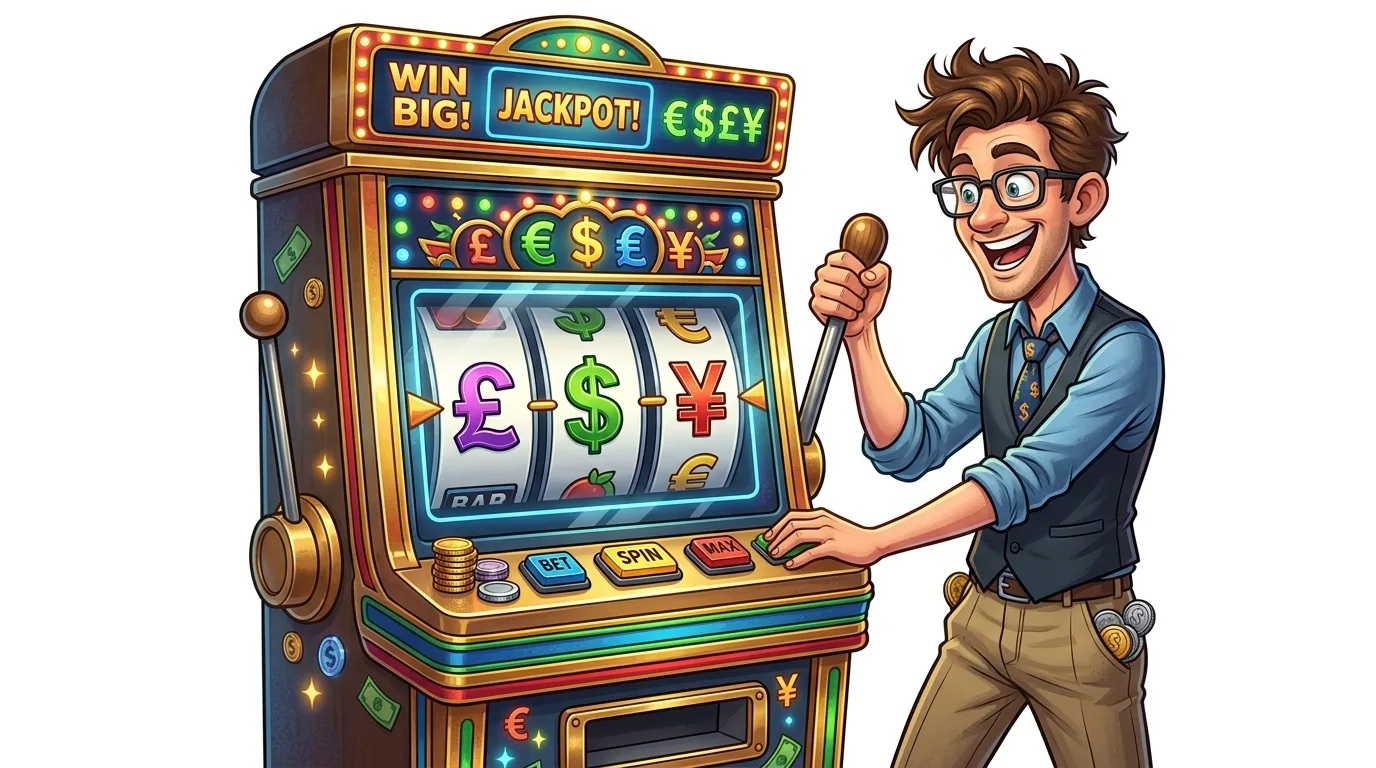
I lost ₦450,000 in a single week back in 2017. I'd just watched a 'masterclass' from a popular Nigerian 'guru' who promised a 'surefire' strategy. I followed his signals blindly, pouring money into EUR/USD trades that went nowhere but south. The guru was driving a new Range Rover in his videos. I was left staring at a blown account, wondering what 'best' really meant. That painful lesson cost me a lot of naira, but it taught me the only definition of the best forex trader in Nigeria that matters: it's the disciplined, self-reliant trader you become.
Let's be real. The idea of the 'best forex trader in Nigeria' is often sold as a person. A celebrity. Someone with flashy cars, a massive Instagram following, and a course to sell you. This is a trap, and it's particularly sticky here. Our culture respects success and visible wealth, which makes us prime targets for this marketing.
I fell for it. You probably know the names. The 'prophet of forex' or the 'young millionaire trader.' Their stories are compelling, but they're almost always incomplete. They never show the 100 students who lost money following their 'one simple trick.' They don't talk about the use that can turn a ₦50,000 account to dust before you can say 'margin call.'
The real work isn't about finding that person. It's about avoiding the distraction. The market doesn't care who you follow. A bad trade taken on a guru's signal hurts just as much as one you found yourself. Your goal isn't to find the best trader; it's to build the best trading process for yourself.

Warning: Any 'trader' whose primary product is their lifestyle, rather than a transparent, verifiable track record, is likely selling a dream, not a skill. If they're more focused on their watch than their win rate, run.
This shift is crucial. Instead of asking 'Who is the best?' start asking 'What does the best do?' What time do they wake up? How do they review their trades? How do they manage risk on a bad day? This turns an impossible search for a person into a practical blueprint for improvement.

💡 Winston's Tip
A guru's Lamborghini is funded by selling dreams, not by trading. Your ₦10,000 stop loss funds their lifestyle. Keep your money and your dignity.

“The market doesn't care who you follow. A bad trade taken on a guru's signal hurts just as much as one you found yourself.”
Forget the Lamborghinis. The hallmarks of a truly proficient trader are quiet, consistent, and frankly, a bit boring. After 12 years and mentoring dozens of Nigerian traders, the pattern is clear.
The Foundation: Risk Management
This is non-negotiable. The best traders I know risk between 0.5% and 2% of their capital on any single trade. Not 5%, not 10%. I use a strict 1% rule. On a ₦500,000 account, that's ₦5,000 maximum risk per trade. This isn't a suggestion; it's the bedrock. It's what lets you sleep at night when the market is volatile. A proper position size calculator is your best friend here.
Consistency Over Home Runs
They don't chase 1000-pip winners. They aim for a consistent 2:1 or 3:1 reward-to-risk ratio on their setups. A trade where they might make ₦15,000 but only risk ₦5,000. They string these together, month after month. Their profit charts look like a gentle slope upwards, not a heart-attack-inducing rollercoaster.
They Have a Written Plan
Not in their head. On paper or in a journal. It answers: What pairs do I trade? (Many stick to just 2-3, like EUR/USD or XAU/USD). What's my entry trigger? Where is my stop loss? Where is my take profit? What's my daily loss limit? They follow this plan like a robot, removing emotion.

The 'best' aren't magicians. They are disciplined accountants of their own capital. Their edge isn't a secret indicator; it's their unshakeable process.

“The hallmarks of a truly proficient trader are quiet, consistent, and frankly, a bit boring.”
So how do you, sitting in Lagos, Port Harcourt, or Abuja, build this? You start with the realities of trading from Nigeria.
Choose Your Battlefield (The Broker)
This is critical. You need a broker that accepts Nigerian clients, offers local payment methods like bank transfer or debit cards, and has a solid reputation. I've used many. Some are great, some are terrible. Do your homework. Look for brokers with clear regulations (not just 'registered in an offshore island'), tight spreads on the majors, and reliable customer support. I've had good execution experiences with brokers like Exness and IC Markets for their raw spreads, and XM for their educational resources when starting out.
Master Your Tools
Pick one charting platform and learn it inside out. For most, that's MetaTrader 4 or 5. Don't collect 50 indicators. Master 2 or 3. I built my entire early career on just price action, the MACD, and support/resistance lines. Understand what a pip truly costs on your account size. Know how use can amplify both gains and losses instantly.
Start with a Micro Account
Your first goal is not to make a million naira. Your first goal is to survive for 3 months without blowing up. Start with a micro account where 1 pip might be worth ₦50, not ₦5000. This is your training ground. Practice your plan. Get used to the feeling of wins and losses without catastrophic financial consequences. This phase is where you learn more than any guru can teach you.
💡 Winston's Tip
Your first profitable month should be boring. If it's exciting, you're risking too much. Aim for the thrill of consistency, not the adrenaline of a gamble.

“The hallmarks of a truly proficient trader are quiet, consistent, and frankly, a bit boring.”
Let me strip away the mystery with some real, messy numbers from my own ledger. This is what the path actually looked like.
The Blow-Up (2017): As I mentioned, I lost ₦450,000 in a week chasing guru signals. Account balance: nearly zero. Lesson learned: I am responsible for my own trades.
The Rebuild (2018): I funded a new account with ₦100,000. I committed to my 1% risk rule. My first profitable month? I made ₦8,500. It felt like a fortune because it was consistent. I used a simple swing trading strategy on AUD/USD, holding trades for 2-4 days.
The Breakthrough Trade (2019): This one is etched in my memory. I went long on USD/JPY at 108.50 based on a weekly support level and a bullish divergence on the daily MACD. My stop was at 107.90 (60 pips, risking ₦6,000). I held for two weeks as it grinded up. I took partial profits at 109.50 and 110.00, and closed the final position at 110.80. Total gain: 230 pips. Net profit: ₦23,000 on that single trade series. It wasn't flashy, but it was a textbook execution of my plan.
The Humbling Lesson (2021): Even with experience, you get humbled. I got overconfident during a news event on the GBP. I widened my stop 'just this once' because I was 'sure' it would come back. It didn't. I took a ₦15,000 loss on a trade that should have been a ₦5,000 loss. I violated my rule, and the market fined me for it. It reinforced that the rules are there for a reason.
The journey isn't a straight line up. It's a jagged line of lessons paid for in naira and time. Every serious trader has a similar chart.

“Your first goal is not to make a million naira. Your first goal is to survive for 3 months without blowing up.”
Enough theory. Here's what you do this week.
- Open a Demo Account: Don't deposit real money yet. Go to a broker like Pepperstone or IC Markets and open a demo. Practice with virtual ₦5,000,000. Get bored with winning. Learn how to lose properly.
- Define ONE Strategy: Pick one market (e.g., EUR/USD) and one simple strategy. Maybe it's trading bounces off the 100 EMA on the 1-hour chart. Test only that for a month on demo. Record every trade in a journal - why you entered, where your stop was, the outcome.
- Calculate Your Reality: If you plan to start with ₦200,000, and you risk 1% per trade, your max risk is ₦2,000. If your typical stop loss is 20 pips, then each pip can only be worth ₦100. That determines your position size. This math is sacred.
- Find a Community, Not a Guru: Look for a group of serious Nigerian traders who discuss charts, not cars. A place where people post their losing trades for review, not just their wins. This accountability is gold.
- Schedule Your Trading: Treat it like a job. Maybe you analyze charts for 30 minutes before the London open at 8 AM Nigerian time. You don't need to be glued to the screen all day. In fact, you shouldn't be.

Pro Tip: Your first real-money account should be an amount you are 100% willing to lose completely. If losing ₦50,000 would affect your rent or family, it's too much. Start smaller. Survival is the first skill to master.
💡 Winston's Tip
The most important line on your chart isn't a trendline. It's the horizontal line marking your daily loss limit. Respect it more than any support level.
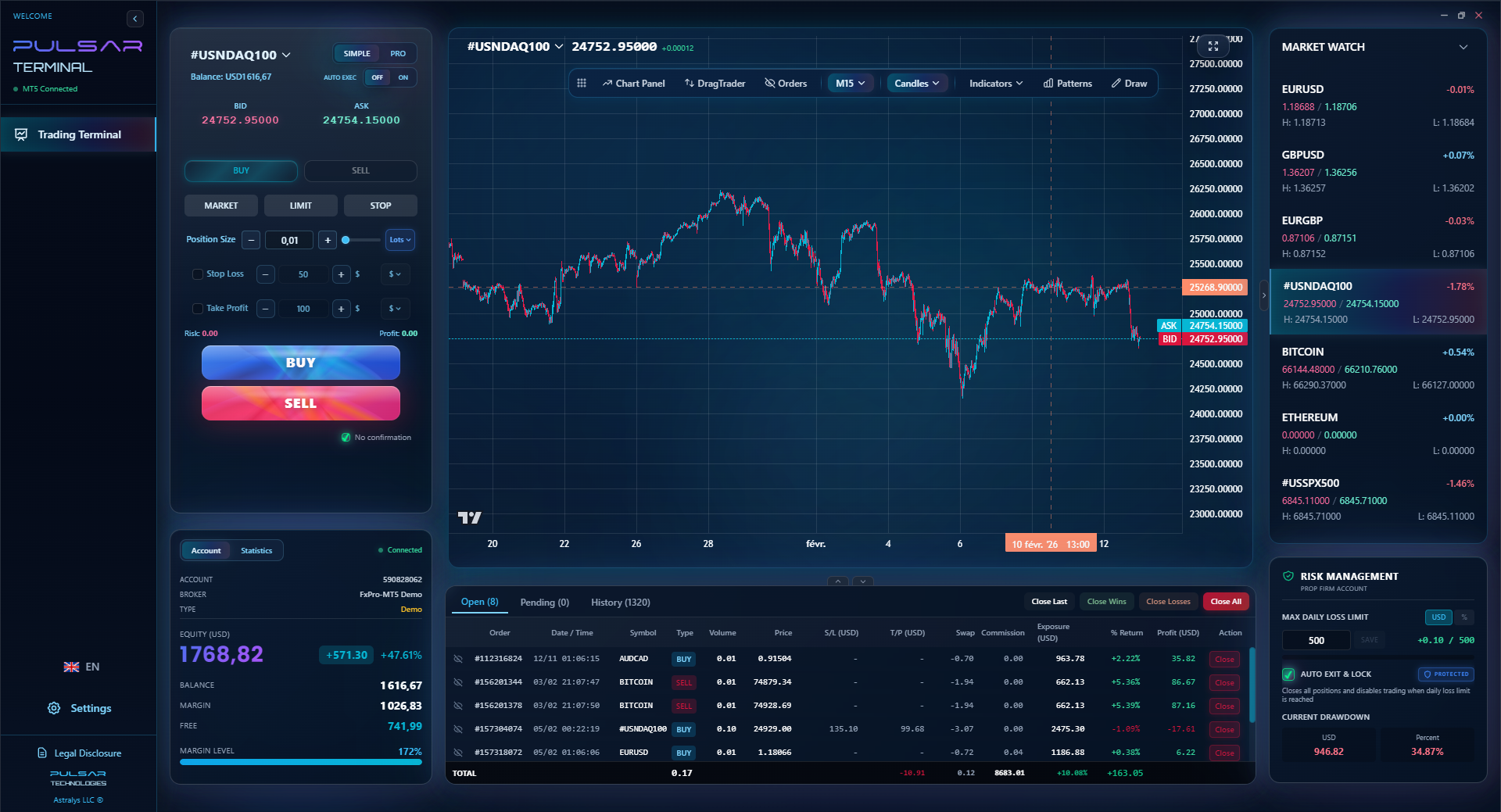
Executing a disciplined plan requires precise tools, and Pulsar Terminal's drag-and-drop orders and automated multi-take-profit levels help you stick to your strategy without emotional interference.
Pulsar Terminal
The all-in-one MT5 companion: drag-and-drop orders, multi-TP/SL, trailing stop, grid trading, Volume Profile, and prop firm protection. Used by 1,000+ traders daily.
“Your first goal is not to make a million naira. Your first goal is to survive for 3 months without blowing up.”
As you navigate this space, here's a quick guide to what to avoid and what to embrace.
| Red Flags (Avoid This) | Green Lights (Seek This) |
|---|---|
| 'Guaranteed' profits or daily signals. | Education on how to read price action and manage risk. |
| Pressure to deposit large amounts quickly. | Encouragement to start small on a demo or micro account. |
| The trader is the main product (courses, seminars). | The trader's transparent track record (via myfxbook, etc.) is the product. |
| Complex strategies with 10+ indicators. | Simple, rules-based strategies you can explain in one sentence. |
| No discussion of stop losses or risk. | Relentless focus on risk-reward ratios and position sizing. |
| Vague answers about broker choice. | Clear guidance on broker regulation, spreads, and withdrawal processes for Nigerians. |
The green light path is less sexy. It doesn't promise a shortcut. It promises hard work, discipline, and gradual growth. But it's the only path that leads to sustainable trading. The fear of a margin call keeps you honest on this path.
“Stop looking for the best forex trader in Nigeria. Start building them.”
I'll leave you with this. After my big loss, I spent a year on a demo account. I traded every day, following my new, boring rules. I didn't make a single real naira that year. But I built the foundation that has supported my trading for the last decade.
The best forex trader in Nigeria isn't a person you send a registration fee to. He or she isn't in a viral video. The best trader is the one you see in the mirror after you've done your market analysis, placed your trade with a calculated stop loss, and walked away from the screen to let the market work.
That trader is calm. That trader is in control. That trader has a plan for both profit and loss. That trader understands that today's trade is just one of hundreds they will take this year. That's the trader you need to become. Stop looking for the best forex trader in Nigeria. Start building them, one disciplined trade at a time. The market is waiting, and it treats everyone the same - it rewards process, not personality.

FAQ
Q1Who is the number 1 forex trader in Nigeria?
There is no official 'number 1.' Any list is subjective and often driven by marketing, not verified track records. Focusing on finding this person is a distraction. Your energy is better spent becoming the most disciplined version of yourself as a trader.
Q2Can I really make money trading forex in Nigeria?
Yes, absolutely. But it's a skilled profession, not a lottery. You can make money just as you can make money being a lawyer or engineer - through dedicated study, practice, and disciplined execution. Many Nigerians do, but many more lose because they approach it as a get-rich-quick scheme.
Q3How much do I need to start forex trading in Nigeria?
You can start with as little as ₦20,000 - ₦50,000 on a micro account with a reputable broker. However, the amount is less important than the percentage you risk. Starting with a small, risk-capital amount you can afford to lose completely is far smarter than starting with your life savings.
Q4Is forex trading legal in Nigeria?
Trading forex with international brokers is a common activity. The Central Bank of Nigeria (CBN) has regulations on banks and BDCs, but individuals trading online with foreign brokers operate in a grey area. The key is to use reputable, internationally regulated brokers that accept Nigerian clients and offer secure deposit/withdrawal methods.
Q5What is the best strategy for a beginner in Nigeria?
The best strategy is a simple one you can consistently follow. Start with price action on a single major pair like EUR/USD. Learn to identify clear support and resistance levels, and practice trading bounces or breaks from those levels on a 1-hour or 4-hour chart. Master risk management first - this is more important than any entry technique.
Q6How do I avoid forex scams in Nigeria?
Avoid anyone promising guaranteed profits or asking for direct management of your funds. Never send money to a personal Nigerian bank account for 'trading.' Only deposit directly into your account with a licensed, transparent international broker. If an offer sounds too good to be true (e.g., 'double your money in a month'), it is.
Prof. Winston's Lesson
Key Takeaways:
- ✓Risk 1% per trade, no exceptions.
- ✓A written plan beats a guru's signal every time.
- ✓Demo trade for 3 months minimum.
- ✓Profit is a byproduct of discipline, not genius.
How useful was this article?
Click a star to rate
Weekly Trading Insights
Free weekly analysis & strategies. No spam.
About the Author
Olumide Adeyemi
West African Trading Pioneer
One of Nigeria's most active forex trading educators. 8 years of experience trading from Lagos. Specializes in low-capital strategies and prop firm challenges for African traders.
Comments
Risk Disclaimer
Trading financial instruments carries significant risk and may not be suitable for all investors. Past performance does not guarantee future results. This content is for educational purposes only and should not be considered investment advice. Always conduct your own research before trading.
You Might Also Like

Cara Trading Forex Sukses: 7 Prinsip dari Trader Profesional
Cara trading forex sukses dengan 7 prinsip trader pro: manajemen modal, disiplin, journal trading, backtest. Data nyata, bukan janji profit palsu.
Jam Trading Forex Terbaik untuk Trader Indonesia: Panduan Lengkap dengan Tabel Waktu
Panduan jam trading forex untuk trader Indonesia. Tabel 4 sesi dunia, jam emas 20:00-00:00, sesi mana yang harus dihindari. Data akurat + tips dari trader berpengalaman.
Top 5 Sàn Forex Uy Tín Nhất 2026: Review Jujur dari Trader Indonesia
Top 5 sàn forex uy tín 2026 untuk trader Indonesia. Review jujur: spread, deposit, withdraw, dukungan lokal. Exness, XM, IC Markets & lebih.
Get Pulsar Terminal
All these calculators are built into Pulsar Terminal with real-time data from your MT5 account. One-click position sizing, automatic risk management, and instant calculations.
Get Pulsar Terminal