


I remember staring at the USD/INR chart on October 19, 2023, watching it break through 83.20.

Rajesh Sharma
Senior Forex Analyst ·  India
India
☕ 11 min read
What you'll learn:
- 1Why Books Matter in Our Regulated Market
- 2The Mindset Foundation: Books That Build Mental Toughness
- 3Market Mechanics & Risk Management: The Unsexy Essentials
- 4Technical Analysis & Price Action: Reading the Charts
- 5One Specialized Masterpiece for the Disciplined
- 6What to Avoid in the Indian Context
- 7Building Your Trading Library & Next Steps

I remember staring at the USD/INR chart on October 19, 2023, watching it break through 83.20. My heart was pounding - I had a short position from 83.15, convinced the RBI would intervene. The books I'd read talked about 'central bank psychology,' but none mentioned the specific, gut-wrenching tension of trading the rupee when you know the central bank might step in at any moment. That trade taught me more than any chapter ever could, but the right books gave me the framework to survive it. Let's talk about the ones that actually matter for us trading in India.
Here's the uncomfortable truth most gurus won't tell you: 90% of the trading advice in popular forex books is useless for Indian retail traders. Why? Because they're written for traders who can access EUR/USD, GBP/JPY, and 50:1 use. We're playing a completely different game with only four pairs (USD/INR, EUR/INR, GBP/INR, JPY/INR) and use capped at 1:20 by SEBI.
But that doesn't mean books are worthless. It means you need to read differently. You're not looking for a magic strategy for EUR/USD. You're looking for universal principles: risk management psychology, how to read order flow, understanding market structure. These concepts translate directly to our NSE currency derivatives.
I made this mistake early on. I devoured a popular book on forex scalping, tried to apply its 5-minute chart patterns to USD/INR futures, and blew up 15% of my account in a week. The spreads were wider (3.5 pips vs. 0.8 for EUR/USD), the liquidity at those times was thin, and the patterns just didn't behave the same way. The book wasn't wrong; it was written for a different market. You need books that teach you how to think, not what to think.

Warning: If a book's examples are all EUR/USD with tight spreads and high use, be very careful applying it directly to USD/INR. The market mechanics are different. Always test concepts in a demo account that simulates our local spreads and liquidity.
The best forex trading books for us are the ones that focus on the timeless aspects of trading. Market psychology is the same in Mumbai as it is in London. Greed and fear don't care about your nationality. A solid understanding of position sizing (check our position size calculator) is critical when your use is limited. That's what you're hunting for.
“90% of the trading advice in popular forex books is useless for Indian retail traders. We're playing a completely different game.”
Trading in the Ruins of Your Own Mistakes
My single biggest loss was 8% of my capital on a single GBP/INR trade in 2021. I was convinced Brexit fallout would hammer the pound. The setup looked good, but I ignored my own rules. I doubled my position size out of frustration after a small loss. The market didn't care. This is where mindset books save you from yourself.
1. Trading in the Zone by Mark Douglas
This isn't a strategy book. It's a brain rewiring manual. Douglas drills one idea into you: the market is probabilistic. No trade is a 'sure thing.' For Indian traders, this is liberating. When you're only trading INR pairs, news and RBI announcements can create violent, unpredictable moves. This book teaches you to detach from the outcome of any single trade. I re-read it every year. It taught me to see a 3% loss on a USD/INR trade as a cost of doing business, not a personal failure.
2. The Mental Game of Trading by Jared Tendler
This is more practical than Douglas. Tendler treats trading psychology like a sport. He has specific drills for tilt, fear, and overconfidence. After my big GBP/INR loss, I used his 'mistake ritual' - writing down exactly what went wrong (emotion: frustration, error: revenge trading) and a corrective action (walk away for 2 hours after any loss >2%). This structured approach is gold when the market feels personal.

Pro Tip: Read these books with a notebook. Don't just highlight passages. Write down one specific mental leak you have (e.g., 'I close profitable EUR/INR trades too early') and the exact thought process the book suggests to fix it. Apply it the next trading day.
These books won't give you a scalping strategy, but they'll give you the discipline to execute any strategy properly. In a market with limited opportunities (just four pairs), patience and emotional control are your biggest edges.

💡 Winston's Tip
When reading a trading book, ignore the specific currency pair examples. Transpose every chart, every example, onto a USD/INR chart in your mind. Ask: 'Would this logic hold with wider spreads and central bank intervention?' That's how you adapt global wisdom to our local reality.

“You're not looking for a magic strategy for EUR/USD. You're looking for universal principles that translate to our NSE currency derivatives.”
This is where most Indian traders fail. We get excited about MACD indicator crossovers or RSI divergences, but we neglect the boring stuff that keeps us alive. The books here are your survival guides.
3. Market Wizards by Jack D. Schwager
Forget the 'wizard' part. Focus on the interviews. Schwager interviews legendary traders, and they all say different things about strategy. But they all agree on risk management. Paul Tudor Jones famously risks 1% of his capital per trade. Bruce Kovner talks about the pain of a loss telling you your position is too big. Reading these stories normalizes strict risk rules. When your friend is bragging about a 20% return on a USD/INR call option, this book reminds you that professionals are happy with 20% a year with controlled risk.
4. The New Market Wizards (also by Schwager)
More of the same, which is exactly what you need. The consistency of the message across dozens of top traders is the point. It killed my desire to be a 'gunslinger.'
My Personal Risk Management Wake-Up Call
In 2022, I had a great run: up 12% in six weeks on USD/INR swing trading. I got cocky. I broke my 2% max risk rule and put 5% on a EUR/INR trade based on a 'can't lose' ECB news play. The news was ambiguous, the pair whipsawed, and I got stopped out. A single trade wiped out nearly half my quarterly gains. I went back and re-read the risk management chapters in Market Wizards. The lesson wasn't new. I just needed to be humbled to hear it again.
These books provide the 'why' behind risk rules. Our position size calculator gives you the 'how,' but you need the conviction to use it every single time, especially when you're feeling clever. They also teach you about the structure of markets - how liquidity works, who the other players are (banks, corporates, the RBI). This is vital context for our relatively small currency derivatives market.

“You're not looking for a magic strategy for EUR/USD. You're looking for universal principles that translate to our NSE currency derivatives.”
Let's be clear: no book will give you a secret indicator for JPY/INR. But the right books will teach you how to read price movement itself - a skill that works on any chart, anywhere.
5. Japanese Candlestick Charting Techniques by Steve Nison
This is the bible. Candlestick patterns are a language of market sentiment. A 'shooting star' or 'hammer' pattern on the USD/INR daily chart tells you a story about rejection or reversal. Nison explains the psychology behind each pattern. This is crucial because our market is heavily influenced by RBI intervention and corporate hedging flows. A sudden long wick at a key level (say, 83.50 on USD/INR) might not be just technicals; it could be the central bank selling dollars. The pattern helps you see the footprint of that activity.
6. Technical Analysis of the Financial Markets by John J. Murphy
This is the complete textbook. It covers everything from chart patterns to indicators to intermarket analysis. Its greatest value for an Indian trader is the section on trend analysis. In our market, USD/INR can be in a slow, grinding uptrend for months (import pressure, oil prices). Murphy teaches you how to identify, respect, and trade with the trend. Fighting the RBI's tolerance band is a losing game. This book helps you see the tide.
I combined these with the RSI indicator to find better entries. For example, in a clear USD/INR uptrend, I'd wait for a pullback and look for bullish candlestick reversal patterns (like a bullish engulfing) near oversold RSI levels on the 4-hour chart. It didn't work every time, but it gave me a structured, repeatable process.

Example: In Jan 2024, USD/INR pulled back from 83.40 to 83.05. The daily chart showed a clear bullish hammer candle forming right on the 50-day moving average, with RSI bouncing from 40. That was a textbook Murphy/Nison setup. Entry at 83.08, target at the previous high of 83.40. It took two weeks, but it worked for a 32-pip gain (about 0.39%). Not huge, but clean and rules-based.
💡 Winston's Tip
Create a 'mistake concordance.' In a notebook, write down a mistake you keep making (e.g., moving stops). Then, next to it, write the page number and quote from a book that addresses it. When you feel the urge to make that mistake again, stop and re-read that specific passage. It's a circuit breaker.

“A single trade wiped out nearly half my quarterly gains. The lesson wasn't new. I just needed to be humbled to hear it again.”
Most traders will read the first six books and stop. But if you're serious about treating this as a business, there's one more that stands alone.
7. The Art and Science of Technical Analysis by Adam Grimes
This book is a mountain to climb. It's dense, quantitative, and brutally honest. Grimes doesn't sell dreams. He presents data. He shows you what patterns actually have an edge (very few) and stresses the overwhelming importance of risk/reward and win rate. For the Indian trader, his work on volatility and statistical edges is pure gold.
Our market has unique volatility patterns. USD/INR can be dead quiet for days, then explode 50 pips on a rumor. Grimes teaches you how to measure volatility (Average True Range), adjust your position size accordingly, and set stops that respect the market's normal noise, so you don't get taken out by random flickers. This book moved me from a gambler looking for setups to a manager allocating risk capital.
It also contains the single best exploration of the MACD indicator I've ever read, explaining not just how to use it, but why it works sometimes and fails others. After reading Grimes, I stopped using MACD as a standalone signal and started using it as a confirmation tool within a broader trend structure, which cut down my false entries on EUR/INR by at least 30%.
This book isn't for beginners. Read it after you've internalized the mindset and risk management books. It's the final piece that transforms understanding into a refined, almost mechanical, process.

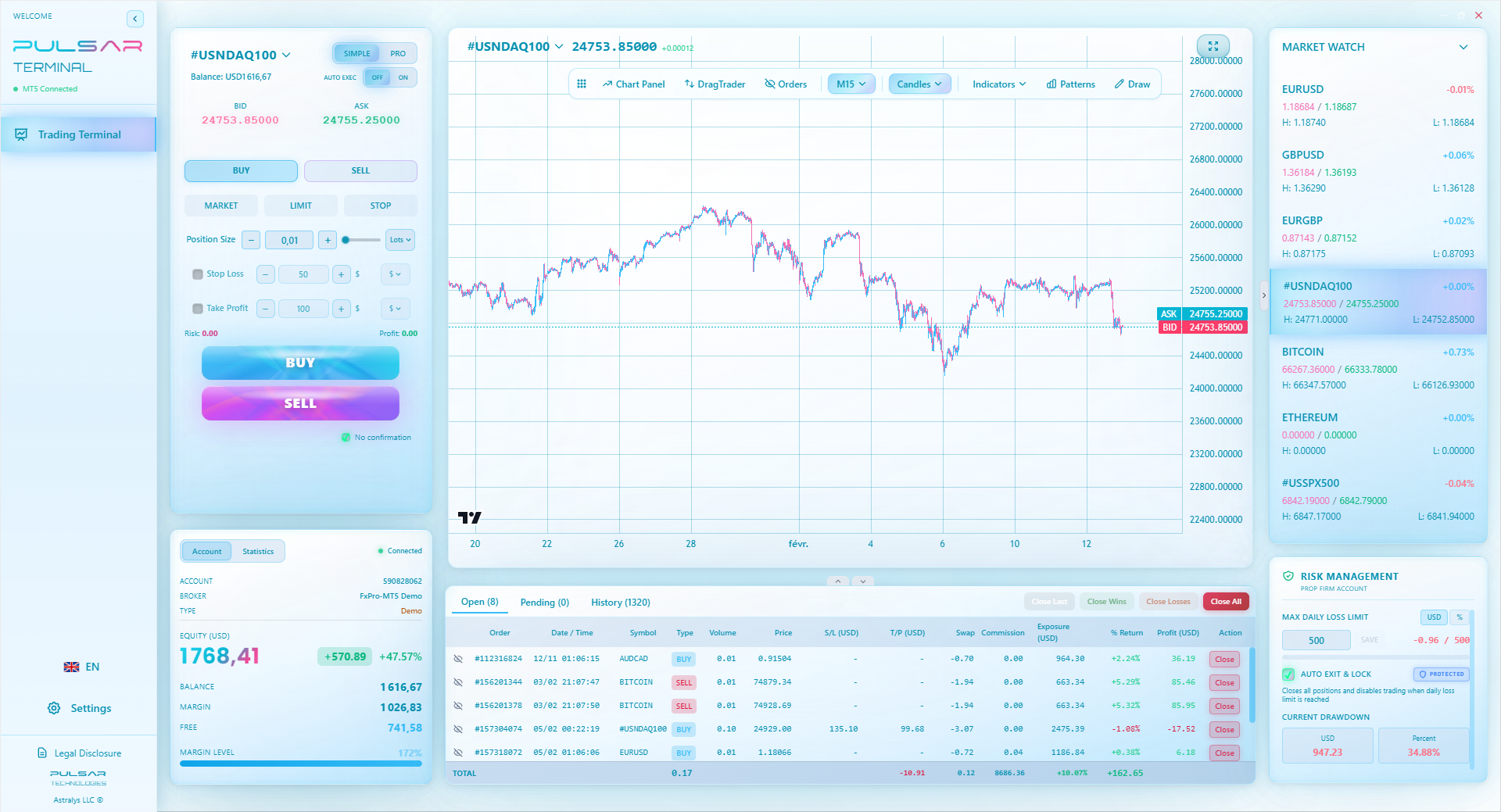
When testing complex concepts from books like Grimes's, having a tool that lets you quickly visualize multi-TP/SL levels and manage risk directly on your MT5 chart is invaluable for turning theory into disciplined practice.
Pulsar Terminal
The all-in-one MT5 companion: drag-and-drop orders, multi-TP/SL, trailing stop, grid trading, Volume Profile, and prop firm protection. Used by 1,000+ traders daily.
“A single trade wiped out nearly half my quarterly gains. The lesson wasn't new. I just needed to be humbled to hear it again.”
Not all popular books are helpful. Some are actively dangerous for someone trading under RBI rules.
- High-use Day Trading Guides: Any book promising riches from 500:1 use scalping is irrelevant and distracting. Our 1:20 use forces a slower, more positional style. These books will make you feel like you're missing out. You're not. You're playing by different, safer rules.
- Exotic Pair Strategy Books: Books focused on AUD/NZD or EUR/CHF correlations are intellectually interesting but practically useless for you. Your brainpower is limited. Focus it on understanding USD/INR dynamics - oil prices, FII flows, RBI policy - not on patterns in currencies you can't even trade.
- 'Get Rich Quick' Autobiographies: Some trader biographies are great for mindset. Others are just ego trips about taking massive, reckless bets that paid off. For every one that worked, a thousand blew up. We don't hear those stories. In India, with our capital controls, a blow-up can freeze your bank accounts. The stakes are different.
The biggest lesson? Read critically. Ask yourself: 'Can this principle apply to a 1:20 leveraged, exchange-traded USD/INR future, or is it built for the wild west of offshore forex?' Filter everything through that lens.
Also, remember that books are a starting point. The real learning is in your trading journal. Recording your trades, your emotional state, and how a concept from a book played out in real-time is what builds true expertise. A book might teach you about a margin call, but only your own fear when you get too close to one will teach you to respect it.
💡 Winston's Tip
The most important book is your trading journal. A £20 notebook where you record your trades, your emotional state, and which book's principle you were testing is worth more than a library of unapplied theory. Review it weekly.

“Our 1:20 use forces a slower, more positional style. Books on 500:1 scalping will make you feel like you're missing out. You're not. You're playing by safer rules.”
You don't need to buy all these books at once. Start with the mindset: get Trading in the Zone. Read it slowly. Then, add Market Wizards for risk management inspiration. Follow it with Nison's candlestick book to learn the language of the charts.
Create a reading schedule. Maybe one chapter a night. But here's the non-negotiable part: you must trade what you read. Open a demo account with a broker that offers NSE currency derivatives (many SEBI-regulated brokers like Zerodha or Upstox offer practice accounts). When you read about support and resistance in Murphy, draw them on the USD/INR chart. When you read about the psychology of a stop-loss in Douglas, practice moving your stop to breakeven after a certain profit.
Books give you the theory, but the market gives you the exam. Your early trades will be messy. You'll forget the lessons. I certainly did. That's okay. The mark of a serious trader isn't perfection, it's the willingness to go back to the books, figure out what you did wrong, and try again.
Finally, connect the dots. A concept from a mindset book, a risk rule from Market Wizards, and a chart pattern from Nison should eventually fuse into a single, coherent trading plan. That plan is yours alone, tailored to your psychology and our unique Indian market. These best forex trading books are the raw materials. You are the builder.
Pro Tip: Don't just read trading books. Read about economics, history, and psychology. Understanding the broader forces that move the rupee - like the impact of monsoon forecasts on inflation and RBI policy - is just as important as knowing what a doji candle means. The best traders are students of the world.
FAQ
Q1Can I legally trade EUR/USD by reading these books and using an international broker?
No. For Indian residents, trading non-INR pairs like EUR/USD for speculative purposes is illegal under FEMA, regardless of what you've read or which broker you use. These books are to help you trade the four legal INR pairs (USD/INR, EUR/INR, GBP/INR, JPY/INR) on SEBI-regulated exchanges more effectively. Using an offshore broker for forex can lead to severe penalties, including frozen bank accounts.
Q2I'm a complete beginner. Which single book should I start with?
Start with Trading in the Zone by Mark Douglas. Before you learn how to spot a trade, you need to learn how to handle the psychological rollercoaster. A perfect strategy is useless if fear and greed make you abandon it. This book builds the mental foundation everything else rests upon.
Q3Are books about Warren Buffett useful for forex trading?
For mindset and long-term thinking, yes. For specific forex tactics, no. Buffett's value investing philosophy is based on owning businesses for years. Forex, especially in the Indian derivatives market, is more about shorter-term price movement. Read Buffett for wisdom on patience and conviction, but don't try to apply his stock valuation models to the USD/INR futures chart.
Q4How do I apply candlestick patterns from Steve Nison's book to USD/INR when the RBI intervenes?
You apply them with caution. Candlestick patterns show market sentiment and rejection. A strong bullish pattern failing at a key high might be evidence of RBI selling dollars. The pattern helps you identify that a powerful seller (possibly the central bank) has stepped in. It doesn't guarantee a reversal, but it tells you the buying pressure was overwhelmed. Always combine patterns with other factors like major technical levels and news context.
Q5The books talk about 50:1 use. I only have 1:20. Does that put me at a disadvantage?
It puts you at a massive advantage. High use is the number one killer of retail trading accounts globally. SEBI's 1:20 cap forces you to use proper position sizing and prevents you from blowing up your account in a single bad trade. The principles in the best books - risk management, patience, trading the trend - are actually easier to follow with lower use. You're forced to be a better trader.
Q6Should I focus on books or online courses?
Books first, always. A well-edited book presents a complete, structured philosophy. Online courses are often fragmented and heavy on hype. Books like the ones listed have stood the test of time across market cycles. Use online resources for specific, updated tutorials - like how to use a broker's platform or the latest XM review for international context - but build your core knowledge from authoritative books.
Q7How long will it take to see results from applying these books?
A long time. Reading a book on the MACD indicator might take a week. Internalizing it, testing it, learning when it fails, and integrating it into a system that works for you can take 6-12 months of consistent practice. Don't expect a book to make you profitable. Expect it to give you the tools to teach yourself through disciplined practice and journaling.
Prof. Winston's Lesson
Key Takeaways:
- ✓Filter every book through the lens of RBI rules and INR pairs.
- ✓Mindset books are more important than strategy books for survival.
- ✓Risk management is not a technique; it's the entire game.
- ✓Apply one concept at a time in a demo account for 20+ trades.
How useful was this article?
Click a star to rate
Weekly Trading Insights
Free weekly analysis & strategies. No spam.
About the Author
Rajesh Sharma
Senior Forex Analyst
Trading Indian and South Asian markets for over 10 years. Started with NSE currency derivatives before moving to international forex. Specializes in USD/INR and emerging market pairs.
Comments
Risk Disclaimer
Trading financial instruments carries significant risk and may not be suitable for all investors. Past performance does not guarantee future results. This content is for educational purposes only and should not be considered investment advice. Always conduct your own research before trading.
You Might Also Like

Cara Trading Forex Sukses: 7 Prinsip dari Trader Profesional
Cara trading forex sukses dengan 7 prinsip trader pro: manajemen modal, disiplin, journal trading, backtest. Data nyata, bukan janji profit palsu.
Jam Trading Forex Terbaik untuk Trader Indonesia: Panduan Lengkap dengan Tabel Waktu
Panduan jam trading forex untuk trader Indonesia. Tabel 4 sesi dunia, jam emas 20:00-00:00, sesi mana yang harus dihindari. Data akurat + tips dari trader berpengalaman.
Top 5 Sàn Forex Uy Tín Nhất 2026: Review Jujur dari Trader Indonesia
Top 5 sàn forex uy tín 2026 untuk trader Indonesia. Review jujur: spread, deposit, withdraw, dukungan lokal. Exness, XM, IC Markets & lebih.
Get Pulsar Terminal
All these calculators are built into Pulsar Terminal with real-time data from your MT5 account. One-click position sizing, automatic risk management, and instant calculations.
Get Pulsar Terminal