


Everywhere you look online, someone's promising you can get rich quick with forex.

David van der Merwe
Emerging Markets Trader ·  South Africa
☕ 9 min read
What you'll learn:
- 1The Harsh Reality of Forex Profitability
- 2What 'Success' Actually Looks Like (Forget the Lambos)
- 3The Three Pillars You Can't Ignore
- 4South African Specifics: Challenges & Hidden Costs
- 5A Realistic Path to Getting Started
- 6Common Traps That Destroy South African Accounts
- 7So, Can U Make Money With Forex Trading? The Final Verdict

Everywhere you look online, someone's promising you can get rich quick with forex. It's the new 'get-rich-quick' scheme, dressed up with fancy charts and talk of 'financial freedom.' I'm here to tell you that most of that is rubbish. The real question isn't 'can u make money with forex trading,' but 'can YOU make money, and more importantly, keep it?' Let's cut through the hype. I've traded through the 2008 crash, the 'Nenegate' Rand flash crash, and everything in between. I'll show you the real numbers, the common traps, and what it actually takes to have a shot.
Let's start with the cold, hard stats that the gurus don't want you to see. Globally, the consensus among brokers and regulators is that a staggering 70-80% of retail traders lose money. In South Africa, the Financial Sector Conduct Authority (FSCA) has repeatedly warned about the risks, because they see the blow-up accounts first-hand. Think about that: for every ten people who start, seven or eight walk away poorer.
Why? It's not because the market is rigged (though you must use an FSCA-regulated broker). It's because trading exploits human psychology perfectly. We're wired to chase wins and avoid admitting losses. A market that moves on fear and greed is a trap for the unprepared. The first step to answering 'can u make money with forex trading' is accepting that the odds are structurally stacked against the average participant. Your goal isn't to be average.

Warning: If a mentor or signal service guarantees profits or downplays risk, run. They are either lying or dangerously ignorant. No one can control the market.
I learned this the expensive way. In my second year, I had a great run on USD/ZAR, turning R15,000 into about R42,000 in three months. I felt invincible. Then I got cocky, doubled my position sizes without a plan, and gave back all those profits plus R10,000 of my original capital in two brutal weeks. That R10,000 lesson on overconfidence was more valuable than the initial profit.

💡 Winston's Tip
Your first R10,000 profit is a milestone, but your first R10,000 loss is the real teacher. Don't fear the loss; study it.
“A market that moves on fear and greed is a perfect trap for the unprepared human mind.”
Social media sells a dream of private jets. Real trading looks boring. A consistently profitable trader isn't making 100% a month. They're grinding out 5-20% per year, with months of flat returns or small losses. That's the benchmark.
The Professional Mindset
Professionals treat it like a business. They have a written business plan. They know their monthly expenses (data, platform fees, broker spreads) and their profit targets. They don't trade to feel smart or beat the market; they trade to execute their plan. Their edge isn't a secret indicator, it's discipline and risk management. A key tool for this is a solid position size calculator to remove emotion from every trade.
A Realistic South African Example
Let's say you have a R50,000 trading account. A 10% annual return is R5,000. That's R417 per month. After platform costs and the inevitable losing trades, your net might be R300. That's not quitting-your-job money. It's a side income that requires serious work. The goal is steady, compounded growth, not a lottery win. This is why proper swing trading strategies that focus on quality setups often outlast frantic day-trading.

Example: Your edge. If your strategy wins 55% of the time with an average win 1.5 times your average loss, you have a positive expectancy. But over 100 trades, you'll still have 45 losing streaks. Can your psychology and bankroll handle that? Most can't.

“Real trading looks boring. A consistently profitable trader is grinding out 5-20% per year, not 100% a month.”
Making money in forex rests on three things. Most beginners focus only on the first and fail.
- Psychology (70% of the Game): This is controlling your own brain. It's following your plan when you're scared after two losses. It's taking a profit when your target is hit, even if you 'feel' it could go further. It's not revenge-trading after a loss. I keep a trading journal, and 80% of my historic losses were due to psychological breaks in my rules, not bad analysis.
- Risk Management (Your Survival Kit): This is non-negotiable. You must define, before every trade, how much you are willing to lose. The golden rule: never risk more than 1-2% of your capital on a single trade. On a R50,000 account, that's R500-R1,000 max. This protects you from a string of losses wiping you out. Understanding terms like margin call is critical here, so you never get one.
- Strategy (The Smallest Piece): Yes, you need a method. But a simple strategy with strict psychology and risk management will beat a complex 'perfect' strategy every time. Your strategy should define your entry, exit, and how you'll manage the trade. It could be based on price action, or simple indicators like the RSI indicator or MACD indicator.
“Real trading looks boring. A consistently profitable trader is grinding out 5-20% per year, not 100% a month.”
Trading from SA isn't the same as trading from London or New York. Our context changes the game.
The ZAR Factor: Trading major pairs like EUR/USD guide involves converting your Rands to USD to fund your account. If the Rand weakens, your international buying power drops. A profitable USD account in terms of dollars could be a loss in Rands if the exchange rate moved against you. It adds a layer of currency risk.
Broker Choice is Critical: You must use a broker regulated by the FSCA. This is for your protection. International brokers like Exness review, IC Markets review, and Pepperstone review often have FSCA licenses for their South African entities. Check their local spreads on pairs you want to trade, especially the spread definition on USD/ZAR, which can be wide. A wide spread is a cost you pay on every trade.
Costs That Eat Profits:
- Spread: The difference between buy and sell price. Your trade starts in a loss by this amount.
- Overnight Financing (Swap): Holding a position past the daily cut-off costs or earns you interest. On some ZAR pairs, the cost to hold can be significant.
- Deposit/Withdrawal Fees: Getting money in and out via bank transfer or EFT can have fees.

Pro Tip: Start by demo trading the exact pairs you're interested in with a real broker's demo account. Note the typical spreads and swap rates. This will give you a true picture of your trading costs before you risk a cent.
💡 Winston's Tip
If you can't explain your trade's thesis in one simple sentence, you don't have a thesis. You have a hope.
“use doesn't make you a better trader. It just makes your mistakes more expensive, faster.”
If you're still reading, you're serious. Here's a step-by-step path that avoids the common cliffs.
- Education First, Money Last: Spend 3-6 months learning. Not from random YouTube gurus, but from established market principles. Understand what a pip definition is, how use works, and what moves currencies.
- Demo Trade Relentlessly: Open a demo account and treat it like real money. Trade your strategy for at least 100 trades. Track every single one in a journal. Your goal is not to make fake profit, but to prove you can follow your rules consistently.
- Start Absurdly Small: When you go live, start with capital you can afford to lose completely. I'm talking R5,000 or less. Your goal for the first year is not profit, but survival and consistency. Use a proper position size calculator for every single trade.
- Specialise: Don't jump from XAU/USD guide (gold) to USD/JPY to the JSE. Pick one or two instruments. Learn their personality, their average daily range, when they are most active.
- Review Weekly: Every weekend, review your trades. Why did you enter? Did you follow your plan? What did your emotions do? This feedback loop is where real improvement happens.
I made every mistake early on. I chased scalping strategy profits without the requisite skill, blowing a small account in days. I learned that my temperament was better suited to slower, more analytical trades.
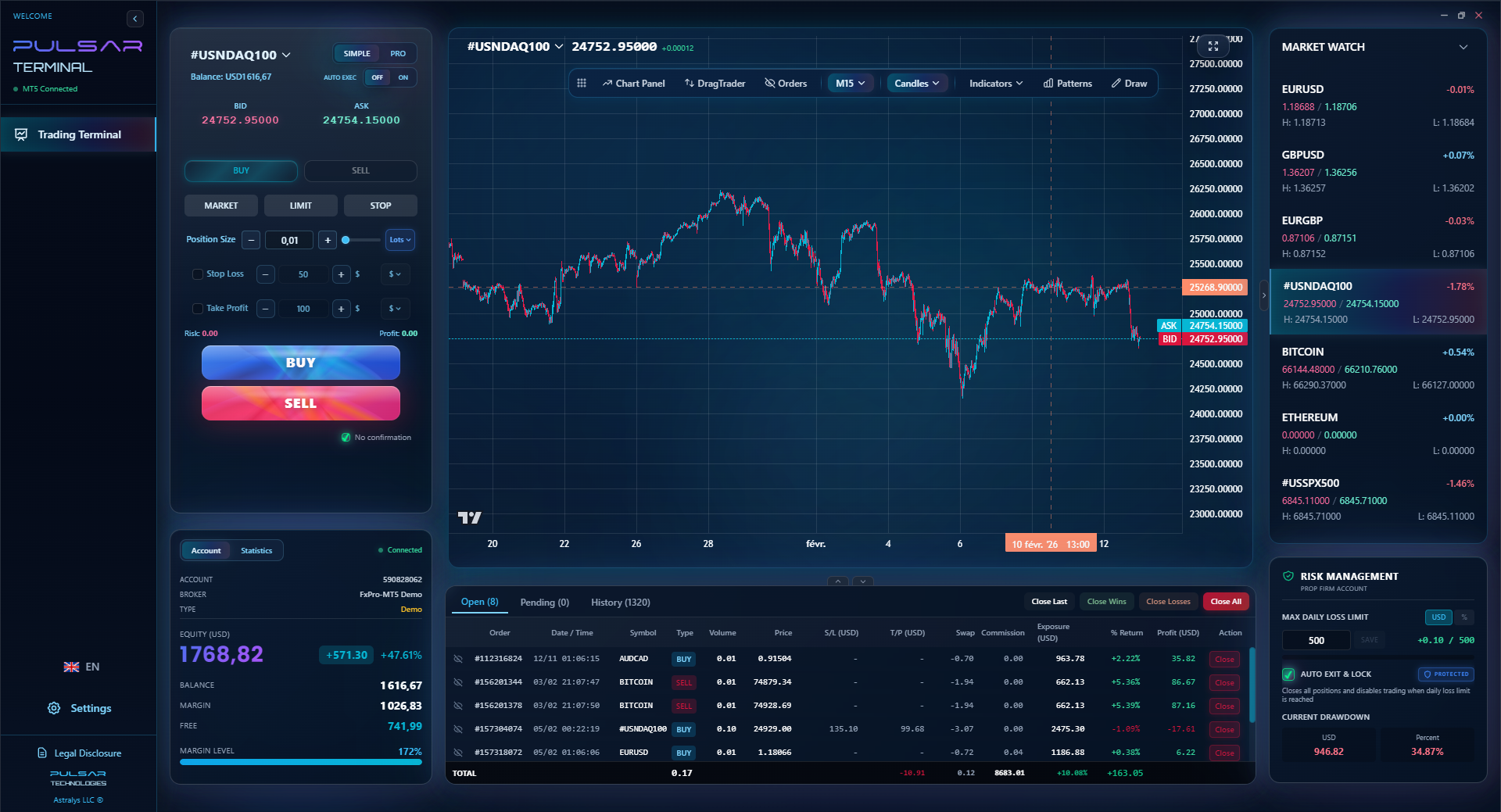
Executing a disciplined plan is hard when emotions run high, which is why tools like Pulsar Terminal automate risk management and order execution directly on your MT5 charts.
Pulsar Terminal
The all-in-one MT5 companion: drag-and-drop orders, multi-TP/SL, trailing stop, grid trading, Volume Profile, and prop firm protection. Used by 1,000+ traders daily.
“use doesn't make you a better trader. It just makes your mistakes more expensive, faster.”
Knowing these traps won't make you immune, but it might help you spot them before they spring.
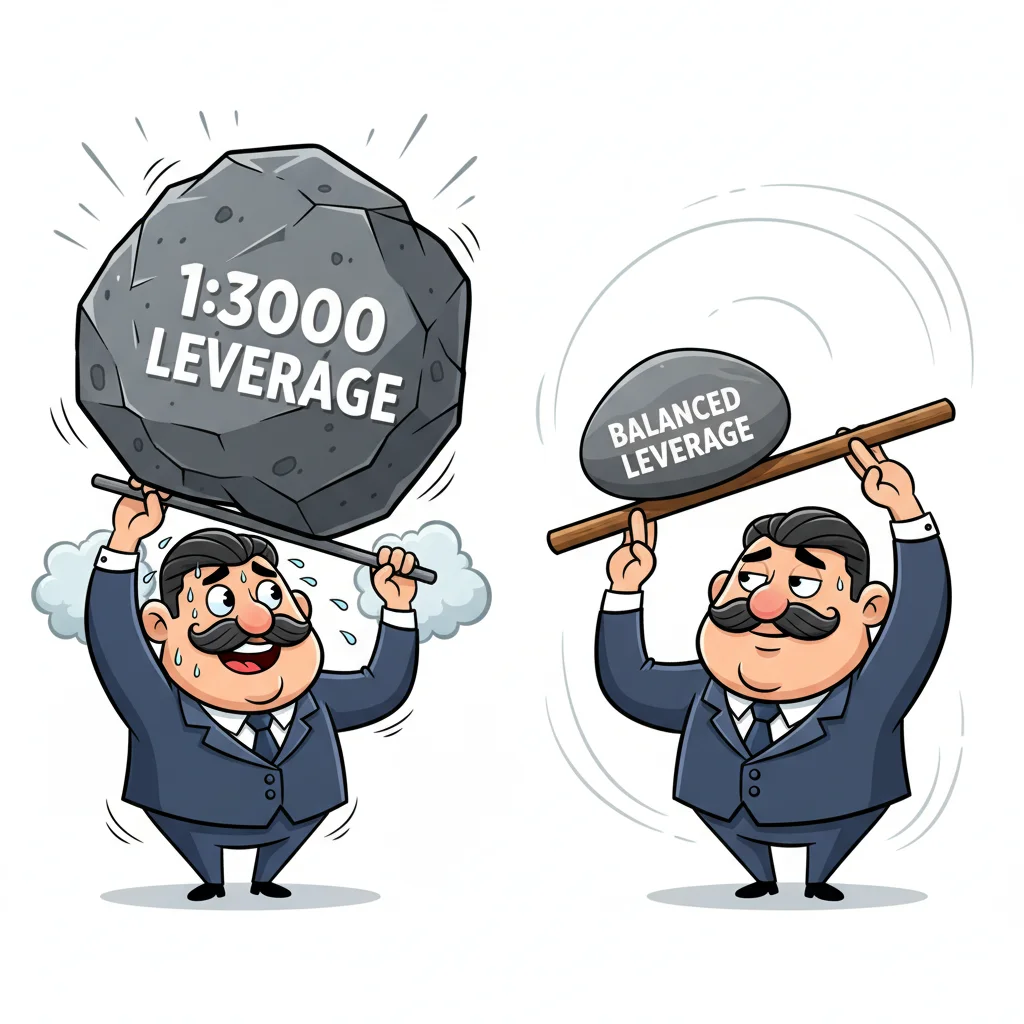
- Over-use: This is the number one killer. Brokers might offer 500:1 use. Using it is suicide. use amplifies losses just as fast as gains. Just because you can open a R500,000 position with R1,000 doesn't mean you should. A 0.2% move against you wipes you out.
- Trading USD/ZAR Emotionally: We all have opinions on the Rand. Don't let your patriotic hope or doom-and-gloom drive your trades. The market doesn't care what you think should happen.
- Funding Your Account with 'Rent Money': If you're trading with money needed for bills, the psychological pressure will cripple your decision-making. You'll cut winners short and let losers run.
- Buying 'Robot' or 'Signal' Services: If their system was so foolproof, why would they sell it for R500 a month instead of using it to trade billions? You are the product.
- Ignoring Total Capital Risk: It's not enough to risk 1% per trade. You must also consider your total exposure. Having five trades open, each risking 1%, means you're risking 5% of your capital if they all go wrong simultaneously. That's a dangerous drawdown.
💡 Winston's Tip
The market's job is to find the price that causes the maximum pain to the maximum number of participants. Don't be one of them.
“Your goal for the first year is not profit, but survival and consistency.”
Here's the honest answer.
Yes, it is possible to make money with forex trading. But the more accurate question is: is it probable for a new, undisciplined trader starting with less than R50,000? The probability is very, very low.
It is a skilled profession that requires years of dedication, a significant investment in education (both financial and emotional), and a temperament that most people simply do not possess. It's a marathon of discipline, not a sprint to riches.
For the vast majority of South Africans, putting that time and energy into advancing their career, starting a small business, or investing in a low-cost ETF will yield a far better and more reliable return with less stress and risk.
However, if you are fascinated by markets, have a relentless analytical mind, can handle brutal honesty with yourself, and are willing to treat it as a multi-year apprenticeship with no guaranteed salary, then you can begin the journey. Start small, learn relentlessly, and protect your capital above all else. That's the only path that has a chance of leading to a positive answer to the question 'can u make money with forex trading.'
FAQ
Q1What is a realistic monthly return from forex trading in South Africa?
Aim for consistency, not a fixed monthly percentage. A professional, risk-focused trader might target 1-3% per month on their capital. But some months will be zero or negative. Annualising returns (10-20% p.a.) is a healthier way to think about it. Anyone promising you steady 10%+ per month is selling a fantasy.
Q2How much money do I need to start forex trading in South Africa?
You can technically start with as little as R500 with some brokers, but it's a terrible idea. With such a small amount, costs (spreads) eat you alive and proper risk management is impossible. A more realistic minimum to learn properly is R5,000-R10,000. This allows you to trade micro lots and practice real risk management without the pressure of losing life-changing money.
Q3Is forex trading taxable in South Africa?
Yes. The South African Revenue Service (SARS) views forex trading profits as income if you're trading frequently (seen as a revenue-generating activity). Profits are added to your other income and taxed at your marginal rate. It's crucial to keep careful records of all trades, deposits, and withdrawals for tax purposes. Speak to a tax professional.
Q4Which is better for beginners: forex or crypto trading?
Forex is generally more structured and liquid, with established regulations (use an FSCA broker). The forex market is larger and moves on macroeconomic data, which can be studied. Crypto is far more volatile and speculative, often driven by sentiment and hype. The extreme swings in crypto are a psychological nightmare for a beginner. Start with forex to learn core trading principles.
Q5Can I make a living from forex trading in South Africa?
It's possible but exceptionally difficult. To replace a modest R20,000 monthly salary, you'd need a large, well-managed capital base (likely R500,000+) and proven multi-year consistency. Most who attempt it blow up their accounts first. It's safer to build your skills and track record over years while keeping your day job, then gradually transition if you achieve sustained success.
Q6Do I need a formal finance qualification to trade forex?
No. Some of the best traders have no formal finance background. What you need is self-education in market mechanics, economics, and, most importantly, trading psychology. Discipline, emotional control, and the ability to follow a plan are far more valuable than a degree in this field.
Prof. Winston's Lesson
Key Takeaways:
- ✓70-80% of retail traders lose money. Your mission is to not be them.
- ✓Never risk more than 2% of your capital on any single trade.
- ✓Psychology and risk management are 90% of the game. Strategy is the last 10%.
- ✓Treat your first live year as a paid apprenticeship in survival.
How useful was this article?
Click a star to rate
Weekly Trading Insights
Free weekly analysis & strategies. No spam.
About the Author
David van der Merwe
Emerging Markets Trader
Johannesburg-based trader with 11 years in emerging market currencies. Specializes in ZAR pairs, FSCA-regulated trading, and South African market analysis.
Comments
Risk Disclaimer
Trading financial instruments carries significant risk and may not be suitable for all investors. Past performance does not guarantee future results. This content is for educational purposes only and should not be considered investment advice. Always conduct your own research before trading.
You Might Also Like

Cara Trading Forex Sukses: 7 Prinsip dari Trader Profesional
Cara trading forex sukses dengan 7 prinsip trader pro: manajemen modal, disiplin, journal trading, backtest. Data nyata, bukan janji profit palsu.
Jam Trading Forex Terbaik untuk Trader Indonesia: Panduan Lengkap dengan Tabel Waktu
Panduan jam trading forex untuk trader Indonesia. Tabel 4 sesi dunia, jam emas 20:00-00:00, sesi mana yang harus dihindari. Data akurat + tips dari trader berpengalaman.
Top 5 Sàn Forex Uy Tín Nhất 2026: Review Jujur dari Trader Indonesia
Top 5 sàn forex uy tín 2026 untuk trader Indonesia. Review jujur: spread, deposit, withdraw, dukungan lokal. Exness, XM, IC Markets & lebih.
Get Pulsar Terminal
All these calculators are built into Pulsar Terminal with real-time data from your MT5 account. One-click position sizing, automatic risk management, and instant calculations.
Get Pulsar Terminal