


I remember staring at my trading statement in late 2024, feeling that familiar sting.

Olumide Adeyemi
West African Trading Pioneer ·  Nigeria
☕ 9 min read
What you'll learn:
I remember staring at my trading statement in late 2024, feeling that familiar sting. Another week of choppy EUR/USD action had left me down $87. The trades weren't terrible, just a grind of small losses that added up. Then I noticed the 'commission rebate' line: a credit of $12.50. It didn't cover the loss, not even close. But it got me thinking. In a market where every pip counts, especially with the Naira's volatility, could that small drip-feed of cashback actually be a tool? Not a magic bullet, but something to tilt the odds? Let's talk about what cashback forex really is for us trading here in Nigeria.
Forget the flashy ads promising 'free money.' Cashback forex, at its core, is a volume-based rebate. For every lot you trade, the broker gives you back a tiny slice of the spread or commission you paid. It's a marketing tool, plain and simple. They're incentivizing you to trade more.
In Nigeria's context, where we're the second-largest retail forex market in Africa with over 300,000 active traders, brokers are fiercely competitive. A cashback offer is their way of standing out. But here's the critical part: it's not regulated as a separate financial product. The Central Bank of Nigeria (CBN) and SEC oversee trading legality, but the rebate scheme itself is just a broker promotion. Its value depends entirely on the broker's integrity.
I learned this the hard way early on. I signed up with a broker offering '50% cashback on all losses!' – a huge red flag I ignored. The platform was awful, spreads were massive, and the 'cashback' was paid in bonus credit I couldn't withdraw. I lost $200 learning that lesson. Real cashback is a small rebate on your trading cost, paid in real, withdrawable cash. Nothing more.

Warning: Any cashback program that promises a rebate on your losses is a scam. It encourages reckless trading. Legitimate rebates are only on the fees you pay, not your P&L.

💡 Winston's Tip
A rebate on bad execution is just a consolation prize. Price your broker on tight, reliable spreads first, perks second.
Let's get practical. You fund your account, let's say with ₦100,000. You're trading EUR/USD on a standard account with a 1.2 pip spread. For a standard lot (100,000 units), that spread cost might be around $12. A typical cashback offer might be $2 per lot traded back to you. It's not much, but it adds up.
The Payment Headache
This is where being a Nigerian trader adds a layer of complexity. The CBN prohibits using official forex windows to fund trading accounts, and many banks block international card transactions for brokers. So, you've likely funded your account via a local transfer or P2P. Now, how does the cashback get to you?
Most brokers will credit it directly to your trading account balance. Withdrawing it, however, means navigating the same payment maze. If you used a local Naira deposit method, your withdrawal might come back via the same channel. It's crucial to check this before you start. I use a broker that offers Naira-denominated accounts, which simplifies everything – deposits, cashback, and withdrawals are all in NGN, avoiding conversion headaches.
The Tax Question
Remember, the Federal Inland Revenue Service (FIRS) wants its share. That 10% capital gains tax on your gross profits? In my view, and from consulting a local accountant, cashback rebates are likely considered a reduction of your trading cost, not taxable income. But your net profit (after cashback) is still taxable. Keep immaculate records. That $12.50 rebate I mentioned? I logged it as a reduction in commission expense, not as profit.
“Cashback doesn't make you a profitable trader. Your edge, your discipline, and your risk management do.”
This is the heart of the matter. A broker can offer you $5 cashback per lot but hide it by having spreads that are 3 pips wide. You're getting 'cashback' with one hand while they're picking your pocket with the other. You must look at the total cost.
Let's compare two scenarios for a Nigerian trader, based on real broker data available to us:
| Broker Type | EUR/USD Spread | Commission per Lot | Cashback per Lot | Net Cost per Lot |
|---|---|---|---|---|
| 'Cashback' Broker A | 1.8 pips | $0 | $3.50 rebate | ~$15.50 ($18 spread cost - $3.50) |
| Low-Spread Broker B | 0.1 pips | $7 commission | $0 rebate | $7.70 ($1 spread cost + $7 commission) |
See the trap? Broker A's offer sounds better, but your net cost is double. I fell for this years ago. I was so focused on the weekly cashback report I didn't notice my breakeven point on each trade was much farther away because of the wide spreads.
For active traders, especially those into scalping strategies, low raw spreads are almost always better than high-spread cashback. For a swing trading approach where you hold trades for days, the spread matters less, and a cashback might provide a slight edge. Always, always do the math. Use a position size calculator that factors in commission and spread to see your true risk.

Example: Trading 10 lots a month? A $2/lot cashback gives you $20 back. But if a lower spread saves you $5/lot, you're better off by $30 even without the flashy rebate.

The moment you start making trading decisions to 'earn more cashback,' you've lost. Your strategy comes first. Always. The rebate is a minor tailwind, not the engine.
Here’s how I integrate it now. I choose my broker primarily for execution speed, regulatory trust (I prefer those with strong offshore licenses like FCA or ASIC, as the local scene is poorly regulated for retail), and low raw costs. If they offer a straightforward, no-strings-attached cashback on top of that, it's a bonus. I treat it as a small cost-reduction mechanism.
For instance, my main broker has tight spreads on XAU/USD (gold), which I trade often. Their small volume rebate effectively reduces my commission by about 15%. It doesn't change my entries or exits, which are based on my MACD indicator and price action rules. But over a quarter, that rebate might cover my data subscription fee. It turns a cost into a breakeven. That's the right mindset.
I also use cashback as a psychological cushion. Knowing that a portion of my trading cost is returned makes me less hesitant to take a valid, small-loss trade to protect my capital. It subtly removes the 'I've already paid the spread' bias that can make you hold a losing trade.
💡 Winston's Tip
If you can't explain the net cost per trade (spread + commission - cashback) in under 10 seconds, you don't understand your true expense. And the market will exploit that.
“The moment you start making trading decisions to 'earn more cashback,' you've lost.”
Nigerian traders are a prime target for shady schemes. Here’s what should make you click away immediately:
- ‘Cashback on Losses’: Already said it, worth repeating. This is designed to make you trade wildly.
- Withdrawal Conditions on the Rebate: If the cashback is labeled as ‘bonus credit’ with a 30x trading volume requirement before withdrawal, it’s a lock-in scheme. Your real money is trapped.
- Unregulated or Unknown Brokers: If the main attraction is the cashback and you can’t easily find their legitimate regulation (CySEC, FSCA, ASIC), it’s a massive risk. Your deposit might just be the cashback.
- Too-Good-To-Be-True Percentages: A rebate that covers 80% of your spread? The money has to come from somewhere – likely from your slippage or terrible execution.
- Pressure to Deposit More for ‘Higher Tiers’: “Deposit $5000 to unlock Platinum cashback!” This is a classic tactic. Your trading strategy, not your account balance, should determine your rebate value.
I got a DM once from a ‘fund manager’ offering a proprietary cashback account with ‘CBN approval.’ A five-minute check showed the CBN had no record of them. They were just collecting deposits. Trust is paramount. Stick to well-known brokers with a physical presence and clear terms, like some of the globally recognized Exness or IC Markets that properly serve the Nigerian market.

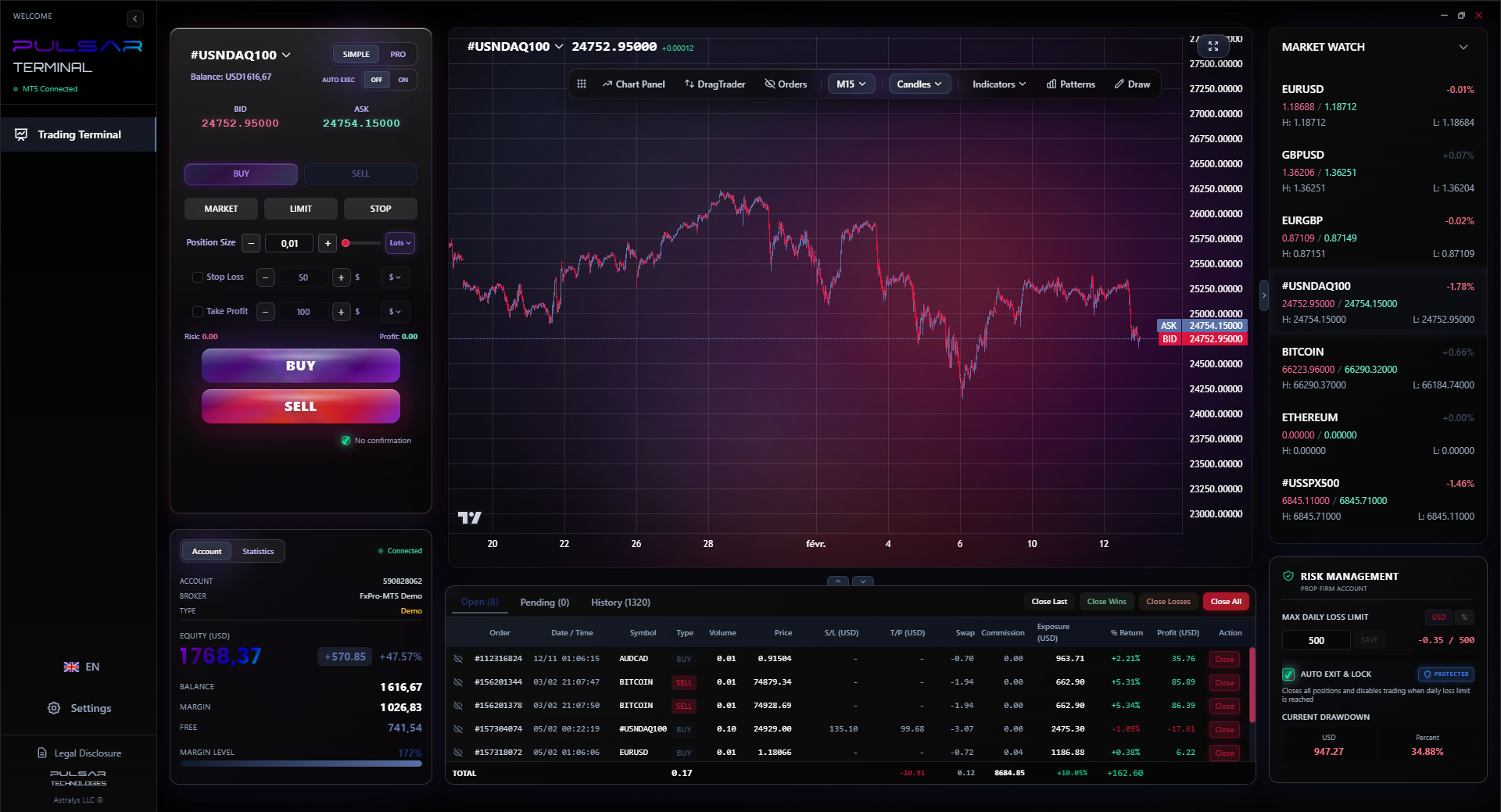
Managing multiple trades and their costs is complex; a tool like Pulsar Terminal helps automate partial closures and breakeven moves directly on MT5, so you can focus on strategy over mechanics.
Pulsar Terminal
The all-in-one MT5 companion: drag-and-drop orders, multi-TP/SL, trailing stop, grid trading, Volume Profile, and prop firm protection. Used by 1,000+ traders daily.
If you've found a legitimate broker with a fair offer, here's how to make it work.
- Read the Fine Print: Know the lot size calculation (standard, mini?), the payment schedule (weekly, monthly?), and the withdrawal policy for the rebate cash.
- Track it Religiously: Don't rely on their statement. Keep your own log. Match their rebate payments against your traded volume every week. Any discrepancy is a major red flag.
- Reinvest it Wisely: Don't treat the cashback as ‘free money’ to risk on a wild trade. My rule? I let the rebate accumulate and then use it to fund a very small, high-conviction trade where I'll apply a tight stop-loss. Or, I simply withdraw it quarterly as a ‘trading cost refund.’
- Factor it into Your Performance Metrics: When you calculate your win rate and average profit/loss, your net cost (spread/commission minus rebate) is the true figure. This gives you a clearer picture of your strategy's edge.
- Use it to Offset Withdrawal Fees: Some payment methods for getting money back to Nigeria have fees. Using your accumulated cashback to cover these fees is a smart, practical use.
, a cashback program should be silent and automatic. If you're thinking about it more than once a month when you check your statement, it's becoming a distraction. Your focus should be on your charts, your RSI indicator readings, and your risk management to avoid a margin call. The rebate is just a minor accounting detail on the path to consistent profits.

“In Nigeria's trading environment, every legitimate advantage, no matter how small, is worth understanding correctly.”
So, is cashback forex worth it? It can be, but only under very specific conditions.
Consider it if: You've already chosen a broker for their core services (regulation, execution, low spreads on your preferred pairs like EUR/USD), and they offer a transparent rebate as a cherry on top. You're a moderately active trader (5+ lots a month) where the rebate can meaningfully offset data or subscription costs. You have the discipline to never, ever let it influence a trading decision.
Ignore it if: You're a beginner. Your focus needs to be 110% on learning, not micro-optimizing costs. The broker leading with the cashback offer is otherwise unknown or has questionable conditions. You are a very low-volume or high-value trader where the rebate is a meaningless rounding error.
For me, it's a small tool in the box. That $12.50 credit I saw? It's now part of a system. It doesn't make me a profitable trader. My edge, my discipline, and my risk management do. But in the tough environment we trade in - with Naira volatility, payment hurdles, and tax obligations - every legitimate advantage, no matter how small, is worth understanding and using correctly. Just keep your eyes on the real prize: the pips on the screen, not the pennies in the rebate account.

FAQ
Q1Is cashback forex trading legal in Nigeria?
Yes, forex trading is legal. Cashback is simply a promotional rebate offered by brokers, not a separately regulated product. You must ensure the broker itself is reputable, ideally holding an international license since Nigeria's retail forex scene is poorly regulated.
Q2How is cashback forex taxed in Nigeria?
Cashback is generally viewed as a reduction in your trading costs (like a discount on commissions), not as taxable income. However, your net profit from trading after receiving cashback is subject to the 10% capital gains tax. Always consult a local tax professional for your specific situation.
Q3Which forex brokers offer the best cashback in Nigeria?
The 'best' offer isn't the highest rebate, but the one with the lowest net trading cost. A broker like IC Markets or Exness might offer low raw spreads with a small rebate, resulting in a lower total cost than a broker with wide spreads and a large, flashy cashback. Always calculate the net cost per lot.
Q4Can I withdraw my cashback earnings immediately?
It depends entirely on the broker's terms. Legitimate programs credit withdrawable cash. Shady ones credit 'bonus money' with impossible withdrawal conditions. You must read the terms before depositing. With reputable brokers, yes, the cashback is yours to withdraw.
Q5Does cashback forex encourage overtrading?
It absolutely can, and that's the danger. If you find yourself taking extra trades just to hit a volume target for a rebate, you've fallen into the trap. The cashback should be a passive benefit from your existing strategy, not the goal.
Q6What's a good cashback rate for a standard account?
There's no standard 'good' rate because it's tied to the spread. A fair benchmark is a rebate that covers 20-30% of the typical spread cost on a major pair. For example, on a 1-pip spread (approx. $10 cost per standard lot), a $2-$3 rebate is plausible. Anything over 50% of the spread cost should be scrutinized heavily.
Prof. Winston's Lesson
Key Takeaways:
- ✓Net cost per trade is all that matters, not the rebate size.
- ✓Cashback on losses is always a scam designed for reckless trading.
- ✓Treat rebates as a minor cost reduction, never as a strategy goal.
- ✓Verify broker terms before depositing; shady conditions lock in your capital.
How useful was this article?
Click a star to rate
Weekly Trading Insights
Free weekly analysis & strategies. No spam.
About the Author
Olumide Adeyemi
West African Trading Pioneer
One of Nigeria's most active forex trading educators. 8 years of experience trading from Lagos. Specializes in low-capital strategies and prop firm challenges for African traders.
Comments
Risk Disclaimer
Trading financial instruments carries significant risk and may not be suitable for all investors. Past performance does not guarantee future results. This content is for educational purposes only and should not be considered investment advice. Always conduct your own research before trading.
You Might Also Like

Cara Trading Forex Sukses: 7 Prinsip dari Trader Profesional
Cara trading forex sukses dengan 7 prinsip trader pro: manajemen modal, disiplin, journal trading, backtest. Data nyata, bukan janji profit palsu.
Jam Trading Forex Terbaik untuk Trader Indonesia: Panduan Lengkap dengan Tabel Waktu
Panduan jam trading forex untuk trader Indonesia. Tabel 4 sesi dunia, jam emas 20:00-00:00, sesi mana yang harus dihindari. Data akurat + tips dari trader berpengalaman.
Top 5 Sàn Forex Uy Tín Nhất 2026: Review Jujur dari Trader Indonesia
Top 5 sàn forex uy tín 2026 untuk trader Indonesia. Review jujur: spread, deposit, withdraw, dukungan lokal. Exness, XM, IC Markets & lebih.
Get Pulsar Terminal
All these calculators are built into Pulsar Terminal with real-time data from your MT5 account. One-click position sizing, automatic risk management, and instant calculations.
Get Pulsar Terminal