


Let's be brutally honest: if you're searching for a 'day trading strategies pdf' to download and magically start printing money, you're already setting yourself up to fail.

Rajesh Sharma
Senior Forex Analyst ·  India
India
☕ 12 min read
What you'll learn:
- 1Why Your Search for a 'Day Trading Strategies PDF' is a Waste of Time
- 2The Real Costs of Day Trading in India (Forget the PDF, Look at the P&L)
- 3Core Strategies That Work Within SEBI's Rules
- 4Risk Management: Your Only Real Edge
- 5Forget PDFs: The Tools You Actually Need
- 6How to Build Your Own 'Strategy Document' (The Right Way)
- 7Your Next Steps (Stop Downloading, Start Doing)
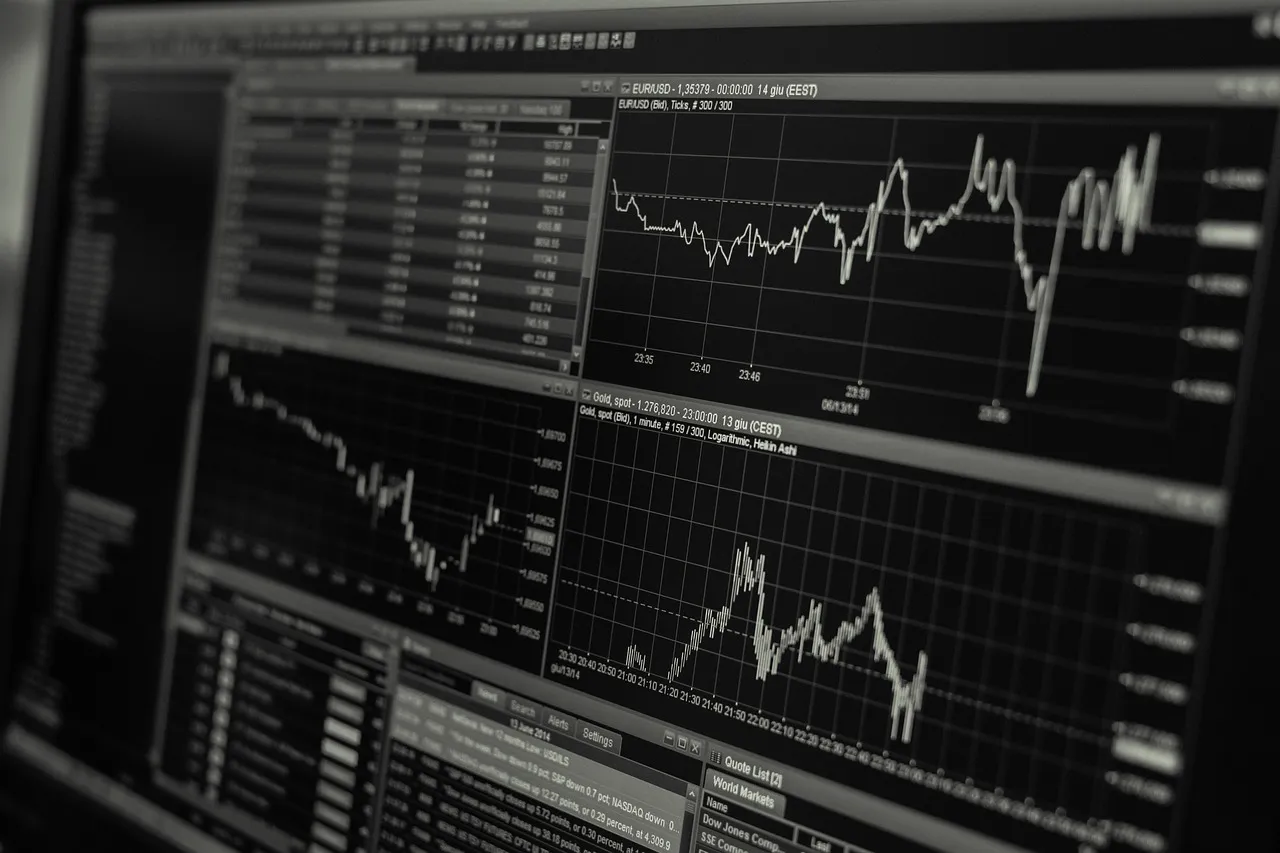
Let's be brutally honest: if you're searching for a 'day trading strategies pdf' to download and magically start printing money, you're already setting yourself up to fail. I've seen it a thousand times. The promise of a secret formula in a downloadable document is a siren song that distracts you from the real, grinding work of learning to trade within India's unique and restrictive framework. This article isn't another PDF. It's a reality check. I'll show you why the PDF hunt is pointless, break down the exact rules and costs that govern your every move, and give you actionable, legal strategies that account for SEBI's 20% margin, the 3:30 PM square-off, and the brutal tax structure. Forget the fantasy. Let's talk about what actually works on the Nifty, Bank Nifty, and Indian stocks.
I get it. You want a blueprint. A checklist. Something you can follow step-by-step to avoid the pain of figuring it out yourself. The problem is, trading doesn't work like assembling IKEA furniture. A strategy pulled from a generic PDF is like trying to use a map of London to navigate Mumbai's streets. It's fundamentally mismatched to your environment.
Those PDFs are almost always created for a global, often US-centric audience. They assume access to high use (50:1, 100:1), 24-hour markets, and different tax implications. They don't account for the SEBI-mandated 20% intraday margin (just 5x use), the absolute requirement to close all positions by 3:30 PM IST, or the Securities Transaction Tax (STT) that chips away at every profitable trade. I learned this the hard way early on. I tried applying a classic US futures scalping method to the Bank Nifty. The strategy relied on holding tiny losses for a potential reversal later in the day. In the US market, that's sometimes viable. In India, at 3:20 PM, my broker's auto-square-off feature liquidated my position at the worst possible moment, turning a small paper loss into a realized one. The strategy wasn't flawed; its environment was.

Warning: A strategy that doesn't have a built-in '3:25 PM exit rule' is useless for Indian equity day trading. Your planning must end by 3:15 PM at the latest to avoid broker chaos.
Also,, a static PDF can't adapt. The market from 2024 to 2026 has seen SEBI get stricter, with studies showing most retail day traders lose money. They're tweaking rules like STT on derivatives to curb speculation. A PDF from two years ago is already obsolete. Real trading skill isn't about memorizing a set of rules from a document; it's about developing situational awareness and risk management tailored to the market you're actually in. Your first tool shouldn't be a strategy PDF, it should be a reliable position size calculator configured for 5x use.

💡 Winston's Tip
If you can't explain your entire strategy, including your exact exit plan, on the back of a napkin before 9:15 AM, you have no business placing a trade. Complexity is the enemy of execution.
Before you even think about a strategy, you need to know your enemy: costs. This is where most new traders' math falls apart. They see a 10-point move in Nifty and think 'profit,' without subtracting the silent partners taking their cut. Let's break down what a single trade actually costs you.
The Government's Cut: Taxes and Charges
This is non-negotiable and comes off the top.
- Securities Transaction Tax (STT): This is the big one. For equity intraday, you pay 0.025% on the sell side. Sell a ₹500,000 position? That's ₹125 gone immediately. For Futures (like Nifty), it's 0.05% on the sell side. For Options, it's 0.15% on the premium when you sell. These rates increased in April 2026.
- Stamp Duty: A small state-level charge, usually 0.003% or ₹300 per crore on the buy side.
- GST: 18% on the brokerage fee and transaction charges.
The Broker's Cut
This varies, but discount brokers have made it cheap.
- Brokerage: Many offer flat fees like ₹20 per order. But pay attention: from April 2026, brokers like Zerodha are charging ₹40 for some intraday derivatives trades if you don't meet SEBI's 50% cash collateral rule. Read the fine print.
- Transaction Charges: NSE/BSE fees, typically around 0.00325% of the turnover.

Example: Let's say you buy and sell ₹300,000 worth of Reliance shares intraday, making a ₹1,500 gross profit.
- STT on Sell: ₹300,000 * 0.00025 = ₹75
- Brokerage (₹20 per trade): ₹40
- Transaction Charges (approx): ₹20
- GST on Brokerage & Charges: ~₹11 Total Costs: ~₹146 Net Profit: ₹1,500 - ₹146 = ₹1,354 Your costs just ate over 9% of your gross profit. To just break even, your strategy needs to overcome this drag on every single trade. This is why low-probability, small-target strategies often fail - the costs consume them. A good scalping strategy needs very high accuracy to overcome this friction.
“A strategy pulled from a generic PDF is like trying to use a map of London to navigate Mumbai's streets.”
Okay, enough about what doesn't work. Let's talk about what does. These frameworks respect the Indian market's constraints.
1. The Opening Range Breakout (ORB) – For the First Hour
This is a classic, and for good reason. The first 30-60 minutes after the 9:15 AM open are often the most volatile, giving you the momentum to make meaningful moves before the afternoon lull. How it works:
- Define the range: Note the high and low of the first 15-30 minutes.
- Wait for a break: Place a buy order slightly above the high, and a sell order slightly below the low.
- Manage the trade: Your profit target should be at least 1.5 to 2 times your risk (stop-loss). The key? You must be prepared to exit by 2:30-3:00 PM at the latest. Don't get greedy. My Experience: I used this on the Bank Nifty futures. On April 12, 2025, the 9:15-9:45 range was 48,200 - 48,450. Price broke above 48,470. I entered at 48,475, placed a stop at 48,400 (75 point risk), and targeted 48,625 (150 point reward). It hit my target by 11:30 AM. I was out for the day. Net profit after costs: ~₹1100 per lot. The discipline is in taking the signal and then protecting the gain.
2. Momentum Fading on Index Heavyweights
This is a counter-trend approach for slower markets, usually between 11 AM and 2 PM. Large-cap stocks like HDFC Bank, Reliance, or ICICI Bank often see sharp, news-driven spikes that quickly retrace. How it works:
- Identify an instrument that has made a sharp, high-volume move in a short time (e.g., 1.5% in 15 minutes).
- Wait for the momentum to stall - the candles get smaller, or the RSI indicator goes above 70.
- Enter a small position against the spike, with a tight stop-loss just beyond the recent high/low.
- Target a 50-70% retracement of the initial spike. This is a quick, small-profit tactic. It requires excellent timing and is riskier than the ORB.

Pro Tip: Combine this with the MACD indicator on a 5-minute chart. Look for the sharp move to create a massive divergence between the price and the MACD histogram. The fade entry often aligns with the histogram starting to shrink.
Strategies come and go. Market conditions change. The one constant for successful traders is ruthless risk management. This is where you separate yourself from the 90% who blow up their accounts. In India, with compulsory use limits, this is even more critical.
The 1% Rule is Your Foundation: Never, ever risk more than 1% of your total trading capital on a single trade. If you have a ₹100,000 account, your maximum loss per trade is ₹1,000. With 5x use, that ₹1,000 risk dictates your position size. Let's say you're buying a stock at ₹1000 and your stop-loss is at ₹990 (10 points down). Your risk per share is ₹10. How many shares can you buy? ₹1,000 / ₹10 = 100 shares. That's a ₹100,000 position (100 shares * ₹1000), using your full allowed use. See how that works? The risk dictates the size, not the other way around. Use a position size calculator until this is second nature.
The Daily Loss Limit: This is more important than any profit target. Set a hard line - like 3% of your capital - and when you hit it, you shut down the terminal. No 'revenge trading,' no 'one more trade to get back.' I didn't have this rule in my second year of trading. I had a bad morning, lost 2.5%. Spent the afternoon chasing, overtrading, and ended the day down 8%. It took me two weeks of disciplined, small wins to dig out of that hole. It was a stupid, avoidable mistake.
Respect the Square-Off: Your stop-loss isn't just a price; it's a time. If your trade isn't working by 3:00 PM, get out. Don't wait for the broker's auto-square-off to potentially execute at a terrible price. Taking a small, planned loss is a professional decision. Getting liquidated at 3:20 PM is an amateur's catastrophe. Understanding terms like margin call is crucial, as a poorly timed trade can trigger one right at the session's end.
💡 Winston's Tip
Your trading journal's most important column is 'Reason for Exit.' If it ever says 'broker auto-square-off,' you've failed your primary job as a risk manager.

“Your first tool shouldn't be a strategy PDF, it should be a position size calculator configured for 5x use.”
Instead of collecting static documents, build a dynamic toolkit. Here’s what matters:
- A Reliable Broker Platform: This is non-negotiable. You need fast execution, a stable platform during volatility, and clear reporting on charges. I've used several over the years. For raw execution speed and low latency, especially for indices, I've found Pepperstone (for forex/CFDs) and IC Markets to be excellent, though they serve the international market. For direct Indian equities and derivatives, Zerodha's Kite or Upstox Pro are industry standards. Do your own Exness review or XM review if you're looking at forex, but remember the different regulatory landscape.
- A Trading Journal (Not Optional): This is your personal strategy PDF that you write every day. Entry price, exit price, time, reason for trade, emotion, P&L. Review it weekly. You'll start to see your real patterns - like losing more on trades after 2 PM, or being better at long trades than short ones. This data is worth more than 100 downloaded PDFs.
- Charting Software with Indian Data: Most brokers provide this. Learn to read price action. Support, resistance, volume. Start with these before piling on 20 indicators.
- A Simple Scanner: To find stocks meeting your ORB or momentum criteria quickly. Many broker platforms have built-in screeners.
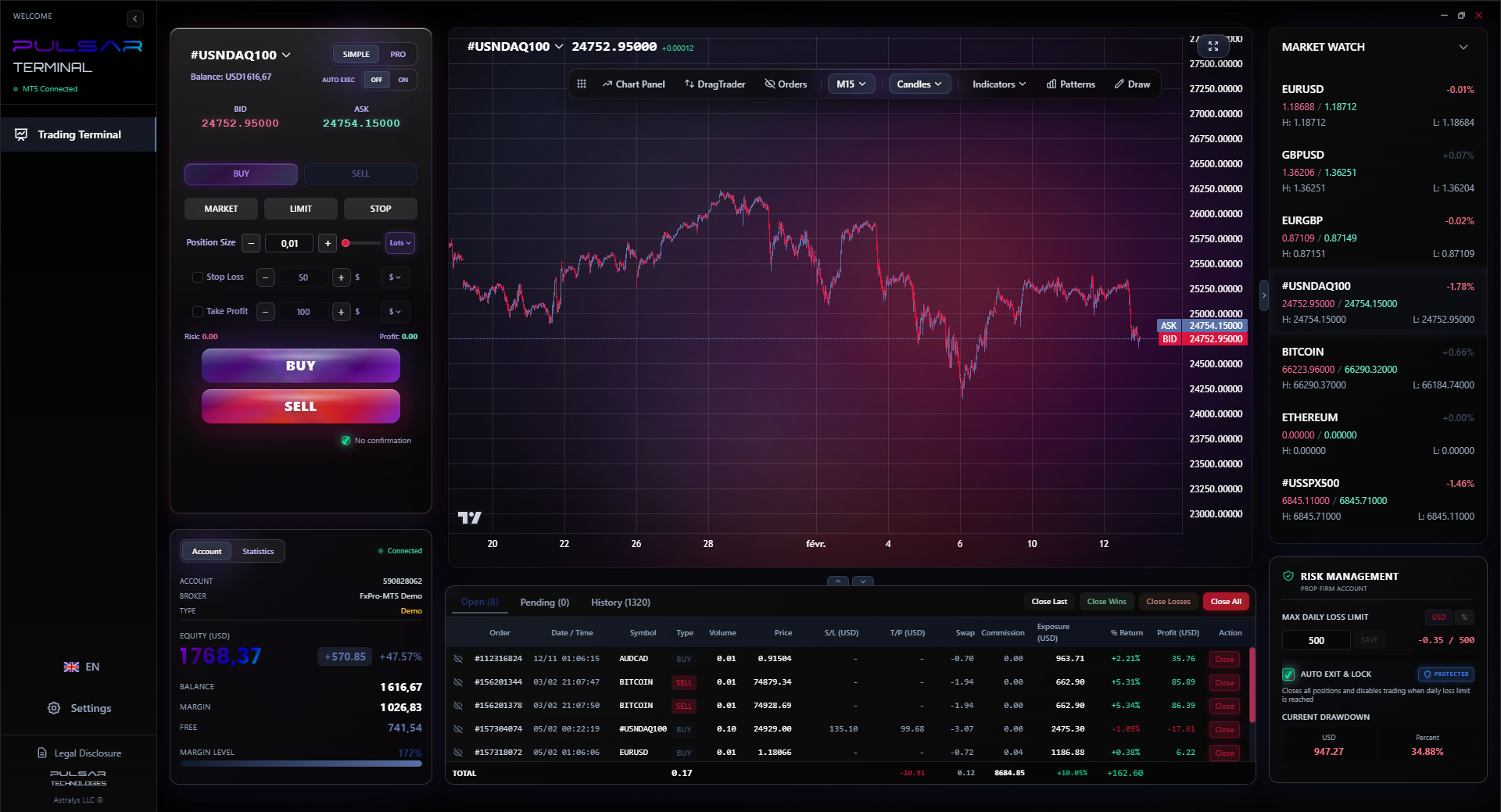
Manually moving stops to breakeven and managing multiple targets is a hassle; Pulsar Terminal automates these advanced order types directly on your MT5 platform, so you can focus on the trade, not the clicks.
Pulsar Terminal
The all-in-one MT5 companion: drag-and-drop orders, multi-TP/SL, trailing stop, grid trading, Volume Profile, and prop firm protection. Used by 1,000+ traders daily.
Now, let's create what a 'day trading strategies pdf' should actually be: your personalized trading plan. Write this down. Seriously, open a Google Doc right now.
Section 1: Market Conditions
- What will I trade? (e.g., Nifty Futures, Bank Nifty, top 5 Nifty stocks by volume)
- What time will I trade? (e.g., 9:15 AM - 11:30 AM, and maybe 2:00 - 3:00 PM for cleanup)
- What market environment do I need? (e.g., avoid the first 15 minutes of extreme gap volatility, avoid days with major global events overnight)
Section 2: Entry Rules (Be Specific)
- For Strategy A (ORB): "I will enter a long only if price breaks the 9:45 AM high by 5 points, on a closing 5-minute candle. I will use a limit order."
- For Strategy B (Momentum Fade): "I will enter a short only if RSI > 72 on a 5-min chart AND the last candle is a doji or small bearish candle after a sharp up-move."
Section 3: Exit Rules (Even More Specific)
- Stop-Loss: "My stop-loss will be placed at X. It will never be moved further away. It may be moved to breakeven if price moves in my favor by Y."
- Profit Target: "My primary target is a 1.5:1 reward-to-risk ratio. I will sell 50% of my position there and trail the rest with a moving stop."
- Time Stop: "I will exit ALL positions by 3:10 PM IST, no exceptions."
Section 4: Risk Parameters
- "My maximum risk per trade is 1% of my current capital (₹XXX)."
- "My maximum daily loss is 3%. If hit, I stop trading for the day."
- "My maximum weekly loss is 7%. If hit, I stop trading for the week and review my plan."
This living document is your true edge. It forces discipline and gives you something to review and refine, unlike a forgotten PDF in your downloads folder. This is the essence of a professional approach, similar to the structured planning needed for swing trading but compressed into a daily timeframe.

“Taking a small, planned loss is a professional decision. Getting liquidated at 3:20 PM is an amateur's catastrophe.”
The information here is enough to start building a real approach. Your job now is to transition from consumer to practitioner.
- Paper Trade for a Month: Use a broker's simulator or just a notebook. Execute your written plan for at least 20 trading days. Track every detail in your journal. The goal isn't to make fake money; it's to build the habit of following your rules under zero pressure.
- Analyze Your Paper Trades: Where did you deviate from the plan? Did you break your time stop? Did you move a stop-loss? This is where you find your psychological weaknesses.
- Start Small with Real Money: When you can follow your plan consistently on paper, fund a small live account with money you can afford to lose completely. Your goal for the first three months is not profit. Your goal is to execute your plan with perfect discipline on 90% of your trades. If you can do that, the profits will come over time.
- Specialize: Don't try to trade everything. Get very good at one thing - like ORB on the Nifty, or fading momentum in Reliance. Understand the pip or point movement and the typical spread for your chosen instrument inside out.
The myth of the perfect 'day trading strategies pdf' is seductive because it offers a shortcut. Trading has no shortcuts. It's a skill built through study, disciplined practice, and continuous adaptation to the rules of your game - and in India, SEBI writes those rules. Now you know them. Your move.
FAQ
Q1Is there really no good day trading strategies PDF for India?
There are educational materials from reputable sources like NSE and some brokers, but they're primers on mechanics, not magic profit formulas. A truly effective 'strategy' isn't a static document; it's a dynamic set of rules you develop and refine yourself based on your own risk tolerance, capital, and the live market's behavior within SEBI's framework.
Q2What is the single biggest mistake Indian day traders make?
Ignoring the cost structure and the square-off rule. They'll hold a losing position hoping for a reversal, only to get auto-squared off at the day's low. Or they'll chase tiny profits that don't even cover the STT and brokerage. Not using a daily loss limit is a close second.
Q3Can I day trade forex in India?
You can trade currency derivatives (like USD/INR futures and options) on Indian exchanges like NSE, which are regulated by SEBI. Trading international forex pairs (like EUR/USD) through offshore brokers is a legal gray area for residents and is not regulated by Indian authorities, carrying significant added risk. If you're interested in those markets, understand the instrument first with a proper EUR/USD guide.
Q4How much money do I realistically need to start day trading in India?
With SEBI's 20% margin rule, you need at least ₹20,000 to control a ₹100,000 position. However, starting with just enough to meet minimum margins leaves no room for error. I'd suggest a minimum of ₹50,000-₹100,000. This allows you to take sensible position sizes while risking only 1-2% per trade and surviving a string of losses without a margin call.
Q5What's better for day trading, stocks or indices?
Indices (Nifty, Bank Nifty futures) are generally better for beginners. They're highly liquid, have tight spreads, and you're trading the overall market direction rather than company-specific news. Individual stocks can have sharper moves but also carry gap risk and lower liquidity. Most pros start with indices.
Q6Does the 20% margin rule apply to commodity and currency trading?
The 20% intraday margin rule is specific to equity cash market trades. For derivatives (futures & options) on indices, stocks, currencies, and commodities, the margin is calculated differently based on SPAN and exposure margins, which can be lower (offering higher effective use). You must check your broker's margin calculator for each specific contract.
Prof. Winston's Lesson
Key Takeaways:
- ✓SEBI's 20% margin means 5x use max - plan accordingly.
- ✓STT costs eat 5-10% of gross profits; factor it in.
- ✓All intraday positions MUST be closed by 3:30 PM IST.
- ✓Risk a maximum of 1% per trade, 3% per day.
- ✓Your trading journal is more valuable than any PDF.
How useful was this article?
Click a star to rate
Weekly Trading Insights
Free weekly analysis & strategies. No spam.
About the Author
Rajesh Sharma
Senior Forex Analyst
Trading Indian and South Asian markets for over 10 years. Started with NSE currency derivatives before moving to international forex. Specializes in USD/INR and emerging market pairs.
Comments
Risk Disclaimer
Trading financial instruments carries significant risk and may not be suitable for all investors. Past performance does not guarantee future results. This content is for educational purposes only and should not be considered investment advice. Always conduct your own research before trading.
You Might Also Like

Cara Trading Forex Sukses: 7 Prinsip dari Trader Profesional
Cara trading forex sukses dengan 7 prinsip trader pro: manajemen modal, disiplin, journal trading, backtest. Data nyata, bukan janji profit palsu.
Jam Trading Forex Terbaik untuk Trader Indonesia: Panduan Lengkap dengan Tabel Waktu
Panduan jam trading forex untuk trader Indonesia. Tabel 4 sesi dunia, jam emas 20:00-00:00, sesi mana yang harus dihindari. Data akurat + tips dari trader berpengalaman.
Top 5 Sàn Forex Uy Tín Nhất 2026: Review Jujur dari Trader Indonesia
Top 5 sàn forex uy tín 2026 untuk trader Indonesia. Review jujur: spread, deposit, withdraw, dukungan lokal. Exness, XM, IC Markets & lebih.
Get Pulsar Terminal
All these calculators are built into Pulsar Terminal with real-time data from your MT5 account. One-click position sizing, automatic risk management, and instant calculations.
Get Pulsar Terminal