


I once wired €5,000 to a Cyprus-based broker, lured by their 'ESMA-protected' branding and tight EUR/USD spreads.

David van der Merwe
Emerging Markets Trader ·  South Africa
☕ 11 min read
What you'll learn:
- 1What Actually Makes a Broker 'European'?
- 2The Pros and Cons for South African Traders
- 3Regulation: A Reality Check
- 4Key European Brokers South Africans Use (And My Experience)
- 5How to Deposit and Withdraw ZAR (Without Getting Killed on Fees)
- 6Who Should Actually Use a European Broker from SA?
- 7Red Flags and Final Checklist

I once wired €5,000 to a Cyprus-based broker, lured by their 'ESMA-protected' branding and tight EUR/USD spreads. Two weeks later, during a volatile Brexit headline, my stop loss on a GBP/USD trade was ignored. The price blew straight through it. The broker's support ticket response was a masterpiece of regulatory jargon, saying 'extreme market conditions' voided their obligation. I lost €1,850 on a trade where my risk was supposedly capped at €300. That's the polished, dangerous reality of many European forex brokers. They're not inherently bad, but trading with them from South Africa is a completely different ball game with hidden pitfalls.
When we say 'European forex brokers,' we're usually talking about one thing: regulation. A broker is considered European if its primary operating entity is licensed by a financial authority within the European Economic Area (EEA). The big names are the Cyprus Securities and Exchange Commission (CySEC), the UK's Financial Conduct Authority (FCA), and Germany's BaFin.
This regulation is a double-edged sword. On one side, it mandates strict client fund segregation, negative balance protection, and use caps for retail clients (like 1:30 on major forex pairs). It looks safe. But here's the kicker for us in South Africa: those protective rules only apply fully to clients who are officially resident in the EEA. When you sign up from a South African IP address with a South African ID, you're almost always onboarded to their offshore entity or a different branch.
That 'offshore' entity might be in the Seychelles, Mauritius, or the British Virgin Islands. It's still owned by the European parent, but the rulebook is different. Your use might jump to 1:500, and those strict negative balance protections can become vague promises. You're trading with the European brand's technology, but not under its flagship regulatory umbrella. It's crucial you check which entity you're actually signing a contract with before you deposit a single rand.

Warning: Just because a broker's headquarters are in Limassol or London doesn't mean you, as a South African resident, are protected by ESMA or FCA rules. Always look for the specific regulatory license number on the website footer for your region.

💡 Winston's Tip
A broker is a utility, not a strategy. Paying for a 'premium' European platform won't fix a broken trading plan. Focus your money and energy on education and risk management first.
Let's break down what this European connection really means for your trading account in ZAR.
The Potential Advantages
Market Access and Technology: Many top-tier European brokers offer exceptional trading platforms (like MT4/MT5) with stable execution and deep liquidity. You get access to a vast range of instruments beyond forex: European stocks, ETFs, and commodities. Their platforms often have advanced tools that local brokers might not offer.
Reputation (Sometimes): A parent company with a CySEC or FCA license suggests a certain level of operational integrity. They're less likely to be outright scams compared to completely unregulated bucket shops. Their business model is usually based on volume and spreads, not on hoping you lose.
The Definite Drawbacks
The Deposit & Withdrawal Headache: This is the biggest daily friction. Funding your account often means doing a SWIFT transfer in EUR or USD. Your South African bank will charge you an international transfer fee (R200+), take a nasty cut on the currency conversion, and the whole process can take 3-5 business days. Withdrawing? Same story in reverse. That R5,000 profit can shrink by R400 just getting it home. Some offer credit/debit card deposits, but those come with their own fees and limits.
Customer Support Time Zones: When the JSE closes and your evening trading session in London or New York starts, their support might be offline. Having an issue at 8 PM SAST? You're likely waiting until morning. For local brokers, a phone call during business hours solves most issues.
Complex Tax Reporting: Trading through an offshore entity of a European broker complicates your tax situation. You'll need to carefully track all trades, conversions from EUR to ZAR, and calculate your own tax liability for SARS. It's not impossible, but it's an administrative burden a local broker might simplify.
Here’s a quick comparison table:
| Feature | European Broker (Offshore Entity) | South African FSCA Broker |
|---|---|---|
| Max use (Forex) | Often 1:500+ | Capped at 1:100 by FSCA |
| Deposit Method | Int'l Bank Transfer, Card | EFT, Ozow, SnapScan |
| Deposit Speed | 3-5 Business Days | Often Instant |
| Client Money Protection | Varies by offshore jurisdiction | Segregated accounts (FSCA rule) |
| Support Hours | EET/CET Business Hours | SA Business Hours |
| Tax Reporting | You handle everything | May provide IT3(b) statements |
“You're trading with the European brand's technology, but not under its flagship regulatory umbrella.”
We need to talk about the 'regulated' marketing claim. Yes, the European parent is regulated. But your money, as a South African client, is probably not in a CySEC-segregated account in a major EU bank. It's likely in an account under the offshore entity's name in Mauritius or elsewhere.
What does this mean if things go wrong? Your recourse is not to CySEC or the FCA. It's to the financial ombudsman or court system of that offshore jurisdiction. This process is typically slower, more expensive, and has less consumer-friendly precedents. I'm not saying you'll definitely lose your funds, but the safety net is thinner and farther away.
The use point is critical. The EU caps use to protect retail traders from themselves. Their offshore entities offer high use (1:500, 1:1000) because it's a major selling point. It's also the fastest way for a new trader to blow up an account. Using a proper position size calculator is non-negotiable here. A 1:500 use means a 20-pip move against you on a standard lot can wipe out 10% of your margin. Most traders don't grasp that math until it's too late.

Example: You deposit €1,000 (roughly R20,000). With 1:500 use, your broker might let you open a €500,000 position (500 standard lots). A mere 0.2% move (20 pips on EUR/USD) against you would be a €1,000 loss, wiping your entire account. That's not trading, it's gambling with a fancy interface.
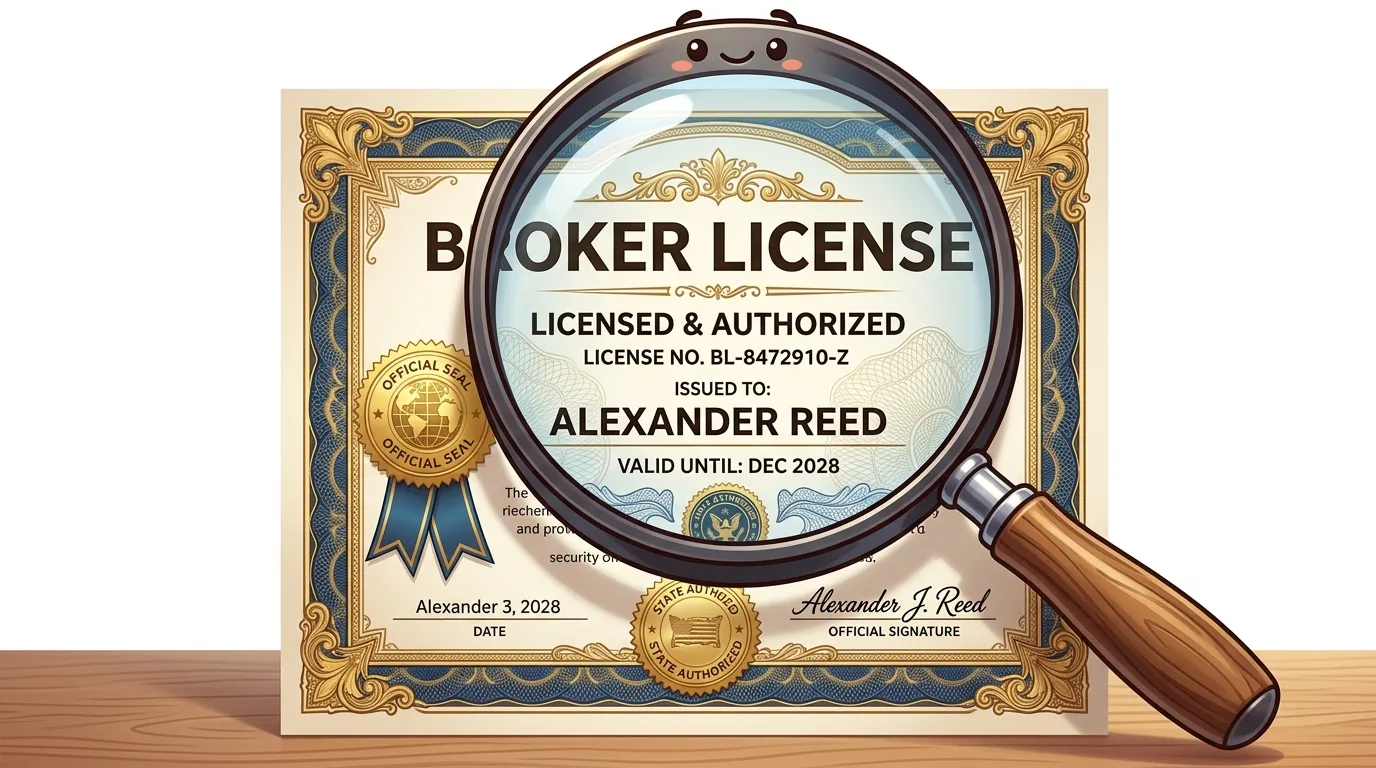
These are some of the common names you'll encounter. I've traded with most of them via their offshore arms.
Exness: Hugely popular for its seemingly unlimited use and easy account opening. Their Exness review details this. I used them years ago for scalping. Execution was fast, but spreads could widen dramatically during news. The withdrawal to my SA bank account took 4 days and incurred a $30 fee plus my bank's charges. It works, but it's not cheap.
IC Markets: Known as a 'true ECN' broker with raw spreads. My experience with IC Markets has been largely positive on execution. They offer a 'True ECN' account where you pay a commission. This can be cheaper for high-volume strategies like scalping. Funding via international transfer is the norm.
XM: Another CySEC-headquartered broker with a global presence. They're known for generous deposit bonuses (which I advise you to be very cautious about) and a wide range of instruments. I found their platform stable, but their customer support was slow to resolve a ticket about a dividend adjustment on a CFD.
Pepperstone: An Australian broker with a strong UK/EU presence. They are often praised for their technology and Razor account. Check the Pepperstone review for specifics. I haven't traded with them personally from SA, but colleagues report similar funding/withdrawal challenges as with others.
Here’s a hard truth from my own ledger: In 2019, I made a €2,100 profit trading gold (XAU/USD) with one of these brokers. By the time the money was converted back to ZAR and landed in my account, the effective profit was about R31,000 instead of the R36,000+ it should have been. Fees and a poor exchange rate ate the rest. That's a hidden cost you must factor in.
💡 Winston's Tip
The allure of 1:500 use is a siren song for the inexperienced. It's not a tool for making money faster, it's a tool for losing your entire account in one bad trade. Cap your use voluntarily, even if they offer more.
“A 1:500 use means a 20-pip move against you can wipe out 10% of your margin. Most traders don't grasp that math until it's too late.”
This is the practical guide you need. Minimizing friction and cost is key.
Step 1: Choose the Right Account Currency. If you're trading global pairs (EUR/USD, GBP/JPY), open your account in USD, not EUR or ZAR. USD is the world's reserve currency, and conversion spreads are usually tightest to/from USD. Your South African bank will give you a better ZAR/USD rate than the broker will give you a ZAR/EUR rate.
Step 2: Use a Specialist Forex Account. Most major SA banks (FNB, Standard Bank, Absa) offer 'Global Accounts' or 'Forex Investment Accounts.' Open one. You can convert ZAR to USD within this account at a commercial rate (close to interbank), which is far better than the standard retail rate. Then, you instruct a USD SWIFT transfer from this account to the broker.
Step 3: The SWIFT Transfer. You'll need the broker's banking details (often a bank in Estonia, Cyprus, or Australia). Include your account number as the reference. The cost is typically a flat fee ($20-$40) plus a correspondent bank fee ($10-$20). It's not cheap, so consolidate your deposits. Don't send R2,000 every week. Save up and send R20,000 once.
Step 4: Withdrawals – Plan Ahead. Initiate withdrawals well before you need the cash. Always withdraw in the account currency (USD) back to your South African forex account. Let your local bank convert it to ZAR, not the broker.

Pro Tip: Before you commit to a broker, do a test. Contact their support and ask: 'What are the full fees for a USD withdrawal to a South African bank account, and how long does it take?' Their answer will tell you a lot about their efficiency and transparency.

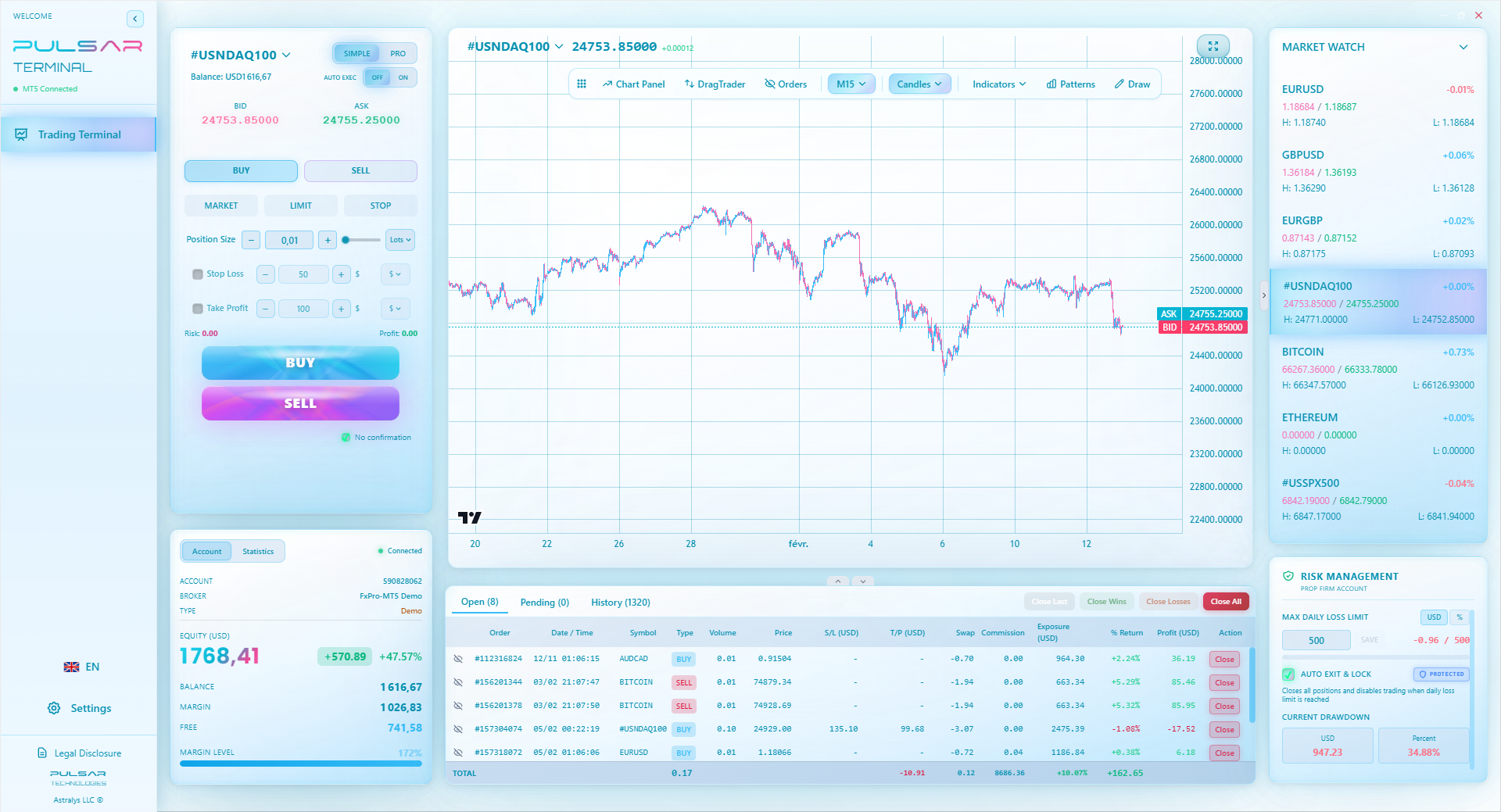
Managing complex trades and strict risk rules across different sessions is easier with tools that automate the process directly on your MT5 platform.
Pulsar Terminal
The all-in-one MT5 companion: drag-and-drop orders, multi-TP/SL, trailing stop, grid trading, Volume Profile, and prop firm protection. Used by 1,000+ traders daily.
After all these caveats, is there a good fit? Yes, for a specific type of trader.
You might be a good fit if:
- You are an experienced trader with a proven, disciplined strategy.
- Your trading style requires specific conditions only they offer (e.g., raw ECN spreads for high-frequency scalping, access to specific European equity CFDs).
- You trade in sizes where the slightly better spreads/execution outweigh the funding costs and administrative hassle.
- You have a dedicated South African forex bank account to manage currency conversions efficiently.
- You are comfortable with the legal and tax implications of trading through an offshore entity.
You should probably look at a local FSCA broker if:
- You are a beginner or intermediate trader. The simplicity of instant EFTs and local support is useful.
- You trade with smaller capital (under R50,000). The fees will eat a disproportionate chunk of your profits.
- You value simplicity and direct recourse. Having the FSCA as a local regulator provides tangible peace of mind.
- Your strategy doesn't require ultra-low-latency or exotic instruments. For trading the EUR/USD or XAU/USD with a swing trading approach, a good local broker is often sufficient.
The bottom line? European brokers offer a professional-grade toolkit, but you pay for it in complexity and hidden costs. For most South Africans starting out, a reputable local broker is the smarter, safer choice. You can always graduate to a European platform later, once your trading business is generating enough profit to justify the overhead.
💡 Winston's Tip
Before funding, do a dummy run. Calculate the total cost of depositing R10,000 and then withdrawing R11,000 (a simulated profit). If the fees eat more than 5% of your profit, the broker's cost structure is working against your edge.
“The slightly better spreads of a European broker are meaningless if funding costs eat your profits.”
Before you click 'Open Account,' run through this list.
Major Red Flags:
- The broker 'guarantees' you will be under EU regulation from South Africa. This is almost certainly false.
- They push you to use cryptocurrency for deposits/withdrawals exclusively. While crypto can be efficient, if it's the only option, it can be a sign they are cutting corners on banking relationships.
- Unrealistic bonus offers. 'Deposit $500, get $500 free!' These bonuses always come with impossible withdrawal conditions (trade 10 million lots). They're designed to make you lose.
- No clear information on which entity you're signing up with. The website should state, 'For clients in South Africa, services are provided by [Company Name] Ltd, registered in [Jurisdiction], License No. XXX.'
Your Pre-Deposit Checklist:
- Identify the contracting entity and its regulator for South African clients.
- Read the Terms & Conditions, especially sections on 'Order Execution,' 'Liquidity,' 'Force Majeure,' and 'Complaints Procedure.'
- Test customer support. Send a pre-sales question via live chat and email. Gauge their response time and clarity.
- Calculate the all-in cost of a deposit and withdrawal cycle using their stated fees and a realistic bank fee.
- Start small. Fund the minimum deposit, test the platform's execution on a demo, and then do a small live trade. Then, try a withdrawal. If that process is smooth, you can consider adding more capital.
Remember, the broker is just the venue. Your success depends 99% on your own strategy, psychology, and risk management. A fancy European platform won't save you from poor discipline. In fact, with higher use available, it can destroy you faster. Focus on your edge first, then find the simplest, most reliable broker that lets you execute it.
FAQ
Q1Are European forex brokers safe for South African traders?
Safety is relative. The European parent company is often well-regulated, but as a South African resident, you'll likely be onboarded to their offshore entity (e.g., in Seychelles or Mauritius). This means you are not protected by EU rules like ESMA use caps or guaranteed negative balance protection. Your funds may be segregated, but your legal recourse is through the offshore jurisdiction, which can be more complex. They are generally operationally safe but offer less regulatory protection than trading with an FSCA-licensed South African broker.
Q2How do I deposit ZAR into a European forex broker?
Direct ZAR deposits are rare. Typically, you must convert your ZAR to USD or EUR first, then send an international SWIFT transfer. The most cost-effective way is to use a dedicated forex account from your South African bank (like an FNB Global Account), convert ZAR to USD there at a good rate, and then SWIFT the USD to the broker. Expect fees (R200+ from your bank, plus correspondent bank fees) and a processing time of 3-5 business days.
Q3What is the use I can get with a European broker from SA?
While the EU caps use at 1:30 for retail clients, the offshore entities used for South African clients often offer use from 1:100 up to 1:1000 or even 'unlimited' on some accounts. This is a major selling point but also a major risk. High use amplifies both profits and losses and is the primary reason new traders blow up accounts. Always use a position size calculator and treat high use with extreme caution.
Q4Can I use popular platforms like MT5 with these brokers?
Yes, absolutely. One of the main advantages of many European brokers is their offering of strong platforms like MetaTrader 4 (MT4) and MetaTrader 5 (MT5). They often provide stable, low-latency connections to their servers. Some also offer advanced proprietary platforms or integration with third-party tools for analysis and automated trading.
Q5How are my trading profits taxed if I use a European broker?
The broker will not withhold tax for the South African Revenue Service (SARS). It is your responsibility to declare all trading profits (and losses) as part of your taxable income in South Africa. You must keep careful records of all trades, deposits, withdrawals, and currency conversions. It's highly recommended to consult with a South African tax professional who understands forex trading to ensure compliance. Trading through a local FSCA broker may simplify this, as some provide annual tax certificates (IT3(b)).
Q6What happens if I have a dispute with a European broker?
Your first step is the broker's internal complaints procedure. If unresolved, your recourse is with the financial ombudsman or regulator of the specific entity you are contracted with (e.g., the Financial Services Authority of Seychelles). You cannot complain to CySEC or the FCA if you are not their direct client. This process is generally more difficult and slower than dealing with the South African FSCA's dispute resolution mechanisms.
Prof. Winston's Lesson
Key Takeaways:
- ✓EU regulation rarely protects South African clients directly.
- ✓High offshore use (1:500+) is the top reason for account blow-ups.
- ✓Bank fees can consume 5-10% of small profits on international transfers.
- ✓Always verify the legal entity you are contracting with before depositing.
How useful was this article?
Click a star to rate
Weekly Trading Insights
Free weekly analysis & strategies. No spam.
About the Author
David van der Merwe
Emerging Markets Trader
Johannesburg-based trader with 11 years in emerging market currencies. Specializes in ZAR pairs, FSCA-regulated trading, and South African market analysis.
Comments
Risk Disclaimer
Trading financial instruments carries significant risk and may not be suitable for all investors. Past performance does not guarantee future results. This content is for educational purposes only and should not be considered investment advice. Always conduct your own research before trading.
You Might Also Like

Cara Trading Forex Sukses: 7 Prinsip dari Trader Profesional
Cara trading forex sukses dengan 7 prinsip trader pro: manajemen modal, disiplin, journal trading, backtest. Data nyata, bukan janji profit palsu.
Jam Trading Forex Terbaik untuk Trader Indonesia: Panduan Lengkap dengan Tabel Waktu
Panduan jam trading forex untuk trader Indonesia. Tabel 4 sesi dunia, jam emas 20:00-00:00, sesi mana yang harus dihindari. Data akurat + tips dari trader berpengalaman.
Top 5 Sàn Forex Uy Tín Nhất 2026: Review Jujur dari Trader Indonesia
Top 5 sàn forex uy tín 2026 untuk trader Indonesia. Review jujur: spread, deposit, withdraw, dukungan lokal. Exness, XM, IC Markets & lebih.
Get Pulsar Terminal
All these calculators are built into Pulsar Terminal with real-time data from your MT5 account. One-click position sizing, automatic risk management, and instant calculations.
Get Pulsar Terminal