


Let's cut the crap.

Olumide Adeyemi
West African Trading Pioneer ·  Nigeria
☕ 10 min read
What you'll learn:
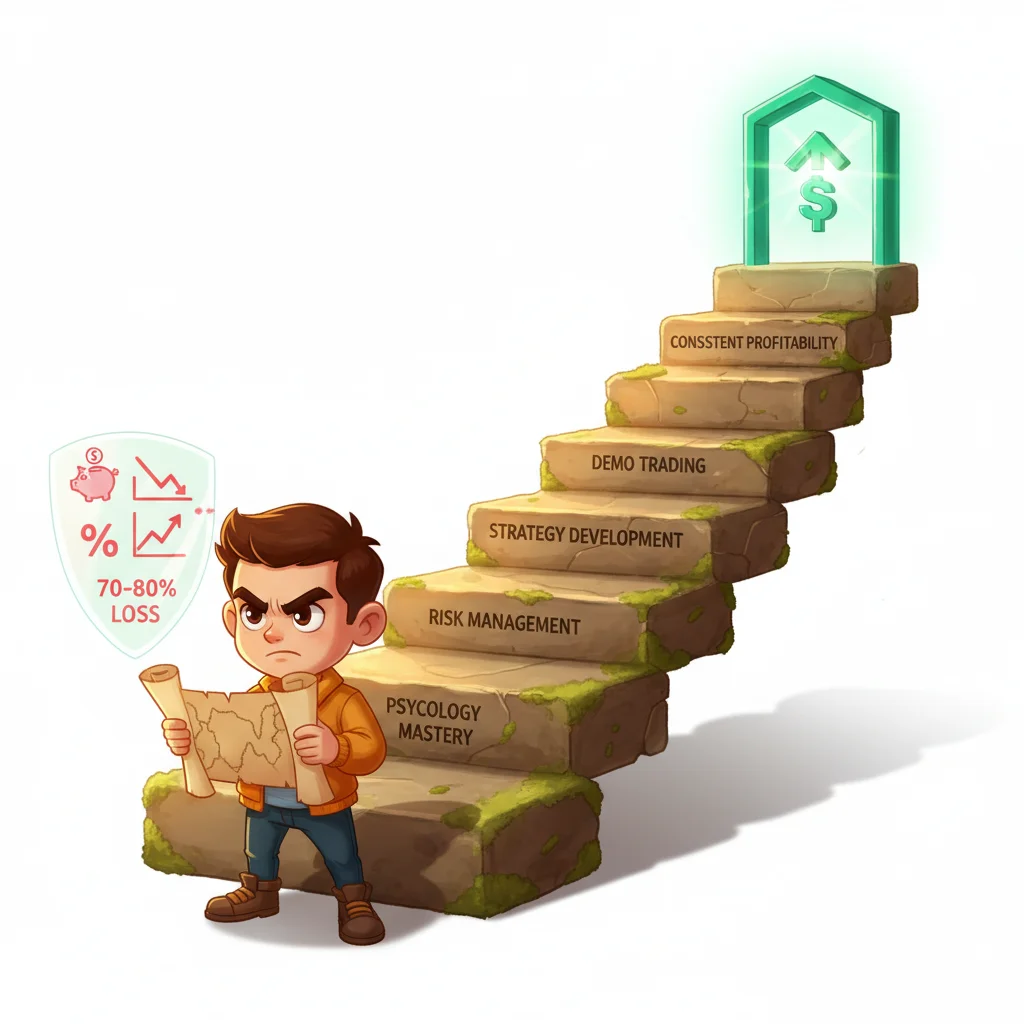
Let's cut the crap. Everyone in Nigeria is talking about forex and cryptocurrency, and 90% of them are about to get wiped out. The promise of quick money from your phone is a siren song that's sinking more ships than it's launching. I've been trading through bull markets, bear markets, and outright bans. This isn't about getting rich quick. It's about understanding the battlefield so you don't become another casualty. I'll show you the real landscape, the traps, and the few things that actually work.
Trading in Nigeria isn't like trading in London or New York. You're operating in a unique environment defined by three things: regulatory uncertainty, economic pressure, and pure, unadulterated hustle. The Central Bank of Nigeria (CBN) has had a famously rocky relationship with crypto, and forex access for the average person is a constant headache. This creates a wild west atmosphere where scams ("FX Guru" courses, fake signal groups) flourish alongside genuine opportunity.
Why does everyone want in? Look around. Inflation is eating salaries alive. The naira's value swings like a pendulum in a storm. People are desperate for a hedge, for a side hustle, for anything that can beat the system. Forex and cryptocurrency promise that escape. But here's the kicker: desperation is the worst trading strategy there is. It makes you take stupid risks. I've seen guys blow three months' salary in a week because they were trying to solve all their problems with one perfect trade.

Warning: The most dangerous phrase in Nigerian trading is "God will do it." Faith is great for your soul, terrible for your stop-loss. The market doesn't care about your prayers.
You need to understand this context. You're not just trading charts; you're trading against the backdrop of cash scarcity, high data costs, and power outages. Your edge isn't just analysis. It's resilience.

“Desperation is the worst trading strategy there is.”
They get lumped together, but forex and cryptocurrency are different beasts. Choosing the wrong one for your personality is a classic rookie mistake.
The Forex Game
Forex is the old guard. It's primarily about major pairs like EUR/USD, GBP/USD, and USD/JPY. Liquidity is massive, spreads are tight (on good brokers), and it's open 24/5. For Nigerians, trading forex often means trading the USD/NGN pair indirectly through CFDs, as direct access is restricted. The moves are generally slower, more technical, and driven by macroeconomic data, central bank policies, and geopolitics.
I made my first consistent money in forex. Back in 2015, I nailed a long-term swing trading setup on EUR/USD. Bought at 1.0850, rode it for months, and took profit in chunks at 1.1300 and 1.1450. The patience it taught me was useful. You can learn a lot from a detailed EUR/USD guide.
The Crypto Circus
Cryptocurrency is the volatile, never-sleeping newcomer. A 10% day is considered quiet. It trades 24/7, driven by hype, fear, institutional adoption news, and Elon Musk's tweets. The spreads can be wider, and the liquidity varies wildly between Bitcoin and some random meme coin.
My biggest crypto lesson came from a loss. In the 2021 bull run, I got greedy on an altcoin. Bought SOL around $40, watched it rocket past $200. I didn't take profit. I was dreaming of $500. It reversed hard, and I ended up closing at $95. A win on paper, a massive failure in psychology. I broke every rule I knew from forex.
The table below breaks it down:
| Feature | Forex (Major Pairs) | Cryptocurrency (Majors like BTC, ETH) |
|---|---|---|
| Market Hours | 24/5 | 24/7/365 |
| Volatility | Lower, predictable | Extremely high, erratic |
| Key Drivers | Interest rates, GDP, employment | Sentiment, adoption, regulation, tech news |
| Best For | Discipline, technical analysis, patience | High risk tolerance, handling emotional swings |

Pro Tip: Start with forex to learn discipline and risk management. Then, if you must, allocate a small, separate "mad money" account for crypto. Never mix the two mindsets in one account.

💡 Winston's Tip
Your phone is your biggest enemy. Turn off all trading notifications, especially P&L updates. You should only be checking your trades at pre-defined times, not every minute.
“The trade you don't take can't lose you money.”
This is where Nigerians get butchered. Choosing a broker is more critical than your trading strategy. A bad broker will steal your money through re-quotes, ridiculous spreads, or just not letting you withdraw.
You need a broker that accepts Nigerian clients, offers local deposit/withdrawal options (bank transfer, maybe even USSD), and is properly regulated by a reputable authority like ASIC (Australia), FCA (UK), or CySEC (Cyprus). Never, ever use an unregulated "bucket shop" broker, no matter how fancy their Instagram ads look.
From my experience, international brokers like IC Markets, Pepperstone, and XM have served the Nigerian community reliably. They offer raw spread accounts that are essential for strategies like scalping. I've used IC Markets for years. Their spreads on EUR/USD regularly hit 0.0 pips during London session, which is crucial. A wide spread turns a winning strategy into a loser before you even start.
For crypto, you're looking at exchanges like Binance (despite its local issues), Bybit, or OKX. Then, you connect that exchange to a trading platform like TradingView or MT5 for actual charting. It's more fragmented than forex.
The single most important step after signing up? Test withdrawals with a small amount before you fund your account with serious money. If there's a problem, you want to find out when you're risking $20, not $2,000.

“The trade you don't take can't lose you money.”
Forget the secret 100% win rate indicator. It doesn't exist. Your survival hinges on risk management and a simple, repeatable process. Here's a blunt truth: your first goal is not to make money. Your first goal is to not lose money. Sounds obvious, right? Almost nobody does it.
The 1% Rule: Never, ever risk more than 1% of your trading capital on a single trade. This is non-negotiable. If you have a 100,000 Naira account, your maximum loss per trade is 1,000 Naira. Use a position size calculator every single time. This one rule alone will keep you in the game long enough to learn.
Keep It Stupid Simple (KISS): Pick one or two instruments. Master them. For forex, that's probably EUR/USD. For crypto, maybe just BTC/USD. Learn how they move. Then, use one or two indicators to confirm your bias, not to give you the bias. I combine support/resistance with the RSI indicator for divergence and the MACD indicator for trend momentum. That's it.

Example: You have a 200,000 Naira account (1% risk = 2,000 Naira). You want to buy USD/JPY at 150.00, with a stop-loss at 149.70 (30 pips risk). Position size = (Account Risk) / (Pips Risk x Pip Value) Pip value for a micro lot (0.01) on USD/JPY is roughly 6.7 Naira. So, 2,000 Naira / (30 pips * 6.7 Naira) = ~0.99 lots. You'd round down to 0.09 lots (9 micro lots) to stay under your risk. See? Math saves you.
Your strategy must account for Naira volatility too. If you're funding in Naira and trading USD pairs, a falling Naira can artificially inflate your account balance, making you feel richer than you are. Don't get cocky.
💡 Winston's Tip
If you feel a strong urge to enter a trade, that's your signal to wait 15 minutes. Impulse is the market's bait.

“Your first goal is not to make money. Your first goal is to not lose money.”
This is the real battlefield. The charts are just a mirror. I've blown up accounts. I've revenge traded. I've held losers hoping they'd come back (they never do). The market is designed to exploit every flaw in human psychology: greed, fear, hope, and ego.
The Nigerian Hustle Mentality is Your Enemy. We're taught to hustle, to push, to force opportunities. In trading, that mentality will destroy you. You can't force a trade. You have to wait, patiently, for the market to give you an opportunity. Then you take it with precision and get out. The rest of the time, you do nothing. This is profoundly difficult for an energetic hustler to accept.
Fear of Missing Out (FOMO): This is rampant in crypto. You see a coin pumping 50% in an hour, you jump in near the top, and it dumps. You're left holding a bag. I've been there. The trade you don't take can't lose you money.
Dealing with Losses: You will have losing trades. Many of them. A 40% win rate with good risk/reward can be highly profitable. You must accept the loss, learn from it if there's a lesson, and move on. Don't try to immediately "get it back." That's the path to a margin call.
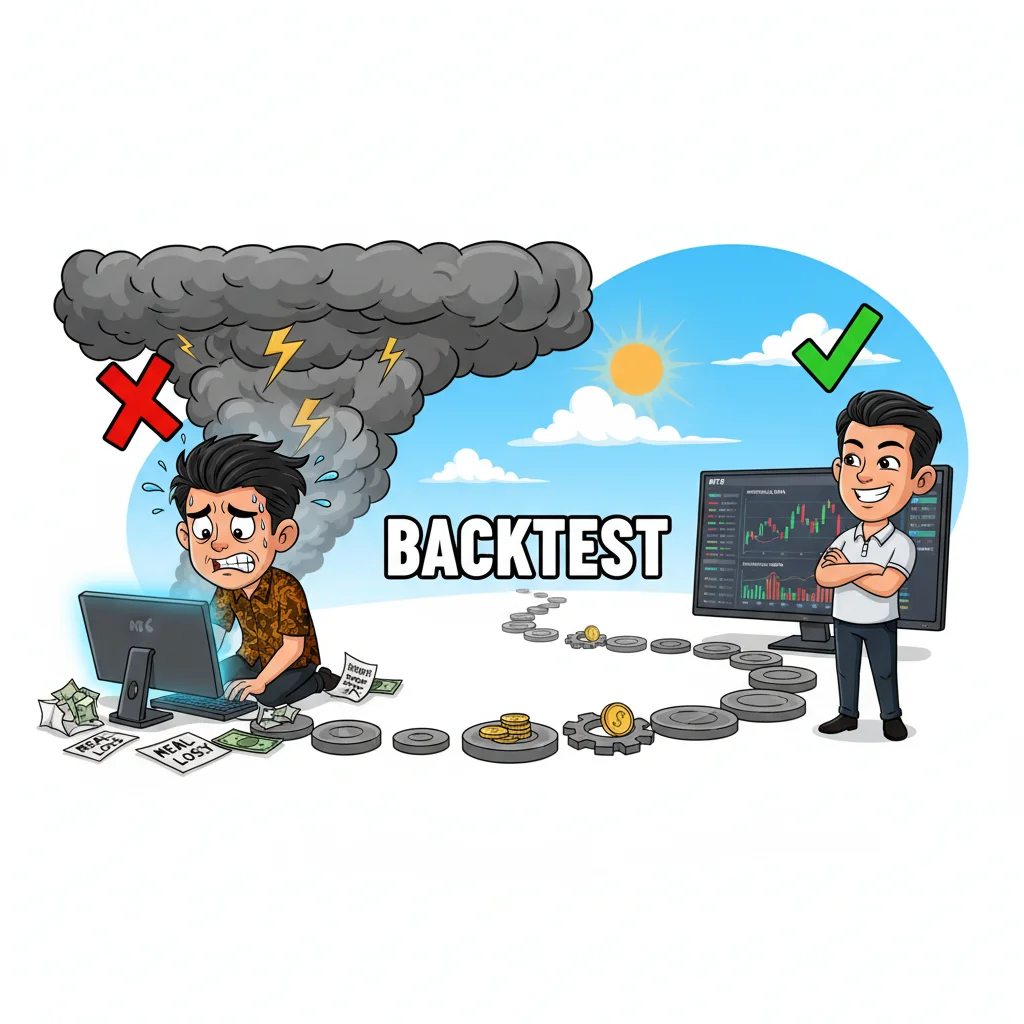
The best tool for psychology is a trading journal. Not just "bought here, sold there." Write down your emotion before the trade: "Feeling impatient because I haven't traded in two days." That emotion is a huge red flag. It will make you see setups that aren't there.
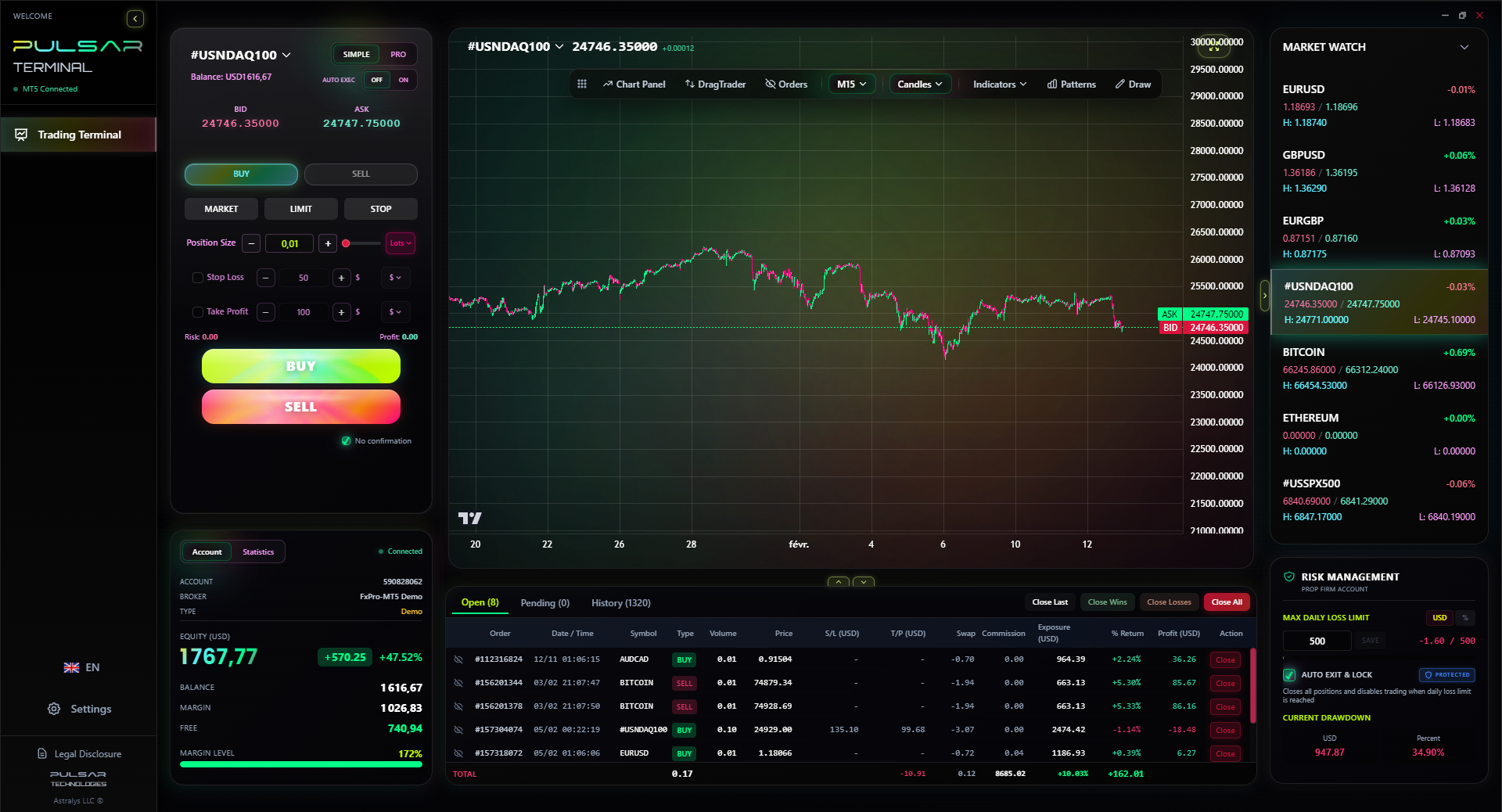
Managing the emotional chaos of trading requires iron-clad rules, and Pulsar Terminal lets you set automated trade management (like trailing stops and partial closures) so your psychology can't sabotage your plan.
Pulsar Terminal
The all-in-one MT5 companion: drag-and-drop orders, multi-TP/SL, trailing stop, grid trading, Volume Profile, and prop firm protection. Used by 1,000+ traders daily.
“Your first goal is not to make money. Your first goal is to not lose money.”
Let's talk about the elephant in the room. The legal and tax framework for forex and cryptocurrency trading in Nigeria is... fuzzy. The CBN has banned banks from facilitating crypto transactions, yet peer-to-peer (P2P) trading is booming. Forex trading via international brokers exists in a gray area.
Taxes: The Federal Inland Revenue Service (FIRS) is increasingly interested in digital assets. While there's no crystal-clear crypto tax law yet, trading profits could potentially be considered taxable income. For forex trading with international brokers, the situation is even less defined. My non-legal, practical advice? Keep careful records of all your deposits, withdrawals, and trades. If and when the law becomes clear, you'll be ready. Consult a Nigerian accountant who understands digital assets. Don't stick your head in the sand.
Withdrawals: This is a practical headache. Withdrawing profits from an international forex broker to your Nigerian bank account can trigger questions from your bank, as it's an inbound forex transfer. You may need to provide documents showing the source of funds. For crypto, you're likely using P2P platforms. Be smart. Use reputable escrow services, meet in safe public places if doing cash, and verify everything. The P2P market has its own scammers.
You are operating on the frontier. That means opportunity, but it also means you have to be twice as careful, twice as documented, and twice as smart about your operational security as a trader in a more established jurisdiction.
💡 Winston's Tip
Keep a 'Stupid Tax' log. Every time you break your own rules and lose money, write the amount down. You'll be shocked how quickly it adds up, and it's a powerful deterrent.
“The Nigerian Hustle Mentality is your enemy in the markets.”
Okay, you're still reading. You're serious. Here's a step-by-step plan for your first 100,000 Naira trading capital. Notice I didn't say "with" your first 100k, I said "for" it. The capital is a tool, not a target.
- Education (Cost: Time): Spend a month learning. Not from Instagram gurus. Read Babypips.com (free). Understand what a pip is, what use is, what a stop-loss is. Paper trade for at least another month. Prove to yourself you can follow a plan without real money on the line.
- Broker Setup (Cost: Maybe $10): Fund a reputable international broker with the absolute minimum. For IC Markets or Pepperstone, that's like $200 (about 300k Naira). I know, it's steep. If that's too much, save up. Do not look for a cheaper, shady alternative. That $200 is your tuition fee. Use a broker with a proper Exness review or other trusted analysis.
- Trade Micro Lots: When you go live, only trade micro lots (0.01). Your goal for the first six months is not profit. Your goal is to execute 100 trades following your 1% risk rule and your simple strategy perfectly. If you end break-even, you're a massive success. You've just bought a priceless education.
- Scale Slowly: After 100 consistent trades, you can consider moving to mini lots (0.10). Increase your position size by 10%, not 100%. This game is a marathon of compounding small, consistent gains, not a sprint to a Lamborghini.
I started with $500. I turned it into $700, then back to $450, then to $800 over six months. The net gain was pathetic. The experience was worth ten times my starting capital. That's the mindset you need.

FAQ
Q1Is forex and cryptocurrency trading legal in Nigeria?
It's complex. Forex trading with international brokers operates in a gray area but is common. The CBN has banned banks from dealing in crypto, but peer-to-peer (P2P) trading is not illegal for individuals. You're not breaking the law by holding crypto in a private wallet. Always get current legal advice.
Q2What is the minimum amount I need to start trading forex in Nigeria?
With a reputable international broker, the minimum is often around $200 (approx. 300,000 Naira). While some offshore brokers offer lower minimums, they often come with higher risk. It's better to save up for a proper broker. Your first goal is to preserve capital, not to start with peanuts.
Q3Which is more profitable, forex or cryptocurrency?
This is the wrong question. Cryptocurrency has higher volatility, meaning potential for faster gains AND faster losses. Forex is generally slower and more predictable. Profitability depends 100% on the trader's skill and risk management, not the market. A disciplined trader can be profitable in either. A greedy one will lose in both.
Q4How do I withdraw my trading profits to my Nigerian bank account?
For forex brokers, you request a withdrawal back to the method you deposited with (often a bank wire). Your bank may ask for documentation. For crypto, you'll typically sell your crypto for Naira on a P2P platform (like Binance P2P) and have the buyer send Naira to your bank account. Always use the platform's escrow service.
Q5Can I trade gold (XAU/USD) as a Nigerian trader?
Yes, absolutely. Gold (XAU/USD) is a popular CFD instrument offered by most international brokers. It's often seen as a hedge against inflation and currency weakness. It behaves differently to currency pairs, so study it specifically. We have a full XAU/USD guide that breaks it down.
Q6What's the biggest mistake Nigerian traders make?
Using too much use. A broker offers 1:500 use, and a new trader thinks it's free money to control a huge position. They put on a trade that's too big, a small move against them wipes out their account. use is a tool, not a multiplier for gains. It's a multiplier for risk.
Q7Do I need a VPN to trade forex or crypto in Nigeria?
For forex with international brokers, usually no. For accessing some global crypto exchanges that may have geo-restrictions, a reliable VPN is sometimes necessary. However, always check your broker's Terms of Service, as some prohibit VPN use. Don't use a VPN to circumvent KYC/AML checks - that's a red flag.
Prof. Winston's Lesson
Key Takeaways:
- ✓Never risk more than 1% of your capital per trade.
- ✓Master one instrument before even looking at another.
- ✓A 40% win rate with good risk management beats a 90% win rate with poor management.
- ✓Your trading journal is more important than your charting software.
How useful was this article?
Click a star to rate
Weekly Trading Insights
Free weekly analysis & strategies. No spam.
About the Author
Olumide Adeyemi
West African Trading Pioneer
One of Nigeria's most active forex trading educators. 8 years of experience trading from Lagos. Specializes in low-capital strategies and prop firm challenges for African traders.
Comments
Risk Disclaimer
Trading financial instruments carries significant risk and may not be suitable for all investors. Past performance does not guarantee future results. This content is for educational purposes only and should not be considered investment advice. Always conduct your own research before trading.
You Might Also Like

Cara Trading Forex Sukses: 7 Prinsip dari Trader Profesional
Cara trading forex sukses dengan 7 prinsip trader pro: manajemen modal, disiplin, journal trading, backtest. Data nyata, bukan janji profit palsu.
Jam Trading Forex Terbaik untuk Trader Indonesia: Panduan Lengkap dengan Tabel Waktu
Panduan jam trading forex untuk trader Indonesia. Tabel 4 sesi dunia, jam emas 20:00-00:00, sesi mana yang harus dihindari. Data akurat + tips dari trader berpengalaman.
Top 5 Sàn Forex Uy Tín Nhất 2026: Review Jujur dari Trader Indonesia
Top 5 sàn forex uy tín 2026 untuk trader Indonesia. Review jujur: spread, deposit, withdraw, dukungan lokal. Exness, XM, IC Markets & lebih.
Get Pulsar Terminal
All these calculators are built into Pulsar Terminal with real-time data from your MT5 account. One-click position sizing, automatic risk management, and instant calculations.
Get Pulsar Terminal