


I lost N450,000 in two weeks.

Olumide Adeyemi
West African Trading Pioneer ·  Nigeria
☕ 10 min read
What you'll learn:
- 1Why Most Forex Books Fail Nigerian Traders
- 2The Must-Read Foundation Books (Start Here)
- 3Advanced Books for Strategy Development
- 4Books to Avoid Like a Bad Trade
- 5Applying Book Knowledge to the Naija Market
- 6My Personal Experience With These Books
- 7Building Your Own Trading Library
- 8Final Word: Books Are a Tool, Not a Savior

I lost N450,000 in two weeks. This was back in 2012, fresh off reading a popular forex book that preached a complex, multi-indicator system. I followed it to the letter, convinced I had the 'secret.' The problem? The book was written for a different market, with different psychology, and assumed I had a $100,000 account. It didn't mention anything about managing the emotional rollercoaster when your trading capital is your 'side hustle' money from Lagos. That's when I realized most forex books are generic. You need the right ones, and you need to know how to apply them here. Let's talk about the books that will actually build your foundation, and the ones you should leave on the shelf.
Walk into any bookstore in Ikeja or order online, and you'll find shelves of forex books promising riches. 90% of them have a fundamental flaw for us: they're written for a Western, institutional mindset. The author assumes you're trading with disposable income, a stable power grid, and a psychological detachment that just isn't realistic when you're juggling a 9-5 in VI and checking charts on your phone during lunch.
These books often ignore the core realities of our market. They don't discuss how CBN policies can cause wild, news-driven spikes in USD/NGN pairs that blow through stop losses in seconds. They rarely touch on the mental strain of trading with capital that feels more precious because of our economic climate. They'll teach you a perfect head-and-shoulders pattern but won't tell you what to do when your internet drops during a crucial breakout - a regular Tuesday in most parts of Nigeria.

Warning: A book that spends 300 pages on exotic indicators but only a paragraph on position size calculator and risk management is dangerous. It's teaching you to drive a Formula 1 car before you know how to use the brakes.
The best forex books for Nigerians are the ones that focus on timeless principles: market structure, price action, and, above all, trader psychology. The mechanics of a pip definition are the same worldwide, but the mindset needed to protect your capital in a volatile, sometimes opaque market like ours is unique. You need books that give you a framework, not a rigid system.
Don't even think about advanced strategies until you've absorbed these three. I re-read them annually, and my notes get longer each time.
1. Trading in the Zone by Mark Douglas
This isn't a strategy book. It's a psychology manual. Douglas drills into the probabilistic nature of markets - the idea that any single trade is a guess, but a series of trades with an edge will be profitable. For Nigerian traders, who often face pressure to 'make it big quickly,' this book is a lifeline. It teaches you to detach from the outcome of one trade and focus on the process. If you only read one book, make it this one. It will save you more money than any indicator ever could.
2. The Disciplined Trader by Mark Douglas
Yes, another Douglas book. It's that important. While Trading in the Zone is about mindset, The Disciplined Trader is about building the habits to support that mindset. It tackles the internal conflicts that cause self-sabotage: fear of missing out (FOMO), revenge trading after a loss, and the inability to pull the trigger. I can trace my first consistent profitable quarter directly back to implementing the daily routines suggested in this book.
3. Japanese Candlestick Charting Techniques by Steve Nison
This is your language primer. Before you learn grammar (strategies), you need to know the alphabet. Candlesticks are the alphabet of price action. Nison's book is the definitive guide. Understanding what a doji, hammer, or engulfing pattern signifies in terms of market sentiment is crucial. It allows you to read the chart directly, without the lag of an indicator. This skill is especially valuable in our market, where you need to make quick, clean decisions. Pair this knowledge with a solid understanding of the MACD indicator or RSI indicator for confluence, and you have a powerful core skill set.

💡 Winston's Tip
When you finish a trading book, write a one-page summary in your own words. If you can't explain the core idea simply, you didn't really understand it.

“A book that spends 300 pages on indicators but only a paragraph on risk management is teaching you to drive without brakes.”
Once your psychology and chart-reading basics are solid, these books will help you build and refine your own edge.
Market Wizards by Jack D. Schwager
This series interviews the greatest traders of a generation. The key takeaway? There is no single 'right' way to trade. Some are fundamental analysts, some are technical, some are quantitative. But they all share ruthless discipline and strong risk management. Reading this showed me that my swing trading approach could be just as valid as a scalping strategy, as long as it suited my personality and lifestyle.
The Complete TurtleTrader by Michael W. Covel
This is the true story of a famous trading experiment. Legendary traders Richard Dennis and William Eckhardt taught a group of complete strangers (the 'Turtles') a mechanical trend-following system. The result? Many became millionaires. The book breaks down the exact rules. The lesson isn't to copy the system blindly (markets have changed), but to see the power of a simple, rules-based approach executed with extreme consistency. It will make you question why you're using 10 indicators when 2 might do.

Pro Tip: When testing a system from a book like this, paper trade it first on the specific pairs you care about, like EUR/USD or XAU/USD. See how it behaves during Lagos trading hours and around CBN announcement times. A system built on EUR/USD data from 2010 might choke on today's volatility.
Technical Analysis of the Financial Markets by John J. Murphy
Consider this the university textbook. It's complete, covering everything from Dow Theory to intermarket analysis. It's not a page-turner, but it's an useful reference. When you hear about a new concept - say, Fibonacci retracements or volume spread analysis - this is where you go to get the clear, unbiased textbook definition before some 'guru' on YouTube twists it.
Just as important as knowing what to read is knowing what to ignore. These categories will cost you time and money.
1. The 'Get Rich Quick' Forex Books. Any book with a title like 'Forex Millions in 30 Days!' or featuring a cover with a guy on a yacht. These are pure fantasy. They sell a dream, not a skill. Trading is a profession, not a lottery. If the strategy inside was so foolproof, why would the author sell it for N5,000 instead of using it?
2. Overly Complex, System-Heavy Tomes. I fell for this early on. Books that present a 'proprietary system' requiring you to plot 15 custom indicators on your chart. They create analysis paralysis. By the time you've configured everything, the move is over. In the fast-moving Nigerian market, where you might be trading on a mobile connection, simplicity and speed are king. Complexity is often used to mask a lack of deep understanding.
3. Outdated Books Ignoring Modern Brokerage. Books written before 2010 that don't account for low-spread definition ECN brokers, advanced order types, or the prevalence of CFDs. Their risk calculations and broker advice are often obsolete. For instance, they might warn against brokers that are now considered top-tier, like IC Markets review or Pepperstone review, which offer the tight spreads and reliable execution Nigerian traders need.

“Your most important trading chapter will be written by you, one disciplined trade at a time.”
Reading is one thing. Applying it here is another. Here’s how to bridge the gap.
Context is Everything: When a book discusses 'news trading,' it's usually referring to NFP or ECB meetings. For you, the high-impact news is CBN Monetary Policy Committee (MPC) announcements and FAAC allocations. These events can cause massive volatility in USD/NGN and even affect your EUR/USD guide trades due to broader EM sentiment. Mark these dates in your calendar and consider reducing position size or staying out entirely.
Infrastructure Realities: Books assume stable internet and power. We know better. Your trading plan must include contingencies. What is your exit rule if your connection fails? Do you have a mobile data hotspot ready? I learned this the hard way during a trade on XAU/USD guide when PHCN took light. I came back to a significant loss that could have been a small, managed one with a standing stop-loss order.
Capital Realism: Most books use examples with $50,000 accounts. Don't get discouraged. The principles of risking 1-2% per trade are even MORE critical when you start with N200,000. A single margin call can wipe you out. Use a broker with micro or cent accounts, like those detailed in the Exness review or XM review, to practice with real, but psychologically manageable, amounts.

Example: You have a N100,000 account. A classic book says risk 1% per trade. That's N1,000. If your stop loss is 50 pips on GBP/USD, your position size must be calculated so that a 50-pip loss equals N1,000. This discipline, straight from the books, is what prevents a string of losses from ending your journey.
💡 Winston's Tip
Never trade a strategy from a book during its first week on your chart. Back-test it on historical data for at least 50-100 trades to see how it *really* behaves.
Let me give you two real examples, wins and losses, tied directly to these texts.
The Loss That Taught Me Psychology: After reading a complex strategy book, I entered a short on EUR/USD at 1.1050, convinced my indicators were aligned. Price went against me by 20 pips. The book's rule was a 30-pip stop. But my ego kicked in. 'The book is right, the market is wrong,' I thought. I moved my stop loss to 50 pips. Price hit it. I lost N35,000 on that one trade, nearly 7% of my account. I violated every principle in Trading in the Zone. I wasn't trading the market; I was trading my belief in the book.
The Win That Cemented Discipline: In Q3 2023, I saw a textbook pin bar rejection at a key weekly support level on GBP/JPY, a setup straight from Nison's candlestick book. My Disciplined Trader routine had me check the economic calendar - no high-impact news. I entered, placed my stop 15 pips below the pin bar, and set a take-profit at a 2:1 risk-reward ratio. I then closed my laptop and went about my day. No checking every 5 minutes. The trade hit TP. A clean, N24,000 gain. The books provided the knowledge, but my enforced discipline executed it without emotion.
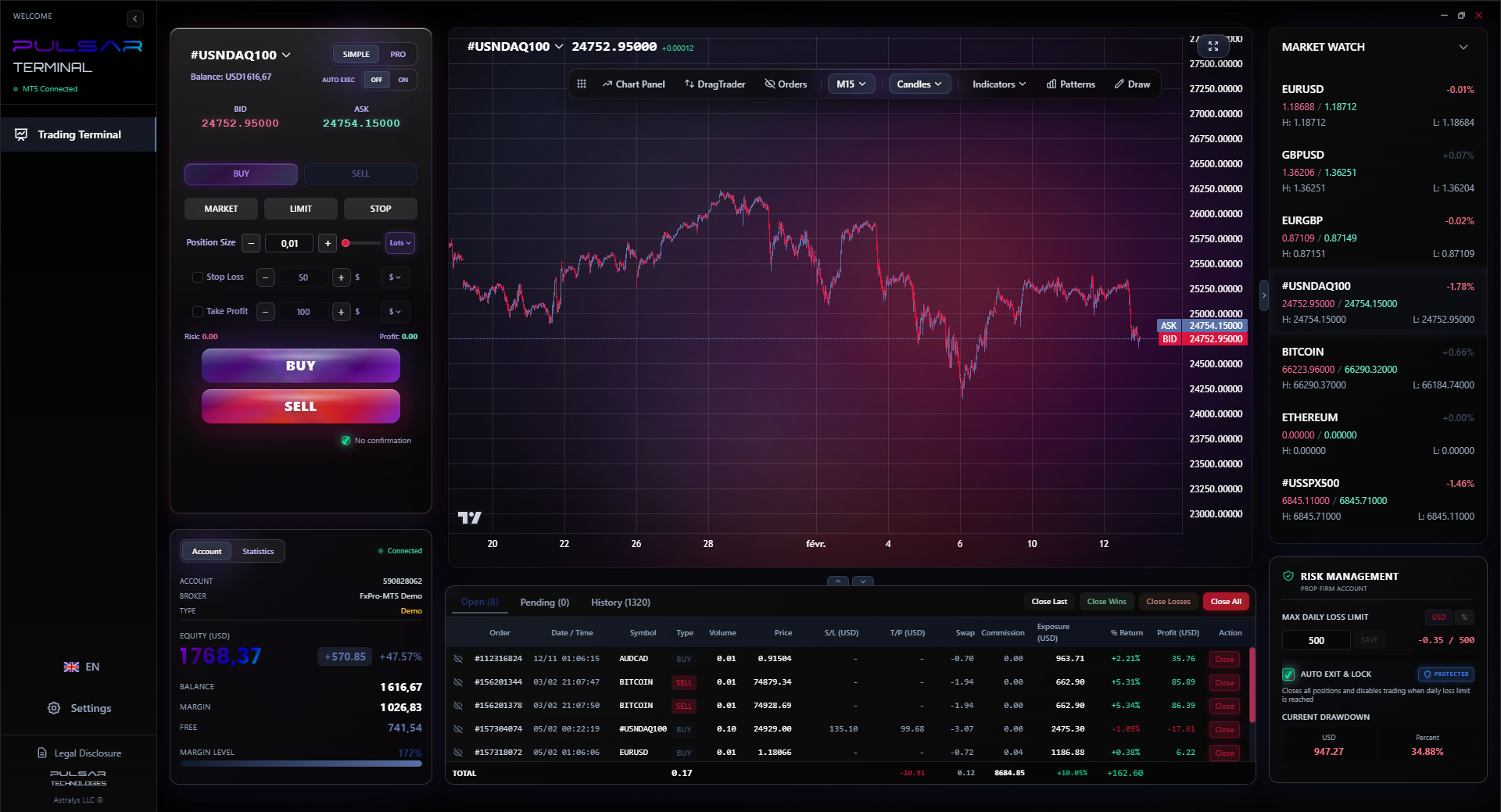
Executing disciplined trades from your book learnings requires precise tools; Pulsar Terminal's drag-and-drop orders and automated multi-TP/SL management on MT5 turn your planned risk-reward ratios into reality with one click.
Pulsar Terminal
The all-in-one MT5 companion: drag-and-drop orders, multi-TP/SL, trailing stop, grid trading, Volume Profile, and prop firm protection. Used by 1,000+ traders daily.
“Complexity in trading books is often used to mask a lack of deep understanding.”
You don't need to buy every book. Start with this curated list.
Phase 1: The Mindset & Basics (Months 1-3)
- Trading in the Zone - Mark Douglas
- Japanese Candlestick Charting Techniques - Steve Nison (Use as a reference, don't try to memorize it all).
Phase 2: Building Process & Perspective (Months 4-6) 3. The Disciplined Trader - Mark Douglas 4. Market Wizards - Jack Schwager
Phase 3: Systemization & Deep Study (Month 6+) 5. The Complete TurtleTrader - Michael Covel 6. Technical Analysis of the Financial Markets - John Murphy (Reference)
Consider your library an investment in your trading business. The N15,000 you spend on these is far better spent than on a 'signals' subscription that will leave you helpless. Re-read them. The second time through, with real trading experience, you'll understand parts you completely glossed over the first time.
No book, no matter how brilliant, will hand you a profitable system. The market is a living thing; books are snapshots of the author's understanding at a point in time. The value of the best forex books is that they give you a framework to build your OWN understanding.
They teach you how to think, not what to think. They provide the concepts - risk management, probability, market structure - that you must then apply and adapt to the Nigerian context, with its unique volatility, infrastructure challenges, and economic drivers.
Start with psychology. Build your chart literacy. Then, and only then, explore strategies. And remember, the most important chapter of your trading story won't be written by Mark Douglas or Steve Nison. It will be written by you, one disciplined trade at a time, based on the solid foundation they helped you pour. Now go read, then go practice.
FAQ
Q1I'm a complete beginner in Nigeria. What is the absolute first forex book I should buy?
Put down the strategy books. Buy 'Trading in the Zone' by Mark Douglas. Read it twice. Your first investment shouldn't be in a magical indicator system, it should be in fortifying your mind against the psychological traps that wipe out 90% of new traders, especially in our high-pressure environment.
Q2Are books about trading stocks useful for forex traders in Nigeria?
The core principles are incredibly useful. Books on market psychology, risk management, and economic cycles are universal. However, books focused solely on stock-picking strategies, P/E ratios, or quarterly earnings won't translate directly. Stick to books about trading as a business and price action analysis, which apply across all speculative markets.
Q3How can I practice the strategies from these books without risking my money?
Open a demo account with a reputable international broker that offers the MT5 platform. Use virtual money to test every concept you read. But here's the key: treat the demo like real money. Start with a virtual amount equal to what you'd really start with (e.g., N200,000). Follow your risk rules religiously. A demo account where you take wild gambles teaches you nothing.
Q4Many books mention 'trading journals.' Is this really necessary for a Nigerian trader?
It's not just necessary, it's non-negotiable. Your journal is where you adapt book knowledge to your reality. Note not just your trades, but also: 'Did PHCN disrupt my analysis?' 'How did the CBN news affect my mindset?' 'Was I trading well during Lagos lunch hours or was I distracted?' This localizes your learning. Your journal is the most important book you'll ever write.
Q5With so much free information online, why should I spend money on forex books?
Free information online is fragmented, often contradictory, and frequently biased (someone is usually selling something). A good book presents a coherent, structured philosophy or system from start to finish. It's a curated education. Think of it this way: you wouldn't try to become a lawyer by only reading random legal blog posts. You'd study textbooks. Trading deserves the same respect.
Q6Can these books help me with trading USD/NGN pairs?
They will help with the universal principles of technical analysis and risk management, which are applicable. However, USD/NGN is heavily influenced by local liquidity, CBN directives, and bureau de change rates - factors most international books don't cover. Use the books to build your analytical framework, but you must layer on your own understanding of Nigerian macroeconomics.
Prof. Winston's Lesson
Key Takeaways:
- ✓Start with trading psychology books before strategy (saves 80% of beginners).
- ✓Risk a maximum of 1-2% of your capital on any single trade.
- ✓Paper trade any new strategy for at least 50 trades first.
- ✓Your trading journal is your single most important tool.
How useful was this article?
Click a star to rate
Weekly Trading Insights
Free weekly analysis & strategies. No spam.
About the Author
Olumide Adeyemi
West African Trading Pioneer
One of Nigeria's most active forex trading educators. 8 years of experience trading from Lagos. Specializes in low-capital strategies and prop firm challenges for African traders.
Comments
Risk Disclaimer
Trading financial instruments carries significant risk and may not be suitable for all investors. Past performance does not guarantee future results. This content is for educational purposes only and should not be considered investment advice. Always conduct your own research before trading.
You Might Also Like

Cara Trading Forex Sukses: 7 Prinsip dari Trader Profesional
Cara trading forex sukses dengan 7 prinsip trader pro: manajemen modal, disiplin, journal trading, backtest. Data nyata, bukan janji profit palsu.
Jam Trading Forex Terbaik untuk Trader Indonesia: Panduan Lengkap dengan Tabel Waktu
Panduan jam trading forex untuk trader Indonesia. Tabel 4 sesi dunia, jam emas 20:00-00:00, sesi mana yang harus dihindari. Data akurat + tips dari trader berpengalaman.
Top 5 Sàn Forex Uy Tín Nhất 2026: Review Jujur dari Trader Indonesia
Top 5 sàn forex uy tín 2026 untuk trader Indonesia. Review jujur: spread, deposit, withdraw, dukungan lokal. Exness, XM, IC Markets & lebih.
Get Pulsar Terminal
All these calculators are built into Pulsar Terminal with real-time data from your MT5 account. One-click position sizing, automatic risk management, and instant calculations.
Get Pulsar Terminal