


I lost R4,200 in under 90 seconds.

David van der Merwe
Emerging Markets Trader ·  South Africa
☕ 9 min read
What you'll learn:
- 1What Exactly Is a Forex Calendar (And Why You Can't Ignore It)
- 2The Events That Actually Move the Needle (Forget the Rest)
- 3How to Trade the News: Three Practical Strategies
- 4The South African Context: Trading ZAR Pairs & Odd Hours
- 5The Top 3 Calendar Mistakes That Wreck Accounts
- 6Your Daily Forex Calendar Routine
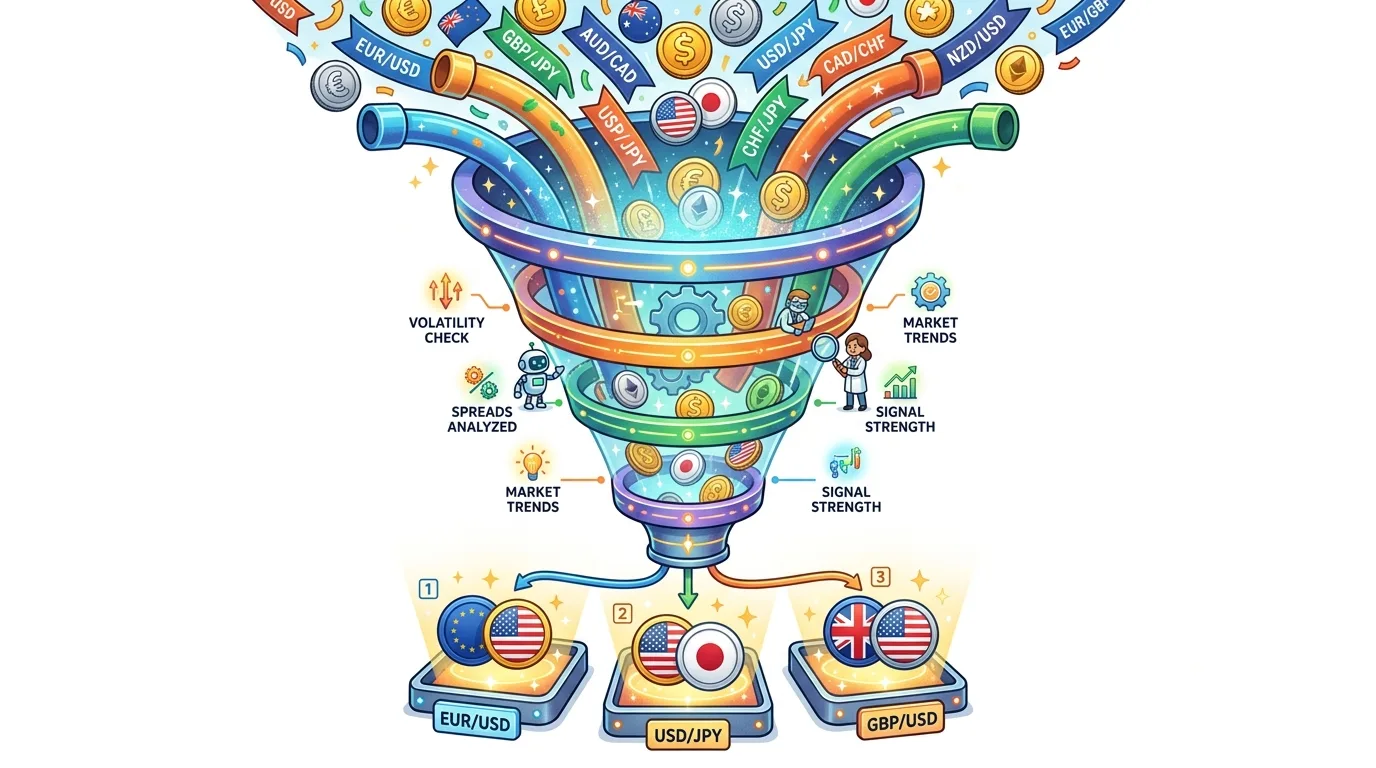
I lost R4,200 in under 90 seconds. It was a Thursday afternoon, and I was short on EUR/USD. The trade was fine, until the US CPI data hit. The number wasn't just high, it was a shocker. The pair spiked 45 pips against me before I could even blink, triggering my stop-loss. I hadn't checked the forex calendar. That single, stupid mistake turned a winning week into a loser. In South Africa, with our volatile Rand and odd market hours, ignoring the economic diary isn't just careless, it's a surefire way to blow up your account. This guide is how you avoid my mistake.
Think of a forex calendar as the market's diary of scheduled appointments. It lists the times, dates, and expected importance of economic data releases, central bank speeches, and political events. It's not a crystal ball, but a risk management tool. For us trading from SA, it's critical because major US and European data often drops during our late afternoon or early evening. You might be making dinner while the Fed is tanking your portfolio.
The calendar tells you three things: the event (e.g., US Non-Farm Payrolls), the previous result, the forecast, and the actual result when it lands. The real magic (and danger) is in the deviation - the gap between the forecast and the actual number. A big miss or beat is what causes those violent, 30-second candles that wipe out trades. I learned this the hard way. Now, I never place a swing trade without scanning the next 48 hours on the calendar first. It's as essential as checking your position size calculator.

Warning: A quiet calendar doesn't mean no risk. Unscheduled news (a sudden SARB comment, a geopolitical flare-up) can happen anytime. The scheduled events are just the landmines you can see on the map.

Not all calendar events are created equal. Most are noise. You need to focus on the high-impact ones, often marked with red flags or three bulls on calendars. Here’s what moves markets for real.
Central Bank Decisions & Statements
This is the big one. The US Federal Reserve (Fed), European Central Bank (ECB), and our own South African Reserve Bank (SARB) announcements are market-shakers. The interest rate decision itself is often priced in. The real volatility comes from the statement and press conference - the tone, the forecasts, the hints about future moves (forward guidance). A hawkish shift can rocket a currency.
Inflation Data (CPI, PCE)
Inflation is all central banks care about right now. US Consumer Price Index (CPI) and Core Personal Consumption Expenditures (PCE) are king. A hot print means rates stay higher for longer, boosting the Dollar. I got caught on that CPI spike I mentioned. Now, I'm either flat or have a ridiculously wide stop before these releases.
Employment Figures
US Non-Farm Payrolls (NFP) on the first Friday of the month is legendary for volatility. It's a direct indicator of economic health. A strong number = strong economy = potential rate hikes. The Average Earnings component is also key for inflation clues.
GDP Releases
Gross Domestic Product data, especially from the US, UK, and Eurozone, defines recession or growth narratives. A surprise contraction can trigger major trend shifts.
For South African traders, add these to your watchlist:
- SARB Interest Rate Decision: Directly impacts USD/ZAR. The Monetary Policy Committee (MPC) statement is crucial.
- South African CPI & Budget Speech: Major drivers of Rand volatility.
- Commodity Prices (Platinum, Gold): Unscheduled, but as a major exporter, SA's currency is tied to these. Watch for big moves in XAU/USD.

Example: On 25 Jan 2024, the SARB held rates at 8.25%. The statement was less hawkish than expected. USD/ZAR fell from around R18.85 to R18.65 within the hour. That's a 200-pip move on our currency pair from words alone.

💡 Winston's Tip
The market's reaction to news tells you more about its current mood than the news itself. A 'good' number that sells off reveals underlying weakness.
“The only thing that matters is the deviation - the gap between the forecast and the actual number.”
You have two choices: avoid the news or trade it. Both are valid. Here’s how to approach each.
Strategy 1: The Avoidance Play (My Default) This is for swing traders and beginners. Simply close or don't open positions ahead of high-impact events. If I have a profitable trade running into a major release, I often take partial profit and move my stop to breakeven. Why risk a sure thing? The goal is to preserve capital, not gamble on headlines. This requires discipline and planning with the calendar.
Strategy 2: The Straddle/Breakout Play This is a common scalping strategy for news. You don't predict the direction; you predict the volatility. Place buy-stop and sell-stop orders equidistant above and below the current price (just outside the typical pre-news range). Whichever way it breaks, you're in. The key is to cancel the other order instantly and manage the winning trade tightly with a trailing stop. Spreads widen massively just before news, so use a broker with reliable execution like Pepperstone or IC Markets.
Strategy 3: The Fade-the-Spike Play (Advanced) This is counter-intuitive. Sometimes, the initial violent spike after news is an overreaction. Once liquidity returns, the price often retraces significantly. You wait for the spike to peak, show signs of exhaustion (like a pin bar on the 1 or 5-minute chart), and then enter in the opposite direction. This is high-risk and requires real experience. I once faded an NFP spike on EUR/USD, catching a 25-pip retracement, but I've also been burned when the initial move was the real move.

Pro Tip: No matter your strategy, know the exact time of the release down to the second. Refresh your calendar page a minute before. Have your platform ready, but don't trade the first 15 seconds of chaos. Let the market decide direction first.
Trading from SA adds unique layers. Our market hours mean we're active during the Asian session, overlapping with Europe, and into the early US session. Major US data at 14:30 GMT is 16:30 SAST. That's prime time for many of us.
The Rand (ZAR) is a classic emerging market currency. It's highly sensitive to global risk sentiment (does the world want risk or safety?) and commodity prices. This means USD/ZAR can be volatile even on days with no major SA data, just because the Dollar is strong or Gold is tanking.
Key SA-Specific Risks:
- Liquidity Gaps: During SA public holidays, liquidity in ZAR pairs can dry up, leading to exaggerated spikes on minor news.
- SARB Surprises: The SARB can be less predictable than major central banks. Watch MPC votes for clues.
- Local Brokers & Spreads: If you're using a local broker, check their spreads on ZAR pairs around news. They can balloon. International brokers like Exness or XM often offer better rates on majors, but you'll need to manage the currency conversion.
A personal rule: I'm extra cautious with USD/ZAR positions around SA budget speeches or sovereign credit rating reviews. The emotional, local reaction can defy technical logic for a while.
💡 Winston's Tip
Your first loss is often your smallest. If news breaks against your trade and you're hoping for a comeback, you're now a gambler, not a trader. Get out.
“Most of the time, the smartest trade is no trade at all.”
I've made these. My friends have made these. Let's break the cycle.
Mistake 1: Trading the Forecast, Not the Deviation. Beginners see a high forecast for US Retail Sales and go long Dollar. Wrong. The market has already priced in that forecast. The only thing that matters is whether the actual number is above or below that forecast. A 'good' number that merely meets expectations often causes a 'sell the fact' drop.
Mistake 2: Ignoring Revisions. The market cares about the change. Often, the headline focus is on the current month's figure, but the real move is triggered by a large revision to the previous month's data. Always check the revision column. A slight miss this month paired with a big upward revision last month can be net bullish.
Mistake 3: Underestimating Medium-Impact Events. You guard against the red-highlighted events. But sometimes, a series of medium-impact events (like several regional manufacturing surveys) all point in the same direction. The cumulative effect can shift sentiment and kill a trend. Use the calendar to understand the overall narrative for the day, not just the headline act.
This is where a tool that helps you manage open trades becomes useful. If you're in a trade and medium-impact news starts to move against you, being able to quickly adjust your stop-loss or take partial profit is key to avoiding a full margin call scenario.
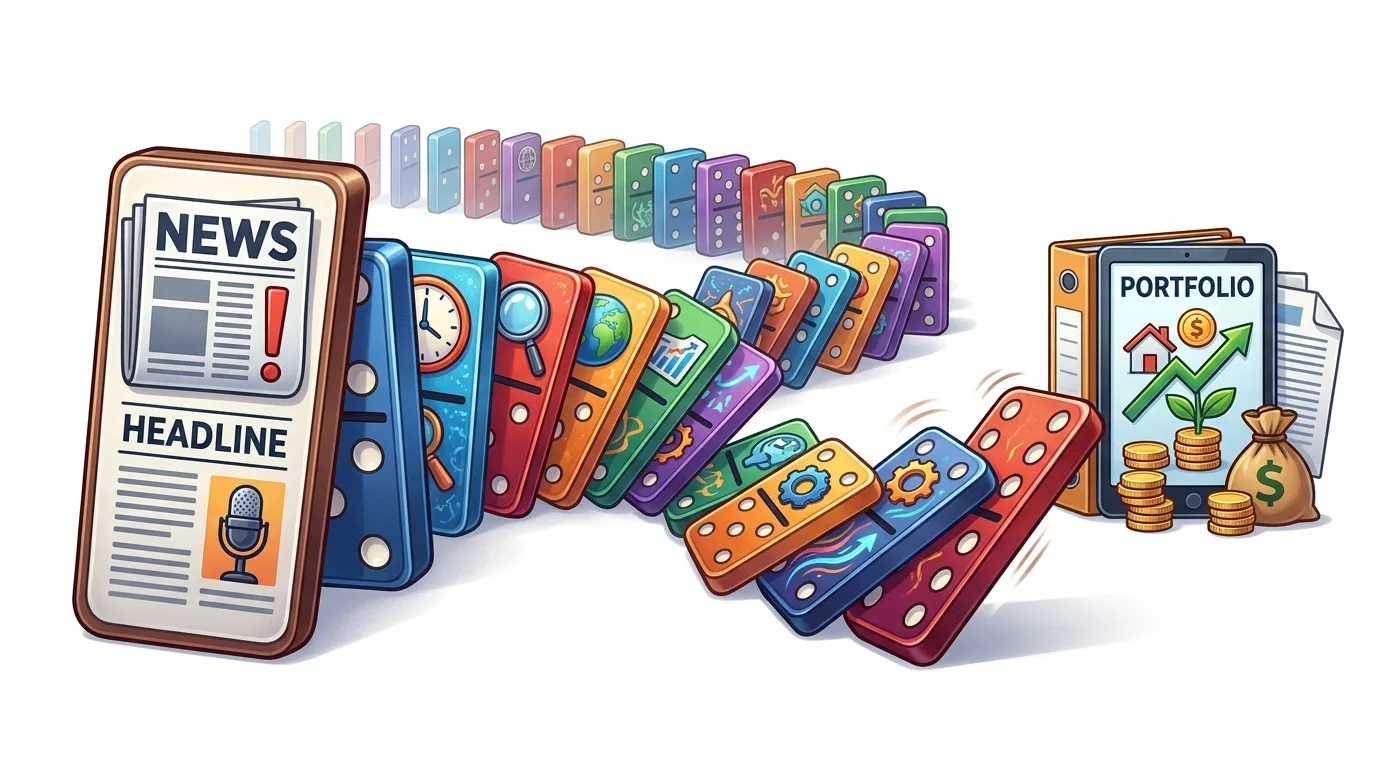
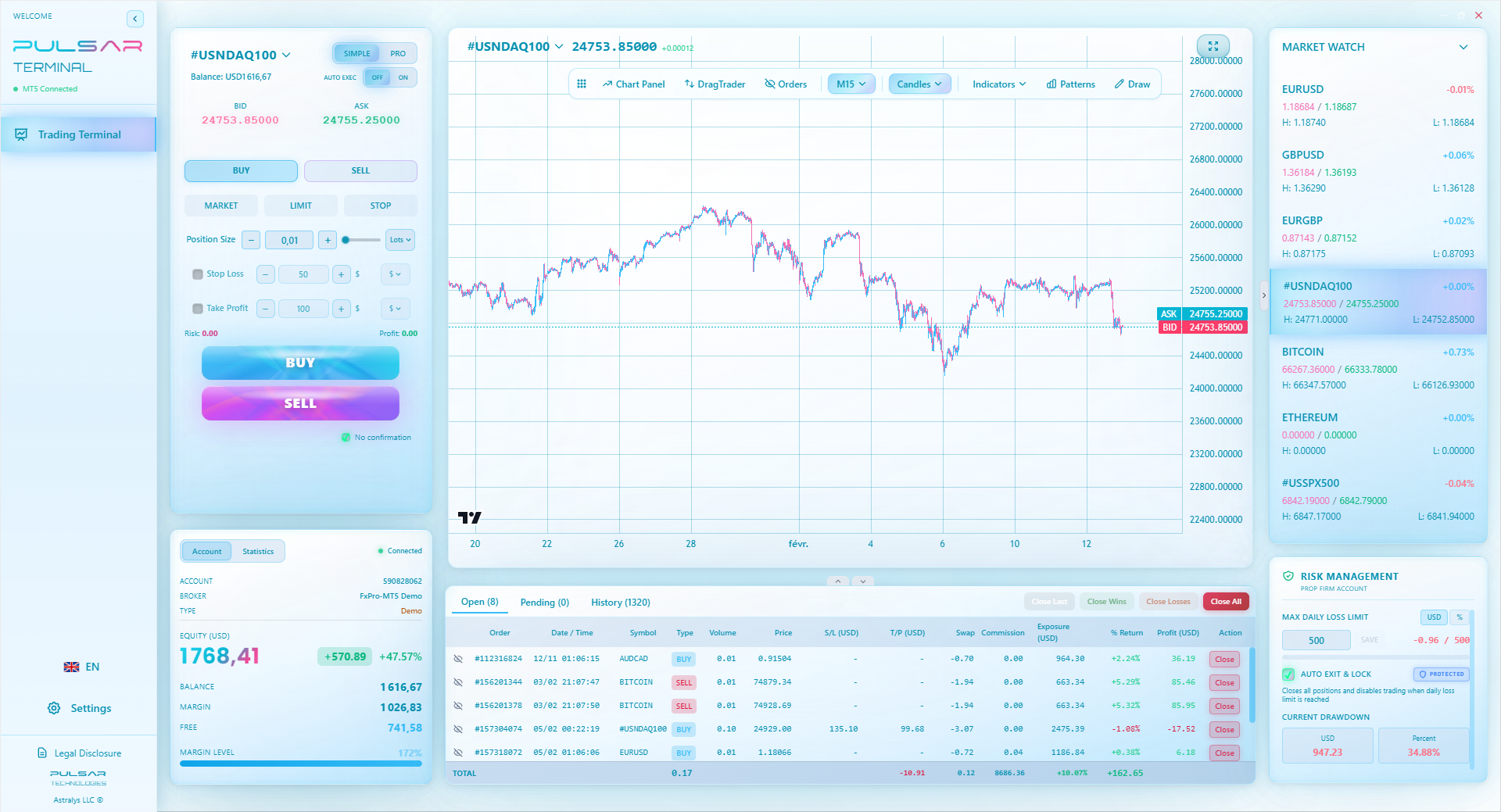
Managing risk around news events requires fast, precise order adjustments, which is where a tool like Pulsar Terminal, with its drag-and-drop stops and one-click partial closures on MT5, becomes a trader's best defense.
Pulsar Terminal
The all-in-one MT5 companion: drag-and-drop orders, multi-TP/SL, trailing stop, grid trading, Volume Profile, and prop firm protection. Used by 1,000+ traders daily.
This takes 5 minutes. Make it a habit like brushing your teeth.
- Evening Before (After US Close): Open your preferred forex calendar. I use the free one on ForexFactory. Scan the next 24-48 hours. Mark any medium or high-impact events.
- Morning Check (Before 8 AM SAST): Look for any updates or changes. Assess your current trades. Ask: "Does any open trade have a key event in its path today?" If yes, decide: close, adjust, or ride it out with wider stops.
- Pre-Event (30 Minutes Before): For any high-impact event you care about, close charts, ensure stable internet. Decide your action: close positions, set orders, or just watch. Have a plan. No winging it.
- Post-Event (15 Minutes After): The market is often schizophrenic for the first few minutes. Let it settle. The real trend often establishes after the initial frenzy. That's your signal.
Combine this with your technical analysis. If EUR/USD is at a key support level and a bullish US news event is due, the technical setup and fundamental catalyst are aligned. That's a higher-probability trade. If they conflict, it's better to wait. The calendar isn't a standalone system, it's the context for all your other tools, be it RSI indicator readings or MACD indicator crossovers.
Finally, remember that the goal isn't to trade every news event. It's to protect your capital from them and occasionally exploit the clear opportunities. Most of the time, the smartest trade is no trade at all.
FAQ
Q1What is the best free forex calendar for South African traders?
ForexFactory.com is the industry standard. It's free, reliable, and you can set the time zone to SAST (GMT+2). The interface clearly shows impact levels (red for high). MyFXbook.com and Investing.com also have good calendars. Just pick one and stick with it.
Q2Should I close all my trades before major news like NFP?
Not necessarily all, but you must have a defined risk management plan. For swing trades, I often tighten stops or take partial profits. For short-term trades, yes, I usually close. It depends on your strategy and risk tolerance. The worst thing is to be undecided and let the market decide for you.
Q3Why does the market sometimes move opposite to what the news suggests?
This is usually because the news was already 'priced in.' The actual number may have been 'good,' but not as good as the exaggerated whispers in the market. Or, the initial spike triggers a flood of stop-losses, creating an exaggerated move that then reverses. It's about expectations versus reality.
Q4How do I trade USD/ZAR around the SARB announcement?
With extreme caution. Liquidity can thin out beforehand. Consider being flat until after the statement and initial press conference volatility (first 15-20 mins). If trading, use smaller position sizes and wider stops than normal. The focus is on the MPC's tone regarding future inflation and rate paths.
Q5What's the difference between 'Volatility' and 'Impact' on a calendar?
They're often used interchangeably, but 'Impact' is the forecasted potential to move the market. 'Volatility' is the actual result. A high-impact event can sometimes cause low volatility if the result is exactly as expected. A medium-impact event can cause high volatility if it's a huge surprise.
Q6Can I use a forex calendar for crypto trading?
Yes, but it's different. Major crypto moves are often tied to Bitcoin ETF flows, regulatory news (unscheduled), and macro events that affect risk appetite (like the US CPI). Traditional economic calendars are less direct, but events that move the Dollar (like Fed decisions) still significantly impact crypto markets.
Prof. Winston's Lesson
Key Takeaways:
- ✓Check the calendar for the next 48 hours before any swing trade.
- ✓Trade the deviation from forecast, not the headline number.
- ✓Major US data at 14:30 GMT is 16:30 SAST. Plan for it.
- ✓Use wider stops or close positions before high-impact ZAR events.
- ✓The initial 60-second news spike is often a trap for retail traders.
How useful was this article?
Click a star to rate
Weekly Trading Insights
Free weekly analysis & strategies. No spam.
About the Author
David van der Merwe
Emerging Markets Trader
Johannesburg-based trader with 11 years in emerging market currencies. Specializes in ZAR pairs, FSCA-regulated trading, and South African market analysis.
Comments
Risk Disclaimer
Trading financial instruments carries significant risk and may not be suitable for all investors. Past performance does not guarantee future results. This content is for educational purposes only and should not be considered investment advice. Always conduct your own research before trading.
You Might Also Like

Cara Trading Forex Sukses: 7 Prinsip dari Trader Profesional
Cara trading forex sukses dengan 7 prinsip trader pro: manajemen modal, disiplin, journal trading, backtest. Data nyata, bukan janji profit palsu.
Jam Trading Forex Terbaik untuk Trader Indonesia: Panduan Lengkap dengan Tabel Waktu
Panduan jam trading forex untuk trader Indonesia. Tabel 4 sesi dunia, jam emas 20:00-00:00, sesi mana yang harus dihindari. Data akurat + tips dari trader berpengalaman.
Top 5 Sàn Forex Uy Tín Nhất 2026: Review Jujur dari Trader Indonesia
Top 5 sàn forex uy tín 2026 untuk trader Indonesia. Review jujur: spread, deposit, withdraw, dukungan lokal. Exness, XM, IC Markets & lebih.
Get Pulsar Terminal
All these calculators are built into Pulsar Terminal with real-time data from your MT5 account. One-click position sizing, automatic risk management, and instant calculations.
Get Pulsar Terminal