


If I hear one more 'guru' promise to turn 50k Naira into 5 million in a month, I might scream.

Olumide Adeyemi
West African Trading Pioneer ·  Nigeria
☕ 9 min read
What you'll learn:

If I hear one more 'guru' promise to turn 50k Naira into 5 million in a month, I might scream. The truth is, most forex courses sold in Nigeria are overpriced, repackaged YouTube content designed to sell you a dream, not a skill. I lost nearly 200k Naira on three different 'mentorship programs' before I figured out what actually matters. This guide cuts through the noise. I'll show you what a real forex course should teach you, how to spot the red flags, and how to build your own education path without getting scammed.
Let's be brutally honest. The market for forex education here is a minefield. On Instagram and WhatsApp, it's a parade of flashy cars, fake payout screenshots, and urgent messages about a 'once-in-a-lifetime' class. Their main product isn't knowledge, it's hope. And they price it at 100k, 250k, sometimes 500k Naira.
I fell for it early on. Bought a course for 120k that was basically a 10-hour video explaining what a pip definition is and how to draw basic support and resistance. Information I could have gotten for free in 20 minutes. The 'secret strategy' was just a moving average crossover. It was a painful, expensive lesson.

Warning: If a course advertises primarily with lifestyle pics (cars, stacks of cash, Dubai trips) and uses pressure tactics ('offer closes tonight!'), run. They are marketers, not traders. A real educator shows trade analysis, discusses risk management, and talks about losses as much as wins.
The first filter is this: are they selling the result or the process? Anyone selling guaranteed results is lying. Trading is probabilistic, not certain. A genuine forex course should make that its first lesson.

💡 Winston's Tip
The most expensive lesson is the one you have to learn twice. Pay for knowledge once, from the right source, even if it seems steep. The cost of learning from scammers is always higher.
Forget the fancy names. Any complete trading education needs these four pillars. If a course skips one, it's incomplete and dangerous.
1. Market Mechanics & Psychology (The Foundation)
This is boring but critical. You need to understand how the forex market actually works: who's in it (banks, hedge funds, retail traders like us), what moves prices, and how orders are filled. Most importantly, this section must destroy the get-rich-quick mindset. It should cover trading psychology - how fear and greed will wreck your account if you let them. This module isn't about making money, it's about not losing it all immediately.
2. Price Action & Technical Analysis (The Charts)
This is where you learn to read the story price is telling. A good course won't just throw 50 indicators at you. It should start with pure price action: understanding candlestick patterns, support/resistance, trend structure, and higher highs/lower lows. Then, it might introduce 1-2 key indicators for confirmation, like the RSI indicator for overbought/oversold conditions or the MACD indicator for momentum. The goal is clarity, not clutter.
3. Risk & Money Management (Your Survival Kit)
This is the most important module, full stop. I don't care how good your strategy is; without this, you will blow up. A proper course drills this into you:
- How to calculate your position size for every single trade. (Never just guess! Use a position size calculator).
- The 1% Rule: Never risk more than 1% of your account on a single trade.
- How to set stop-losses based on market structure, not how much you're willing to lose.
- Understanding margin call and use. (Hint: using 500:1 use is a great way to say goodbye to your capital).
4. A Clear, Tested Strategy (The Blueprint)
Finally, you need a complete, rules-based strategy. It should answer every question: What time frame do you trade? What pairs? What are the exact entry conditions? Where is the stop loss? Where do you take profit? A good course provides a strategy that you can then practice and adapt. It should work for a style like scalping strategy or swing trading, but be clear about which one.

Example: My main strategy risks 0.8% per trade. If my account is 500,000 Naira, my max risk is 4,000 Naira. If my stop loss is 20 pips on EUR/USD, I use a position size calculator to find the lot size that makes 20 pips = 4,000 Naira loss. This discipline is non-negotiable.
“A real forex course should make risk management its first lesson, not its last.”
So, do you need to pay at all? The answer is nuanced.
The Free Route is Viable (But Harder) You can absolutely learn everything from free resources: YouTube, Babypips.com, broker education centers, and forums. The problem? It's fragmented. You'll get conflicting advice, information overload, and no structured path. You have to be incredibly disciplined to curate your own curriculum, which most beginners aren't. I tried this first and spent months jumping from one concept to another without building a complete trading plan.
When a Paid Course Makes Sense A paid course is valuable for one reason: structure. A good one organizes the information logically, provides a community for questions, and might offer mentorship. You're paying for a curated path and time saved.
The Nigerian Middle Ground Here's what I recommend now: Start with free, foundational knowledge. Understand the basics of currencies, spread definition, and charts. Then, if you want to pay, look for affordable, specific courses. Don't buy the 'from zero to hero' mega-pack. Instead, buy a course focused solely on 'Price Action Swing Trading' or 'Institutional Order Flow'. Pay for deep expertise in one area, not a shallow overview of everything. And always, always check reviews from independent sources, not just testimonials on the seller's page.
Let's make this practical. Use this checklist before you send any money.
Red Flags (Avoid Immediately):
- Guaranteed Profits: The biggest lie in trading.
- No Discussion of Losses: If every trade shown is a winner, it's edited.
- Focus on High use: They encourage using 1:500 or similar. This is a recipe for a margin call.
- Vague Strategy: 'I'll teach you my secret method' with no concrete details beforehand.
- Payment to Personal Accounts: Legitimate businesses have company accounts.
Green Lights (Good Signs):
- Transparent Track Record: Shows a verified, long-term statement (like Myfxbook) with both wins and losses.
- Emphasis on Risk Management: This topic is central, not an afterthought.
- Clear Curriculum: They show you exactly what modules are included before you buy.
- Teaches a Process: Focus is on analysis, execution, and review - not just signals.
- Reasonable Price: In Nigeria, a solid, focused course from a credible trader might range from 30k to 100k Naira. Anything vastly higher needs extraordinary justification.
Also, consider the broker they recommend or use. Do your own research on them. Are they reputable and well-regulated for Nigerian traders? Check our reviews for brokers like Exness review, IC Markets review, or XM review to cross-reference.
💡 Winston's Tip
Your trading journal is your true forex course. The market teaches you every day; the journal is where you take notes. Review it more than you review any paid course material.
“You're not paying for secrets; you're paying for a structured path and time saved.”
Let me break down what my actual education cost, including my mistakes, so you have real numbers.
Phase 1: The Scam Era (Total Loss: ~200,000 Naira)
- Course A (120k Naira): The basic one I mentioned. Learned almost nothing new.
- Course B (75k Naira): A 'prop firm challenge passing' course. The strategy was so high-risk it failed in live market conditions. Lost the challenge fee too.
Phase 2: The Self-Education Pivot (Cost: Time) I spent 6 months consuming free content. I studied the EUR/USD guide and XAU/USD guide to understand specific instruments. I practiced on demo for hundreds of hours. Progress was slow but foundational.
Phase 3: Targeted Investment (Cost: 45,000 Naira) Finally, I paid for one specific course from an international swing trader. It wasn't marketed to Nigerians, had no flashy cars, and was purely about his institutional-style order flow strategy. This was the game-changer. It filled the gaps in my analysis. Combined with my own practice, it gave me a strong edge.
The Real Cost: My total financial cost was about 245k Naira. The effective cost, after subtracting the scams, was 45k Naira. The time cost was over a year. The lesson? Pay for specific, advanced knowledge from proven traders, not for basic education or dreams.
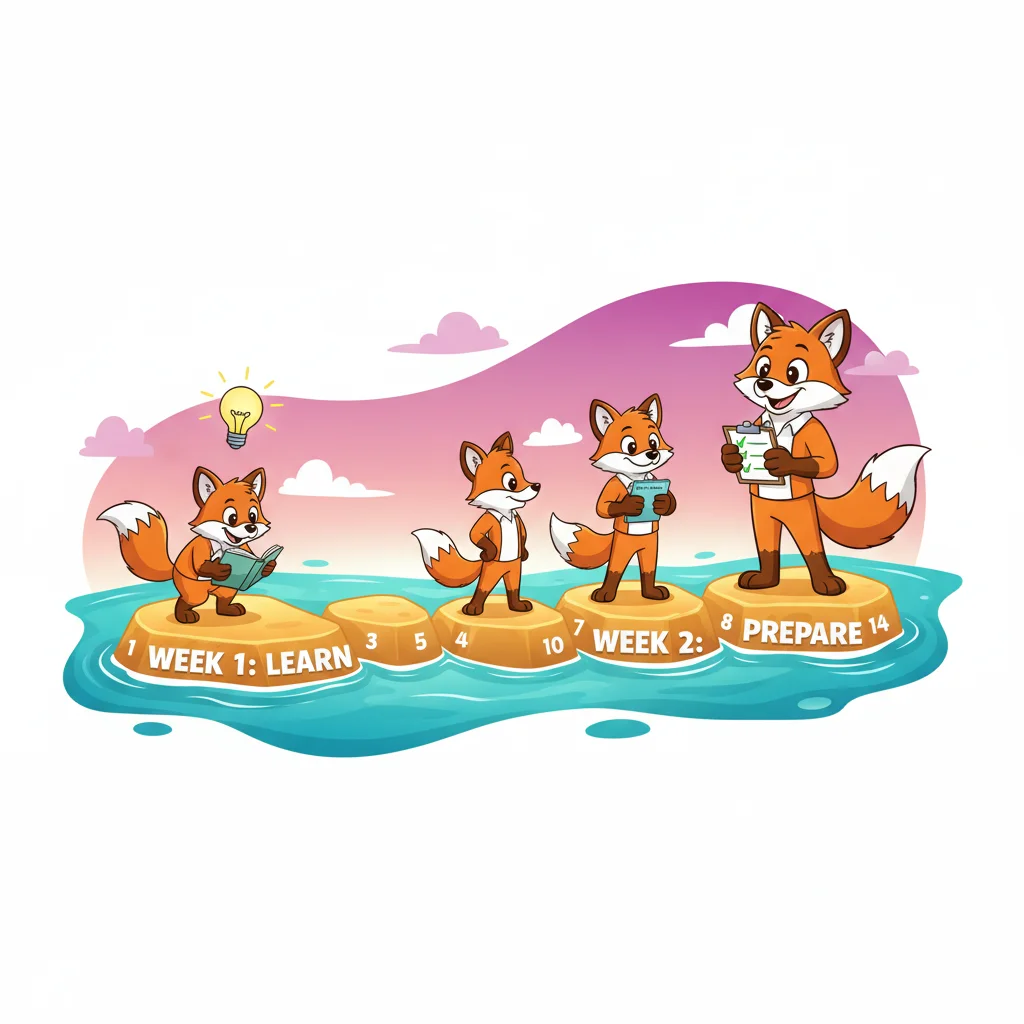
Here’s a step-by-step, 90-day plan to educate yourself effectively, mixing free and paid resources.
Weeks 1-4: The Absolute Basics (All Free)
- Complete the entire Babypips.com 'School of Pipsology'. Take notes.
- Open a demo account with a broker like Pepperstone review or IC Markets. Don't trade yet, just get familiar with the platform (MT4/MT5).
- Learn what a pip is, what a spread is, and how use works.
Weeks 5-8: Analysis & Strategy (Mostly Free)
- Deep dive into price action. Watch reputable free YouTube videos on support/resistance and trend lines.
- Pick ONE indicator to learn deeply, like the RSI indicator. Understand its signals and its failures.
- Start observing charts daily. Look at the EUR/USD guide and see if you can identify trends.
Weeks 9-12: Practice & Refinement (Consider Targeted Paid Help)
- Start on demo with a tiny, simulated account. Practice your 1% risk rule using a position size calculator.
- Keep a detailed trading journal. Note your entry reason, emotion, outcome.
- This is where you might invest in a paid course. Now that you know the basics, you can identify a specific weakness (e.g., 'I don't understand pullback entries') and find a course that specifically addresses it.

Pro Tip: Your first paid investment shouldn't be a general forex course. It should be a book or a course on trading psychology or risk management. Mastering your mind and your money will make any strategy work better.
“The goal of your first live account is to preserve capital, not to make profits.”
Completing a course is the beginning, not the end. It's like getting your driver's license. The real learning happens on the road.
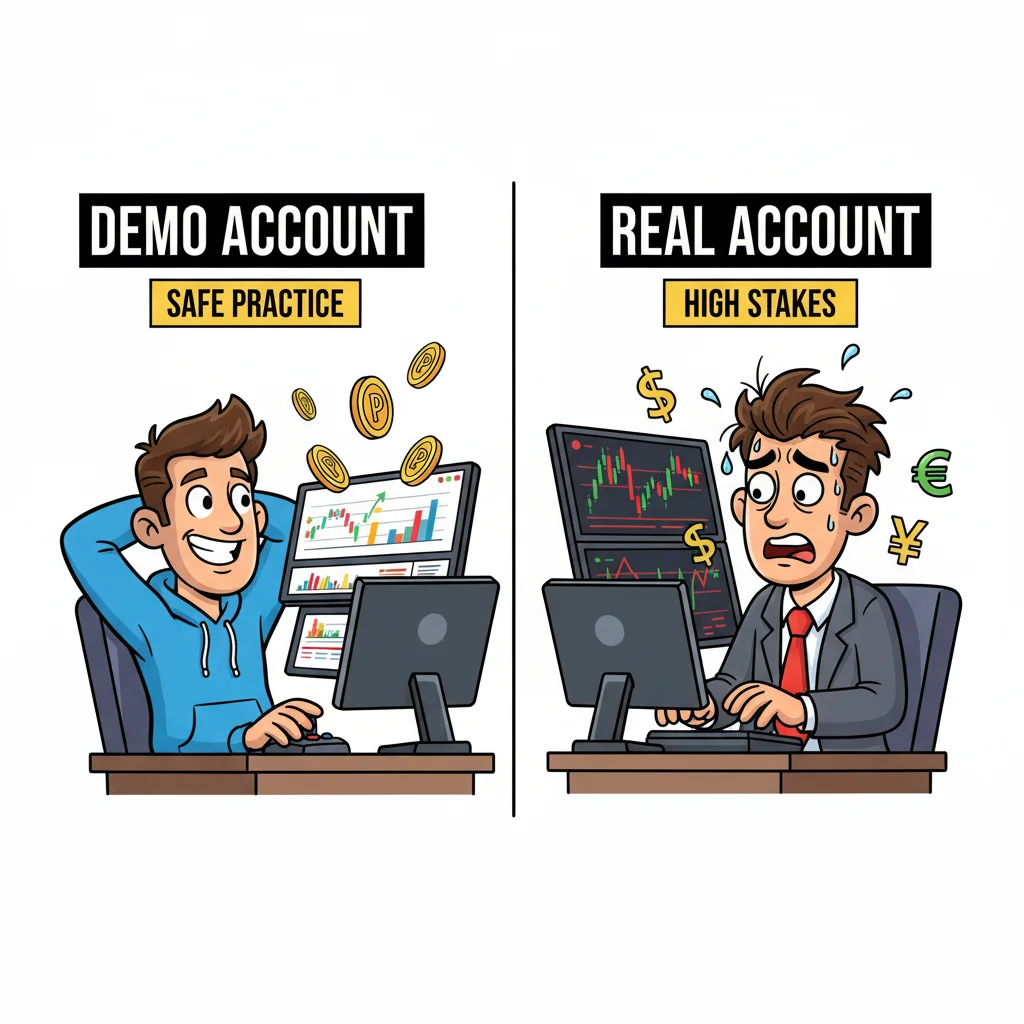
1. Demo Trading is Non-Negotiable: You need at least 3-6 months of consistent, journaled demo trading. Your goal isn't profit, it's consistency in following your plan. I traded demo for 8 months before going live.
2. Live Trading Starts Tiny: When you go live, start with an amount you can afford to lose completely - maybe 20k-50k Naira. Your goal for the first 6 months is to preserve capital, not to make profits. Trade micro lots (0.01). The pressure is real, and you need to acclimatize.
3. Continuous Learning: The market changes. Join communities, read books, and review your trades weekly. A tool that revolutionized my trade management was learning to use advanced order types. Setting multiple take-profit levels or automating a trailing stop changed my profitability.
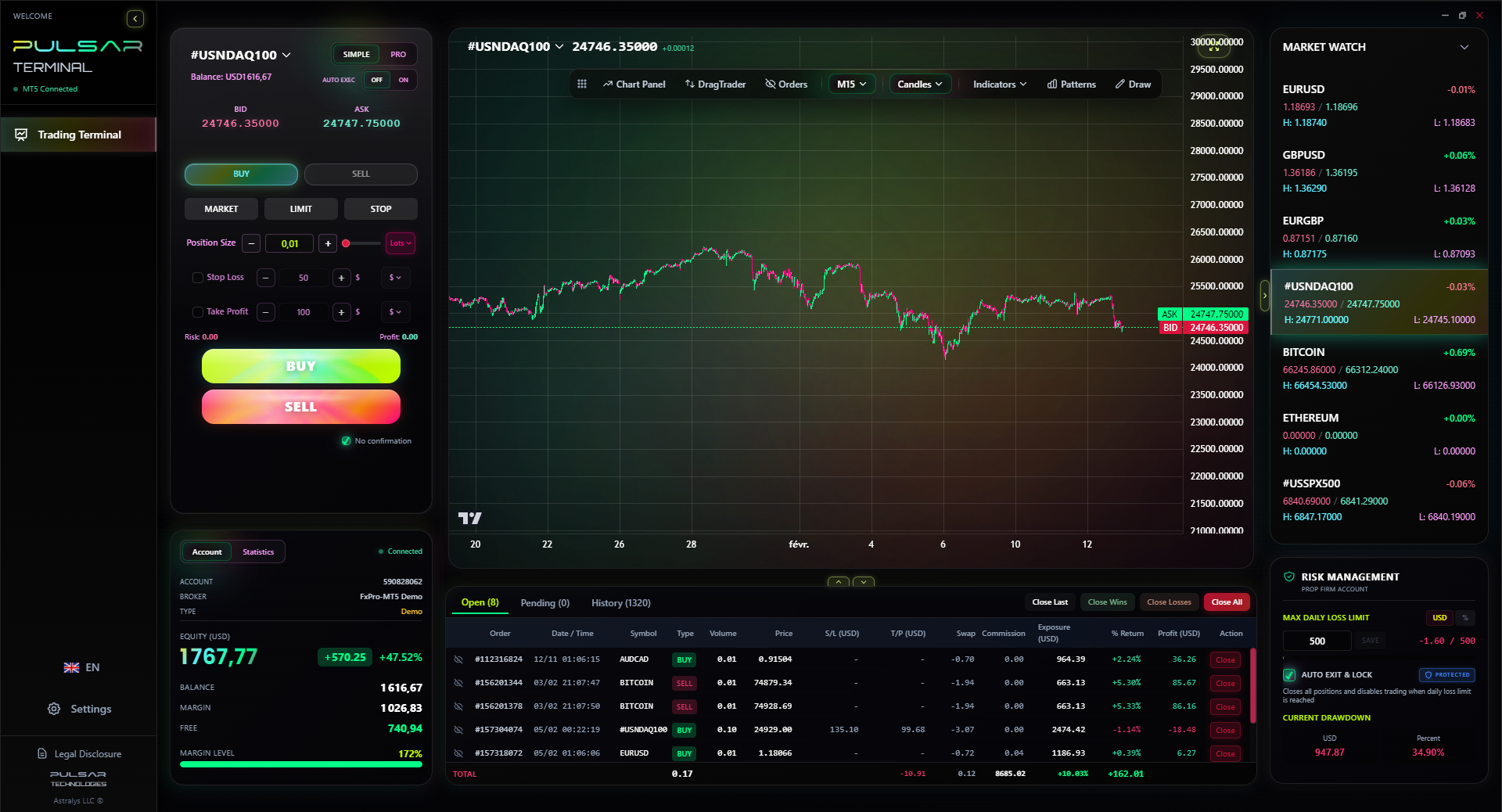
This is where technology can give you a serious edge. Manually moving stop losses to breakeven or managing a grid of orders is stressful and prone to error. Having a tool that lets you drag and drop these orders onto your chart, or automatically protects your daily loss limit (crucial for prop firm challenges), turns complex rules into simple clicks. It lets you focus on analysis, not mechanics.
Executing a complex trading plan with multiple take-profit levels and trailing stops is where Pulsar Terminal turns strategy into simple, drag-and-drop actions on your MT5 chart.
Pulsar Terminal
The all-in-one MT5 companion: drag-and-drop orders, multi-TP/SL, trailing stop, grid trading, Volume Profile, and prop firm protection. Used by 1,000+ traders daily.
FAQ
Q1What is the best forex course in Nigeria?
There's no single 'best' course. Avoid any that are heavily advertised on social media with lifestyle marketing. Look for courses focused on a specific skill (like price action or risk management) from educators with verifiable, long-term track records. Often, the best value isn't a Nigerian-specific course but a quality international one.
Q2Can I learn forex trading for free in Nigeria?
Absolutely. Websites like Babypips.com offer a complete free foundation. YouTube has quality educators if you're careful. The challenge with free resources is the lack of structure and the abundance of bad advice. You need strong discipline to build your own curriculum from free materials.
Q3How much does a good forex course cost in Nigeria?
A credible, focused course from a genuine trader can range from 30,000 to 100,000 Naira. Be deeply suspicious of courses costing 200k Naira and above, unless they offer extensive, personalized mentorship with proven results. Remember, a high price doesn't equal high quality.
Q4How long does it take to learn forex trading?
To grasp the basics, about 1-3 months. To become consistently proficient and emotionally disciplined enough to trade live successfully, expect 6 to 12 months of dedicated study and demo practice. Anyone promising mastery in weeks is lying.
Q5Do I need a mentor to learn forex?
A good mentor can accelerate your learning by providing feedback and accountability. However, a paid 'mentor' who just gives you signals is useless. True mentorship involves reviewing your charts and your psychology. You can also be your own mentor through rigorous journaling and review of your demo trades.
Q6What should I learn first in forex?
Learn risk and money management first. Before you even look at a chart strategy, understand how to calculate position size, set stop-losses, and the 1% risk rule. Protecting your capital is the first and most important skill. Then move on to market basics and price action.
Prof. Winston's Lesson
Key Takeaways:
- ✓Risk management is 80% of the game; a course must teach it first.
- ✓Avoid any course priced over 100k Naira without verified proof.
- ✓Demo trade for 6+ months before risking real money.
- ✓Never risk more than 1% of your account on a single trade.
How useful was this article?
Click a star to rate
Weekly Trading Insights
Free weekly analysis & strategies. No spam.
About the Author
Olumide Adeyemi
West African Trading Pioneer
One of Nigeria's most active forex trading educators. 8 years of experience trading from Lagos. Specializes in low-capital strategies and prop firm challenges for African traders.
Comments
Risk Disclaimer
Trading financial instruments carries significant risk and may not be suitable for all investors. Past performance does not guarantee future results. This content is for educational purposes only and should not be considered investment advice. Always conduct your own research before trading.
You Might Also Like

Cara Trading Forex Sukses: 7 Prinsip dari Trader Profesional
Cara trading forex sukses dengan 7 prinsip trader pro: manajemen modal, disiplin, journal trading, backtest. Data nyata, bukan janji profit palsu.
Jam Trading Forex Terbaik untuk Trader Indonesia: Panduan Lengkap dengan Tabel Waktu
Panduan jam trading forex untuk trader Indonesia. Tabel 4 sesi dunia, jam emas 20:00-00:00, sesi mana yang harus dihindari. Data akurat + tips dari trader berpengalaman.
Top 5 Sàn Forex Uy Tín Nhất 2026: Review Jujur dari Trader Indonesia
Top 5 sàn forex uy tín 2026 untuk trader Indonesia. Review jujur: spread, deposit, withdraw, dukungan lokal. Exness, XM, IC Markets & lebih.
Get Pulsar Terminal
All these calculators are built into Pulsar Terminal with real-time data from your MT5 account. One-click position sizing, automatic risk management, and instant calculations.
Get Pulsar Terminal