


Here's a hard truth: 90% of the 'forex forecasts' you see on WhatsApp, Telegram, and even some fancy websites are complete rubbish.

Olumide Adeyemi
West African Trading Pioneer ·  Nigeria
☕ 11 min read
What you'll learn:
- 1What Exactly Are You Looking At?
- 2The Nigerian Forecast Scam Playbook (And How to Spot It)
- 3The Trader's Toolkit: Building Your Own Forecast
- 4How to (Actually) Use Broker Analysis
- 5Mistakes I've Made (So You Don't Have To)
- 6A Real-World Forecast Walkthrough: USD/NGN (Parallel Market)
- 7Building Your Daily Forecast Routine
Here's a hard truth: 90% of the 'forex forecasts' you see on WhatsApp, Telegram, and even some fancy websites are complete rubbish. They're either designed to sell you a course, pump a signal service, or are just lazy guesses dressed up as analysis. In Nigeria, where the thirst for financial opportunity meets a flood of online 'gurus', this is a dangerous mix. This guide isn't about finding the perfect prediction. It's about teaching you how to critically evaluate any forecast, build your own, and stop wasting money on promises that never materialize.
A forex forecast is simply an attempt to predict the future direction of a currency pair. That's it. It can be based on technical analysis (charts), fundamental analysis (economic data), or, most commonly, a blend of both. The problem starts when you don't know which one you're reading.
A technical forecast for EUR/USD might say, "Price is approaching the 1.0850 resistance level from the weekly chart; a break above could target 1.0950." It's grounded in visible price levels. A fundamental forecast might argue, "With the CBN expected to hold rates and US inflation data hot, USD/NGN could see further pressure." It's about the 'why'.
The garbage forecasts are vague: "GBP/USD is set for a big move this week!" Or worse, they give you a specific target and stop-loss with a 95% 'guaranteed' win rate, usually for a fee. I fell for this early on. Paid 50k Naira for a 'VIP signal group' that promised daily forecasts. Their first three calls hit stop-losses consecutively. When I asked for the analysis, I got radio silence. That was my tuition fee for learning that real analysis is transparent.

Warning: Any forecast that doesn't clearly state its reasoning (e.g., 'based on RSI divergence and the 200-day MA') or the assumed time frame (e.g., 'this is a weekly outlook') is marketing, not analysis. Treat it like spam.

💡 Winston's Tip
A forecast without a defined 'I am wrong' price level is a wish, not a plan. Always know your exit before your entry.
“90% of the 'forex forecasts' you see are designed to sell you something, not make you money.”
Scammers here have perfected a system that preys on hope and limited financial education. You need to recognize the patterns.
The Signal Seller: This is the most common. They'll flood social media with screenshots of 'winning trades' (often from a demo account or fabricated). The forecast is always ultra-specific: "Buy GBP/JPY at 183.50, SL 183.00, TP 184.50." They create urgency: "Offer closes in 30 minutes!" Once you pay, usually via bank transfer or crypto, the signals either stop coming, start losing, or you get added to a massive group where the same signal is given to 500 people - making it useless due to slippage.
The Robot/EA Vendor: They package a forecast into an 'Expert Advisor' that trades for you. "Set it and forget it! 20% monthly returns!" They show a beautiful backtested equity curve (which is easily manipulated). What they don't show is how the EA will blow your account in live market conditions it wasn't tested on. I wasted $200 on one that turned a $1,000 demo account into $1,500 over a year in a backtest. Live? It blew my $500 real account in two weeks when volatility spiked.
The 'Master Class' Guru: This one sells the dream of learning to forecast yourself. For 100k-500k Naira, you get a poorly recorded video series full of basic information you could find for free on YouTube or in our scalping strategy guide. Their secret 'forecast method' is usually just a common indicator with fancy branding.
The Red Flags
- Guaranteed Profits: This is illegal. No one can guarantee market movement.
- Vague or No Past Performance: If they can't show a verifiable, real-money track record (not screenshots), run.
- Pressure to Pay Quickly: Creating artificial scarcity is a classic sales tactic for junk.
- Complex Jargon to Sound Smart: They use terms like 'quantum entanglement trading' to confuse you.

Pro Tip: Before paying for any service, ask one question: "Can I see your verified Myfxbook or FXBlue live statement for the past 12 months?" A legitimate pro will have this. A scammer will block you.
“Your own forecast, even if imperfect, is worth more than a thousand 'guru' signals because you learn from its failures.”
This is where you take back control. Your own forecast is your trading plan. It won't always be right, but it will be yours, and you'll learn from every mistake.
1. Start with the Big Picture (Fundamentals): You don't need a PhD. For a Nigerian trader, focus on:
- CBN Monetary Policy Committee (MPC) Meetings: Interest rate decisions are huge for the Naira. Is the CBN hiking to fight inflation? That can strengthen the Naira, affecting pairs like USD/NGN (in the official market) and your general forex outlook.
- US Economic Data: Since most pairs involve the USD, Non-Farm Payrolls (NFP), CPI inflation, and Federal Reserve statements are critical. A strong US economy often means a strong Dollar.
- Oil Prices: Nigeria's lifeblood. A rising oil price can improve foreign reserves and Naira stability. Keep an eye on Brent Crude.
2. Map the Territory (Technical Analysis): This is about finding levels where price might react.
- Identify Key Support & Resistance: Where has the price bounced or reversed before? Draw horizontal lines there. A forecast like "Watch for a reaction at the 1.2500 support" is actionable.
- Use Trend Indicators: Is the pair above or below its 50 or 200-period Moving Average? Don't forecast a buy in a strong downtrend.
- Gauge Momentum: Tools like the RSI indicator or MACD indicator can help you see if a move is overextended. A forecast of "continued upside" is weaker if the RSI is above 80 (overbought).
3. Define Your Time Frame: Your forecast changes wildly based on this. A scalping strategy forecast looks at the next 5-30 minutes. A swing trading forecast looks at the next 3-10 days. Never mix them up. My biggest loss in 2023 came from taking a daily chart forecast and trying to scalp it on the 5-minute chart. I was stopped out in an hour.
4. The Most Important Part: The Invalidating Condition. A good forecast states, "I am wrong if..." For example: "I forecast a move to 1.0950, but I am WRONG if price closes below the 1.0800 support on the 4-hour chart." This tells you when to exit, saving your capital. Always use a position size calculator to ensure your risk per trade is sane (I risk never more than 1% per trade).
“Your own forecast, even if imperfect, is worth more than a thousand 'guru' signals because you learn from its failures.”
Good brokers like IC Markets, Pepperstone, and Exness provide daily market analysis and forecasts from in-house teams. This is a free resource, but you must use it correctly.
Don't: Blindly trade their highlighted levels. They are not signals for you.
Do: Use them as a second opinion on your own analysis. Did their technical team also identify the 1.0850 resistance you saw? That adds confluence. Did their fundamental team highlight an upcoming US data release you missed? That's a valuable heads-up to maybe reduce your position size or stay out of the market until the news passes.
Their research is best for understanding the narrative driving the markets. Read it to know what the big institutional players are talking about. Then, use your own chart work to find precise entry points. Think of it as getting the general weather forecast (broker research) and then checking your own barometer and wind vane (your charts) before sailing.

Example: Let's say XM review shows their research is bullish on Gold (XAU/USD) due to expected Dollar weakness. You go to your own XAU/USD guide chart and see it's consolidating just under a key resistance at $2050. Your forecast becomes: "Bullish bias per broker narrative, but I will only enter on a confirmed 4-hour close above $2050, with a stop below $2035." You've used their input but made the trade your own.
💡 Winston's Tip
If a forecast sounds too good to be true, it's not a forecast. It's a sales pitch. Your skepticism is your best asset.
“The stop-loss isn't a suggestion; it's the price that proves your forecast's main premise false.”
Let's get personal. I've blown accounts following bad forecasts and saved others by sticking to my own. Here are the costly lessons.
1. Chasing the 'Perfect' Forecast: I used to open 5 different analyst websites every morning, looking for consensus. If 3 out of 5 were bullish EUR/USD, I'd buy. The problem? Markets often move when consensus is wrong. I was following the herd off a cliff. The trade that broke this habit was in early 2022. Consensus was overwhelmingly bullish on the Euro. I went long EUR/USD at 1.1300. The Russia-Ukraine war started, and it plummeted to 1.0800 in days. I lost 500 pips because I valued others' forecasts over the clear price action breaking down.
2. Ignoring Timeframe Mismatch: A popular analyst gives a 'weekly forecast' for GBP/JPY to go up. You see a tiny dip on the 15-minute chart and jump in, thinking you're getting a discount. That dip might be part of a daily-scale retracement that goes much deeper, stopping you out before the weekly trend resumes. Your forecast timeframe (15-min) and your trade rationale (weekly) are in conflict. This is a surefire way to get whipsawed.
3. Not Planning for the Forecast Being Wrong: This is the killer. You get married to your forecast. Price moves against you, and instead of admitting your forecast is invalid, you 'add to the position to average down' or move your stop-loss further away. This is how a 50-pip loss turns into a 300-pip disaster and a potential margin call. My rule now is ironclad: my stop-loss is sacred. It's the price that proves my forecast's main premise false. If it hits, I'm out. No questions, no excuses.
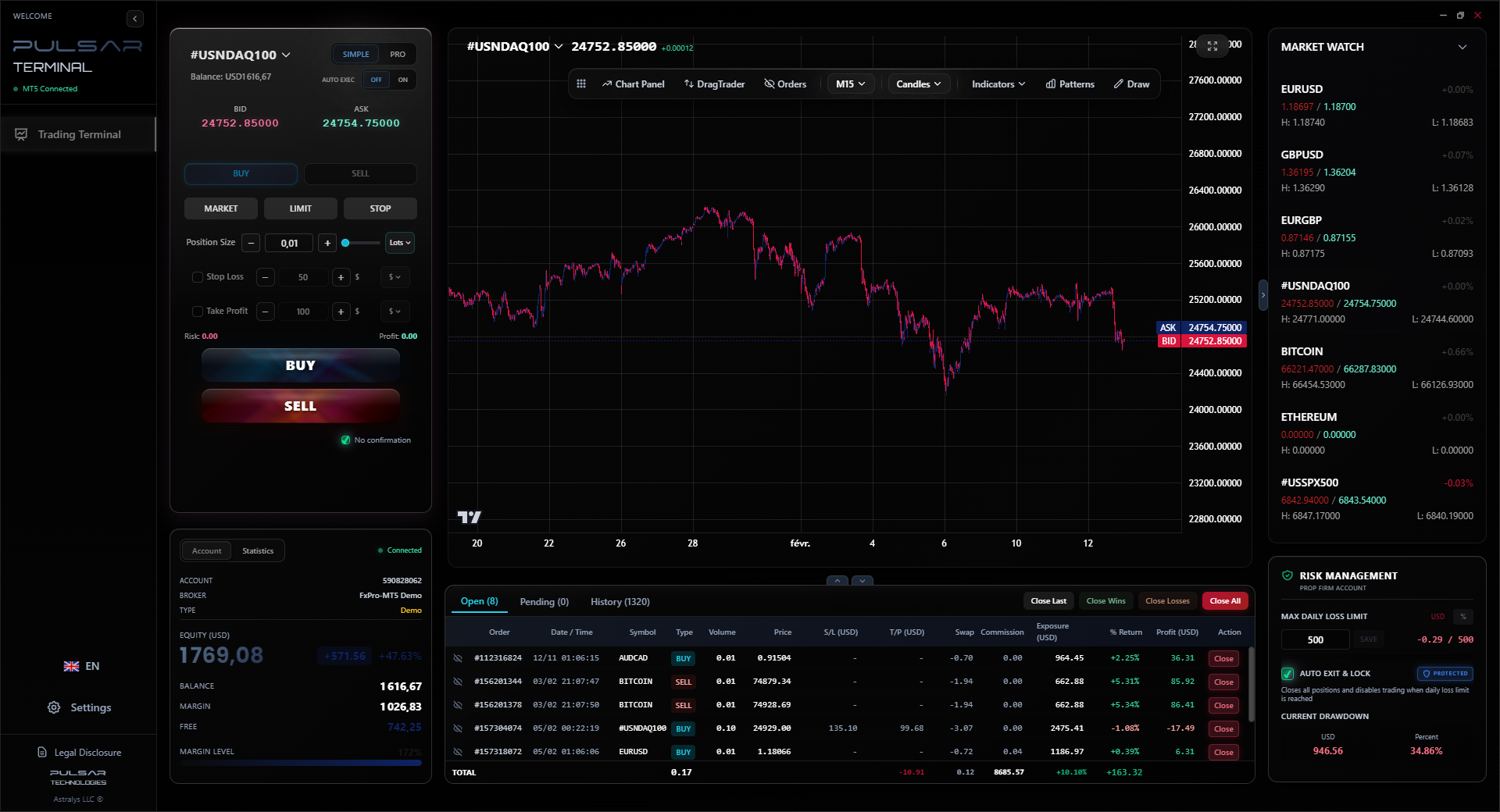
When your forecast is wrong, disciplined exit execution is critical; Pulsar Terminal's one-click close and breakeven functions on MT5 remove hesitation and protect your capital instantly.
Pulsar Terminal
The all-in-one MT5 companion: drag-and-drop orders, multi-TP/SL, trailing stop, grid trading, Volume Profile, and prop firm protection. Used by 1,000+ traders daily.
“The stop-loss isn't a suggestion; it's the price that proves your forecast's main premise false.”
Let's apply this to something every Nigerian trader thinks about. Note: Trading the Naira on the parallel market is often done via unofficial channels and carries significant regulatory risk. This is for educational illustration only.
Scenario: It's Q1 2024. The CBN has just hiked interest rates aggressively to combat inflation. Oil prices are stable.
1. Fundamental Outlook: The rate hike is a strong Naira-positive move in the medium term, as it attracts foreign portfolio investment. However, dollar scarcity on the official market continues to fuel parallel demand. My fundamental forecast: Bullish pressure on the Naira (lower USD/NGN rate) from the rate hike, but parallel market volatility remains high.
2. Technical Setup (Hypothetical Chart): Let's say the parallel rate is hovering around ₦1,450/$. I look at the chart (if available from your source) and see:
- Resistance: A clear ceiling at ₦1,480/$ that has held multiple times.
- Support: A floor at ₦1,420/$.
- Price Action: It's currently at ₦1,455/$, in the middle of the range.
3. My Actionable Forecast:
- Bias: Cautiously bullish (expecting Naira strength) due to CBN action, but only within the known range.
- Trade Idea: I will NOT buy dollars at ₦1,455. I will look for a move towards support to consider a sale of USD (buy Naira). My potential entry zone is near ₦1,430/$, anticipating a bounce back into the range.
- Invalidation Level: If the price breaks and closes above the ₦1,480 resistance, my bullish Naira forecast is wrong. Something else is driving dollar demand. I would step aside.
- Risk Management: I decide that if I take a position, I will risk no more than 1% of my capital on this high-volatility instrument. I use a tight stop-loss relative to the wide spreads typical in this market.
This isn't a sure thing. It's a reasoned plan based on available information, with clear rules for being wrong. That's the difference between a gambler's hope and a trader's forecast.
“Consistency in your routine will teach you more about forecasting than any paid course ever could.”
Consistency beats genius every time. Here’s a simple 20-minute routine to build your own outlook.
Morning (Before 9 AM WAT):
- Check the Economic Calendar: What major data is due today? (US, EU, UK). Mark high-impact events. No new forecasts 30 minutes before these.
- Scan Major Pairs: Open the daily chart of EUR/USD, GBP/USD, USD/JPY, and XAU/USD. What are the key levels from yesterday? Has price opened with a gap?
- Determine the Trend: Use the 50-period EMA on the 4-hour chart. Price above = general uptrend bias. Below = downtrend bias. Your forecast should not strongly contradict the major trend.
- Form Your One-Sentence Forecast: For example: "EUR/USD is in a daily uptrend but approaching a major resistance at 1.0950. My bias is bullish but I expect a pause or pullback at that level."
Evening (After 5 PM WAT):
- Review: Did your forecast play out? Why or why not? Was it the news? Was your technical level respected?
- Journal: Write down your morning forecast, the actual outcome, and one lesson. This is how you improve.
Stick to this for one month. You’ll start to see patterns in your own thinking and in the market. You’ll stop needing to search for other people's forecasts because you’ll have the only one that matters: your own.
FAQ
Q1Are free forex forecasts from websites any good?
Some are decent educational content from real analysts, but many are just clickbait to get you on their email list. The good ones provide clear reasoning and discuss both bullish and bearish scenarios. The bad ones are always one-sided and sensational. Treat them as a starting point for your own research, never as trading signals.
Q2What's the best time frame for a forex forecast?
There isn't one. It depends entirely on your trading style. A scalper needs a 5 or 15-minute forecast. A swing trader needs a 4-hour or daily forecast. A long-term investor looks at weekly or monthly charts. The biggest mistake is using a long-term forecast to make a short-term trade. Always match the forecast's time frame to your intended holding period.
Q3How accurate do forex forecasts need to be to be profitable?
This surprises most new traders: you don't need high accuracy. You need good risk management. A forecast with a 40% win rate can be highly profitable if your average winning trade is three times the size of your average loser (a 3:1 reward-to-risk ratio). Focus on the quality of your forecasts (clear reasoning, defined invalidation points) and your position sizing, not just on being 'right'.
Q4Can I use AI or trading bots for forecasts?
AI tools can process vast amounts of data to identify statistical patterns, which can be insightful. However, they often fail during unprecedented market events (wars, sudden policy shifts). Bots execute based on pre-programmed logic. Neither understands context or nuance. They are tools, not oracles. The most reliable forecast combines AI-identified patterns with human judgment on market context and sentiment.
Q5As a Nigerian, should I focus on forecasting USD/NGN?
It's natural to focus on it, but be extremely cautious. The official market is illiquid for retail, and the parallel market is opaque and carries high counterparty risk. The spreads are enormous, making short-term forecasting and trading very difficult. Most Nigerian professional traders I know focus on major pairs like EUR/USD or GBP/USD where the market is deep, transparent, and regulated brokers like IC Markets or Pepperstone offer fair access. Use your understanding of Naira dynamics for broader context, not as your primary trading instrument.
Q6How often should I update my forecast?
Update it when new, relevant information arrives that invalidates your original premise. This could be a shocking news event, a key economic data miss, or a clear technical breakout in the opposite direction of your bias. Don't update it just because price wiggles a few pips against you. Stick to your predefined invalidation levels from your trading plan.
Prof. Winston's Lesson
Key Takeaways:
- ✓Define your invalidation level for every forecast.
- ✓Match your forecast's time frame to your trade duration.
- ✓Risk a maximum of 1% of capital per trade.
- ✓Use broker research for narrative, not for entry signals.
- ✓Journal your forecast accuracy to find your biases.
How useful was this article?
Click a star to rate
Weekly Trading Insights
Free weekly analysis & strategies. No spam.
About the Author
Olumide Adeyemi
West African Trading Pioneer
One of Nigeria's most active forex trading educators. 8 years of experience trading from Lagos. Specializes in low-capital strategies and prop firm challenges for African traders.
Comments
Risk Disclaimer
Trading financial instruments carries significant risk and may not be suitable for all investors. Past performance does not guarantee future results. This content is for educational purposes only and should not be considered investment advice. Always conduct your own research before trading.
You Might Also Like

Cara Trading Forex Sukses: 7 Prinsip dari Trader Profesional
Cara trading forex sukses dengan 7 prinsip trader pro: manajemen modal, disiplin, journal trading, backtest. Data nyata, bukan janji profit palsu.
Jam Trading Forex Terbaik untuk Trader Indonesia: Panduan Lengkap dengan Tabel Waktu
Panduan jam trading forex untuk trader Indonesia. Tabel 4 sesi dunia, jam emas 20:00-00:00, sesi mana yang harus dihindari. Data akurat + tips dari trader berpengalaman.
Top 5 Sàn Forex Uy Tín Nhất 2026: Review Jujur dari Trader Indonesia
Top 5 sàn forex uy tín 2026 untuk trader Indonesia. Review jujur: spread, deposit, withdraw, dukungan lokal. Exness, XM, IC Markets & lebih.
Get Pulsar Terminal
All these calculators are built into Pulsar Terminal with real-time data from your MT5 account. One-click position sizing, automatic risk management, and instant calculations.
Get Pulsar Terminal