


Here's the biggest lie you'll hear in Lagos trading groups: 'Follow my signals and you'll make millions in weeks.' That's not a forex guru, that's a marketer.

Olumide Adeyemi
West African Trading Pioneer ·  Nigeria
☕ 10 min read
What you'll learn:
- 1What Actually Is a Forex Guru? (Hint: It's Not What You Think)
- 2The Nigerian Forex Guru Scammer: 5 Red Flags You Can't Ignore
- 3What a Legit Mentor Actually Provides
- 4How to Build Your Skills (Even Without a 'Guru')
- 5The Nigerian Reality: Legal, Tax, and Broker Truths
- 6My Own 'Guru' Mistakes (And What They Cost Me)
- 7The End Goal: Becoming Your Own Guru
Here's the biggest lie you'll hear in Lagos trading groups: 'Follow my signals and you'll make millions in weeks.' That's not a forex guru, that's a marketer. The real tragedy is that genuine, profitable traders exist, but they're drowned out by the noise. I've lost money following the wrong people, and I've made it back by learning the difference. Let's cut through the hype and talk about what a real mentor looks like in Nigeria's unique market, where a 10% capital gains tax on profits is the law and finding a solid broker is half the battle.
Forget the Lamborghini pictures and rented mansion videos. In the real world, a forex guru is just a consistently profitable trader who can also teach. Their value isn't in giving you daily signals (that's a dependency trap), but in showing you how to build your own trading system. They focus on risk management, psychology, and a repeatable process.
In Nigeria, the role is even more critical. Our market is, frankly, poorly regulated for retail forex. The CBN and SEC have rules, but the space is flooded with offshore brokers and 'educators' of questionable quality. A real guru helps you navigate that. They'll talk about the 10% capital gains tax you must pay on profits. They'll stress the importance of using brokers with real international licenses, not just a fancy website.
I learned this the hard way. Early on, I paid 150,000 Naira to a 'guru' for a 'masterclass.' All I got was a rehash of free YouTube content and a Discord full of losing trades. The real education started when I found a mentor who first made me paper trade for three months and grilled me on my position size calculator inputs before ever discussing entries.

Warning: Any 'guru' who guarantees profits or downplays risk is a scammer. Full stop. The market doesn't guarantee anything, and neither can they.

💡 Winston's Tip
A mentor's most valuable lesson is often their documented failure, not their highlighted success. Ask to see a trade journal entry for a loss.
Scammers here have perfected a local playbook. Knowing these signs saved my account.
1. The 'Government-Backed' Secret Strategy. They claim to have a method 'endorsed by the CBN' or a 'SEC loophole.' This is nonsense. No government body endorses a retail trading strategy. The CBN's role is monetary policy, not teaching you how to trade EUR/USD.
2. Pressure to Deposit via Unusual Methods. If they insist you fund your account (or worse, their account) via gift cards, direct bank transfer to a personal account, or cryptocurrency with no broker receipt, run. Legitimate funding goes through the broker's official channels. I once had a guy ask me to buy iTunes cards. Seriously.
3. The WhatsApp/Telegram Signal Factory. This is the most common. For a monthly fee (say, 30k Naira), you get access to a broadcast channel pumping out 10 signals a day. There's no rationale, no risk management. They'll show a few winning screenshots and hide the 10 losing trades. The goal is to keep you subscribed, not profitable. If you're looking for a scalping strategy, this chaotic approach is the opposite.
4. Fake Brokerage Partnerships. They claim you must open an account with a specific, obscure broker to follow their signals. Often, this broker is unregulated and they're getting a kickback on your losses (a dealing desk model). You should always choose your own broker based on regulation and costs. Do your own research like reading our Exness review or IC Markets review for trusted options.
5. The Lifestyle Overload. Constant videos of luxury cars, stacks of dollars, and high-end clubs. Real profitable traders are often boring. They're focused on charts and risk, not filming content. As my first real mentor told me, 'If they have time to make 10 glamour videos a day, when are they actually trading?'
“The real tragedy is that genuine, profitable traders exist, but they're drowned out by the noise.”
So what should you pay for? Value, not promises.
Transparent Track Record: Not just P&L screenshots (which can be faked), but a verifiable, long-term broker statement. A real mentor might show a 3-year history with a realistic 15-30% annual return, including drawdowns. My mentor showed me a 22% return year with a 12% max drawdown. That's believable.
Focus on Framework, Not Signals: They teach you how to identify support/resistance, manage trades, and control your emotions. They'll explain how to use the RSI indicator or MACD indicator within a system, not as magic bullets.
Risk Management is King: The first module of any real course should be position sizing and risk-per-trade. They'll drill into you that risking more than 1-2% of your capital on a single trade is gambling. They'll make you calculate the pip definition value for your account size.
Context for the Nigerian Trader: A good mentor understands our challenges. They'll discuss the impact of local inflation (around 28% in 2025) on your trading capital's real value. They'll talk about the tax implications and the pros/cons of international brokers like XM or Pepperstone for Naira-based accounts.
Ongoing Support & Community: Access to a serious community where trades are reviewed and mistakes are analyzed, not a hype-fest. Look for mentors who offer live analysis sessions, not just pre-recorded videos.

Pro Tip: Ask a potential mentor this: 'What was your worst trading month last year and what did you learn from it?' If they say they never have losing months, they're lying.
You don't need to pay anyone. I built my foundation for free. Here's how.
Start with the Absolute Basics
Don't touch a live chart until you can explain what a spread definition is and how it affects your trade. Understand use and how it can lead to a margin call. Use a demo account for at least 6 months. Your goal isn't profit, it's consistency.
Paper Trade a Simple Strategy
Pick one major pair like EUR/USD and learn everything about it. Our EUR/USD guide is a good start. Then, apply one simple strategy. Maybe it's a moving average crossover on the 4-hour chart. Document every trade: entry, exit, why you took it, how you felt.
Analyze Your Own Data
After 100 paper trades, look at your stats. What's your win rate? Your average win vs. average loss? This data is your truth. It tells you more than any guru. I found my win rate was 38% on paper, but my risk-reward was 1:3, so I was still profitable. That shaped my entire approach.
Use Free, Quality Resources
There's immense free content from reputable brokers and global analysts. Follow market news from Bloomberg or Reuters, not random Telegram channels. Learn about swing trading or gold fundamentals from our XAU/USD guide.
Find a Peer Group, Not a Guru
Connect with other serious Nigerian traders. Form a small mastermind of 3-4 people where you review each other's trades. Accountability is free and incredibly powerful. This peer review caught a major flaw in my gold trading logic that I'd been blind to.
💡 Winston's Tip
If you can't explain your mentor's core strategy in one simple sentence, you haven't learned it. Complexity is often used to mask a lack of edge.
“Your trading journal is your best guru. Weekly reviews are non-negotiable.”
This is the boring but essential stuff no flashy guru will emphasize.
It's Legal, But Choose Your Broker Wisely: Yes, you can trade forex as a Nigerian resident. But you're largely on your own. The CBN licenses local forex brokers (costing about 5 million Naira for the license), but most serious retail traders use internationally regulated brokers for better platforms and protection. Your money's safety is paramount.
You Must Pay Tax: The FIRS wants its share. All profits from trading are subject to a 10% Capital Gains Tax. A real mentor will teach you to track your trades carefully for tax purposes. A scammer will tell you it's 'tax-free money.'
Understand the Macro Picture: Nigeria's forex inflows hit $59.6 billion in 2024, a huge jump. Portfolio inflows surged. This volatility and liquidity are what create trading opportunities, especially in pairs involving the Naira or commodities like oil. Your trading doesn't exist in a vacuum; it's affected by these flows.
Deposits and Withdrawals: Funding an international broker can involve USD transfers or crypto. Factor in the fees and time. A legit operation will have clear, if sometimes slow, withdrawal procedures. If a 'guru' offers to handle your withdrawals for you, that's a massive red flag.

Example: You make a 500,000 Naira profit in a year. After the 10% capital gains tax, you keep 450,000 Naira. Any 'guru' who doesn't factor this into profit calculations is setting you up for a nasty surprise.
I need to be honest about my losses so you don't repeat them.
Mistake 1: The Signal Subscription. In 2019, I paid $200/month for a 'VIP Gold Signals' group. The seller had all the credentials. Over 4 months, I followed 47 signals. Result? A net loss of $1,850. The guru's published 'track record' only showed the 12 winning trades. The 35 losers were quietly ignored in the group chat. I learned that a track record without full, auditable transparency is worthless.
Mistake 2: The 'Prop Firm Pass' Service. This one stung. A service offered to pass a $100,000 prop firm challenge for me for a 500,000 Naira fee. They'd 'manage' my account. They blew the challenge account in 3 days by over-leveraging on news events. I lost the fee and learned a brutal lesson: no one can eliminate your risk. If you're using a prop firm, the discipline has to be yours. Tools that help with discipline, like apps that enforce daily loss limits, are valuable, but outsourcing your entire challenge is a recipe for disaster.
Mistake 3: Confusing Charisma for Competence. My biggest loss, about 3 million Naira, didn't come from a scammer. It came from a genuinely knowledgeable, charismatic trader whose style just didn't fit my psychology. He was a hyper-aggressive scalper. I'm more methodical. I tried to force his system onto my personality, overtraded, and blew up. The lesson? Even a real guru's system might not be your system. You have to find your own edge.
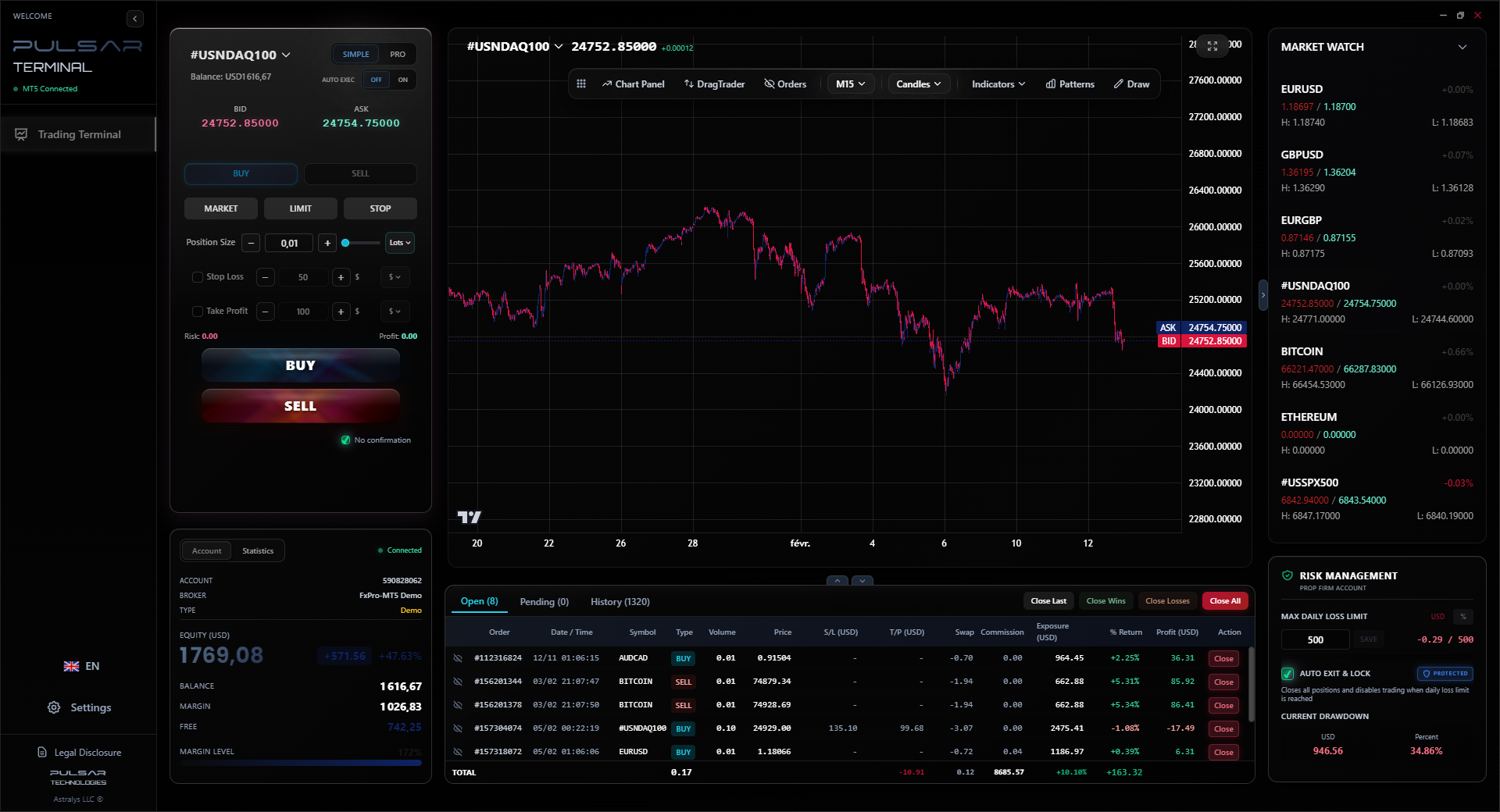
Managing the strict rules of a prop firm challenge or your own risk limits is easier with tools that automate protection, like Pulsar Terminal's daily loss guard for MT5.
Pulsar Terminal
The all-in-one MT5 companion: drag-and-drop orders, multi-TP/SL, trailing stop, grid trading, Volume Profile, and prop firm protection. Used by 1,000+ traders daily.
“Forget finding a forex guru. Focus on becoming a competent trader. The rest will follow.”
This is the only sustainable path. Your journey should aim to fire your guru.
Develop Your Own Checklist: Create a pre-trade checklist that covers market condition, news risk, entry rationale, stop-loss, and take-profit levels. Mine has 12 items. I don't click buy until all are checked.
Specialize: You don't need to trade everything. Maybe you get good at trading GBP/JPY during London hours. Or maybe you focus solely on swing trading US indices. Depth beats breadth every time.
Invest in Tools, Not Gurus: Consider spending money on a better trading platform, faster internet, or reliable hardware. These improve your execution. A good charting tool can be a better investment than another vague course. For example, having a platform that lets you easily set multiple take-profit levels or automate a trailing stop can make a real difference in managing your trades efficiently.
Review, Adapt, Repeat: Your trading journal is your best guru. Weekly reviews are non-negotiable. Why did that loss happen? Was it a rule break or a valid signal that failed? This feedback loop is what turns a losing trader into a consistent one.
, the market is the only guru that matters. It will teach you through profits and losses. Your job is to be a humble, disciplined, and relentless student. Forget finding a forex guru. Focus on becoming a competent trader. The rest will follow.
FAQ
Q1Is it illegal to follow a forex guru in Nigeria?
No, it's not illegal to seek education or mentorship. However, forex trading itself is legal for individuals, but the space is poorly regulated. The illegality comes into play if the 'guru' is running a Ponzi scheme, offering unlicensed financial advice as a registered entity, or engaging in fraud. Always ensure you're dealing with someone teaching a skill, not managing your money or guaranteeing returns.
Q2How much should I pay a forex mentor in Nigeria?
Prices vary wildly, from 50k Naira for a basic course to millions for 'elite' groups. A fair price for a structured, complete beginner-to-intermediate course with some support might range from 150k to 500k Naira. The key is value: does it provide a complete framework, risk management rules, and ongoing access? Never pay for 'lifetime access to signals' - that's a service, not education, and its value is questionable.
Q3Do I have to pay tax on profits made from a guru's signals?
Absolutely yes. The FIRS doesn't care where your trading idea came from. Any profit you realize from trading is subject to a 10% Capital Gains Tax. It's your personal responsibility to declare and pay this tax. A legitimate mentor will remind you of this obligation.
Q4Can a forex guru help me pass a prop firm challenge?
They can teach you the skills and discipline required, but no ethical guru will 'pass it for you' or guarantee a pass. Services that offer to trade your challenge account for a fee are high-risk and often violate the prop firm's rules. The goal should be to learn enough to pass it yourself. Using tools that help enforce the challenge's rules (like daily loss limits) can be a smarter investment.
Q5What's the biggest difference between a UK and Nigerian forex guru?
Regulation and audience context. A UK-based educator operates under strict FCA rules, so they can't make unrealistic promises. A Nigerian guru operates in a less defined space, which allows more hype. Also, a good Nigerian guru should address local issues: Naira volatility, funding methods for int'l brokers, local tax laws, and the psychological impact of the high-inflation environment on trading capital.
Q6I found a guru with verified profit screenshots. Is that enough proof?
It's a start, but it's not enough. Screenshots can be from demo accounts, simulated results, or selective wins. Ask for a verified myfxbook or similar live track record that shows several years of history, including drawdowns. Even better, ask if you can speak to a few long-term students (not just the featured success stories).
Prof. Winston's Lesson
Key Takeaways:
- ✓Real gurus teach frameworks, not just signals.
- ✓Always verify a track record with long-term, audited statements.
- ✓Factor in Nigeria's 10% capital gains tax on all profits.
- ✓Your psychology must match your trading system.
How useful was this article?
Click a star to rate
Weekly Trading Insights
Free weekly analysis & strategies. No spam.
About the Author
Olumide Adeyemi
West African Trading Pioneer
One of Nigeria's most active forex trading educators. 8 years of experience trading from Lagos. Specializes in low-capital strategies and prop firm challenges for African traders.
Comments
Risk Disclaimer
Trading financial instruments carries significant risk and may not be suitable for all investors. Past performance does not guarantee future results. This content is for educational purposes only and should not be considered investment advice. Always conduct your own research before trading.
You Might Also Like

Cara Trading Forex Sukses: 7 Prinsip dari Trader Profesional
Cara trading forex sukses dengan 7 prinsip trader pro: manajemen modal, disiplin, journal trading, backtest. Data nyata, bukan janji profit palsu.
Jam Trading Forex Terbaik untuk Trader Indonesia: Panduan Lengkap dengan Tabel Waktu
Panduan jam trading forex untuk trader Indonesia. Tabel 4 sesi dunia, jam emas 20:00-00:00, sesi mana yang harus dihindari. Data akurat + tips dari trader berpengalaman.
Top 5 Sàn Forex Uy Tín Nhất 2026: Review Jujur dari Trader Indonesia
Top 5 sàn forex uy tín 2026 untuk trader Indonesia. Review jujur: spread, deposit, withdraw, dukungan lokal. Exness, XM, IC Markets & lebih.
Get Pulsar Terminal
All these calculators are built into Pulsar Terminal with real-time data from your MT5 account. One-click position sizing, automatic risk management, and instant calculations.
Get Pulsar Terminal