


Here's a fact that should make you pause before clicking 'buy': the modern forex market as we know it is younger than your dad's favourite pair of jeans.

Olumide Adeyemi
West African Trading Pioneer ·  Nigeria
☕ 8 min read
What you'll learn:
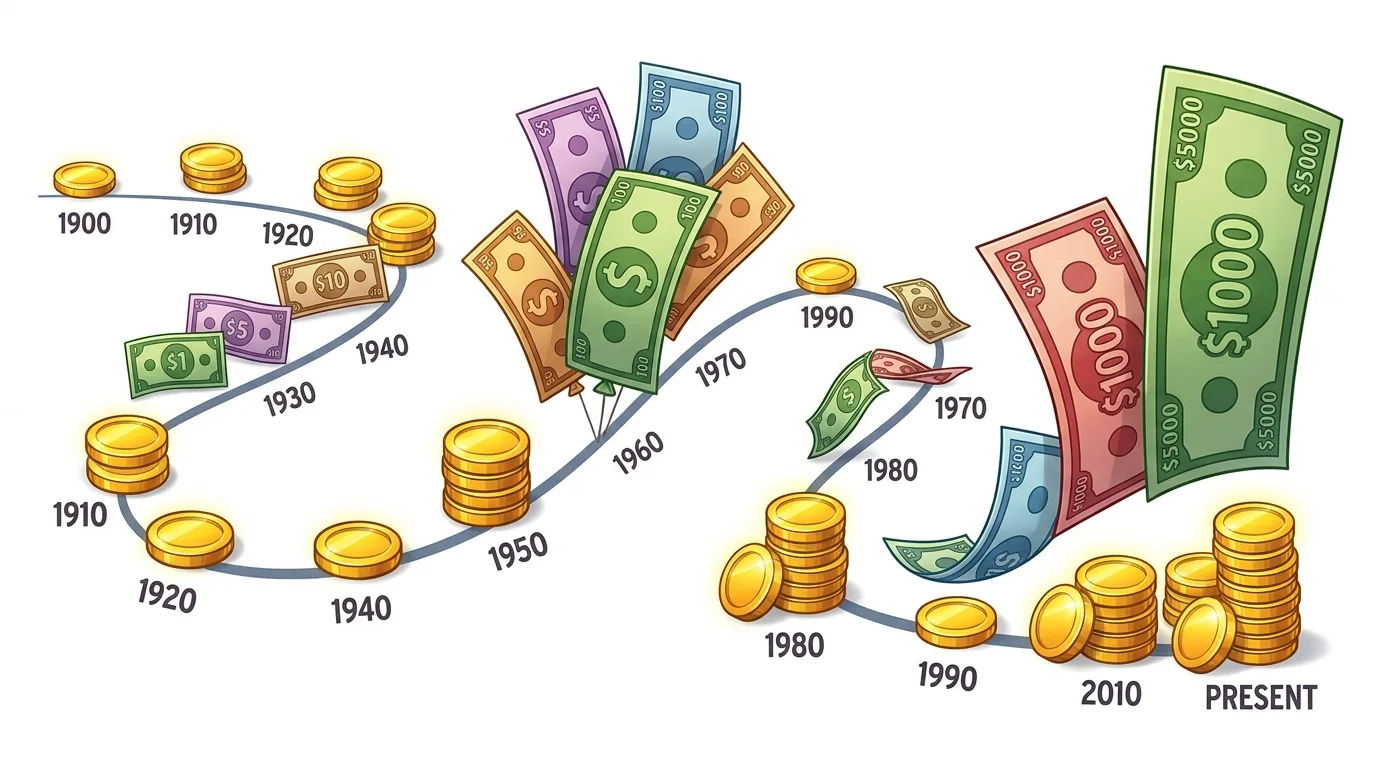
Here's a fact that should make you pause before clicking 'buy': the modern forex market as we know it is younger than your dad's favourite pair of jeans. The free-floating currency system only kicked off in 1971. Before that, your Naira was literally backed by a chunk of gold in a vault somewhere. We're trading in a system that's a 50-year-old experiment, and understanding its chaotic, unregulated birth is the only way to spot the patterns - and the predators - in today's market.
Let's get one thing straight: people have always traded value. In ancient Nigeria, you'd swap yams for cloth. The first real 'forex' happened when Lydia (now Turkey) minted gold coins around 600 BC. Fast forward to the 19th century, and the Gold Standard ruled. Your British Pound or, later, your Nigerian Pound Sterling, could be exchanged for a fixed amount of gold. It was simple, rigid, and collapsed because governments, shockingly, loved printing money they didn't have the gold to back.
The big bang for modern forex history was the Bretton Woods Agreement in 1944. After World War II, the big powers met and pegged global currencies to the US Dollar, which was itself pegged to gold at $35 an ounce. This created stability for rebuilding nations. For a newly independent Nigeria in 1960, this system provided a predictable framework for international trade. But it was a house of cards. By 1971, the US had spent so much on the Vietnam War and social programs that it couldn't cover all the dollars in circulation with gold. President Nixon 'temporarily' suspended dollar-gold convertibility. That 'temporary' measure is still in place today. We've been trading on pure faith ever since.

Pro Tip: The collapse of Bretton Woods is why we have floating exchange rates. This means a currency's value is purely based on supply, demand, and sentiment. There's no gold backing your Naira's value against the Dollar - just the market's collective belief. Never forget that.
The 1970s were a mess. With the gold anchor gone, currencies went wild. This volatility, while terrifying for governments, created the very opportunity we trade on today: price movement. The first electronic forex quotes appeared in 1973 on Reuters screens, but this was a market for giants - banks, multinationals, and governments. The minimum trade size was in the millions. You and I weren't invited.
This era also saw the rise of the 'forex scam' archetype, just on a grander scale. Unregulated 'bucket shops' would take speculative bets from clients without ever executing them on a real market. If the client won, the shop would often vanish. Sound familiar? The technology was different, but the human greed driving the scam was identical to the fake investment schemes that would later plague Nigeria.
The Plaza Accord and Market Manipulation
In 1985, the world's top finance ministers met at the Plaza Hotel in New York. They deliberately orchestrated a devaluation of the US Dollar. Think about that: the most powerful financial leaders in the world got together and planned a massive multi-year market move. It worked. This is the ultimate lesson in forex history: the market is not some pure, natural force. It is shaped, and often shoved, by political will. When you see the CBN making a sudden intervention on the Naira, remember the Plaza Accord. The big players have always written the rules.

💡 Winston's Tip
The market has a longer memory than you do. A resistance level from 2018 can still matter in 2024. Always zoom out.

“Your biggest risk isn't volatility or use; it's the unchanging nature of human greed.”
The 1990s changed everything. The internet and affordable PCs blew the doors off the trading floor. MetaQuotes launched MetaTrader in 2000, and suddenly anyone with a computer and a dream (or a delusion) could open a demo account. Retail brokers like FXCM and Gain Capital emerged, offering leveraged trading to the masses with tiny minimum deposits. This was the democratization of speculation.
For Nigeria, this coincided with the early days of widespread internet access. Ambitious Nigerians saw forex as a new frontier, a way to earn hard currency in a challenging local economy. Online forums and early signal services sprang up. I remember my first trade in 2006 on a platform that looked like it was built in MS Paint. I bought EUR/USD at 1.2780 because a guy on a Yahoo! group said it was going 'to the moon.' I didn't know what a spread was, let alone a pip. I lost 2% of my account in a day on that single, clueless trade. The barrier to entry had vanished, but the barrier to competence remained sky-high.

Warning: The 2000s broker landscape was the Wild West. Slippage was horrific, requotes were constant, and many offshore brokers were outright fraudulent. The clean(er) execution you get from a regulated broker today, like the ones we review at IC Markets or Pepperstone, is a hard-won evolution from that chaotic period.
Nigeria's forex history is a tale of two markets: the official and the parallel. After independence, the Naira was strong, even trading near parity with the Pound in the 1980s thanks to oil wealth. Then came structural adjustment, chronic devaluation, and the birth of the legendary 'Aboki FX' black market. Every Nigerian trader today has a dual-screen mindset: one eye on the official CBN rate, one on the street rate.
The 2000s and 2010s saw an explosion of local 'forex investment' schemes. MMM Nigeria (2016) was the most infamous, but it was part of a long lineage. These weren't trading; they were Ponzi schemes dressed in forex clothing. They exploited a deep, understandable desire for dollar-denominated returns in a volatile economy. I lost a friend to one of these in 2014. He 'invested' ₦500,000 with a 'fund manager' who promised 10% monthly returns. The manager drove a new Range Rover for two months, then disappeared. My friend never traded a single currency pair.
This painful history is why regulation matters. The SEC Nigeria's 2022 move to validate certain brokers, like Exness which now operates with a Nigerian license, is a direct response to this legacy of fraud. It's not about restricting opportunity; it's about separating legitimate scalping strategy from criminal enterprise.
💡 Winston's Tip
The most profitable trading tool invented in the last 50 years isn't an indicator. It's the 'Cancel Order' button. Use it liberally.
“A 5% gain you keep is better than a 50% gain you give back next week.”
You might think ancient history is irrelevant to your 15-minute chart. You'd be wrong. Every pattern, every regulation, every tool you use is a scar from a past market event.
1. Volatility is the Norm, Not the Exception. The 1970s taught us that. Don't be shocked when the Naira or a major pair makes a wild swing. Build your position size calculator assumptions around volatility, not calm.
2. Central Banks are the Ultimate Players. The Plaza Accord and countless CBN interventions prove it. You're not just trading economics; you're trading politics. A good swing trading plan always has a calendar of central bank meetings.
3. Technology is a Double-Edged Sword. The MT4/5 platform gave us access, but also created a generation of indicator junkies. I wasted years overlaying 15 oscillators on a chart, ignoring price action. The classic MACD indicator or RSI indicator survived this era because they actually work when used correctly, not because they're flashy.
4. Your Biggest Risk is Human Nature. The bucket shops of the 1920s and the crypto FX scams of 2023 operate on the same principle: exploiting greed and ignorance. The tool changes (Telegram vs. newspaper ads), but the scam doesn't. Protecting yourself starts with knowing this history.

Example: In 2015, the SNB unpegged the CHF/EUR. Brokers went bust, accounts blew up. That single event rewrote broker risk management rules globally. The spreads you see, the margin requirements you have, the negative balance protection some offer - all are reactions to historical explosions.
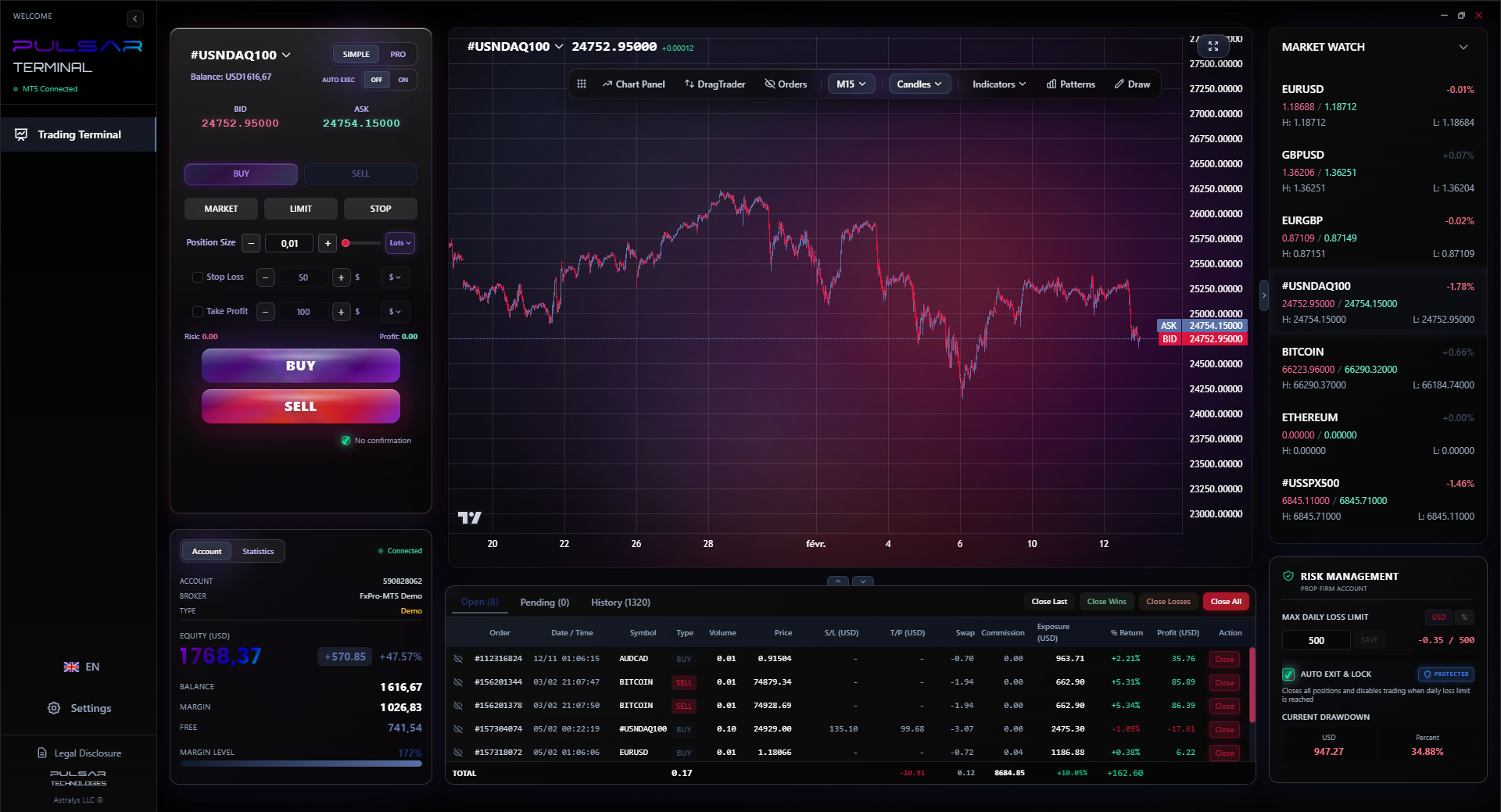
Managing the volatility born from forex history requires precise tools; Pulsar Terminal's drag-and-drop orders and multi-TP/SL features let you execute complex risk management plans on MT5 in seconds, not minutes.
Pulsar Terminal
The all-in-one MT5 companion: drag-and-drop orders, multi-TP/SL, trailing stop, grid trading, Volume Profile, and prop firm protection. Used by 1,000+ traders daily.
So, what do you do with all this? Here’s the distilled wisdom from five decades of market chaos.
First, trust is earned, not given. Before funding an account, do the work. Check for a real license (SEC Nigeria, FCA, ASIC). Read our deep-dive reviews on brokers like XM to see their actual track record. Your grandfather wouldn't give his yams to a stranger; don't give your Naira to an unverified website.
Second, use is a historical accident. The 500:1 use some offshore brokers offer isn't a right; it's a marketing gimmick born from competition. The old-school traders in the 80s had maybe 10:1. High use is the fastest path to a margin call. Use it like pepper - a little can enhance, a lot will destroy.
Third, develop a long-term mindset. The market has survived world wars, the end of gold, and the dot-com bust. Your goal isn't to win today, but to survive for a decade. That means preserving capital above all else. A 5% gain you keep is better than a 50% gain you give back next week.
Finally, specialize. The modern trader has access to 100+ pairs, gold, oil, indices. The 1970s trader focused on one or two. Pick your battlefield. If you trade XAU/USD (gold), learn its unique drivers. If you trade EUR/USD, know it inside out. Depth beats breadth every time in this game.
💡 Winston's Tip
If a trading opportunity seems too good to be true, it's not a new approach. It's an old scam wearing a new URL.
FAQ
Q1When did forex trading actually begin?
As exchange of value, it's ancient. As a formal, speculative market for retail traders, it began in the late 1990s with the spread of the internet and platforms like MetaTrader. The free-floating system that enables modern speculation started in 1971.
Q2Why is the history of forex important for a trader today?
Because history repeats. Market structures, scam tactics, and regulatory changes are all cycles. Knowing how the Naira has been managed, or how major pairs reacted to past crises (like the 2008 crash), helps you anticipate future moves and avoid repeating classic mistakes.
Q3What was the biggest event in forex history?
The collapse of the Bretton Woods system in 1971. This ended the gold standard, cut the link between money and physical value, and created the volatile, sentiment-driven floating exchange rate market we trade today. Everything else is a consequence.
Q4How has forex trading changed in Nigeria in the last 20 years?
It moved from an obscure, elite activity to a mainstream pursuit, fueled by internet access and the search for dollar income. This was marred by a wave of Ponzi schemes (like MMM). Now, it's entering a more mature phase with local regulation (SEC Nigeria) beginning to validate international brokers, offering more protection.
Q5Did people trade forex before computers?
Yes, but not like we do. Banks and institutions traded via phone on the interbank market. Charts were drawn by hand on graph paper. Technical analysis was done with rulers and pencils. The speed, accessibility, and use available to a retail trader today were unimaginable.
Q6What's the oldest forex strategy that still works?
Price action and support/resistance. Traders in the 1930s like Richard Wyckoff were identifying supply and demand zones on ticker tape. While we have fancy indicators now, the core principle of buying low (demand) and selling high (supply) is as old as the market itself.
Prof. Winston's Lesson
Key Takeaways:
- ✓The modern forex market is a 50-year experiment.
- ✓Central banks, not charts, are the ultimate market force.
- ✓Scams evolve, but their core exploit (greed) never changes.
- ✓Survival for a decade beats spectacular wins for a month.
How useful was this article?
Click a star to rate
Weekly Trading Insights
Free weekly analysis & strategies. No spam.
About the Author
Olumide Adeyemi
West African Trading Pioneer
One of Nigeria's most active forex trading educators. 8 years of experience trading from Lagos. Specializes in low-capital strategies and prop firm challenges for African traders.
Comments
Risk Disclaimer
Trading financial instruments carries significant risk and may not be suitable for all investors. Past performance does not guarantee future results. This content is for educational purposes only and should not be considered investment advice. Always conduct your own research before trading.
You Might Also Like

Cara Trading Forex Sukses: 7 Prinsip dari Trader Profesional
Cara trading forex sukses dengan 7 prinsip trader pro: manajemen modal, disiplin, journal trading, backtest. Data nyata, bukan janji profit palsu.
Jam Trading Forex Terbaik untuk Trader Indonesia: Panduan Lengkap dengan Tabel Waktu
Panduan jam trading forex untuk trader Indonesia. Tabel 4 sesi dunia, jam emas 20:00-00:00, sesi mana yang harus dihindari. Data akurat + tips dari trader berpengalaman.
Top 5 Sàn Forex Uy Tín Nhất 2026: Review Jujur dari Trader Indonesia
Top 5 sàn forex uy tín 2026 untuk trader Indonesia. Review jujur: spread, deposit, withdraw, dukungan lokal. Exness, XM, IC Markets & lebih.
Get Pulsar Terminal
All these calculators are built into Pulsar Terminal with real-time data from your MT5 account. One-click position sizing, automatic risk management, and instant calculations.
Get Pulsar Terminal