


You keep seeing those ads, right? 'Forex Insider Secrets Revealed!' or 'Join Our VIP Signal Channel!' They promise you the keys to the kingdom, the hidden knowledge that turns your phone into a money printer.

Olumide Adeyemi
West African Trading Pioneer ·  Nigeria
☕ 11 min read
What you'll learn:
- 1What 'Forex Insider' Really Means (And What It Doesn't)
- 2The Nigerian Forex Scams You MUST Avoid
- 3Building a Real Edge: Your Practical Blueprint
- 4The Tools Real 'Insiders' Actually Use
- 5The Psychology & Mindset Shift
- 6The Path From Retail to Professional
- 7The Final Word: You Are the Only Insider You Need

You keep seeing those ads, right? 'Forex Insider Secrets Revealed!' or 'Join Our VIP Signal Channel!' They promise you the keys to the kingdom, the hidden knowledge that turns your phone into a money printer. But what does being a 'forex insider' actually mean for a Nigerian trader? Is it about illegal tips, or is it something else entirely? Let me tell you, after 12 years in this game, the real insider knowledge isn't what you're being sold. It's about understanding the unique pressures on the Naira, spotting the local scams a mile off, and building a strategy that works with your reality, not against it.
Let's clear this up first. When you hear 'forex insider' in Nigeria, your mind might jump to someone with illegal government contacts, getting advance notice of CBN policy changes. That's not just rare, it's dangerous and stupid. The real 'insider' edge in forex isn't about secret information, it's about superior process and discipline that looks like magic to outsiders.
Think about it. The forex market is global and decentralized. No single entity, not even the CBN, controls the EUR/USD price. So an 'insider' here isn't someone with a cheat code. It's a trader who has mastered their psychology, has a rock-solid risk management plan (seriously, use a position size calculator), and understands how global events filter down to affect their trades. They've made every mistake in the book, so they know which pitfalls to avoid.
I learned this the hard way. Early on, I chased 'insider signals' from a group that claimed to have 'bank order flow' data. I paid 150k Naira for a month. The result? Two winning trades, five losers, and a net loss of $420 on my account. The 'insider' was just a guy in a cafe using a basic MACD indicator and selling hope. The real shift happened when I stopped looking for shortcuts and started building my own system.

Warning: Any service promising 'guaranteed profits' or 'insider government news' is a scam, full stop. The only thing they're an insider in is separating you from your money.
The true insider knowledge is boring: it's consistency. It's knowing that liquidity is thin during Lagos lunch hours, which can cause weird spikes. It's understanding how Naira liquidity crunches at month-end can affect your funding methods. That's the local edge you can actually use.

💡 Winston's Tip
The market's job is to make you feel stupid right before it makes you right. Your job is to have the capital and the conviction to survive the first part.
“The real 'insider' edge in forex isn't about secret information, it's about superior process and discipline that looks like magic to outsiders.”
Our market is unfortunately a breeding ground for slick operators. They prey on the desperation for financial freedom and the allure of 'insider' status. Here’s how to spot them.
The Signal Seller Guru: This guy has screenshots of perfect trades on a demo account. He drives a fancy car (maybe rented) and speaks in complex jargon. He sells WhatsApp signal groups for 50k-500k Naira. The signals often come with insane use suggestions like 'use 1:500' and no clear stop loss. I once tracked one of these gurus' public calls for two weeks. Of 23 signals, 14 were losers. If you'd followed them all with a 2% risk per trade, your account would have been down over 25%. That's not an edge, it's a demolition service.
The Prop Firm 'Helper': With the rise of prop firm challenges, a new scam emerged: people who claim to 'help' you pass the evaluation for a fee. They might offer to trade your account or sell you a 'special EA' that guarantees passage. Remember, if their EA was so good, why would they need your 100k Naira fee instead of just trading their own funded account? A real prop firm challenge tests your discipline, not your ability to cheat.
The Fake Investment Scheme (Ponzi): They call it 'forex portfolio management' with promised returns of 5-10% monthly. They use terms like 'hedge fund' and 'AI trading.' Your friend got his 'returns' for two months, so you invest 200k Naira. The returns are just new investors' money. It collapses when recruitment slows. Always ask: who is the regulated entity holding the funds? If it's just a company name and a GTB account, run.

Pro Tip: Before sending any money to a mentor or signal service, ask for a verifiable, real-time track record from a reputable third-party site like Myfxbook. If they can't or won't provide it, that's your answer.
“Any service promising 'guaranteed profits' or 'insider government news' is a scam, full stop.”
Forget buying an edge. You build one. Here’s how, step by step, for the Nigerian context.
Start With Your Why and Your Capital
Be brutally honest. Are you trading to escape a job you hate? That's emotional fuel that will burn you. Your 'why' should be to build a skill. Start with capital you can afford to lose completely. I don't care if it's 20k Naira. Starting small with a broker like Exness or XM that offers micro lots means you can make real trades without real panic. The goal of your first 100 trades isn't profit, it's education.
Master One Setup, One Pair
You don't need to trade everything. The EUR/USD is perfect to start. It's liquid, spreads are tight, and information is plentiful. Pick one strategy - maybe a simple support/resistance swing trading method - and trade only that. Document every trade. Why did you enter? Where was your stop? What did the chart look like? I traded nothing but EUR/USD pullbacks to the 200-period moving average for my first eight months. It taught me more about price action than any course.
Integrate Local & Global Fundamentals
This is your potential 'insider' advantage. You live here. You feel the inflation at the market. You hear the forex black market (aboki) rate gossip. Learn to connect those local realities to the charts.
For example, when there's strong talk of a CBN interest rate hike to fight inflation, the Naira might temporarily strengthen. But if you're trading USD/NGN CFDs (offered by some international brokers), you need to know if your broker's pricing is based on the official or parallel market rate. That's a specific, local piece of knowledge that a trader in London won't have. It doesn't give you a sure thing, but it adds context.
Risk Management Is Non-Negotiable
This is the absolute core. Never, ever risk more than 1-2% of your account on a single trade. Use a stop loss on EVERY trade, no exceptions. I learned this after a single trade wiped out 35% of my account in 2016. I was 'sure' the ECB would cause a euro crash. I wasn't. The emotional toll was worse than the financial one. A proper position size calculator is your best friend. If you don't have a risk management rule written down, you don't have a trading plan.
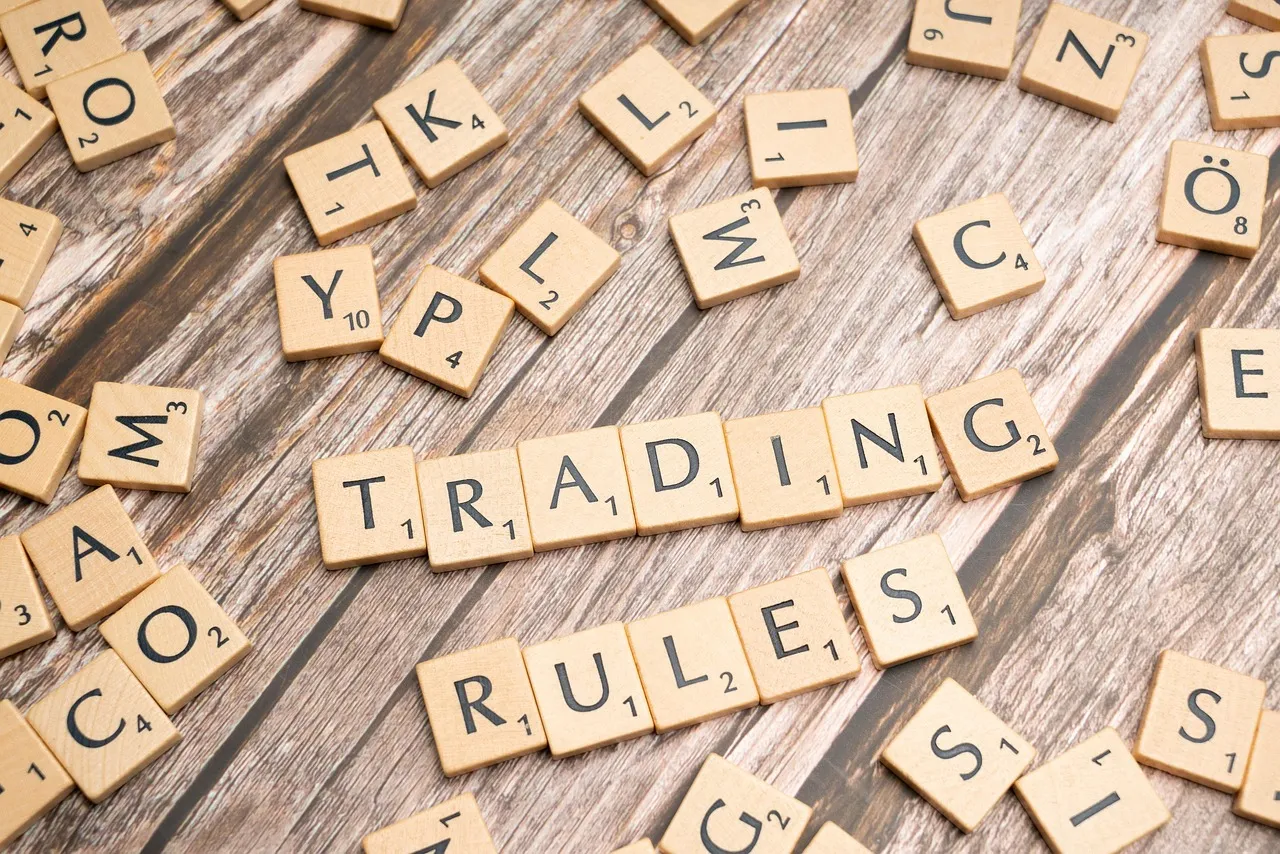
“Any service promising 'guaranteed profits' or 'insider government news' is a scam, full stop.”
It's not about expensive software. It's about the right free or cheap tools used correctly.
A Reliable Broker: This is your foundation. You need a broker with fair pricing, solid execution, and reliable deposits/withdrawals in Naira. I've had good experiences with IC Markets and Pepperstone for their raw spreads, but always check their current Naira deposit options. Look for low, consistent spreads (under 1.0 pip on EUR/USD for ECN accounts) and no hidden fees on currency conversion.
A Trading Journal (Not Optional): This is your single most important tool. Use a simple Google Sheet. Record: Date, Pair, Entry, Stop Loss, Take Profit, Exit, P&L, Risk %, and most importantly, 'Reason for Trade' and 'Lesson Learned.' Review it weekly. My journal showed me I had a 60% win rate on trades entered before 10 AM Lagos time, but only 40% after 3 PM. That was a game-changer for my schedule.
Basic Indicators (Used Well): Less is more. A moving average to define trend, and the RSI indicator to spot potential reversals or continuations. I combine a 50-period EMA with RSI readings above 60 for bullish trends and below 40 for bearish ones. That's it. I don't have 10 indicators cluttering my screen.
Economic Calendar: Follow the Forex Factory calendar. Know when major US data (NFP, CPI) and ECB/CBN announcements are due. These events cause volatility. As a beginner, you might want to flat your positions before them. I don't trade the first 15 minutes after a high-impact news release. The spreads widen too much, and it's just gambling.
💡 Winston's Tip
If you can't explain your edge in one simple sentence, you don't have one. Complexity is the enemy of execution.
“Your ego is your worst enemy. You need to be okay with being wrong 40%, 50%, even 60% of the time.”
This is where the real separation happens. The 'insider' mindset is calm, patient, and detached.
Embrace Being Wrong: Your ego is your worst enemy. You need to be okay with being wrong 40%, 50%, even 60% of the time. A professional's edge can be slim. A strategy with a 55% win rate and a good risk-reward ratio is fantastic. I had a streak of 7 losses in a row once. It felt terrible. But because each loss was only 1% of my account, I survived. The 8th trade was a winner that made back all the losses and more. If I had doubled down on loss #5 trying to 'get back,' I'd have been finished.
Process Over Profit: Don't stare at your P&L. Stare at your checklist. Did I follow my plan? Was my risk correct? Was the setup valid? If you answer yes to those but still lost, that's a good trade. Celebrate it. A bad trade where you get lucky and win is actually dangerous - it reinforces sloppy behavior.
Handle the Naira Anxiety: When you have 500k Naira in a trading account and the Naira is volatile, the urge to 'withdraw before it gets worse' is strong. You have to separate your trading capital from your living expenses. Your trading account is in USD. Think in USD. Your job is to grow the USD amount. The conversion back to Naira is a separate, periodic financial decision. Mixing the two will cause panic exits.

Example: Let's say you have a $1,000 account. You risk 1% ($10) per trade. Your target profit per trade is $20 (2% account risk, 1:2 risk-reward). If you win 5 trades and lose 5 trades, you're net +$50. That's a 5% gain on your account by being right only half the time. That's the power of risk management, not prediction.
Managing multiple trades and strict prop firm rules by hand is stressful; Pulsar Terminal automates advanced order types and daily loss limits directly on your MT5 platform.
Pulsar Terminal
The all-in-one MT5 companion: drag-and-drop orders, multi-TP/SL, trailing stop, grid trading, Volume Profile, and prop firm protection. Used by 1,000+ traders daily.
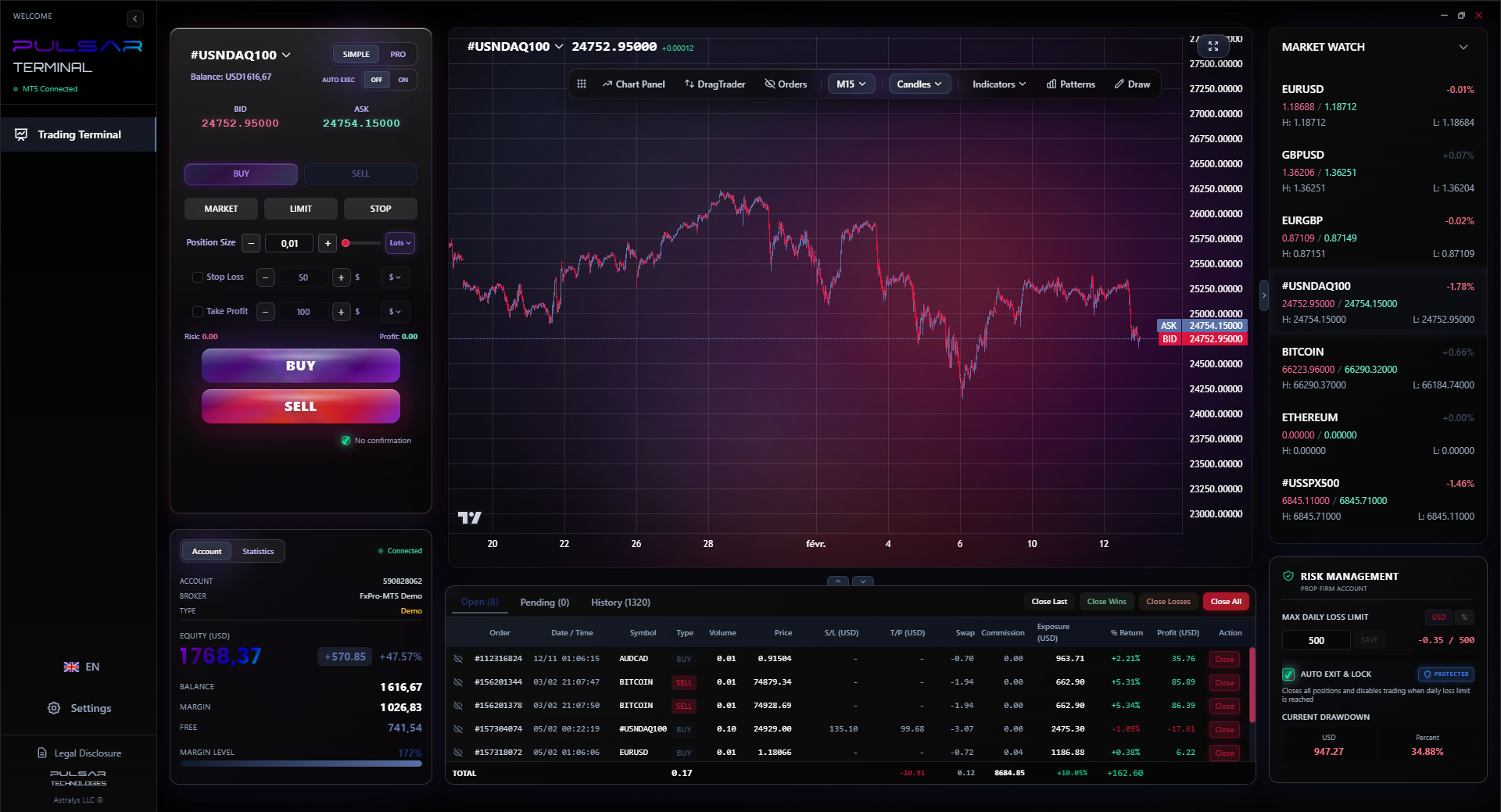
“Your ego is your worst enemy. You need to be okay with being wrong 40%, 50%, even 60% of the time.”
How do you cross the bridge from hobbyist to someone who consistently generates returns? It's a marathon.
The 100-Trade Milestone: Don't even judge your strategy until you've executed at least 100 trades with it in a live, but small, account. This filters out luck. After my first 100 trades on a strict strategy, my stats were clear: 52% win rate, average winner 1.8x my average loser. That told me I had something statistically valid, even if it felt slow.
Scaling Slowly: Once you have 6 months of consistent, documented profitability, then you can think about adding more capital. And I mean adding - not risking more per trade. If you were risking 1% with $1,000, you now risk 1% with $2,000. The percentage stays the same. The biggest killer is getting a few wins, feeling like a genius, and suddenly risking 5% per trade. That's the fast track to a margin call.
Consider Prop Firms (Later): Once you're consistently profitable with your own capital, prop firms can be a way to trade with larger size. But see them as a rigorous test, not free money. Their rules (like daily loss limits) are excellent training. The challenge is to apply your already-profitable strategy under their constraints. Don't buy a challenge hoping to 'figure it out' during the evaluation. You should already know your strategy works.
Continuous Learning: The market changes. A strategy that worked in a ranging market will fail in a strong trend. You need to learn to identify market states. Read books, not just blog posts. 'Trading in the Zone' by Mark Douglas did more for my psychology than any indicator ever could.
💡 Winston's Tip
Your trading journal isn't a diary of your brilliance. It's a forensic report on your repeated mistakes. Read it like a detective.
“The VIP room is empty. The real 'insider' advantage is built, not bought.”
So, here's the ultimate truth they don't want you to know. There is no secret society of forex insiders handing out golden tickets. The VIP room is empty. The real 'insider' advantage is built, not bought. It's built through thousands of hours of screen time, through painful losses you learn from, through the discipline to follow a boring plan day after day.
It's knowing that your greatest asset isn't a signal, but your ability to control your own emotions when a trade goes against you. It's understanding that in Nigeria, your edge might be the patience to wait for the perfect London session setup after your 9-5, while others are forcing trades out of boredom.
Start today. Open a demo account. Pick one pair. Write down one simple rule (e.g., 'Buy if price pulls back to the 50 EMA and RSI is above 50 in an uptrend'). Trade it 50 times. Journal every outcome. That right there, that process, is the beginning of your true insider journey. It's not glamorous. But it's real. And it's the only thing that has ever consistently worked, from Lagos to London to New York.
I'll leave you with this: The market doesn't care about your dreams, your bills, or your need for status. It just is. Your job is to build a system that aligns with its reality. Do that, and you won't need to look for an insider. You'll become one.
FAQ
Q1Is forex trading legal in Nigeria?
Yes, trading the international forex market through globally regulated brokers is legal for individuals. However, you are subject to the rules of your chosen broker and must comply with CBN guidelines for moving money internationally. Trading is legal; running an unlicensed investment scheme or scam is not.
Q2What is the minimum amount I need to start forex trading in Nigeria?
You can start with a very small amount. Many international brokers like XM or Exness allow you to open an account with as little as $10 (about 15k Naira). The key is to use micro or cent lots so you can practice proper risk management. The amount is less important than the percentage you risk per trade.
Q3Are forex signal groups worth it for Nigerian traders?
Almost always, no. The vast majority sell generic analysis or, worse, reckless trades. Your goal should be to learn to fish, not to pay for a single fish of unknown quality. The dependency will cripple your development as a trader. The few legitimate educators charge for education, not daily signals.
Q4How do I fund my forex trading account from Nigeria?
Most brokers offer bank wire transfers, credit/debit cards, and increasingly, local payment processors like Flutterwave or Paystack for Naira deposits. Cryptocurrency is another option, but be aware of price volatility during the transfer. Always check your broker's specific 'deposit' page for Nigeria-friendly options.
Q5What's the biggest mistake new Nigerian forex traders make?
Two tied for first: 1) Using excessive use (like 1:500) because it's offered, which turns small market movements into account explosions. 2) Trading to make 'quick money' to solve immediate financial problems. This emotional pressure leads to breaking every risk management rule. Trade to learn first, profit second.
Q6Can I use my phone to trade forex successfully?
You can, especially for monitoring and executing simple trades. MT4/MT5 have good mobile apps. However, for serious chart analysis, trade planning, and journaling, a computer is far superior. Think of your phone as the remote control, but your computer is the command center.
Q7How do I know if a forex mentor or course in Nigeria is legitimate?
Legitimate educators focus on teaching concepts: risk management, psychology, chart reading. They have a transparent track record (like a verified Myfxbook link) they can show, not just screenshot piles. They should be able to explain their strategy clearly, including its losing periods. Be very wary of anyone who focuses on their lifestyle, guarantees profits, or pressures you to sign up quickly.
Prof. Winston's Lesson
Key Takeaways:
- ✓Risk a maximum of 1-2% per trade, always.
- ✓Master one currency pair before adding more.
- ✓A 55% win rate with good risk-reward is a solid edge.
- ✓Your trading journal is your most important tool.
- ✓Process consistency beats sporadic genius every time.
How useful was this article?
Click a star to rate
Weekly Trading Insights
Free weekly analysis & strategies. No spam.
About the Author
Olumide Adeyemi
West African Trading Pioneer
One of Nigeria's most active forex trading educators. 8 years of experience trading from Lagos. Specializes in low-capital strategies and prop firm challenges for African traders.
Comments
Risk Disclaimer
Trading financial instruments carries significant risk and may not be suitable for all investors. Past performance does not guarantee future results. This content is for educational purposes only and should not be considered investment advice. Always conduct your own research before trading.
You Might Also Like

Cara Trading Forex Sukses: 7 Prinsip dari Trader Profesional
Cara trading forex sukses dengan 7 prinsip trader pro: manajemen modal, disiplin, journal trading, backtest. Data nyata, bukan janji profit palsu.
Jam Trading Forex Terbaik untuk Trader Indonesia: Panduan Lengkap dengan Tabel Waktu
Panduan jam trading forex untuk trader Indonesia. Tabel 4 sesi dunia, jam emas 20:00-00:00, sesi mana yang harus dihindari. Data akurat + tips dari trader berpengalaman.
Top 5 Sàn Forex Uy Tín Nhất 2026: Review Jujur dari Trader Indonesia
Top 5 sàn forex uy tín 2026 untuk trader Indonesia. Review jujur: spread, deposit, withdraw, dukungan lokal. Exness, XM, IC Markets & lebih.
Get Pulsar Terminal
All these calculators are built into Pulsar Terminal with real-time data from your MT5 account. One-click position sizing, automatic risk management, and instant calculations.
Get Pulsar Terminal