


Let me guess.

Olumide Adeyemi
West African Trading Pioneer ·  Nigeria
☕ 9 min read
What you'll learn:
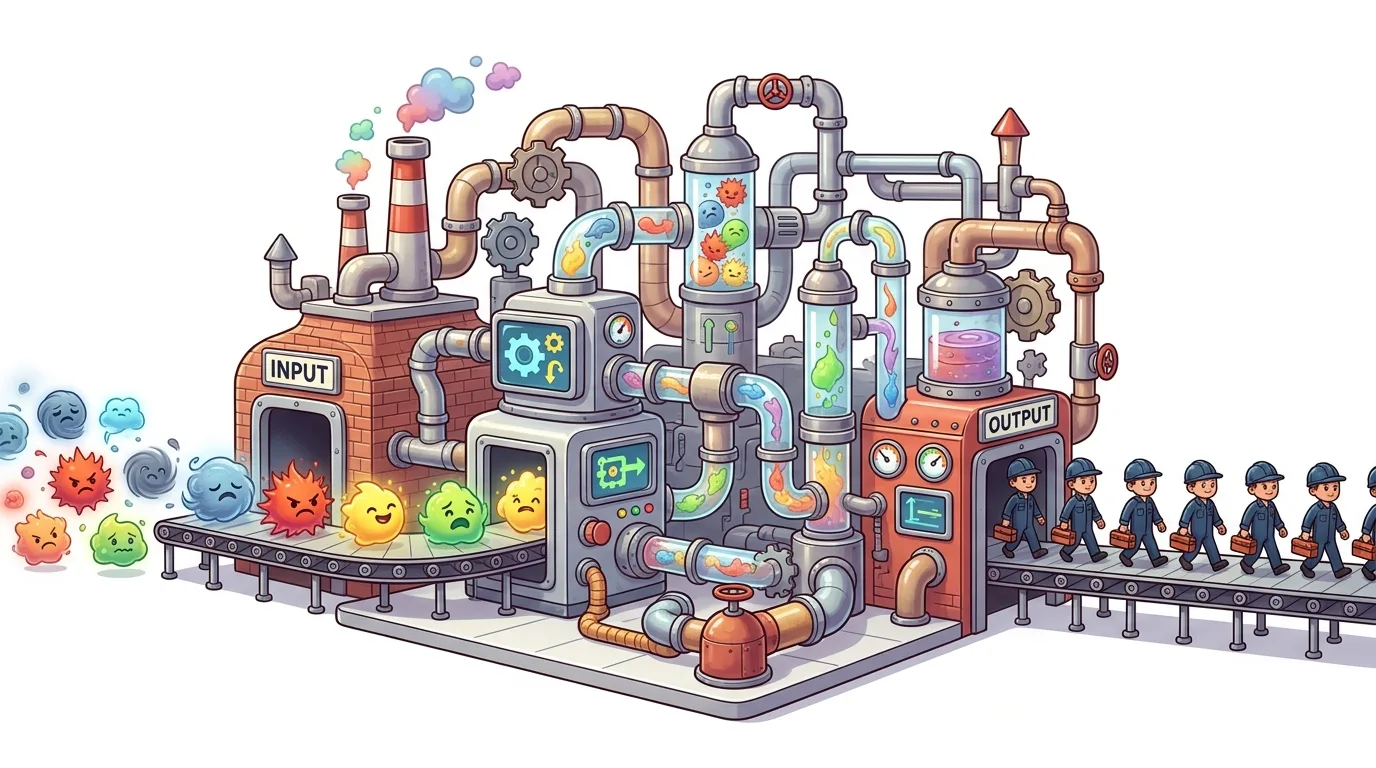
Let me guess. You've seen the ads. 'Set it and forget it!' 'Let the robot make you money while you sleep!' The promise of a Forex Robot Factory - a system that churns out profitable trades automatically - is incredibly tempting, especially when you're juggling a 9-to-5 in Lagos or Port Harcourt. I get it. But here's the brutal truth most sellers won't tell you: buying a trading robot is often just an expensive way to learn a painful lesson. I've bought them, tested them, and blown up accounts with them. Let's set the record straight on what these 'factories' really are, so you don't waste your hard-earned Naira.
It's not a physical building in Ikeja. When people talk about a Forex Robot Factory, they usually mean one of two things. First, it's a brand name for specific commercial Expert Advisors (EAs) - which is just a fancy term for automated trading software you install on MetaTrader. Second, and more commonly, it's a marketing concept. It sells the dream of a turnkey system that manufactures profits with mechanical precision.
The core idea is an algorithm that follows a strict set of rules to enter and exit trades. No emotion, no hesitation. In theory, it's brilliant. In the chaotic reality of the Lagos interbank market or during major news events, it's a different story. These robots are just code, and code can't adapt to context like a human can. It doesn't know that the CBN just made an unexpected announcement or that liquidity has dried up because of a local holiday.

Warning: The term 'factory' is intentional marketing. It implies reliability, scale, and consistent output. In trading, especially forex, consistency is the holy grail - and it's incredibly rare. Don't let the industrial metaphor fool you into thinking the process is foolproof.
Many are sold through flashy websites with fake testimonials and hypothetical backtests. I learned this the hard way early on. I bought a 'Gold Miner' EA for $500 back in 2017. The sales page showed a smooth equity curve going up and to the right forever. In my first real month, it hit a streak of 12 losing trades in a row on GBP/JPY. The robot didn't care; it just kept executing. I lost about 25% of my account before I pulled the plug. That was my Naira funding a developer's vacation, not a factory.

“Buying a trading robot is often just an expensive way to learn a painful lesson.”
Our market isn't like trading in London or New York. We face unique challenges that most generic forex robots are utterly blind to.
Internet and Power Reliability
Your robot is only as good as your light and your data. A power cut in Surulere or network lag from your ISP can mean your EA misses a crucial exit signal. I've seen trades go deep into the red because my generator kicked in 30 seconds too late. The robot, sitting idle on a dead laptop, doesn't have a contingency plan. Automated systems demand 24/7 uptime, which is a luxury, not a guarantee, here.
Broker and Spread Issues
Not all brokers are created equal, and this matters immensely for robots. Many EAs are built for tight, stable spreads. Try running a high-frequency scalping robot on a Nigerian broker with wide and variable spreads during volatile sessions, and you'll get slaughtered on execution. Your bot might signal an entry at 1.1050, but your fill comes at 1.1057, turning a potential winner into a loser before it even starts. Always check a broker's policy on EAs. Some international brokers like IC Markets or Pepperstone are known for better EA compatibility and tighter spreads, which is crucial.
The Over-Optimization Trap
This is the killer. Sellers 'curve-fit' the robot's logic to past data so it looks amazing. It's like teaching for a specific exam by memorizing the answer sheet. It will ace that one test (the backtest) but fail miserably on any new, unseen market conditions. When the market shifts - and it always does - the robot keeps making the same old mistakes. It doesn't learn. It just loses.

Pro Tip: Before you run any robot on a live account, test it on a demo for a FULL market cycle - through trending and ranging periods. If it only works in one type of market, it's a one-trick pony that will eventually get shot.

💡 Winston's Tip
A robot's backtest is its CV. Would you hire someone based on a CV that only lists their successes and was written by their mother? Demand to see the full employment history, warts and all.
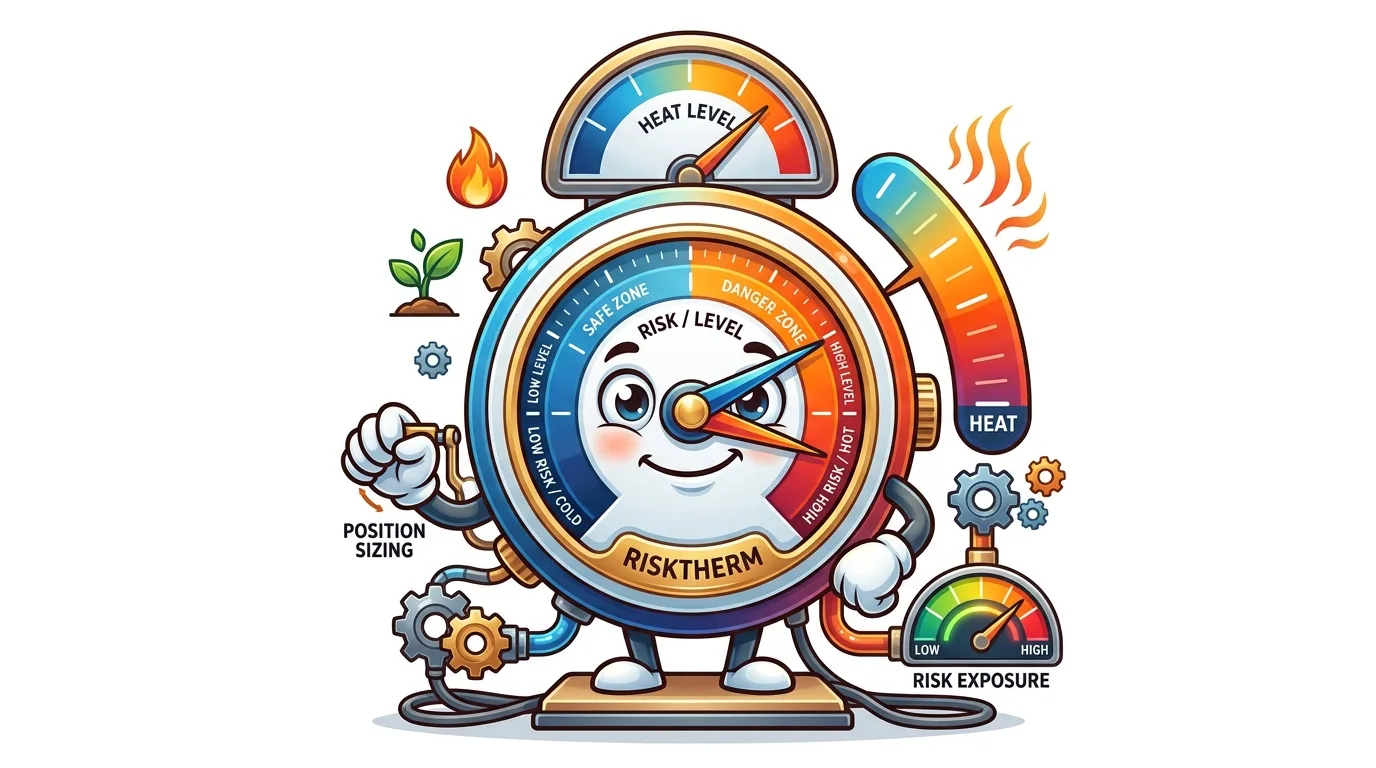
“The term 'factory' is intentional marketing. It implies reliability, scale, and consistent output. In trading, consistency is the holy grail - and it's incredibly rare.”
Let's talk numbers. The price tag on the website is just the beginning.
- Upfront Cost: Ranges from $99 for a basic 'grid' EA to $5,000+ for 'institutional' systems. That's ₦150,000 to ₦7.5 million+ at current rates. Most fall in the $500-$1500 range.
- VPS (Virtual Private Server): To run 24/7, you need a VPS. That's another $15-$50 per month (₦22,500-₦75,000).
- The Hidden Cost of Losses: This is the big one. No robot has a 100% win rate. You must fund the account it will trade on. A $500 robot trading a $1,000 account is a recipe for a margin call. You need significant capital to withstand the drawdowns.
- Mental Cost: The stress of watching it lose is real. You'll second-guess it, turn it off at the worst time, or override it, defeating the whole purpose.
I once calculated the total cost of a six-month experiment with a martingale-style robot (one that doubles down on losses). Between the purchase price, VPS, and the eventual account loss, I was down over $2,000. I could have taken a proper trading course or funded a sensible manual trading account with that money. The robot was a very expensive teacher.
“The term 'factory' is intentional marketing. It implies reliability, scale, and consistent output. In trading, consistency is the holy grail - and it's incredibly rare.”
Yes, but under very specific, unsexy conditions. The fantasy is buying a robot, installing it, and getting rich. The reality is more like hiring and managing a very rigid, stupid employee.
A robot can be a useful tool for a trader who already knows what they're doing. For example, if you have a proven manual scalping strategy but can't sit at the screen all day, you might code the exact rules into an EA to execute for you. The key is you developed the edge; the robot is just the hands.
The most realistic use case I've found is for utility functions, not for finding trades. Think about a tool that automatically moves your stop to breakeven after a certain number of pips, or manages a basket of trades according to your rules. This takes the emotion out of trade management, which is half the battle. The other half - finding good trades - is still on you.

Example: Let's say you're a swing trader. You could use a robot not to find swings, but to automatically trail your stop by 20 pips once you're 50 pips in profit on a trade you entered manually. That's a practical application that serves you, not replaces you.
Blindly trusting a black box you bought online with your trading capital is, in my strong opinion, a form of gambling. You're betting on the developer's skill and honesty, not your own.
💡 Winston's Tip
Your greatest trading edge is between your ears. No algorithm can replicate your ability to sense fear, greed, or a shift in market narrative from local news. Don't devalue that.

“Blindly trusting a black box you bought online with your trading capital is, in my strong opinion, a form of gambling.”
The market is flooded with junk. Here’s how to spot it:
- Guaranteed Profits or No-Drawdown Claims: Run. This is the #1 sign of a scam. Trading involves risk. Period.
- Overly Complicated Sales Pages: If it spends more time talking about luxury cars and beaches than the actual trading logic, be wary.
- No Real-Time, Verifiable Track Record: A Myfxbook link that's only a month old or is on a demo account is useless. You need to see years of live account history, including the drawdown periods.
- Seller Avoids Specifics: If they can't clearly explain what market conditions the robot fails in, they're hiding something. Every strategy has weaknesses.
- One-Time Payment for 'Lifetime Updates': Markets evolve. A robot that isn't regularly updated will become obsolete. A serious developer often has a monthly fee or paid major updates.
I fell for the 'guaranteed profits' line once. The seller used fake screenshots and a pressure-sales tactic ('offer expires in 2 hours!'). The robot was a simple moving average crossover system you could code in 10 minutes. I paid $300 for it. Don't be me.
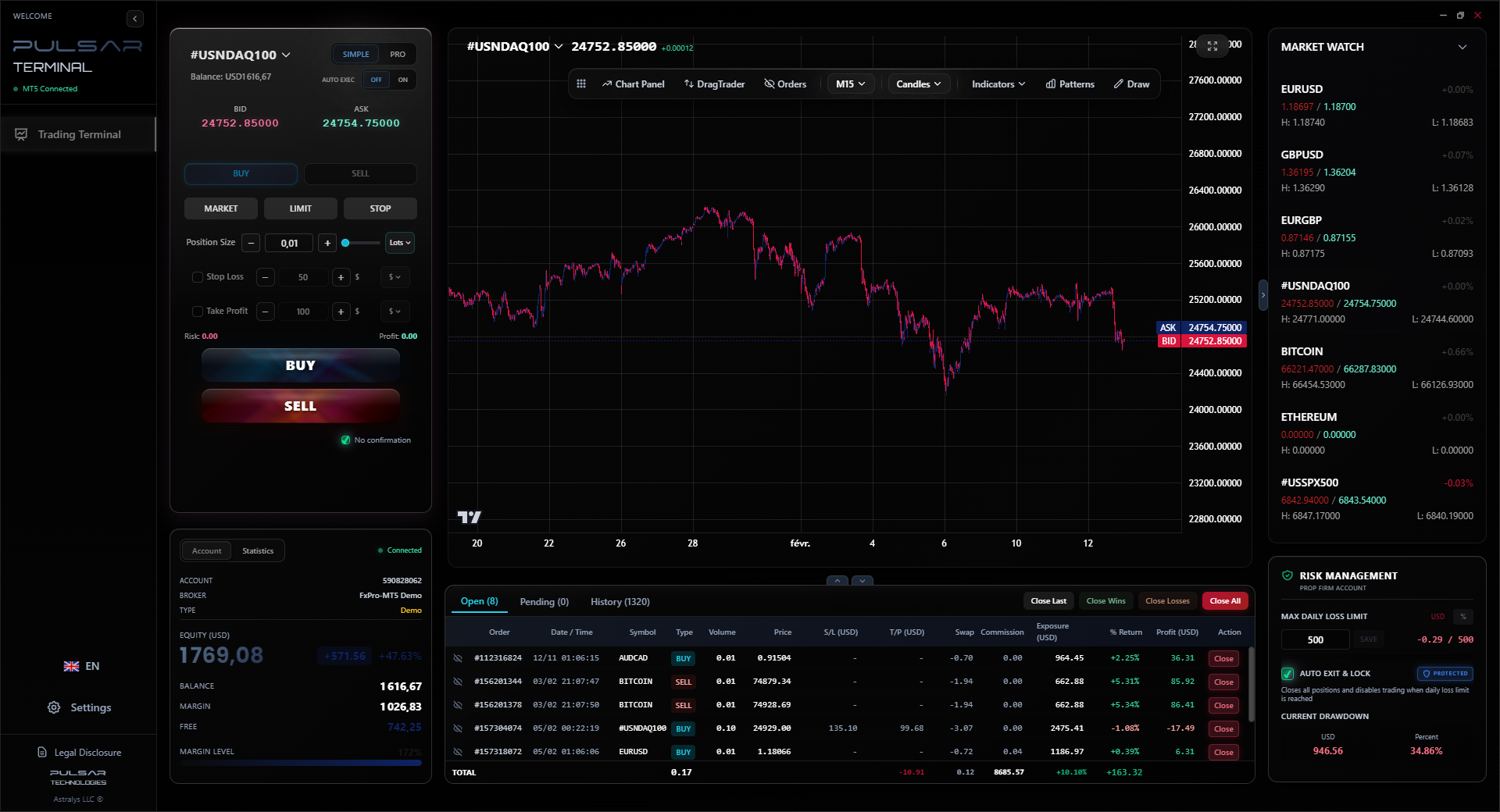
Instead of gambling on a black-box robot, use tools like Pulsar Terminal to automate the boring parts of trade management—like setting multiple take-profits or a trailing stop—on trades you've entered with your own brain.
Pulsar Terminal
The all-in-one MT5 companion: drag-and-drop orders, multi-TP/SL, trailing stop, grid trading, Volume Profile, and prop firm protection. Used by 1,000+ traders daily.
“Blindly trusting a black box you bought online with your trading capital is, in my strong opinion, a form of gambling.”
Instead of funding a forex robot factory's owner, invest in your own trading factory - your mind. Here’s where that money is better spent:
- Education: Buy books, take a reputable course. Learn about price action, MACD divergence, or RSI overbought/oversold conditions. This knowledge doesn't expire.
- Quality Data and Tools: Subscribe to a good news feed (like Reuters or Bloomberg terminal access via your broker). Get a reliable internet backup. These support your decisions.
- Sensible Practice: Fund a small live account (e.g., $200) and trade manually. The lessons you learn from feeling the wins and losses are priceless. Use a position size calculator religiously to manage your risk.
- Focus on One Market: Become an expert on one pair. Understand how EUR/USD reacts to ECB news or how XAU/USD (gold) moves with the dollar. Depth beats breadth.
Building skill is slower and less glamorous than clicking 'buy' on a robot. But it's the only thing that gives you lasting control. You can't outsource your success in trading.
💡 Winston's Tip
If you wouldn't risk the robot's purchase price on a single high-probability trade you found yourself, you shouldn't risk it on the robot. It's the same capital.

“Think of yourself as a factory foreman, not a passive investor. The robot is the machine. You are the quality control.”
Okay, I get it. The allure is strong. If you're determined to go down this road, here's a survival guide.
- Start with a Free/Open-Source EA: The MetaTrader community has thousands. Test them exhaustively on demo first. You'll learn how they work (and fail) without spending a kobo.
- Demand Transparency: Only consider robots with a multi-year, verified live track record on a site like Myfxbook. Scrutinize the maximum drawdown and the profit factor.
- Match the Robot to Your Broker: Test the EA on your specific broker's demo account. Check the execution speed, slippage, and how it handles the spreads during your preferred trading session.
- Start Microscopically: If you go live, use the smallest possible lot size. Risk 0.5% of your account per trade, not 5%. Let it run for at least 100 trades before you even think about increasing size.
- You Are the Boss: The robot works for you. You must monitor its performance, understand its logic, and have an emergency stop button. Never give it unchecked control over your capital.
Think of yourself as a factory foreman, not a passive investor. The robot is the machine. You are the quality control, maintenance, and safety officer. If the machine starts producing defective products (losing trades), you shut it down and diagnose the problem.
FAQ
Q1What is the best Forex Robot Factory for Nigerian traders?
Honestly, there's no single 'best' one. The 'best' robot is the one whose logic you fully understand and that has been proven to work consistently with your specific broker's conditions over several years. More importantly, the best investment is often in your own education, not in a black-box system.
Q2Are forex robots legal in Nigeria?
Yes, using automated trading software (Expert Advisors) is legal. However, you must ensure you are trading with a broker that is properly regulated, either internationally or by a recognized authority. The SEC Nigeria does not specifically regulate forex robots, but it warns against unlicensed investment schemes, which many robot sellers effectively are.
Q3How much money do I need to start with a forex robot?
Much more than you think. Beyond the robot's cost, you need enough capital to survive its inevitable losing streaks. A $500 robot on a $1,000 account will likely blow up. A safer approach is to have at least $5,000 - $10,000, so you can risk a tiny percentage per trade and withstand drawdowns without a margin call.
Q4Can I run a forex robot on my phone?
Technically, some brokers offer mobile MT4/MT5. But it's a terrible idea. You need a stable, always-on connection. A Virtual Private Server (VPS) is the professional way to run a robot 24/7, as it's a remote computer in a data center with no power cuts or internet downtime.
Q5What's the difference between a forex robot and a signal service?
A forex robot (EA) automatically executes trades on your MT4/MT5 platform. A signal service sends you trade alerts (e.g., via Telegram), and you have to manually execute them. Both have similar risks - you're following someone else's system without necessarily understanding it. Robots add the risk of technical failure on your end.
Q6I bought a robot and it's losing money. What should I do?
First, turn it off. Go back to demo testing. Was the live performance drastically different from the backtest or the vendor's claims? If so, you may have been misled. Analyze the losing trades. Were they due to spread/slippage, or did the market simply behave in a way the robot couldn't handle? Consider the money lost as tuition. Don't throw good money after bad by letting it continue.
Prof. Winston's Lesson
Key Takeaways:
- ✓Test any robot for 100+ trades on demo first.
- ✓Factor in VPS costs (+$30/month) from the start.
- ✓Maximum Drawdown is more important than total profit.
- ✓If it can't handle 50-pip spreads during news, it will fail.
How useful was this article?
Click a star to rate
Weekly Trading Insights
Free weekly analysis & strategies. No spam.
About the Author
Olumide Adeyemi
West African Trading Pioneer
One of Nigeria's most active forex trading educators. 8 years of experience trading from Lagos. Specializes in low-capital strategies and prop firm challenges for African traders.
Comments
Risk Disclaimer
Trading financial instruments carries significant risk and may not be suitable for all investors. Past performance does not guarantee future results. This content is for educational purposes only and should not be considered investment advice. Always conduct your own research before trading.
You Might Also Like

Cara Trading Forex Sukses: 7 Prinsip dari Trader Profesional
Cara trading forex sukses dengan 7 prinsip trader pro: manajemen modal, disiplin, journal trading, backtest. Data nyata, bukan janji profit palsu.
Jam Trading Forex Terbaik untuk Trader Indonesia: Panduan Lengkap dengan Tabel Waktu
Panduan jam trading forex untuk trader Indonesia. Tabel 4 sesi dunia, jam emas 20:00-00:00, sesi mana yang harus dihindari. Data akurat + tips dari trader berpengalaman.
Top 5 Sàn Forex Uy Tín Nhất 2026: Review Jujur dari Trader Indonesia
Top 5 sàn forex uy tín 2026 untuk trader Indonesia. Review jujur: spread, deposit, withdraw, dukungan lokal. Exness, XM, IC Markets & lebih.
Get Pulsar Terminal
All these calculators are built into Pulsar Terminal with real-time data from your MT5 account. One-click position sizing, automatic risk management, and instant calculations.
Get Pulsar Terminal