


Here's a statistic that should keep you up at night: over 80% of retail traders lose money.

Olumide Adeyemi
West African Trading Pioneer ·  Nigeria
☕ 11 min read
What you'll learn:
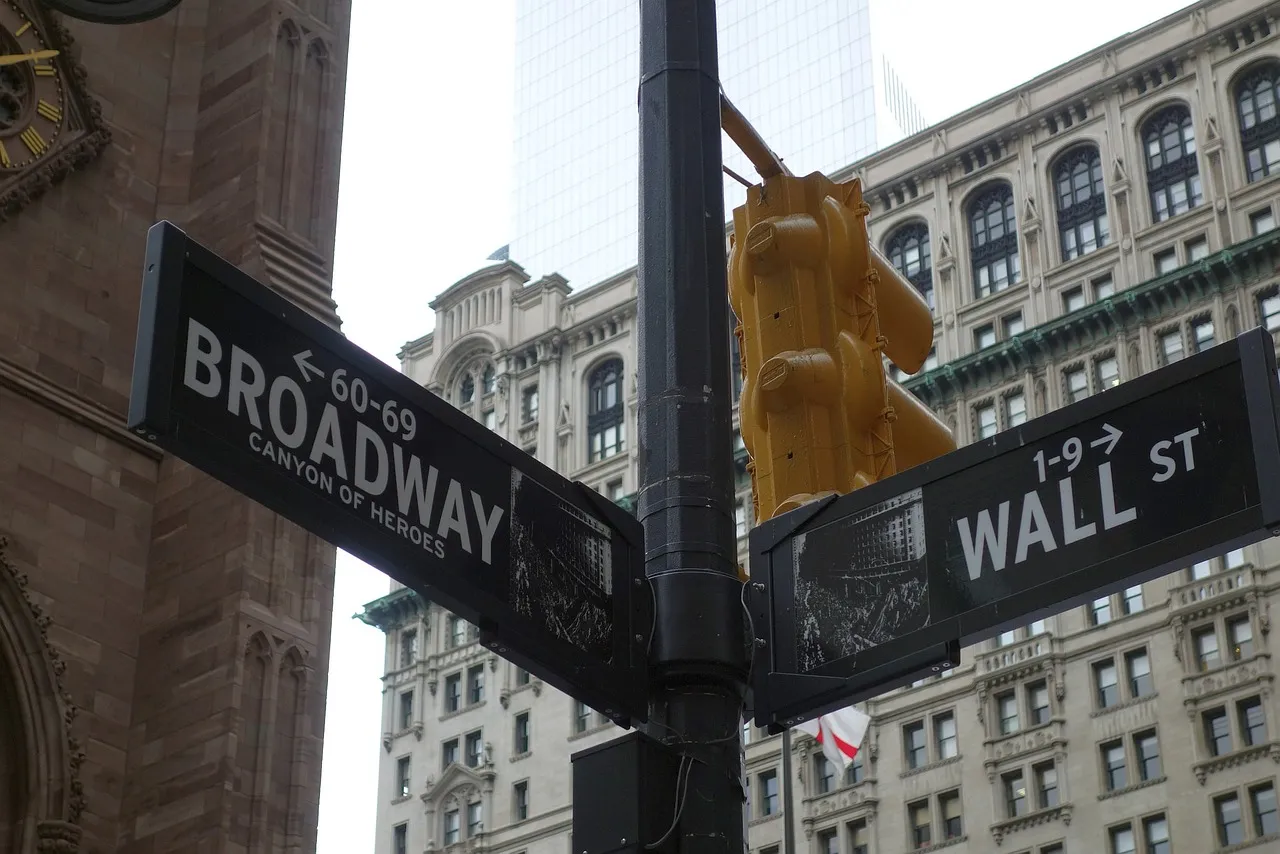
Here's a statistic that should keep you up at night: over 80% of retail traders lose money. In Nigeria, that number might be higher, not because of a lack of skill, but because they don't understand the local forex services environment. Trading isn't just about charts; it's about navigating a minefield of regulations, broker fees, and payment gateways. I've seen too many traders with a solid strategy get wiped out by a margin call they didn't see coming or a withdrawal that got stuck for weeks. This guide cuts through the noise. We'll look at what's legal, what's a scam, and how to structure your trading so you survive long enough to actually get good at it.
Let's get the most important point out of the way first: individual forex trading is legal in Nigeria. The panic you sometimes hear is about the methods, not the act itself. The Central Bank of Nigeria (CBN) is the big boss here, overseeing all foreign exchange activity. Their main job is to protect the Naira, which means they have very strong opinions about how money moves in and out of the country.
The Securities and Exchange Commission (SEC) is also in the picture, working on a framework for online retail forex. But here's the practical reality for you right now: most international brokers serving Nigerian clients are regulated offshore by bodies like the FCA (UK) or CySEC (Cyprus). The CBN's official stance is that you shouldn't fund trading accounts using the official foreign exchange windows. They want you to use your own existing foreign currency, like from a domiciliary account.
A major new rule is the Nigerian Foreign Exchange (FX) Code, launched in January 2025. This isn't really for you and me, the retail traders. It's for the big banks and authorized dealers, setting rules on ethics and transparency in the wholesale market. For you, the takeaway is that the environment is becoming more structured, which is a good thing long-term.
The biggest legal risk isn't trading; it's how you move money. Using unapproved channels or trying to circumvent CBN rules to fund your account can get you into serious trouble. Always use the deposit methods your broker explicitly offers for Nigeria.

Warning: Never use a Bureau de Change (BDC) or a personal currency vendor to get dollars to fund a trading account unless that method is explicitly listed and supported by your broker. You risk your funds being frozen or facing legal action from the CBN for breaking forex regulations.

💡 Winston's Tip
Your first profit target should always be to move your stop loss to breakeven. Protecting your capital is rule number one. Profits come after survival.
“High use isn't a tool; it's a detonator for your trading account.”
Choosing a broker in Nigeria isn't about who has the flashiest ads on Instagram. It's about survival. You need to look at three things: regulation, costs, and reliability of withdrawals. I'll give you the numbers, but remember, the cheapest isn't always the best if you can't get your money out.
The Spread Game
The spread is your first, and often biggest, cost. It's the difference between the buy and sell price. For a popular pair like EUR/USD, here's what you're looking at (for a standard account):
| Broker | Typical EUR/USD Spread |
|---|---|
| Exness (Razor Account) | From 0.0 pips + commission |
| Capital.com | 0.64 pips |
| XTB | 0.92 pips |
| AvaTrade | 0.93 pips |
A pip might seem small, but it adds up fast. If you're a scalping strategy trader taking 10 trades a day, a 1-pip difference in spread is the difference between profitability and blowing up your account. I learned this the hard way early on. I was trading gold (XAU/USD) with a broker that had a 50-cent spread. I switched to a broker with a 30-cent spread, and my win rate on the same strategy jumped by 15%. That's real money.
Minimum Deposits and use Traps
Brokers love to advertise low minimum deposits and insane use. Exness lets you start with $1. XM with $5. It's a great way to test the waters. But that high use? It's a double-edged sword.
I've seen brokers offer 1:3000. Let that sink in. With $100, you could control a $300,000 position. One wrong move, a 0.03% move against you, and your entire account is gone. It's not a tool; it's a detonator. Most serious traders I know, even the aggressive ones, rarely use more than 1:100. Your first job is to protect your capital, not vaporize it with over-use. Always use a position size calculator before you enter any trade.
The Withdrawal Test
This is the most critical part of choosing a forex service. A broker can be great until you try to take your profits out. Read Nigerian-specific reviews. How long do withdrawals take to a Nigerian bank account or to Skrill? Are there hidden fees? I once had a $2,000 withdrawal stuck for three weeks with a broker that was "perfect" until I tried to leave. Now I only use well-reviewed brokers with a long track record in Nigeria, like IC Markets or Pepperstone.
“The biggest legal risk isn't trading forex; it's how you move the money to fund your account.”
This is where theory meets the frustrating reality of Nigerian forex services. You can't just use your Naira debit card for everything. The CBN has limits on international transactions.
Your main options are:
- Bank Transfer: Direct to the broker's bank account. Can be slow (3-5 business days) and your bank might ask questions.
- Debit/Credit Cards (Visa/Mastercard): Usually instant. But remember the CBN's international spending limits.
- E-wallets: Neteller and Skrill are the kings here. Fast deposits and withdrawals. This is my preferred method for speed and reliability.
- Local Processors: Some brokers integrate with Paystack or Interswitch for direct Naira deposits (they convert it).
- Cryptocurrency: A growing number of traders use USDT (Tether) to fund accounts. It's fast and bypasses traditional banking hurdles. But be aware of crypto volatility and ensure your broker officially accepts it.

Pro Tip: Before you deposit a large amount, do a test withdrawal. Deposit $50, trade a little (or just leave it), then try to withdraw $45. If that process is smooth and fast, you've got a good sign. If it's a nightmare, you just saved your future profits.
Be very wary of "middlemen" offering to get you dollars for funding. Stick to the official channels your broker provides. Also, note that services like Payoneer may charge a hefty fee (like $29.95) if your account is inactive or receives less than $2000 in a year.
“The biggest legal risk isn't trading forex; it's how you move the money to fund your account.”
MetaTrader 5 (MT5) is the standard platform for a reason. It's strong, supports automated trading (Expert Advisors), and is offered by almost every broker. But if you're just using plain MT5, you're working with one hand tied behind your back.
The real edge in trading comes from analysis and order management. Basic MT5 is clunky for this. You need better tools to visualize the market and execute your plan precisely.
For example, let's talk about a simple concept like a trailing stop. On standard MT5, setting and adjusting a trailing stop is a manual, distracting process. In a fast market, you're either glued to the screen or you miss the move. Advanced trading terminals automate this. You set your rules, and the software manages the trade, moving your stop loss to lock in profit as the price moves in your favor. This is non-negotiable for managing risk on winning trades.
The same goes for analysis. Most retail traders just look at candlesticks and a couple of basic indicators like the RSI indicator or MACD indicator. Professional tools offer Market Profile and Volume Profile, which show you where the big money is trading - where the real support and resistance are, not just lines you drew on a chart. I didn't understand true market structure until I started using these tools. It changed my entire approach to finding entries for swing trading.
Your platform is your cockpit. You wouldn't fly a plane with only a basic altimeter and a fuzzy map. Don't trade the $6 trillion forex market with just the default toolkit.
💡 Winston's Tip
If you can't write down the exact reason for your trade in one clear sentence, you have no business being in the market. Gamblers have hunches. Traders have plans.
“A trading plan you don't follow is just a piece of fiction you wrote about yourself.”
Risk management is universal, but in Nigeria, you have extra layers to consider. Volatility isn't just on the chart; it's in your environment.
1. Power & Internet Instability: Your trading plan must account for disconnections. This means:
- No massive, high-use trades that can wipe you out in minutes. If the power goes out, you're a sitting duck.
- Always use stop losses. Every single trade. No debate. A stop loss is your lifeline when you're not at the screen.
- Consider a UPS (inverter) and a reliable mobile data backup (like a 4G MiFi).
2. Economic Reality: With inflation, your capital is constantly losing purchasing power in Naira. This pressures traders to "make up for it" by taking riskier trades. That's a direct path to a margin call. You must separate your trading capital from your living expenses. Your trading account is not an ATM. It's a business fund.
3. The Psychology of Scarcity: When you trade with money you can't afford to lose, every pip definition movement feels emotional. You hold losers hoping they'll turn around (they usually don't), and you cut winners short to "secure profit." This is the exact opposite of profitable trading. My rule, learned from a very painful $1,200 loss in 2017, is to never have more than 5% of my total net worth in active trading capital. It lets me think clearly.
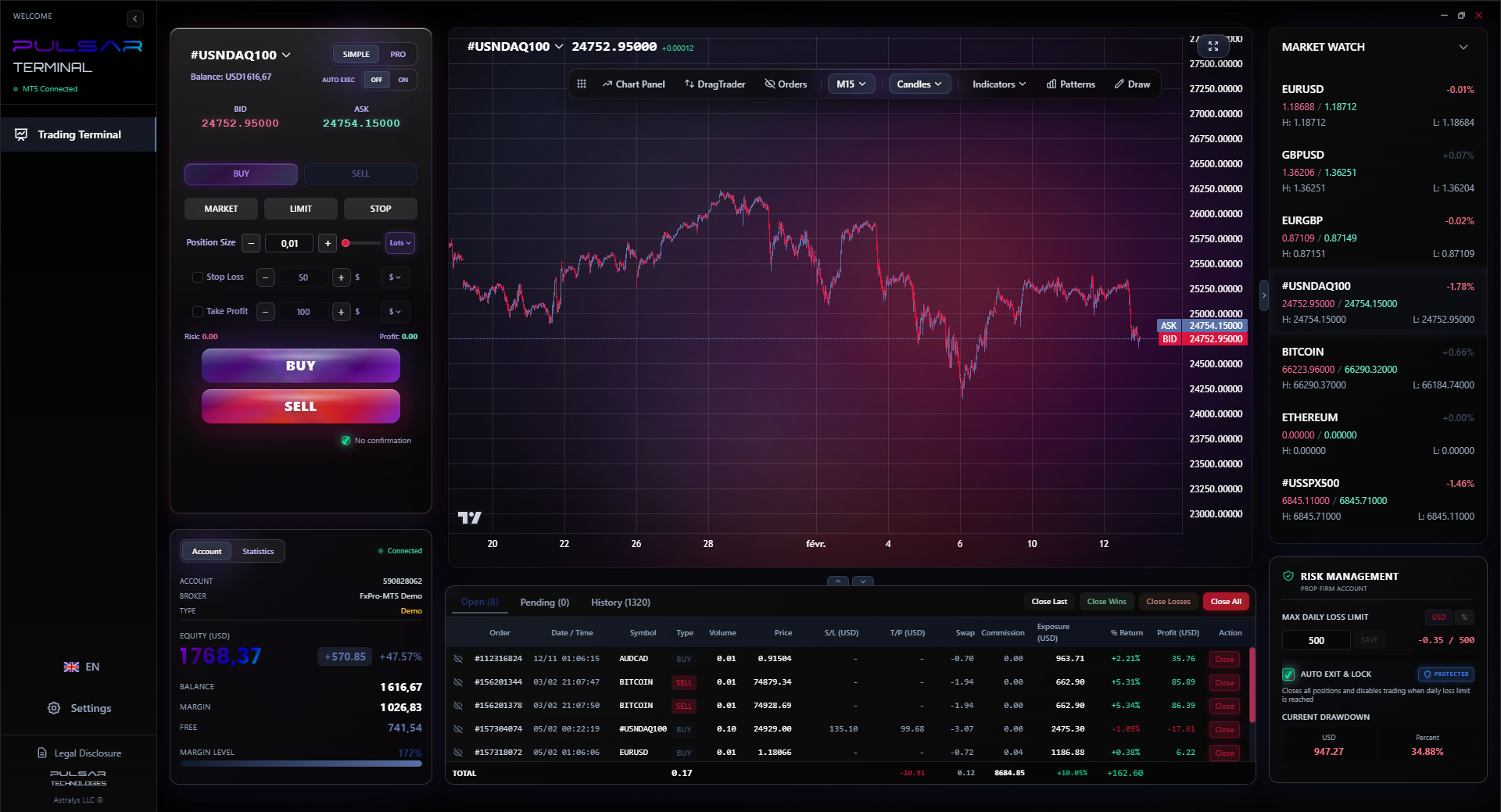
4. The Prop Firm Trap: Many traders see prop firm challenges as a shortcut. They are, but they're also designed for you to fail. The daily loss limits are brutal. You need surgical risk management to pass. Tools that can automatically enforce max daily loss rules are not a luxury here; they're a necessity to prevent one bad hour from ending your entire challenge.
Managing the strict daily loss limits of a prop firm challenge requires robotic discipline, which is exactly what automated trading tools in Pulsar Terminal are built to enforce on your MT5 platform.
Pulsar Terminal
The all-in-one MT5 companion: drag-and-drop orders, multi-TP/SL, trailing stop, grid trading, Volume Profile, and prop firm protection. Used by 1,000+ traders daily.
“A trading plan you don't follow is just a piece of fiction you wrote about yourself.”
The forex space in Nigeria is fertile ground for scams. Here’s what to run away from, fast:
- "Signals Guru" Guaranteeing Profits: Anyone guaranteeing weekly returns of 20%, 50%, or 100% is lying. Period. If their strategy was that good, they'd be trading with bank money, not selling N5000 WhatsApp subscriptions. I paid for one of these services early in my career. The guy had slick charts and convincing talk. I followed his "sure fire" signal on GBP/JPY. Lost 8% of my account in 45 minutes. He blamed "unexpected volatility."
- Unlicensed Investment Schemes (Ponzi/Pyramid): They often use forex as a cover. If the model is more about recruiting others than actual trading, it's a scam. Your returns are just new members' deposits.
- Brokers with No Clear Regulation: If you can't easily find their license number (from FCA, CySEC, ASIC, FSCA) on their website, avoid them. A fancy website means nothing.
- Fake Bonuses with Impossible Withdrawal Terms: Some shady brokers offer 100% deposit bonuses. The fine print says you need to trade a volume of 100 times the bonus + deposit before you can withdraw any of your own money. It's a trap to make you overtrade until you lose everything.
- Account Managers Asking for Direct Access: No legitimate, regulated professional will ask for the login details to your trading account. They might offer managed accounts through a proper, transparent platform, but they never need your password.
Your best defense is skepticism. If it sounds too good to be true, it is. Every single time.
💡 Winston's Tip
The market's job is to find the price where the most people will be wrong. Your job is to not be one of them. That means waiting for your specific setup, not trading every wiggle.
“Your platform is your cockpit. Don't fly a $6 trillion market with a fuzzy map and a basic altimeter.”
A trading plan isn't a vague idea. It's a written document, your business plan. Here’s what a real one looks like for the Nigerian trader:
1. The Instrument List: Don't trade everything. Master one or two markets. For most, that's EUR/USD guide and maybe XAU/USD guide. Know their average daily range, their spread definition at your broker's active hours, and what moves them.
2. The Strategy Rules: This is your "how."
- What setup are you looking for? (e.g., Pullback to a key moving average with RSI divergence).
- What is your exact entry trigger?
- Where is your stop loss? (Not a random number, based on recent market structure).
- Where is your take profit? (Based on a measured move or key resistance).
3. The Risk Rules (The Most Important Part):
- Maximum Risk per Trade: Never more than 1-2% of your account balance. On a $1,000 account, that's $10-$20 risk per trade.
- Maximum Daily Loss: If you lose 3-5% in a day, you stop. Close the platform. The market will be there tomorrow.
- Maximum Weekly Loss: A 10% drawdown? Time for a full stop and review. You're doing something wrong.
4. The Journal: Every trade goes in a journal. Entry, exit, P&L, and most importantly, why you took the trade and how you felt. This is how you find your personal weaknesses. My journal showed me I was terrible at trading during London lunch hours. I just stopped during that time, and my performance improved.
Forex services provide the arena. Your trading plan is your training regimen and fight strategy. Without it, you're just walking in and hoping you don't get knocked out in the first round.

FAQ
Q1Is forex trading legal for individuals in Nigeria?
Yes, individual forex trading is legal. The Central Bank of Nigeria (CBN) regulates forex activity. The key is to use your own legally obtained foreign currency (e.g., from a domiciliary account) and to use brokers' approved deposit channels. The CBN prohibits using official forex windows to fund trading accounts.
Q2Which broker is the best for Nigerians in 2026?
There's no single "best" broker. You need to choose based on regulation, trading costs (spreads/commissions), reliable withdrawal methods for Nigeria, and platform stability. Brokers like Exness, XM, IC Markets, and Pepperstone are popular choices among experienced Nigerian traders due to their long market presence and multiple deposit options. Always check the latest reviews focusing on withdrawal experiences.
Q3What is the safest way to deposit and withdraw money?
E-wallets like Skrill and Neteller are generally considered among the safest and fastest methods for Nigerian traders. They act as a buffer between your bank and the broker. Bank transfers and card withdrawals are also safe with regulated brokers but can be slower. Always perform a small test withdrawal before committing large capital.
Q4How much money do I need to start forex trading in Nigeria?
You can start with a very small amount due to low minimum deposits. Brokers like Exness allow you to start with $1, and XM with $5. However, starting with such a small amount is mainly for learning the platform. To trade seriously with proper risk management (risking 1-2% per trade), a more realistic starting capital is $200-$500. This allows you to withstand normal losses without blowing your account on a few bad trades.
Q5What is the Nigerian FX Code and does it affect me?
The Nigerian Foreign Exchange (FX) Code, launched in 2025, sets ethical and governance standards for banks and authorized dealers in the wholesale FX market. As a retail trader, it doesn't directly dictate your actions. Its indirect effect is to promote a more transparent and stable overall forex environment, which is beneficial for everyone.
Q6Can I use a VPN to sign up with a broker not serving Nigeria?
This is extremely risky and not recommended. Using a VPN to hide your location violates the broker's terms of service. If they discover this (often during the withdrawal verification process), they can freeze your account and confiscate your funds. Always trade with brokers who openly accept clients from Nigeria.
Q7Why is use so high in Nigeria and is it safe to use?
Brokers offer high use (like 1:1000 or 1:2000) as a competitive marketing tool to attract clients. It is NOT safe to use the maximum use. High use dramatically amplifies both profits and losses. Using full use is the fastest way to lose your entire account. Most professional traders use use of 1:10 to 1:100 at most, always in conjunction with strict stop-loss orders.
Prof. Winston's Lesson
Key Takeaways:
- ✓Never risk more than 2% of your capital on a single trade.
- ✓Always perform a test withdrawal before depositing serious money.
- ✓Master 1-2 currency pairs, don't chase 20.
- ✓Use tools that automate risk management (trailing stops, daily loss limits).
- ✓A written trading journal is 10x more valuable than another indicator.
How useful was this article?
Click a star to rate
Weekly Trading Insights
Free weekly analysis & strategies. No spam.
About the Author
Olumide Adeyemi
West African Trading Pioneer
One of Nigeria's most active forex trading educators. 8 years of experience trading from Lagos. Specializes in low-capital strategies and prop firm challenges for African traders.
Comments
Risk Disclaimer
Trading financial instruments carries significant risk and may not be suitable for all investors. Past performance does not guarantee future results. This content is for educational purposes only and should not be considered investment advice. Always conduct your own research before trading.
You Might Also Like

Cara Trading Forex Sukses: 7 Prinsip dari Trader Profesional
Cara trading forex sukses dengan 7 prinsip trader pro: manajemen modal, disiplin, journal trading, backtest. Data nyata, bukan janji profit palsu.
Jam Trading Forex Terbaik untuk Trader Indonesia: Panduan Lengkap dengan Tabel Waktu
Panduan jam trading forex untuk trader Indonesia. Tabel 4 sesi dunia, jam emas 20:00-00:00, sesi mana yang harus dihindari. Data akurat + tips dari trader berpengalaman.
Top 5 Sàn Forex Uy Tín Nhất 2026: Review Jujur dari Trader Indonesia
Top 5 sàn forex uy tín 2026 untuk trader Indonesia. Review jujur: spread, deposit, withdraw, dukungan lokal. Exness, XM, IC Markets & lebih.
Get Pulsar Terminal
All these calculators are built into Pulsar Terminal with real-time data from your MT5 account. One-click position sizing, automatic risk management, and instant calculations.
Get Pulsar Terminal