


Ever placed a trade, watched it go nowhere for hours, and then get stopped out the moment you step away? I have.

Olumide Adeyemi
West African Trading Pioneer ·  Nigeria
☕ 10 min read
What you'll learn:
- 1What Exactly Is a Forex Time Converter? (It's Not Just a Clock)
- 2Why This Is a Game-Changer for Nigerian Traders
- 3The Major Forex Sessions, Translated to WAT (GMT+1)
- 4How to Actually Use This: A Trading Plan Template
- 5Best Time Converters and Tools for Nigerian Traders
- 6Timing Traps: Mistakes I've Made (So You Don't Have To)
- 7Mixing Time with Technicals: A Powerful Combo

Ever placed a trade, watched it go nowhere for hours, and then get stopped out the moment you step away? I have. More times than I care to admit. The problem wasn't my analysis. It was my timing. I was trading during the 'dead zone' in Lagos while the real money was moving in London and New York. Getting your head around global market hours is the single biggest free upgrade you can make to your trading. This isn't about fancy indicators; it's about being in the right market at the right time. Let's talk about how a simple forex time converter can save you from those frustrating, sideways trades and put you in sync with the world's liquidity.
A forex time converter is a tool that translates global trading session times into your local time zone. For us in Nigeria, that means converting everything from GMT/UTC to West African Time (WAT), which is GMT+1. But it's more than just adding an hour. It's a visual map of market activity.
Think of it like this: the forex market is a 24-hour relay race. The baton passes from Sydney to Tokyo, then to London, and finally to New York. A good converter shows you not just when each runner starts, but, crucially, when they're both running together. Those overlap periods are where the magic - and the money - happens.
When I first started, I'd see 'London Open: 8:00 GMT' and just guess. I'd trade at 9 AM WAT, thinking I was early for London. I was wrong. The real momentum often doesn't hit until an hour or two after the official open. A proper converter helps you anticipate that flow, not just the opening bell.

Warning: Don't rely on your phone's world clock or a basic Google search. Daylight Saving Time (DST) changes in the US and Europe will throw your calculations off by an hour for half the year. A dedicated forex time converter automatically adjusts for DST, so you're never caught out.

💡 Winston's Tip
Your trading platform's clock is your master clock. Set your MT4/MT5 server time to 'GMT+0' or 'Broker's Time'. All your chart patterns, indicator signals, and trade durations will be based on this. Never use your local PC time for chart analysis.
“A forex time converter is the single biggest free upgrade you can make to your trading.”
Our location in WAT is actually a hidden advantage, but only if you understand it. We're positioned perfectly to catch two of the three major trading sessions live without destroying our sleep schedule.
The WAT Trading Day Reality:
- Early Morning (12 AM - 8 AM WAT): This is the tail end of the New York session and the early Sydney/Asia hours. Volatility is usually low. I used to try and scalp here, fighting for 5-pip moves. It was a waste of energy and often resulted in overtrading.
- Late Morning to Afternoon (9 AM - 5 PM WAT): This is our golden window. London is open and fully active, and New York joins in from 2 PM WAT. The London-New York overlap (2 PM - 5 PM WAT) is the most liquid and volatile period of the entire day. Major economic data from both regions is released here.
- Evening (6 PM onwards WAT): New York is winding down. Liquidity dries up. This is when erratic, news-driven spikes can happen, but the trend is often set for the next day.
I learned this the hard way. In 2021, I took a short position on GBP/USD at 11 AM WAT, just as London was getting going. My analysis was solid, but the market just chopped around. Frustrated, I moved my stop-loss tighter. At 2:15 PM WAT, right as New York traders logged on, a wave of buying hit and took me out for a $250 loss. The price then reversed and plummeted, exactly as I'd predicted. I was right on direction, but wrong on timing. The market didn't care about my analysis until the big players in London and New York agreed on it.
“The London-New York overlap (2 PM - 5 PM WAT) is where over 70% of the daily forex volume happens. If you only have one hour to trade, make it this one.”
Here’s your cheat sheet. Bookmark this. These times are approximate for the standard open/close, but the real action often starts and ends within a 1-2 hour window of these times.
| Trading Session | Major Financial Center | Core Hours (WAT) | Character & Pairs to Watch |
|---|---|---|---|
| Asian | Tokyo, Singapore | 12:00 AM - 9:00 AM | Often range-bound. Sets the tone. Watch AUD, JPY, NZD pairs. |
| London / European | London, Frankfurt | 8:00 AM - 5:00 PM | The most liquid session. The trend is often established here. All EUR, GBP, CHF pairs. |
| New York / US | New York | 2:00 PM - 11:00 PM | High volatility, especially at the open. Reacts to London moves & US data. USD pairs, XAU/USD (Gold). |
The Holy Grail: Session Overlaps
This is where you want to be focused. Period.
- Asian-London Overlap (8 AM - 9 AM WAT): A mild increase in activity. Good for catching early European direction.
- London-New York Overlap (2 PM - 5 PM WAT): This is it. Over 70% of all daily forex transactions happen during this window. Spreads are often at their tightest, and major breakouts occur. If you only have one hour to trade a day, make it this one.

Pro Tip: Don't just trade the overlap blindly. Use the first 30 minutes (2 PM - 2:30 PM WAT) to observe. See which direction the combined weight of London and New York money is pushing. Then look for a retracement to enter in the direction of the new, confirmed flow.

“The London-New York overlap (2 PM - 5 PM WAT) is where over 70% of the daily forex volume happens. If you only have one hour to trade, make it this one.”
Knowing the times is one thing. Building a routine around them is what creates consistency.
My WAT-Centric Trading Day:
- 7:45 AM WAT: I'm at my desk. I'm not trading yet. I'm reviewing what happened in the late US session and Asia. I'm looking at the daily charts to see if we're near key support/resistance. I check the economic calendar for data due at 9:30 AM WAT (UK) and 2:30 PM WAT (US).
- 8:00 AM - 10:00 AM WAT (London Open): I'm watching. I might place a pending order if I see a clear level from the Asian session being tested. I avoid chasing the initial spike. This is observation time.
- 1:45 PM WAT: Final prep for the New York open. I ensure all my positions have appropriate stop-losses. I calculate my maximum risk for the day using my position size calculator. I get ready for potential volatility.
- 2:00 PM - 5:00 PM WAT (The Overlap): This is my primary trading window. I execute my planned trades. I'm especially active if there's major US news (like NFP) at 2:30 PM WAT. The liquidity means my orders get filled quickly and at the price I want.
- After 5:30 PM WAT: I stop opening new positions. I manage existing ones, maybe moving stops to breakeven. The market becomes thinner and more unpredictable.
Real Trade Example: On March 15, 2024, I was watching EUR/USD. It had been consolidating all Asian session. At 8:30 AM WAT, strong EU data hit. It broke above 1.0920. I didn't chase. At 2:10 PM WAT, during the overlap, it pulled back to 1.0925 - retesting the breakout level. That was my signal. I went long at 1.0927. Stop at 1.0900 (27 pips). The combined session buying pressure was clear. I took half profit at 1.0970 (+43 pips) and let the rest run. The session momentum did the work.
💡 Winston's Tip
The first 15 minutes after a major session open (like London at 8 AM WAT) is for watching, not trading. Let the institutional orders hit the market and establish the initial auction. Then, trade the retracement to that new level.
“I was right on market direction, but wrong on timing. The market didn't care about my analysis until the big players in London and New York agreed on it.”
You don't need to pay for this. Here are the tools I use every day:
- Forex Factory Session Times: The classic. Go to Forex Factory, look at the bottom right of the homepage. It has a visual map showing which sessions are open in real-time, automatically adjusted for DST. It's my quick-glance reference.
- Babypips Market Hours Tool: Interactive and simple. You select your city (Abuja or Lagos are listed), and it shows you a color-coded chart of all sessions in your time.
- Your Broker's Platform: Brokers like IC Markets or Pepperstone often have a market hours section within their client portal. This is useful as it reflects their specific liquidity providers' activity.
- Simple Mental Math: For a quick check, remember: New York Open (EST) is 8 AM. We are 5 hours ahead. So, New York Open = 1 PM WAT. But in summer (US DST), they shift forward an hour, so it becomes 2 PM WAT. This is why an auto-converter is safer!
Integrate a converter into your pre-trade checklist. Before you even look at a chart, know which session is active and what's coming next.
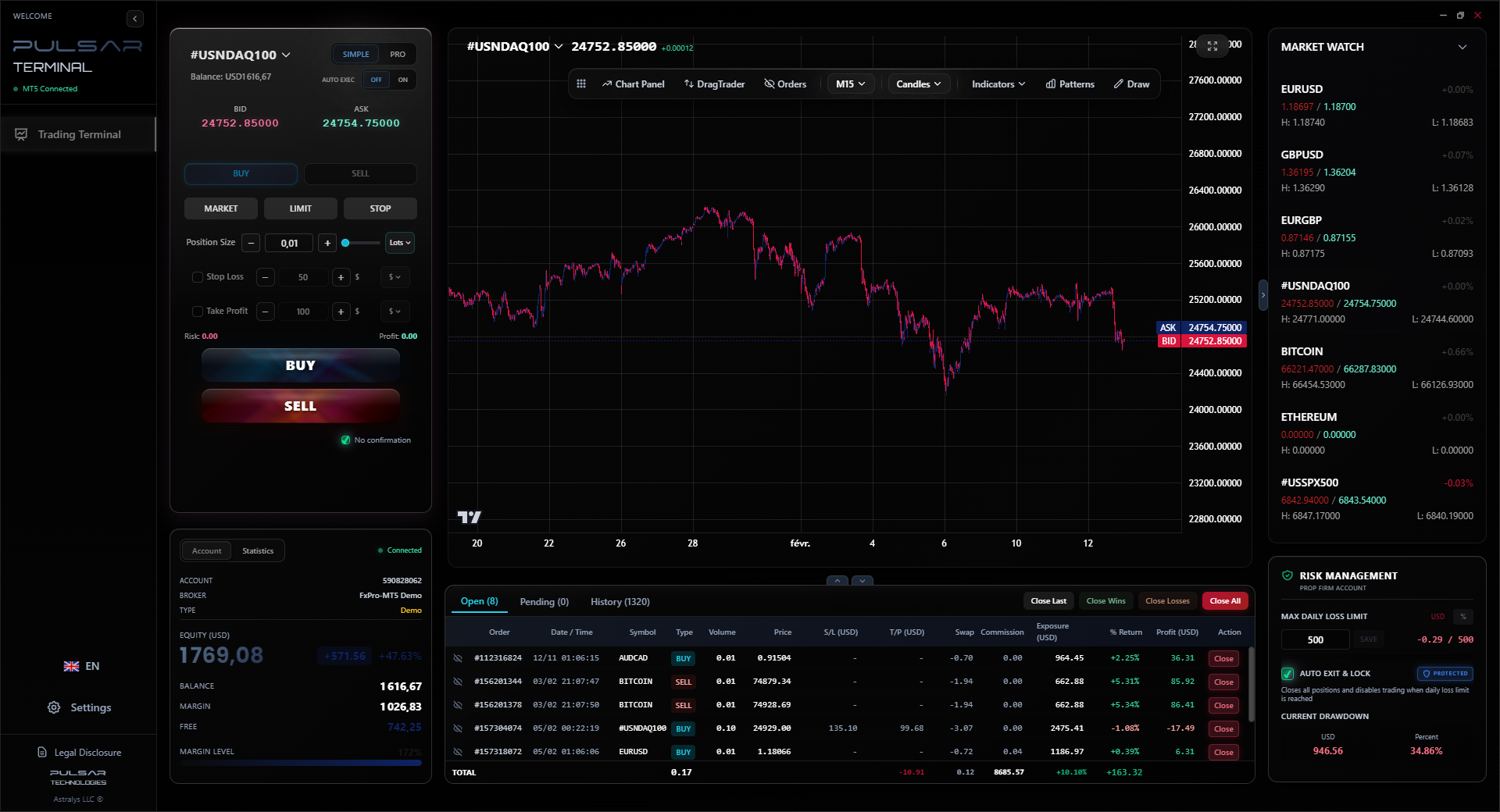
Managing trades across volatile session overlaps is stressful, but tools like Pulsar Terminal let you set multi-level take-profits and trailing stops on MT5 before the news even hits.
Pulsar Terminal
The all-in-one MT5 companion: drag-and-drop orders, multi-TP/SL, trailing stop, grid trading, Volume Profile, and prop firm protection. Used by 1,000+ traders daily.
“I was right on market direction, but wrong on timing. The market didn't care about my analysis until the big players in London and New York agreed on it.”
Let's be brutally honest about where we go wrong.
- Trading the 'Dead Zone': The period between 5 PM WAT (London close) and 1 AM WAT (Asia deep) is treacherous. I once tried to hold a swing trade over this period. A low-liquidity news headline caused a 40-pip spike against me, triggered my stop, and then reversed. The spread also widened massively, making my exit worse.
- Ignoring the Economic Calendar: The time converter tells you when to trade. The economic calendar tells you when not to. Trading EUR/USD through the US Non-Farm Payrolls release (2:30 PM WAT) without a plan is gambling. I've been whipped out of good positions by the initial spike countless times.
- Forgetting Daylight Saving Time: This is the classic rookie (and sometimes veteran) error. In March 2023, I was an hour early for the New York open for a week because I forgot the US had sprung forward. My entire rhythm was off.
- Overtrading During Quiet Hours: Boredom is a trader's enemy. When the Asian session is flat, it's tempting to force trades. I'd use a scalping strategy on a 1-minute chart, trying to scrape 5 pips. The commissions and spreads would eat any profit. That time is better spent on analysis or rest.
Warning: High use during low-liquidity hours is a direct path to a margin call. A small move against you can be exaggerated when there are fewer buyers and sellers in the market.
💡 Winston's Tip
If you can't be at your screen for the 2 PM WAT New York open, use pending orders. Place your buy stop or sell stop orders 10-15 pips beyond key Asian/London session highs/lows before 1:45 PM. Let the market's opening volatility work for you.
“Boredom is a trader's enemy. The Asian session is for analysis, not for forcing trades out of impatience.”
Time awareness supercharges your technical analysis. It provides context.
- Support/Resistance: A key level breaking during the Asian session is less significant than the same break at 3 PM WAT during the London-NY overlap. The volume confirms the breakout.
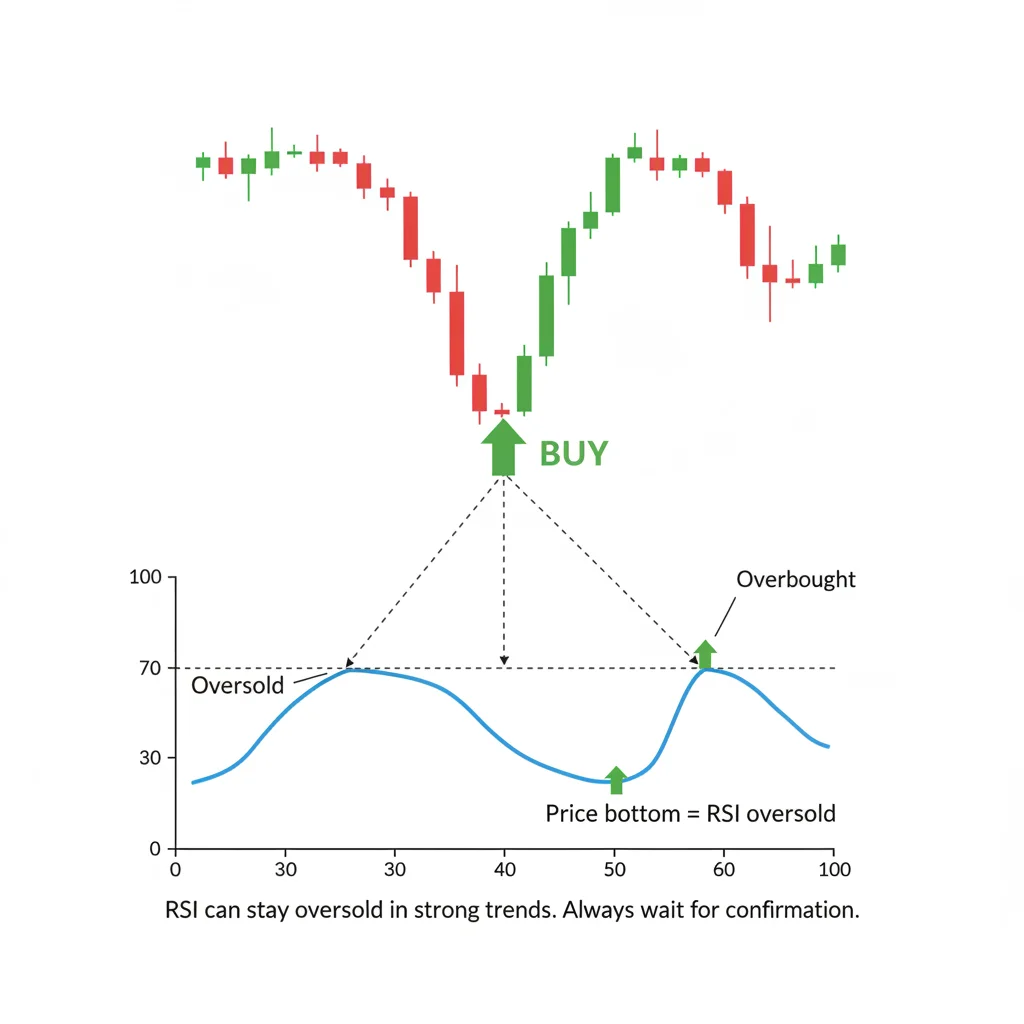
- Indicator Signals: An RSI indicator showing oversold at 10 AM WAT might just mean a quiet market. The same reading at 3 PM WAT could signal a major reversal with the power of two sessions behind it.
- News Trading: You know the time of the release. Use your converter to see what sessions are active. A UK news release at 9:30 AM WAT will have more impact (with London open) than a US release at 7:30 AM WAT (when only Asia is active).
My rule: I only take major trend-based signals that align with the activity of the dominant session. A buy signal on GBP/USD at 4 AM WAT? I ignore it. The same signal at 10 AM WAT? I'm interested. At 3 PM WAT with a clean retest? That's a high-probability setup.
FAQ
Q1What is the best time to trade forex in Nigeria?
The absolute best time is during the London-New York session overlap, from 2:00 PM to 5:00 PM West Africa Time (WAT). This period has the highest liquidity and volatility, leading to cleaner trends and better order execution.
Q2Do I need to stay up all night to trade forex from Nigeria?
No, not at all. One of the advantages of WAT is that you can trade the most active sessions (London and New York) during normal afternoon hours. Trading the Asian session (which runs late night into early morning) is optional and often less profitable for most strategies.
Q3How does Daylight Saving Time (DST) affect my trading times?
DST is crucial. When the US and Europe 'spring forward' (usually March), their trading sessions start one hour earlier in WAT. The New York open shifts from 2 PM WAT to 1 PM WAT. When they 'fall back' (November), it shifts later. Always use a forex time converter that updates automatically for DST.
Q4Is the 'London Open' the exact best time to enter a trade?
Not usually. The official open is 8 AM WAT, but the market often needs 60-90 minutes to find its direction as major banks and funds place their orders. The first hour can be choppy. It's often better to wait for a clear move to develop after the initial volatility settles.
Q5Can I trade on weekends with a forex time converter?
No. The global forex market is closed from approximately 10 PM WAT on Friday until it re-opens with the Sydney session around 10 PM WAT on Sunday. A time converter will show all sessions as closed. Any 'weekend trading' offered by some brokers is synthetic and has extreme risks.
Q6What's the biggest mistake Nigerian traders make with market hours?
Trading during low-liquidity periods (late night or early morning WAT) out of boredom or impatience. This leads to chasing tiny moves, suffering from wider spreads, and getting stopped out by erratic price action. Patience to wait for the London and New York sessions is key.
Prof. Winston's Lesson
Key Takeaways:
- ✓Trade the London-NY overlap (2-5 PM WAT) for highest probability.
- ✓Use an auto-DST time converter, never guess.
- ✓Avoid trading the low-liquidity 'dead zone' after 5 PM WAT.
- ✓Align your technical signals with active session volume.
- ✓Set MT5 server time to GMT+0, not your local time.
How useful was this article?
Click a star to rate
Weekly Trading Insights
Free weekly analysis & strategies. No spam.
About the Author
Olumide Adeyemi
West African Trading Pioneer
One of Nigeria's most active forex trading educators. 8 years of experience trading from Lagos. Specializes in low-capital strategies and prop firm challenges for African traders.
Comments
Risk Disclaimer
Trading financial instruments carries significant risk and may not be suitable for all investors. Past performance does not guarantee future results. This content is for educational purposes only and should not be considered investment advice. Always conduct your own research before trading.
You Might Also Like

Cara Trading Forex Sukses: 7 Prinsip dari Trader Profesional
Cara trading forex sukses dengan 7 prinsip trader pro: manajemen modal, disiplin, journal trading, backtest. Data nyata, bukan janji profit palsu.
Jam Trading Forex Terbaik untuk Trader Indonesia: Panduan Lengkap dengan Tabel Waktu
Panduan jam trading forex untuk trader Indonesia. Tabel 4 sesi dunia, jam emas 20:00-00:00, sesi mana yang harus dihindari. Data akurat + tips dari trader berpengalaman.
Top 5 Sàn Forex Uy Tín Nhất 2026: Review Jujur dari Trader Indonesia
Top 5 sàn forex uy tín 2026 untuk trader Indonesia. Review jujur: spread, deposit, withdraw, dukungan lokal. Exness, XM, IC Markets & lebih.
Get Pulsar Terminal
All these calculators are built into Pulsar Terminal with real-time data from your MT5 account. One-click position sizing, automatic risk management, and instant calculations.
Get Pulsar Terminal