


Ever placed a trade and watched it do absolutely nothing for hours, only to get stopped out while you were sleeping? You're not alone.

Olumide Adeyemi
West African Trading Pioneer ·  Nigeria
☕ 10 min read
What you'll learn:
Ever placed a trade and watched it do absolutely nothing for hours, only to get stopped out while you were sleeping? You're not alone. Most Nigerian traders get the mechanics of trading down, but they completely ignore the single most important factor that determines whether a setup works or fails: timing. The forex market is a 24-hour beast, but it doesn't move with the same intensity all day. Your location in Nigeria (GMT+1) gives you a unique, and frankly brilliant, vantage point if you know how to use it. Let's talk about how to align your trading clock with the world's money.
Here's a hard truth I learned after blowing up my second account. You can have the perfect scalping strategy, the most accurate indicator, and flawless risk management, but if you're trading the EUR/USD when the Tokyo session is winding down and London hasn't opened yet, you're fighting a ghost. The market is dead. Spreads widen, liquidity dries up, and price can get jerked around by a single large order. Your brilliant analysis means nothing in a market that isn't moving.
I remember trying to trade GBP/JPY at 2 PM Nigerian time. The chart looked ripe for a breakout. I entered, set my stop loss, and... nothing. For three hours, price just chopped sideways in a 10-pip range. The spread ate into my potential profit, and I finally closed out with a tiny gain that felt like a loss after all that waiting. I was trading during the 'dead zone' between sessions. That experience cost me time and opportunity. Volatility is your friend if you're prepared for it; it's your executioner if you're not. Understanding forex time zones tells you when the market's engines are firing on all cylinders.

Warning: Trading during low-liquidity periods (like the late US/early Asia session) is a common way to get 'stop hunted.' Your broker's spread is your fixed cost of doing business, and it's always highest when volume is lowest.

💡 Winston's Tip
The market pays you for being right at the right time. A correct analysis during the wrong session is worthless. Align your conviction with the market's clock.
“Your location in Nigeria (GMT+1) is a secret weapon for trading the London and New York sessions without destroying your sleep.”
The market revolves around four key financial centers. Forget the city names for a second; think of them as engines that turn on and off.
The Sydney/Tokyo Session (The Asian Engine)
Nigerian Time: 12:00 AM - 9:00 AM (approx.) This is where the trading day technically begins. It's often quieter for major pairs like EUR/USD, but it's the main event for the Asian 'crosses' like AUD/JPY and NZD/JPY. If you're a night owl in Lagos, you can catch the tail end of this session. Don't expect massive trends here; it's more about range-bound trading and setting up for the European open.
The London Session (The Big Kahuna)
Nigerian Time: 8:00 AM - 5:00 PM (approx.) This is it. The London session is the largest by volume, accounting for roughly 30% of all global forex transactions. This is when the market truly wakes up for a Nigerian trader. The EUR/USD and GBP pairs come alive. Most of the day's decisive moves happen here. If you have a 9-5 job, your lunch break aligns perfectly with peak London volatility. Use it.
The New York Session (The Volatility Partner)
Nigerian Time: 1:00 PM - 10:00 PM (approx.) Just as London is starting to wind down, New York kicks into gear. The overlap between London and New York (from 1 PM to 5 PM Nigeria time) is the most volatile and liquid period of the entire day. Economic data from the US is released here, causing immediate and sharp moves. This is prime time for action.
The Pacific Session (The After-Hours)
This is a quiet overlap of the late New York and early Sydney sessions. For Nigerians, this is very late night. Generally, avoid opening new positions here unless you're a seasoned swing trader holding for days.

Example: Let's say you want to trade the London session open. Don't jump in at exactly 8 AM Nigerian time. The first 30-60 minutes can be chaotic as banks and institutions place their opening orders. I often wait until 8:30 or 9 AM to let the initial frenzy settle and find a clearer direction.

“Most of the day's decisive moves happen during the London session. If you have a 9-5 job, your lunch break aligns perfectly with peak volatility.”
Our GMT+1 timezone is a secret weapon. We are perfectly positioned to trade the most important parts of the day without destroying our sleep schedule.
The Nigerian Trader's Prime Time Table:
| Session Overlap | Nigerian Time (GMT+1) | What Happens | Best For |
|---|---|---|---|
| London Open | 8:00 AM - 10:00 AM | Surge in volatility & volume on EUR, GBP. | Catching the first major trend move of the day. |
| London & New York Overlap | 1:00 PM - 5:00 PM | Highest volatility of the day. Max liquidity. | Any strategy requiring strong momentum. News trading. |
| US Economic Data Releases | Usually 2:30 PM or 4:00 PM | Sharp, immediate spikes on USD pairs. | Quick, high-risk/high-reward scalps (if you're experienced). |
| Asian Session (Tail End) | 6:00 AM - 9:00 AM | Setting of ranges, AUD/NZD/JPY activity. | Preparing for the London open, trading Asian crosses. |
My most consistent profits have come from focusing on that 1 PM - 4 PM window. The market has clear direction, spreads are tight, and you're not trading in the dark. For instance, I once caught a 120-pip move on GBP/USD between 1:30 PM and 3:15 PM Nigerian time, based purely on a breakout pattern that formed during the London morning. The New York volume fueled the continuation. I entered at 1.2750 and exited at 1.2870. Trying that same setup at 10 PM would have been pointless.

Pro Tip: Set your phone alerts for 7:45 AM (before London open) and 12:45 PM (before the London/NY overlap). Use these 15 minutes to analyze the charts, check the economic calendar, and plan your trades. Don't just jump in blind.
“Most of the day's decisive moves happen during the London session. If you have a 9-5 job, your lunch break aligns perfectly with peak volatility.”
Not all strategies work in all sessions. This mismatch is a major reason traders fail.
- Scalping: You need tight spreads and fast execution. The London/New York overlap (1 PM - 5 PM Nigeria) is your only real playground. I tried scalping the XAU/USD (gold) at 11 PM once. The spread was 50 cents wide, and I was stopped out on noise before the trade had a chance. A complete waste. Use a broker known for low latency and tight spreads during these hours, like IC Markets or Pepperstone.
- Day Trading (My Bread and Butter): You're looking for 50-150 pip moves. The entire London session and the overlap are perfect. This is where you apply your support/resistance, trendline, and indicator analysis (RSI, MACD) on the 1-hour and 4-hour charts.
- Swing Trading: Time of day matters less, but entry timing still does. I prefer to place my swing trade orders during the London or New York session for better fill prices. Avoid placing market orders on Sunday evening or during Asian hours when spreads are insane.
The key is to be a specialist, not a generalist. If you're a day trader, protect your sleep and don't feel pressured to watch the charts at midnight. The market will be there tomorrow at 8 AM.
💡 Winston's Tip
Your most powerful tool is the 'Do Not Trade' order. Knowing when to sit on your hands - during the dead zones - is what separates professionals from perpetual demo traders.

“I trade my 3-4 hour window and walk away. My profitability soared when my screen time plummeted.”
All this talk of timing is useless if your broker's platform is slow or you can't fund your account. Here’s the on-the-ground reality for us.
Regulation & Safety: The local framework is evolving. Your safest bet is an international broker with strong offshore regulation that accepts Nigerian clients. Look for names like the FSCA, CySEC, or ASIC. Exness and XM are hugely popular here for a reason - they're accessible.
Funding Your Account: This is the real hurdle. Forget using your Naira debit card for international broker deposits directly; bank limits will block you. The standard workaround is:
- Local Bank Transfer: Many brokers have local Nigerian partners. You transfer Naira to a local account, and it's converted and deposited.
- E-Wallets: Skrill, Neteller, and even crypto (USDT) are common gateways. They act as a middleman to bypass card restrictions.
Platforms: MT4 and MT5 are king. Every broker offers them. Your focus should be on a broker that provides stable servers during high volatility (London open) and offers the raw spreads you need for your strategy. A broker's demo server might be fine at 3 AM, but test it at 2 PM on a Tuesday before you commit real money.
Taxes: Remember, profits are subject to a 10% Capital Gains Tax. Keep a clean record of your trades. That 100-pip win needs to have 10 pips mentally allocated to the FIRS.
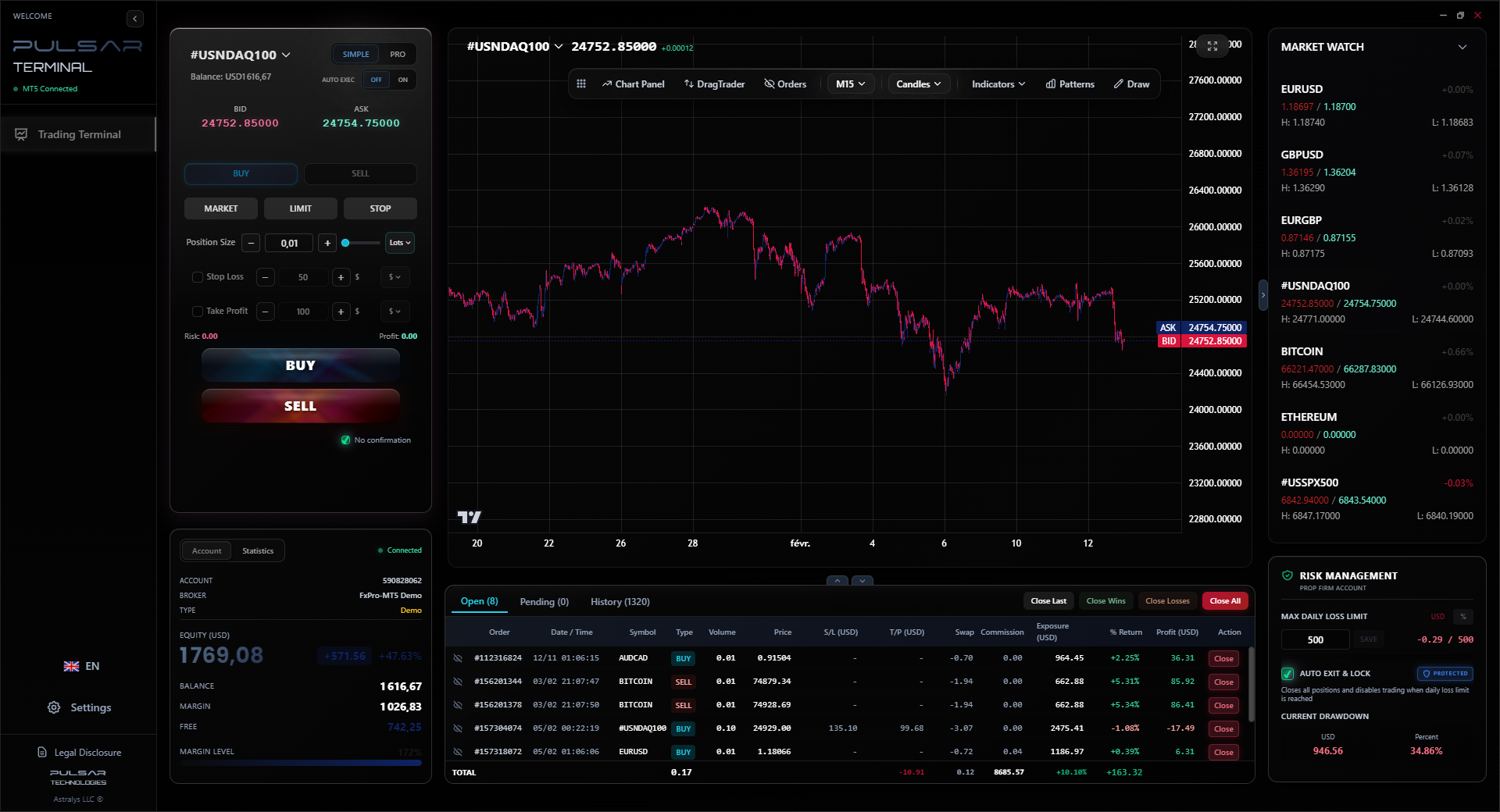
Managing trades across volatile session overlaps is stressful, but tools like Pulsar Terminal let you set multi-level take-profits and trailing stops on MT5 before the news even hits.
Pulsar Terminal
The all-in-one MT5 companion: drag-and-drop orders, multi-TP/SL, trailing stop, grid trading, Volume Profile, and prop firm protection. Used by 1,000+ traders daily.
“I trade my 3-4 hour window and walk away. My profitability soared when my screen time plummeted.”
Let me save you some pain and lost money.
- Trading All Session, Every Session: You're not a robot. I used to think I had to catch every move. It led to burnout and overtrading. Now, I trade my 3-4 hour window and walk away. My profitability soared when my screen time plummeted.
- Ignoring the Economic Calendar: The biggest moves are scheduled. Trading the GBP/USD at 2:30 PM Nigeria time without knowing US CPI data is dropping is like walking into a lion's den wearing steak shorts. Always, always check the calendar.
- Forgetting About Daylight Saving Time (DST): Europe and the US switch to DST at different times. For a few weeks each year, the London open shifts to 9 AM Nigeria time, and the overlap shifts. Mark it on your calendar. I once missed a whole week of good setups because my internal clock was off.
- Not Adjusting Position Size for Volatility: A 20-pip stop loss might be safe at 10 AM, but it's a joke during the 2 PM overlap. Use a position size calculator and widen your stops during high-volatility periods, or reduce your lot size. A sudden spike can blow through a tight stop and trigger a margin call faster than you can blink.
- Chasing the Asian Session When You're Not Asian: Unless you have a specific edge in AUD/JPY, let it go. Your edge as a Nigerian trader is your proximity to European and US market hours. Play to your strengths.
“You can trade forex from Nigeria successfully, but you must trade on the world's schedule, not just your own.”
Here’s what a disciplined trading day looks like for me now:
- 7:45 AM (WAT): Wake up, check the economic calendar on my phone. Any high-impact news at 8:30 AM or 10 AM? I note it.
- 8:15 AM - 8:45 AM: At my desk. I look at the daily and 4H charts. Did price close at a key level? What did the Asian session do? I'm not trading yet. I'm planning.
- 9:00 AM - 12:00 PM: London is running. I execute my planned trades, manage open positions. If I haven't found a setup by noon, I'm likely done for the morning.
- 12:45 PM: Quick review. Prepare for the volatility spike of the overlap.
- 1:00 PM - 4:00 PM: Peak focus time. I might take 1-2 high-conviction trades here. I am hyper-aware of news.
- After 5:00 PM: I close out any day trades. I do not open new ones. I might set a limit order for a swing trade, but that's it. The rest of the evening is for analysis, journaling, and living my life.
This routine uses my timezone as an advantage. I'm not fighting the market's natural rhythm; I'm riding its waves. You can trade forex from Nigeria successfully, but you must trade on the world's schedule, not just your own. Master the clock, and you master a huge part of the game.

FAQ
Q1What is the best time to trade forex in Nigeria?
The absolute best time is the overlap between the London and New York sessions, from 1:00 PM to 5:00 PM Nigerian Time (GMT+1). This period has the highest trading volume and volatility, providing the best opportunities for momentum-based strategies. The London session open (8:00 AM - 10:00 AM) is also excellent.
Q2Is forex trading legal in Nigeria?
Yes, forex trading is legal for individuals in Nigeria. The Central Bank of Nigeria (CBN) and the Securities and Exchange Commission (SEC) oversee the market. However, many retail traders use internationally regulated brokers due to the evolving local framework for online trading.
Q3What is the worst time to trade forex from Nigeria?
The worst times are during low-liquidity periods: late at night (after 10 PM) during the Pacific session, and early Sunday evening when markets first reopen. Spreads are wide, moves are erratic, and the risk of getting stopped out on meaningless noise is very high.
Q4Do I have to pay tax on forex trading profits in Nigeria?
Yes. Profits from forex trading are generally subject to a 10% Capital Gains Tax, which you are responsible for declaring and paying to the Federal Inland Revenue Service (FIRS). Keep detailed records of all your trades.
Q5How do I fund my forex trading account as a Nigerian?
Direct international card payments are often blocked. The most common methods are local bank transfers (to the broker's Nigerian partner account) and e-wallets like Skrill, Neteller, or cryptocurrency (USDT). Brokers like Exness and HFM have streamlined these local payment options.
Q6What is a 'pip' and why does it matter for timing?
A pip is the smallest price move a currency pair can make. It matters for timing because the value of a pip is tied to volatility. During high-volume sessions, you can achieve more pips of profit (or loss) in a shorter time. Your risk per pip should be adjusted based on the session's typical volatility.
Q7Does Daylight Saving Time affect my trading times?
Yes, significantly. When the US and Europe spring forward or fall back, your session times will shift by one hour relative to Nigerian time (which does not observe DST). The London open might move from 8 AM to 9 AM WAT for part of the year. You must adjust your schedule accordingly.
Prof. Winston's Lesson
Key Takeaways:
- ✓Trade the London/NY overlap (1-5 PM WAT) for maximum momentum.
- ✓Avoid new positions during low-liquidity late-night sessions.
- ✓Always check the economic calendar before the 2:30 PM data dump.
- ✓Widen stops or reduce lot size during high-volatility periods.
- ✓Remember the 10% tax on your trading profits.
How useful was this article?
Click a star to rate
Weekly Trading Insights
Free weekly analysis & strategies. No spam.
About the Author
Olumide Adeyemi
West African Trading Pioneer
One of Nigeria's most active forex trading educators. 8 years of experience trading from Lagos. Specializes in low-capital strategies and prop firm challenges for African traders.
Comments
Risk Disclaimer
Trading financial instruments carries significant risk and may not be suitable for all investors. Past performance does not guarantee future results. This content is for educational purposes only and should not be considered investment advice. Always conduct your own research before trading.
You Might Also Like

Cara Trading Forex Sukses: 7 Prinsip dari Trader Profesional
Cara trading forex sukses dengan 7 prinsip trader pro: manajemen modal, disiplin, journal trading, backtest. Data nyata, bukan janji profit palsu.
Jam Trading Forex Terbaik untuk Trader Indonesia: Panduan Lengkap dengan Tabel Waktu
Panduan jam trading forex untuk trader Indonesia. Tabel 4 sesi dunia, jam emas 20:00-00:00, sesi mana yang harus dihindari. Data akurat + tips dari trader berpengalaman.
Top 5 Sàn Forex Uy Tín Nhất 2026: Review Jujur dari Trader Indonesia
Top 5 sàn forex uy tín 2026 untuk trader Indonesia. Review jujur: spread, deposit, withdraw, dukungan lokal. Exness, XM, IC Markets & lebih.
Get Pulsar Terminal
All these calculators are built into Pulsar Terminal with real-time data from your MT5 account. One-click position sizing, automatic risk management, and instant calculations.
Get Pulsar Terminal