


Here's a brutal truth most gurus won't tell you: over 80% of retail traders lose money trading news.

David van der Merwe
Emerging Markets Trader ·  South Africa
☕ 9 min read
What you'll learn:
- 1What Is a Forex Economic Calendar (And What It Isn't)
- 2The Events That Actually Move the Rand (ZAR Pairs)
- 3How to Read Forecast, Actual, and Prior (The Devil's in the Details)
- 4Practical Trading Strategies Around News (Not During It)
- 5South African Specifics: Time Zones, Brokers, and the Rand
- 6The 5 Most Common Calendar Mistakes (And How to Avoid Them)
- 7Putting It All Together: Your Weekly Calendar Routine
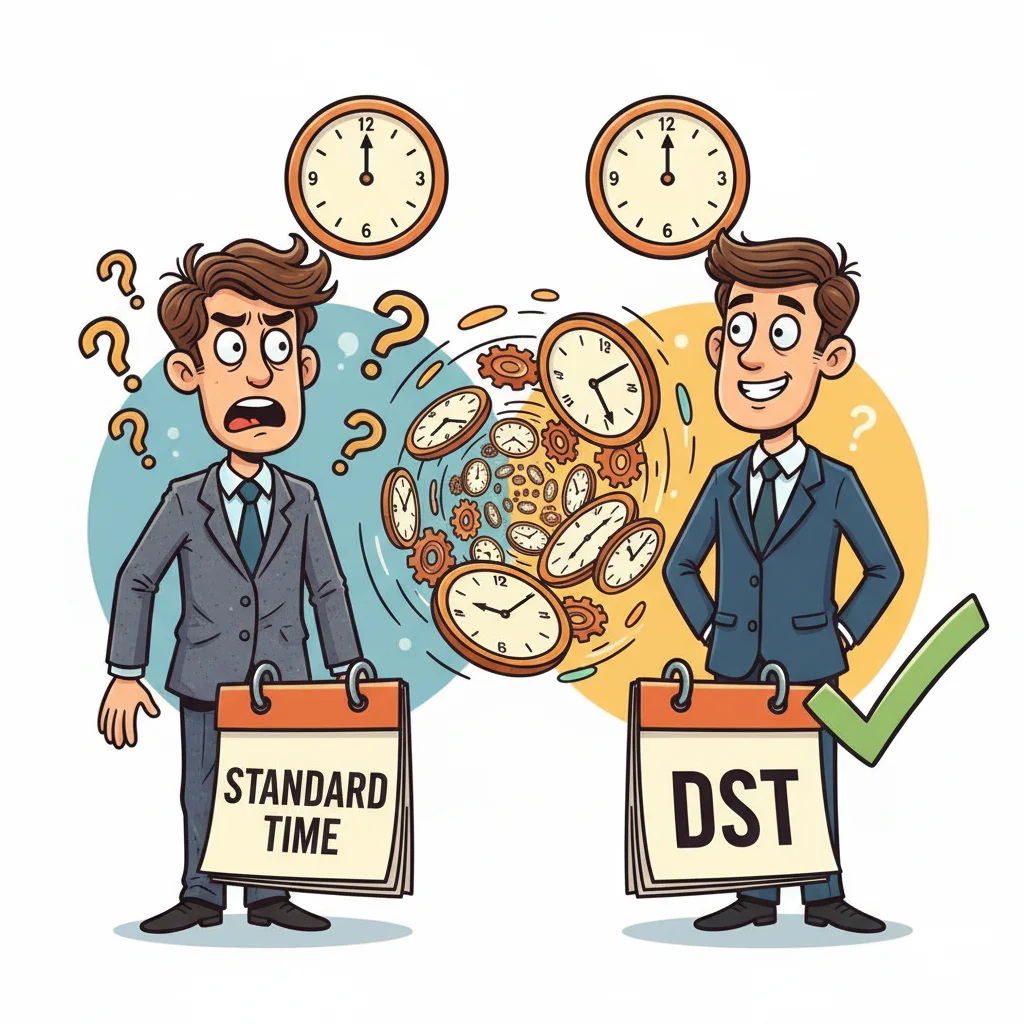
Here's a brutal truth most gurus won't tell you: over 80% of retail traders lose money trading news. They see the red 'HIGH IMPACT' alert, slam a trade, and watch their account get whipped around. The problem isn't the news itself, it's a complete misunderstanding of how to use a forex trading calendar. It's not a signal generator. It's a risk management tool. For us trading from SA, with the Rand's unique volatility, getting this wrong isn't just a mistake, it's a fast track to a margin call. This guide will show you how to use the calendar not to predict the market, but to protect yourself from it.
Let's clear this up first. A forex trading calendar is simply a schedule of economic data releases, central bank announcements, and political events that can cause significant price movement. Think SARB interest rate decisions, US Non-Farm Payrolls, or local budget speeches.
It is NOT a crystal ball. It doesn't tell you which way price will go. I learned this the hard way early on. Back in 2019, the US Fed cut rates, which typically weakens the USD. I bought EUR/USD instantly on the news. The USD ripped higher. Why? The cut was already priced in, and the Fed's forward guidance was unexpectedly hawkish. I lost 2.3% of my account in 90 seconds because I traded the headline, not the market's interpretation.
The calendar's real job is to warn you of periods of elevated volatility and potential liquidity gaps. It tells you when the market might move, not where. For a swing trading approach, this is critical information for managing open positions.

Warning: Treating a calendar event as a guaranteed trade signal is the single biggest reason new traders blow up on news days. The market's reaction is all that matters.
“The calendar's real job is to warn you of periods of elevated volatility and potential liquidity gaps. It tells you *when* the market might move, not *where*.”
Trading from South Africa means you're likely watching USD/ZAR, EUR/ZAR, or GBP/ZAR. Their drivers are a mix of local and global forces. You can't just watch the US calendar and call it a day.
Local Events That Matter
- South African Reserve Bank (SARB) Monetary Policy Committee (MPC) Decisions: This is our big one. The repo rate announcement and the following statement move the Rand instantly. The tone (hawkish vs. dovish) is often more important than the rate change itself.
- CPI (Consumer Price Index) & PPI Data: Inflation readings directly influence SARB's decisions. A high print can strengthen the Rand on rate hike expectations.
- Budget Speech & Medium-Term Budget Policy Statement (MTBPS): These outline government spending, debt, and taxes. A credit-negative speech can hammer the ZAR. I remember the 2020 MTBPS: the deficit projections were shocking, and USD/ZAR spiked over 150 pips in an hour.
- Eskom & Load Shedding Updates: Seriously. While not a formal calendar event, any major announcement on the energy crisis can cause immediate ZAR volatility. It's a unique South African risk factor.
Global Events That Dominate
- US Federal Reserve (FOMC) Decisions & Press Conferences: The US Dollar is the world's reserve currency. What the Fed does sets the tone for all FX markets, including EM currencies like the ZAR. This is non-negotiable to watch.
- US Non-Farm Payrolls (NFP): The first Friday of every month. It causes massive USD volatility which spills over into all USD pairs, including USD/ZAR. Liquidity can dry up just before the print.
- Major Global CPI & GDP Data: From the Eurozone, UK, and China. These affect global risk sentiment. When global investors are scared, they pull money out of emerging markets like South Africa first.

Example: Trading USD/ZAR on US NFP day? Your effective spread might widen from 25 pips to 80+ pips in the minute before the release. A standard 2% risk position suddenly carries the slippage risk of an 8% move. A position size calculator is essential here.

💡 Winston's Tip
The market's job is to make the most people wrong. A strong consensus forecast on the calendar is the perfect setup for a contrarian move. Be wary of the herd.
“Treating a calendar event as a guaranteed trade signal is the single biggest reason new traders blow up on news days.”
Every calendar event shows three numbers: Forecast, Actual, and Prior. Most traders just look if Actual > Forecast and buy the currency. That's a great way to lose money.
Here's what you should be looking at instead:
- The Deviation: How far did Actual miss the Forecast? A miss of 0.1% on EU CPI might be noise. A miss of 0.5% is a market-mover.
- The Revision: Check the Prior number. Was last month's data revised? A beat on the current print looks great, but if the prior month was revised down significantly, the net effect might be negative. The market prices in the revision too.
- The Trend: Is this the third month in a row of rising inflation? Context matters more than a single data point.
Let me give you a real example from my own journal. Trading GBP/USD on a UK jobs report.
- Forecast: Unemployment Rate 4.2%
- Actual: 4.1% (A beat! Good for GBP, right?)
- Prior: Revised to 4.0% from 4.2%
The headline looked bullish, but the revision showed last month was actually better than first thought. The market sold GBP on the realization that the trend was softening from 4.0% to 4.1%. I got caught in the headline trap and took a 35-pip loss. The lesson? Read the whole story, not just the headline. Understanding these nuances is as important as knowing the definition of a pip.
“Treating a calendar event as a guaranteed trade signal is the single biggest reason new traders blow up on news days.”
There are three main ways to approach news. Only one of them is sane for most retail traders.
1. The Fade (My Preferred Method for Swing Trading) This involves waiting for the initial news spike to happen and then looking for a trade in the opposite direction. Why? The initial move is often driven by algos and panic, creating an overreaction. Once the liquidity settles, price often retraces. I use this on USD/ZAR after SARB meetings. The announcement causes a wild 100-pip spike. I wait 15-30 minutes for the chart to form a clear rejection pattern (like a pin bar or a bearish engulfing on the 15-minute chart) before entering a fade trade. It requires patience but has a higher win rate for me.
2. The Straddle/Strangle (High Risk, High Setup Cost) This is an options strategy where you place both a buy and a sell order with tight stops just before the news, hoping to catch the breakout in either direction. I don't recommend this for spot FX traders. The spreads widen, slippage is huge, and you can get stopped out on both sides in the pre-news volatility. It's a broker's dream.
3. The Avoidance (The Smartest Strategy for Beginners) Simply close all positions 30 minutes before a high-impact news event and don't trade until 15-30 minutes after. You miss the chaos and protect your capital. This is the single most effective risk management tool on your calendar. If you're just starting out, make this your rule. You can learn more about managing this volatility in our guide on scalping strategies, which often explicitly avoid news periods.

Pro Tip: Mark the time of the news on your chart, not just the day. Draw a vertical line. Watch how price behaves in the 30 minutes before and after. This 'price action replay' is more educational than any trade you could take.
💡 Winston's Tip
If you wouldn't walk into a lion's den for R100, don't enter a trade right before high-impact news for a 20-pip target. The risk/reward is insane, and not in your favour.
“The initial news spike is often driven by algos and panic. Once the liquidity settles, price often retraces.”
Trading from SA adds a layer of complexity with time zones. Most major news is released during our afternoon or evening (SAST).
- US Data (NFP, FOMC): Typically 15:30 or 21:00 SAST. You're trading during our late afternoon or night.
- EU Data: Between 11:00 and 13:00 SAST.
- UK Data: Between 11:00 and 13:00 SAST.
- SARB Decision: Usually announced around 15:00 SAST.
This means you need a broker that offers stable execution during these volatile windows. Look for brokers with a strong local presence and proven reliability during news. I've found brokers like IC Markets and Pepperstone consistently have strong systems, though their raw spreads on ZAR pairs might not always be the tightest.
Also, be aware of local bank holidays. On a South African public holiday, liquidity on USD/ZAR might be slightly thinner, exacerbating news moves. Always check your broker's holiday schedule for margin adjustments. The last thing you want is to be in a trade on Freedom Day when liquidity dries up and your margin call level is effectively higher.
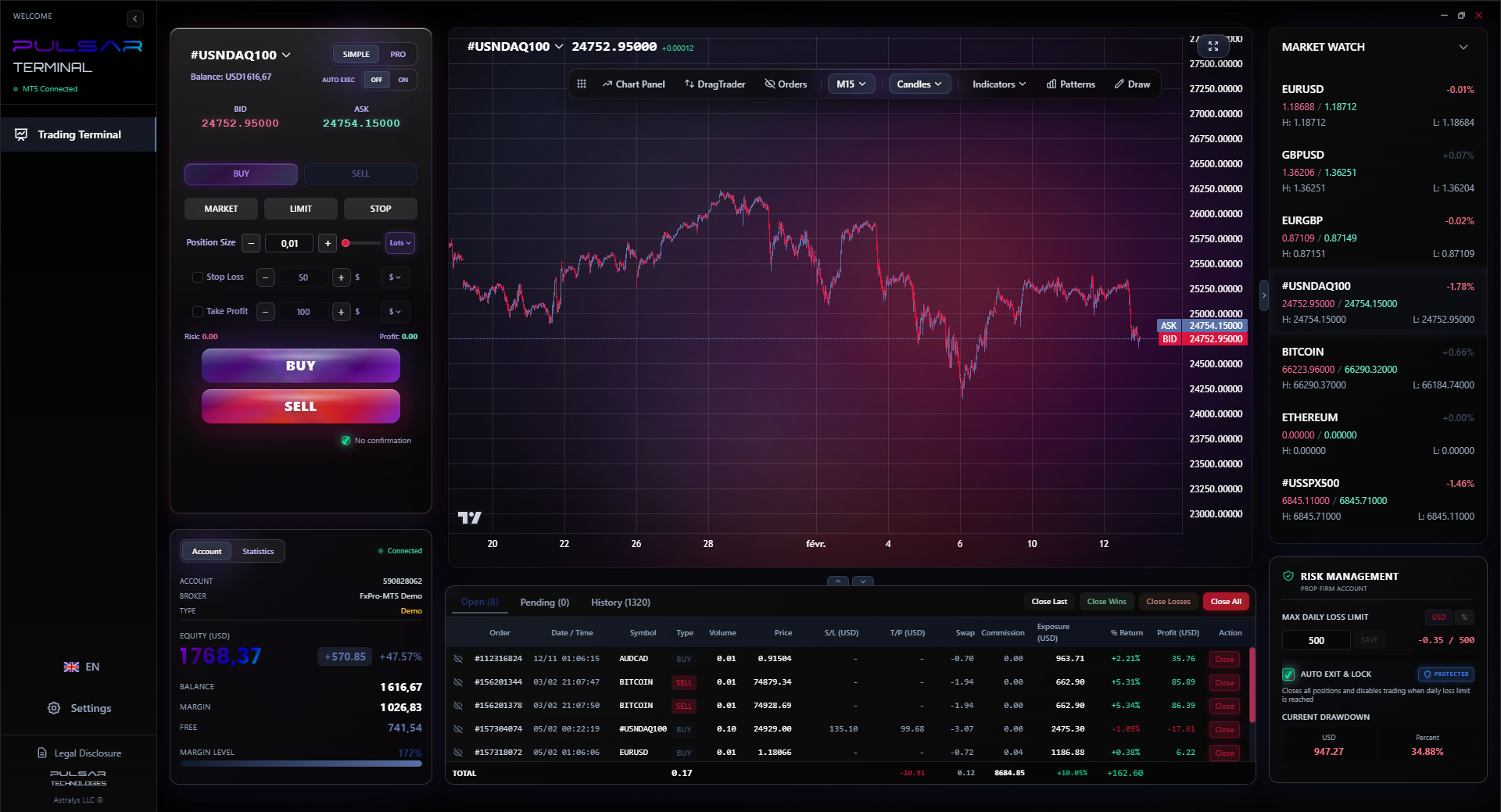
Managing trades around volatile news events requires precise order tools, like the ability to set multiple take-profit levels and move stops to breakeven with one click, which Pulsar Terminal provides directly on your MT5 platform.
Pulsar Terminal
The all-in-one MT5 companion: drag-and-drop orders, multi-TP/SL, trailing stop, grid trading, Volume Profile, and prop firm protection. Used by 1,000+ traders daily.
“The initial news spike is often driven by algos and panic. Once the liquidity settles, price often retraces.”
I've made most of these. Let's save you the money.
- Trading the 'Rumor' (Pre-News Positioning): You guess the data will be good and enter early. This is gambling, not trading. The market has already priced in the consensus forecast.
- Chasing the Initial Spike: You see USD/ZAR fly 80 pips on the news and hit buy, only to enter at the very top before it reverses. The move is usually over by the time you react.
- Ignoring Revisions: As discussed, this is a silent account killer. Always, always check if the prior number was changed.
- Overlooking Low-Impact Events: Sometimes, a medium-impact event, when combined with a certain technical setup, can cause a bigger move than expected. Don't filter your calendar to only 'red' events.
- Not Accounting for Spread Widening: Your stop-loss might be 20 pips away, but the spread can instantly widen to 15 pips on news. You get filled at a much worse price than you planned. Always assume your effective risk is 1.5x to 2x your normal size during high-impact news. This is where understanding the spread becomes a practical survival skill.
💡 Winston's Tip
Your best trade on a news day is often the one you don't take. Use the calendar to identify when to be flat, not just when to be in.

“Your best trade on a news day is often the one you don't take.”
Here's a simple routine I follow every Sunday night:
- Scan the Week: Open your calendar (Investing.com, Forex Factory, or your broker's). Look at the whole week ahead. Identify the 3-5 truly high-impact events.
- Mark Your Chart: Physically draw vertical lines on your trading charts for those events. Use a different color for SARB vs. Fed events.
- Adjust Your Trade Plan: For any swing trades you're in, decide: Will you close before the news, widen your stop, or hold? Write this down. If you're using tools that help with order management, this is the time to set them. For example, setting a breakeven stop before a news event can lock in profits and remove risk.
- Plan Your Session: Know what time you need to be at your desk. If NFP is at 15:30 SAST, don't schedule a meeting for 15:25.
- Post-News Review: After a major event, review the charts. Did price respect key technical levels after the noise? This is where the real trading opportunities often appear, in the calm after the storm. This disciplined review is what separates a swing trading professional from an amateur.
The forex trading calendar is your map of minefields. It doesn't tell you how to cross them, it just shows you where they are. Your job is to either go around, wait for the dust to settle, or cross with extreme caution. Most traders see the minefield and think it's a goldfield. Don't be one of them.
FAQ
Q1What is the best free forex trading calendar for South Africans?
Forex Factory is the community standard - it's free, customizable, and shows times in your local timezone (SAST) if you set it correctly. Investing.com's calendar is also excellent, with good filtering options. Your broker's calendar (like those from XM or Exness) is also worth checking as it's integrated with their platform.
Q2Should I trade the SARB interest rate decision?
Probably not, unless you have years of experience and understand ZAR volatility. The initial spike is unpredictable. It's better to watch, analyze the statement tone (hawkish/dovish), and look for a trade setup 30-60 minutes after the announcement when the market digests the information.
Q3How much does the spread widen during high-impact news like NFP?
It varies by broker and pair. On major pairs like EUR/USD, a typical 0.8 pip spread can blow out to 10-15 pips or more in the seconds around the release. On USD/ZAR, a 25-pip spread can easily become 80-100 pips. Always check your broker's execution policy.
Q4What's more important, the actual data or the central bank's forward guidance?
For major events like FOMC or SARB meetings, the forward guidance (the statement, projections, and press conference) is almost always more important than the actual rate decision itself. The decision is often already priced in; the new information is in the outlook.
Q5Can I use the RSI or MACD indicator to trade news events?
No. Most lagging indicators like the RSI indicator or MACD indicator are useless during the news release itself as they're based on past prices and the market is experiencing a fundamental shock. They can be useful later to gauge overbought/oversold conditions after the initial spike.
Q6Is it safe to leave stop-loss orders in place during news?
It's risky. Due to spread widening and slippage, you could be stopped out at a far worse price than your set level (a phenomenon called 'stop hunting' or, more accurately, liquidity gap filling). Many experienced traders remove tight stops before major news or switch to a guaranteed stop-loss if their broker offers it (for a fee).
Q7Why does the Rand (ZAR) sometimes move opposite to what the news suggests?
Two main reasons: 1) Risk Sentiment. Good local SA news can be overshadowed by a global risk-off mood, causing investors to flee all emerging market currencies. 2) The 'Buy the Rumor, Sell the Fact' dynamic. If the good news was heavily anticipated, traders sell their positions to take profit once the news is out.
Prof. Winston's Lesson
Key Takeaways:
- ✓The forecast vs. actual is less important than the revision to prior data.
- ✓Spread widening can turn a 2% risk trade into an 8% loss instantly.
- ✓Wait 15-30 minutes after news for the market to find its true direction.
- ✓Mark news times on your chart as vertical lines - it's a visual risk map.
How useful was this article?
Click a star to rate
Weekly Trading Insights
Free weekly analysis & strategies. No spam.
About the Author
David van der Merwe
Emerging Markets Trader
Johannesburg-based trader with 11 years in emerging market currencies. Specializes in ZAR pairs, FSCA-regulated trading, and South African market analysis.
Comments
Risk Disclaimer
Trading financial instruments carries significant risk and may not be suitable for all investors. Past performance does not guarantee future results. This content is for educational purposes only and should not be considered investment advice. Always conduct your own research before trading.
You Might Also Like

Cara Trading Forex Sukses: 7 Prinsip dari Trader Profesional
Cara trading forex sukses dengan 7 prinsip trader pro: manajemen modal, disiplin, journal trading, backtest. Data nyata, bukan janji profit palsu.
Jam Trading Forex Terbaik untuk Trader Indonesia: Panduan Lengkap dengan Tabel Waktu
Panduan jam trading forex untuk trader Indonesia. Tabel 4 sesi dunia, jam emas 20:00-00:00, sesi mana yang harus dihindari. Data akurat + tips dari trader berpengalaman.
Top 5 Sàn Forex Uy Tín Nhất 2026: Review Jujur dari Trader Indonesia
Top 5 sàn forex uy tín 2026 untuk trader Indonesia. Review jujur: spread, deposit, withdraw, dukungan lokal. Exness, XM, IC Markets & lebih.
Get Pulsar Terminal
All these calculators are built into Pulsar Terminal with real-time data from your MT5 account. One-click position sizing, automatic risk management, and instant calculations.
Get Pulsar Terminal