


Let's clear this up right now: buying a fancy forex trading certificate won't make you a profitable trader.
Rajesh Sharma
Senior Forex Analyst ·  India
India
☕ 9 min read
What you'll learn:
- 1What Exactly Is a 'Forex Trading Certificate' in India?
- 2The Real Rules: What You Can and Cannot Trade
- 3Course Costs vs. Real Trading Value
- 4Your Practical Path to Legal Forex Trading in India
- 5Red Flags: When a 'Certificate' is a Scam
- 6The Other Certificate: The FFMC Business License
- 7What You Should Do Instead of Buying a Certificate
Let's clear this up right now: buying a fancy forex trading certificate won't make you a profitable trader. In fact, chasing that piece of paper as a magic ticket is one of the fastest ways to lose money. I've seen it happen. The term 'forex trading certificate' in India is a confusing one, often sold with dreams of easy money. The truth is, it means one of two very specific things: an expensive lesson from an educator, or a serious license for a business. Neither one guarantees you'll make a single rupee in the markets. I'm going to walk you through exactly what these certificates are, what they aren't, and how to navigate India's unique regulatory maze so you don't waste your time or break the law.
When someone in India talks about getting a forex trading certificate, they're usually talking about one of two completely different things. Mixing them up can cost you.
First, there's the educational certificate. This is what most ads you see are selling. It's a course completion document from an institute, online platform, or 'guru'. They teach you theory, maybe some chart patterns, and give you a PDF at the end. I took one early on, paid about ₹15,000. It taught me what a pip definition was, but it didn't teach me how to handle a losing streak that wiped out two weeks of profits in an hour. These certificates don't hold any regulatory weight with SEBI or the RBI. They're just proof you paid for a class.
Second, there's the regulatory license. This is for businesses, not retail traders like you and me. The main one is the RBI's Full-Fledged Money Changer (FFMC) license. This lets a company legally buy/sell foreign cash, issue travel cards, that sort of thing. It's not for speculating on EUR/USD. Getting this involves serious capital (Rs. 25 lakhs minimum net worth) and costs around ₹1,15,000 in fees. It's a business permit, not a trading card.

Warning: If a course advertises its 'certificate' as a way to get around RBI rules or trade with international brokers, run. That's a red flag for a scam. No educational certificate changes the legal framework you operate under.
This is the most important part of your trading education, and no certificate covers it properly. India's rules, governed by FEMA and enforced by the RBI and SEBI, are strict for a reason: to protect the rupee and you.
You CAN legally trade: Only currency pairs that include the Indian Rupee (INR), and only as derivatives (futures & options) on Indian exchanges like the NSE or BSE. The main pairs are USD/INR, EUR/INR, GBP/INR, and JPY/INR. You do this through a SEBI-registered broker like Zerodha, ICICI Direct, or Angel One. Your money stays in INR, in Indian banks.
You CANNOT legally trade (as a retail trader):
- Major pairs like EUR/USD or GBP/USD.
- Any pair that doesn't involve the INR.
- Through offshore brokers like Exness, IC Markets, or XM. Even if they accept Indian clients, you are violating FEMA. The RBI has an 'Alert List' of such unauthorized platforms. I learned this the hard way years ago; my friend had his withdrawal held for 'compliance checks' for months after funding an international account with his Indian card.
- Leveraged spot forex. That '1:500 use' offer? Illegal for you here.
Your broker's platform is your only legal gateway. Thinking of using an international MT5 account? Don't. The tax and legal headache isn't worth it.

💡 Winston's Tip
A certificate proves you finished a class. A trading journal proves you're learning the market. One is for your wall, the other is for your wealth.
“Buying a fancy forex trading certificate won't make you a profitable trader. In fact, chasing that piece of paper as a magic ticket is one of the fastest ways to lose money.”
Let's talk numbers, because this is where dreams get priced. That shiny forex trading certificate from an educator comes with a wide price tag.
- A basic beginner course might run you ₹10,000 to ₹20,000.
- A 'certificate' program averages around ₹17,000.
- Advanced or 'mentorship' programs? They can easily shoot past ₹50,000, even hitting ₹1,00,000 or more.
I paid for a mid-tier course once. It promised 'institutional strategies'. The certificate looked nice on my wall. The strategy failed in live markets because it didn't account for slippage during our timezone's low liquidity. The certificate was worthless; the lesson in testing everything myself was priceless.

Pro Tip: Before you pay for any course, demand to see verified, audited live trade results from the instructor over at least 6 months. If they only show cherry-picked screenshots, their certificate is just a receipt.
The real education is free or cheap: SEBI's investor website, exchange rulebooks, and practicing with a demo account. Spend your first ₹10,000 on a demo account, a notebook, and learning basic risk management. A position size calculator will save you more money than any ₹50,000 course ever will.
What Should a Good Course Actually Teach?
A worthwhile program should spend less time on complex indicators and more on:
- Indian Regulations: Deep dive into FEMA, contract specs on NSE.
- Risk Management: How to calculate position size for USD/INR futures, what a margin call really looks like on your broker's platform.
- Psychology: Handling the stress of a trade going against you, which no certificate can simulate.
- Taxation: How to file your trading income (yes, it's taxable). If the course glosses over these for 'secret signals', it's not educating you, it's selling you a fantasy.
Forget the certificate for a second. Here's your actual step-by-step path to getting started, legally and safely.
Step 1: Open a Trading & Demat Account. Choose a SEBI-registered broker. Compare their platforms, margins, and customer service. Don't just go for the cheapest; go for the most reliable. Fund your account in INR via net banking or UPI.
Step 2: Learn the Instrument. Don't jump into USD/INR. Understand the contract. One USD/INR futures contract on the NSE is for $1000. If the rate moves from 83.50 to 83.60, that's a 10 paisa move, which is 10 points. With a point value of ₹1 (for most brokers), that's a ₹10 profit or loss per contract. Start small. One contract.
Step 3: Develop a Strategy Based on Reality. Will you be a scalping strategy trader on the 5-minute chart, or look for larger swing trading moves? Your strategy must fit the liquidity of INR pairs, which is different from the 24-hour EUR/USD market. Learn to use tools like the RSI indicator or MACD indicator in the context of your chosen pair.
Step 4: Paper Trade, Then Go Live Small. Use your broker's paper trading feature for at least 2-3 months. Track every trade in a journal. Then, go live with a capital amount you are 100% prepared to lose. Your goal for the first year is not profit; it's survival and consistency.
This process requires zero educational certificates. It requires discipline, which you can't buy.
💡 Winston's Tip
The most valuable education happens after you click 'buy' or 'sell'. No certificate can prepare you for the emotional volatility of a live position. That's a course you teach yourself.
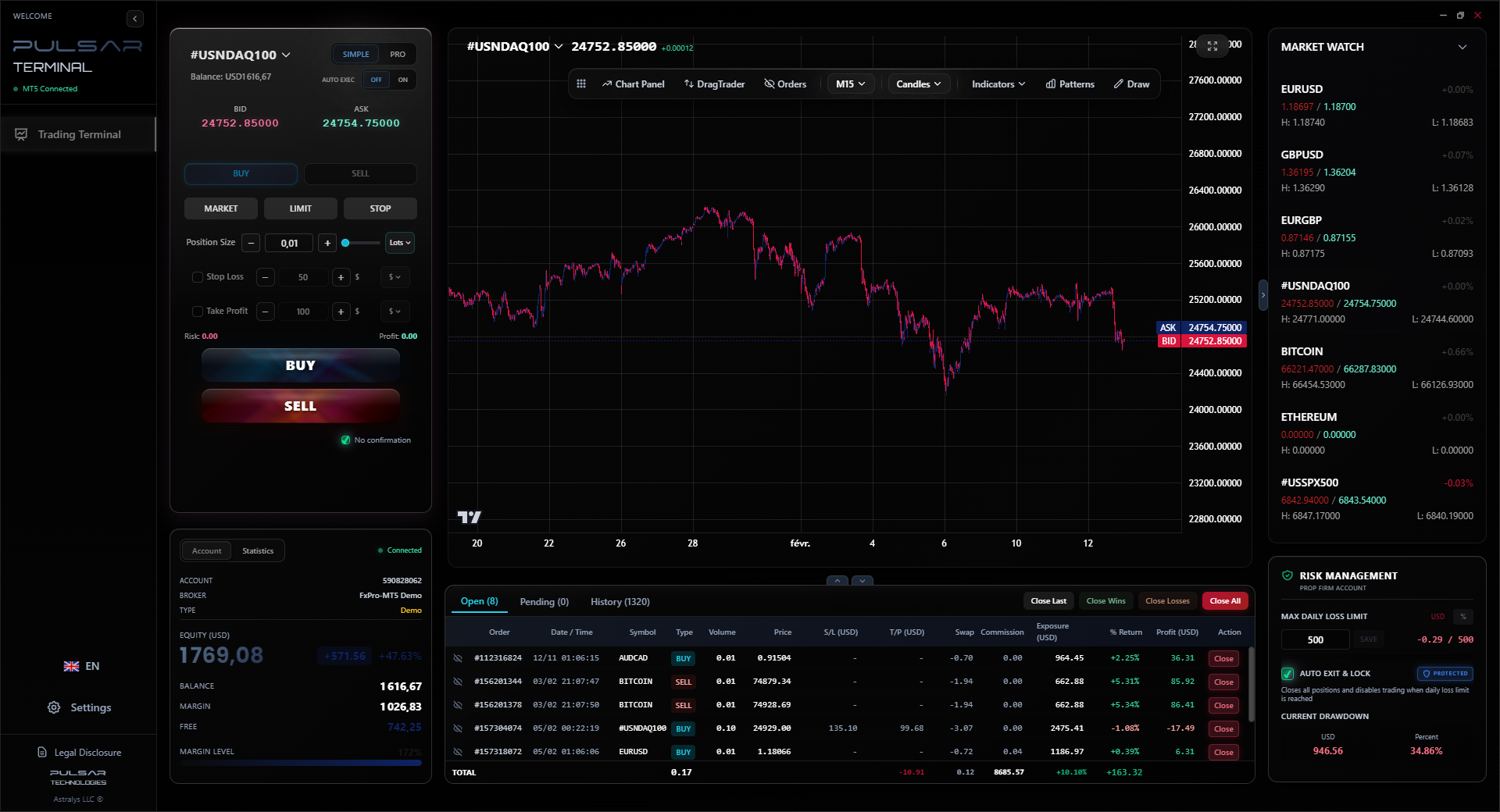
When developing and testing your strategy on platforms like MT5, having precise control over your orders and risk is non-negotiable.
Pulsar Terminal
The all-in-one MT5 companion: drag-and-drop orders, multi-TP/SL, trailing stop, grid trading, Volume Profile, and prop firm protection. Used by 1,000+ traders daily.
“Your first profitable trade won't come because you framed a certificate. It will come because you understood the spread on your broker's platform and placed a sensible stop-loss.”
The market is flooded with predators. Here’s how to spot them.
- Guaranteed Profits or High Returns: Any course or 'certification program' that promises specific monthly returns is lying. Period.
- Bypassing RBI Rules: They claim their 'certification' or 'partner broker' lets you legally trade EUR/USD. This is false and dangerous.
- Pressure to Sign Up: 'Limited seats at this price!' It's a marketing tactic, not education.
- Vague Instructors: The teacher has no public, verifiable long-term track record. They're a 'secret millionaire' you can't check.
- Focus on Tools Over Rules: They spend 80% of the time on a fancy indicator and 2 minutes on saying 'manage your risk' without teaching how.
I almost fell for one that offered a 'certificate of mastery' after a 4-hour webinar. The cost was ₹8,000. The 'master strategy' was just buying when a moving average crossed, with no stop-loss plan. I'd have lost my tuition fee and then my trading capital.
Your best certificate is your own trading journal, showing months of disciplined practice, risk management, and gradual learning. That's the only credential that matters in this game.
Just so you have the full picture, let's briefly touch on the real regulatory certificate: the FFMC license. This isn't for trading; it's for running a forex service business.
Think of a shop at the airport that changes dollars for rupees, or a company that provides forex cards to students going abroad. To do that legally, you need this license from the RBI.
The barriers are high:
- You need to be a registered company (cost: ~₹25,000).
- You need substantial Net Owned Funds: Rs. 25 lakhs for one branch, Rs. 50 lakhs for multiple.
- The license fee itself is about ₹90,000.
- Your business is subject to strict RBI audits and reporting.
This is a completely different world from speculative trading. It's a compliance-heavy, physical or financial services business. Unless you have ₹25-50 lakhs to park and want to get into currency exchange, this 'forex trading certificate' is not relevant to you.
💡 Winston's Tip
In India, your first trade shouldn't be on a chart. It should be on the SEBI website, reading the investor protection guidelines. Know the rules of the game before you play.
“The real education is free or cheap: SEBI's investor website, exchange rulebooks, and practicing with a demo account.”
So where should you invest your time and money? Here's a realistic plan.
- Regulatory Homework: Bookmark the SEBI and RBI websites. Read the FAQs for retail investors. This is boring, but it's your shield.
- Broker Demo: Open demo accounts with 2-3 major SEBI brokers. Get a feel for their platforms. Watch how USD/INR moves during the Indian trading session (9 AM to 5 PM).
- Free Knowledge: YouTube has reputable educators (focus on concepts, not signals). Read classic trading books - 'Trading in the Zone' for psychology is more valuable than any indicator course.
- Community Learning: Join serious trading forums or communities focused on Indian markets. Learn from the mistakes others are sharing.
- Skill Purchase: If you must spend money, spend it on a single skill-building tool. A good market scanner, or a advanced charting software subscription, might offer more value than a generic course. For instance, mastering a tool that helps you visualize support/resistance can be a game-long skill.
Your first profitable trade won't come because you framed a certificate. It will come because you understood the spread definition on your broker's platform, placed a sensible stop-loss, and had the patience to let a valid idea play out. That's the real certification process.
FAQ
Q1Does a forex trading certificate from an Indian institute allow me to trade with international brokers?
No, absolutely not. No educational certificate changes Indian foreign exchange law (FEMA). Trading through international brokers for pairs like EUR/USD remains illegal for Indian retail residents, regardless of any course you complete. The only legal way is via SEBI brokers on Indian exchanges.
Q2What is the cheapest way to learn forex trading legally in India?
The cheapest way is free. Use the extensive free educational materials provided by SEBI and the NSE. Open a demo account with a registered broker to practice trading USD/INR futures without risk. Combine this with reading well-regarded trading books from your library. Invest time before you invest money.
Q3Can I get a job with a forex trading certificate?
An educational certificate alone is unlikely to land you a job at a bank or fund. Those roles typically require degrees like an MBA, CA, or CFA, along with strong analytical skills. The certificate might show personal interest, but it's not a recognized professional qualification in the finance industry.
Q4Is the profit from trading USD/INR on NSE taxable?
Yes. Trading income is considered business income or speculative business income for tax purposes. You must file it under the appropriate head (P&F from Business or Speculation) in your ITR. Short-term capital gains tax may also apply. Always consult with a tax professional familiar with trading.
Q5What is the minimum amount needed to start trading forex legally in India?
There's no fixed minimum, but it's dictated by margin requirements. For example, one USD/INR futures contract might require an initial margin of around ₹8,000-₹12,000 (this varies with volatility). So practically, you could start with ₹15,000-₹20,000, but that leaves no room for error. A safer starting capital is at least ₹50,000 to ₹1,00,000 to properly manage risk across a few trades.
Q6What's the difference between a forex trading course and getting an FFMC license?
They are worlds apart. A course is for personal education on how to speculate on prices. An FFMC license is a business permit from the RBI to physically exchange currencies or provide forex cards. The course costs thousands of rupees; the license requires lakhs in net worth and is for running a service business, not for personal trading.
Prof. Winston's Lesson
Key Takeaways:
- ✓A 'forex trading certificate' is either an unregulated course receipt or a serious business license.
- ✓Indian retail traders can only legally trade INR pairs (e.g., USD/INR) on SEBI platforms.
- ✓Course fees range from ₹10,000 to over ₹1,00,000, with no correlation to trading success.
- ✓The FFMC business license requires a minimum net worth of Rs. 25 lakhs.
- ✓Your trading journal is the only credential that truly matters.
How useful was this article?
Click a star to rate
Weekly Trading Insights
Free weekly analysis & strategies. No spam.
About the Author
Rajesh Sharma
Senior Forex Analyst
Trading Indian and South Asian markets for over 10 years. Started with NSE currency derivatives before moving to international forex. Specializes in USD/INR and emerging market pairs.
Comments
Risk Disclaimer
Trading financial instruments carries significant risk and may not be suitable for all investors. Past performance does not guarantee future results. This content is for educational purposes only and should not be considered investment advice. Always conduct your own research before trading.
You Might Also Like

Cara Trading Forex Sukses: 7 Prinsip dari Trader Profesional
Cara trading forex sukses dengan 7 prinsip trader pro: manajemen modal, disiplin, journal trading, backtest. Data nyata, bukan janji profit palsu.
Jam Trading Forex Terbaik untuk Trader Indonesia: Panduan Lengkap dengan Tabel Waktu
Panduan jam trading forex untuk trader Indonesia. Tabel 4 sesi dunia, jam emas 20:00-00:00, sesi mana yang harus dihindari. Data akurat + tips dari trader berpengalaman.
Top 5 Sàn Forex Uy Tín Nhất 2026: Review Jujur dari Trader Indonesia
Top 5 sàn forex uy tín 2026 untuk trader Indonesia. Review jujur: spread, deposit, withdraw, dukungan lokal. Exness, XM, IC Markets & lebih.
Get Pulsar Terminal
All these calculators are built into Pulsar Terminal with real-time data from your MT5 account. One-click position sizing, automatic risk management, and instant calculations.
Get Pulsar Terminal