


Here's a hard truth most new traders in Bangladesh don't want to hear: staring at live forex charts all day is one of the fastest ways to lose money.

Daniel Harrington
Head of Content
☕ 9 min read
What you'll learn:
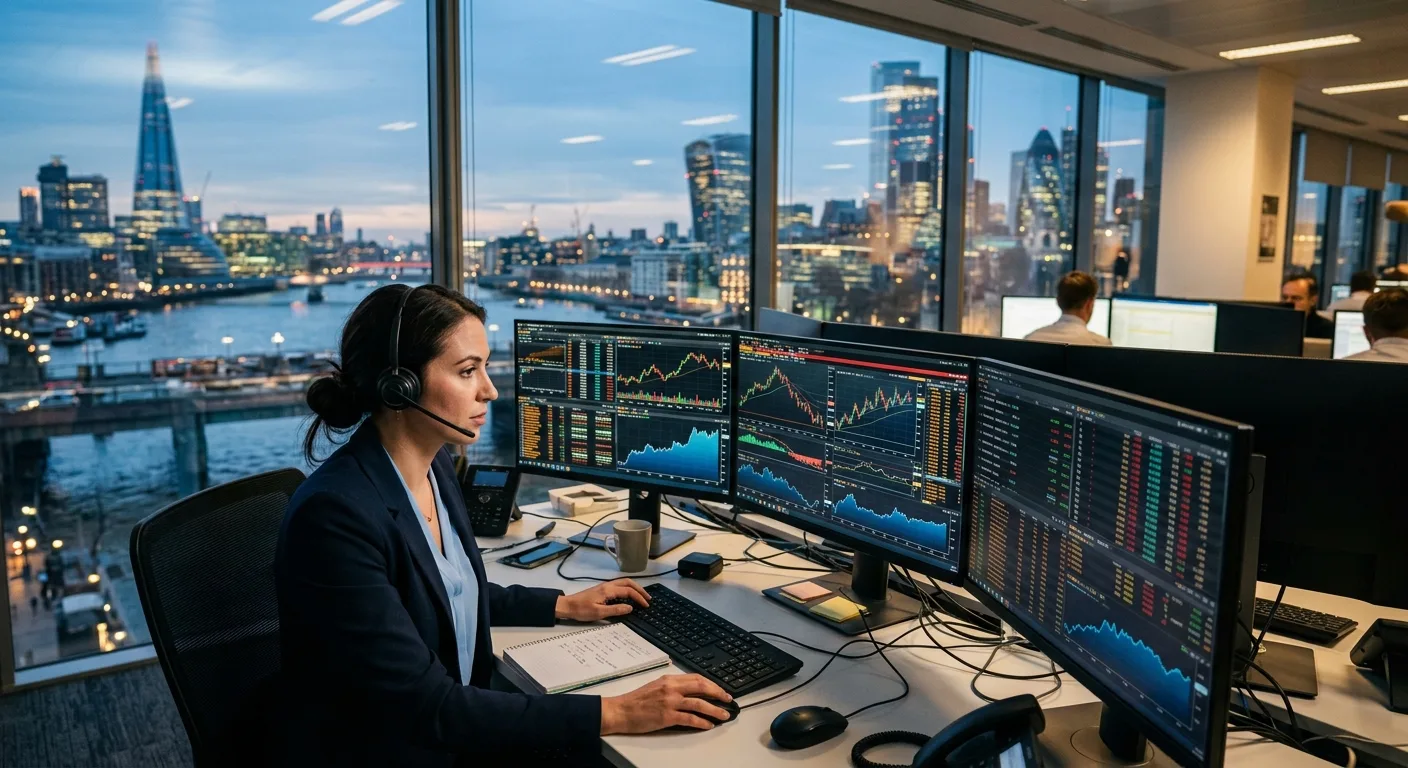
Here's a hard truth most new traders in Bangladesh don't want to hear: staring at live forex charts all day is one of the fastest ways to lose money. I know, because I lost nearly ৳50,000 in my first year doing exactly that. The real skill isn't in watching the candles form, it's in knowing what to watch for and, more importantly, when to look away. This guide is about turning those hypnotic, real-time charts from a liability into your most powerful tool.
A live chart is your window into the market's pulse. It shows you price action as it happens, reflecting the collective decisions of every trader, bank, and algorithm in the world. For a scalper trying to catch a 10-pip move on EUR/USD, it's essential. For a swing trader looking at the weekly trend, it's often just a distraction.
The biggest mistake I see? Traders in Dhaka, Chittagong, or Sylhet glued to their screens during off-hours for the major sessions. The London session (2 PM to 11 PM Bangladesh Time) and the overlap with New York (8 PM to 1 AM BDT) are where you'll see the most reliable volume and movement. Watching a live chart at 3 AM BDT is usually a waste of good sleep - the market is thin and prone to erratic spikes.

Warning: Live charts can lie. A sudden, sharp spike on low volume (common during Asian sessions) isn't a 'breakout.' It's often just a large bank order hitting a thin market, and the price will snap right back. I've been whipsawed by these more times than I care to admit.
The value is in context. A live chart confirms your analysis from the higher timeframes. You use it for precise entry and managing your trade, not for making brand-new decisions every five minutes. If you find yourself constantly changing your mind because of a new candle, you're not trading, you're gambling with a fancy screen.

💡 Winston's Tip
The market is open 24 hours, but your brain isn't. Schedule your live chart time like a professional meeting, and then walk away. Discipline in screen time is discipline in trading.
In Bangladesh, your choice is often dictated by what your broker offers. The gold standard for serious charting is MetaTrader 5 (MT5). It's free, strong, and supports expert advisors (EAs) for automation. Most international brokers like IC Markets or Pepperstone offer MT5 with excellent execution.
The Data Feed Question
Your broker provides the data feed for your charts. This is critical. A slow or 'off' feed means your prices are stale. I once had a stop-loss on XAU/USD (gold) not trigger because my broker's feed lagged during a news event. The quoted price on my chart was $1805, but by the time my order reached the market, the real price was $1798. That ৳7,000 lesson taught me to always test a broker's demo during high volatility.
Free vs. Paid Charting Software
You can use TradingView as a standalone charting tool. Its social features and drawing tools are fantastic. But remember: the prices on TradingView are aggregated and may not exactly match your broker's prices, especially for exotic pairs. For final execution, always use your broker's terminal. Think of TradingView as your planning room and MT5 as your cockpit.
A good setup for many here is using TradingView for analysis and idea generation, then placing the actual trade on a reliable platform like MT5 through a broker with a strong local presence, such as Exness, which many Bangladeshi traders use for its deposit options.
“Staring at live forex charts all day is one of the fastest ways to lose money.”
Forget the 50+ indicators. You only need to understand a few things deeply on a live chart.
- Price Action & Candlesticks: This is the raw story. A long green candle closing near its high shows strong buying pressure. A candle with long wicks on both ends (a spinning top) shows indecision. Watching these form in real time teaches you about market sentiment.
- Support and Resistance: These are horizontal lines marking where price has historically reversed. The magic happens when price approaches these levels on a live chart. Does it bounce? Or does it slice through with volume? Your trade decision happens right there.
- The Moving Average (MA): I keep a simple 20-period and 50-period Exponential Moving Average (EMA) on my chart. In a strong uptrend, the price should stay above the 20 EMA. If it breaks below the 50 EMA on the 15-minute chart during the London session, that's a serious warning sign for my short-term longs.
- Volume: While forex has no central exchange volume, MT5 shows 'tick volume' - the number of price changes. A breakout on high tick volume is more trustworthy than one on low volume.

Example: You see EUR/USD approaching a major resistance at 1.0950 on the 1-hour chart. On the live 5-minute chart, you watch. Price hits 1.0949, forms a bearish engulfing candle, and the tick volume spikes. That's a live, high-probability signal to consider a short, with a stop just above 1.0950. This is the synthesis of planning and live action.
Tools like the RSI indicator or MACD indicator can help confirm these moments, but price itself is the ultimate indicator.

Your strategy must match your timeframe and screen time.
Scalping (1-minute to 5-minute charts): This is all about live charts. You're in and out in minutes, aiming for 5-15 pips. It's intense. You need a broker with razor-thin spreads (look at raw spread accounts from IC Markets or Pepperstone) and rock-solid execution. A common scalping tactic is trading bounces off the VWAP (Volume Weighted Average Price) or the previous hour's high/low. I don't recommend this for beginners; the transaction costs and stress are high.
Intraday Trading (15-minute to 1-hour charts): This is the sweet spot for many. You use the higher timeframe (4-hour/daily) for direction, and the live 15-minute chart for entry. For example, if the daily trend for GBP/JPY is up, you wait for a pullback to a support level on the 1-hour chart. Then, on the live 15-minute chart, you look for a bullish reversal pattern (like a hammer candle or a break of a small downtrend line) to enter. My most consistent wins come from this method.
Swing Trading (4-hour+ charts): Here, live charts are mostly for order management. You might check the 1-hour chart once or twice a day to manage your stop or take partial profits. The bulk of your analysis is done on the daily and weekly charts. For a deeper look, our guide on swing trading covers this in detail.
Regardless of strategy, always use a position size calculator. A live chart can tempt you to 'double down' on a losing trade. The calculator keeps your risk in check.
💡 Winston's Tip
If you feel the urge to constantly tweak your stop-loss or take-profit while watching a live chart, close the chart. Your plan was made in calm; don't change it in chaos.
“A live chart can tempt you to 'double down' on a losing trade. The calculator keeps your risk in check.”
I've fallen into every one of these traps.
Overtrading: This is the #1 killer. A live chart makes it look like there's always an opportunity. Three losing scalping trades in a row? You're not missing out by walking away. You're saving your capital.
Chasing the Price: You see a pair rocket up 30 pips in a minute. FOMO (Fear Of Missing Out) hits, and you buy at the very top. The live chart then shows it collapsing 25 pips. You just bought the rumor and sold the news. Wait for a pullback or a retest.
Ignoring the Big Picture: Zoom out. Always. A beautiful buy signal on a 5-minute chart is worthless if it's against the dominant trend on the 4-hour chart. The higher timeframe trend is the tide; your live chart is just the waves.
Paralysis by Analysis: Too many lines, too many indicators. Your chart looks like a spiderweb. Clean it up. Price, a couple of key support/resistance lines, and one or two indicators are all you need. A cluttered chart leads to confused decisions.
Neglecting News: Economic calendars are free. A live chart will go crazy during major news releases (like US Non-Farm Payrolls). If you don't know why, you'll get stopped out. Either avoid trading 5 minutes before and after major news, or have a specific news-trading plan.

Managing the psychological stress of live charts is easier when your trade management is automated; Pulsar Terminal lets you set multi-level take-profits and trailing stops directly on your MT5 chart, so you can step away without worry.
Pulsar Terminal
The all-in-one MT5 companion: drag-and-drop orders, multi-TP/SL, trailing stop, grid trading, Volume Profile, and prop firm protection. Used by 1,000+ traders daily.

Let's talk practicalities for trading from Bangladesh.
Internet: A stable connection is non-negotiable. Fiber optic is best. Always have a mobile data hotspot (from Banglalink, GP, or Robi) as a ready backup. A disconnection during a live trade is a nightmare.
Hardware: You don't need a Bloomberg terminal. A decent laptop with a clear screen is fine. A second monitor is a game-changer for having your chart, trade terminal, and news calendar open simultaneously. It reduces frantic tab-switching.
Power: Load shedding happens. An affordable UPS is a critical piece of trading equipment. It gives you the 5-10 minutes needed to close out positions or switch to your laptop battery/hotspot gracefully.
Psychology: Trading during Bangladesh night hours for the US session can mess with your sleep and judgment. Set strict limits. Use pending orders and stop-losses so you don't have to stare at the screen all night. Your mental capital is as important as your financial capital.
“Your goal for the first six months is to survive and learn, not to get rich.”
Knowledge without practice is just theory.
- Open a Demo Account: Do it today. Use it to explore the platform, draw lines, and get a feel for live price movement without risk. But don't stay on demo forever - it doesn't train your emotions.
- Develop a Simple Ritual: Before you even open a live chart, know your plan. What pair are you watching? What's the higher timeframe trend? What are your key support/resistance levels? Write it down on a sticky note next to your screen.
- Start Small: When you go live, start with a position so small that a 50-pip loss feels like a tuition fee, not a disaster. For many, that means trading mini or micro lots. Your goal for the first six months is to survive and learn, not to get rich.
- Review Your Trades: This is the most important step. At the end of the day or week, look at your trades. Why did you enter? Was it according to your plan? What did the live chart show at that moment? This review process is what turns screen time into experience.
Remember, the goal of using forex trading charts live isn't to be right on every tick. It's to execute a well-researched plan with discipline. The charts are your map, but you are the driver. Don't let the noise of every little bump in the road steer you off course.
💡 Winston's Tip
Your first job when looking at a live chart is not to find a new trade. It's to see if the market is giving you the opportunity you already planned for. If not, do nothing.

FAQ
Q1Is forex trading with live charts legal in Bangladesh?
The legal landscape is complex. Trading with international brokers is a common practice, but it operates in a regulatory grey area. The Bangladesh Bank has historically cautioned against it. You are responsible for understanding the current regulations and any associated financial risks. Always prioritize brokers with strong international regulation.
Q2What is the best time in Bangladesh to trade forex live?
The most active and ideal times are during the London session (2:00 PM - 11:00 PM BDT) and the overlapping London/New York session (8:00 PM - 1:00 AM BDT). These periods have the highest liquidity and most reliable price action. The Asian session (early morning BDT) is typically quieter.
Q3Why does the price on my live chart differ from my broker's trading platform?
This is usually due to a data feed lag or spread. Free charting services like TradingView use aggregated data. Your broker's platform shows their specific feed and the actual buy/sell prices, which include the spread. For execution, always rely on your broker's terminal prices.
Q4How much money do I need to start trading with live charts?
You can start with a very small amount on a demo account to learn. For a live account, many international brokers allow deposits as low as $50-$100. However, with proper risk management (e.g., risking 1% per trade), a more realistic starting capital to see meaningful practice is around $500-$1000. Never trade with money you cannot afford to lose.
Q5What does a 'pip' mean on a live chart?
A pip (Percentage in Point) is the smallest standard move a currency pair can make. For most pairs like EUR/USD, it's 0.0001. If EUR/USD moves from 1.0850 to 1.0851, it moved 1 pip. This is how profit and loss are measured. Watching pips move in real-time is the essence of live chart trading.
Q6Can I use mobile apps for live forex trading in Bangladesh?
Yes, all major brokers and platforms like MT5 have mobile apps. They are excellent for monitoring open positions and managing orders. However, for detailed chart analysis and placing new complex trades, a desktop or laptop with a larger screen is highly recommended for accuracy and reducing errors.
Q7What is a margin call, and how can I see it coming on my charts?
A margin call happens when your losses eat up your available margin, forcing the broker to close your positions. You can see it coming by monitoring your account equity and margin level in your trading platform. On your charts, if a trade moves heavily against you and approaches your stop-loss, it's a warning. Always use a stop-loss on every single trade to prevent this.
Prof. Winston's Lesson
Key Takeaways:
- ✓Trade live only during high-volume sessions (London/NY overlap).
- ✓Use live charts for entry & management, not for new analysis.
- ✓Always zoom out to the 4-hour chart for trend context.
- ✓A cluttered chart with 10 indicators leads to paralysis.
- ✓Schedule your screen time; 24/7 watching destroys judgment.
How useful was this article?
Click a star to rate
Weekly Trading Insights
Free weekly analysis & strategies. No spam.
About the Author
Daniel Harrington
Head of Content
Head of content at The Trading Mentor. Veteran trader with a passion for making complex trading concepts accessible. Covers global topics, strategies, and platform guides.
Comments
Risk Disclaimer
Trading financial instruments carries significant risk and may not be suitable for all investors. Past performance does not guarantee future results. This content is for educational purposes only and should not be considered investment advice. Always conduct your own research before trading.
You Might Also Like

Cara Trading Forex Sukses: 7 Prinsip dari Trader Profesional
Cara trading forex sukses dengan 7 prinsip trader pro: manajemen modal, disiplin, journal trading, backtest. Data nyata, bukan janji profit palsu.
Jam Trading Forex Terbaik untuk Trader Indonesia: Panduan Lengkap dengan Tabel Waktu
Panduan jam trading forex untuk trader Indonesia. Tabel 4 sesi dunia, jam emas 20:00-00:00, sesi mana yang harus dihindari. Data akurat + tips dari trader berpengalaman.
Top 5 Sàn Forex Uy Tín Nhất 2026: Review Jujur dari Trader Indonesia
Top 5 sàn forex uy tín 2026 untuk trader Indonesia. Review jujur: spread, deposit, withdraw, dukungan lokal. Exness, XM, IC Markets & lebih.
Get Pulsar Terminal
All these calculators are built into Pulsar Terminal with real-time data from your MT5 account. One-click position sizing, automatic risk management, and instant calculations.
Get Pulsar Terminal