


Thinking about signing up for one of those forex trading courses in Chennai? You're probably wondering if it's worth the money, or if you're just about to get scammed.
Rajesh Sharma
Senior Forex Analyst ·  India
India
☕ 10 min read
What you'll learn:
- 1The Legal Minefield Comes First
- 2What Do These Courses Actually Teach?
- 3The Real Cost Breakdown: Is It Worth It?
- 4Massive Red Flags (How to Spot a Scam)
- 5The Self-Education Alternative Path
- 6If You MUST Choose a Course: A Vetting Checklist
- 7The Broker Question: What Happens After the Course?
- 8Final Verdict: Is It Worth It?
Thinking about signing up for one of those forex trading courses in Chennai? You're probably wondering if it's worth the money, or if you're just about to get scammed. I've been trading for over a decade, and I've seen the good, the bad, and the downright ugly when it comes to these courses. Let's cut through the marketing fluff and talk about what you're really getting into, especially with India's tricky legal landscape. Spoiler: it's not as simple as they make it sound.
Before you even think about a forex trading course in Chennai, you need to understand the rules. This isn't optional. In India, forex trading is legal, but with massive, non-negotiable restrictions. The Reserve Bank of India (RBI) and SEBI are not playing games.
You are only allowed to trade currency pairs that include the Indian Rupee (INR). That means USD-INR, EUR-INR, GBP-INR, JPY-INR. That's it. Forget about EUR/USD, GBP/JPY, or any of the major pairs you see advertised globally. Trading those through an international broker is prohibited under FEMA (Foreign Exchange Management Act).
All legal trades must go through a SEBI-regulated broker like Zerodha, Angel One, or ICICI Direct on Indian exchanges (NSE, BSE). Using an offshore broker for spot forex or CFDs? That's a big red flag. The RBI even publishes an 'Alert List' of unauthorized platforms. I've seen traders get their accounts frozen for ignoring this.

Warning: The Liberalised Remittance Scheme (LRS) does NOT allow you to send money abroad for speculative forex trading. Anyone telling you otherwise is leading you into a legal grey area. The only semi-legal offshore route is through GIFT City IFSC brokers, and that's a whole other conversation.
The first thing any legitimate forex trading course in Chennai should teach you is this regulatory framework. If they don't, walk away. Immediately.
Most forex trading courses in Chennai follow a similar, tired curriculum. They'll start with the absolute basics: what a currency pair is, what a pip means, how to read a candlestick. This is useful if you're a complete novice, but you can learn this for free on YouTube in an afternoon.
Then they move to basic technical analysis. You'll get introduced to support and resistance, maybe a moving average, and the holy grail for course sellers: the RSI indicator and MACD indicator. They'll show you pretty back-tested charts where everything lines up perfectly. Reality is messier.
The Missing Pieces
Here's what they often gloss over or completely ignore:
- Psychology: They'll mention 'discipline' but won't teach you how to handle the gut-wrenching feeling of a losing streak. I once lost 15% of my account in two days because I revenge traded. No course prepared me for that.
- Risk Management: They'll say 'risk 1% per trade' but won't make you use a position size calculator religiously. They won't drill into you what a margin call feels like when it happens.
- The Indian Context: Will they teach you the unique quirks of trading USD-INR futures? The liquidity, the spread patterns, the impact of RBI intervention? Most just recycle generic global forex content.
The advanced courses might touch on price action or a specific scalping strategy. But ask yourself: if their strategy was so foolproof, why are they selling it for 50,000 INR instead of just trading it themselves?

💡 Winston's Tip
The most valuable part of any course isn't the strategy, it's the forced structure. If you can't build that discipline yourself, a cheap course might be a worthwhile kickstart. Just don't confuse it with a golden ticket.
“A legitimate educator makes money from teaching, not from your trading losses or broker referrals.”
Let's talk numbers. Based on my research and what I've seen in the market, here’s what you’re looking at for forex trading courses in Chennai.
| Course Type | Price Range (INR) | What You're Probably Getting |
|---|---|---|
| Basic/Intro | 5,000 - 20,000 | 8-hour 'fast-track', basic charting, very general advice. |
| Standard Diploma | 20,000 - 50,000 | 1-3 month course, more indicators, some basic back-testing. |
| 'Advanced' / Personal Mentorship | 50,000 - 1,00,000+ | One-on-one sessions, access to a 'community', promises of proprietary signals. |
I paid 35,000 INR for a course in Mumbai back in 2015. The instructor was a good salesman. He showed us a perfect EUR/USD trade from the week before. What he didn't show were the three losing trades he took in between. The course materials were just PDFs of Investopedia articles. I felt like an idiot.
Personal mentorship fees in Chennai can run from 700 to 1,000 INR per hour. That's 8,400 to 12,000 INR per month if you do 12 sessions. That's a serious commitment. Before you pay, demand a trial session. Ask them to explain a live market setup right then and there.

Pro Tip: The best education often costs nothing. Paper trade on a demo account from a SEBI-regulated broker for 6 months. Track every single trade in a journal. This painful, boring process will teach you more than 90% of paid courses.
The market for forex trading courses in Chennai is flooded with opportunists. Here’s how to spot them.
- Guaranteed Profits: If they guarantee returns or a specific monthly income, run. Trading has no guarantees. Period.
- Focus on Exotic Pairs: If their course material is all about GBP/JPY or AUD/CAD and doesn't heavily address USD-INR, they are teaching you something you can't legally trade as an Indian resident. That's irresponsible.
- The 'Secret Indicator': They'll try to sell you a magical, proprietary indicator that 'always' finds the turning point. It doesn't exist. I wasted $500 on one once. It repainted past signals, making historical charts look perfect while being useless in real time.
- Pressure to Use a Specific Offshore Broker: Some 'academies' are just funnels for international brokers who pay them a kickback (often called IB fees). Their advice will be biased towards getting you to deposit with that broker, regardless of the legal implications for you.
- No Discussion of Losses: If every example trade is a winner, they're lying. A legitimate educator will show you their losing trades and explain what went wrong.
A real educator makes money from teaching, not from your trading losses or broker referrals. Their goal should be to make you independent, not dependent on their signals forever.
“The market itself will be your most expensive and most effective teacher. Don't bankrupt yourself before you even get to class.”
Honestly, you can build a formidable trading education for a fraction of the cost of most forex trading courses in Chennai. It just requires more discipline.
Step 1: Master the Free Basics. Babypips.com's 'School of Pipsology' is free, complete, and globally respected. Learn the absolute fundamentals there. Don't skip a single lesson.
Step 2: Understand the Indian Market. Read the RBI's circulars on forex. Understand how USD-INR futures work on the NSE. Follow market news from Indian financial papers. This context is priceless and often missing from global courses.
Step 3: Paper Trade with a Strategy. Pick one simple strategy. Maybe a basic swing trading method using a 50 and 200-period moving average on the USD-INR chart. Paper trade it for 100 trades. Record the entry, exit, spread, reason, and your emotional state. This log is your real course material.
Step 4: Learn Risk Management Cold. This is non-negotiable. Know how to calculate your position size for every single trade before you enter. Understand use and how it can blow up your account. This is where most retail traders fail, and a good position size calculator is your best friend.
I built my first profitable system this way. It was boring. It took 18 months of demo trading. But when I finally went live, I didn't blow up my account in the first week, which is more than I can say for many of my peers who took shortcuts.
💡 Winston's Tip
Before paying a single rupee, paper trade the instructor's core strategy for a month. If you can't make it work in simulation, you won't make it work with real money, no matter how charismatic they are.
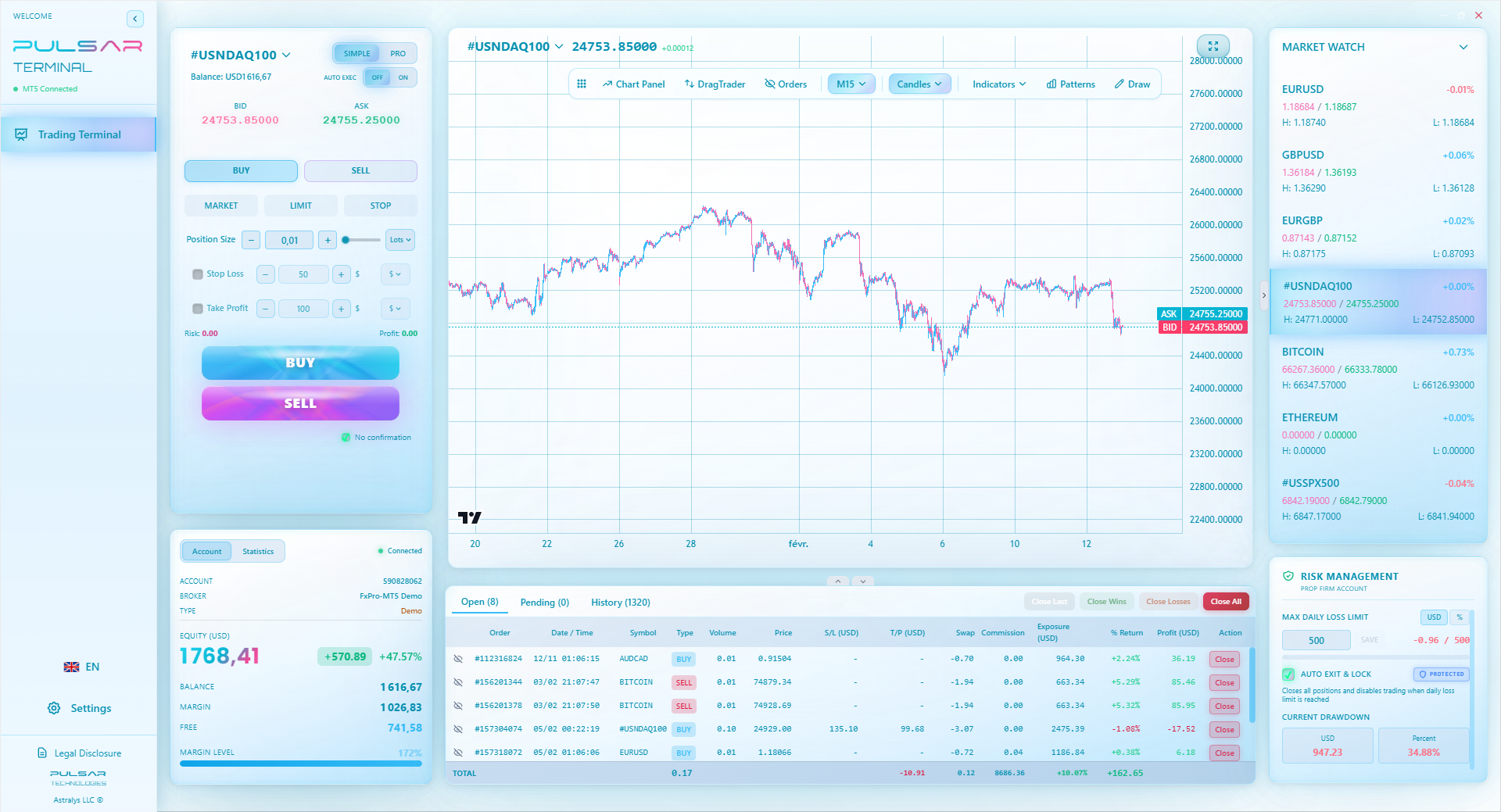
When you're paper trading and testing strategies, a tool like Pulsar Terminal lets you manage complex multi-TP/SL orders and set trailing stops on MT5, mimicking professional trade management from day one.
Pulsar Terminal
The all-in-one MT5 companion: drag-and-drop orders, multi-TP/SL, trailing stop, grid trading, Volume Profile, and prop firm protection. Used by 1,000+ traders daily.
Alright, maybe you're the type who needs structure. If you're determined to pay for a forex trading course in Chennai, use this checklist.
- Ask for the Legal Module: Request to see the syllabus section on Indian forex regulations (FEMA, SEBI, RBI). If it's vague or non-existent, reject it.
- Demand Real Trade Records: Don't accept cherry-picked screenshots. Ask for a verified, long-term track record of the educator's trades (including losses) in the USD-INR or other permissible pairs.
- Talk to Alumni: Get contact details for at least two former students. Ask them the hard questions: "Did you become consistently profitable? What wasn't covered? Would you do it again?"
- Check the Broker Talk: Listen carefully. Are they pushing you towards a specific offshore broker to trade EUR/USD? That's a major red flag given the legal risks.
- Trial or Money-Back: A confident educator might offer a short trial period or a satisfaction guarantee. Be wary of 'all sales final' policies.
Remember, you're not just buying information. You're buying curated, applicable, and legal information tailored for an Indian trader. That's the filter everything must pass through.

Example: Let's say a course costs 30,000 INR. Ask yourself: Is this better than spending 5,000 INR on a few key books, 5,000 INR on a strong trading journal subscription, and investing the remaining 20,000 INR as a tiny live trading capital to learn psychology? Often, the DIY route is more effective.
“Your choice of broker fundamentally shapes your trading journey. Don't let a course instructor make that choice for you based on their affiliate commission.”
This is the cliff many courses push you off. You finish the class, pumped up, and then you need a broker. This is where the legal rubber meets the road.
For 100% legal trading, you open an account with a SEBI-regulated Indian broker like Zerodha or Angel One. You'll trade USD-INR futures and options. The spreads might be wider than you see advertised for international forex, and the trading hours are tied to the Indian exchange schedule. But you can sleep at night.
The course should prepare you for this reality. They should teach you how to analyze these specific contracts.
Many courses, however, subtly (or not so subtly) point you towards international brokers like XM or IC Markets that accept Indian clients. They'll talk about tighter spreads on EUR/USD. What they won't talk about is the RBI's Alert List, the potential for regulatory action, or the fact that you're technically violating FEMA. I know traders who use these brokers, but they do so knowing the risks. A course that doesn't explicitly warn you about these risks is doing you a disservice.
Your choice of broker fundamentally shapes your trading journey. Don't let a course instructor make that choice for you based on their affiliate commission.
So, are forex trading courses in Chennai worth it? It depends, but mostly, no.
For a complete beginner with zero discipline, a good, legally-focused introductory course (in the 5,000-15,000 INR range) might provide structure and save you time. It can stop you from making catastrophic early mistakes. Think of it as paying for a guided tour of a minefield.
But for any course above 30,000 INR, the value proposition gets very shaky. You are often paying for hope, community, and the illusion of a shortcut. The advanced 'secrets' are usually just disciplined application of the basics combined with strong risk management - things you can and must learn on your own.
The harsh truth is this: trading success is about you. Your psychology, your discipline, your ability to handle uncertainty. No course can install that software in your brain. You have to write it yourself through experience, loss, and relentless self-honesty.
Invest your money first in a solid education on Indian regulations. Then invest your time in relentless practice. The market itself will be your most expensive and most effective teacher. Don't bankrupt yourself before you even get to class.
FAQ
Q1Is forex trading legal in India after taking a course in Chennai?
Yes, but only in a very specific way. You can legally trade currency derivatives (futures and options) involving the Indian Rupee (like USD-INR) on Indian exchanges (NSE, BSE) through SEBI-regulated brokers like Zerodha. Trading major international pairs like EUR/USD through offshore brokers is prohibited under FEMA. A good course must teach this distinction first.
Q2What is the average cost of a forex trading course in Chennai?
Costs vary wildly. A basic introductory workshop can be around INR 5,000. A standard diploma-style course typically ranges from INR 20,000 to INR 50,000. 'Advanced' mentorship or personal coaching can cost from INR 50,000 to over 1,00,000. Always compare the syllabus to free resources before paying a premium.
Q3Can I get a job after completing a forex trading course?
It's highly unlikely. These courses are aimed at retail, self-directed traders, not job placement. The finance industry hires based on degrees (like MBA, CFA) and experience, not certificates from local trading academies. The goal of the course should be to teach you to trade your own capital, not to get you employed.
Q4Do these courses provide trading signals?
Some do, especially the more expensive ones. Be extremely wary. Reliance on signals makes you dependent and prevents you from learning. Often, signal services are a way to keep you subscribed (and paying) monthly. A good course should teach you how to find your own trades, not feed you someone else's.
Q5What is the success rate of traders who take these courses?
There are no reliable public statistics, but the global success rate for retail traders is notoriously low, often estimated below 10%. A course doesn't change this statistic dramatically. Success depends almost entirely on the trader's subsequent discipline, risk management, and psychological fortitude, which a course can introduce but not guarantee.
Q6Should I choose an online or classroom course in Chennai?
Online offers more flexibility and potentially access to better global educators. Classroom courses might offer more direct interaction. The content and instructor quality matter far more than the delivery method. For either, insist on seeing detailed curriculum and proof of the instructor's legitimate, long-term trading acumen.
Prof. Winston's Lesson
Key Takeaways:
- ✓Indian forex rules are non-negotiable: trade only INR pairs on SEBI platforms.
- ✓Course costs range from 5k to 1L+ INR; high price rarely equals high value.
- ✓The biggest red flag is a guarantee of profits or a 'secret' indicator.
- ✓Self-education via demo trading and journals is 90% as effective.
- ✓A course's main job is to teach legal frameworks and risk management, not magic signals.
How useful was this article?
Click a star to rate
Weekly Trading Insights
Free weekly analysis & strategies. No spam.
About the Author
Rajesh Sharma
Senior Forex Analyst
Trading Indian and South Asian markets for over 10 years. Started with NSE currency derivatives before moving to international forex. Specializes in USD/INR and emerging market pairs.
Comments
Risk Disclaimer
Trading financial instruments carries significant risk and may not be suitable for all investors. Past performance does not guarantee future results. This content is for educational purposes only and should not be considered investment advice. Always conduct your own research before trading.
You Might Also Like

Cara Trading Forex Sukses: 7 Prinsip dari Trader Profesional
Cara trading forex sukses dengan 7 prinsip trader pro: manajemen modal, disiplin, journal trading, backtest. Data nyata, bukan janji profit palsu.
Jam Trading Forex Terbaik untuk Trader Indonesia: Panduan Lengkap dengan Tabel Waktu
Panduan jam trading forex untuk trader Indonesia. Tabel 4 sesi dunia, jam emas 20:00-00:00, sesi mana yang harus dihindari. Data akurat + tips dari trader berpengalaman.
Top 5 Sàn Forex Uy Tín Nhất 2026: Review Jujur dari Trader Indonesia
Top 5 sàn forex uy tín 2026 untuk trader Indonesia. Review jujur: spread, deposit, withdraw, dukungan lokal. Exness, XM, IC Markets & lebih.
Get Pulsar Terminal
All these calculators are built into Pulsar Terminal with real-time data from your MT5 account. One-click position sizing, automatic risk management, and instant calculations.
Get Pulsar Terminal