


I remember watching the USD/GHS chart in late 2022, my cursor hovering over the sell button as the Cedi was in freefall.

Olumide Adeyemi
West African Trading Pioneer
☕ 11 min read
What you'll learn:
- 1The Legal Landscape: What's Actually Allowed?
- 2Taxes and the Ghana Revenue Authority
- 3Choosing a Broker: Local vs. International
- 4Trading the Ghanaian Cedi (GHS)
- 5Market Hours and the Best Times to Trade
- 6Common Pitfalls (And How I Fell Into Them)
- 7Building a Ghana-Specific Trading Plan
- 8The Future: Regulation and Opportunity
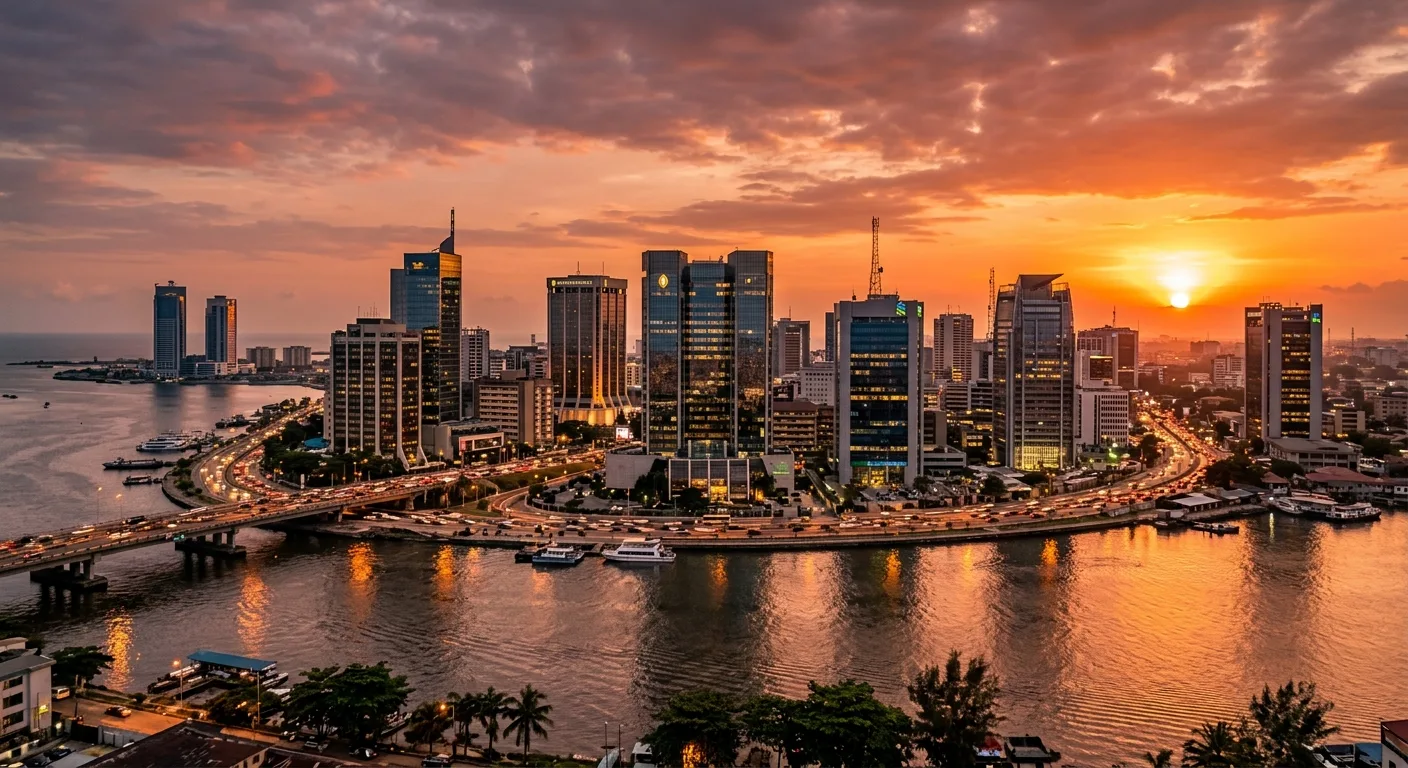
I remember watching the USD/GHS chart in late 2022, my cursor hovering over the sell button as the Cedi was in freefall. The rate had blown past 12, then 13. The news was full of inflation talk and IMF negotiations. I took a short position at 13.50, thinking it couldn't go much higher. Two weeks later, it hit 15.20. That trade taught me more about trading in Ghana than any book ever could - respect the local currency's volatility and understand the rules before you risk a pesewa. Let's talk about how to trade forex here, properly.
This is where most new Ghanaian traders get confused. Yes, forex trading is legal for you as an individual. No, there isn't a specific license for you to get from the Bank of Ghana (BoG) to trade on MetaTrader. The regulation is split, and it's crucial you know who does what.
The BoG is the big boss for the official financial system. They control the flow of foreign currency in and out of the country. They license the forex bureaus you see on the street and regulate the banks that trade in the interbank market. If a local company wants to act as a broker between banks, they need BoG approval and a hefty GHC 1.5 million in capital. These authorized dealers work on commission, not by widening the spread definition.
Where you come in is under the watch of the Securities and Exchange Commission (SEC). For years, it's been a bit of a grey area for retail traders like us. But things are changing. In August 2025, the SEC publicly said they're developing guidelines to regulate and license forex trading. By February 2026, they had a draft of their Digital Forex Trading Guidelines ready for industry feedback. This is huge. It means a proper framework to protect us from scams is coming.

Warning: The BoG's warnings are for businesses taking deposits. The SEC's warnings are about unlicensed investment schemes promising crazy returns. As a solo trader using an international platform, you're in a different category - but you still need to be smart.
The bottom line? Trading for yourself is fine. Running an unlicensed fund collecting money from friends and family to trade forex is very illegal and will get the SEC knocking.

💡 Winston's Tip
The Cedi's volatility isn't your enemy; it's a variable in your equation. Trade it with the same cold, calculated rules you'd use for the Japanese Yen. Sentiment is data, not a directive.
Let's not kid ourselves. If you make consistent money, the Ghana Revenue Authority (GRA) will want its share. This isn't a maybe; it's a when. Forex trading profits are treated as income.
You'll be taxed at the personal income tax rates, which can go up to 35% depending on your total income bracket. If you're trading through a registered company, that's a 25% corporate tax rate on profits. You must declare this income. I know traders who've tried to fly under the radar, but once you start withdrawing significant amounts to your local bank account, questions get asked.
Keep a detailed trading journal. I use a simple spreadsheet: date, instrument, entry, exit, profit/loss in USD, and the converted GHS value using the day's rate. It makes life easier come tax season. Think of it as part of your trading cost, just like the spread. Ignoring it is a great way to turn a profitable year into a stressful nightmare with penalties.
“Trading the Cedi taught me more about volatility than any textbook - respect it, but don't let familiarity breed recklessness.”
You won't find a local, BoG-licensed broker offering you a MetaTrader 5 account with 1:500 use. That's not their game. The local authorized dealers help big transactions between banks. For retail trading, you're looking at international brokers.
This is the most critical decision you'll make. Because the BoG doesn't regulate these offshore platforms, you have zero protection from them if the broker goes under. Your safety net is the broker's own regulator.
Look for Tier-1 Regulation
You want a broker licensed by a serious authority. Top picks include the UK's Financial Conduct Authority (FCA), the Australian Securities and Investments Commission (ASIC), or the Cyprus Securities and Exchange Commission (CySEC). These guys have strict rules about client fund segregation, which means your money is kept separate from the broker's operating cash.
Brokers That Work Well Here
From my experience and talking to other traders in Accra and Kumasi, these international brokers are popular for good reason:
| Broker | Strong Regulation | Key Benefit for Ghanaian Traders |
|---|---|---|
| XM Review | CySEC, ASIC, FSCA | Excellent local deposit/withdrawal support, solid educational resources. |
| Exness Review | CySEC, FSCA | Very competitive spreads, especially on majors like EUR/USD. |
| IC Markets Review | ASIC, CySEC | Raw spread accounts, great for high-volume or scalping strategy. |
| Pepperstone Review | ASIC, FCA, CySEC | Reliable execution, strong charting tools. |
Deposits and withdrawals are usually smooth. Most brokers accept bank wire transfers (though your bank might ask questions), and many work with popular e-wallets. Always test the withdrawal process with a small amount first.

Pro Tip: Don't get dazzled by crazy use offers from unregulated brokers. A 1:1000 account is a fast track to a margin call. Start with a well-regulated broker offering sensible use, like 1:100 or 1:200. Preservation of capital is rule number one.
Trading your own currency is a unique beast. You feel it. You see the price of imported rice go up, you hear the fuel price change on the news - that's the USD/GHS chart playing out in real life. This intimate knowledge is an edge, but also an emotional trap.
The Cedi is volatile. Political announcements, IMF program reviews, and Bank of Ghana FX intervention auctions move the market. In February 2026, the BoG even introduced new guidelines just for these interventions to manage volatility. You need to follow local financial news as closely as you watch your charts.
How to Approach USD/GHS (or EUR/GHS)
First, most of us don't trade it on our main forex broker. The liquidity and spreads can be wild. Instead, you might use Contracts for Difference (CFDs) on the currency's performance, or trade correlated assets. When the Cedi weakens, shares of multinational companies listed on the Ghana Stock Exchange that have dollar revenues can become interesting plays.
Second, never assume you know where it's going because you live here. My failed short at 13.50 is proof. I let the sentiment on the street cloud my technical analysis. The chart was still screaming bullish. Now, I might use a local event as a catalyst for a setup, but I always let the price action confirm it. A strong MACD indicator divergence on the daily chart is often more reliable than the latest political soundbite.
It's a fascinating pair, but treat it with more caution, not less, because you're close to it. Use a tight position size calculator and wider stops than you would on something like EUR/USD guide.
“The SEC's new guidelines aren't a barrier; they're a welcome mat for serious traders and a broom for the scammers.”
Ghana is on GMT, which works beautifully for forex. You don't have to destroy your sleep schedule to catch the good moves.
The sweet spot is between 1:00 PM and 5:00 PM Ghana time. This is when the London session is in full swing and the New York session opens. Overlap equals liquidity, and liquidity means tighter spreads and cleaner price movements. It's the best time for active strategies like scalping strategy.
If you're more of a swing trading person, the Asian session (which starts around 1:00 AM our time) can be useful for setting orders. The Tokyo session often sets the range for the day. I'll often place my pending orders for the London open before I go to bed, based on the Asian session action.
I made the mistake early on of trying to trade all sessions. I'd be up at 2 AM chasing a yen move, exhausted by noon, and then miss the perfect London setup. Pick your session based on your strategy and lifestyle. For most Ghanaians, the late afternoon is perfect - you can finish your day job and catch the most active market window.
💡 Winston's Tip
Your greatest edge in Ghana is discipline. While others chase overnight riches with crazy use, you compound steady, small gains. In a market fueled by speculation, the risk-averse survive.
Let me save you some money and stress by sharing my own missteps.
Pitfall 1: The "Get-Rich-Quick" Seminar Trap. Early on, I paid GHS 5,000 for a weekend "masterclass" from a self-proclaimed guru. He promised a secret indicator that never lost. It was junk. Real education is continuous, often free from broker webinars, and based on understanding price action, not magic bullets.
Pitfall 2: Over-leveraging the Cedi. I once used maximum use on a small USD/GHS trade, thinking "I know this one." A 50-pip move (pip definition) against me wiped out 20% of my account. The emotional connection to your home currency makes you reckless. Use half the use you think you need.
Pitfall 3: Ignoring Global Pairs. I was so focused on the Cedi I missed massive trends in XAU/USD guide (gold) and EUR/USD. The GHS pairs are niche. Your bread and butter should be the major and minor pairs where the liquidity is immense and the technicals play out more cleanly. Diversify your watchlist.
Pitfall 4: Poor Risk Management. This is the universal killer. I didn't use a stop-loss on a GBP/JPY trade because I was "sure" it would bounce. It didn't. I watched in horror as the loss grew from -1% to -15%. Now, I never enter a trade without a stop. Ever. It's non-negotiable.

Example: On a $1,000 account, risking 1% per trade means your max loss is $10. If your stop is 20 pips away on EUR/USD, your position size should be 0.05 lots. A position size calculator does this math instantly. Use it.
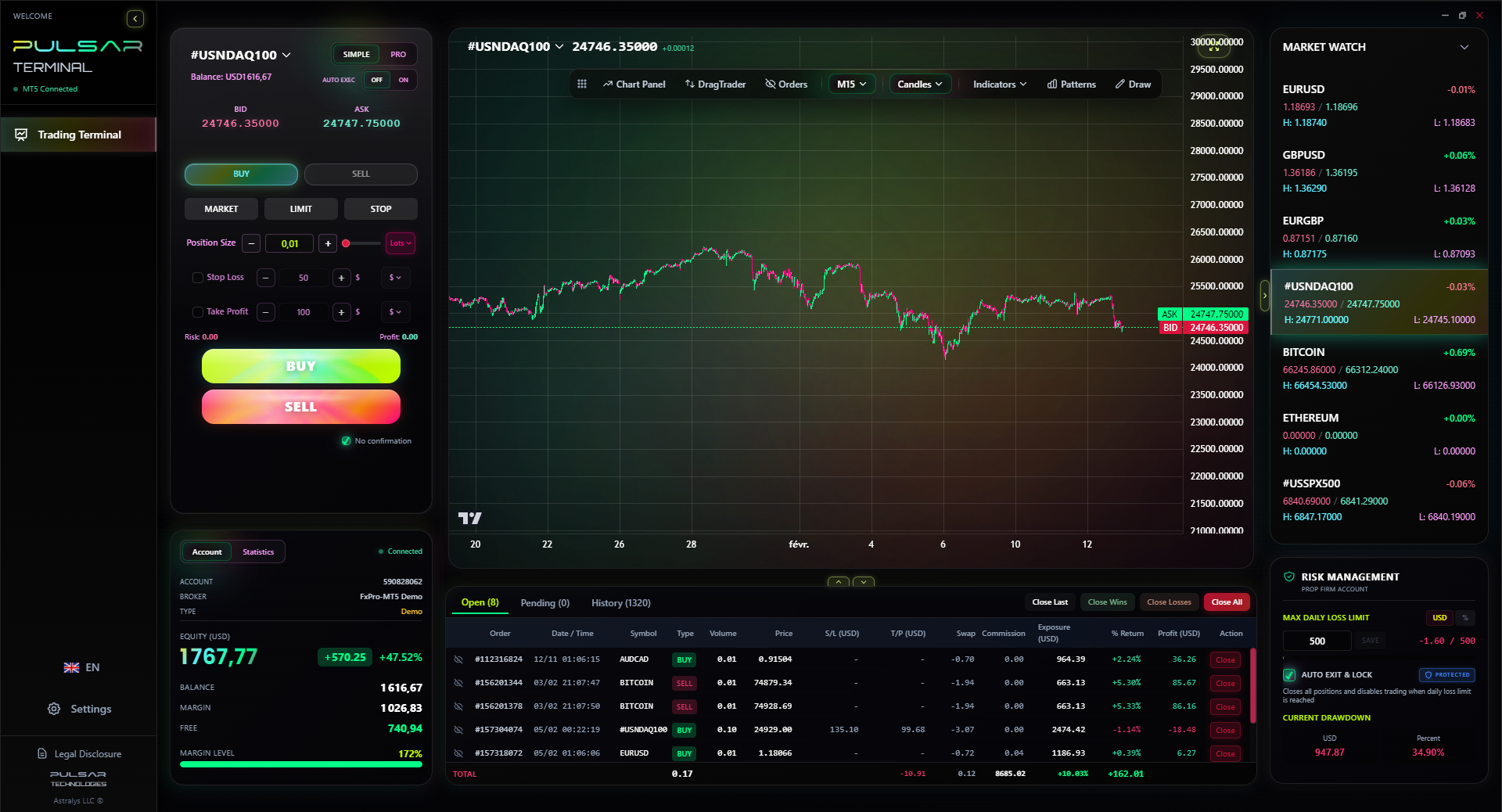
When a volatile Cedi move or a fast London session requires precise, rapid order management, a tool like Pulsar Terminal's drag-and-drop orders and one-click partial closures on MT5 turns execution from a chore into a reflex.
Pulsar Terminal
The all-in-one MT5 companion: drag-and-drop orders, multi-TP/SL, trailing stop, grid trading, Volume Profile, and prop firm protection. Used by 1,000+ traders daily.
“Your safety net isn't the Bank of Ghana; it's the FCA or ASIC stamp on your broker's license page.”
Your plan isn't just your strategy. It's your entire operating manual, tailored to our context.
- Capital & Broker: Start with capital you can truly afford to lose. Not your rent money, not your business capital. Open an account with a Tier-1 regulated broker like the ones mentioned. Verify your account fully to avoid withdrawal issues later.
- Strategy & Pairs: Will you scalp the London open on EUR/USD? Will you swing trade gold using the RSI indicator on the 4H chart? Choose one major strategy and 2-3 currency pairs to master. Include USD/GHS only if you have a specific, rules-based approach for its volatility.
- Risk Management: This is your plan's core. Mine is simple: 1% max risk per trade, stop-loss always placed, no more than 3 trades open at once. My weekly loss limit is 5%. If I hit it, I stop for the week. No arguments.
- Record Keeping & Taxes: Your journal must note the GHS equivalent of profits/losses. Set aside a portion of your profits monthly for tax obligations. Open a separate savings account for this if you have to.
- Continuous Learning: Follow the SEC's updates on their new forex guidelines. Attend reputable online seminars. The market changes, and so must you.
The goal is to remove emotion. When the power goes out (and it will), or the internet drops, your plan tells you what to do. Mine says: if you get disconnected, your stops are already set. Wait until you have stable connection before taking new trades. Simple.

The direction is clear. The SEC is moving to formalize the space. Their draft guidelines from early 2026 are a positive step. This isn't about stopping us from trading; it's about cleaning out the bad actors - the Ponzi schemes and unlicensed fund managers - to make the environment safer for serious retail traders.
For you, this means legitimacy is increasing. It may eventually mean using SEC-licensed local introducing brokers who partner with international firms. It will mean clearer paths for tax compliance. This maturation is good. It protects the community and helps separate gambling from actual trading.
My advice? Get your house in order now. Trade with a regulated international broker, keep clean records, and develop a real edge. When the formal framework lands, you'll be ahead of the curve, trading professionally while others are still scrambling to understand the new rules. The opportunity in forex trading in Ghana is real, but it belongs to the disciplined, the educated, and the patient.
FAQ
Q1Do I need a license from the Bank of Ghana to start forex trading?
No. As an individual trading your own capital on international platforms, you do not need a license from the BoG. The BoG licenses businesses like forex bureaus and interbank dealers. Your activity falls under the developing oversight of the Securities and Exchange Commission (SEC).
Q2How do I pay taxes on my forex trading profits in Ghana?
You must declare your net profits (total profits minus losses) as income to the Ghana Revenue Authority (GRA). These profits are added to your other income and taxed at the personal income tax rate, which can be up to 35%. It's crucial to keep detailed records of all trades for your tax filing.
Q3Is my money safe with an international forex broker?
It's safe only if the broker is properly regulated by a reputable authority like the UK's FCA or Australia's ASIC. These regulators require client funds to be held in segregated accounts. The Bank of Ghana cannot protect you if an unregulated offshore broker fails, so your due diligence is your first line of defense.
Q4What is the best time of day to trade forex in Ghana?
The most active and liquid time is between 1:00 PM and 5:00 PM Ghana time (GMT). This covers the overlap of the London and New York sessions, offering the best trading conditions with tighter spreads and stronger trends.
Q5Can I trade the Ghanaian Cedi (GHS) on my forex platform?
Often, not directly as a spot currency pair like USD/GHS on major retail platforms. However, you can frequently trade it as a CFD (Contract for Difference) based on its value, or trade correlated assets. The pair itself is extremely volatile and influenced heavily by local economic and political events.
Q6What's the biggest mistake new Ghanaian traders make?
Two stand out: 1) Over-leveraging, especially on Cedi-related trades, due to emotional familiarity, and 2) Using unregulated brokers or "signal services" that promise guaranteed returns. Both stem from a lack of foundational education in risk management and broker regulation.
Prof. Winston's Lesson
Key Takeaways:
- ✓Use Tier-1 regulated brokers (FCA, ASIC) exclusively.
- ✓Risk a maximum of 1% of capital on any single trade.
- ✓Trade the volatile London-NY overlap (1-5 PM Ghana time).
- ✓Set aside 25-35% of profits for GRA tax obligations.
How useful was this article?
Click a star to rate
Weekly Trading Insights
Free weekly analysis & strategies. No spam.
About the Author
Olumide Adeyemi
West African Trading Pioneer
One of Nigeria's most active forex trading educators. 8 years of experience trading from Lagos. Specializes in low-capital strategies and prop firm challenges for African traders.
Comments
Risk Disclaimer
Trading financial instruments carries significant risk and may not be suitable for all investors. Past performance does not guarantee future results. This content is for educational purposes only and should not be considered investment advice. Always conduct your own research before trading.
You Might Also Like

Cara Trading Forex Sukses: 7 Prinsip dari Trader Profesional
Cara trading forex sukses dengan 7 prinsip trader pro: manajemen modal, disiplin, journal trading, backtest. Data nyata, bukan janji profit palsu.
Jam Trading Forex Terbaik untuk Trader Indonesia: Panduan Lengkap dengan Tabel Waktu
Panduan jam trading forex untuk trader Indonesia. Tabel 4 sesi dunia, jam emas 20:00-00:00, sesi mana yang harus dihindari. Data akurat + tips dari trader berpengalaman.
Top 5 Sàn Forex Uy Tín Nhất 2026: Review Jujur dari Trader Indonesia
Top 5 sàn forex uy tín 2026 untuk trader Indonesia. Review jujur: spread, deposit, withdraw, dukungan lokal. Exness, XM, IC Markets & lebih.
Get Pulsar Terminal
All these calculators are built into Pulsar Terminal with real-time data from your MT5 account. One-click position sizing, automatic risk management, and instant calculations.
Get Pulsar Terminal