


My first 'big' trade was on GBP/JPY.

Olumide Adeyemi
West African Trading Pioneer ·  Nigeria
☕ 8 min read
What you'll learn:
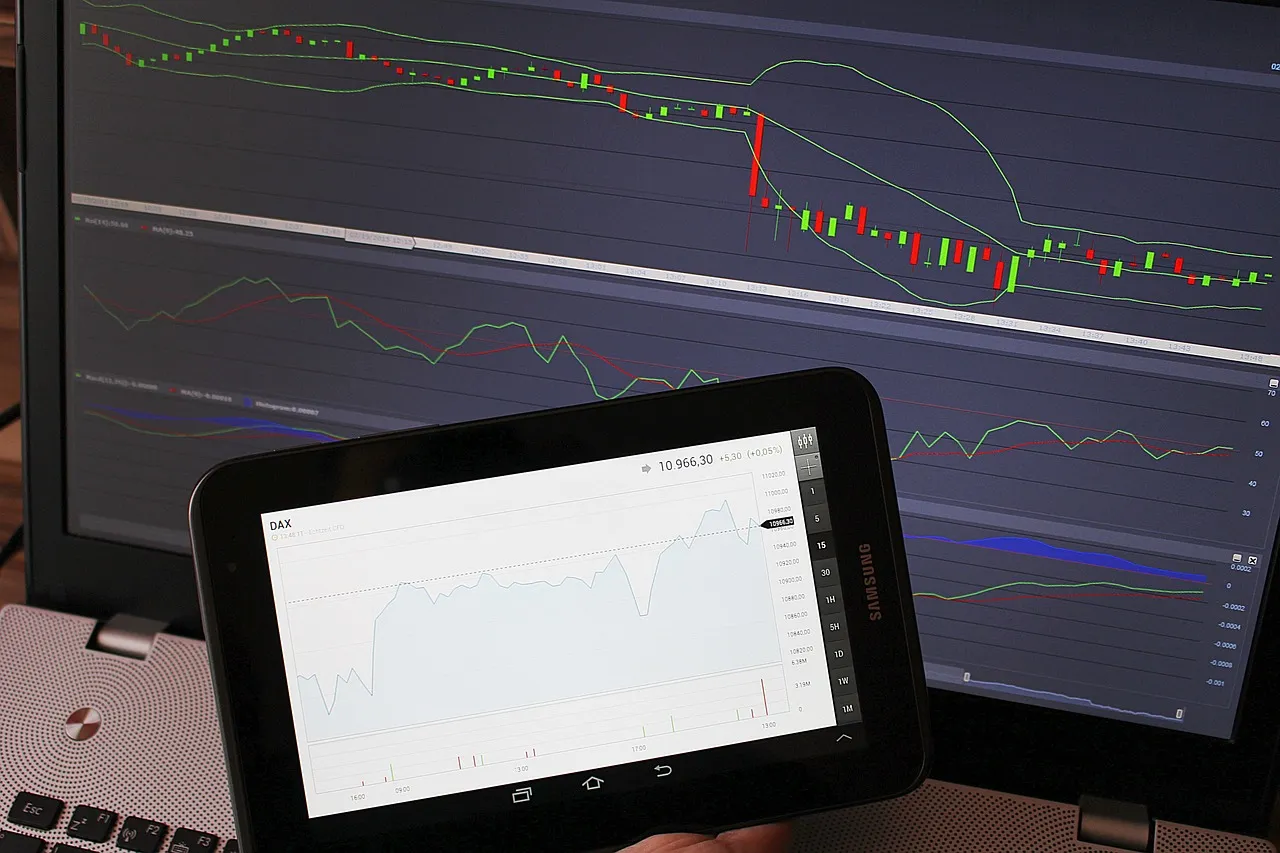
My first 'big' trade was on GBP/JPY. I'd watched a YouTube guru talk about a 'sure' breakout. I threw ₦500,000 into my account, used maximum use, and went all in. The pair moved 50 pips... against me. In less than an hour, I got a margin call and lost over ₦80,000. I was stunned. That loss, painful as it was, taught me the first and most crucial of all forex trading lessons for beginners: trading isn't about finding magic setups; it's about surviving long enough to let your good ideas work. Let's talk about how you can skip that expensive lesson and start on the right foot.
The biggest trap for new traders in Nigeria isn't a bad broker or a tricky indicator. It's the story we tell ourselves. We see flashy cars on Instagram from 'traders' and think this is a shortcut. It's not. It's a skilled profession.
I treated my first year like a part-time hustle I could master in a few months. That cost me money. Realistic forex trading lessons for beginners start with re-framing your goal. Your first goal isn't to make a million Naira. Your first goal is to not blow up your account. Your second goal is to achieve consistent, small gains.
Think of it like learning a trade. An apprentice welder isn't handed the critical pipeline job on day one. He practices on scrap metal. Your trading account is your scrap metal. Protect it.

Warning: Any mentor, group, or signal service promising guaranteed weekly returns of 20% or more is selling a fantasy. They profit from your subscription, not your trading success.
This mindset shift changes everything. It makes you patient. It makes you value a 2% gain that you planned for over a 10% gain that was pure luck. Luck isn't a strategy. A solid process is.
This is the core lesson. If you only take one thing from this guide, let it be this: you must control your risk on every single trade. My GBP/JPY disaster happened because I risked far too much of my capital on one idea.
The 1% Rule
A fundamental rule is to never risk more than 1% of your trading capital on a single trade. If you have a ₦100,000 account, that's ₦1,000 per trade. This isn't your potential loss in Naira value, it's the maximum your stop-loss should represent.
Let's say you're buying USD/NGN (though you'll likely trade major pairs like EUR/USD through an international broker). You decide your stop-loss is 50 pips away. You need to calculate your position size so that a 50-pip loss equals ₦1,000. A position size calculator is non-negotiable here. Doing this math manually before every trade engrains the discipline.
What a Stop-Loss Really Is
A stop-loss isn't a failure. It's a pre-paid insurance policy. It's the fee you're willing to pay to be wrong. Putting it on and walking away is a sign of strength, not weakness. I've left stops only to watch the market reverse and hit my take-profit without me. It stings, but it's better than the alternative: watching a loss spiral into a margin call that wrecks your account.

Example: Account: ₦200,000. Risk per trade: 1% = ₦2,000. Trading EUR/USD. Stop-loss distance: 30 pips. Pip value for a micro lot (0.01) is roughly ₦40. To lose ₦2,000 at 30 pips, you'd need a position where 30 pips * value = ₦2,000. Pip value needs to be ₦66.67. This means a position size of about 0.016 lots. You'd round down to 0.01 lots to be extra safe.

💡 Winston's Tip
Your first ten trades in a live account should be 1/10th your normal risk size. You're not testing the market; you're testing your own emotional response to real money.
“Your first goal isn't to make a million Naira. Your first goal is to not blow up your account.”
In Nigeria, you have two main paths: local brokers dealing in USD/NGN and international brokers offering global forex pairs. Most serious retail traders I know use the latter because of better regulation, tighter spreads, and access to more instruments.
When I started, I was dazzled by a 100% deposit bonus. What I didn't read were the crazy withdrawal conditions and the wide spreads that ate my profits. Your broker is your gateway to the market. If it's shaky, everything you build on top is unstable.
Look for:
- Strong Regulation: FCA (UK), ASIC (Australia), CySEC (Cyprus). This protects your funds.
- Low & Consistent Spreads: Check the typical spread on majors like EUR/USD during your trading hours. A difference of 0.3 pips adds up fast.
- Reliable Deposits/Withdrawals: Can you fund with your Nigerian card or bank transfer? How long do withdrawals take? Read recent reviews from other Nigerian traders.
Brokers like Exness, IC Markets, and XM are popular here for good reason. They've built a reputation for serving the African market reliably. Do your own research, but prioritize safety and execution over flashy sign-up offers.
The internet is flooded with thousands of indicators and complex systems. As a beginner, this is noise. Your job isn't to collect indicators like Pokémon cards. It's to find one simple, logical method and learn it inside out.
I spent months jumping from strategy to strategy. When one lost two trades in a row, I'd abandon it for the next shiny thing. I was always learning, never mastering. I was a perpetual beginner.
Pick one approach. It could be:
- Price Action: Trading support/resistance breaks or bounces. Just pure candlesticks on the chart.
- A Simple Indicator Combo: Like the RSI indicator for overbought/oversold levels combined with a key moving average for trend direction. Or the MACD indicator for momentum and crossovers.
Then, practice it in a demo account for at least 100 trades. Not 10, not 20. One hundred. Write down every trade: why you took it, your entry, stop, target, and the outcome. This trade journal will teach you more about your strategy and your own psychology than any course. You'll learn if your strategy works better for scalping quick pips or for swing trading over days.
“A stop-loss isn't a failure. It's a pre-paid insurance policy.”
You can have the best strategy in the world, but if you can't handle the emotions, you'll lose. Fear and greed are your real opponents.
Fear makes you move your stop-loss wider, turning a small loss into a catastrophic one. It makes you exit a winning trade too early because you're scared it will reverse.
Greed makes you add to a losing position, hoping it will turn around (it's called 'averaging down,' and it's a sure way to blow an account). It makes you risk 5% on a 'sure thing.'
The fix is mechanical discipline. Your trading plan, written down, is your anchor. It should state:
- Your daily loss limit (e.g., stop trading if you lose 3% of your account in a day).
- Your maximum position size.
- The exact conditions for entering and exiting a trade.
When you feel the emotion rising, you don't make a decision. You follow the plan. The plan was made by the calm, logical you. The emotional you is a terrible decision-maker.

Pro Tip: After a losing trade, close the platform. Go for a walk. Do not 'revenge trade' to win the money back immediately. That's when you make your second, bigger mistake.
💡 Winston's Tip
Print out your worst trade and pin it above your screen. Not to shame yourself, but to remember the cost of breaking your rules. That visual reminder is stronger than any promise you make to yourself.

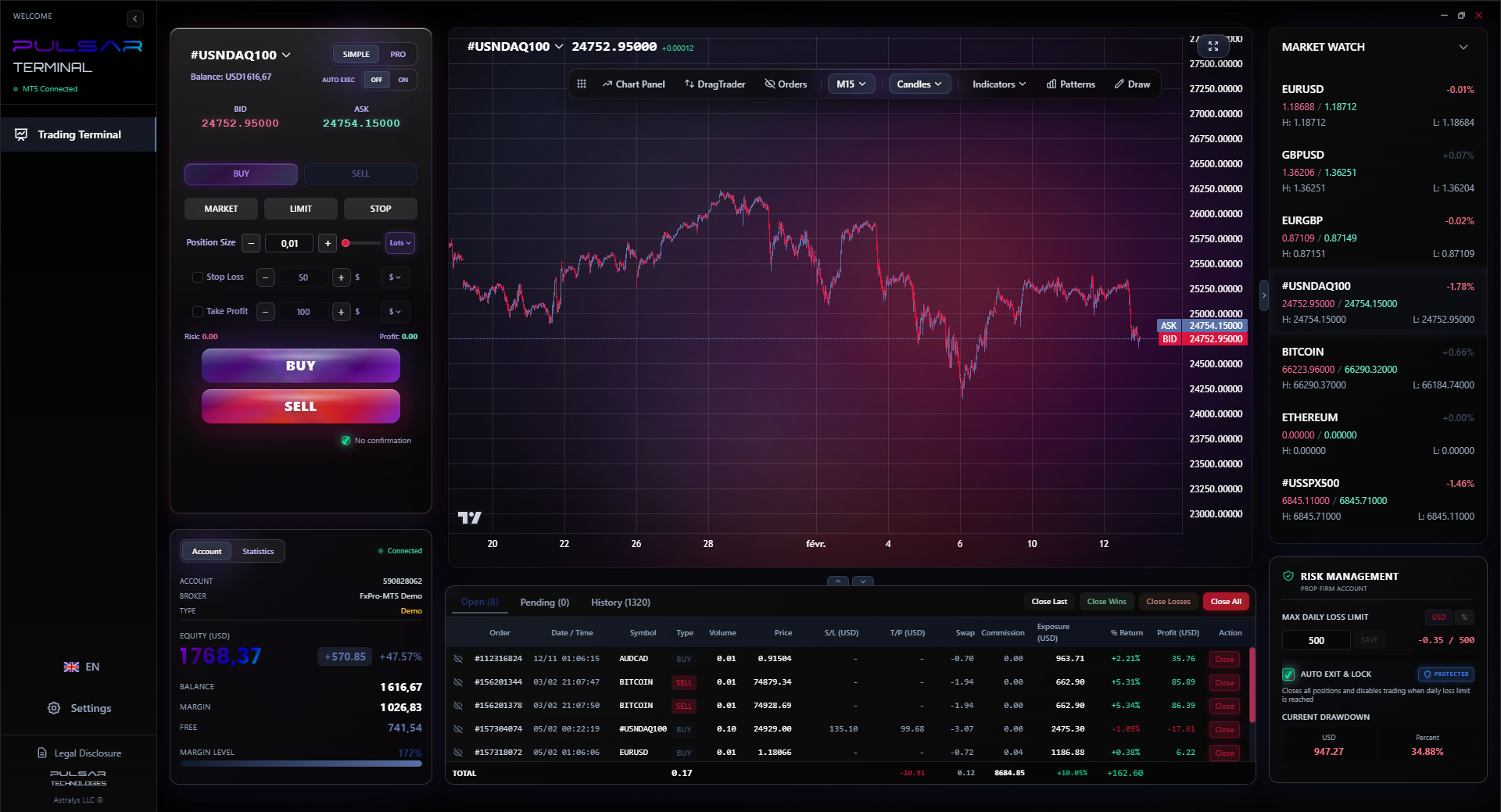
Managing the psychology of trade execution is easier when your tools let you set precise rules upfront, like Pulsar Terminal's drag-and-drop order system for MT5.
Pulsar Terminal
The all-in-one MT5 companion: drag-and-drop orders, multi-TP/SL, trailing stop, grid trading, Volume Profile, and prop firm protection. Used by 1,000+ traders daily.
Reading books and watching tutorials is essential, but it's like reading a manual on how to swim. You have to get in the water. The market has a feel to it.
Spend time just watching the charts with no intention of trading. Use a demo account to get this feel without risk. Notice how price reacts to news events (like US Non-Farm Payrolls). See how it respects certain price levels. Watch the speed of movement during the London open versus the Asian session.
One of my best early lessons came from trading Gold (XAU/USD). I learned it has a 'personality.' It's more volatile than EUR/USD, often makes sharp, sustained moves, and is sensitive to real-world fear. Trading it taught me about volatility management. You only learn this by observing and trading small.
Start with a demo, then move to a live account with the absolute minimum deposit. The goal of this first live account isn't profit. It's to feel the psychological difference between virtual and real money. That tension is the final teacher.
“When you feel the emotion rising, you don't make a decision. You follow the plan.”
Your education as a trader never stops. The market changes. But as a beginner, your learning must be focused, not scattered.
Year 1 Focus: Survival. Master your one strategy. Nail down your risk management. Build your trading journal. Aim for consistency, not huge returns.
Year 2 Focus: Refinement. Maybe you add a filter to your strategy. You might explore another time frame or instrument. You start to understand correlations.
Avoid the shiny object syndrome. That new AI-powered indicator won't save you. The core principles of price movement, supply/demand, and human psychology haven't changed in centuries.
Finally, find a community of serious traders, not hype men. People who talk about losses, risk, and journaling, not just screenshots of profits. This journey can be isolating; having a few people who understand the struggle makes a world of difference.
Remember, every professional trader you look up to was once a beginner who lost money. The difference is they learned the right forex trading lessons for beginners the hard way, built a process, and stuck to it through the tough times. You can choose to learn from their mistakes, and mine, instead.
FAQ
Q1How much money do I need to start forex trading in Nigeria?
You can start with as little as $10 (about ₦15,000) with some international brokers on a micro account. However, I strongly recommend starting with at least $100-200 (₦150,000-₦300,000). This gives you enough capital to practice proper position sizing and risk management without being wiped out by a few small losses. Remember, your first deposit is for learning, not for getting rich.
Q2Is forex trading legal and taxable in Nigeria?
Trading forex with international brokers is legal for Nigerians. You are engaging in an international financial market. Regarding tax, the situation can be unclear. Trading profits could be considered taxable income. It's crucial to keep detailed records of all your trades, deposits, and withdrawals. For definitive advice on your tax liability, consult a qualified Nigerian accountant or tax advisor, not people on social media.
Q3What's the best time to trade forex from Nigeria?
The most volatile and liquid sessions are the London session (8 AM - 5 PM GMT, which is 9 AM - 6 PM Nigerian time) and the overlap with the New York session (1 PM - 5 PM GMT, 2 PM - 6 PM Nigerian time). This is when you'll see the most movement and the tightest spreads. The Asian session (11 PM - 8 AM GMT) is typically quieter.
Q4Can I really make a living from forex trading in Nigeria?
A small percentage of traders do, but it takes years of dedication, disciplined saving of capital, and strong risk management. It's not a guaranteed income. Your first goal should be to generate consistent supplemental income. Think of it as building a skilled profession. Don't quit your job until your trading profits have consistently exceeded your salary for at least 12-18 months and you have a large financial cushion.
Q5How do I avoid forex scams in Nigeria?
Avoid any person or company that: 1) Guarantees profits. 2) Asks you to send money directly to a personal account for 'managed trading.' 3) Pressures you to invest quickly. 4) Operates without clear regulatory oversight. Only deposit funds into a regulated broker's account in the company's name. If someone can't explain drawdowns and risks, they're a marketer, not a trader.
Q6Should I use a VPN to trade forex?
Most reputable international brokers accept clients from Nigeria, so a VPN is usually unnecessary for access. In fact, using a VPN to disguise your location to open an account is against most brokers' terms of service and can lead to your account being frozen and funds withheld. Always be truthful about your country of residence during registration.
Prof. Winston's Lesson
Key Takeaways:
- ✓Never risk more than 1% of capital per trade.
- ✓Master one strategy over 100 demo trades.
- ✓Psychology, not strategy, causes 80% of failures.
- ✓Choose brokers for regulation, not bonuses.
How useful was this article?
Click a star to rate
Weekly Trading Insights
Free weekly analysis & strategies. No spam.
About the Author
Olumide Adeyemi
West African Trading Pioneer
One of Nigeria's most active forex trading educators. 8 years of experience trading from Lagos. Specializes in low-capital strategies and prop firm challenges for African traders.
Comments
Risk Disclaimer
Trading financial instruments carries significant risk and may not be suitable for all investors. Past performance does not guarantee future results. This content is for educational purposes only and should not be considered investment advice. Always conduct your own research before trading.
You Might Also Like

Cara Trading Forex Sukses: 7 Prinsip dari Trader Profesional
Cara trading forex sukses dengan 7 prinsip trader pro: manajemen modal, disiplin, journal trading, backtest. Data nyata, bukan janji profit palsu.
Jam Trading Forex Terbaik untuk Trader Indonesia: Panduan Lengkap dengan Tabel Waktu
Panduan jam trading forex untuk trader Indonesia. Tabel 4 sesi dunia, jam emas 20:00-00:00, sesi mana yang harus dihindari. Data akurat + tips dari trader berpengalaman.
Top 5 Sàn Forex Uy Tín Nhất 2026: Review Jujur dari Trader Indonesia
Top 5 sàn forex uy tín 2026 untuk trader Indonesia. Review jujur: spread, deposit, withdraw, dukungan lokal. Exness, XM, IC Markets & lebih.
Get Pulsar Terminal
All these calculators are built into Pulsar Terminal with real-time data from your MT5 account. One-click position sizing, automatic risk management, and instant calculations.
Get Pulsar Terminal