


Here's a fact that might surprise you: over 90% of the 'forex trading PDF for beginners' files circulating on Ghanaian WhatsApp and Telegram groups contain dangerously outdated or outright false information.

Olumide Adeyemi
West African Trading Pioneer
☕ 11 min read
What you'll learn:
- 1Why Most Free PDFs Are Dangerous (And What to Look For)
- 2Legal & Tax Rules Every Ghanaian Trader Must Know
- 3Building Your Ghana-Friendly Trading Plan (The PDF Blueprint)
- 4Picking a Broker & Funding Your Account (The Practical Stuff)
- 5From Charts to First Trade: A Simple Framework
- 6Common Pitfalls (And How I Fell Into Them)
- 7Your Next Steps: Beyond the PDF
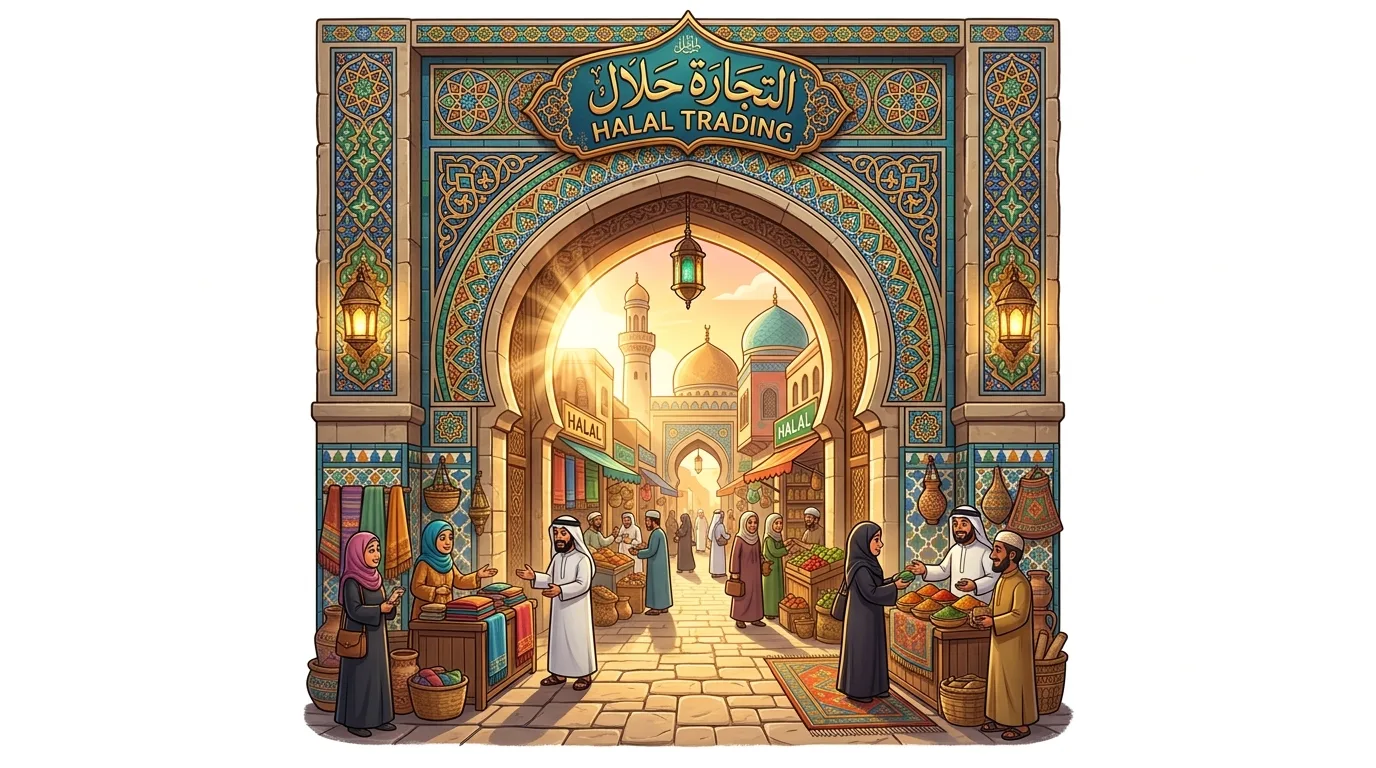
Here's a fact that might surprise you: over 90% of the 'forex trading PDF for beginners' files circulating on Ghanaian WhatsApp and Telegram groups contain dangerously outdated or outright false information. I've seen PDFs from 2018 being passed off as new, with strategies that would blow up an account in today's market. The truth is, finding a reliable, Ghana-specific guide is tough. This isn't just another article. Consider this your foundational PDF, written for the Ghanaian trader in 2026, covering everything from the Bank of Ghana's latest rules to how you actually pay taxes on your profits.
Let's be honest. We've all been in that WhatsApp group where someone drops a 'life-changing' forex PDF. The title is always something dramatic. You download it, and within five pages, you realize it's generic junk copied from some 2010 website, probably written by someone who's never traded a live account.
The biggest red flag? No mention of Ghana. If a guide doesn't talk about the Ghanaian Cedi (GHS), local payment methods like mobile money, or the regulatory stance of the Bank of Ghana (BoG), it wasn't made for you. It was made for a global audience, which means it misses the specifics that matter most to your trading reality.
A proper forex trading pdf for beginners for a Ghanaian should answer these questions right up front:
- Is this legal here? (Answer: Yes, but with caveats).
- How do I get my money in and out with a broker like Exness or XM?
- What's the deal with taxes on trading profits for the Ghana Revenue Authority (GRA)?

Warning: I once followed a 'scalping strategy' from a PDF that advocated for 50-pip stops on EUR/USD. It failed to account for spread widening during the London open. I lost 2.3% of my account in one trade because the 'guru' who wrote it didn't understand basic execution. Test every piece of advice, especially from free sources.
Look for PDFs or guides that reference recent events. If it doesn't mention the SEC's ongoing push to regulate forex (announced August 2025) or the BoG's revised FX position limits from February 2026, it's ancient history. The market evolves, and so should your education.

💡 Winston's Tip
A plan you don't follow is just a piece of paper. The real test isn't writing the rules, it's obeying them when your last three trades were losses.
“Finding a reliable, Ghana-specific guide is tough. Consider this your foundational PDF.”
This is the boring but critical stuff nobody in the Telegram groups wants to talk about. Getting this wrong can cost you more than a bad trade.
The Regulatory Grey Area
Forex trading is legal in Ghana. Full stop. However, the online retail forex trading you and I do - through MT5 on our phones - exists in a bit of a grey area. The Bank of Ghana (BoG) regulates banks and forex bureaus. The Securities and Exchange Commission (SEC) Ghana regulates securities. But as of today, there's no specific body that solely licenses and oversees the international brokers we use, like IC Markets or Pepperstone.
This means you have limited formal protection if something goes wrong with your broker. That's why choosing a broker with strong international regulation (like FSCA, ASIC, CySEC) is non-negotiable. The BoG has repeatedly warned against unlicensed forex activity within Ghana, so you're operating in a space that's permitted but not yet fully formalized. That's changing, though. The SEC announced in August 2025 that it's developing guidelines to regulate and license forex traders directly. Keep an eye on that.
The Tax Reality
Here’s where I made a costly mistake early on. I assumed my trading profits were somehow 'off the books.' They aren't. The Ghana Revenue Authority (GRA) considers forex trading profits as income. You are legally required to declare this income.
Personal income tax rates are progressive, from 0% up to 35%. If you trade through a registered company, corporate tax is a flat 25%. I'm not a tax advisor, but I learned the hard way to keep careful records of every trade - profit and loss. When you start making consistent money, this becomes your new homework. Ignoring it is an audit waiting to happen.

Example: Let's say you make a net profit of GHS 50,000 in a year from trading. This income falls into the tax brackets. After personal reliefs, a significant portion could be taxed at rates between 25-30%. That's a big chunk you need to plan for, not discover later.
“Your first goal isn't to make 100% return. Your first goal is to survive for 6 months.”
A trading plan isn't a fancy document. It's a set of rules that stops you from self-destructing when emotions run high. Your plan must account for your context: your capital in Cedis, your internet reliability, and the times you can actually trade.
Your Market & Session Schedule
You're in Ghana. The most liquid trading window is the London/New York overlap, which is from about 2 PM to 5 PM Ghana time. That's when spreads are tightest and moves can be explosive. It's perfect for a scalping strategy if that's your style. The Asian session (Tokyo) runs in our early morning, which is often quieter and better for studying charts or planning swing trading setups.
What pairs should you focus on? Start with the majors: EUR/USD, GBP/USD, USD/JPY. They have the tightest spreads and most predictable behavior. I'd avoid exotic pairs like USD/GHS (if you can even find it) as a beginner. The spreads are massive, and the volatility can be brutal and news-driven.
Risk Management: Your Survival Kit
This is the core of any worthwhile forex trading pdf for beginners. Your number one job is to not blow up your account.
- Risk per Trade: Never risk more than 1-2% of your account balance on a single trade. On a GHS 5,000 account, that's GHS 50-100. Use a position size calculator religiously.
- Stop-Losses: Always use one. Every single trade. No debate. A stop-loss is your pre-accepted cost of being wrong. Placing it is a professional habit.
- Understand use: Just because your broker offers 1:500 doesn't mean you should use it. High use amplifies both gains and losses. I started with 1:50 and never looked back. It forces you to be more selective with your trades.

Pro Tip: Your first goal isn't to make 100% return. Your first goal is to survive for 6 months without a margin call. Consistency over months proves your plan works more than one lucky week ever will.

“Your first goal isn't to make 100% return. Your first goal is to survive for 6 months.”
You can't trade without a broker. But you can't just pick any flashy one you see on Instagram.
The Broker Checklist for Ghana
- International Regulation: This is your safety net. Look for brokers licensed by the FSCA (South Africa), ASIC (Australia), or CySEC (Cyprus). These regulators have strict client fund protection rules. Our own XM review and Exness review detail their regulatory standings.
- Accepts Ghanaian Clients: This seems obvious, but not all do. The big international names usually do.
- Local Payment Methods: This is huge. Can you deposit and withdraw easily via mobile money (MoMo) or direct bank transfer in GHS? If funding is a 3-day headache involving international wire fees, it's a bad fit. Brokers catering to Africa typically have these options.
- Trading Conditions: Look at the average spread on EUR/USD. Under 1.5 pips is decent for a standard account. Check swap fees if you hold trades overnight.
A Word on Minimum Deposits
Many brokers offer accounts you can start with as little as $10 or $50. That's fine for learning the platform. But be realistic. To properly implement a trading plan with sensible position sizing, you'll need more. Trying to trade a $50 account with 1% risk means your position sizes are microscopic, and the psychological pressure is immense.
My first funded account was $200. It felt like a fortune at the time. I used it to practice my plan in a live environment where the money was real, but the stakes weren't life-changing. I still use a demo account to test new ideas, but there's no substitute for the focus real money brings.
💡 Winston's Tip
Your first 100 trades are for data collection, not for getting rich. Treat each one as an experiment where the outcome - win or loss - teaches you something.
“The market doesn't owe you opportunities. Wait for the high-probability ones.”
Okay, you have a broker, you understand the rules. Now, how do you actually find a trade? Let's strip it down to a basic, repeatable framework. This is the 'strategy' section that should be in every forex trading pdf for beginners.
Step 1: The Big Picture (Trend)
Don't jump into the 1-minute chart. Start on the 4-hour or daily chart. Is the price generally making higher highs and higher lows (uptrend), or lower highs and lower lows (downtrend)? Your first rule: trade in the direction of the trend. It increases your odds. Fighting the trend is a quick way to lose money.
Step 2: The Entry Zone (Support & Resistance)
Zoom in to the 1-hour chart. Look for key price levels where the market has reversed before - these are support (floor) and resistance (ceiling) levels. In an uptrend, look for price to pull back to a support level. That's your potential entry zone.
Step 3: The Trigger (A Simple Indicator)
You need a signal to tell you the pullback might be over. This is where a basic indicator comes in. The RSI indicator is a good start. In an uptrend pullback to support, you might look for the RSI to dip near 30 (oversold) and then start curling back up. Or, use the MACD indicator to see if momentum is shifting back in the trend's direction.
Step 4: Execute Your Plan
You see your setup. Now, apply your trading plan rules:
- Entry: Buy at market or just above your identified support.
- Stop-Loss: Place it below the recent swing low (for a buy). This defines your risk (R).
- Take-Profit: Aim for a reward of at least 1.5x your risk (1.5R). You can use the next resistance level as a guide.
Here's a real, simple example from my journal: I bought EUR/USD at 1.0850 after a pullback to a clear 4-hour support. My stop was at 1.0820 (30 pips risk). My target was 1.0900 (50 pips reward). That's a 1.67 R:R. The trade worked, hitting my target. The profit wasn't massive, but it was a clean execution of my plan. I've had plenty that hit my stop, too. That's the game.
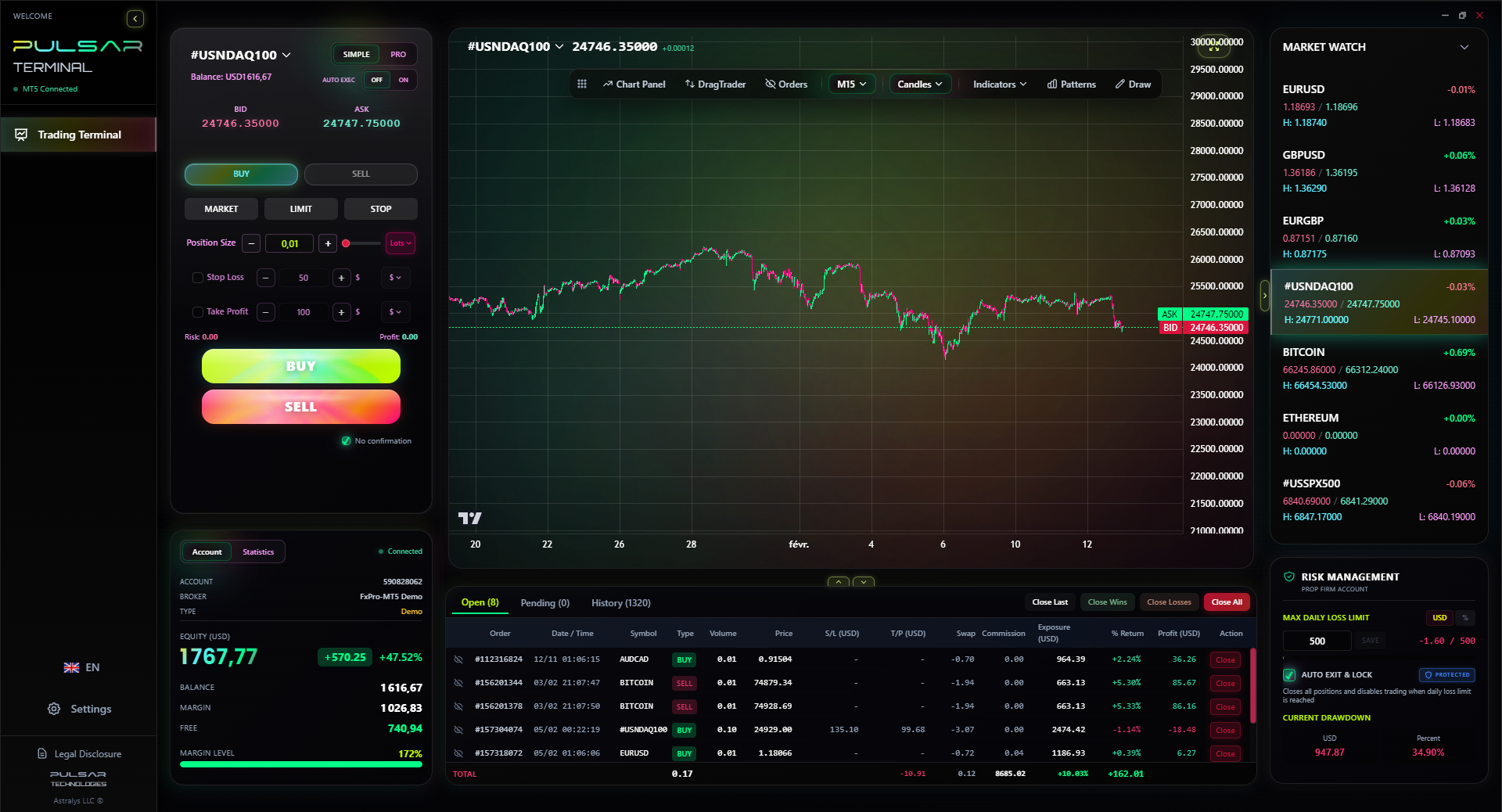
Executing a clean trading plan with precise stop-loss and take-profit levels is easier with tools that let you manage risk directly on your chart, like Pulsar Terminal's drag-and-drop order tools for MT5.
Pulsar Terminal
The all-in-one MT5 companion: drag-and-drop orders, multi-TP/SL, trailing stop, grid trading, Volume Profile, and prop firm protection. Used by 1,000+ traders daily.
“The market doesn't owe you opportunities. Wait for the high-probability ones.”
Let me save you some pain and Cedis by sharing my own blunders.
Pitfall 1: Overtrading. This is the beginner's disease. No good setup? You trade a mediocre one anyway because you're bored or want to 'make back' a loss. I once took 12 trades in a day, forcing setups that weren't there. Result: 8 losses, 4 tiny wins, net loss of 5% of my account. The market doesn't owe you opportunities. Wait for the high-probability ones.
Pitfall 2: Ignoring Economic News. The Ghanaian market closing doesn't matter; the forex market is 24/5. Major news like US Non-Farm Payrolls or ECB decisions cause massive volatility. I learned this when I was in a trade during a Fed announcement. The spread on GBP/USD widened from 1.2 pips to over 20 pips in a second, and my stop-loss was executed at a much worse price than I set - a phenomenon called slippage. Now, I check an economic calendar and avoid trading 15 minutes before and after major news releases.
Pitfall 3: The 'Holy Grail' Mentality. There is no secret indicator or strategy that prints money. Anyone selling you a '100% win rate' system is lying. Sustainable trading is about probability and risk management, not magic. I wasted months and money chasing this illusion.
Pitfall 4: Going It Alone. Trading can be isolating. Find a community - not a signal-pumping Telegram group, but a place where people discuss analysis and psychology. Learning from others' perspectives is useful. Just remember, you are responsible for every click of the buy/sell button.
💡 Winston's Tip
The market doesn't know you exist. It has no emotion, no memory of your last win, and no intention to pay your bills. Trade the price, not your hopes.
“Sustainable trading is about probability and risk management, not magic.”
Think of this guide as your chapter one. Where do you go from here?
- Open a Demo Account: Pick one of the brokers we discussed and practice the framework for at least a month. Treat the virtual money like it's real. Your goal is stringing together weeks of consistent, plan-following execution, not hitting a jackpot.
- Journal Religiously: For every trade, note: date, pair, entry/exit, reason for entry, emotional state, outcome. Review weekly. Your journal will tell you more about your weaknesses than any guru ever could.
- Start Small: When you go live, fund your account with money you can afford to lose completely. The psychological pressure is different. Your first live goal is emotional control, not profit.
- Keep Learning: The market changes. What worked last year might not work next year. Read books on trading psychology (like 'Trading in the Zone'). Learn about different market structures. A solid understanding of the Volume Profile tool, for instance, can add a powerful layer to your analysis.
The journey is long, and honestly, most give up. But if you focus on process over profits, education over excitement, and risk management over get-rich-quick schemes, you give yourself a real fighting chance. Welcome to the markets.
FAQ
Q1Is forex trading legal and safe in Ghana?
Yes, it's legal. However, 'safe' depends on you. There's no specific Ghanaian regulator for the international retail brokers we use, so your main protection comes from choosing a broker with strong international regulation (like FSCA or ASIC). The trading itself carries inherent risk of loss.
Q2How much money do I need to start forex trading in Ghana?
Technically, you can start a demo account with $0. For a live account, some brokers accept as little as $10. Realistically, to trade properly with sensible risk management (e.g., 1% risk per trade), a starting capital of at least GHS 2,000-5,000 is more practical. Never trade with money you can't afford to lose.
Q3Do I pay tax on my forex trading profits in Ghana?
Yes. The Ghana Revenue Authority (GRA) considers trading profits as taxable income. You are required to declare this income, and it will be taxed at the applicable personal income tax rates (0-35%). Keep detailed records of all your trades.
Q4What is the best time to trade forex in Ghana?
The most active and liquid time is the London and New York session overlap, from about 2:00 PM to 5:00 PM Ghana Time. This is when you'll typically find the best trading conditions for major pairs like EUR/USD.
Q5Which forex broker is best for beginners in Ghana?
There's no single 'best,' but look for brokers that: 1) Are internationally regulated, 2) Accept Ghanaian clients, 3) Offer local payment methods (e.g., mobile money), and 4) Have user-friendly platforms like MT4/MT5. Brokers like XM, Exness, and IC Markets are popular choices worth researching.
Q6Can I use mobile money to fund my forex trading account?
Often, yes. Many international brokers catering to the African market have integrated local payment solutions, including mobile money (like MTN MoMo) and direct bank transfers in GHS. This is a key feature to check when choosing your broker.
Q7What's the biggest mistake I should avoid as a beginner?
Overtrading and poor risk management. Don't trade just to be in the market. Wait for your setup. And never, ever risk more than 1-2% of your account on a single trade. Protecting your capital is more important than making a profit on any given day.
Prof. Winston's Lesson
Key Takeaways:
- ✓Risk a maximum of 2% per trade, always.
- ✓Trade with the trend on higher timeframes.
- ✓Choose brokers with FSCA or ASIC regulation.
- ✓Declare all trading profits to the GRA.
- ✓The London/NY overlap (2-5 PM local) is prime time.
How useful was this article?
Click a star to rate
Weekly Trading Insights
Free weekly analysis & strategies. No spam.
About the Author
Olumide Adeyemi
West African Trading Pioneer
One of Nigeria's most active forex trading educators. 8 years of experience trading from Lagos. Specializes in low-capital strategies and prop firm challenges for African traders.
Comments
Risk Disclaimer
Trading financial instruments carries significant risk and may not be suitable for all investors. Past performance does not guarantee future results. This content is for educational purposes only and should not be considered investment advice. Always conduct your own research before trading.
You Might Also Like

Cara Trading Forex Sukses: 7 Prinsip dari Trader Profesional
Cara trading forex sukses dengan 7 prinsip trader pro: manajemen modal, disiplin, journal trading, backtest. Data nyata, bukan janji profit palsu.
Jam Trading Forex Terbaik untuk Trader Indonesia: Panduan Lengkap dengan Tabel Waktu
Panduan jam trading forex untuk trader Indonesia. Tabel 4 sesi dunia, jam emas 20:00-00:00, sesi mana yang harus dihindari. Data akurat + tips dari trader berpengalaman.
Top 5 Sàn Forex Uy Tín Nhất 2026: Review Jujur dari Trader Indonesia
Top 5 sàn forex uy tín 2026 untuk trader Indonesia. Review jujur: spread, deposit, withdraw, dukungan lokal. Exness, XM, IC Markets & lebih.
Get Pulsar Terminal
All these calculators are built into Pulsar Terminal with real-time data from your MT5 account. One-click position sizing, automatic risk management, and instant calculations.
Get Pulsar Terminal