


Here's a number that should grab your attention: the UK's Capital Gains Tax allowance was cut in half for the 2024/25 tax year, dropping from £6,000 to just £3,000.

Sarah Collins
Trading Strategist ·  United Kingdom
☕ 11 min read
What you'll learn:
- 1The Big Question: Are You an Investor or a Business?
- 2Capital Gains Tax (CGT) for Forex Traders
- 3The UK's Secret Weapon: Tax-Free Spread Betting
- 4When Forex Becomes Your Business: Income Tax
- 5Keeping Records & Not Getting a Shock
- 6Broker Choice & Regulatory Safety (FCA)
- 7Mistakes I Made (So You Don't Have To)

Here's a number that should grab your attention: the UK's Capital Gains Tax allowance was cut in half for the 2024/25 tax year, dropping from £6,000 to just £3,000. That means more of your trading profits are potentially taxable, sooner. I learned about forex trading tax the UK way - through a confusing letter from HMRC after my first profitable year. The rules aren't straightforward, and getting them wrong is expensive. This guide isn't legal advice, but it's the honest, practical breakdown I wish I'd had, covering everything from spread betting's tax-free status to when HMRC might decide you're running a business.
This is where most traders get tripped up. HMRC doesn't have a special 'forex trader' box. They fit you into existing categories, and which one you land in changes everything. It all comes down to their infamous 'badges of trade'.
If your trading looks like a hobby or casual investment, profits are likely subject to Capital Gains Tax (CGT). Think of this as the 'default' for most retail traders using CFDs or spot forex. You get an annual tax-free allowance (more on that later), and only pay tax on gains above it.
But, if your activity has the hallmarks of a business, you'll be slapped with Income Tax and possibly National Insurance. HMRC looks for patterns: Are you trading daily? Is it your main source of income? Do you use sophisticated, systematic methods? Are you seeking profit from short-term market movements rather than long-term investment?
I had a scary moment in year three. My trading frequency had ramped up, and my account was my primary income. My accountant sat me down and said, 'Mate, with this volume and consistency, HMRC could easily argue this is a trade.' We had to restructure. The difference is massive: CGT rates top out at 20%, while Income Tax can hit 45% plus National Insurance.

Warning: Don't assume you're automatically under CGT. If you're trading full-time with a significant bankroll, get professional advice. HMRC's view can change as your activity evolves.
“The UK's Capital Gains Tax allowance was cut in half for the 2024/25 tax year, dropping from £6,000 to just £3,000.”
Let's break down CGT with real, current numbers. This is the regime most part-time and many active retail traders will fall under.
The Tax-Free Allowance & Rates
For the 2024/25 tax year, your annual exempt amount is £3,000. Any net gains (total profits minus total losses) below this are tax-free. Above it, you pay:
- 10% if you're a basic-rate taxpayer.
- 20% if you're a higher or additional-rate taxpayer.
That halving of the allowance from £6,000 is a big deal. In 2023, I had a £5,800 net gain. It was completely tax-free. This year, £3,000 of that would be exempt, and I'd pay 20% on the remaining £2,800 - a £560 tax bill.
Calculating Your Gain or Loss
It's not just about your account balance on April 5th. You need to calculate the profit or loss on every closed trade. Keep careful records. Your broker's statements are crucial, but they're not a substitute for your own log.
You can offset losses against gains. A brutal truth: I had a £15,000 loss in one terrible month during the 2022 volatility. The only silver lining was carrying that loss forward to offset against future profits, reducing my CGT bill for two years after.

Example: Let's say in a tax year, you make 100 trades. 60 are winners totalling £8,000 in profit. 40 are losers totalling £2,000 in loss. Your net gain is £6,000. Deduct your £3,000 allowance. Your taxable gain is £3,000. If you're a higher-rate taxpayer, you owe 20% of £3,000 = £600 in CGT.
Remember, this applies to profits from trading forex CFDs and spot forex. It's why understanding your position size calculator is so critical - overtrading can push you over the allowance quickly.

💡 Winston's Tip
Your first £3,000 in net profit each year is your 'tax-free runway'. Plan your trading size to use it wisely, but never trade just to hit a tax target.
“Spread betting is the single biggest advantage UK-based traders have.”
This is the single biggest advantage UK-based traders have. Financially spread betting is considered gambling by HMRC. Profits are free from Capital Gains Tax and Income Tax. Losses can't be offset against other taxable gains, but that's a trade-off most will take.
It's not a loophole; it's a specific, established treatment. But there are catches.
First, you must be trading with a UK-regulated broker offering spread betting to UK residents. Firms like IG Group and CMC Markets have major spread betting operations. The trading experience is almost identical to CFDs - you're still speculating on price movements of the EUR/USD or XAU/USD.
Second, you must be careful not to trigger the 'badges of trade'. If HMRC deems your spread betting a business, they could theoretically seek to tax it. This is extremely rare for retail traders but underscores the need for professional advice if you're trading very large sizes full-time.
I switched a portion of my capital to spread betting years ago. The psychological relief of knowing the profit is entirely mine is tangible. However, I still use CFDs for certain strategies where the execution or spread is better. It's about using the right tool for the job.

Pro Tip: If you're starting out or have a smaller account, prioritise learning with a spread betting account. It simplifies your tax situation enormously and lets you focus purely on the trading.

“Spread betting is the single biggest advantage UK-based traders have.”
This is the path I eventually transitioned to. When trading is your sole or primary occupation, done systematically and with continuity, HMRC will likely see it as a self-employed trade. Your profits are treated as income.
What This Means Financially
You lose the CGT allowance. Instead, you get the Personal Allowance (£12,570 for 2024/25). Your trading profits are added to any other income you have.
- Basic rate (20%): £12,571 to £50,270
- Higher rate (40%): £50,271 to £125,140
- Additional rate (45%): Over £125,140
On top of this, you'll likely pay Class 2 and Class 4 National Insurance Contributions. This funds your state pension and benefits entitlements.
The Upsides of Being a Business
It's not all downside. As a business, you can claim many more expenses against your profits to reduce your tax bill. Think beyond the obvious:
- A proportionate share of your rent/mortgage and utilities for your home office.
- Trading software subscriptions, charting services, and data feeds.
- Computer equipment, monitors, even a portion of your internet bill.
- Education costs (books, courses relevant to your trading).
- Accountancy and professional fees.
My accountant helped me structure this properly. In one year, legitimate expenses reduced my taxable profit by over £8,000. That saved me £3,200 in tax at the 40% rate. The key is everything must be 'wholly and exclusively' for the purpose of your trade. You need receipts and a solid rationale.
This status also opens doors. It looks better on mortgage applications than 'self-employed day trader'. It formalises what you do. If you're considering a prop firm challenge, passing one can be strong evidence of a systematic, business-like approach.
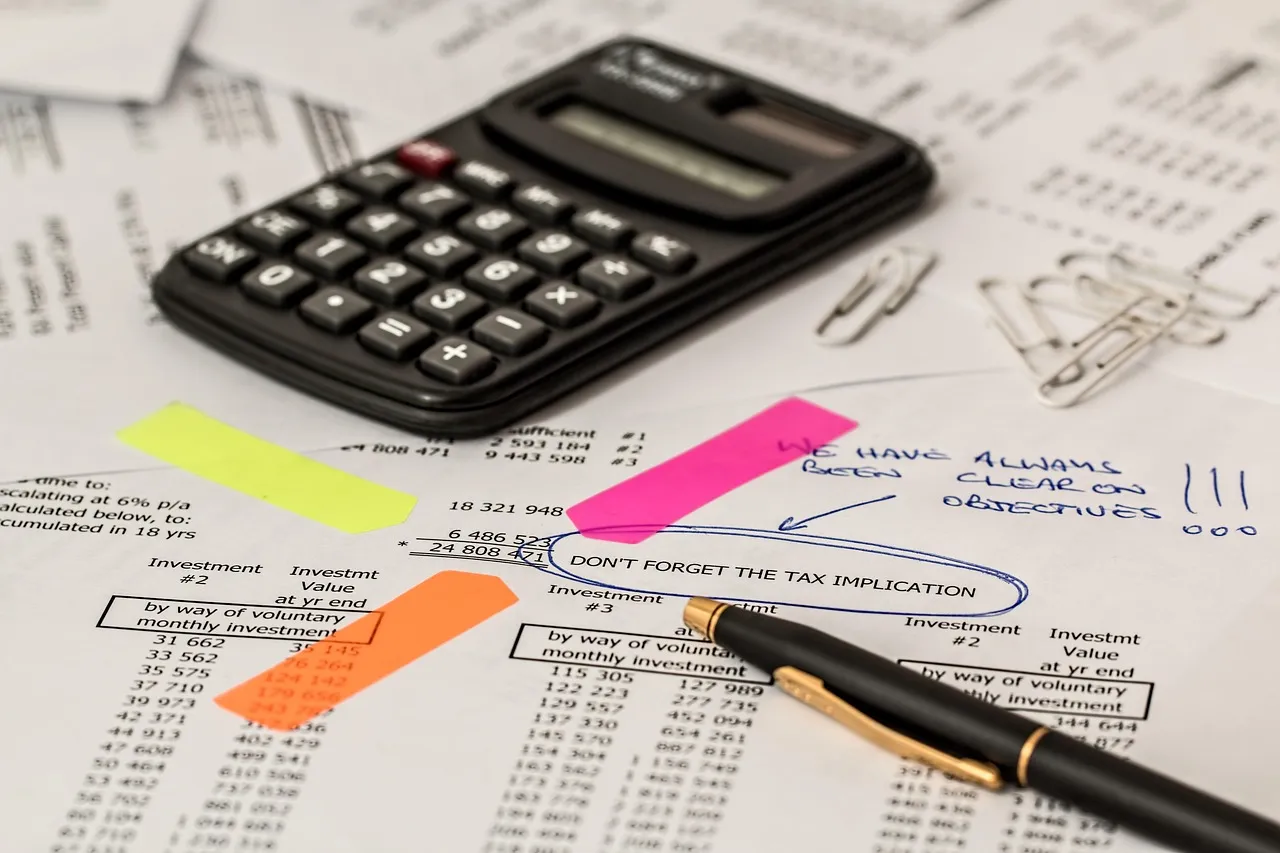
“I had to liquidate a great position in a trending market to pay a tax bill. That loss of opportunity hurt more than the tax.”
The single best piece of tax advice I can give you has nothing to do with law: keep immaculate records from day one.
What You Must Track
For every single trade, log:
- Instrument (e.g., GBP/USD)
- Entry date, time, and price
- Exit date, time, and price
- Position size
- Profit/Loss in your account currency (GBP)
- Any commissions or fees
A simple spreadsheet works. I use a dedicated trading journal app that exports a clean CSV file for my accountant. Your broker's platform, like MT5, will have a trade history, but I never rely solely on that. I know traders who've had issues with broker statements not matching their own logs during an HMRC enquiry.
Setting Aside Money for Tax
This is the rookie mistake I made. You make £10,000 in profit, feel great, and reinvest it all. Then the tax bill arrives, and you have to close positions at a bad time to pay it.
My rule now: I immediately move 20-25% of any net monthly profit into a separate savings account. If I'm trading under CGT, I use the lower end. If I'm under Income Tax, I use the higher end. This money does not exist for trading. When the tax bill comes, it's painless.
When to Get an Accountant
If your profits consistently exceed your CGT allowance, or if you're trading with significant size and frequency, hire a specialist accountant. Not your high street guy who does taxes for plumbers. Find someone who understands financial trading, spread betting, and HMRC's nuances. Their fee will be tax-deductible and will almost certainly save you more than it costs.
They'll also help you with your annual Self Assessment tax return. The deadline for online submission is January 31st following the end of the tax year (April 5th). Miss it, and you face an automatic £100 penalty.
Managing this stuff is part of the job. A clean, organised back office lets you focus on the charts without that nagging worry about HMRC.
💡 Winston's Tip
Open a separate, instant-access savings account and label it 'TAX'. The moment you withdraw profits, siphon off 25%. Out of sight, out of mind, ready for the bill.
“I had to liquidate a great position in a trending market to pay a tax bill. That loss of opportunity hurt more than the tax.”
Your broker choice directly impacts your safety and, indirectly, your tax reporting. In the UK, you should only use a broker regulated by the Financial Conduct Authority (FCA). This isn't just good advice; it's critical for your protection.
Why FCA Regulation Matters for Tax
- Accurate Reporting: FCA-regulated firms provide clear, annual statements perfect for tax purposes. I've seen statements from offshore brokers that are a nightmare to decipher.
- Client Money Protection: Your funds are held in segregated accounts. If the broker goes bust, your money is separate. This has nothing to do with tax, but everything to do with not losing your entire trading bankroll - which would rather limit your tax concerns.
- Negative Balance Protection: You can't lose more than you deposit. A rogue trade won't put you in debt to the broker, creating a bizarre negative 'asset' for tax.
- Access to Spread Betting: Most proper FCA brokers offer this tax-efficient product to UK residents.
Broker Costs & The Bottom Line
Remember, every pound you pay in spreads and commissions is a pound of profit you didn't make. It reduces your taxable gain. But your goal is to maximise net profit, not minimise tax.
Look at brokers like Pepperstone (their Razor account) or IC Markets for raw spreads plus commission. For spread betting, IG and CMC are giants. Compare their typical spreads on the pairs you trade. A 0.1 pip difference might seem trivial, but over hundreds of trades, it's real money left on the table - money that could have been profit.
I made the mistake early on of choosing a broker with 'zero commission' but wide spreads. My effective trading cost was higher. I switched to a raw spread account, and my net profitability improved immediately, even after paying the commission. That's more profit before tax.
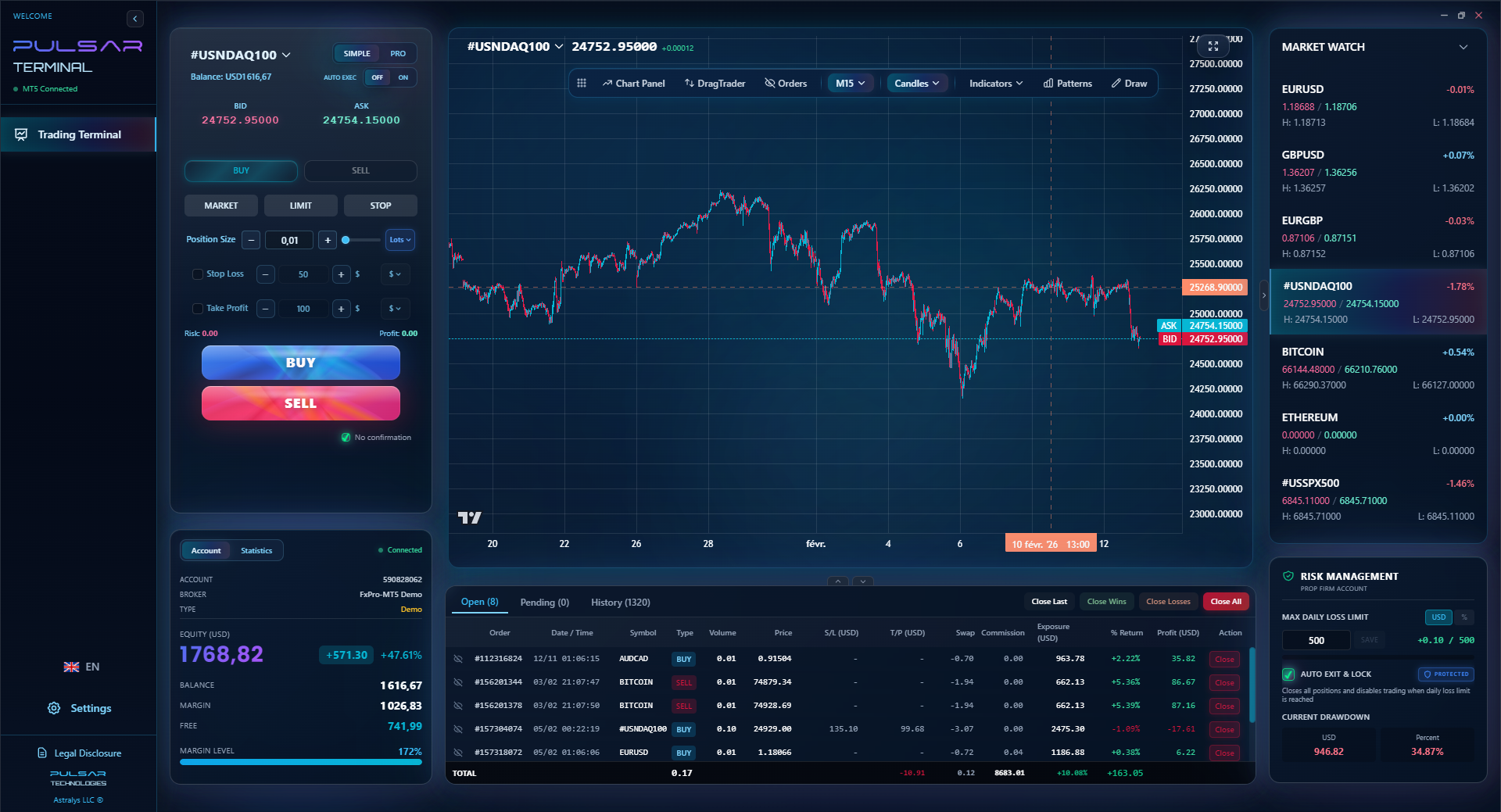
Accurate tax reporting starts with accurate trade tracking, and Pulsar Terminal's advanced trade management and journaling features on MT5 make compiling your annual data straightforward.
Pulsar Terminal
The all-in-one MT5 companion: drag-and-drop orders, multi-TP/SL, trailing stop, grid trading, Volume Profile, and prop firm protection. Used by 1,000+ traders daily.
“Treat your tax responsibility with the same discipline as your trading strategy.”
Let's get vulnerable. I've messed this up so you can learn from it.
Mistake 1: Ignoring It Completely. My first profitable year, I made about £8,000. I was ecstatic. I told myself, 'It's not a real job, it's just trading.' I didn't declare it. A year later, I got a letter from HMRC. They hadn't audited me, but something in my banking activity triggered a review. I had to hire an accountant, file a late return, pay the tax owed, plus interest and a penalty. The penalty alone was £400. The stress was immense. Declare your profits.
Mistake 2: Not Understanding the CGT Allowance. I thought the £6,000 allowance (at the time) was per instrument. I thought I could make £6,000 on EUR/USD and £6,000 on Gold tax-free. Wrong. It's your total net gain across all taxable assets (shares, forex, etc.).
Mistake 3: Poor Record-Keeping During a Scalping Strategy Phase. I was making 50+ trades a day. My journal was a mess. At the end of the quarter, reconciling my broker statement with my P&L was a 20-hour nightmare of cross-referencing timestamps and ticket numbers. Now, I have a rigid process: I journal the trade the moment I enter it.
Mistake 4: Not Planning for Tax Payments. As mentioned, I got a £7,000 tax bill and had to liquidate a great position in a trending market to pay it. I sold my XAU/USD longs prematurely and watched the price climb another 8% without me. That loss of opportunity hurt more than the tax.
The lesson? Treat your tax responsibility with the same discipline as your trading strategy. It's a non-negotiable cost of doing business. Factor it in from the start, and it ceases to be a source of fear or surprise.
💡 Winston's Tip
If you're trading seriously, your accountant's fee is a business expense. A good one saves you multiples of their cost in tax efficiency and peace of mind.
FAQ
Q1Do I pay tax on forex losses in the UK?
You don't pay tax on losses, but they can be valuable. For Capital Gains Tax, you can offset losses against gains in the same tax year to reduce your tax bill. If your losses exceed your gains, you can carry the net loss forward to offset against future gains. For spread betting, losses are just losses; they can't be used for tax purposes.
Q2Is forex trading tax-free if I use a spread betting account?
For the vast majority of UK retail traders, yes. Profits from financial spread betting are generally free from Capital Gains Tax and Income Tax. This is its primary advantage. However, you must ensure you're using a UK-regulated broker that offers spread betting to residents.
Q3What is the tax-free allowance for forex trading in 2024/25?
If your profits are subject to Capital Gains Tax, you have an Annual Exempt Amount of £3,000 for the 2024/25 tax year. Any net gains below this are tax-free. If HMRC classifies your trading as a business (Income Tax), you get the Personal Allowance of £12,570 instead.
Q4How do I declare forex trading profits to HMRC?
You need to register for Self Assessment and file a tax return. If under CGT, you report your net gains on the 'Capital Gains Summary' pages. If under Income Tax, you report your trading profit (income minus allowable expenses) as self-employed income. You must do this by January 31st following the end of the tax year.
Q5Can I trade forex as a limited company in the UK?
Yes, some professional traders do this. The company would pay Corporation Tax on its profits (currently 19% to 25%, depending on profit level). You would then pay yourself a salary or dividends, which are taxed personally. This adds complexity and costs (accountancy, company filings) but can be tax-efficient for larger, consistent profits. Don't do this without expert advice.
Q6Does the FCA's 30:1 use limit affect my taxes?
No, not directly. The use limit is a risk-reduction rule for retail clients. However, using high use irresponsibly can lead to larger losses (or gains), which obviously affects your taxable profit or loss. Good risk management, like using a position size calculator, is key to sustaining your trading business.
Q7What happens if I don't declare my forex trading profits?
You are legally required to declare taxable income and gains. If HMRC discovers undeclared profits, you will be liable for all unpaid tax, plus interest on the late payment. You will also likely face a penalty, which can be up to 100% of the tax owed in cases of deliberate concealment. It's not worth the risk.
Prof. Winston's Lesson
Key Takeaways:
- ✓CGT allowance is now only £3,000 (2024/25).
- ✓Spread betting profits are generally tax-free for UK residents.
- ✓Set aside 20-25% of profits immediately for tax.
- ✓Use only FCA-regulated brokers for safety and clear reporting.
- ✓Hire a specialist accountant before you think you need one.
How useful was this article?
Click a star to rate
Weekly Trading Insights
Free weekly analysis & strategies. No spam.
About the Author
Sarah Collins
Trading Strategist
London-based trading strategist with 12 years in financial markets. Former analyst at a City of London brokerage. Covers GBP pairs, European markets, and FCA-regulated trading.
Comments
Risk Disclaimer
Trading financial instruments carries significant risk and may not be suitable for all investors. Past performance does not guarantee future results. This content is for educational purposes only and should not be considered investment advice. Always conduct your own research before trading.
You Might Also Like

Cara Trading Forex Sukses: 7 Prinsip dari Trader Profesional
Cara trading forex sukses dengan 7 prinsip trader pro: manajemen modal, disiplin, journal trading, backtest. Data nyata, bukan janji profit palsu.
Jam Trading Forex Terbaik untuk Trader Indonesia: Panduan Lengkap dengan Tabel Waktu
Panduan jam trading forex untuk trader Indonesia. Tabel 4 sesi dunia, jam emas 20:00-00:00, sesi mana yang harus dihindari. Data akurat + tips dari trader berpengalaman.
Top 5 Sàn Forex Uy Tín Nhất 2026: Review Jujur dari Trader Indonesia
Top 5 sàn forex uy tín 2026 untuk trader Indonesia. Review jujur: spread, deposit, withdraw, dukungan lokal. Exness, XM, IC Markets & lebih.
Get Pulsar Terminal
All these calculators are built into Pulsar Terminal with real-time data from your MT5 account. One-click position sizing, automatic risk management, and instant calculations.
Get Pulsar Terminal