


Everyone's selling you a dream: pass a challenge, get funded, and trade with 'house money.' It's a powerful fantasy.
James Mitchell
Senior Trading Analyst
☕ 11 min read
What you'll learn:
- 1The Gray Area Is Closing: Regulation Is Inevitable
- 2By The Numbers: You Will Probably Fail
- 3Costs, Fees, and The Real Price of a Dream
- 4use, Platforms, and The Brokerage Shell Game
- 5A Survival Guide for The Coming Shakeout
- 6The Hybrid Model Is The Future (And It's Already Here)
- 7What You Should Do Right Now
Everyone's selling you a dream: pass a challenge, get funded, and trade with 'house money.' It's a powerful fantasy. But the cold, hard data tells a different story. Only about 7% of traders who buy a challenge ever see a single payout. The industry is a $20 billion beast, and 62% of the over 2,000 global firms are right here in the US. But the party's changing. I've been through the evaluation grinder myself, and what I see coming down the pipe isn't just another rule tweak - it's a fundamental reshaping of what a prop firm even is. Let's cut through the hype and look at what the future of prop firms actually holds.
For years, prop firms have operated in a beautiful, profitable loophole. They're not quite brokers, not quite asset managers. They sell you an 'evaluation service' for a fee, and if you pass, they let you trade a simulated account with a promise of a profit split. Because you're not depositing trading capital with them, they've largely sidestepped the heavy hand of the SEC and CFTC.
That free ride is ending. Regulators have caught on. The CFTC, in particular, is expected to drop the hammer by 2026, likely classifying these evaluation-based models as Commodity Trading Advisors (CTAs). That's not a slap on the wrist. It means registration, formal capital requirements, and detailed risk disclosures you have to give to every 'client' (that's you, the trader).
Think about what that does to the business model. Overnight, compliance costs skyrocket. The days of a three-person shop running a prop firm from a basement are numbered. This push is why you're already seeing much stricter KYC (Know Your Customer) checks. It's not just the firms being thorough; their payment processors and banks are demanding it to avoid their own regulatory headaches.

Warning: If a prop firm isn't asking for solid proof of ID and address, be very suspicious. In the future of prop firms, lax KYC is a giant red flag that they're either incompetent or planning to vanish before the regulators show up.
The SEC already tried to expand the 'dealer' definition to snag prop firms in early 2024, but a judge shot it down. Don't let that fool you. The regulatory pressure isn't going away; it's just shifting venues. The goal is clear: bring this wild west industry into the regulated financial system.

“Only 7% of all traders who buy a challenge ever see a single payout. The business model is built on your repeated failure.”
Let's talk about why you, personally, are statistically likely to lose your evaluation fee. This isn't pessimism; it's probability. The business model of most future prop firms is built on these numbers.
First, the pass rate. Across the industry, only 5-10% of traders pass their evaluation on the first try. Some firms claim 20%. Let's be generous and say 15%. That means 85 out of every 100 people fail immediately. Their fee is gone.
But passing is just the first filter. Getting funded doesn't mean you get paid. Only about 45% of funded traders ever receive a single payout. Combine that with the initial pass rate, and you get the brutal headline stat: only 7% of all traders who start a challenge ever get paid.
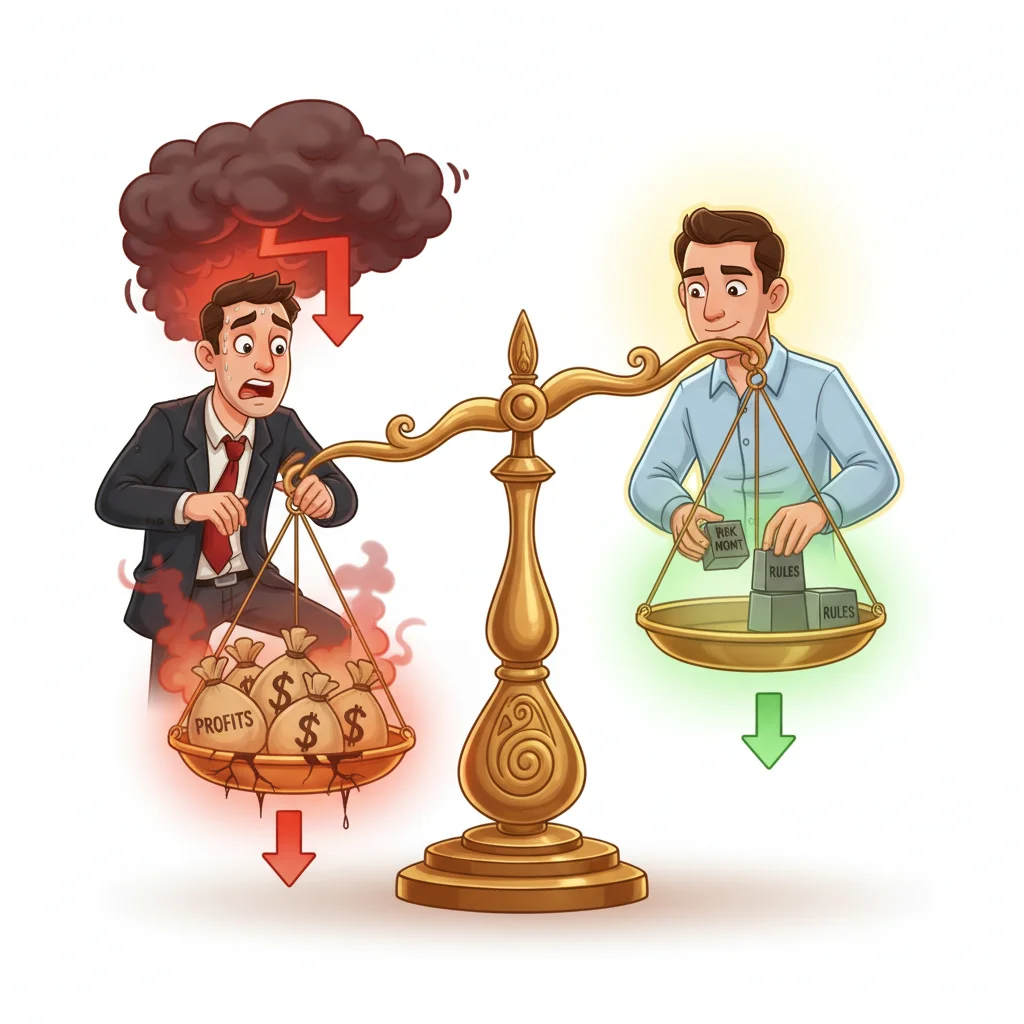
Why? The rules are designed for it. The profit targets, daily loss limits, and maximum drawdowns aren't just risk management tools for the firm; they're psychological traps for you. They encourage overtrading to hit a target and then revenge trading after a small loss blows your daily limit.
I learned this the expensive way. Early on, I passed a $50,000 challenge with a firm (now defunct). I was up $1,800, well within my drawdown. Got cocky. Took a oversized position on the EUR/USD right before some Fed news, didn't use a hard stop, and watched a 40-pip spike against me. I was down $2,200 in minutes, breaching my max loss. Account failed. I never even made it to the 'funded' stage. That $2,200 was a simulated loss, but the $350 I paid for the challenge was very real. That trade is why I'm religious about my position size calculator now.

Example: The average payout is about 4% of the account size. So if you're dreaming of monthly six-figure withdrawals from a $100k account, reality is closer to $4,000 on average. After the firm takes its 20-30% cut, you're looking at $2,800-$3,200. That's if you're in the lucky 7%.

💡 Winston's Tip
A prop firm challenge isn't a test of your trading genius; it's a test of your ability to follow arbitrary rules under pressure. The market doesn't care about your daily loss limit. The firm's risk department does. Master the rules first, the market second.
“The future of prop firms belongs to hybrid models: regulated brokers handling the money, and prop arms acting as talent scouts.”
Let's break down where your money actually goes. It's not just one fee; it's a gauntlet.
The Evaluation Fee: This is your ticket to play. It can be as low as $17 for a tiny account or over $800 for a large one. The average is a shocking $4,270. That's a lot of risk capital to put down on a test.
The Reset Fee: You blow your daily loss limit on a bad Tuesday? That'll be $60-$80 to reset and start over. This is pure profit for the firm. It incentivizes them to set tight, easily-breached limits.
The Activation Fee: The new 'Pay After You Pass' model seems trader-friendly. Pay $1 to start, then a bigger fee ($68 to $2,040) only if you pass. Smarter, but that activation fee still stings. It also means the firm has zero risk on you until you prove you're in that top 5-10%.
The Profit Split: They advertise 80%, 90%, even 100%. Read the fine print. That 100% is often only on the first $25k, or requires hitting massive scaling targets. The standard is 70-90%. For every $1,000 you make, you keep $700-$900. The firm, who risked no actual trading capital on you, gets the rest.
When you look at the future of prop firms, expect these fee structures to get more complex, not simpler. As regulatory costs rise, firms will need to maintain profitability. That money comes from you, the trader, through more resets, higher activation fees, or a bigger slice of your profits.
“The future of prop firms belongs to hybrid models: regulated brokers handling the money, and prop arms acting as talent scouts.”
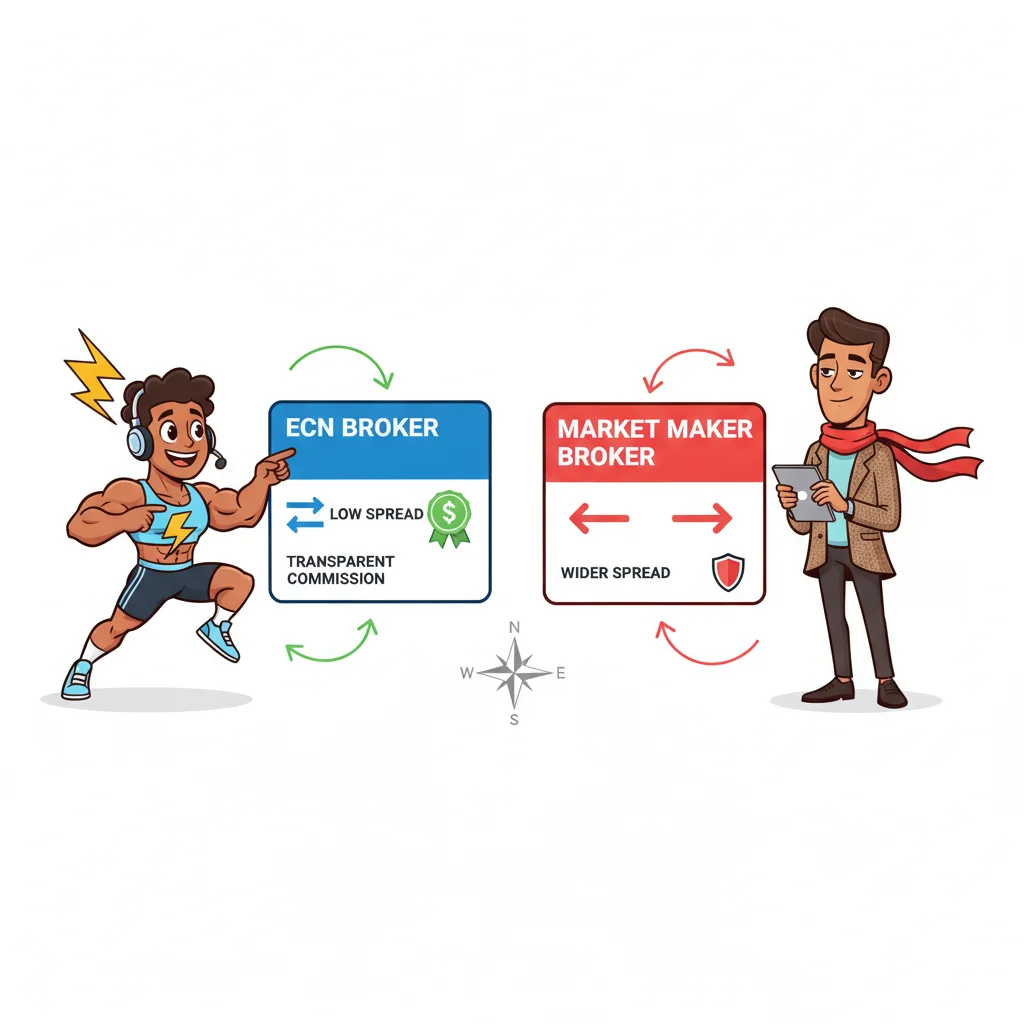
Here's a dirty little secret: most prop firms don't have direct market access. They're not brokers. They partner with real, regulated brokers like the ones we review (IC Markets, Pepperstone) to execute trades. The prop firm is just a middleman with a fancy evaluation system.
This matters for your trading conditions.
use: They'll advertise 1:100, 1:200. But for instruments like indices or commodities, it's often much lower (1:10 to 1:40). And there's a regulatory push to lower it across the board. The future of prop firms will feature less use, not more. This kills the dream of turning $500 into $50,000 overnight, which is probably a good thing for your account longevity.
Spreads & Commissions: You might get 0.0 pip spreads on majors, which is great. But for futures, expect commissions of $3-$4 per side. A round turn on the E-mini S&P 500 will cost you $6-$8 before you're even in profit. This eats into your tight risk parameters fast. If you're into scalping strategies, these costs are a make-or-break factor.
Platforms: MT4 and MT5 are kings, but the February 2024 MetaQuotes crackdown showed the fragility of this setup. Overnight, firms lost their platform licenses. An estimated 80-100 firms shut down. The future will see a scramble for alternative platforms like cTrader, Tradovate, or DXtrade. If your entire swing trading system is built on a specific MT5 indicator, a platform change could derail you completely.
💡 Winston's Tip
Your edge isn't your indicator setup. Your edge is your emotional discipline within the firm's constraints. The 10% who pass have the same charts as the 90% who fail. The difference is in the journal, not the software.
“Your first goal on a funded account shouldn't be a Lamborghini. It should be to withdraw your initial evaluation fee.”
So, with regulation looming and a consolidation wave coming, how do you not become a casualty?
Treat It Like a Business Expense
That evaluation fee is not an investment; it's the cost of a very expensive audition. Would you pay $4,270 for a job interview with a 7% chance of getting hired? Only if you were absolutely sure of your skills. Paper trade your strategy first. Then use a tiny personal account. Only when you have 6 months of consistent, boring profitability should you even look at a prop challenge.
Read The Contract, Not The Sales Page
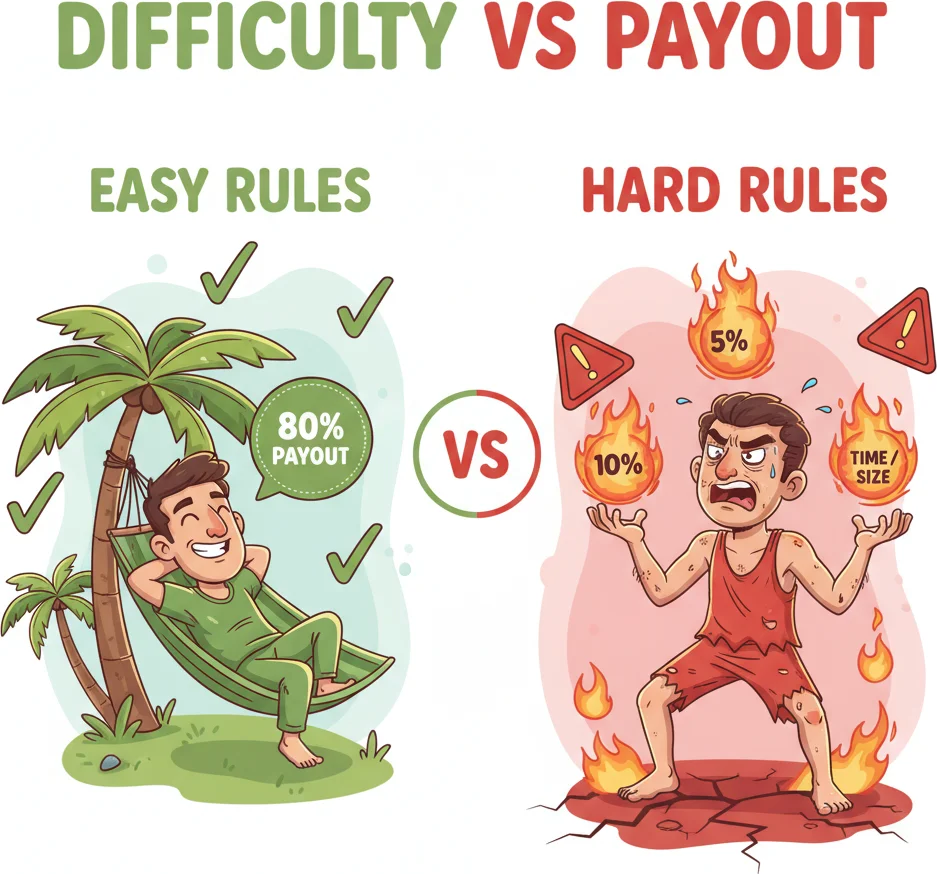
The profit target is 10%? Great. What's the daily loss limit? 5%? That means two bad days in a row can fail you, even if you're up net. What's the maximum drawdown? Is it from the starting balance or the peak equity? This detail has ended more funded accounts than any market crash. Know the rules better than the firm's support staff.
Plan for The Firm to Disappear
This sounds cynical, but it's practical. Smaller firms will get bought or fold under regulatory costs. Before you pay any fee, research their longevity. Where are they incorporated? Do they have a clear, registered address? How do they handle payouts? If they're slow or sketchy with $500 withdrawals, imagine trying to get $50,000 out. Your trading journal and strategy should be portable. Your edge shouldn't depend on a specific firm's quirky rules.

Pro Tip: Your first goal on a funded account shouldn't be a Lamborghini. It should be to withdraw your initial evaluation fee. Get your own skin out of the game. Now you're playing with truly 'house money,' and the psychology changes completely.
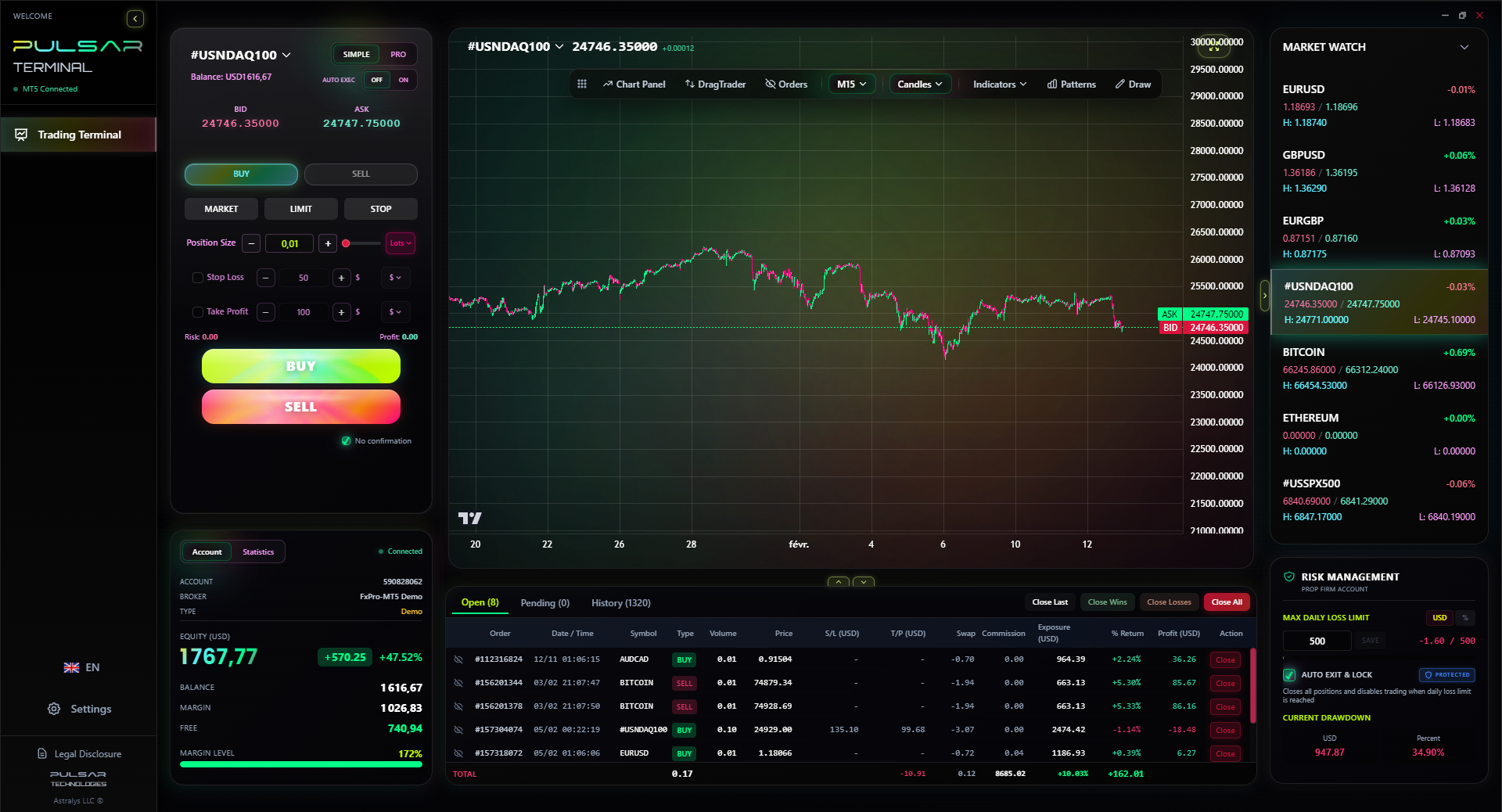
Managing a prop firm's strict daily loss and drawdown rules is a constant manual headache, which is why tools like Pulsar Terminal automate tracking and can even lock your account to prevent a rule breach.
Pulsar Terminal
The all-in-one MT5 companion: drag-and-drop orders, multi-TP/SL, trailing stop, grid trading, Volume Profile, and prop firm protection. Used by 1,000+ traders daily.
“Your first goal on a funded account shouldn't be a Lamborghini. It should be to withdraw your initial evaluation fee.”
The writing is on the wall. The pure 'pay-to-play' evaluation model is too juicy a target for regulators. The future of prop firms belongs to hybrid models.
We're already seeing it: prop firms formally partnering with or being absorbed by regulated brokers. In this setup, the broker handles all the client money and regulatory compliance. The 'prop firm' arm simply acts as a talent scout and risk manager, taking a slice of the profits from the traders they bring in.
This changes the trader's relationship. You might actually be opening an account directly with a licensed broker (adding a layer of safety). The evaluation might become less about one-off challenges and more about sustained performance on a live, but limited, account. The fees could shift from upfront challenges to ongoing performance fees.
For you, this could be better. More stability, clearer regulation, and firms that are incentivized for your long-term success, not just your repeated failure and reset fees. But it also means the bar will be higher. They'll want proven track records, not just hopefuls with $50.
My one experience with a more structured firm was different. The rules were stricter, but clearer. The support was actual risk managers, not just customer service. I lasted longer. I even hit my first profit target on a XAU/USD swing, banking a $1,200 profit (my split was $960). It felt less like a casino and more like a mercenary audition. That's the direction things are moving.
💡 Winston's Tip
View every fee not as a cost, but as a data point. A high reset fee tells you the firm profits from your failure. A transparent, low-cost model with a higher profit split tells you they profit from your success. Choose the firm whose incentives align with yours.
“The regulatory gray area is closing. Compliance costs will wipe out the small shops and reshape the industry by 2026.”
If you're serious about this path, here's your action plan, stripped of all hype.
- Build a Real Track Record: Use a personal account with your own money, even if it's just $500. Trade it for a minimum of six months. Use a trading journal. You need to see your own win rate, average win/loss, and max drawdown in live markets. Your strategy for EUR/USD needs real proof.
- Run the Math on Fees: Pick a target firm. Add up: Evaluation Fee + Probable Reset Fees (budget for at least two) + any monthly data fees. That's your total cost. Now, look at their average payout stat (around 4% of account size). Is your probable profit after splits greater than your total cost? If not, it's a bad business deal.
- Prioritize Firms With Strong Broker Partners: Go for firms that openly partner with reputable, well-regulated brokers you recognize. It's a sign of stability. Check our Exness review or XM review to understand what a solid broker looks like.
- Start Small: Ignore the $400,000 account dream. Start with the smallest, cheapest challenge the firm offers. Your goal isn't to get rich on this one attempt. Your goal is to learn the firm's systems, their payout process, and their true behavior without risking four figures. Prove you can navigate their specific obstacle course with play money first.
The landscape is hardening. The easy money for firms collecting failure fees is drying up. The future of prop firms will belong to serious traders who treat it as a professional qualification, not a lottery ticket. The question is, are you in that top 7% by skill, or are you just funding their next bonus pool?
FAQ
Q1Will prop firms become illegal in the US?
Not illegal, but heavily regulated. The likely outcome is that they'll be forced to register as Commodity Trading Advisors (CTAs) or similar entities, which brings capital requirements, disclosure rules, and direct oversight. The unregulated 'gray area' model is on borrowed time.
Q2What's the single biggest mistake traders make with prop firms?
Treating the evaluation like a trade. They use oversized positions to hit the profit target fast, violating sane risk management. They're trading to pass a test, not to execute a strategy. This is why the pass rate is so low. The rules are designed to punish impatient, aggressive trading.
Q3Are 'Pay After You Pass' models better?
They're better for your initial risk. Losing $1 feels better than losing $300. But they're not a free lunch. The activation fee you pay after passing is often higher than a standard challenge fee, and the firm has zero risk on you until you prove you're profitable. It's a smarter business model for them, filtering for only the most confident traders.
Q4How do I know if a prop firm is trustworthy?
Check three things: 1) Transparency about their broker partner (a real, regulated broker is a must). 2) A clear, long-term track record (firms less than 2 years old are riskier, especially post-2024). 3) Payout verification. Search for user experiences on withdrawal times. Delays or excuses are a major red flag.
Q5Is the 100% profit split a scam?
Not necessarily a scam, but always a marketing hook with conditions. It's often for the first $25,000 only, or requires hitting very high scaling targets. Read the terms. The sustainable profit split for the future of prop firms will be in the 70-85% range, as they need revenue to cover rising regulatory costs.
Q6Can I trade any strategy with a prop firm?
No. High-frequency scalping, arbitrage, or news trading is often banned. They also ban 'copy trading' or using EAs you didn't code yourself. You must understand their allowed strategies list. Even if a strategy like using the MACD indicator or RSI indicator works for you, if it's executed in a banned style (like martingale), you'll be disqualified.
Q7What happens to my funded account if the prop firm shuts down?
This is the biggest risk. If the firm folds, your simulated 'funded account' and any unrealized profits likely vanish. You're a creditor, not an account holder. This is why prioritizing firms with strong broker partnerships is critical - your positions may actually be with the broker, offering some protection.
Prof. Winston's Lesson
Key Takeaways:
- ✓Pass rates are 5-10%. You are the underdog.
- ✓Average payout is just 4% of account size.
- ✓Regulation as CTAs is coming by 2026.
- ✓Prioritize firms with strong broker partners.
- ✓Treat fees as business expenses, not investments.
How useful was this article?
Click a star to rate
Weekly Trading Insights
Free weekly analysis & strategies. No spam.
About the Author
James Mitchell
Senior Trading Analyst
Based in New York with over 9 years of trading experience. Focuses on major USD pairs, prop firm challenges, and the US regulatory landscape.
Comments
Risk Disclaimer
Trading financial instruments carries significant risk and may not be suitable for all investors. Past performance does not guarantee future results. This content is for educational purposes only and should not be considered investment advice. Always conduct your own research before trading.
You Might Also Like

Cara Trading Forex Sukses: 7 Prinsip dari Trader Profesional
Cara trading forex sukses dengan 7 prinsip trader pro: manajemen modal, disiplin, journal trading, backtest. Data nyata, bukan janji profit palsu.
Jam Trading Forex Terbaik untuk Trader Indonesia: Panduan Lengkap dengan Tabel Waktu
Panduan jam trading forex untuk trader Indonesia. Tabel 4 sesi dunia, jam emas 20:00-00:00, sesi mana yang harus dihindari. Data akurat + tips dari trader berpengalaman.
Top 5 Sàn Forex Uy Tín Nhất 2026: Review Jujur dari Trader Indonesia
Top 5 sàn forex uy tín 2026 untuk trader Indonesia. Review jujur: spread, deposit, withdraw, dukungan lokal. Exness, XM, IC Markets & lebih.
Get Pulsar Terminal
All these calculators are built into Pulsar Terminal with real-time data from your MT5 account. One-click position sizing, automatic risk management, and instant calculations.
Get Pulsar Terminal