


I remember staring at my screen in 2020, watching USD/ZAR rip higher.

David van der Merwe
Emerging Markets Trader ·  South Africa
☕ 12 min read
What you'll learn:
- 1What the Heck is an FVG in Forex?
- 2Trading FVGs with South African Realities in Mind
- 3Brokers and Platforms: Where to Actually Draw Your FVGs
- 4A Simple, Step-by-Step FVG Strategy for ZAR Pairs
- 5Mistakes I've Made (So You Don't Have To)
- 6The Not-So-Fun Part: SARS and Record Keeping
- 7Putting It All Together: Your South African FVG Plan
I remember staring at my screen in 2020, watching USD/ZAR rip higher. I'd spotted what I thought was a perfect buy setup on a pullback. Entered at 16.85, tight stop. The price tapped my entry, then reversed hard, taking me out for a 50-pip loss before rocketing up 300 pips without me. That was my first, painful introduction to a Fair Value Gap (FVG) – a hidden zone of imbalance that the market had to fill. I was trading against the gap's magnetism. In South Africa, with our famously volatile Rand, understanding FVG forex isn't just a fancy strategy; it's survival gear. Let's break down how to use it here, with our rules, our brokers, and our unique market quirks.
Alright, let's cut through the jargon. A Fair Value Gap (FVG) is basically a price vacuum. It's not a fancy indicator you download. It's a blank space on your chart created when price moves so fast it leaves a 'gap' in market activity.
Think of it like this: Imagine a big news hit on the USD, and EUR/USD jumps from 1.0800 to 1.0830 in a single candle. The market didn't trade at 1.0810, 1.0815, 1.0820 – it just skipped those prices. That skipped zone is the FVG. The core idea from Smart Money Concepts (SMC) is that these gaps are areas of unfair price. Liquidity (buy and sell orders) sits there, waiting. The market has a tendency to return to fill that gap before continuing its main trend.
There are two main types you'll see:
- Bullish FVG: Created by a big up move. The gap is below the current price. The market often dips back down to fill it before rallying again.
- Bullish FVG: Created by a big down move. The gap is above the current price. The market often rallies back up to fill it before falling further.

Pro Tip: Don't overcomplicate it. On your MT4/MT5 chart, just look for a large candle surrounded by two smaller candles that don't overlap its full range. The space between the wicks of those surrounding candles is your FVG zone.
The key for us in South Africa? Our market, especially pairs like USD/ZAR, is prone to these explosive moves. Political news, commodity swings (we're a big resources exporter), or global risk sentiment can create massive FVGs in seconds. Spotting them gives you a map of where price is likely to go next.
“In South Africa, with our famously volatile Rand, understanding FVG forex isn't just a fancy strategy; it's survival gear.”
You can't just copy a YouTube strategy and apply it blindly here. Our market has its own personality, and our regulators have specific rules that change the game.
The ZAR Volatility Factor
Pairs like USD/ZAR, EUR/ZAR, and GBP/ZAR are your playground. They're liquid but can move 200-300 pips in a session easily. An FVG on the 1-hour chart here is a much bigger deal than on EUR/USD. I once caught a fill on a USD/ZAR FVG that was 150 pips wide – that's a serious move. But that volatility is a double-edged sword. Your stop-loss needs breathing room, which affects your position size calculator inputs dramatically.
FSCA's 30:1 use Limit
This is the big one. Since 2021, retail traders with FSCA-regulated brokers are capped at 30:1 use on major forex pairs. For a volatile pair like USD/ZAR, many brokers offer even less, sometimes 20:1. This changes your FVG strategy fundamentally.
Why? Lower use means you need more margin per trade. You can't afford to take as many 'scalp' entries into FVGs with tiny stops. It pushes you towards higher timeframes (like the 4-hour or daily) where FVGs are more significant and your stops can be wider without getting you margin call warnings. It forces better discipline, honestly.
A Local Trade Example
In late 2024, USD/ZAR had a massive sell-off on weaker US data. On the 4-hour chart, a huge bearish candle dropped from 18.40 to 18.10. The next candle was a small doji. That created a clear FVG zone between 18.35 and 18.40 (above price).
My plan: Wait for price to rally back into that zone to fill the FVG, then look for sell signals. Two days later, price rallied into the 18.37 area (right in the FVG), formed a bearish pin bar on the 1-hour chart, and reversed. Entry: 18.36. Stop: just above the FVG at 18.45. Target: previous low. It worked, but the 90-pip stop felt huge. With 30:1 use, my position size had to be conservative. The 300-pip win was great, but it was a patient swing trade, not a quick in-and-out.

Warning: Many international 'gurus' teach FVG entries on the 5-minute chart with 500:1 use. That style is illegal for SA retail traders and a fast track to blowing your account on the ZAR's whipsaws. Adapt or lose.

💡 Winston's Tip
The market's job is to find liquidity. An FVG is a pocket of missing liquidity. Price is a magnet, and that gap is iron. Trade the fill, not the hope.
“The 30:1 use limit forces you towards higher timeframes where FVGs are more significant and your stops can be wider without getting margin call warnings. It forces better discipline, honestly.”
You need a platform that lets you draw clearly and a broker that gives you fair access to ZAR pairs. Here’s the local lowdown.
FSCA-Regulated Brokers for Serious Traders: If you want the safety of local regulation (and you should), these are solid picks. Remember, they all enforce the 30:1 use cap.
| Broker | Why It's Good for FVG Trading | Key Point for ZAR |
|---|---|---|
| IG | Top-tier charts, great for analysis. | Strong ZAR liquidity, but minimum deposit is around ZAR 5,000+. |
| Tickmill | Raw spreads are tight. | Excellent for cost on majors, but check their specific ZAR pair spreads. |
| FP Markets | Very popular with MT4/MT5 traders. | Good all-rounder with solid execution. |
| Khwezi Trade | Local FSCA license (ODP). | Min deposit just ZAR 500. You're dealing with a South African company. |
International Brokers (Use at Your Own Risk): Brokers like IC Markets or Exness offer higher use if you sign up under their global entities. The spreads can be razor-thin, which is tempting. But here's the rub: the FSCA can't help you if something goes wrong. I've used them, and the 500:1 use is dangerous. It makes you over-trade. Also, your tax situation gets murkier with offshore brokers.
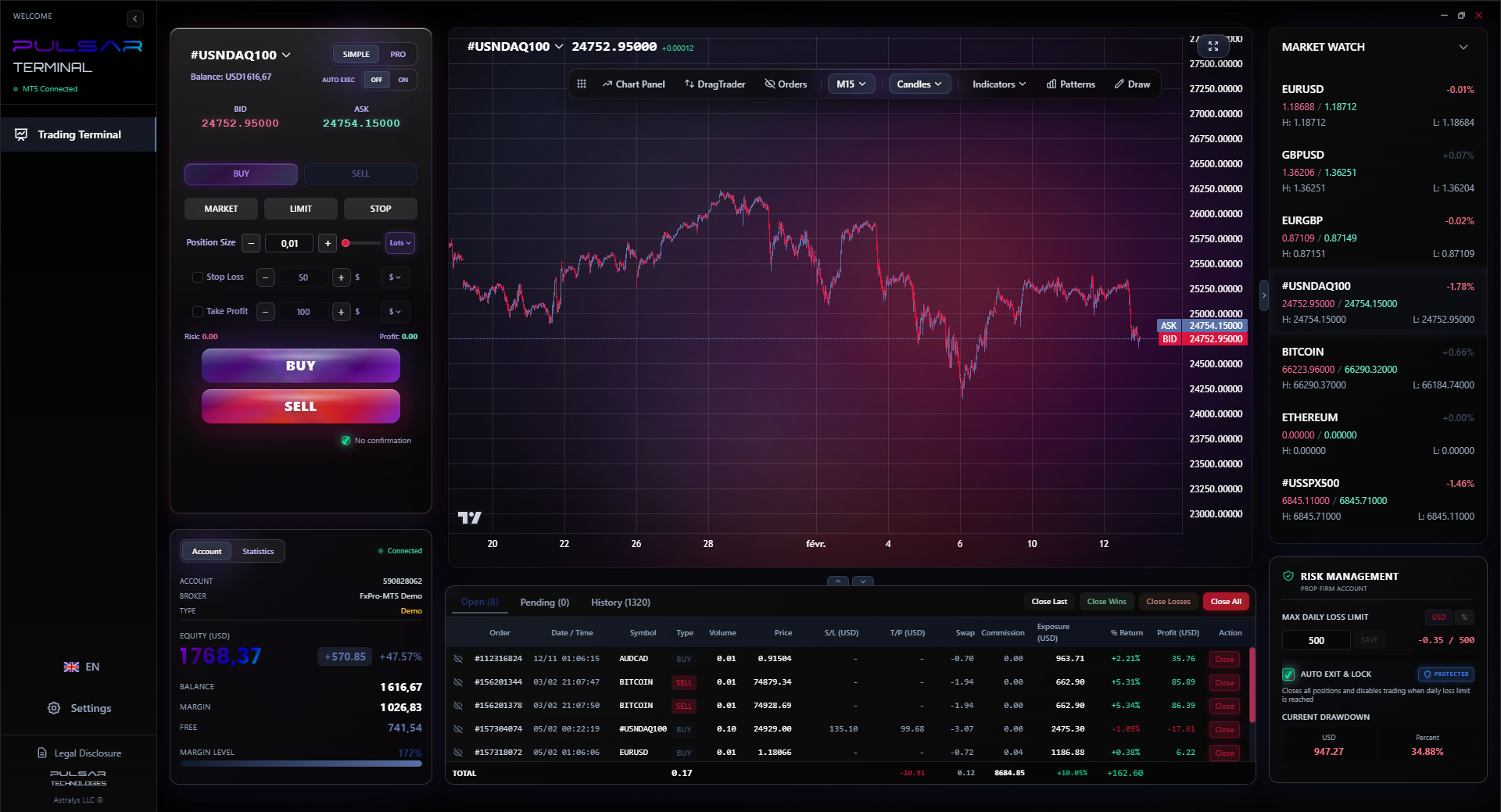
Platforms are Key: You'll be drawing rectangles to mark your FVG zones. MT4 and MT5 are king here in SA. Everyone uses them. The drawing tools are fine. Some traders are moving to cTrader for its cleaner look. For advanced FVG work, some use tools like Pulsar Terminal (an MT5 add-on) which can help visualize order flow and imbalances more clearly. Whatever you choose, keep it simple. A rectangle tool and horizontal lines are all you really need.
My setup? I use Pepperstone on MT5 for most analysis, but I keep a smaller account with Khwezi Trade to stay compliant for a portion of my capital. It's a balance between cost and peace of mind.
“The 30:1 use limit forces you towards higher timeframes where FVGs are more significant and your stops can be wider without getting margin call warnings. It forces better discipline, honestly.”
Let's build a rule-based approach you can test on a demo account tonight. We'll focus on the 4-hour chart for sustainability, respecting our use limits.
Step 1: Find the Gap Switch to USD/ZAR or EUR/ZAR on the 4H chart. Scroll back and look for the largest, cleanest candles. Ignore messy consolidation. You want a strong impulse candle with two adjacent candles that leave a clear gap between their wicks. Highlight that zone with a rectangle.
Step 2: Wait for the Retracement This is where most fail. They jump in as soon as they see the gap. Don't. The market must return to the FVG zone. Be patient. It might take hours or days. Let price come to you.
Step 3: Confirm Your Entry When price enters your FVG zone, don't buy or sell immediately. Look for a rejection pattern. My favourite is a simple pin bar or an engulfing candle on the 1-hour chart within the 4-hour FVG zone. You can also use a basic RSI indicator divergence for extra confirmation.
Step 4: Manage the Trade
- Entry: On the close of your confirmation candle.
- Stop Loss: Place it just on the other side of the FVG zone. If you're selling into a bearish FVG (above price), put your stop just above the top of the FVG rectangle.
- Take Profit: Your first target is the other side of the FVG zone. Your second, bigger target is the original impulse move's extension. Consider taking partial profits at the first target.

Example: USD/ZAR 4H FVG zone is 18.20-18.25 (bearish FVG). Price rallies into it. At 18.23, a 1H bearish engulfing candle forms.
- Sell Entry: 18.230
- Stop Loss: 18.255 (just above the zone)
- TP1: 18.205 (edge of zone)
- TP2: 18.100 (previous swing low) Risk: 25 pips. Reward (to TP2): 130 pips. That's a solid ratio.
This isn't a scalping strategy. It's a form of swing trading that uses market structure. You might only get 2-3 of these high-quality setups a week on the ZAR pairs.
💡 Winston's Tip
South Africa's 30:1 use isn't a cage, it's a teacher. It forces you to trade significant market moves (like 4H FVGs) instead of gambling on noise. The best pupils learn from constraints.
“If you make money, SARS wants to know. This isn't a maybe.”
I've blown up a small account trading FVGs poorly. Here's the expensive education, free.
1. Trading Every Single Gap: Not all FVGs are created equal. A tiny gap on a 15-minute chart during the Asian session is meaningless noise. The best FVGs form at key market structure levels – like after breaking a major support or resistance. Focus on the big ones.
2. Ignoring the Overall Trend: This was my biggest early error. If the daily trend is strongly up, and you're trying to sell every little bearish FVG, you're fighting the tide. FVGs work best as entry points in the direction of the higher timeframe trend. A bullish FVG in an uptrend is a golden buy opportunity.
3. Stops That Are Too Tight: Because FVGs are zones, not lines, price can probe the entire area. If you put your stop 5 pips inside the zone, you'll get stopped out on the fill before the reversal. Your stop must be on the other side, giving the zone room to work.
4. Forgetting About Spreads: On exotic pairs like GBP/ZAR, the spread definition can be 15-20 pips easily. If your FVG zone is only 25 pips wide, the spread eats a huge chunk of your potential profit. Factor this in before you enter. This is why brokers with raw spreads + commission can sometimes be better for this style.
5. No Patience: I once drew an FVG, got excited, and entered a limit order in the middle of the zone. Price drifted into it, filled me, and then slowly drained another 50 pips through the zone before reversing. I was stopped out. I entered without a confirmation candle. The lesson? Wait for the market to show its hand inside the zone.
Manually drawing and managing FVG zones across multiple charts is tedious; a tool like Pulsar Terminal can help automate pattern drawing and set alerts for when price enters your key zones on MT5.
Pulsar Terminal
The all-in-one MT5 companion: drag-and-drop orders, multi-TP/SL, trailing stop, grid trading, Volume Profile, and prop firm protection. Used by 1,000+ traders daily.
“If you make money, SARS wants to know. This isn't a maybe.”
Listen, brah, if you make money, SARS wants to know. This isn't a maybe. As of 2026, they are actively looking at forex trading profits. Here’s the deal:
- It's Income, Not Capital: Unless you're holding positions for years (you're not), SARS views frequent trading as a business. Your net profits are added to your other income and taxed at your marginal rate (up to 45%). Ouch.
- You Must Declare Offshore Profits: Even if you use IC Markets or XM based overseas, you are a South African tax resident. You must declare that global income.
- Records Are Everything: Your FVG trading will generate dozens of trades. You need a detailed log:
- Trade date, pair, entry/exit price.
- Profit/Loss in ZAR (convert at the trade date's rate).
- Broker statements.
- Records of all deposits and withdrawals.
How does this affect your FVG trading? It should make you more selective. Chasing ten tiny FVG scalps a day creates a tax record-keeping nightmare and likely won't be profitable after costs. Focusing on a few high-quality 4H or daily FVG setups per month creates cleaner, more manageable records and likely better results. Consider using a local broker like Khwezi or an FSCA-regulated international branch for simpler tax reporting – they often provide annual tax certificates in ZAR.
💡 Winston's Tip
Your trading journal is more important than your indicator set. Write down why each FVG setup worked or failed. Your edge isn't in the gap; it's in your refined process for trading it.
“Your stop must be on the *other side* of the FVG zone, giving the zone room to work. This is non-negotiable.”
So, where do you start next Monday?
- Get Your House in Order: Choose a broker. If you're new or want safety, go FSCA-regulated. Accept the 30:1 use as a protective feature, not a limitation. Fund your account with money you can afford to lose.
- Practice on Demo: Open a demo account on MT5. Load up USD/ZAR. Go back over the last 3 months and mark every clear 4-hour FVG. See how price reacted. Practice drawing the zones.
- Develop a Checklist: Write down your rules. Mine looks like this:
- Is there a clear FVG on the 4H chart at a key level?
- What is the daily trend direction?
- Has price entered the FVG zone?
- Is there a 1H confirmation candle?
- Have I calculated my position size for a stop beyond the FVG?
- Is the spread reasonable for this pair? If all are 'yes', then and only then, do I consider the trade.
- Start Small: When you go live, trade the smallest possible size. Your goal for the first 20 trades is not profit, it's execution. Can you follow your plan? The volatile ZAR will test your emotions.
- Keep a Journal: Note every trade, the FVG setup, and most importantly, why you took it or skipped it. This is how you learn what works for you in our specific market.
FVG forex trading in South Africa is a powerful way to read the market's footprints. But it's not a magic bullet. It's a piece of context in a noisy, volatile environment. Combine it with sound risk management, respect for our regulations, and an eye on the taxman, and you've got a fighting chance to build a real edge. Now, go mark up some charts.
FAQ
Q1Is forex trading with FVG strategies legal in South Africa?
Yes, absolutely. Forex trading is legal. Using Fair Value Gap analysis is just a charting method. The key is that you must trade through a broker licensed by the Financial Sector Conduct Authority (FSCA) to be fully protected by local law. The strategy itself isn't regulated, your broker is.
Q2What's the best timeframe to find FVGs for USD/ZAR?
For the volatile ZAR pairs, I strongly recommend starting on the 4-hour chart. The FVGs here are more significant and reliable. Lower timeframes (like 15-min or 1-hour) are filled with noise and tiny gaps that will get you chopped up, especially with our 30:1 use limiting your position size.
Q3Do I need to pay tax on profits from FVG trading?
Yes. SARS views frequent trading as income-generating. Your net annual profit from all trading (including FVG trades) must be declared as part of your taxable income. Keep careful records of all trades, deposits, and withdrawals.
Q4Can I use international brokers to get higher use for FVG trading?
Technically, you can sign up with an international broker's global entity. However, you will not be protected by the FSCA, you may violate the broker's terms of service, and you still have a legal obligation to declare profits to SARS. The 30:1 use limit exists for retail protection - using higher use significantly increases your risk of large losses.
Q5How wide should a valid FVG be?
There's no fixed pip value. It's relative to the pair and timeframe. On USD/ZAR 4H, a 30-80 pip gap is common and tradable. The key is that it should be visually clear - a distinct space where price skipped. A 10-pip 'gap' is probably just normal spread and market noise.
Q6What's a good confirmation signal to use with an FVG?
Keep it simple. A pin bar or an engulfing candle on a lower timeframe (like the 1-hour) that forms inside the FVG zone is my go-to. You can also look for basic divergence with the RSI indicator. The confirmation should show that price is rejecting the FVG area.
Q7Why does my FVG trade keep getting stopped out before the reversal?
This usually means your stop loss is placed inside the FVG zone. Remember, the zone is the entire area price needs to fill. Place your stop loss on the other side of the zone, giving the market room to complete the fill before reversing. Also, ensure you're waiting for a confirmation candle, not entering as soon as price touches the zone.
Prof. Winston's Lesson
Key Takeaways:
- ✓Trade 4H FVGs on ZAR pairs, ignore smaller timeframes.
- ✓Always place your stop loss BEYOND the far side of the FVG zone.
- ✓SARS taxes trading profits as income - keep perfect records.
- ✓Use the 30:1 use limit to enforce disciplined position sizing.
How useful was this article?
Click a star to rate
Weekly Trading Insights
Free weekly analysis & strategies. No spam.
About the Author
David van der Merwe
Emerging Markets Trader
Johannesburg-based trader with 11 years in emerging market currencies. Specializes in ZAR pairs, FSCA-regulated trading, and South African market analysis.
Comments
Risk Disclaimer
Trading financial instruments carries significant risk and may not be suitable for all investors. Past performance does not guarantee future results. This content is for educational purposes only and should not be considered investment advice. Always conduct your own research before trading.
You Might Also Like

Cara Trading Forex Sukses: 7 Prinsip dari Trader Profesional
Cara trading forex sukses dengan 7 prinsip trader pro: manajemen modal, disiplin, journal trading, backtest. Data nyata, bukan janji profit palsu.
Jam Trading Forex Terbaik untuk Trader Indonesia: Panduan Lengkap dengan Tabel Waktu
Panduan jam trading forex untuk trader Indonesia. Tabel 4 sesi dunia, jam emas 20:00-00:00, sesi mana yang harus dihindari. Data akurat + tips dari trader berpengalaman.
Top 5 Sàn Forex Uy Tín Nhất 2026: Review Jujur dari Trader Indonesia
Top 5 sàn forex uy tín 2026 untuk trader Indonesia. Review jujur: spread, deposit, withdraw, dukungan lokal. Exness, XM, IC Markets & lebih.
Get Pulsar Terminal
All these calculators are built into Pulsar Terminal with real-time data from your MT5 account. One-click position sizing, automatic risk management, and instant calculations.
Get Pulsar Terminal