


Want to trade like George Soros and break the Bank of England? Who doesn't.

Rajesh Sharma
Senior Forex Analyst ·  India
India
☕ 11 min read
What you'll learn:
- 1What Actually Is the George Soros Trading Strategy?
- 2Reflexivity Theory for Retail Traders (Forget the PhD)
- 3Applying Soros's Thinking to Indian Markets
- 4A Practical Setup for the Indian Trader
- 5The Brutal Risks (And Why You'll Probably Lose Money at First)
- 6Brokers and Tools You'll Need in India
- 7My Final Verdict for Indian Traders
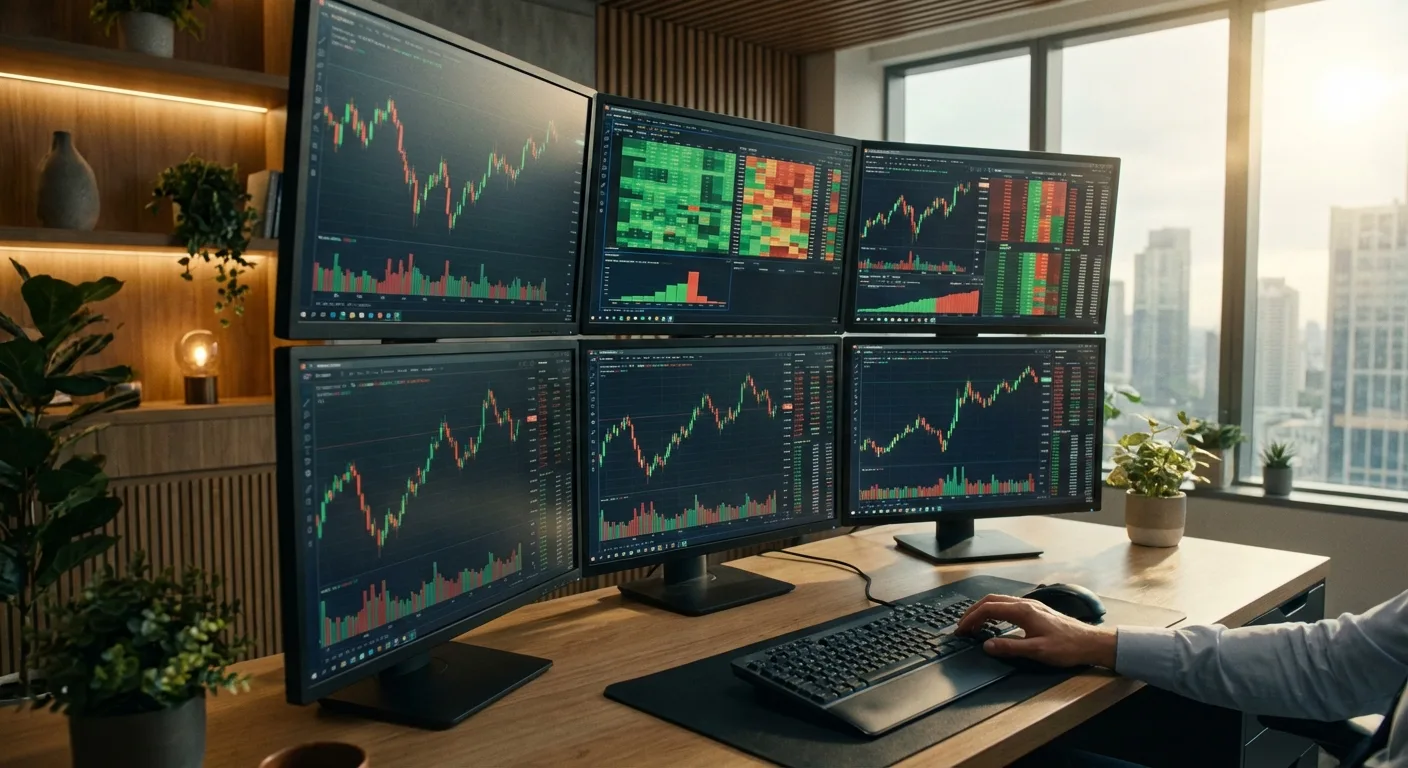
Want to trade like George Soros and break the Bank of England? Who doesn't. But let's be brutally honest: you're not managing a $30 billion hedge fund. The real question is, can you steal the core principles from the George Soros trading strategy and use them as a retail trader in India? The answer is yes, but you have to strip away the myth and focus on the mechanics. It's not about betting your life savings on a hunch. It's about understanding how markets really work, spotting the cracks in consensus, and having the guts to act. I've tried to copy his style, made some costly mistakes, and learned what actually translates to the Nifty and USD/INR charts on your screen.
Forget the Hollywood version. Soros's edge wasn't magic; it was a specific framework called reflexivity theory. Most economics assumes markets move toward equilibrium. Soros said that's rubbish. He believed markets are inherently biased and those biases actually change the fundamentals they're supposed to reflect.
Think of it as a feedback loop. Prices don't just reflect reality; they create a new reality. A company's stock goes up because of optimism. That high stock price lets the company raise cheap capital, hire better talent, and buy competitors, which then justifies the higher price. The initial bias (optimism) altered the fundamental story. This works in reverse too, with pessimism creating a death spiral.
His trading strategy, often called global macro, was about finding these moments of extreme bias - where the market's perception was so far detached from a fragile underlying reality that a massive correction was inevitable. He didn't just predict it; he bet big on it, using immense use through his Quantum Fund.

Warning: use is Soros's weapon of mass destruction and your most likely path to a margin call. He could access it cheaply and manage the risk with a team of PhDs. You probably can't. Using a position size calculator isn't optional here; it's your survival kit.
The famous 1992 "breaking the Bank of England" trade was a perfect reflexivity play. The UK was in the European Exchange Rate Mechanism (ERM), but its economy was too weak to support the high German interest rates it was pegged to. The market bias was "the peg will hold." Soros saw the fundamental fragility, shorted the British pound with enormous use, and catalyzed the very collapse he bet on. His fund made over $1 billion in a day. That's the theory in its purest, most profitable form.
You don't need a philosophy degree to use this. For us, reflexivity means watching for narratives that become self-fulfilling. The market isn't a weighing machine; it's a voting machine that sometimes rigs the election.
Spotting the Feedback Loop
Look for sectors or stocks where the price action itself is driving the news. A classic Indian example was the IT boom in the early 2000s. Rising stock prices allowed Infosys, Wipro, etc., to offer Employee Stock Options (ESOPs), attracting insane talent away from traditional jobs. This talent influx boosted profits, which justified higher prices. The loop was positive. The 2008 crash broke it.
The Boom-Bust Sequence
Soros outlined a generic sequence: 1) A trend is unrecognized. 2) It becomes recognized and accelerates via positive feedback (the boom). 3) It enters a period of testing. 4) The bias becomes exhausted and trends reverse (the bust). 5) A catastrophic, reflexive collapse can occur.
Your job is to identify phase 2 (for riding the trend) and, more crucially, phase 4 (for a potential reversal). This is where tools like the MACD indicator can show divergence - price making a new high but momentum fading - hinting that the feedback loop is losing power.
I once got caught in a negative reflexive loop with a mid-cap bank stock. Bad results came out, the stock fell 5%. Rumours of an NPA issue hit Twitter, it fell another 10%. The falling price spooked institutional investors, who sold, making the price fall further and the rumours seem more credible. I was long, hoping for a bounce. I lost 18% before cutting the trade. I was a victim of the loop, not an observer of it.

💡 Winston's Tip
The market's job is to tell a convincing story. Your job is to find the one plot hole everyone else is ignoring. That's where the money is.
“The market isn't a weighing machine; it's a voting machine that sometimes rigs the election.”
You can't short the rupee with $10 billion. But you can train yourself to think in macro themes and spot their inflection points.
1. The INR Carry Trade Narrative: For years, the play was simple: borrow in USD/EUR at low rates, invest in high-yielding Indian government bonds. This constant demand for INR creates a bias for strength. But watch for the trigger for reversal: a sharp rise in US Fed rates, or a spike in Indian inflation that threatens that yield advantage. When the cost of borrowing dollars rises, the loop reverses, and everyone rushes for the exit. This creates volatility in pairs like USD/INR, perfect for a swing trading approach based on the shifting macro tide.
2. FPI Flows as a Reflexive Force: Foreign Portfolio Investor money isn't passive. Heavy buying (the bias) drives Nifty up. A rising Nifty improves India's economic outlook in global reports, which justifies more FPI inflows (the feedback). This loop can create extended trends. The crack comes when global risk sentiment sours (like in a US recession). Outflows begin, pushing the market down, which makes India look "riskier," accelerating outflows. Tracking FPI data from NSDL isn't just research; it's tracking the mood of a giant, reflexive player.
3. Sectoral Manias: Remember the renewable energy hype? Policy support (reality) led to soaring stock prices (bias). Those high valuations allowed companies to raise equity and debt cheaply (changed reality), funding massive expansion. The loop was in full swing. The test comes when subsidies are cut or execution fails. Which of today's narratives - semiconductors, EVs, defence - are in a genuine reflexive boom, and which are just hype?

Pro Tip: Don't trade the first headline. Trade the consensus that forms around the headline. When every business channel pundit is saying the same thing about RBI policy or IT earnings, the reflexive bias is at its peak. That's when you look hardest for the flaw.
Here’s how I structure a Soros-inspired trade, stripped down for a retail account.
Step 1: The Hypothesis (The Flaw) Don't start with the chart. Start with a sentence: "The market believes X, but Y is true, and that will cause Z." Example: "The market believes high IT sector margins are permanent due to the AI boom, but rising wage inflation and client pushback on rates will compress margins within two quarters."
Step 2: Finding the Chart Level Now, go to the Nifty IT index chart. Look for a technical level that, if broken, would confirm the market is starting to perceive this flaw. Is it a key support level that's been tested multiple times? A break below that could start a negative feedback loop of selling. Use the RSI indicator to see if it's overbought as price struggles at a high - a sign the positive loop is exhausted.
Step 3: The Trade & Risk If my hypothesis is that Nifty IT will fall, I might buy a put option or short the index futures. This is critical: I decide my maximum loss before the trade. If the index moves 5% against me, I'm wrong, and I'm out. Soros was famous for cutting losses quickly. He'd rather preserve capital for the next, correct idea.
Step 4: Monitoring the Narrative Once in the trade, I'm not just watching price. I'm scanning for news that confirms the reflexive turn. Are brokerages downgrading the sector? Are there reports of deal cancellations? This feedback validates the trade. If the price moves in my favour but the narrative stays stubbornly positive, I get cautious. The loop hasn't turned yet.
I used this in early 2023 on a XAU/USD trade. Hypothesis: "The market believes the Fed will pivot imminently, but sticky inflation means rates will stay higher for longer, crushing gold." I shorted at $1950. The break below the $1900 support was my confirmation. I took profit at $1820. The risk was defined, the narrative (Fed commentary) confirmed the move, and it worked. Not a billion dollars, but a solid 6.6% on the capital risked.
💡 Winston's Tip
If you can't explain your trade thesis in two sentences to a smart friend, you don't have a thesis. You have a hope.
“You can be fundamentally right but be six months early. The market can stay biased longer than you can stay solvent.”
This is the part most gurus skip. Trying to trade like Soros is incredibly dangerous for retail traders. Here's why.
use Landmines: Soros's returns were magnified by use. Your broker, like Exness or IC Markets, will offer you use too - maybe 50:1 on forex. This is a trap. A 2% move against you wipes out 100% of your margin on a 50:1 trade. You will get the direction right but be stopped out by noise. I learned this the hard way shorting EUR/INR during the Greece crisis. I was right on the eventual drop, but a 150-pip squeeze against me first obliterated my position. My spread and use killed me, not my thesis.
Timing is Everything: You can be fundamentally right but be six months early. The market can stay biased longer than you can stay solvent. Holding a losing position "because Soros would" is a surefire way to blow up your account. You lack his infinite capital (or near enough).
Information Asymmetry: Soros had a network of central bankers, politicians, and analysts. You have Twitter, Bloomberg Quint, and Moneycontrol. The quality of your "fundamental flaw" analysis will be inferior. This means your win rate will be lower, so your risk management must be impeccable.
The Psychological Toll: Going against the crowd is lonely and scary. When you short a popular stock that's "guaranteed to go up," and it rallies another 10%, every cell in your body screams you're an idiot. Most traders fold here, only to watch the collapse happen after they've covered. You need a constitution of steel, which only comes from experience and surviving previous mistakes.
Managing complex, multi-legged macro trades requires precision; Pulsar Terminal's drag-and-drop orders and multi-TP/SL features on MT5 let you execute sophisticated Soros-inspired strategies without the headache.
Pulsar Terminal
The all-in-one MT5 companion: drag-and-drop orders, multi-TP/SL, trailing stop, grid trading, Volume Profile, and prop firm protection. Used by 1,000+ traders daily.

You can't execute this on a basic Upstox chart. You need a platform that handles sophisticated analysis and multiple asset classes.
For Macro Analysis: You need real-time access to global news (Reuters, Bloomberg), Indian economic data releases, and FPI/DII flow data. Sites like NSDL and SEBI are your friends.
For Charting & Execution: A strong platform like MetaTrader 5 (MT5) is almost non-negotiable. You need to look at correlations: how is the US Dollar Index (DXY) moving with USD/INR? How is the S&P 500 moving with Nifty? You need multiple timeframes and advanced indicators.
| Broker Consideration | Why It Matters for a "Soros-Style" Trade |
|---|---|
| Multi-Asset Access | Can you trade Nifty futures, Bank Nifty, USD/INR, and maybe US indices from one account? You need to see the whole picture. Brokers like Pepperstone offer this. |
| Advanced Order Types | Beyond simple stop-losses. You need trailing stops to lock in profits during a reflexive bust, and OCO (One-Cancels-the-Other) orders for complex entry hypotheses. |
| Low Latency & Reliable Execution | When the RBI makes a surprise announcement, you can't afford slippage. Test the demo accounts of brokers like XM or IC Markets during high volatility. |
| Research Quality | Does the broker provide actionable macro insights, or just fluff? Their research should feed your hypothesis generation. |
The Mindset Tool: A trading journal. Not just for entries and exits, but for writing down your initial hypothesis, the prevailing market narrative, and why you were right or wrong. This is how you build the Soros-like instinct over years.
💡 Winston's Tip
Soros made billions on a few trades but protected capital on hundreds. Your stop-loss is your most Soros-like tool. Use it.
“For you, the George Soros trading strategy is a lens, not a blueprint.”
Should you try to trade like George Soros? Yes and no.
Yes, you should adopt his mindset. Train yourself to question consensus. Look for the disconnect between story and reality. Think in terms of feedback loops, not just support and resistance. This will make you a far more discerning trader, whether you're scalping Bank Nifty or investing in SIPs.
No, you should not try to replicate his methods directly. You cannot use his level of use. You cannot make billion-dollar directional bets. You cannot afford to be early.
For you, the George Soros trading strategy is a lens, not a blueprint. Use it to identify high-probability, asymmetric risk/reward setups where the market is leaning too far one way. Then, use retail-sized positions, ruthless stops, and impeccable trade management to exploit it.
Start small. Take your next trade idea and write down the "reflexive hypothesis" on a sticky note. If you can't articulate what the market wrongly believes, you shouldn't be in the trade. Focus on mastering one instrument - maybe Nifty or EUR/USD - through this macro lens before expanding.
The goal isn't to become the next Soros. It's to steal his best ideas, adapt them to your reality, and consistently protect your capital while taking smart risks. That's how you survive and compound in the Indian markets. Everything else is just a story.
FAQ
Q1Can a retail trader in India really use George Soros's strategy?
You can use the thinking, not the literal strategy. Retail traders lack the capital, use, and information network. Focus on adopting his reflexivity mindset - looking for market narratives that are disconnected from reality and poised for a reversal - and apply it with strict risk management and small position sizes suitable for your account.
Q2What is reflexivity theory in simple terms?
It's the idea that market prices don't just reflect fundamentals; they influence them. A rising stock price (bias) can make a company more successful (changed reality) by letting it raise cheap capital, which then justifies the higher price. This creates self-reinforcing feedback loops that drive booms and busts.
Q3What's a concrete example of this in the Indian market?
FPI (Foreign Portfolio Investor) flows are a classic reflexive force. Heavy buying drives the Nifty up (bias). A rising market improves India's global economic scores (changed reality), which attracts more FPI inflows (feedback). This loop continues until a global shock (like a US recession) triggers outflows, which pushes prices down, making India look riskier, accelerating the selling in a negative loop.
Q4What's the biggest risk in trying to trade this way?
use and timing. Using high use to magnify a macro bet can wipe you out on a short-term move against you, even if your long-term thesis is correct. Also, markets can remain irrational longer than you can remain solvent. You must use tight stop-losses and excellent position sizing.
Q5Do I need a special broker to trade with a macro mindset?
You need a competent broker, not necessarily a special one. Look for one that offers multi-asset access (Nifty, USD/INR, global indices), reliable execution, and advanced order types like trailing stops. Platforms like MetaTrader 5 are essential for the complex charting and analysis this approach requires.
Q6What's the first step I should take to apply this?
Before your next trade, write down a one-sentence hypothesis: "The market believes X, but Y is true, which will cause Z." If you can't clearly identify what the consensus is and why it's wrong, you're not trading on a Soros-like insight - you're just gambling on price movement.
Prof. Winston's Lesson
Key Takeaways:
- ✓Reflexivity means prices change fundamentals.
- ✓Trade the narrative shift, not the first headline.
- ✓Use 1/10th the use you think you need.
- ✓Your stop-loss is your best macro tool.
How useful was this article?
Click a star to rate
Weekly Trading Insights
Free weekly analysis & strategies. No spam.
About the Author
Rajesh Sharma
Senior Forex Analyst
Trading Indian and South Asian markets for over 10 years. Started with NSE currency derivatives before moving to international forex. Specializes in USD/INR and emerging market pairs.
Comments
Risk Disclaimer
Trading financial instruments carries significant risk and may not be suitable for all investors. Past performance does not guarantee future results. This content is for educational purposes only and should not be considered investment advice. Always conduct your own research before trading.
You Might Also Like

Cara Trading Forex Sukses: 7 Prinsip dari Trader Profesional
Cara trading forex sukses dengan 7 prinsip trader pro: manajemen modal, disiplin, journal trading, backtest. Data nyata, bukan janji profit palsu.
Jam Trading Forex Terbaik untuk Trader Indonesia: Panduan Lengkap dengan Tabel Waktu
Panduan jam trading forex untuk trader Indonesia. Tabel 4 sesi dunia, jam emas 20:00-00:00, sesi mana yang harus dihindari. Data akurat + tips dari trader berpengalaman.
Top 5 Sàn Forex Uy Tín Nhất 2026: Review Jujur dari Trader Indonesia
Top 5 sàn forex uy tín 2026 untuk trader Indonesia. Review jujur: spread, deposit, withdraw, dukungan lokal. Exness, XM, IC Markets & lebih.
Get Pulsar Terminal
All these calculators are built into Pulsar Terminal with real-time data from your MT5 account. One-click position sizing, automatic risk management, and instant calculations.
Get Pulsar Terminal