


You've seen the ads, right? The ones promising a robot that made over $2 million with '98% accuracy.' As a trader in South Africa, you're probably wondering if the GPS Forex Robot is the shortcut to easy money, or just another expensive lesson.

David van der Merwe
Emerging Markets Trader ·  South Africa
☕ 9 min read
What you'll learn:
You've seen the ads, right? The ones promising a robot that made over $2 million with '98% accuracy.' As a trader in South Africa, you're probably wondering if the GPS Forex Robot is the shortcut to easy money, or just another expensive lesson. I bought it. I tested it. Let me save you some rand and a whole lot of frustration by breaking down exactly what this robot is, how it fits into our local market, and whether you should even consider it.
The GPS Forex Robot is an Expert Advisor (EA), which is just a fancy name for an automated trading program that runs on the MetaTrader 4 or 5 platform. You install it, attach it to a chart, and in theory, it trades for you 24/5. The sales pitch is incredibly seductive: a one-time payment of $149 (roughly R2,700 to R2,800 depending on the exchange rate) for a 'lifetime license,' claims of 93.98% win rates, and charts showing massive equity growth.
Here's the first reality check. That '98% accuracy' claim is, in my experience, marketing gymnastics. The developer, Mark Larsen, states this refers to the primary strategy's entry accuracy, not your overall profit and loss. The robot also has a 'reverse strategy' that can trigger after losses, which is where many users report getting hammered. It's not a set-and-forget money printer. It's a tool with specific, and frankly, quite rigid rules.
When I first installed it back in 2019, I was cautiously optimistic. I funded a small $500 (about R9,000 at the time) account with an offshore broker that supported MT4. For the first two months, it did nothing. Not a single trade. I learned the hard way that it's not a high-frequency scalping robot. It's designed to wait for very specific conditions, sometimes for weeks, before taking a position. This low activity - averaging maybe 1-2 trades a month - is something you need to be psychologically prepared for.
Let's talk numbers, because that's where the rubber meets the road. The upfront cost is $149 USD. But for you in South Africa, that's just the start.
The Hidden Costs
First, you need a live trading account with a broker that supports MT4/5. While the robot's website suggests certain brokers, your priority must be finding one that's reputable and aligns with South African regulations. The minimum deposit can range from $5 (R90) to $200 (R3,600+). You're also paying the spread on every trade the robot executes. If it's trading during low-liquidity times, those spreads widen and eat into any potential profit.
My Experience with the Numbers
I ran the GPS Forex Robot on a demo account for three months, then on a live account with $1,000 for four months. On the live account, it placed 7 trades. It won 5 and lost 2. Sounds good, right? Here's the catch: the two losses were significantly larger than the five wins. My net result after commissions and spreads was a loss of about $87 (R1,500). This is the classic problem with just looking at win rate - it tells you nothing about the risk/reward ratio.
The advertised 'net profit of $593,230 since 2012' is a backtested result. Backtesting is like driving using only the rear-view mirror; it shows you where you've been under perfect conditions, not the pothole-filled road ahead. Real-market slippage, changing broker conditions, and unexpected news events (like a SARB interest rate decision) aren't fully accounted for.

Warning: Many user reviews, especially on independent sites like Trustpilot, report the robot going months without placing a single trade, or entering a series of losing trades via its 'reverse' mode. That $149 can quickly turn into a much larger loss if you're not actively monitoring it.

💡 Winston's Tip
A robot's win rate is a vanity metric. Focus on its risk-to-reward ratio and maximum drawdown. A 90% win rate means nothing if the 10% of losses wipe out all the gains.
“That R2,700 is far better spent on building your own knowledge. The forex market rewards skill and discipline, not just automation.”
This is the most critical section for any local trader. Yes, using a forex robot like the GPS is legal in South Africa, but with major, non-negotiable caveats governed by the Financial Sector Conduct Authority (FSCA).
The FSCA doesn't regulate the robot itself, but it strictly regulates who can give you financial advice and how your money is handled. The company selling the GPS Forex Robot is not an FSCA-licensed Financial Service Provider (FSP). They are selling you software, not a managed account service. This is a crucial distinction. You are entirely responsible for every trade it makes.
Your safety net is your broker. You must use a broker that is either:
- FSCA-regulated locally (your best protection for fund security and dispute resolution).
- Regulated by a top-tier foreign authority (like ASIC or FCA) and accepts South African clients.
Never deposit money with an unregulated offshore broker just because the GPS website recommends it. If that broker vanishes, the FSCA can't help you. Also, remember the South African Reserve Bank's (SARB) exchange controls. Your annual discretionary allowance is R1 million. Any trading profits you bring back into SA count against this, and you must declare them. Using an automated system that potentially generates many transactions doesn't exempt you from these reporting rules.

Pro Tip: Before buying any EA, check the provider's location and regulatory status. If they claim to 'manage' your account for a fee, they absolutely must have an FSP license from the FSCA. The GPS seller does not have this, which is why they stress it's 'software only.'
So you've decided to proceed. Here’s the practical guide to getting it running in a South African context.
The GPS Forex Robot only works on MetaTrader 4 or 5. Most reputable brokers offer MT4. Some popular choices among experienced local traders include Exness, IC Markets, and XM. I personally tested it on an IC Markets MT4 account. The installation is straightforward: you download a file, place it in your MT4's 'Experts' folder, restart the platform, and drag it onto a chart.
But setup is where the real work begins. You need to configure it. The default settings are for a specific broker's conditions (often an old Alpari UK demo). They will almost certainly not be optimal for your chosen broker's spreads and execution speed. You'll need to adjust the lot size, the magic number (its trade identifier), and most importantly, understand the 'strategy' switch. Choosing the wrong one for market conditions can lead to rapid losses.
This isn't passive income. It's active system management. You need to:
- Ensure your VPS or computer is running 24/5 (a power outage in Joburg means missed trades).
- Monitor for news events. The robot has no fundamental analysis. A major SARB announcement or a US Fed speech can blow through its stop losses.
- Keep track of your position size relative to your account balance. The robot doesn't know your risk tolerance.
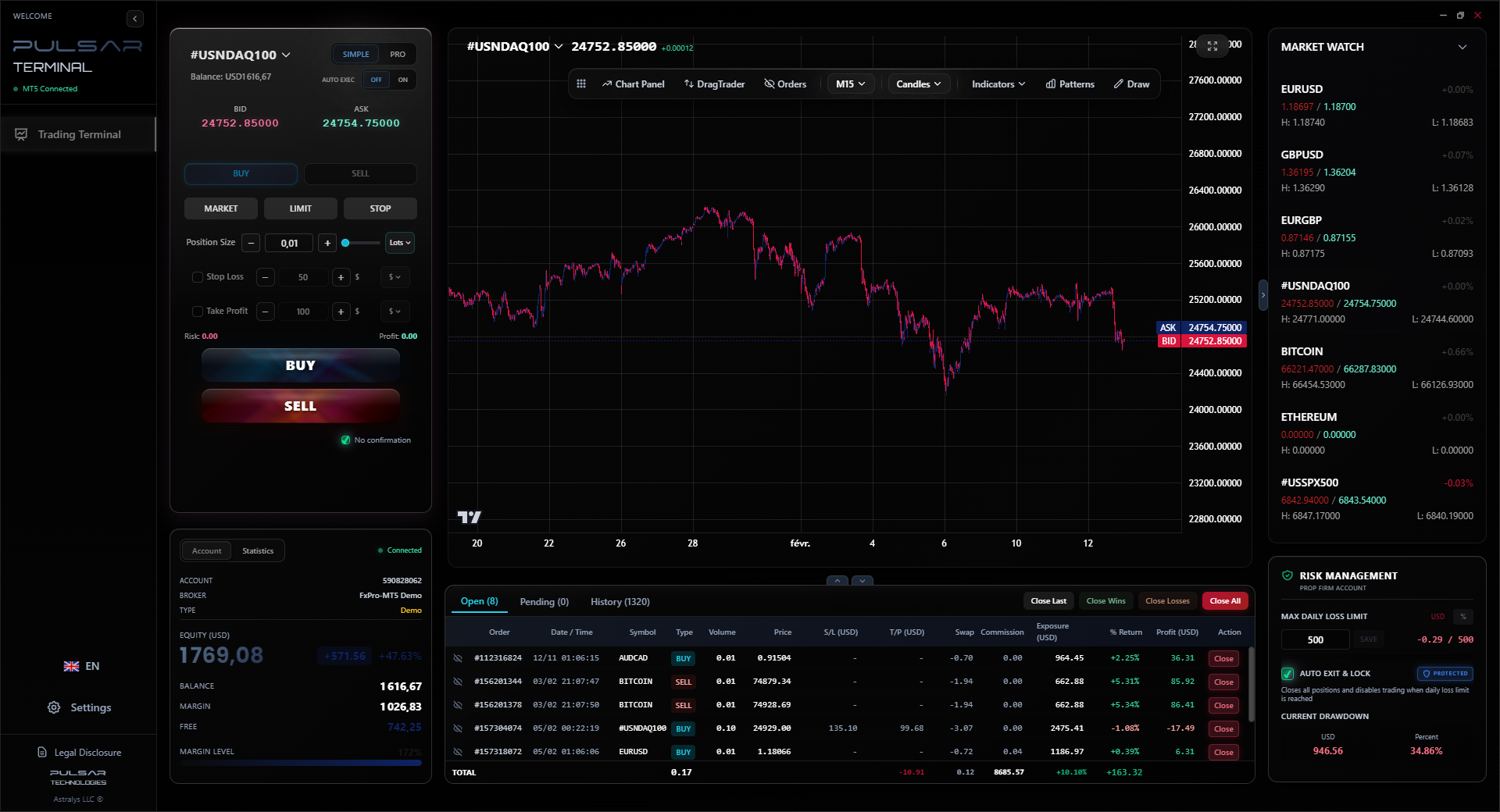
A tool like Pulsar Terminal can be a lifesaver here, as it lets you manage multiple trades and set advanced stop-loss rules directly on MT5, giving you back some control over the robot's automated actions.
💡 Winston's Tip
Never let an automated system trade without your own fundamental overlay. An EA doesn't know about a SARB interest rate decision at 3pm. You do. Pause it during high-impact news.
“The advertised 'net profit of $593,230 since 2012' is a backtested result. Backtesting is like driving using only the rear-view mirror.”
If I had that R2,700 to invest in my trading today, I would not spend it on the GPS Forex Robot. Here’s what I’d do, based on 12 years of wins and painful losses.
1. Education First, Automation Later. Use that money for a course on price action or a subscription to a reputable trading journal platform. Understanding why a trade works is infinitely more valuable than blindly following a robot. Once you have a solid manual swing trading strategy, then you can explore coding it into an EA yourself, or hiring a coder on a site like MQL5.com. You'll own the logic completely.
2. Build a Proper Risk-Managed Account. That R2,700 could be your first risk capital. Start small. Open an account with an FSCA-regulated broker with a low minimum deposit. Trade micro lots. Your goal for the first year shouldn't be profit, it should be survival and consistency. Learn to use the MACD indicator and RSI indicator not as signals, but as context within your overall strategy.
3. Consider a Prop Firm Challenge. Many funded trader programs (prop firms) cost around $100-$200 for a challenge. If you pass, you trade their capital for a split of the profits. This forces you to develop discipline and a strong strategy under strict rules. The skills you build here are permanent. Passing one of these is a better proof to your ability than any robot purchase.
The core issue with buying a 'black box' robot is dependency. It makes you a system administrator, not a trader. When it stops working (and all EAs go through drawdown periods), you have no skills to fall back on. I learned this the hard way after my GPS experiment failed. I had to go back to the basics, relearn chart reading, and build my confidence from scratch.
If you're exploring automation, tools like Pulsar Terminal let you automate specific, high-value tasks like trailing stops and partial closures on your own manual trades, keeping you firmly in the driver's seat.
Pulsar Terminal
The all-in-one MT5 companion: drag-and-drop orders, multi-TP/SL, trailing stop, grid trading, Volume Profile, and prop firm protection. Used by 1,000+ traders daily.
For the vast majority of South African traders, especially beginners, my answer is a firm no.
The GPS Forex Robot is a legitimate piece of software, not an outright scam. But it's a specialized tool sold with hyperbolic marketing. Its low trade frequency and sensitivity to broker conditions make it a poor fit for someone looking for consistent activity or who doesn't understand its internal mechanics. The risk of it triggering a series of losing 'reverse' trades is real and can lead to a significant margin call if you're over-leveraged.
It might have a place for a very specific type of trader: someone with a larger account (so the low trade volume isn't an issue), who understands MT4 EAs inside and out, and who is willing to treat it as a single, high-risk/high-potential-reward component of a diversified trading plan. This person would also need the patience to potentially wait months for a setup.
For everyone else, that R2,700 is far better spent on building your own knowledge. The forex market, especially trading pairs like EUR/USD or XAU/USD, rewards skill and discipline, not just automation. The greatest tool you can ever invest in is between your ears. No robot can replace the judgment you develop from placing your own trades, managing your own emotions, and learning from your own mistakes. That's the real path to success in this game.
💡 Winston's Tip
If you wouldn't manually take the trade the robot is about to execute, you shouldn't be running the robot. Automation should execute your plan, not replace your judgment.
FAQ
Q1Is the GPS Forex Robot legal with South African FSCA regulations?
Yes, using the software itself is legal. However, the company selling it is not an FSCA-licensed Financial Service Provider (FSP). You are solely responsible for all trades it executes. Your protection comes from using an FSCA-regulated broker to host your trading account.
Q2How much does it really cost for a South African?
The robot license is ~R2,700 ($149). You must also fund a live trading account (min. R90-R3,600+), potentially pay for a VPS, and will always pay trading spreads and commissions. The real cost is often the drawdown losses it can incur.
Q3Which South African brokers work with the GPS Forex Robot?
It works on any broker offering MetaTrader 4 or 5. Popular local choices include Exness, XM, and IC Markets. Always prioritize the broker's FSCA regulation over robot compatibility.
Q4Does it really have a 98% win rate?
This is a misleading claim. The developer states it refers to entry accuracy of its primary strategy, not overall profitability. The robot uses a 'reverse strategy' after losses which can result in significant drawdowns, making the actual profit/loss win rate much lower.
Q5What is the biggest risk for a SA trader using this robot?
Financial loss due to misunderstanding the strategy, combined with regulatory risk. Using an unregulated broker to run it could lead to a total loss of funds with no FSCA recourse. The robot's inactivity or series of reverse trades can also deplete an account.
Q6Are there better alternatives for automated trading?
Yes. First, learn to trade manually. Then, you can code your own strategy into an EA or use a platform like Pulsar Terminal to automate specific trade management tasks (like trailing stops) on your own trades, keeping you in control.
Q7Can I get my money back if it doesn't work?
They offer a 60-day money-back guarantee, but many user reviews complain that support ignores refund requests or sets difficult conditions. You should consider the $149 as a non-refundable purchase.
Prof. Winston's Lesson
Key Takeaways:
- ✓Win rate is meaningless without risk/reward context.
- ✓Always prioritize FSCA broker regulation over EA compatibility.
- ✓Budget for hidden costs: VPS, spreads, and potential drawdown.
- ✓Treat any advertised backtested profit with extreme skepticism.
How useful was this article?
Click a star to rate
Weekly Trading Insights
Free weekly analysis & strategies. No spam.
About the Author
David van der Merwe
Emerging Markets Trader
Johannesburg-based trader with 11 years in emerging market currencies. Specializes in ZAR pairs, FSCA-regulated trading, and South African market analysis.
Comments
Risk Disclaimer
Trading financial instruments carries significant risk and may not be suitable for all investors. Past performance does not guarantee future results. This content is for educational purposes only and should not be considered investment advice. Always conduct your own research before trading.
You Might Also Like

Cara Trading Forex Sukses: 7 Prinsip dari Trader Profesional
Cara trading forex sukses dengan 7 prinsip trader pro: manajemen modal, disiplin, journal trading, backtest. Data nyata, bukan janji profit palsu.
Jam Trading Forex Terbaik untuk Trader Indonesia: Panduan Lengkap dengan Tabel Waktu
Panduan jam trading forex untuk trader Indonesia. Tabel 4 sesi dunia, jam emas 20:00-00:00, sesi mana yang harus dihindari. Data akurat + tips dari trader berpengalaman.
Top 5 Sàn Forex Uy Tín Nhất 2026: Review Jujur dari Trader Indonesia
Top 5 sàn forex uy tín 2026 untuk trader Indonesia. Review jujur: spread, deposit, withdraw, dukungan lokal. Exness, XM, IC Markets & lebih.
Get Pulsar Terminal
All these calculators are built into Pulsar Terminal with real-time data from your MT5 account. One-click position sizing, automatic risk management, and instant calculations.
Get Pulsar Terminal