


I was short on EUR/USD on November 3rd, 2022.

Olumide Adeyemi
West African Trading Pioneer ·  Nigeria
☕ 10 min read
What you'll learn:
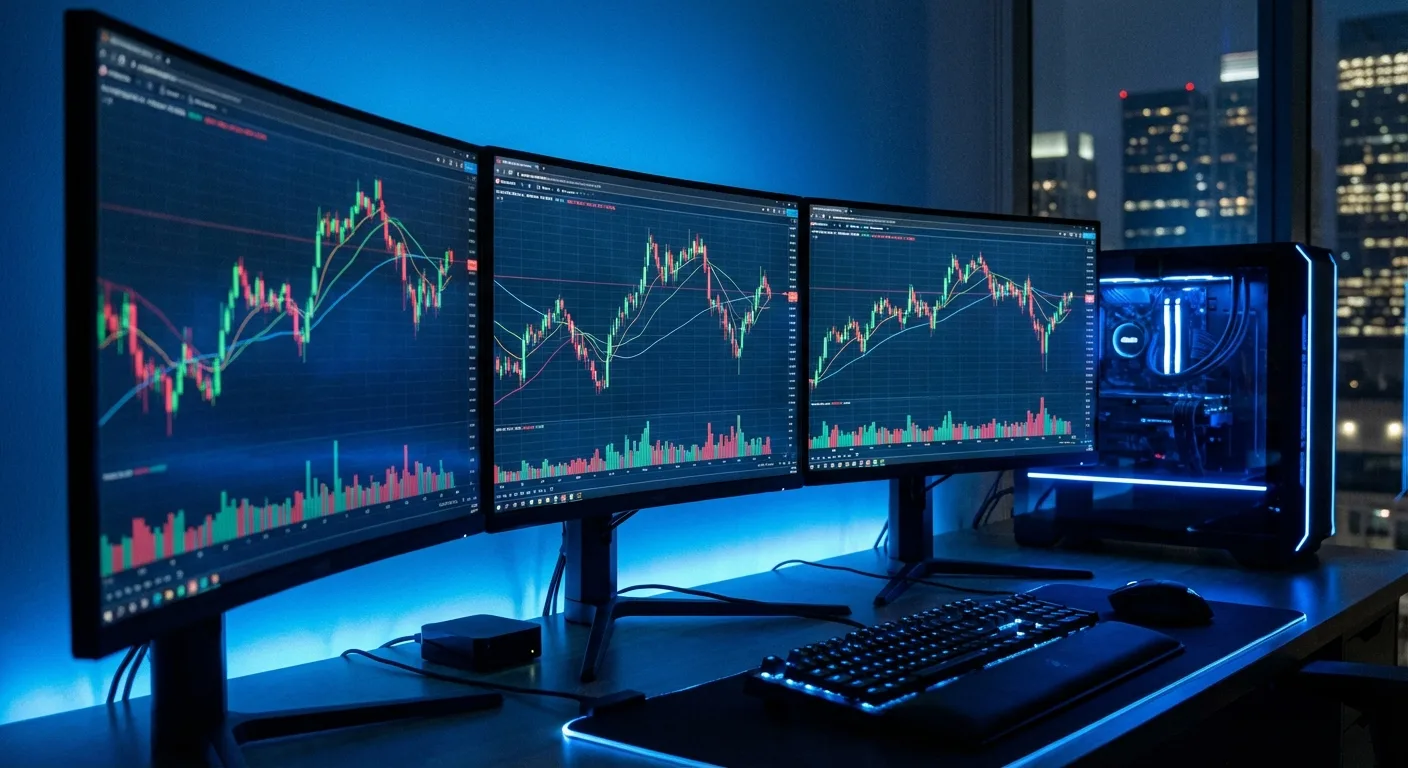
I was short on EUR/USD on November 3rd, 2022. The U.S. Non-Farm Payrolls report was due. My stop loss was a comfortable 25 pips away. The number hit: 261K jobs added, smashing expectations. The chart didn't move. It vaporized. In half a second, my stop was taken at a 42-pip slippage. Gone. Just like that. That's the raw, unadulterated power of high impact forex news. It doesn't care about your analysis, your stop loss, or your feelings. This guide isn't about predicting the news. It's about building a bunker, putting on your helmet, and learning how to operate in the artillery barrage.
Forget what your WhatsApp group says. High impact news isn't just any announcement. It's a scheduled economic data release or central bank event that has a proven, historical track record of causing significant, immediate volatility in a currency pair. The market reprices itself in seconds.
In practical terms, you're looking at:
- Central Bank Interest Rate Decisions & Statements: The big one. The Central Bank of Nigeria's (CBN) Monetary Policy Committee (MPC) meetings, the U.S. Federal Reserve (FOMC), the ECB. This is where policy changes, and the forward guidance (what they say about the future) is often more important than the rate itself.
- Inflation Data (CPI): Consumer Price Index. This directly influences central bank policy. A hot CPI print can send a currency soaring on rate hike expectations.
- Employment Data: U.S. Non-Farm Payrolls (the "NFP") is the king. Strong jobs = strong economy = potential for higher rates. Other countries have their own versions (like UK Claimant Count).
- GDP Figures: Gross Domestic Product. The main scorecard for an economy's health. A big miss or beat can trigger sustained moves.
- Retail Sales: A direct pulse check on consumer spending strength.

Warning: Don't confuse medium-impact (like PMI surveys) with high-impact. Trading the German ZEW Economic Sentiment index like it's the ECB is a sure way to bleed money on spreads for minimal movement.
My rule? If it doesn't regularly cause 30+ pip spikes in the major pairs within the first minute, it's not high impact. You need a reliable economic calendar. Most good brokers provide one. I mark the truly high-impact events in red and clear my schedule 15 minutes before and after.
“High impact news doesn't care about your analysis, your stop loss, or your feelings.”
You have three basic choices when news drops. Trying to mix them is how you get run over.
1. The Avoidance Strategy (My Default)
This is the smartest play for most traders, especially beginners. You simply close all positions and stay out of the market 15-30 minutes before the news and for at least 5-10 minutes after. Why? To avoid the insanity: widened spreads (I've seen EUR/USD spreads blow out to 15 pips), horrific slippage (like my NFP story), and pure noise. You preserve capital and wait for a clear chart pattern to emerge from the chaos. This isn't cowardice. It's discipline.
2. The Pre-News Positioning (The High-Stakes Gambit)
This is where you place a trade before the number is released, betting on the direction of the move. It's pure speculation. You're gambling on an outcome. Some try to hedge by placing both a buy and a sell order just before the news, hoping the spike will hit one take-profit. This is dangerous because of spread widening and the fact the price can spike both ways (a whipsaw) and take out both stops. I lost $400 trying this on a UK CPI report once. The price spiked up 20 pips, hit my buy TP, then reversed 50 pips down and hit my sell stop. Net loss.
3. The Post-News Reaction Trade (The Sniper Approach)
This is the only "news trading" method I respect. You wait for the news to hit, let the initial 30-60 seconds of explosive volatility pass, and then assess. You're not trading the news itself, you're trading the market's reaction to the news. Did the price break a key technical level and hold? Is there a clear rejection (a pin bar) after the spike? This requires patience, a cool head, and a very good understanding of support and resistance.

Pro Tip: If you trade the reaction, use a wider stop. The post-news environment is still jittery. A 15-pip stop will get hunted. Consider 25-50 pips on majors, and always, always use a position size calculator so that wider stop doesn't blow up your account.

💡 Winston's Tip
The first spike is for the algos. The second move, after the retrace, is for the traders. Wait for it.

“Trading the post-news reaction isn't gambling on an outcome; it's assessing the market's verdict.”
Trading news without a checklist is like skydiving without checking your parachute. Here's mine:
- Identify the Event: What's the news? U.S. CPI, CBN MPC? Know the exact time (and convert it to your local WAT).
- Know the Consensus & Previous Figures: What are economists forecasting? What was the last number? The market moves on the deviation from expectation. A "good" number that was already expected might cause no move.
- Check the Chart for Key Levels: Where is the nearest major support and resistance? Where is the daily open? These are the magnets during volatility. Draw the lines.
- Adjust or Remove Pending Orders: Any limit or stop orders near the current price? Cancel them. The spike can trigger them in terrible places.
- Decide Your Role: Are you avoiding, positioning, or sniping? Commit. No last-minute changes.
- Calculate Your Risk: If you're entering, what's your position size? Use your calculator. Your risk per trade should be the same as always (e.g., 1% of account). News doesn't justify breaking your rules.
I keep a notepad file open with this list. It forces discipline when the adrenaline starts pumping.
“Trading the post-news reaction isn't gambling on an outcome; it's assessing the market's verdict.”
When the number hits, the chart turns into a seismograph. Here's what's happening and how to not panic.
The Reality of Slippage & Spreads: Your broker isn't cheating you (usually). Liquidity providers pull back, spreads widen to protect themselves, and market orders get filled at the next available price. A 1-pip spread can become 10 pips in a blink. This is why market orders during news are suicidal. If you must enter, use a limit order at a specific price, accepting you might not get filled.
The Two-Stage Move: Often, there's an initial, violent knee-jerk spike (the algos reacting). Then, there's a partial retracement as humans assess and profit-taking occurs. The direction of the move after that retracement is often the real trend. This is why waiting is powerful.
My Golden Rule for Open Trades: If I have a trade open before news (which I try to avoid), I do one of two things: 1) Close it entirely 15 minutes prior. 2) Move my stop loss to breakeven and remove my take profit. This locks in no loss and gives the trade room to breathe through the storm. Trying to guess which way it will go and moving stops accordingly is a fool's errand.
Tools like a trailing stop can be useful in the sustained move after the initial chaos, but not during the spike. Automating this is where a platform helper shines. Setting a breakeven stop automatically after a certain profit is a lifesaver.
💡 Winston's Tip
If your heart is pounding as the clock counts down to a news release, you have no business being in a trade. Close it. Fear is a signal.
“use magnifies losses faster than gains. Use your position size calculator religiously, especially before news.”
Let's talk about the local context. Trading from Nigeria adds unique layers to this challenge.
Poor Internet & Power: News trading at 2:00 PM WAT (when many European reports drop)? Better have a working inverter and solid data. A disconnection during those 60 seconds means you're at the market's mercy. I once missed closing a trade because NEPA took the light and my modem died. Lost two weeks of profits. Now I have a laptop on battery backup and my phone on mobile data as a backup chart.
Overleveraging on "Sure Things": This is the biggest killer. "CBN is sure to hike rates! Let me go 10x on USD/NGN!" I've been there. In 2021, I was convinced the MPC would hike. I piled into a USD/NGN buy position with 5x my normal size. They held rates. The pair dropped 2% in an hour. The loss was catastrophic. use magnifies losses faster than gains. Use your position size calculator religiously, especially before news.
Trading Too Many Pairs: Focus. You can't effectively track GBP/USD, EUR/JPY, and USD/CAD all during a U.S. news event. Pick one or two majors that are most sensitive to that news (e.g., USD/JPY for U.S. data) and master them. Liquidity in exotics or minor pairs evaporates during news, leading to nightmarish slippage.
Chasing the Spike: You see EUR/USD rocket 40 pips up. "I missed it!" So you buy at the top. Then it retraces 30 pips. You're now in a losing trade, driven by FOMO. This is not a strategy. It's an emotional reaction. If you missed the bus, wait for the next one. The market will always give you another opportunity.
Managing open trades through volatile news is stressful, which is why automating stop-loss adjustments and breakeven moves with a tool like Pulsar Terminal can save your account from emotional decisions.
Pulsar Terminal
The all-in-one MT5 companion: drag-and-drop orders, multi-TP/SL, trailing stop, grid trading, Volume Profile, and prop firm protection. Used by 1,000+ traders daily.

“use magnifies losses faster than gains. Use your position size calculator religiously, especially before news.”
Your goal shouldn't be to become a news gambler. It should be to build a strong trading plan that acknowledges news and uses it to its advantage.
Incorporate the Calendar into Your Weekly Plan: Every Sunday, I check the week ahead. I block out high-impact events in my trading journal. On those days, I might decide to only trade in the Asian session (quieter), or I might plan to be a sniper for a specific event. This is proactive, not reactive.
Use News for Context, Not Entries: Did the price break a 3-month range on the back of a CPI shock? That's a massive clue for your swing trading bias for the next week. The news provides the fundamental catalyst for the technical break you've been watching. This is high-probability trading.
The Prop Firm Consideration: If you're in a prop firm challenge, news is your #1 enemy. Their strict daily loss limits don't care about slippage. A single news spike can blow your challenge. Your best bet? Flat. Be in no trades during major events. The potential reward is never worth the existential risk to your challenge. Some tools can help enforce this by automatically closing all positions before major news if you're prone to temptation.
Backtest Your News Reactions: Don't just guess. Go back on your MT5 chart. Find old NFP or CPI events. Replay what happened. How far did the price spike? How much did it retrace? Where were the key support/resistance levels? This data is gold. It tells you what "normal" looks like, so you can spot the abnormal opportunity.
💡 Winston's Tip
Your best trade on a high-impact news day is often the one you don't take. Preserved capital is profit.

“The ability to sit on your hands and watch the fireworks, knowing your capital is safe, is the mark of a mature trader.”
You can't do this with just a chart and a prayer.
| Tool | Purpose | Nigerian-Friendly Note |
|---|---|---|
| Reliable Economic Calendar | See times, forecasts, previous data. | ForexFactory.com is free and excellent. Set your timezone to WAT. |
| Fast Execution Broker | Minimize slippage on entries/exits. | Look for true ECN/RAW spread accounts from brokers like IC Markets or Pepperstone. Test their demo during news. |
| Stable Internet & Power | Prevent catastrophic disconnects. | Invest in a good UPS/inverter. Have mobile data ready to switch. |
| Trading Journal | Record your news trades, outcomes, and emotions. | Review why you won or lost. Was it skill or luck? |
| Volatility Indicator | Visually see when volatility is expanding. | Average True Range (ATR) on your chart. A rising ATR ahead of news is a warning sign. |
| Risk Management Tool | Automate stop adjustments, breakeven moves. | This is advanced but crucial for managing open trades through volatility. It removes emotion. |
Finally, the most important tool is between your ears. Patience. The ability to sit on your hands and watch the fireworks, knowing your capital is safe, is the mark of a mature trader. The market will be there in 10 minutes. Your account might not be if you jump in unprepared.
FAQ
Q1What's the single most important high impact news for a beginner to watch?
U.S. Non-Farm Payrolls (NFP), released the first Friday of every month at 1:30 PM WAT. It's the most consistently volatile event. Don't trade it. Just watch it. Observe the spread widening, the spike, the retracement. Use it as a live classroom.
Q2Is it better to trade before or after the news?
For 99% of traders, it's better to trade after, or not at all. The pre-news gamble has terrible odds due to spread costs and the binary nature of the outcome. The post-news reaction trade lets you see the market's actual direction with much clearer technicals.
Q3How much does slippage usually cost during major news?
It varies wildly. On a major like EUR/USD with a good broker, you might see 5-15 pips of slippage on a market order during events like NFP or FOMC. On less liquid pairs or with a poor broker, 30-50+ pips is not unheard of. That can turn a 1% risk into a 5% loss instantly.
Q4Can I trade CBN MPC announcements effectively?
It's incredibly tough. The Nigerian forex market is less liquid than major markets. This can mean even more erratic price jumps and harder-to-fill orders. The news also often leaks or is anticipated in the parallel market. If you're new, treat it as an avoidance event. Watch and learn first.
Q5Should I use a wider stop loss when trading around news?
Absolutely, yes - but only if you are trading the post-news reaction after the initial spike has settled. Your stop must be placed beyond the recent noise range. And crucially, you must reduce your position size proportionally so that the wider stop still represents the same monetary risk (e.g., 1% of your account).
Q6Do all brokers allow news trading?
Q7How can I practice news trading without risking money?
Open a demo account with a broker that offers good news execution. Use the economic calendar. For every major event, write down your plan (Avoid, Position, or Snipe). Then execute it on demo. Record the results in a journal. Do this for 20-30 news events before even considering real money.
Prof. Winston's Lesson
Key Takeaways:
- ✓Always know the consensus forecast and previous figure.
- ✓During news, spreads widen: a 1-pip cost can become 10 pips.
- ✓If trading post-news, use a 25-50 pip stop on majors.
- ✓Practice on 30+ demo news events before using real money.
- ✓Flat is a valid and often winning position during news.
How useful was this article?
Click a star to rate
Weekly Trading Insights
Free weekly analysis & strategies. No spam.
About the Author
Olumide Adeyemi
West African Trading Pioneer
One of Nigeria's most active forex trading educators. 8 years of experience trading from Lagos. Specializes in low-capital strategies and prop firm challenges for African traders.
Comments
Risk Disclaimer
Trading financial instruments carries significant risk and may not be suitable for all investors. Past performance does not guarantee future results. This content is for educational purposes only and should not be considered investment advice. Always conduct your own research before trading.
You Might Also Like

Cara Trading Forex Sukses: 7 Prinsip dari Trader Profesional
Cara trading forex sukses dengan 7 prinsip trader pro: manajemen modal, disiplin, journal trading, backtest. Data nyata, bukan janji profit palsu.
Jam Trading Forex Terbaik untuk Trader Indonesia: Panduan Lengkap dengan Tabel Waktu
Panduan jam trading forex untuk trader Indonesia. Tabel 4 sesi dunia, jam emas 20:00-00:00, sesi mana yang harus dihindari. Data akurat + tips dari trader berpengalaman.
Top 5 Sàn Forex Uy Tín Nhất 2026: Review Jujur dari Trader Indonesia
Top 5 sàn forex uy tín 2026 untuk trader Indonesia. Review jujur: spread, deposit, withdraw, dukungan lokal. Exness, XM, IC Markets & lebih.
Get Pulsar Terminal
All these calculators are built into Pulsar Terminal with real-time data from your MT5 account. One-click position sizing, automatic risk management, and instant calculations.
Get Pulsar Terminal