


How much can I make trading forex? If you're asking that, you've probably seen the ads: guys posing with cars they don't own, promising you'll quit your job in three months.

Olumide Adeyemi
West African Trading Pioneer ·  Nigeria
☕ 8 min read
What you'll learn:
- 1The Math Behind Forex Profits: It's Not What You Think
- 2Nigerian Rules, Taxes, and the Real Costs
- 3use: The Double-Edged Sword for Naija Traders
- 4Realistic Profit Scenarios: From Beginner to Consistent
- 5What Separates the Winners from the Losers
- 6Choosing the Right Broker in Nigeria
- 7The Final Verdict on Forex Earnings
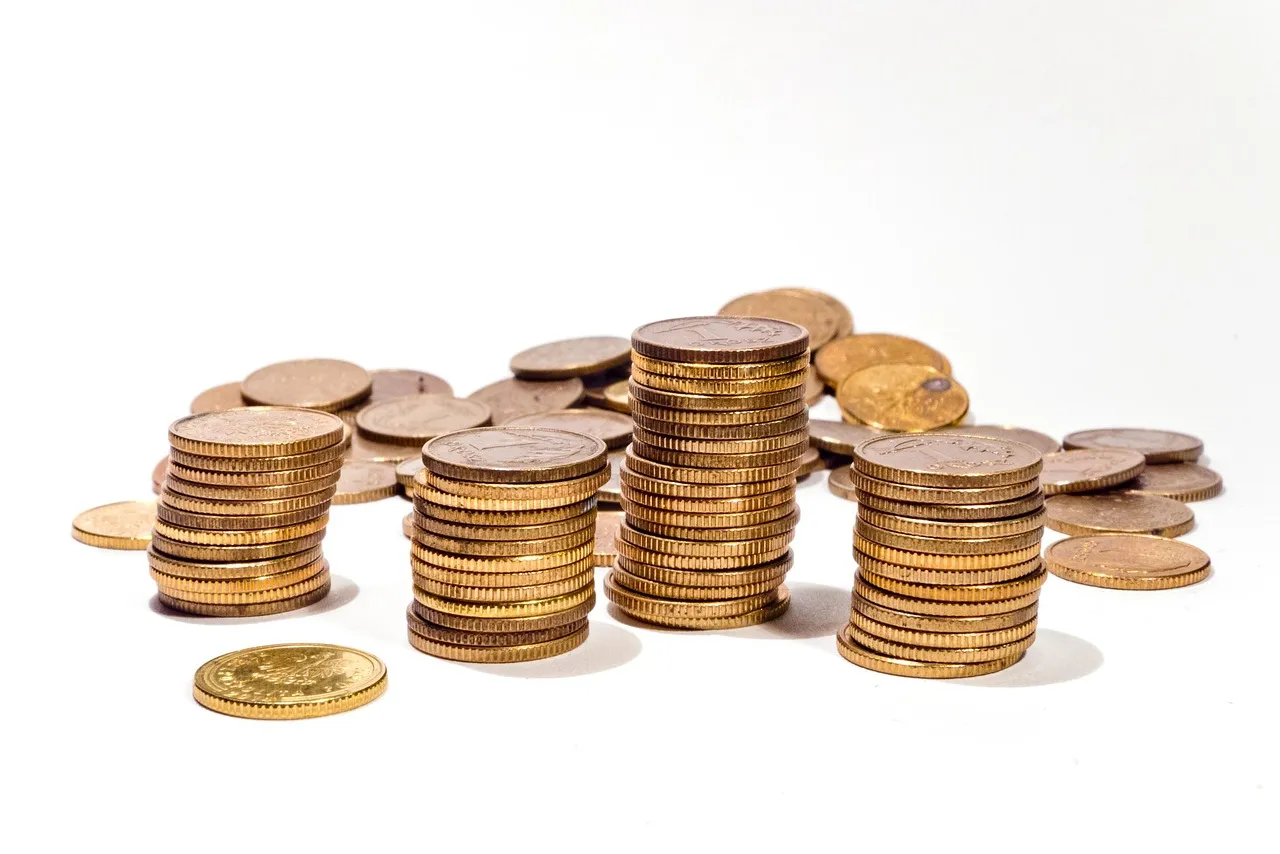
How much can I make trading forex? If you're asking that, you've probably seen the ads: guys posing with cars they don't own, promising you'll quit your job in three months. Let's cut the nonsense. Your potential earnings aren't about dreams; they're a cold, hard function of your capital, your skill, and your ability not to blow up your account. I've traded through bull markets, crashes, and everything in between from Lagos to London. Here's what 12 years in the trenches has taught me about what's actually possible for a trader in Nigeria.
Forget percentages for a second. Your profit in Naira or dollars is determined by three things: your account size, your risk per trade, and your win rate. That's it. No magic.
Let's say you start with ₦500,000 (about $330). A professional, disciplined trader might aim for a 1-3% return per month. That's ₦5,000 to ₦15,000. Not exactly Lamborghini money, is it? But it's sustainable. The guys chasing 50% a month are usually the ones funding the brokers' bonuses with their deposits.

Example:
- Account: $1,000
- Monthly Target: 5% (aggressive but possible)
- Profit: $50
- After 10% Capital Gains Tax: $45 That's about ₦68,000. For a whole month of work and risk. This is the reality check most new traders need.
The global daily volume is insane - over $9.6 trillion. Nigeria's slice of that is estimated between ₦300 million to ₦450 million daily. The opportunity is there, but your piece of the pie is tiny unless you have serious capital. This is why proper position size calculation isn't optional; it's the difference between growing an account and donating to the market.
I learned this the hard way early on. I turned $200 into $1,200 in two weeks trading gold (XAU/USD) like a cowboy. Felt like a genius. Then I lost $900 of it in one afternoon because I didn't respect the math. The market always collects its tuition.

💡 Winston's Tip
Your first profit target should always be moving your stop loss to breakeven. Protecting capital is job one.
Trading is legal here, but the government wants its share. The CBN and SEC are watching, even if the rules for retail traders are still a bit fuzzy around the edges.
The 10% Tax Man
Any profit you make is subject to a 10% Capital Gains Tax. That's non-negotiable. If you make ₦100,000, you owe ₦10,000. Factor this into your targets immediately. Trading with an international broker doesn't make you exempt; it's your responsibility to declare it.
The SEC is cracking down hard on "fund managers" promising guaranteed returns. If someone offers you a "managed account" with a crazy monthly return, run. That's a Ponzi scheme, not forex trading. Stick to regulated, reputable international brokers.
The Hidden Fees That Eat Your Profit
Your broker isn't a charity. They make money from you via spreads, commissions, and swaps.
| Cost Type | What It Is | Typical Example (EUR/USD) |
|---|---|---|
| Spread | Difference between buy/sell price | 0.6 - 1.0 pips on a standard account |
| Commission | Fee per lot traded (on ECN accounts) | $3.50 per side, so $7.00 round turn |
| Swap/Overnight | Interest for holding a position past 5 PM EST | Can be a credit or debit |
If you're a scalping strategy trader making 5-pip profits, a 1-pip spread means 20% of your potential gain is gone before the trade even moves. This is why choosing a broker with tight, transparent pricing like Pepperstone or IC Markets matters more than their welcome bonus.

“Your profit in Naira is determined by three things: your account size, your risk per trade, and your win rate. That's it.”
This is where Nigerian traders get into the most trouble. Because our local regulations aren't as strict as the UK's or EU's, brokers here can offer insane use - I'm talking 1:1000, 1:2000, even "unlimited." It's a trap dressed as an opportunity.
use magnifies everything. A 1% move in your favor with 1:100 use doubles your money. That same 1% move against you wipes out your entire account. I've seen it happen in minutes.

Warning: High use is not a tool for making more money with a small account. It's a tool for efficient capital use with a large, professionally managed account. Using 1:1000 on a $100 account is a guaranteed ticket to a margin call.
A sensible approach? Cap yourself. Even if your broker offers 1:500, use 1:10 or 1:20 for major pairs like EUR/USD. For volatile pairs or commodities like XAU/USD, use even less. Your goal is survival, not a one-time jackpot. The brokers offering unlimited use are betting you'll misuse it and blow up. Don't prove them right.
Let's put concrete numbers to different stages of a trader's journey. These are based on my experience and watching hundreds of traders succeed and fail.
The Beginner (First 6-12 Months)
Goal: Don't lose money. Learn. Capital: ₦150,000 - ₦500,000 ($100 - $330) Realistic Monthly Return: 0% to -5% Comment: You will likely lose money. This is your education cost. If you can end the year with most of your capital intact, you're in the top 20% of beginners. Focus on mastering one strategy, like swing trading a single pair.
The Developing Trader (Years 1-3)
Goal: Consistent, small profits. Capital: ₦500,000 - ₦3,000,000 ($330 - $2,000) Realistic Monthly Return: 2% - 5% Comment: This is where discipline pays. A 3% monthly return on ₦1,000,000 is ₦30,000. After tax, that's ₦27,000. It's not glamorous, but it's real growth. This requires strict risk management - never risking more than 1% of your account on a single trade.
The Consistent Trader (Years 3+)
Goal: Live off trading income. Capital: ₦5,000,000+ ($3,300+) Realistic Monthly Return: 5% - 10% Comment: Now we're talking. A 7% return on ₦5,000,000 is ₦350,000 per month. After tax, that's ₦315,000. This is a legitimate professional income. But to get here, you need the track record and the nerves of steel to handle the drawdowns. Most never make it to this stage because they chase get-rich-quick schemes in stages one and two.
💡 Winston's Tip
If you can't explain your trade setup in one sentence, you don't have a setup. You have a hope.
“High use is not a tool for making more money with a small account. It's a tool for efficient capital use with a large, professionally managed account.”
It's not a secret indicator. After a decade, I can tell you the difference comes down to psychology and process.
The losers are obsessed with the next trade. The winners are obsessed with their journal. The losers see a 50-pip move and think of the money they could have made. The winners see the same move and analyze whether it fit their strategy's rules for entry.
Here's a personal rule that saved my career: Never let a winning trade turn into a loser. If you're up 30 pips, move your stop loss to breakeven. Lock in the win. I once watched a £2,000 profit on GBP/USD evaporate and turn into a £500 loss because I got greedy and didn't protect the gain. That lesson was more valuable than any winning trade.
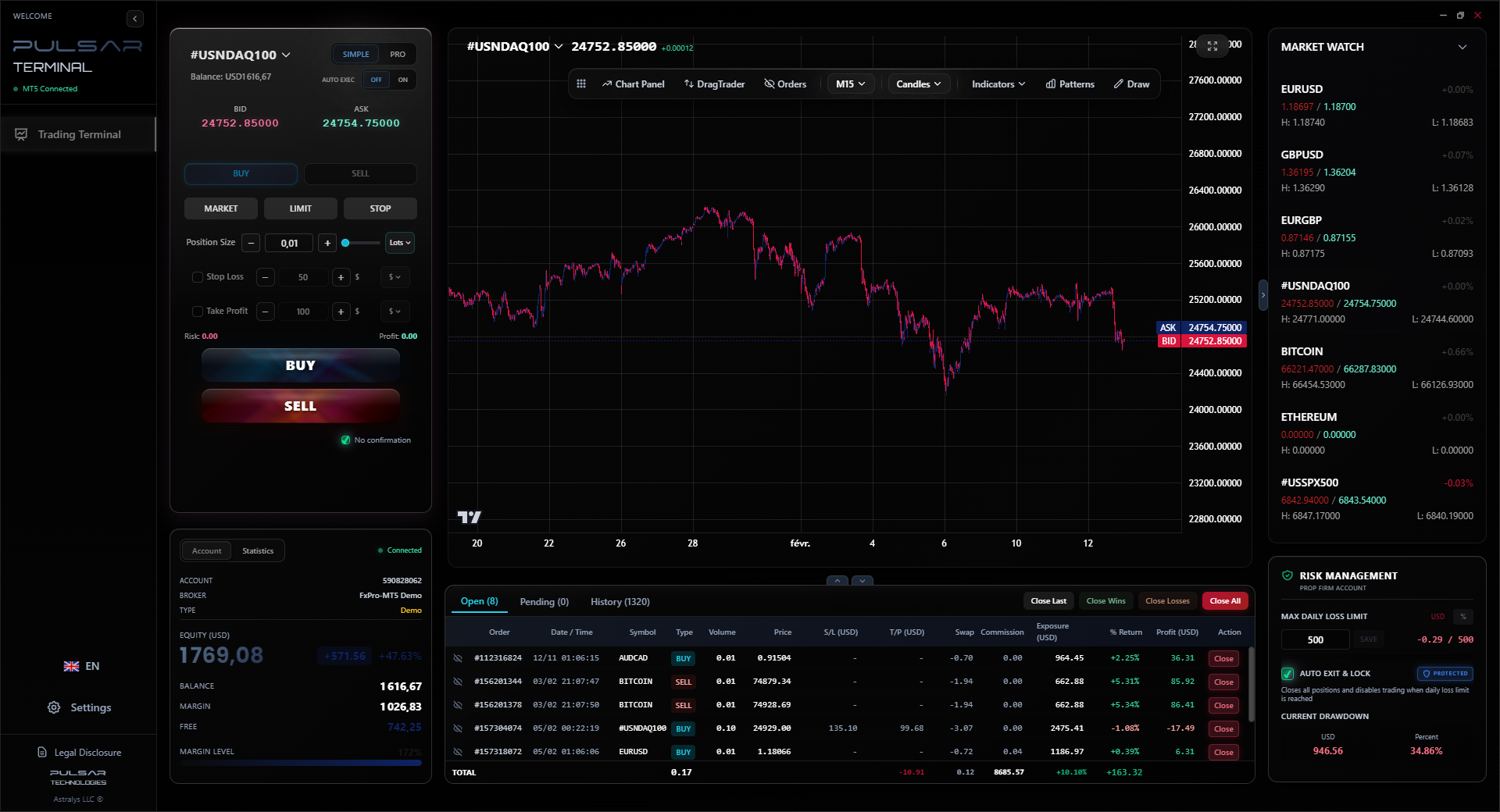
Your edge comes from your ability to execute a boring plan, over and over, regardless of emotion. Tools that automate parts of this process are force multipliers. Managing multiple take-profit levels or moving a stop to breakeven manually is stressful and error-prone.

Executing a boring plan without emotion is key, and Pulsar Terminal automates critical risk management tasks like setting multiple take-profits and moving stops to breakeven directly on your MT5 chart.
Pulsar Terminal
The all-in-one MT5 companion: drag-and-drop orders, multi-TP/SL, trailing stop, grid trading, Volume Profile, and prop firm protection. Used by 1,000+ traders daily.
Your broker is your gateway to the market. A bad one will cost you money through requotes, slippage, and wide spreads. For Nigerian traders, I prioritize two things: international regulation and reliable Naira deposits/withdrawals.
You want a broker regulated by a top-tier authority like the UK's FCA or Australia's ASIC. This protects your funds. Many "local" outfits aren't properly regulated. I've used Exness for their seamless Naira transactions and XM for their educational resources when starting. For raw spreads and execution speed now, I prefer IC Markets.
Look for:
- Low, stable spreads on the pairs you trade.
- Multiple deposit options (bank transfer, cards, local e-wallets).
- No ridiculous fees on withdrawals.
- A reliable trading platform (MT4/MT5).
Avoid brokers that call you constantly with "hot tips" or pressure you to deposit more. A good broker is like a utility company: they provide a service quietly in the background.
💡 Winston's Tip
The market will test your stop loss and then reverse to your target more times than you can stomach. If you move your stop, you've failed the test.
“The losers are obsessed with the next trade. The winners are obsessed with their journal.”
So, how much can you make trading forex in Nigeria?
You can make a steady secondary income. You can, with years of work and significant capital, make a full-time living. You will almost certainly not get rich quick.
The path to profitability looks like this: Preserve capital → Achieve small, consistent returns → Gradually scale your size as your skill and account grow.
The biggest profit killer isn't a losing trade; it's the desperate attempt to recover losses by doubling down. The market doesn't care about your rent or your plans. It only responds to price.
Start small. Treat it as a serious business, not a casino. Keep a detailed journal. Pay your taxes. If you can do that for two years without blowing up, you might just have a shot at answering the question 'how much can I make trading forex' with a number that actually means something.
FAQ
Q1What is a realistic monthly percentage return from forex trading?
For a skilled, disciplined trader, 2-10% per month is realistic. Beginners should aim for 0% (capital preservation). Anything advertised above 20% monthly is almost certainly a scam or unsustainable risk-taking.
Q2How much money do I need to start trading forex in Nigeria?
You can technically start with as little as $10, but it's a terrible idea. You'll be forced to use extreme use. A more realistic minimum to practice proper risk management is between ₦150,000 and ₦500,000 ($100-$330).
Q3Do I pay tax on my forex trading profits in Nigeria?
Yes. The Federal Inland Revenue Service (FIRS) requires you to pay a 10% Capital Gains Tax on your net trading profits. It's your responsibility to declare this income.
Q4Is 1:500 use safe for a beginner?
No. It's a weapon of mass account destruction. A beginner doesn't have the risk management skill to handle it. Start with 1:10 or 1:20 maximum to learn how price moves without the constant threat of a margin call.
Q5Can I make 100k Naira a month trading forex?
Yes, but not with a 50k Naira account. To make 100k Naira consistently, you likely need an account of at least 2-3 million Naira, aiming for a 3-5% monthly return. Focus on building the capital through consistency first.
Q6What's the biggest mistake Nigerian forex traders make?
Using excessive use because it's offered. They see 1:1000 and think it's free money, not understanding that a 0.1% move against them wipes out their entire margin. They trade size before they have skill.
Prof. Winston's Lesson
Key Takeaways:
- ✓Aim for 2-5% monthly returns, not 50%.
- ✓Always factor in the 10% capital gains tax.
- ✓Use use of 1:20 or less to learn.
- ✓Start with at least ₦150k to practice real risk management.
How useful was this article?
Click a star to rate
Weekly Trading Insights
Free weekly analysis & strategies. No spam.
About the Author
Olumide Adeyemi
West African Trading Pioneer
One of Nigeria's most active forex trading educators. 8 years of experience trading from Lagos. Specializes in low-capital strategies and prop firm challenges for African traders.
Comments
Risk Disclaimer
Trading financial instruments carries significant risk and may not be suitable for all investors. Past performance does not guarantee future results. This content is for educational purposes only and should not be considered investment advice. Always conduct your own research before trading.
You Might Also Like

Cara Trading Forex Sukses: 7 Prinsip dari Trader Profesional
Cara trading forex sukses dengan 7 prinsip trader pro: manajemen modal, disiplin, journal trading, backtest. Data nyata, bukan janji profit palsu.
Jam Trading Forex Terbaik untuk Trader Indonesia: Panduan Lengkap dengan Tabel Waktu
Panduan jam trading forex untuk trader Indonesia. Tabel 4 sesi dunia, jam emas 20:00-00:00, sesi mana yang harus dihindari. Data akurat + tips dari trader berpengalaman.
Top 5 Sàn Forex Uy Tín Nhất 2026: Review Jujur dari Trader Indonesia
Top 5 sàn forex uy tín 2026 untuk trader Indonesia. Review jujur: spread, deposit, withdraw, dukungan lokal. Exness, XM, IC Markets & lebih.
Get Pulsar Terminal
All these calculators are built into Pulsar Terminal with real-time data from your MT5 account. One-click position sizing, automatic risk management, and instant calculations.
Get Pulsar Terminal