


I remember watching the USD/ZAR chart on my screen in late 2025, the pair pushing towards R19.50.

David van der Merwe
Emerging Markets Trader ·  South Africa
☕ 10 min read
What you'll learn:
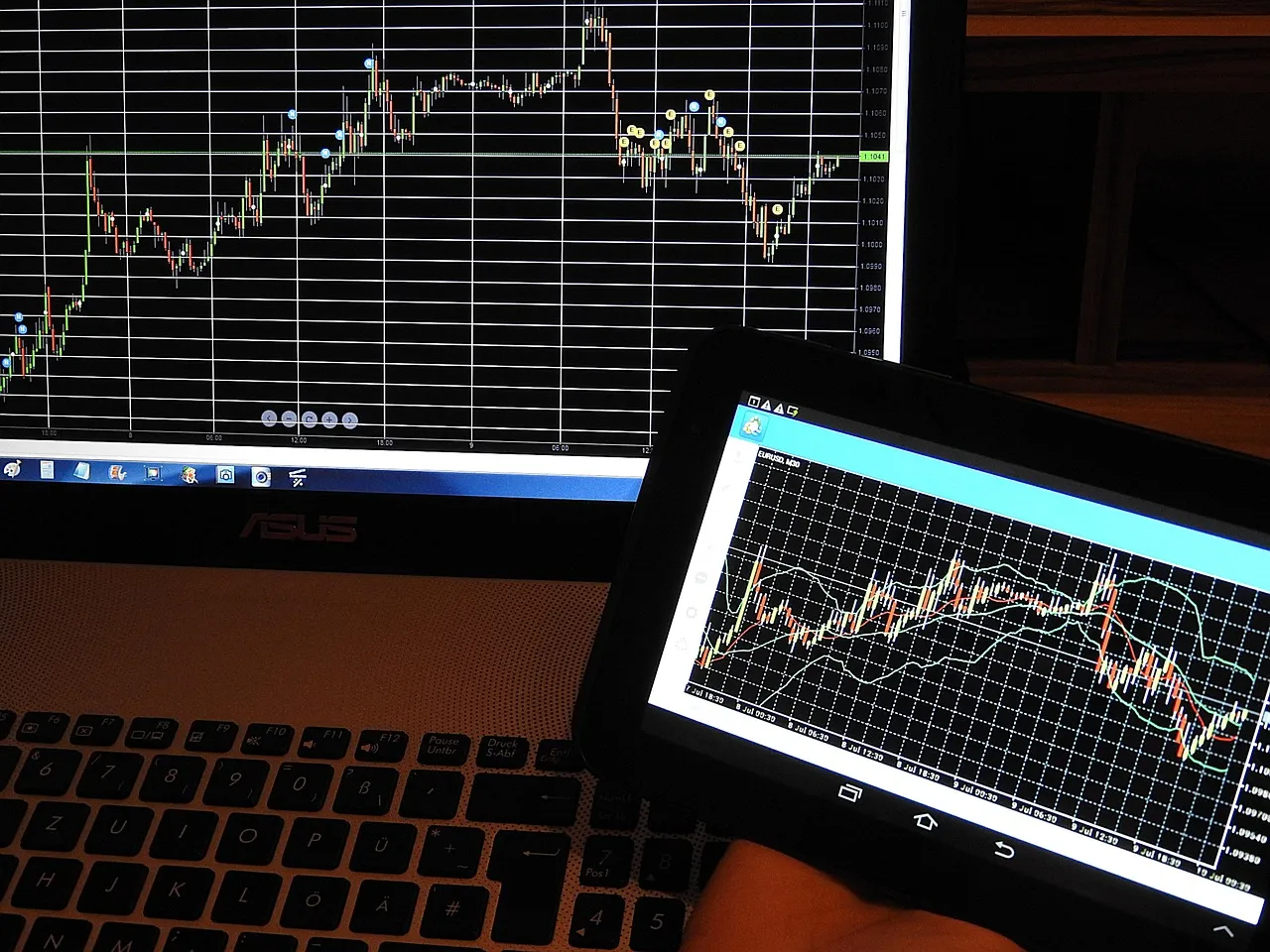
I remember watching the USD/ZAR chart on my screen in late 2025, the pair pushing towards R19.50. My phone was buzzing with messages from other local traders, all asking the same thing: 'Is this it? Is it going to break?' That moment, full of tension and opportunity, is what draws so many South Africans to forex. But between that excitement and consistent profit lies a path filled with specific rules, costs, and strategies you need to know. Let's talk about how to trade forex in South Africa the right way, from the legal stuff to the practical trades.
Before you place a single trade, you need to understand the playing field. South Africa has a clear, strict regulatory framework, and getting this wrong can cost you more than just a bad trade.
The Financial Sector Conduct Authority (FSCA) is your main watchdog. Any broker you seriously consider must be licensed by them. This isn't just a nice-to-have. An FSCA license means the broker must keep your money in a separate account from their own. If they go bust, your capital is (theoretically) protected. I learned this the hard way early on, using an unregulated platform that suddenly 'had technical issues' when I tried to withdraw. I lost R8,000. Stick to FSCA-regulated brokers.
The use Cap
Since 2021, the FSCA has capped use for retail traders at 30:1. Forget the 500:1 or 1000:1 offers you see from offshore brokers. This is a good thing. High use is a shortcut to blowing up your account. With 30:1, a 3.33% move against you wipes out your margin. It forces you to think about position size calculator and risk management from day one.
The Tax Man Cometh (SARS)
Here’s the part everyone tries to ignore, but you can’t. The South African Revenue Service (SARS) views your net trading profits as taxable income. It doesn't matter if your broker is in Cyprus or the Bahamas. If you’re a South African tax resident, you must declare those gains. The good news? You can deduct your trading-related expenses - platform fees, data subscriptions, even a portion of your internet bill. Keep a detailed log. I use a simple spreadsheet: date, profit/loss, and a running total for the tax year.

Warning: The SARB does not allow you to speculate directly against the Rand with offshore brokers. You fund your international trading account using your discretionary allowance (R1 million) or foreign investment allowance (R10 million). Don't try to get clever with moving money; use the proper channels through your bank.

💡 Winston's Tip
The Rand is a moody beast. Trade it on the daily chart, not the five-minute. You'll sleep better and see the real trend.
Your broker is your gateway to the market. The costs they charge are a direct drag on your performance, so you need to pick based on more than just a flashy ad.
Let's break down the real costs you'll face. The spread is the most obvious one - the difference between the buy and sell price. On a major pair like EUR/USD, you might see anything from 0.0 pips (with a commission) to 1.5 pips on a standard account. For a local pair like USD/ZAR, expect wider spreads, often 50-150 pips because it's less liquid.
Then there are commissions. A 'raw spread' account might charge $3-$5 per lot, per side. So, opening and closing a 1-lot trade costs you $6-$10 before you've even made a cent. Overnight financing (swap) fees can also eat into longer-term swing trading positions. Always check the broker's fee schedule for inactivity fees, too. Some will charge you $50 or more if you don't trade for a few months.
Here’s a quick comparison of some FSCA-regulated brokers popular here:
| Broker | Min. Deposit | EUR/USD Spread (Typical) | Key Feature for ZAR Traders |
|---|---|---|---|
| IG | R0 (ZAR account) | 0.6 pips | Strong local presence, ZAR accounts. |
| Khwezi Trade | R500 | Variable | Local broker, direct ZAR deposits. |
| Tickmill | $100 (≈R1850) | 0.11 pips + $6 commission | Very tight raw spreads. |
| XM | $5 (≈R92) | From 0.8 pips | Low minimum, good for beginners. |
| Pepperstone | $200 (≈R3700) | 0.0 pips + commission | Excellent execution, popular with active traders. |
My personal preference leans towards international brokers like IC Markets review or Pepperstone review for their raw pricing and technology, but funding them requires using your foreign allowance. For absolute simplicity, a local FSCA broker like IG or Khwezi lets you deposit and withdraw in Rands instantly.

Pro Tip: When comparing brokers, don't just look at the advertised spread. Look at the 'all-in' cost for a round-turn trade (open and close). A 0.8 pip spread with no commission is often more expensive than a 0.1 pip spread with a $4 commission on a standard 1-lot trade.
“The chart doesn't care about your opinion on South African politics.”
Okay, the account is funded. The platform is open. Now what? Let's walk through the mechanics of a real trade, using the USD/ZAR as our example because it's the pair we all watch.
First, you need an idea. Let's say you believe the US Dollar will strengthen against the Rand. You'd buy USD/ZAR (go long). The price quote is 18.7500 / 18.7520. The spread is 20 pips (or points, in this case). To buy, you enter at the 'ask' price: 18.7520.
Now, position size. This is the most critical step most new traders skip. You have a R20,000 account. With 30:1 use, your total buying power is R600,000. That doesn't mean you should use it all! A good rule is to risk no more than 1-2% of your account on a single trade. For R20,000, that's R200-R400.
Let's say you place a stop loss 500 points away at 18.7020. If the price hits that, you lose 500 points. How much is each point worth? If you're trading a standard lot (100,000 units), each point is roughly $0.067, or about R1.25 (depending on the USD/ZAR rate). To keep your loss at R400, you can only trade about 0.64 lots. This is where a position size calculator becomes your best friend. I never place a trade without using one.
You set a take profit target 1000 points away at 19.7520, aiming for a 2:1 reward-to-risk ratio. You click 'buy', and you're in the market. Your platform will now show your floating P&L. The emotional game begins.

Example:
- Account: R20,000
- Risk per Trade: 1.5% = R300
- Stop Loss Distance: 400 points on USD/ZAR
- Point Value (per standard lot): ~R1.20
- Position Size: R300 / (400 * R1.20) = 0.625 lots You would trade 0.63 lots to keep your risk precise.
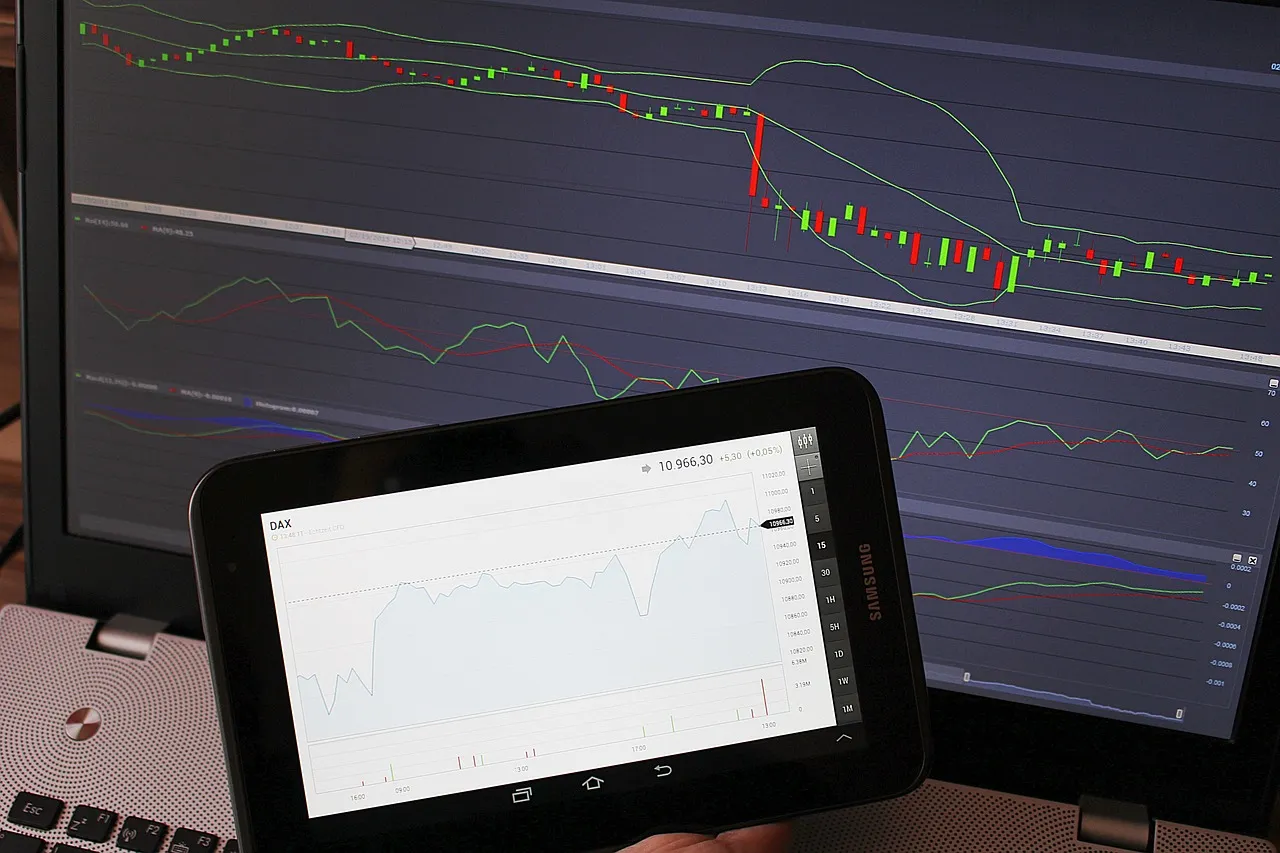
South Africa's market has its own rhythms. The most liquid times for pairs like USD/ZAR, EUR/ZAR, and GBP/ZAR are during Johannesburg trading hours (7 AM - 5 PM SAST) and when London overlaps. Volatility often spikes around local economic data releases - CPI, SARB interest rate decisions, budget speeches.
Trading the USD/ZAR News
I’ve had my best trades on USD/ZAR around SARB meetings. In January 2024, the SARB held rates steady. The initial reaction was a weaker Rand, pushing USD/ZAR from 18.65 to 18.90. I had a buy order placed at 18.70, just in case. It triggered, and I rode it to 19.05 for a 350-point gain. The key? I set the order before the news, with a wide stop loss (200 points) to account for the initial volatility spike. Trying to jump in after the news hits is like chasing a taxi in the rain.
A Simple Swing Trading Approach
For a less stressful method, look at daily charts. I combine a basic trend filter, like a 50-period Exponential Moving Average (EMA), with the MACD indicator for momentum. If the price is above the 50 EMA and the MACD histogram is turning positive, I look for a small pullback to enter a long trade on the 4-hour chart. I’ll hold for a few days to a week, targeting a swing high. This works well on EUR/USD and XAU/USD guide (Gold), which are less erratic than the Rand.
What Didn't Work for Me
Early on, I tried scalping strategy USD/ZAR on a 1-minute chart. It was a disaster. The spreads are too wide, and the 'noise' is overwhelming. I’d be up R500 one minute and down R1500 the next. The transaction costs alone killed any edge I thought I had. Save scalping for major pairs like EUR/USD with ultra-low spreads, if you must.
💡 Winston's Tip
Your first R10,000 in profits isn't yours. It belongs to SARS. Set it aside the moment you withdraw it. Trust me.
“Your first goal isn't to make R50,000. Your first goal is to not lose your initial capital for three months.”
Trading is 80% psychology, 20% method. In South Africa, we face a few unique mental traps.
The first is 'ZAR bias'. We live here, we hear the news constantly - load-shedding, politics, the economy. It's easy to develop a strong, emotional bias that the Rand must always get weaker. I held onto losing short ZAR trades for weeks in 2023, convinced a turnaround was impossible, ignoring the clear bullish dollar trend on the chart. That stubbornness cost me over R15,000. The chart doesn't care about your opinion.
The second is overtrading due to FOMO (Fear Of Missing Out). When USD/ZAR makes a big 500-point run in a day, you feel you have to be in it. That's when you enter late, with poor risk parameters, and often get caught in the reversal. I’ve done it more times than I care to admit. Sometimes, the best trade is no trade at all.
Finally, there's the isolation. Trading can be lonely. You’re sitting at home making decisions with real money. This is why having a simple, written trading plan is non-negotiable. Your plan should answer: What pairs do I trade? What’s my daily loss limit? What’s my setup? When your emotions are high, the plan is your anchor. Without one, you’re just gambling.
Warning: A margin call is not a suggestion. It’s a final warning that you’ve mismanaged your risk catastrophically. If you get one, your system has failed. Re-evaluate everything - your position sizing, your use, your strategy - before depositing another cent.
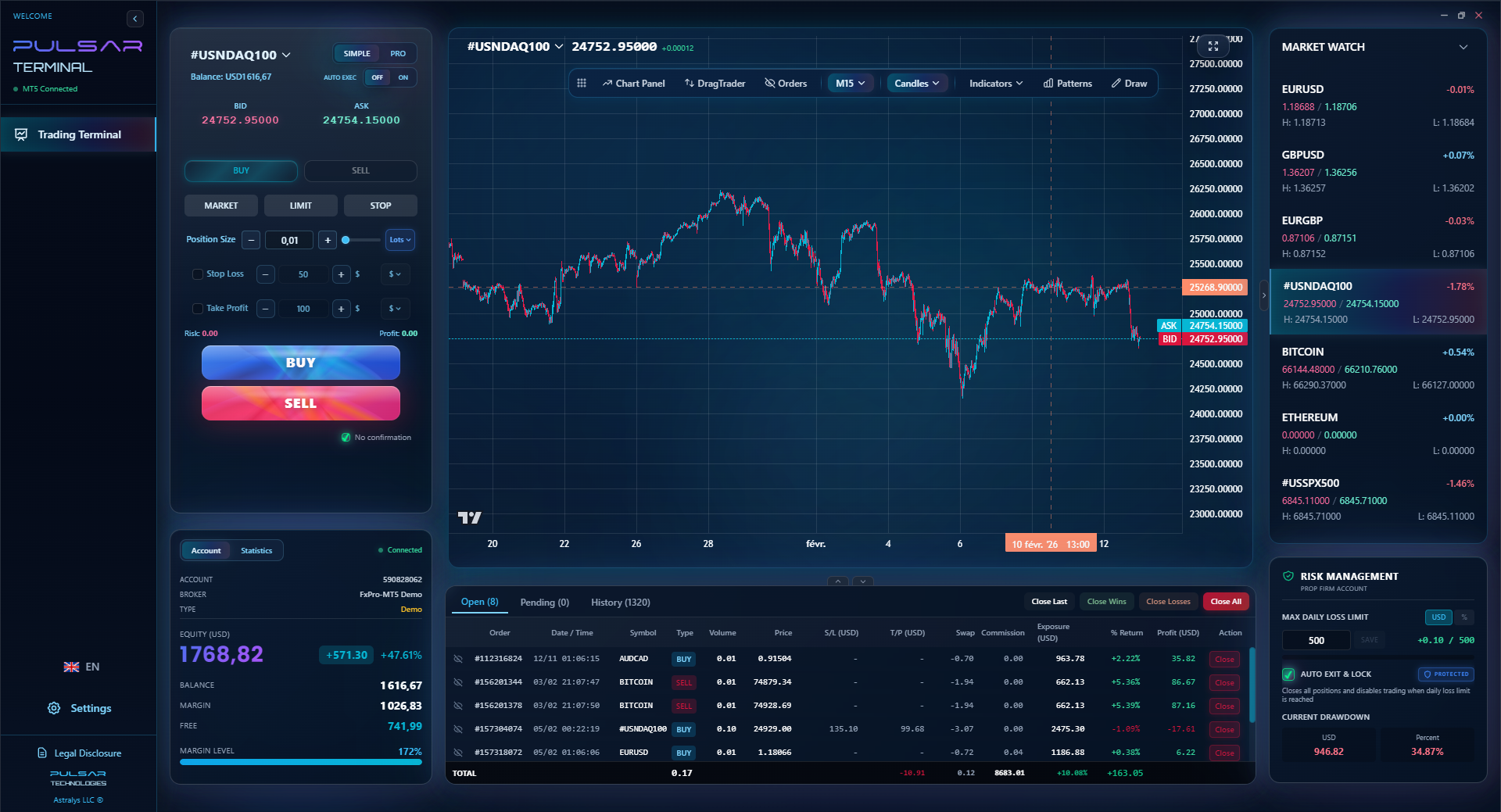
Sticking to your risk rules is the hardest part of trading, which is why automating tools like trailing stops and breakeven orders in Pulsar Terminal can be a game-saver.
Pulsar Terminal
The all-in-one MT5 companion: drag-and-drop orders, multi-TP/SL, trailing stop, grid trading, Volume Profile, and prop firm protection. Used by 1,000+ traders daily.
Thinking of this as a 'side hustle' is how you lose money. You need to treat it like a small business from the start.
Start Small, Really Small. Your first goal isn't to make R50,000. Your first goal is to not lose your initial capital for three months. Trade a micro account (where 1 lot is 1,000 units) or use a demo account until your strategy produces consistent simulated results for at least two months. I paper-traded for four months before going live, and it was the best education I got.
Keep a Trading Journal. This is your business ledger. Record every trade: entry, exit, spread definition cost, reason for entry, emotional state. Review it weekly. You’ll quickly see if you’re better at long-term swings or short-term setups, and which pairs are actually profitable for you.
Plan for Taxes Quarterly. Don't wait for February. Every quarter, calculate your approximate net profit. Set aside 30-40% in a separate savings account for SARS. It hurts to see that money leave your trading account, but it hurts infinitely more to have a massive tax bill you can’t pay.
Continuous Learning. The market changes. The strategies that worked in 2022 might not work in 2026. Follow global macro trends, understand how interest rates drive currency values, and refine your technical skills. Tools like the RSI indicator are basics, but understanding order flow and market structure is what separates amateurs from professionals.
The path to learning how to trade forex in South Africa is a marathon. It’s about consistent, disciplined execution more than any single brilliant trade. Protect your capital, manage your risk, and the profits will follow over time.
FAQ
Q1Is forex trading legal and safe in South Africa?
Yes, it's completely legal. It's safe if you use a broker licensed by the Financial Sector Conduct Authority (FSCA). This regulation ensures client funds are segregated and provides a recourse if something goes wrong. Avoid unregulated offshore brokers at all costs.
Q2How much money do I need to start trading forex in South Africa?
You can start with very little. Some brokers like XM allow deposits as low as $5 (about R92). However, I strongly recommend starting with at least R5,000-R10,000. This gives you enough buffer to trade sensible position sizes and absorb initial losses while you're learning without immediately facing a margin call.
Q3How are my forex trading profits taxed by SARS?
SARS treats your net profit (total gains minus total losses and allowable expenses) as taxable income. This gets added to your other income and taxed at your marginal rate. You must declare this income even if your broker is international. Keep detailed records of all trades and related expenses.
Q4What is the best forex pair to trade for beginners in South Africa?
I recommend starting with major pairs like EUR/USD or GBP/USD. They have the tightest spreads and are less volatile than the Rand. While USD/ZAR is tempting, its wider spreads and sensitivity to local news make it trickier for a novice. Get your feet wet with the majors first.
Q5Can I use my TFSA to trade forex?
No, you cannot. Tax-Free Savings Accounts (TFSAs) in South Africa are strictly for investing in approved local assets like equities, bonds, and ETFs listed on local exchanges. Forex and CFD trading do not qualify. You must use a dedicated trading account with a licensed broker.
Q6What's the single biggest mistake new South African traders make?
Using too much use and trading position sizes that are way too large for their account. With a 30:1 cap, it's still easy to over-use. Risking 5% or 10% of your account on one trade is a recipe for quick ruin. Never risk more than 1-2% per trade.
Prof. Winston's Lesson
Key Takeaways:
- ✓Only use FSCA-regulated brokers for fund safety.
- ✓Max use is 30:1. Risk max 2% per trade.
- ✓SARS taxes net profits as income. Keep records.
- ✓Start with majors like EUR/USD, not USD/ZAR.
- ✓A trading journal is your most important tool.
How useful was this article?
Click a star to rate
Weekly Trading Insights
Free weekly analysis & strategies. No spam.
About the Author
David van der Merwe
Emerging Markets Trader
Johannesburg-based trader with 11 years in emerging market currencies. Specializes in ZAR pairs, FSCA-regulated trading, and South African market analysis.
Comments
Risk Disclaimer
Trading financial instruments carries significant risk and may not be suitable for all investors. Past performance does not guarantee future results. This content is for educational purposes only and should not be considered investment advice. Always conduct your own research before trading.
You Might Also Like

Cara Trading Forex Sukses: 7 Prinsip dari Trader Profesional
Cara trading forex sukses dengan 7 prinsip trader pro: manajemen modal, disiplin, journal trading, backtest. Data nyata, bukan janji profit palsu.
Jam Trading Forex Terbaik untuk Trader Indonesia: Panduan Lengkap dengan Tabel Waktu
Panduan jam trading forex untuk trader Indonesia. Tabel 4 sesi dunia, jam emas 20:00-00:00, sesi mana yang harus dihindari. Data akurat + tips dari trader berpengalaman.
Top 5 Sàn Forex Uy Tín Nhất 2026: Review Jujur dari Trader Indonesia
Top 5 sàn forex uy tín 2026 untuk trader Indonesia. Review jujur: spread, deposit, withdraw, dukungan lokal. Exness, XM, IC Markets & lebih.
Get Pulsar Terminal
All these calculators are built into Pulsar Terminal with real-time data from your MT5 account. One-click position sizing, automatic risk management, and instant calculations.
Get Pulsar Terminal