


I remember the WhatsApp messages flooding in late 2020.

Olumide Adeyemi
West African Trading Pioneer ·  Nigeria
☕ 11 min read
What you'll learn:
- 1What Was MBA Forex, Really?
- 2Real Forex Trading vs. a Ponzi Scheme: Spot the Difference
- 3Nigeria's Forex Rules Now: What Changed After the Crash?
- 4How to Choose a Real, Safe Broker in Nigeria
- 5The Real (and Boring) Costs of Trading
- 6The Mental Lessons: Greed, Trust, and Self-Reliance
- 7Moving Forward Safely: Your Action Plan
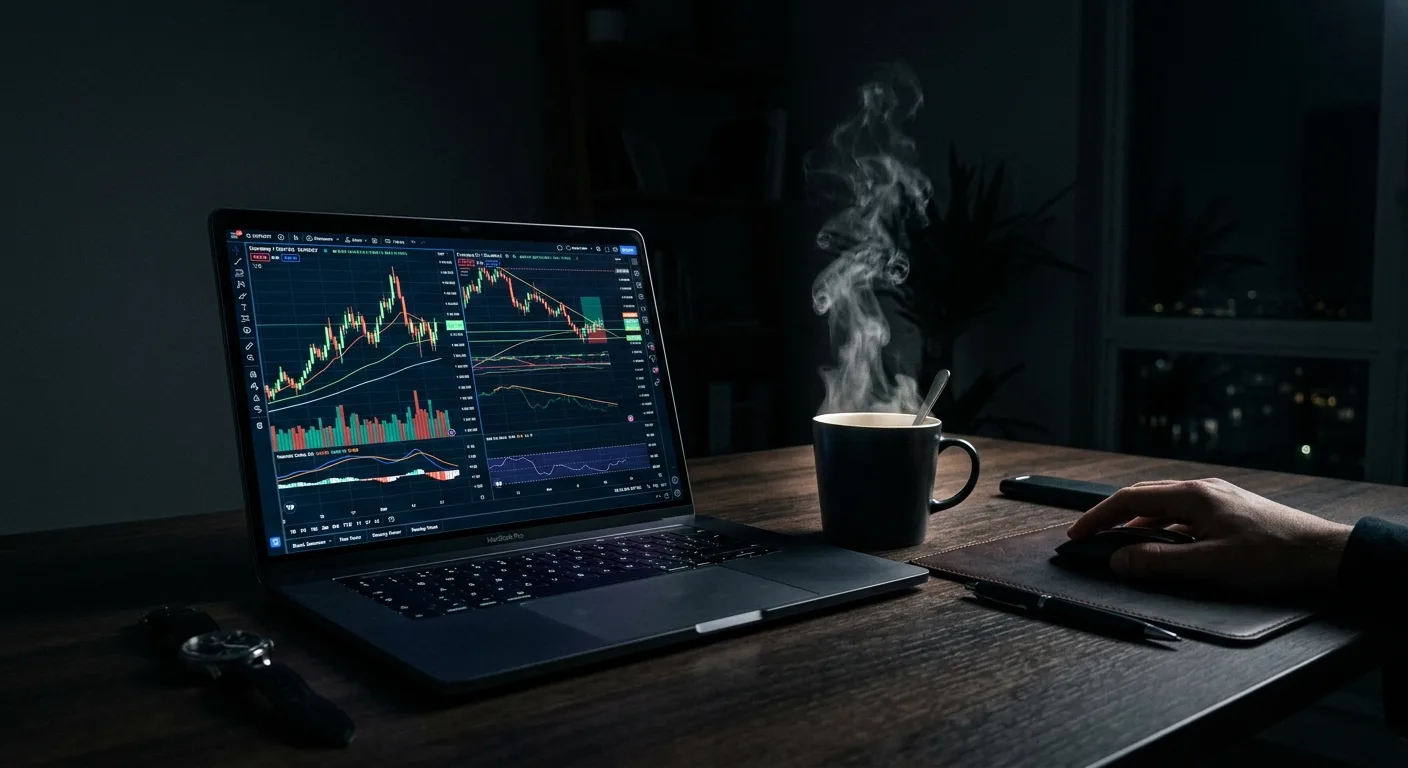
I remember the WhatsApp messages flooding in late 2020. Friends, family, all asking if I'd heard about MBA Forex's 'Christmas break.' One guy I knew had put in ₦8 million, lured by the 20% monthly promise. He showed me his dashboard, the numbers climbing in a beautiful, impossible curve. I told him it was too good to be true. He didn't listen. By January, the site was gone, the offices locked. That wasn't a trading failure. That was theft, dressed up in forex clothing. The MBA Forex crash wasn't about market volatility; it was a masterclass in how greed and a lack of knowledge can wipe you out faster than any bad trade.
Let's be clear from the start. MBA Trading and Capital Investment Limited wasn't a forex broker. It wasn't even a real investment firm. It was a classic Ponzi scheme that used the buzzword 'forex' as a shiny cover. Founded around 2018 by Maxwell Odum, it promised the moon: 15% to 20% returns every single month. Think about that for a second. That's turning ₦100,000 into over ₦1 million in a year, with zero risk. In the real world of swing trading, a 20% annual return is considered exceptional.
They had no license from the Securities and Exchange Commission (SEC). The SEC actually warned people publicly. They had no audited records, no verifiable trading activity you could track. Your 'profits' were just new deposits from other victims. The whole thing was a digital house of cards.

Warning: If a 'company' promises fixed, high monthly returns and isn't listed on the SEC's website as a licensed capital market operator, run. It's that simple.
The collapse was brutal. They announced a 'break' on December 24, 2020, and simply vanished. Websites down, phones off, offices empty. The Central Bank of Nigeria (CBN) froze their accounts, but the damage was done. The EFCC later declared Odum wanted for an alleged ₦213 billion fraud. That's billion with a 'B'. Over 40,000 Nigerians were caught in this net. My friend lost his life savings. I lost sleep watching it happen, knowing I couldn't stop him.
“The MBA Forex crash wasn't about market volatility; it was a masterclass in how greed and a lack of knowledge can wipe you out.”
This is the most important lesson from the whole MBA Forex crash. Confusing the two can cost you everything.
Real Forex Trading:
- You control the trades. You open a live account with a regulated broker like Exness or IC Markets, download MT5, and you decide when to buy or sell EUR/USD.
- Profits are NOT guaranteed. You can make 5% in a day and lose 3% the next. Your capital is at direct risk from market movements.
- You see the market. You have charts, live prices, and a transparent record of every transaction, including the spread you pay.
- You can withdraw anytime. Reputable brokers process withdrawals to your bank account or wallet in a few days.
A Ponzi Scheme (like MBA Forex):
- They 'control' everything. You give them money, and they give you a login to a fancy dashboard showing 'profits.'
- Profits are 'guaranteed.' They offer a fixed, high monthly return, rain or shine. This is the biggest red flag.
- You see nothing. No real trading platform, no access to market data, no trade history. Just numbers on a screen they control.
- Withdrawals are a problem. They often delay, make excuses, or only allow withdrawals if you recruit new people.
I made a mistake early in my career that taught me this. I joined a 'signal group' that demanded a monthly fee and promised 80% win rates. It felt similar. I was outsourcing my thinking. The first month was great. The second, the 'guru' made a huge losing bet on GBP/JPY and just disappeared from Telegram. I lost my fee and, more importantly, the capital I blindly followed him with. Now I only trust my own analysis and my own broker terminal.

💡 Winston's Tip
A promise of guaranteed returns is a confession of fraud. The market guarantees nothing but uncertainty.
“A 20% monthly return is an emotional trigger, not a financial proposition. It shuts down the part of your brain that asks questions.”
The MBA Forex crash and other scandals forced regulators to act. The landscape today is tighter, at least for the official market. Here’s what you, as a trader, should know about the current framework.
The Central Bank of Nigeria (CBN) is in the driver's seat. In early 2025, they launched the Nigerian Foreign Exchange (FX) Code. This isn't just a document, it's a rulebook for banks and authorized dealers on ethics, transparency, and how trades should be executed. It’s meant to clean up the system.
They've also rolled out an Electronic Foreign Exchange Matching System (EFEMS). Think of it as a centralized, transparent order book for the official market. The goal is better price discovery, so the rate you get from your bank is closer to the real market rate.
The BDC Shake-Up
Bureau de Change operators have been on a wild ride. In 2024, the CBN revoked the licenses of over 4,173 BDCs that weren't playing by the rules. Then, in a turnaround by February 2026, they let licensed BDCs back into the official market. Now, a licensed BDC can buy up to $150,000 per week from banks, but they must sell it within 24 hours. This is to stop hoarding and speculation.
For you, the retail trader using international brokers, these rules mainly affect the Naira liquidity and the official exchange rate. A more stable official Naira is good for everyone. But your actual trading on global EUR/USD or XAU/USD happens outside this system, on platforms provided by your chosen broker.
The key takeaway? The regulatory heat is on. Unlicensed entities promising forex riches have a bigger target on their backs now. The SEC's warning list is your friend. Check it.
“A 20% monthly return is an emotional trigger, not a financial proposition. It shuts down the part of your brain that asks questions.”
So, if you shouldn't send money to an MBA Forex, where should you send it? Here’s my practical checklist, born from trial and error.
1. Regulation is Non-Negotiable. Your broker must be regulated by a reputable authority outside Nigeria. Why? Because it means they adhere to strict financial standards, keep client funds in segregated accounts, and are regularly audited. Look for licenses from:
- CySEC (Cyprus)
- FCA (UK)
- ASIC (Australia)
- FSCA (South Africa)
Many top brokers serving Nigeria have these. I personally use brokers like Pepperstone and XM because their regulatory pedigree is solid.
2. Check the Practical Details.
- Minimum Deposit: Can you start small? Some brokers allow $10 (about ₦15,000). This is perfect for learning without major risk. Don't start with ₦5 million.
- Naira Support: Do they accept local bank deposits or cards? Do they have a local office or support team? HFM, for instance, has an office in Lagos.
- Spreads & Commissions: This is your cost of doing business. Compare the EUR/USD spread on a standard account. ECN accounts often have tighter spreads but charge a commission per lot. Use a position size calculator to figure out your true costs.
3. Test the Platform. They should offer MetaTrader 4/5 or cTrader. These are the industry standards. If they only have a weird, proprietary web platform, be cautious. Download their MT5 demo and play with it for a week. Is it stable? Does the data feed feel right?

Pro Tip: Before depositing real money, try a withdrawal. Open a demo account, then ask support about the withdrawal process for Nigerian clients. How long does it take? What are the fees? A legitimate broker will have a clear, documented process. A shady one will be vague.
💡 Winston's Tip
Your first investment should always be in education, not capital. Knowledge is the only deposit that never loses value.
“The hard truth is this: the work is yours to do. There are no shortcuts.”
Let's kill the fantasy of free money. Real trading has costs. Understanding them is what keeps you in the game. The MBA Forex crash sold a dream of pure profit. Reality is different.
The Spread: This is the difference between the buy and sell price. It's how many brokers make money. On EUR/USD, a good spread might be 1.0 pip. On a standard lot ($100,000), that 1-pip spread is a $10 cost the moment you enter the trade. If you're scalping, tight spreads are critical.
The Commission: ECN/RAW accounts often have spreads from 0.0 pips but charge a commission. It might be $6 per round lot (buying and selling). So, on that same standard lot, your cost is $6 instead of a spread.
Swap Fees: Hold a position overnight? You'll pay or earn a small interest fee called a swap. It can add up over time.
The Hidden Cost: You. Your biggest cost is your own losses. This is where risk management isn't a suggestion, it's survival. I learned this the hard way in 2019. I got cocky after a few wins and put 50% of my account on a single USD/ZAR trade. My analysis was right, but a sudden, unexpected political announcement sent it spiking against me. I didn't have a stop-loss. I watched, frozen, as it wiped out 40% of my account before I manually closed. That was a ₦400,000 lesson in humility and the absolute necessity of a margin call discipline.
Here’s a sobering comparison table:
| Cost Factor | MBA Forex 'Model' | Real Trading Reality |
|---|---|---|
| Profit Promise | Guaranteed 15-20%/month | Never guaranteed. High risk of loss. |
| Primary Cost | Your entire principal | Spreads, commissions, swap fees, your own losses. |
| Control | None. You hand over money. | Full control over entries, exits, risk. |
| Transparency | Zero. Fake dashboard. | Full. Every trade, cost, and P&L is visible. |
Trading isn't a get-rich-quick scheme. It's a skilled profession with real expenses. The moment someone hides those expenses behind a promise, you're not in a trade, you're in a trap.

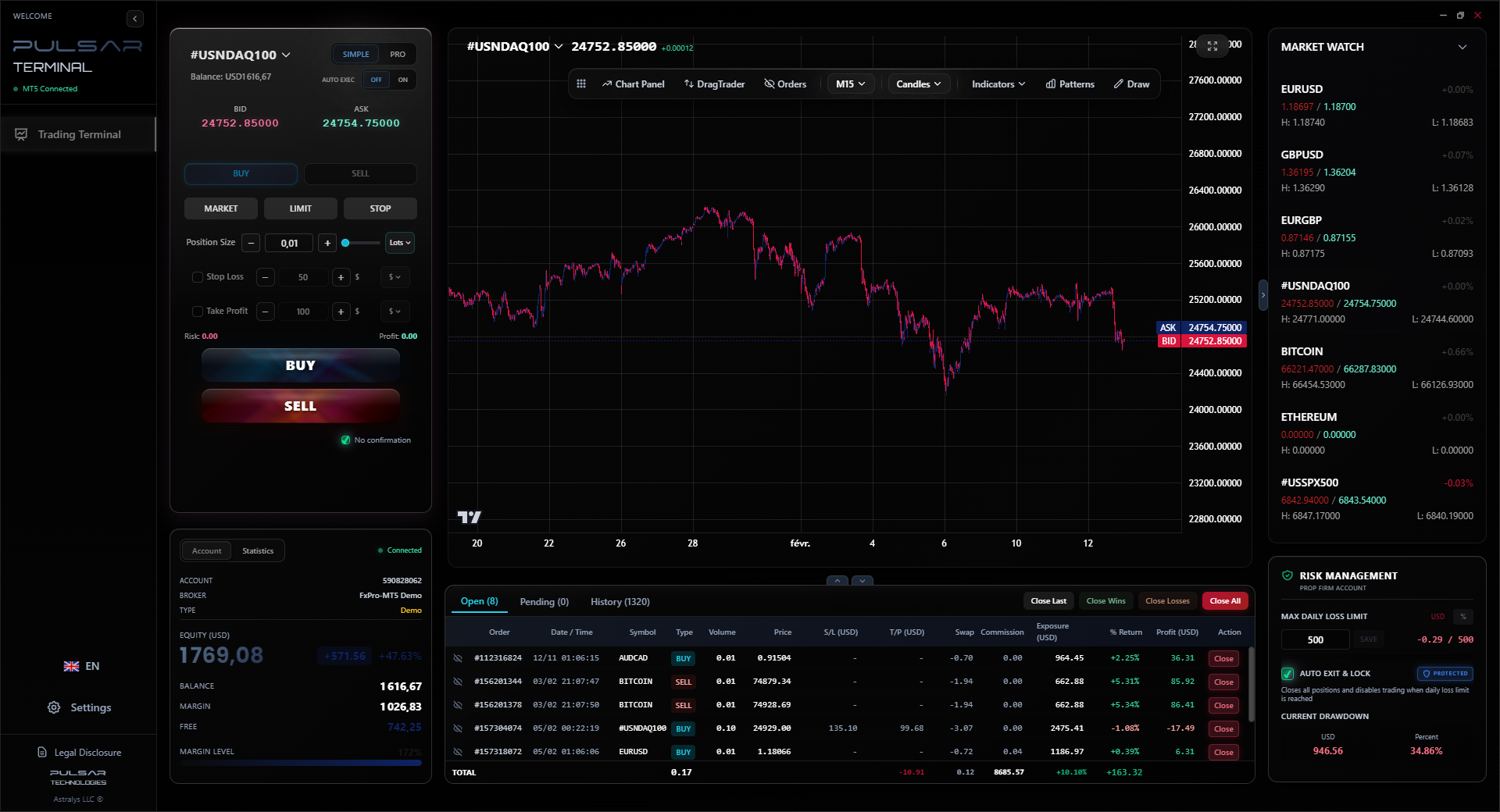
Sticking to a disciplined trading plan with precise stop-losses is the antidote to greed, and tools like Pulsar Terminal help enforce that discipline directly on your MT5 charts.
Pulsar Terminal
The all-in-one MT5 companion: drag-and-drop orders, multi-TP/SL, trailing stop, grid trading, Volume Profile, and prop firm protection. Used by 1,000+ traders daily.
“The hard truth is this: the work is yours to do. There are no shortcuts.”
The MBA Forex crash happened because it exploited fundamental human weaknesses. As traders, we have to master these, or the market will eat us alive.
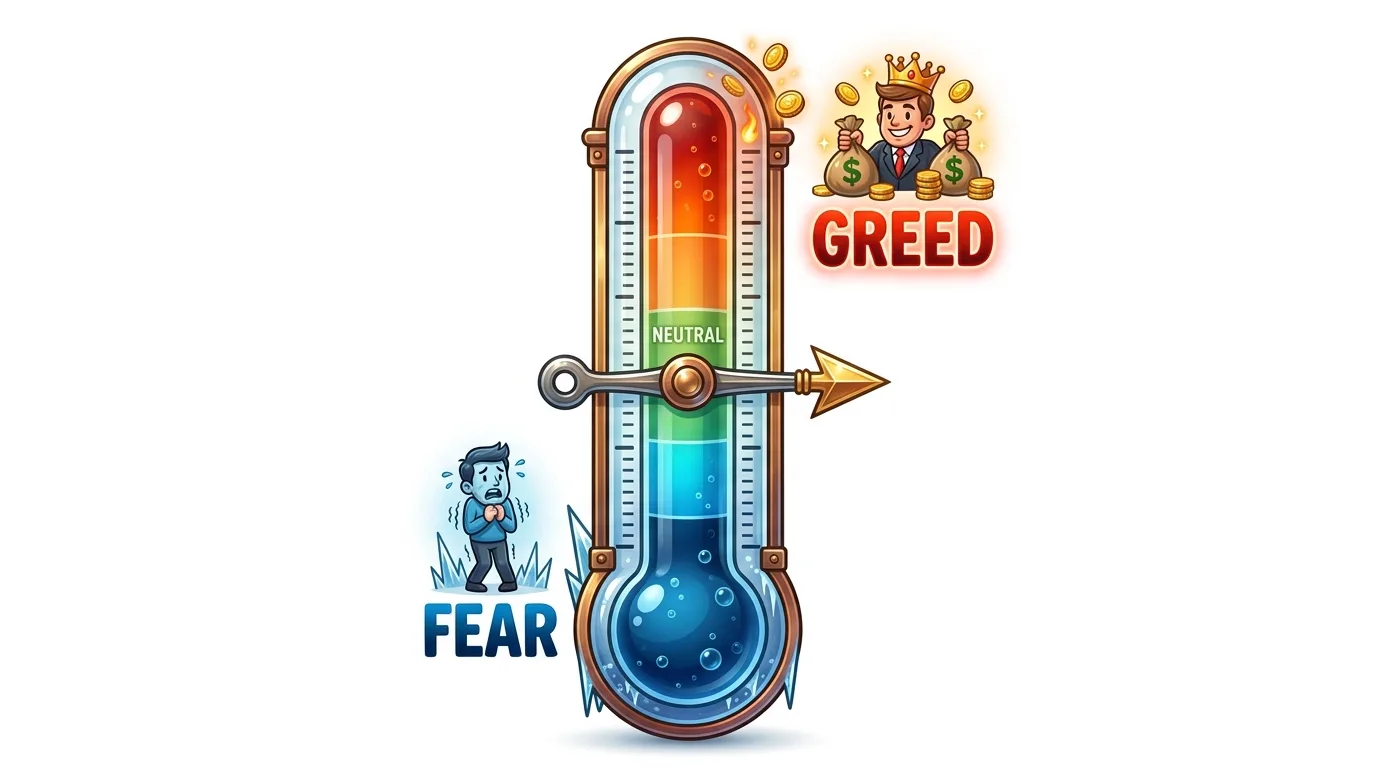
Greed blinds logic. A 20% monthly return is an emotional trigger, not a financial proposition. It shuts down the part of your brain that asks questions. I fight this by having rigid rules. My risk-per-trade is never more than 1% of my account. If a setup looks 'too perfect' for a 5x return, I'm extra suspicious. I've walked away from more trades than I've taken, and that's saved me more money than any single winner.
Trust, but verify. My friend trusted MBA Forex because his cousin was 'making money.' That's social proof, not due diligence. In trading, you verify everything. You backtest strategies. You verify broker licenses. You don't trust a YouTube guru until you see their long-term, verifiable track record.
Self-reliance is your only edge. You cannot outsource your financial future. Those 'managed account' services that promise to trade for you? Most are just dressed-up versions of the same Ponzi logic, with slightly better marketing. The hard truth is this: the work is yours to do. Learning to read price action, understanding the MACD indicator divergence, managing your psychology - this is the work. There are no shortcuts.
After my friend's loss, I sat him down. We didn't talk about revenge or getting his money back. We opened a demo account. We started with the absolute basics: what is a currency pair, what is a pip, why you always use a stop-loss. It was slow. It was boring. It was real. That's the only path forward.
💡 Winston's Tip
If you wouldn't walk into a dark alley with your life savings, don't send them to an unregulated website. Due diligence is your flashlight.
“Your goal of your first year is not to get rich. The goal is to survive.”
Let's turn this horror story into a practical guide. If you're in Nigeria and want to trade forex, here's how to start without becoming the next headline.
Step 1: Educate with Skepticism. Learn from free, reputable sources first. Babypips.com's 'School of Pipsology' is a classic. Read books by market veterans, not 'gurus' selling courses. Before you spend a kobo on a 'masterclass,' you should understand support/resistance, risk-reward ratios, and what a RSI indicator actually measures.
Step 2: Demo, Demo, Demo. Open a demo account with two different regulated brokers. Trade it for a minimum of three months. Your goal isn't to make fake money, it's to not lose fake money consistently. Practice your risk management every single trade. Treat the virtual ₦1,000,000 as if it's real.
Step 3: Start Absurdly Small. When you go live, fund your account with an amount you can afford to lose completely. I'm talking ₦50,000 - ₦100,000. Use a micro or cent account if possible. The goal of your first year is not to get rich. The goal is to survive, to learn the feel of real money on the line, and to refine your process.
Step 4: Build a System, Not a Wish. Document your strategy. What setups do you trade? What's your entry trigger? Where is your stop-loss? Where is your take-profit? What time of day do you trade? Without a written plan, you're just gambling. Your plan is your anchor when the market gets chaotic.
The ghost of the MBA Forex crash should serve as a permanent reminder. The financial markets are not a magic money tree. They are a complex, risky arena where the informed and disciplined have a fighting chance, and the greedy and gullible are guaranteed to lose. Choose which side you're on.
FAQ
Q1Is forex trading illegal in Nigeria after the MBA Forex crash?
No, forex trading itself is perfectly legal in Nigeria. The crash involved an unlicensed Ponzi scheme, not legitimate trading. You can trade with internationally regulated brokers legally. The key is using a licensed entity, not an illegal scheme like MBA was.
Q2How much money do I need to start real forex trading in Nigeria?
You can start with very little. Some international brokers allow you to open an account with as little as $10 (approx. ₦15,000). However, I strongly recommend starting with a demo account first. When you go live, a more realistic and safer starting capital is between $200 and $500 (₦300k - ₦750k), which allows for proper risk management on micro lots.
Q3What is the safest way to fund my forex trading account?
Use payment methods offered directly by your regulated broker, such as credit/debit cards (Visa/Mastercard) or international e-wallets like Skrill or Neteller. These provide a layer of traceability. Avoid handing cash to a third-party 'agent' who promises to fund your account for you.
Q4Can I get my money back from MBA Forex?
As of now, the case is still with the Economic and Financial Crimes Commission (EFCC). While they are prosecuting those involved, recovering lost funds from a collapsed Ponzi scheme is extremely difficult and often takes years, if it happens at all. Investors should not hold their breath for a full recovery.
Q5What's the biggest red flag for a forex scam in Nigeria?
A guaranteed, high monthly return (e.g., 10%, 15%, 20%). Legitimate trading has variable profits and losses. Any 'company' offering a fixed, high return is almost certainly running a Ponzi scheme. Another major red flag is the lack of a regulatory license from a reputable body like CySEC, FCA, or ASIC.
Q6Are there any good Nigerian forex brokers?
The most reliable path is to use established international brokers that accept Nigerian clients and are regulated abroad. Some, like HFM, have a physical presence in Lagos. Focus on the broker's international regulation, trading conditions, and client support, not just a local address.
Prof. Winston's Lesson
Key Takeaways:
- ✓Ponzi schemes promise guaranteed returns; real trading guarantees only risk.
- ✓Always verify broker regulation with an external authority (e.g., CySEC, FCA).
- ✓Start live trading with capital you can afford to lose 100% of.
- ✓Your risk per trade should never exceed 1-2% of your account.
How useful was this article?
Click a star to rate
Weekly Trading Insights
Free weekly analysis & strategies. No spam.
About the Author
Olumide Adeyemi
West African Trading Pioneer
One of Nigeria's most active forex trading educators. 8 years of experience trading from Lagos. Specializes in low-capital strategies and prop firm challenges for African traders.
Comments
Risk Disclaimer
Trading financial instruments carries significant risk and may not be suitable for all investors. Past performance does not guarantee future results. This content is for educational purposes only and should not be considered investment advice. Always conduct your own research before trading.
You Might Also Like

Cara Trading Forex Sukses: 7 Prinsip dari Trader Profesional
Cara trading forex sukses dengan 7 prinsip trader pro: manajemen modal, disiplin, journal trading, backtest. Data nyata, bukan janji profit palsu.
Jam Trading Forex Terbaik untuk Trader Indonesia: Panduan Lengkap dengan Tabel Waktu
Panduan jam trading forex untuk trader Indonesia. Tabel 4 sesi dunia, jam emas 20:00-00:00, sesi mana yang harus dihindari. Data akurat + tips dari trader berpengalaman.
Top 5 Sàn Forex Uy Tín Nhất 2026: Review Jujur dari Trader Indonesia
Top 5 sàn forex uy tín 2026 untuk trader Indonesia. Review jujur: spread, deposit, withdraw, dukungan lokal. Exness, XM, IC Markets & lebih.
Get Pulsar Terminal
All these calculators are built into Pulsar Terminal with real-time data from your MT5 account. One-click position sizing, automatic risk management, and instant calculations.
Get Pulsar Terminal