


Here's a statistic that should sober you up: between 63% and 86% of retail CFD accounts lose money.

Olumide Adeyemi
West African Trading Pioneer ·  Nigeria
☕ 8 min read
What you'll learn:
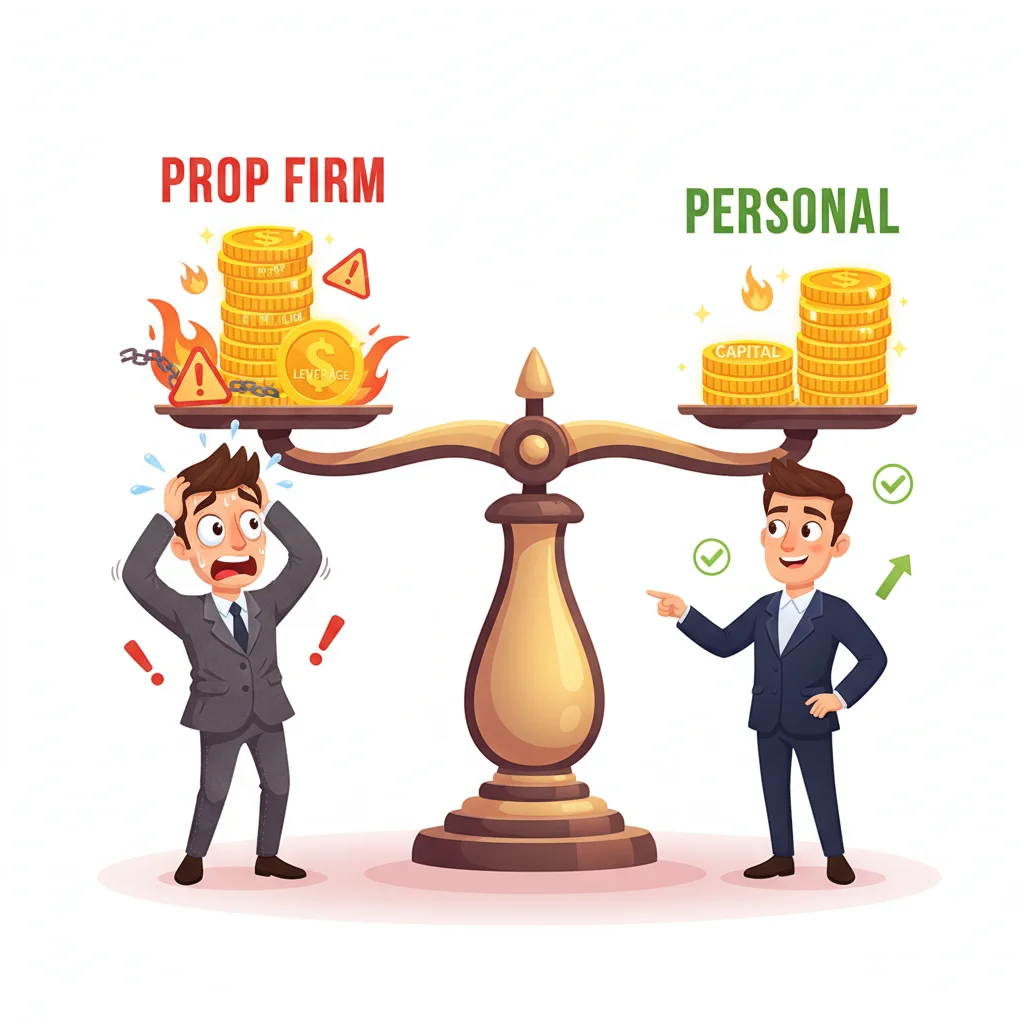
Here's a statistic that should sober you up: between 63% and 86% of retail CFD accounts lose money. In Nigeria, where flashy car ads promise easy wealth, that number likely skews higher. Being a professional forex trader here isn't about getting rich quick, it's about surviving long enough to make the 10% capital gains tax a problem you actually have. Let's strip away the Instagram fantasy and look at what this job really entails, from navigating the CBN's rules to picking a broker that won't vanish with your money.
Forget the Lamborghinis. In Nigeria, a professional forex trader is defined by three things: consistency, process, and tax compliance. It has nothing to do with the size of your initial deposit or how loud you are on Twitter.
A professional treats trading like a business. That means having a written trading plan you stick to, even when FOMO is screaming at you to buy that pump on USD/NGN. It means knowing your numbers cold: your risk per trade (usually 1-2% of capital), your win rate, and your average profit vs. average loss. I've seen more traders blow up from poor position size calculator discipline than from bad market calls.
Here's the real kicker: the Nigerian taxman, the FIRS, defines you as a professional the moment you make a profit. That 10% capital gains tax isn't a suggestion. I learned this the hard way in 2021 after a good quarter on XAU/USD. I hadn't set aside anything for taxes, thinking my profits were too 'small-time' to matter. The eventual reckoning was a painful lesson in business fundamentals.

Warning: If you're funding your account via the black market (and let's be honest, many are due to CBN restrictions), your paper trail needs to be impeccable. Mixing unofficial forex with taxable trading profits is a quick way to draw very unwanted attention.

💡 Winston's Tip
Your first profit target should always be to not lose money. Survival is the foundational skill. Everything else is built on top of that.
“A professional treats trading like a business. That means having a written trading plan you stick to, even when FOMO is screaming.”
This is where most aspiring 'pros' get intellectually lazy. Yes, forex trading is legal for individuals. No, it's not the wild west. The Central Bank of Nigeria (CBN) and the Securities and Exchange Commission (SEC) are the main players, but their gaze isn't fixed on you, the retail trader. Their focus is on banks and big institutions.
The critical rule, and I need you to hear this, is the CBN's prohibition on using official foreign exchange windows to fund trading accounts. They call it 'economic sabotage.' This forces most serious traders towards international brokers, which is a whole other due diligence challenge.
You're operating in a space that's tolerated but not actively regulated at the retail level. This puts the entire onus of safety on you. Your broker's license becomes your first line of defense. A professional doesn't just look for the highest use; they look for the most credible regulator backing their broker.
Why Your Broker's License is Your Safety Net
When you send money to Exness, IC Markets, or XM, you're not under CBN's protection. You're under the jurisdiction of the Seychelles FSA, the CMA Kenya, or the South African FSCA. A professional verifies this license before depositing a single kobo. They check the regulatory register, they don't just trust the broker's website footer. I made the mistake early on with a broker offering '1:3000 use.' The license was from a jurisdiction I couldn't even find on a map. The withdrawal took 3 months. Never again.

“The 10% capital gains tax isn't a suggestion. I learned this the hard way after a good quarter.”
Your trading platform is where you execute. Your trading system is what keeps you alive. For a Nigerian pro, this system has two core pillars: market analysis and ruthless risk management.
Analysis isn't about finding a magic indicator. It's about understanding context. How is the black-market Naira rate affecting USD/NGN sentiment? What's the CBN's latest move? You then layer technicals on top. I personally use a combination of price action and the RSI indicator for overbought/oversold zones, and the MACD indicator for trend confirmation. But the indicator is just the trigger. The strategy is the rulebook.

Pro Tip: Your edge won't come from a more complex chart. It comes from better risk management than the other guy. If your average winning trade is +50 pips and your average loser is -20 pips, you can be wrong more than you're right and still be profitable. Most amateurs have the opposite ratio.
Your system must include:
- Entry Rules: Objective criteria. Not 'it looks good.'
- Exit Rules: A clear stop-loss and take-profit plan. Using a scalping strategy? Your exits need to be lightning fast. Swing trading? You need wider stops.
- Risk Per Trade: Fixed. No exceptions. If your account is $1,000, risking 2% means $20. On a USD/JPY trade where your stop is 25 pips, your position size is calculated to lose exactly $20 if that stop is hit.
- A Trading Journal: This is non-negotiable. Every trade. Entry, exit, reason, emotion, screenshot. I review mine every Sunday. It's the most humbling and educational hour of my week.
💡 Winston's Tip
If you can't explain your trade setup in one simple sentence, you don't understand it well enough to risk money on it.

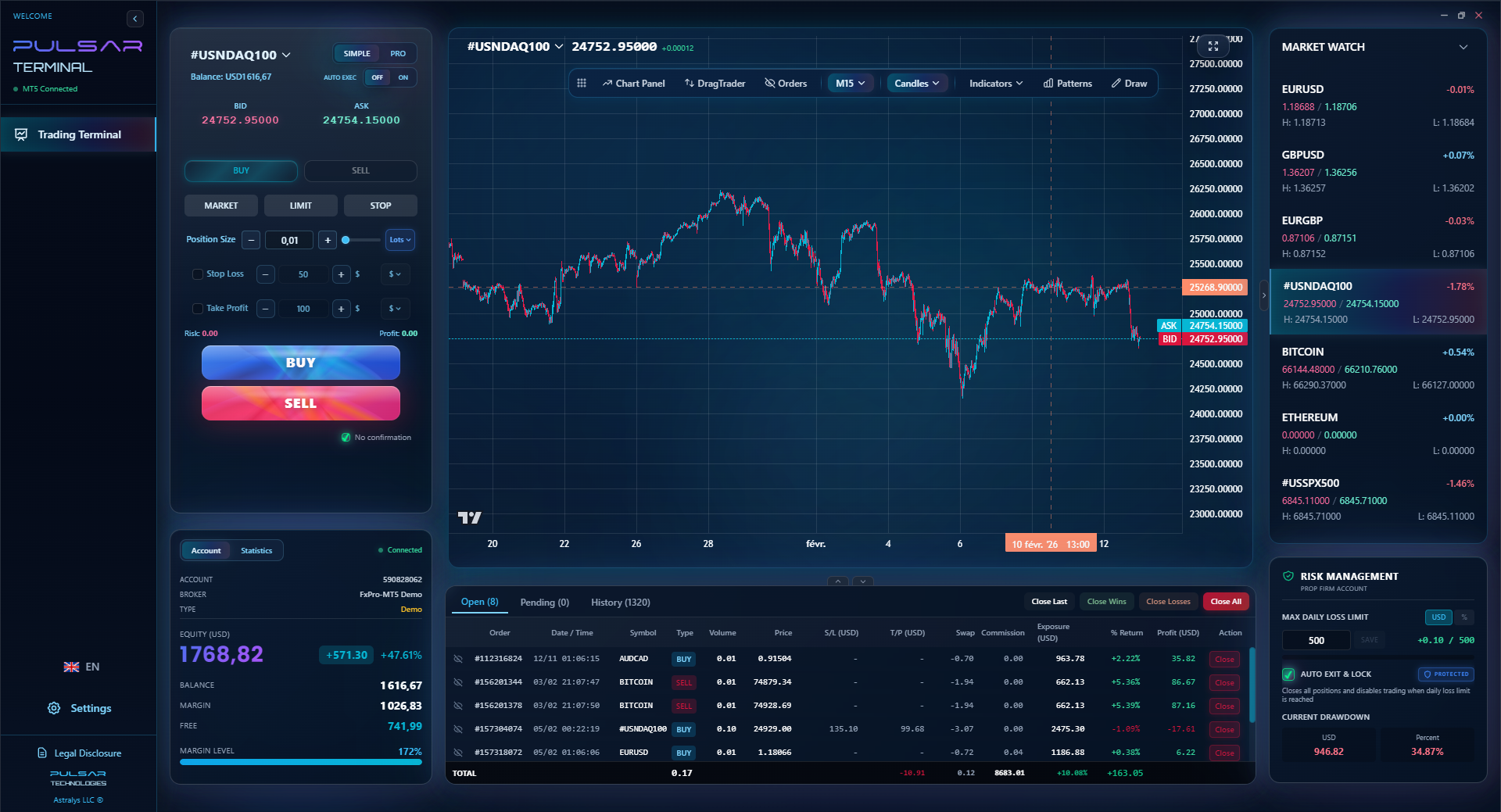
Executing a professional system requires precise tools, and Pulsar Terminal's drag-and-drop orders and multi-TP/SL management turn complex trade plans into a single, error-free click on your MT5 chart.
Pulsar Terminal
The all-in-one MT5 companion: drag-and-drop orders, multi-TP/SL, trailing stop, grid trading, Volume Profile, and prop firm protection. Used by 1,000+ traders daily.
“Your edge won't come from a more complex chart. It comes from better risk management than the other guy.”
Let's talk about the real costs of doing business. The advertised use of 1:1000 or 'unlimited' is a trap for the amateur. A professional sees use as a risk multiplier, not a wealth accelerator.
Here’s a comparison of what matters for a Nigerian pro:
| Broker | Typical EUR/USD Spread | Key Feature for Pros | Minimum Deposit | use (for NGN clients) |
|---|---|---|---|---|
| IC Markets | 0.0 pips + commission | Raw ECN access, great for scalping | $200 | Up to 1:1000 |
| Exness | 0.0 – 0.1 pips | NGN accounts, fast withdrawals | Varies | 'Unlimited' (use with extreme caution) |
| Pepperstone | From 0.0 pips + comm | Strong ECN execution, Razor account | $200 | Up to 1:400 (under CMA Kenya) |
| XM | From 0.8 pips (no comm) | Low $5 minimum, good for testing | $5 | Up to 1:1000 |
| FP Markets | From 0.0 pips + $6/lot | True institutional-grade ECN | $100 | Up to 1:500 |
Your real enemy is the spread + commission + swap. If you're a day trader, swap might not matter. If you hold positions for weeks, it will eat into your profits. I once took a long-term buy on AUD/USD and forgot about the negative swap. After 3 months, the swap charges had wiped out 40% of my paper gains. A professional calculates all costs before the trade.
That juicy 1:1000 use? It means a 0.1% move against you wipes out 100% of your margin. Pros use high use only to reduce margin lock-up on very small, high-probability trades. They are not using it to control a $100,000 position with $100. That's a one-way ticket to a margin call.
“Your edge won't come from a more complex chart. It comes from better risk management than the other guy.”
The market doesn't care about your rent, your family pressure, or the latest fuel price hike. But you do. And that's the psychological battleground. In Nigeria, where economic pressure is a constant, the temptation to 'force' a trade to meet an obligation is immense. A professional separates survival money from trading capital. If you need next month's rent from this month's trades, you've already lost.
Then there's the taxman. The 10% capital gains tax on gross profits is straightforward, but compliance is a discipline. Set aside 10% of every single withdrawal you make. Create a separate savings pot for it. When FIRS comes calling (and if you're consistently profitable, they might), you need to be ready with records.
Your trading journal is your first line of defense here too. It proves your income is from trading and not from other, potentially unexplained sources. In an economy with currency controls, this paper trail is your friend. I keep a simple spreadsheet: Date, Profit/Loss, Cumulative Profit, Tax Owed (10% of Cumulative). It's boring. It's essential.

Example: You make ₦500,000 profit in a year. Your tax liability is ₦50,000. If you haven't saved that, you're digging into your trading capital to pay it, which sets you back for the next year. It's a vicious cycle amateurs never see coming.
💡 Winston's Tip
The taxman is the most consistent trend in the market. Always account for him before you count your profits.
“The advertised use of 1:1000 is a trap for the amateur. A professional sees use as a risk multiplier.”
So how do you actually make the jump? It's a grind, not a leap.
Phase 1: The Apprenticeship (6-12 months) Trade a demo account, then a very small live account (like $50-$100). Your goal here is not profit. It's to execute 100 trades according to your plan and journal the results. You're testing your psychology and your process. Most people fail here because they get bored or impatient.
Phase 2: The Journeyman (1-2 years) You have a statistically proven edge from your journal data. Now you scale your capital slowly. You might move to a prop firm challenge or fund an account with 3-6 months of living expenses saved separately. Your focus is on consistent monthly returns, not home runs. This is where you start dealing with real tax implications.
Phase 3: The Professional (Ongoing) Trading is your primary source of income. You have business processes: weekly reviews, quarterly tax estimates, continuous education. You might specialize in a few pairs like EUR/USD or commodities. You understand that some months will be flat or down, and your risk management ensures you live to trade the next one.
The Nigerian dream sold online skips Phases 1 and 2 entirely. That's why it's a fantasy. The path of a professional forex trader is one of gradual, disciplined compounding, punctuated by constant learning and adaptation. It's less glamorous than the ads, but it's the only version that lasts.
FAQ
Q1Do I need a license from CBN to be a professional forex trader in Nigeria?
No. Individual retail traders do not need a CBN license. The licensing requirements you hear about are for brokerage firms and financial institutions. Your legal requirement is to pay the 10% capital gains tax on your profits to the FIRS.
Q2What is the best use for a beginner in Nigeria?
Forget what the broker offers. Start with no more than 1:10. Seriously. It forces you to focus on analysis and position sizing. Using 1:500 or 1:1000 as a beginner is a guaranteed way to lose your deposit fast. It amplifies every mistake.
Q3How do I fund my forex trading account with Naira?
You cannot use the official CBN window. Most traders use international debit/credit cards (like Visa/Mastercard) or cryptocurrencies to deposit directly with their chosen international broker. Brokers like Exness and HFM also offer direct Naira deposits through local payment systems. Always check the broker's specific deposit methods for Nigerian residents.
Q4Is forex trading taxable in Nigeria?
Yes. Profits are subject to a 10% Capital Gains Tax (CGT). You are responsible for declaring this income and paying the tax to the Federal Inland Revenue Service (FIRS). Keep detailed records of all your trades and withdrawals.
Q5What's more important for a pro: a good strategy or good psychology?
Psychology, by a mile. You can have the best strategy in the world, but if you can't follow its rules due to fear, greed, or impatience, it's worthless. The market is a constant test of your emotional discipline. Your trading journal is the tool that helps you improve both.
Q6Can I become a professional forex trader with a small account?
You can start the process of becoming professional with a small account. But you cannot realistically replace a full-time income with a $100 account. The goal of a small account is to prove your consistency and build your skills. Scaling to a professional income requires scaling your capital responsibly over time, or passing a prop firm challenge.
Prof. Winston's Lesson
Key Takeaways:
- ✓Define 'professional' by process, not profits.
- ✓Verify your broker's offshore license, not just its ads.
- ✓Risk a maximum of 1-2% of capital per trade.
- ✓Set aside 10% of every withdrawal for FIRS taxes immediately.
How useful was this article?
Click a star to rate
Weekly Trading Insights
Free weekly analysis & strategies. No spam.
About the Author
Olumide Adeyemi
West African Trading Pioneer
One of Nigeria's most active forex trading educators. 8 years of experience trading from Lagos. Specializes in low-capital strategies and prop firm challenges for African traders.
Comments
Risk Disclaimer
Trading financial instruments carries significant risk and may not be suitable for all investors. Past performance does not guarantee future results. This content is for educational purposes only and should not be considered investment advice. Always conduct your own research before trading.
You Might Also Like

Cara Trading Forex Sukses: 7 Prinsip dari Trader Profesional
Cara trading forex sukses dengan 7 prinsip trader pro: manajemen modal, disiplin, journal trading, backtest. Data nyata, bukan janji profit palsu.
Jam Trading Forex Terbaik untuk Trader Indonesia: Panduan Lengkap dengan Tabel Waktu
Panduan jam trading forex untuk trader Indonesia. Tabel 4 sesi dunia, jam emas 20:00-00:00, sesi mana yang harus dihindari. Data akurat + tips dari trader berpengalaman.
Top 5 Sàn Forex Uy Tín Nhất 2026: Review Jujur dari Trader Indonesia
Top 5 sàn forex uy tín 2026 untuk trader Indonesia. Review jujur: spread, deposit, withdraw, dukungan lokal. Exness, XM, IC Markets & lebih.
Get Pulsar Terminal
All these calculators are built into Pulsar Terminal with real-time data from your MT5 account. One-click position sizing, automatic risk management, and instant calculations.
Get Pulsar Terminal