


I stared at the screen, my cursor hovering over the 'Buy' button.

James Mitchell
Senior Trading Analyst
☕ 13 min read
What you'll learn:
- 1What Exactly Is a Prop Firm EA?
- 2The Non-Negotiable Rules You Must Code
- 3Building vs. Buying: The Eternal Debate
- 4My Personal EA Journey: The Real Numbers
- 5Broker & Platform: The Unsung Heroes
- 6Common Pitfalls (And How to Avoid Them)
- 7From Challenge to Live Funded: The Mindset Shift
- 8Final Thoughts & Getting Started

I stared at the screen, my cursor hovering over the 'Buy' button. The FTSE 100 was ticking up, but my prop firm challenge account was sitting at a 4.8% loss for the day. One more bad trade and I'd hit the 5% daily loss limit, failing the evaluation. I'd spent weeks on that attempt. That was the moment I realized doing everything manually, with all that emotional pressure, just wasn't scalable. I needed a system, a set of unbreakable rules. More than that, I needed something to enforce them without my interference. That's when I got serious about building a prop firm EA.
Let's cut through the hype. A prop firm EA isn't some magical money-printing robot. It's an Expert Advisor - a piece of automated trading software for MetaTrader - specifically coded to navigate the unique rulebook of proprietary trading firm challenges.
Think of it as your robotic co-pilot. Its main job isn't just to find trades. Its primary mission is to protect you from yourself and the firm's strict rules. While you might be looking for the next big swing trading setup, the EA is constantly checking the clock, calculating your daily drawdown, and making sure you don't accidentally blow a profit target because you got greedy.

Warning: The biggest misconception is that you can buy a $99 'Pass Any Challenge' EA, set it, and forget it. If it were that easy, everyone would be funded. These firms aren't charities; their rules are designed to catch inconsistent, overly risky behavior. A good EA encodes a legitimate, rule-based strategy and acts as a strict compliance officer.
The core functions are usually:
- Trade Execution: Opens and closes trades based on your defined strategy.
- Risk Sentinel: Monitors your daily and overall drawdown in real-time. If you're approaching a limit, it can hedge or stop trading entirely.
- Profit Target Tracker: Once you're near your challenge's profit target (say, 8%), it can switch to ultra-conservative mode or even stop trading to lock in the win.
- Timekeeper: Many challenges have minimum trading day requirements. The EA can ensure you place at least a token trade each day to count it.
It turns the challenge from a high-wire emotional act into a controlled, systematic process. The goal isn't just to pass one challenge, but to have a repeatable method to get funded again and again.

If your EA doesn't respect these, you will fail. I've learned this the expensive way, blowing a few challenges early on by missing a tiny rule.
Daily Loss Limit: The Account Killer
This is rule #1. If your challenge says a 5% daily loss limit, that doesn't mean you can lose 4.9% every day. It means if your equity drops 5% from the starting balance of that day, you're done. Your EA must calculate this in real-time. I once had a trade go south quickly while I was away from my desk. By the time I got back, I was at a 5.2% daily loss. Game over. An EA should have closed all positions at 4.8% or 4.9% as a safety buffer.

Example: You start Monday with a $100,000 evaluation account. Your daily loss limit is 5% ($5,000). At 3 PM, your open losses hit -$4,850. A good EA should be in 'red alert' mode, closing positions or refusing new ones, not waiting for the exact -$5,000.
Overall Drawdown: The Slow Burn
This is usually based on your starting balance or peak equity. It's a slower, trailing danger. Your EA needs to track your 'highest equity since start' and know the maximum allowed drop from that peak (e.g., 10%). This stops you from making 8%, giving half back, and then blowing past the limit on a bad streak.
Profit Target Discipline
This is where human psychology fails. The target is 10%? You hit 9.5% and get scared of losing it, so you close everything and miss the target. Or you get greedy at 11% and give it all back. The EA should have a clear plan: maybe it trades normally until 8%, then reduces position size by 50% until the target is hit, then stops entirely. Use a position size calculator to dynamically adjust lot sizes as you approach your target.
Trading Period Rules
'Minimum 5 trading days.' Sounds simple. But if your EA nails the profit in 2 days, you still need to trade (carefully) for 3 more. Code it to place tiny, low-risk trades just to satisfy the calendar requirement once the main goal is met.

💡 Winston's Tip
The first rule of prop firm EA club is to protect the daily loss limit above all else. Code a buffer - if the limit is 5%, have the EA cease trading at 3.5%. Survival is the primary objective.
“A prop firm EA isn't a money-printing robot. It's a robotic co-pilot whose main job is to protect you from yourself.”
Here's my take, after trying both routes.
Buying an EA: You're buying someone else's strategy and risk rules. The pros are speed and (theoretically) expertise. The cons are massive. You have no idea how it works under the hood. When it has a losing streak - and it will - you'll have no faith in it and likely shut it off. You're also a target for scammers selling 'guaranteed' EAs that are just martingale systems destined to blow up. I bought one in 2019 for $300. It passed a $50k challenge... then immediately lost the funded account in two weeks because its risk parameters were too aggressive for live trading.
Building Your Own (or hiring a coder): This is the far superior path, but it's work. You start with your own proven, manual strategy. Maybe it's a simple RSI indicator divergence setup on the EUR/USD guide, or a moving average crossover. You know its win rate, average loss, and expectancy. Then, you work with a coder (from a reputable platform like MQL5.com) to translate your exact rules into code and bolt on the prop firm rule protection from the previous section.
This is what finally worked for me. My strategy was a basic support/resistance breakout on the 1-hour chart. I knew its stats. I paid a coder $500 to automate it. The first version was clunky, but after two weeks of tweaking on a demo account, it was ready. The beauty? I understood every trade it took. When it lost, I knew why, and I could trust the process.
| Buying an EA | Building Your Own EA | |
|---|---|---|
| Control | Zero. You're a passenger. | Total. You dictate every rule. |
| Understanding | Low. It's a black box. | High. You built the logic. |
| Cost | $50 - $500+ (one-time) | $200 - $2000+ (development) |
| Adaptability | None. Can't change the core strategy. | High. You can tweak parameters anytime. |
| Long-term Value | Low. Often useless after challenge rules change. | High. It's your proprietary system. |

Pro Tip: If you hire a coder, start with a 'Minimum Viable Product.' Don't ask for 20 indicators and complex AI. Ask them to code your ONE best setup with strict stop-loss and take-profit rules. Get that working perfectly, then add features later.
Managing the complex risk rules of a prop firm challenge is easier when you have tools that automate protection, like setting a hard daily loss limit that stops all trading.
Pulsar Terminal
The all-in-one MT5 companion: drag-and-drop orders, multi-TP/SL, trailing stop, grid trading, Volume Profile, and prop firm protection. Used by 1,000+ traders daily.

Let's get concrete. I'll walk you through the EA that finally got me a consistently funded status.
The Strategy Core: It traded Gold (XAU/USD guide) on the 15-minute chart. Entry triggers were a combination of a tight MACD indicator histogram flip and price action at a key level identified in the Asian session. Not fancy. Win rate was about 55%.
The Prop Firm Layer: This was the key. The EA was coded for a specific firm's challenge (let's say a 10% target, 5% daily, 10% max drawdown).
- Daily Loss Circuit Breaker: If unrealized daily loss hit 3%, it closed all trades and stopped trading for 24 hours. This protected the 5% limit.
- Profit Phase: At 8% total profit, it cut position size by 70%. At 9.5%, it stopped opening new trades and only managed existing ones.
- Time Rule: It would open one micro-lot trade per day if the 'minimum days' weren't met.
The Results:
- First Challenge Attempt: Passed in 11 days. Hit 10.2% profit. The EA stopped trading automatically. I manually closed the final trade.
- Live Funded Account (Phase 1): The first month was rocky. The EA made 2.1%. I almost shut it off because it felt slow. But I stuck to the plan.
- The Mistake: I got cocky. I manually overrode the EA to take a 'sure thing' news trade. It turned into a 3% loss in minutes, nearly triggering my daily limit on the live account. I never overrode it again.
- 18-Month Outcome: That same EA, with minor tweaks for volatility, has now passed 4 separate challenges for different firms and runs on two live funded accounts. Its average monthly return across all accounts is 1.5-4%. Not glamorous, but consistent and within all drawdown rules.
The takeaway? The profit came from the strategy. The funded account came from the EA's ruthless enforcement of the prop firm's rules. You need both halves.
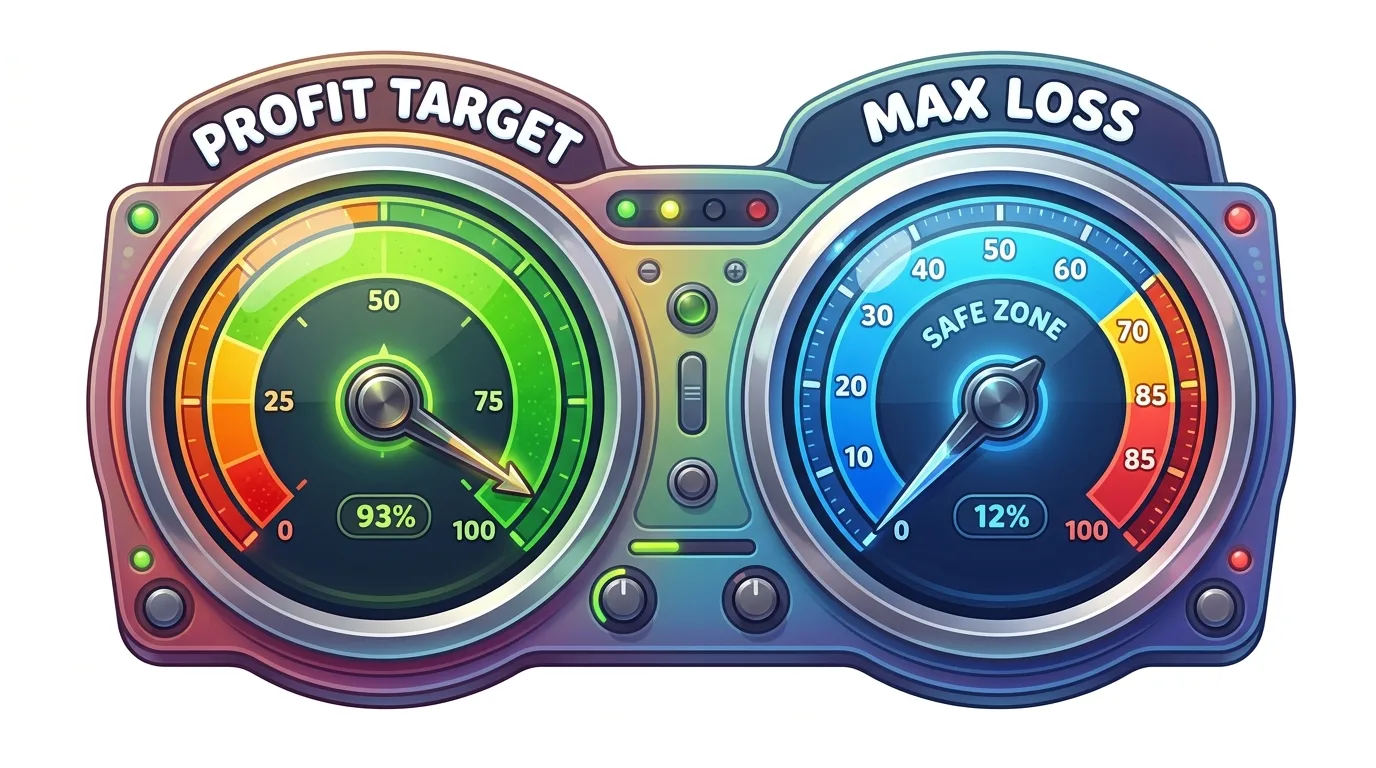
“The profit comes from your strategy. The funded account comes from the EA's ruthless enforcement of the prop firm's rules.”
Your EA is only as good as the environment it runs in. This is a technical but critical point.
Choosing a Broker: You need a broker that's compatible with MetaTrader 4 or 5 and has stable, low-latency servers. More importantly, you need one that won't reject your stops or manipulate spreads during news events, which can cause your EA's logic to fail. I've had good, reliable execution with brokers like IC Markets review and Pepperstone review for EA trading. Their raw spread accounts are ideal.
The VPS (Virtual Private Server): This is non-optional. Running an EA on your home computer means it stops when your internet drops or your computer sleeps. A VPS is a remote, always-on computer in a data center near your broker's servers. It runs your MT4/5 platform and EA 24/7. For about $15-30 a month, it eliminates downtime. I use a popular one called ForexVPS, hosted in London, to trade EU sessions smoothly.
MetaTrader 4 vs. MetaTrader 5: MT4 is the old reliable, with tons of EAs built for it. MT5 is more modern and handles partial order fills better. Most prop firms offer MT5 now. Check which platform your firm uses and develop your EA for that. The coding language (MQL4 vs MQL5) is different.
Testing, Testing, Testing: Before you ever put it on a live challenge, run your EA on a demo account for at least a month. Then, run it on a small live account with real money (like $100) to test execution and slippage. This 'forward test' is where you'll find glitches. I once had an EA that worked perfectly on demo but failed to open trades on live because of a one-pip deviation setting I'd overlooked.
💡 Winston's Tip
Forward test your EA on a small live account for a minimum of 30 days and 100 trades. Demo tests are for logic; live tests are for execution reality - slippage, spreads, and fills.
Let me save you some pain and lost evaluation fees.
Over-optimization (Curve-Fitting): This is the killer. You tweak your EA's parameters so it makes perfect, beautiful profits on past data. But it's learned the exact past, not the general market. In the live market, it fails immediately. Always test on 'out-of-sample' data - data it wasn't optimized on.
Ignoring Slippage & Spreads: In backtests, your EA buys at the exact price. In reality, during high volatility, the spread on something like the EUR/USD guide can widen from 1 pip to 10 pips. Your EA might think it got in at 1.0850, but the real fill is 1.0855, turning a winning trade into a loser. Always set your backtest to '90% modeling quality' and account for average spread.
No Disaster Recovery: What happens if the VPS reboots? Does your EA auto-start? Does it know what trades were open? Code in a 'journaling' function so it can read a file on startup and reconcile its position with the broker's.
Chasing the 'Holy Grail': You will be tempted to keep adding rules to catch every market move. Stop. A simple, strong strategy with iron-clad risk management will beat a complex, fragile one every time. My most successful EA has just two entry conditions and three exit conditions. That's it.
Warning: Never, ever use a martingale or grid strategy EA on a prop firm challenge. These systems average down by adding to losing trades. They might pass a challenge by sheer luck, but they will almost certainly hit the max drawdown limit and blow the account eventually. The rules are designed to catch this behavior.

“Passing the challenge is just the entrance exam. The real test is keeping the live funded account.”
Passing the challenge is just the entrance exam. The real test is keeping the live funded account. Your EA's job now changes slightly.
The pressure is different. Now, real profit splits are on the line. The firm's rules might be slightly more lenient on daily loss, but the overall drawdown is still there, and now it's attached to real capital.
You must resist the urge to 'help' your EA. Your job is now one of monitoring and slight optimization, not intervention. Track its performance weekly. Is the win rate holding up? Is the average loss within bounds? Use a journal.
Also, diversify. Once you have one funded account running smoothly, use the same EA (or a slightly modified version) to pass another firm's challenge. Don't put all your eggs in one basket. Different firms have different rules and profit split structures. I run versions of my core EA on accounts with two different firms as a hedge.
Finally, remember the goal is consistency, not moonshots. A prop firm EA that grinds out 2-3% a month without ever threatening the drawdown is a golden goose. One that makes 15% one month and loses 12% the next is a liability they'll shut down. Your EA should embody the patience you need to have as the account owner.
💡 Winston's Tip
Your EA's most important feature isn't its entry signal. It's its ability to stop trading. Automating discipline is the entire point.
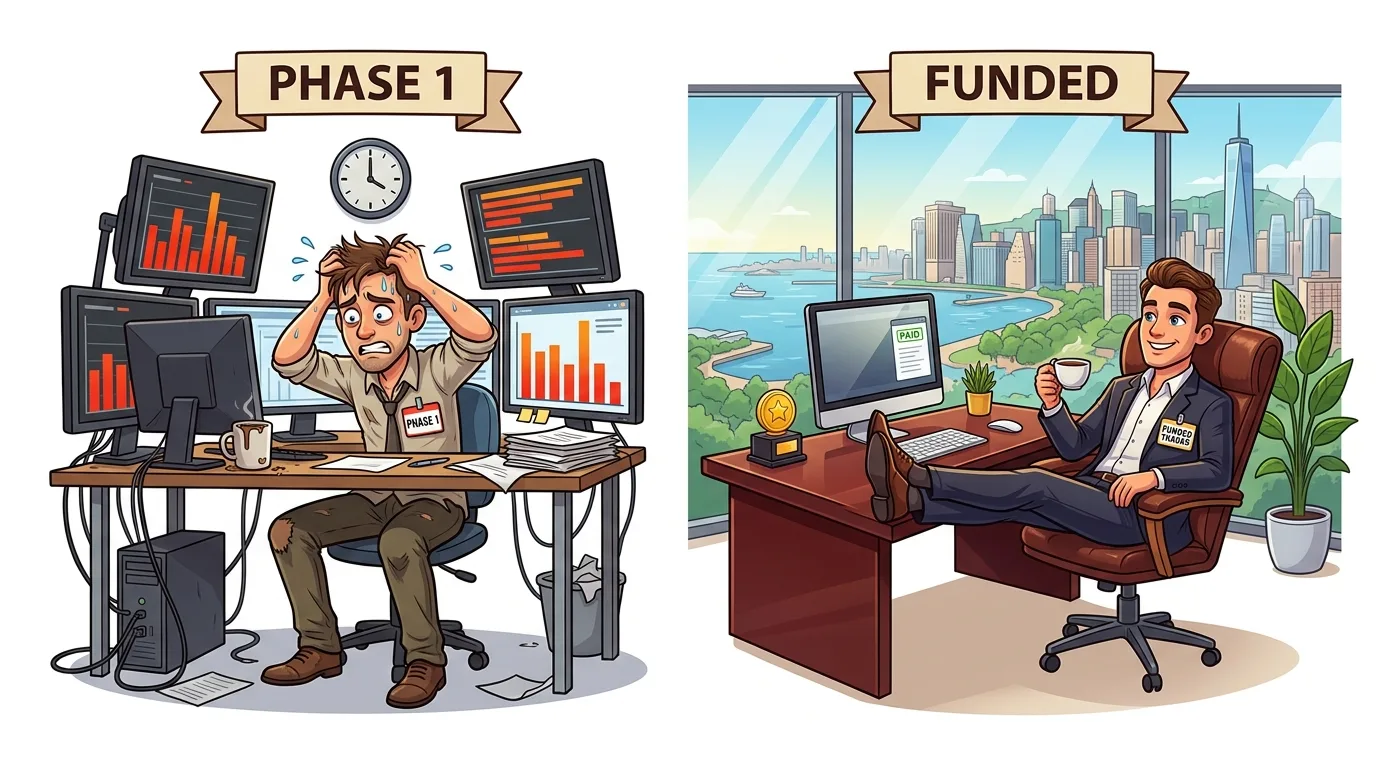
So, is a prop firm EA right for you? If you have a defined, rule-based trading strategy that you can describe in simple 'if-then' statements, and you're tired of the emotional rollercoaster of manual challenges, then absolutely.
Here's a step-by-step starter plan:
- Document Your Strategy: Write down every single rule. Entry, exit, stop-loss, take-profit. What instrument, what time frame? Be painfully specific.
- Manual Backtest: Test those rules on past charts, trade by trade, for at least 100 trades. Get the real stats: win rate, average win/loss, expectancy. If it's not profitable manually, automating it will just lose money faster.
- Find a Coder: Go to the MQL5.com marketplace. Look for developers with high ratings and positive reviews for EAs. Be clear about your needs: "Code my strategy rules + these prop firm risk management rules."
- Test Relentlessly: Demo test for a month. Small live account test for two weeks. Only then consider using it on a challenge.
- Start Small: Buy the smallest challenge your firm offers (e.g., $10k). The rules are the same, but the fee is lower. Prove the EA works there first.
A prop firm EA is a tool, not a savior. It amplifies your discipline and enforces your plan. It removes fear and greed from the execution equation. The edge still has to come from you - from your market understanding and your strategy. But once you have that edge, a well-coded EA is the vehicle that can reliably drive it through the gates of a funded account, again and again.
It took me years of trial and error to build a system that works. The path is there. It just requires moving from being a discretionary gambler to a systematic manager. Your future self, watching the EA manage risk while you're away from the screen, will thank you for making the shift.

FAQ
Q1Can I really pass a prop firm challenge with just an EA?
Yes, but with major caveats. The EA must encode a statistically sound trading strategy first. It's not a magic wand. Its primary value is in ruthlessly enforcing the challenge's risk rules (daily loss, max drawdown) that traders often break emotionally. It passes the challenge by following a plan perfectly, not by being clever.
Q2How much does it cost to develop a custom prop firm EA?
Costs vary wildly. A simple EA based on a few indicators might cost $200-$500 from a freelance coder on MQL5.com. A more complex system with advanced risk management features and multiple strategies can run $1,000-$3,000. Remember, you often get what you pay for in terms of code quality and reliability.
Q3Is it legal to use an EA for a prop firm challenge?
In almost all cases, yes. Most prop firms explicitly allow automated trading (EAs) as long as you're not engaging in arbitrage, latency exploitation, or other prohibited practices. Always check your specific firm's Terms of Service. They usually care about the result (following their rules) more than the method.
Q4What's the biggest risk of using a prop firm EA?
Over-reliance on a flawed system. If you don't understand the strategy the EA is using, you won't have the conviction to let it run through a losing period. The second biggest risk is technical failure: a VPS crash, a broker disconnection, or a bug in the code that causes unintended behavior. Constant monitoring is still required.
Q5Can I use the same EA for different prop firms?
You can use the same core strategy, but you will almost always need to adjust the risk parameters. One firm may have a 5% daily loss limit, another 4%. One may calculate drawdown from balance, another from equity. A well-built EA will have these as easily adjustable inputs, so you can reconfigure it for each firm's rulebook.
Q6Do I need to be a programmer to use a prop firm EA?
No, but you need to be technically competent. You don't need to write code, but you should understand how to install an EA on MetaTrader, configure its input parameters (like lot size, stop loss pips), set up a VPS, and interpret its log files. Think of it like driving a car - you don't need to be a mechanic, but you should know how to check the oil.
Prof. Winston's Lesson
Key Takeaways:
- ✓Code a daily loss buffer (e.g., stop at 3.5% for a 5% limit).
- ✓Forward test on a live micro account for 30+ days.
- ✓Optimize for consistency, not maximum profit.
- ✓Never override the EA's risk management rules.
How useful was this article?
Click a star to rate
Weekly Trading Insights
Free weekly analysis & strategies. No spam.
About the Author
James Mitchell
Senior Trading Analyst
Based in New York with over 9 years of trading experience. Focuses on major USD pairs, prop firm challenges, and the US regulatory landscape.
Comments
Risk Disclaimer
Trading financial instruments carries significant risk and may not be suitable for all investors. Past performance does not guarantee future results. This content is for educational purposes only and should not be considered investment advice. Always conduct your own research before trading.
You Might Also Like

Cara Trading Forex Sukses: 7 Prinsip dari Trader Profesional
Cara trading forex sukses dengan 7 prinsip trader pro: manajemen modal, disiplin, journal trading, backtest. Data nyata, bukan janji profit palsu.
Jam Trading Forex Terbaik untuk Trader Indonesia: Panduan Lengkap dengan Tabel Waktu
Panduan jam trading forex untuk trader Indonesia. Tabel 4 sesi dunia, jam emas 20:00-00:00, sesi mana yang harus dihindari. Data akurat + tips dari trader berpengalaman.
Top 5 Sàn Forex Uy Tín Nhất 2026: Review Jujur dari Trader Indonesia
Top 5 sàn forex uy tín 2026 untuk trader Indonesia. Review jujur: spread, deposit, withdraw, dukungan lokal. Exness, XM, IC Markets & lebih.
Get Pulsar Terminal
All these calculators are built into Pulsar Terminal with real-time data from your MT5 account. One-click position sizing, automatic risk management, and instant calculations.
Get Pulsar Terminal