


Most new traders ask the wrong question.
James Mitchell
Senior Trading Analyst
☕ 9 min read
What you'll learn:

Most new traders ask the wrong question. They want to know which market is 'better' or 'easier to make money in.' That's a one-way ticket to blowing up your account. The real question is which market fits your personality, schedule, and risk tolerance. I've lost money in both arenas before figuring that out. Let's cut through the marketing hype and compare trading forex vs stocks on the terms that actually matter.
This is where the fundamental difference hits you. In stocks, you're buying a piece of a company. You're betting on its profits, management, and sector trends. You can read 10-K filings, listen to earnings calls, and feel like you understand the asset. It's tangible.
Forex is pure macroeconomics and sentiment. You're trading the relative value of one currency against another. When you buy EUR/USD, you're betting the Eurozone's economic outlook is stronger than the US's. You're trading central bank policy, inflation reports, and geopolitical flows. There's no balance sheet. The 'asset' is a country's entire economy.
This changes your research completely. Stock trading can feel like detective work. Forex trading feels like being a political analyst with a Bloomberg terminal. One isn't inherently better, but they demand different mindsets. I got smoked early on trying to apply stock valuation models to currency pairs. It's like using a thermometer to measure speed.

Warning: Don't fall for the 'forex is simpler' line. Just because there are fewer major pairs doesn't mean it's easier. Understanding why the Bank of Japan might intervene in USD/JPY is as complex as analyzing a tech company's moat.

💡 Winston's Tip
If you can't explain your stop-loss rationale in one sentence, you don't have a trade, you have a hope.
Your lifestyle will dictate which market you can trade effectively.
The 24-Hour Forex Grind
The forex market runs 24 hours a day, five days a week. It opens Sunday evening in Sydney and closes Friday evening in New York. This is a double-edged sword. The upside? You can trade around your day job. A major news event hits at 8:30 AM EST? You're in. The downside? The market never sleeps. That position you left open can get gapped over the weekend or during the thin Tokyo session. I learned this the hard way holding a GBP/USD long over a weekend when a Brexit headline dropped. Came back to a 120-pip loss against me before I could blink.
The Stock Market Schedule
US equities trade from 9:30 AM to 4:00 PM EST, with pre-market and after-hours sessions offering limited liquidity. This structure is actually a blessing for discipline. The market closes, you're done. No temptation to stare at charts all night. The flip side? If you have a 9-to-5 job, you miss the entire primary session. You're left trading the wild west of pre-market, where spreads are wide and moves can be erratic.
Liquidity and Slippage
Forex is the most liquid market in the world, with over $6 trillion traded daily. The major pairs (like EUR/USD) have razor-thin spreads, especially with brokers like IC Markets or Pepperstone. Slippage on entry is usually minimal during major sessions.
Stock liquidity varies wildly. Trading Apple? You'll get filled instantly. Trading a small-cap biotech with low volume? Good luck getting your order filled without moving the price. I once tried to exit a $15,000 position in a niche pharma stock and watched the ask drop 3% as my market order hit.

Example: The average daily range for EUR/USD might be 70-100 pips. For a mega-cap stock like Microsoft, it might be a 1-2% move. But a speculative small-cap can easily swing 10-20% in a day. Volatility isn't a market trait, it's an instrument trait.
“The goal of your first 100 trades isn't to get rich. It's to still have enough capital to place your 101st trade.”
This is the single most critical distinction and the #1 reason new traders fail. The use rules are completely different, and they fundamentally alter your risk profile.
In the US stock market, you're subject to Regulation T. This means standard margin is 2:1 use. If you have $10,000, you can buy $20,000 worth of stock. For day trading under the PDT rule, you might get 4:1 intraday. It's tightly controlled.
Forex brokers, especially offshore ones, offer use that can make your eyes water. 50:1 is common. 100:1, 200:1, even 500:1 is advertised. This is where the siren song gets dangerous.
Let me give you a real, painful example from my early days. I deposited $2,000 with a broker offering 400:1 use. In my mind, I was controlling $800,000! I put on a 0.5 lot trade in GBP/USD (controlling $50,000). A move of just 40 pips against me was a $200 loss, wiping out 10% of my account. I didn't use a stop-loss because 'it would come back.' It didn't. A 100-pip move wiped out half my capital in an hour. The use didn't create the loss, my idiocy did. But the use turned a bad trade into an account-ending event.
High use is a tool, not a strategy. It lets you put up less margin, but your profit and loss are calculated on the full position size. You must use a position size calculator religiously. If you trade forex with the same dollar risk per trade that you use in stocks, the use becomes irrelevant. It's just a margin requirement. The problem is almost no one has that discipline initially.

Pro Tip: Regardless of the use offered, I never risk more than 1% of my account on a single trade. On a $10,000 account, that's $100. I size my position so that my stop-loss distance, in pips, multiplied by the pip value, equals $100 or less. This is non-negotiable.
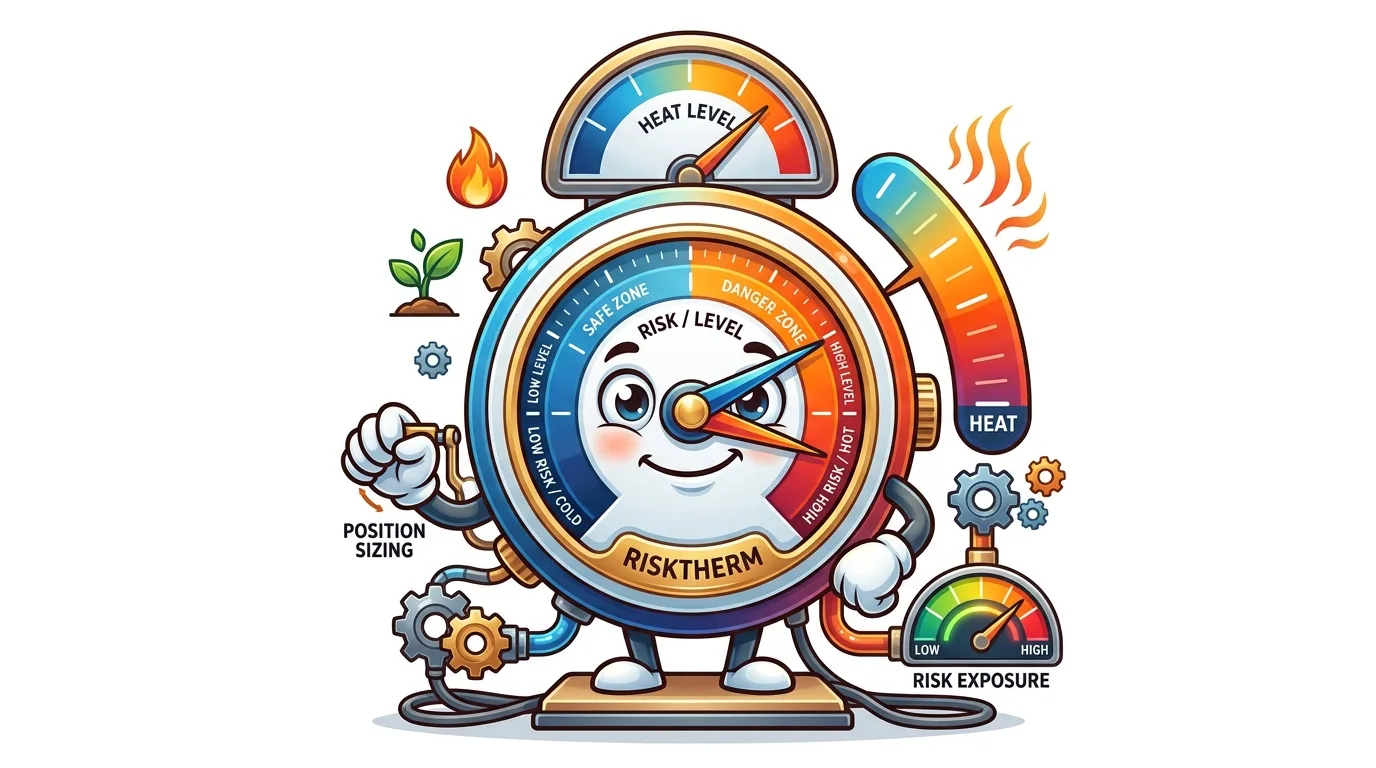
How you pay to play is different. These costs eat directly into your edge, so you need to know them cold.
Forex Costs: You primarily pay the spread (the difference between the bid and ask price). On a major pair like EUR/USD during London hours, this can be as low as 0.1 pips with a raw spread account from a broker like Exness or IC Markets. That's about $0.10 per 1 standard lot. Some brokers also charge a small commission per lot. There are typically no data fees or exchange fees.
Stock Costs: You pay a commission per trade (though many brokers are now commission-free for US equities). However, you're not off the hook. You pay the spread, which can be wide on low-volume stocks. More importantly, you might pay for real-time data. Want Level II quotes (the order book)? That's often a monthly fee. Trading options or futures on stocks? Those have their own exchange and regulatory fees.
For active traders, especially scalpers, forex can be cheaper due to the microscopic spreads. For a long-term swing trading investor buying and holding shares, the commission-free stock model might be cheaper. But always look beyond the headline 'zero commission' claim. The cost is baked in somewhere, usually in the spread.
💡 Winston's Tip
The market's job is to find the price that hurts the most people. Your job is to not be one of them.

“Risk is controlled by the trader, not the market.”
Not all strategies translate between markets. Your approach should match the market's rhythm.
Scalping: Taking 5-10 pips profits on forex majors is a viable, high-probability game due to tight spreads and high liquidity. Doing the same on a stock (trying to capture 10 cents) is often eaten up by the bid-ask spread unless it's a mega-cap. Forex is generally more suited to pure technical, short-term strategies.
Swing Trading: This can work beautifully in both. In stocks, you're swinging based on earnings cycles, breakouts from consolidations, or sector rotations. In forex, you're swinging on broader monetary policy trends or momentum from a series of economic data releases. The holding period (days to weeks) is similar.
Long-Term Investing: This is the domain of stocks. Buying and holding currencies for years isn't really 'trading,' it's a macro hedge. The carry trade (earning interest rate differentials) is the closest thing, but it's a specific strategy. If you believe in a company's 10-year vision, buy the stock. If you think the US dollar will weaken over a decade... there are probably better instruments than a spot forex trade.
I personally found my niche in forex swing trading. The 24-hour cycle meant I could analyze and place orders in the evening, set stops and targets, and not need to watch the screen all day. My foray into stock day trading failed because I couldn't be glued to the tape from 9:30 to 4:00.
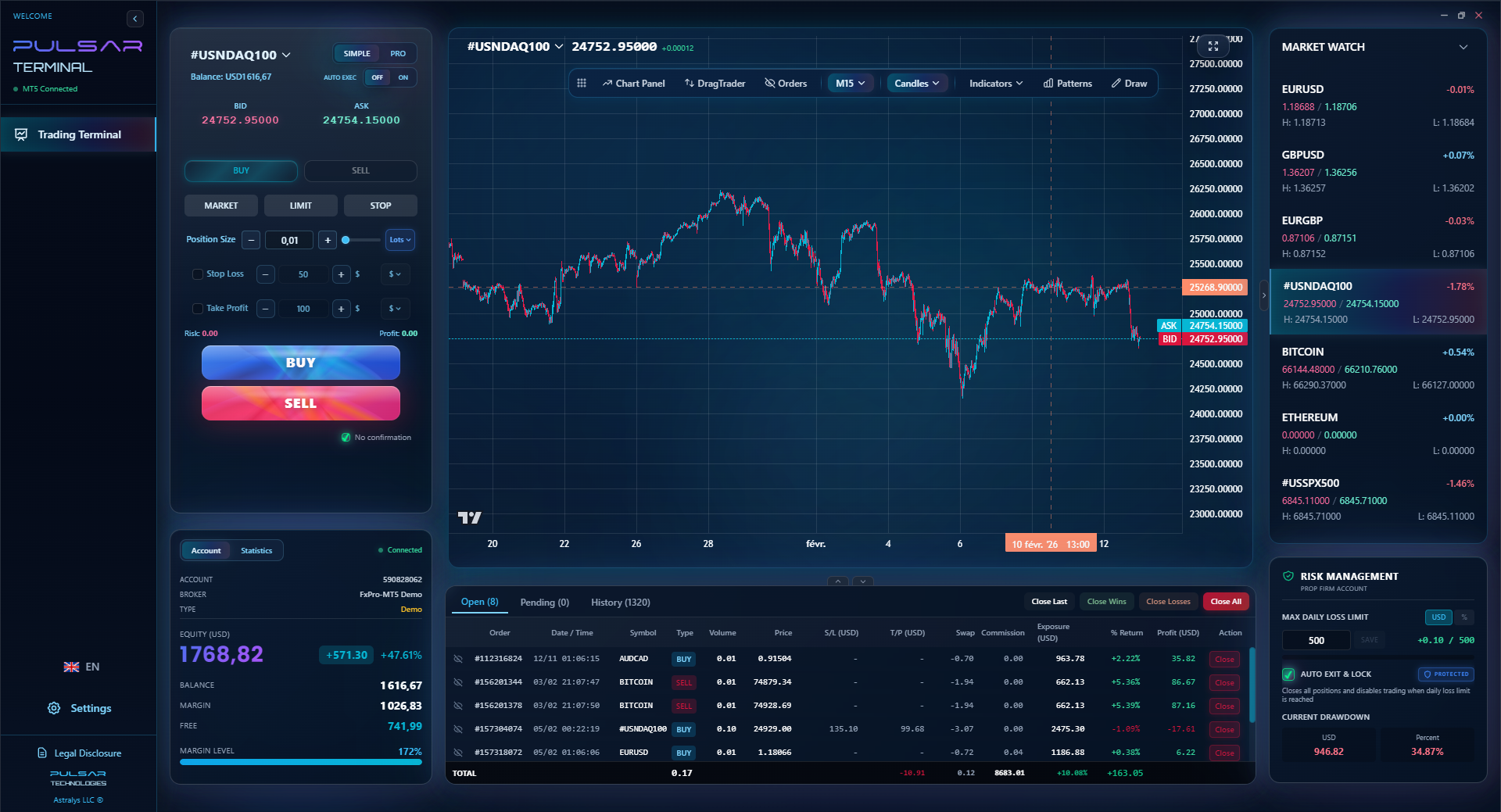
Managing multiple trades across different markets is easier with tools that automate risk, like Pulsar Terminal's one-click stop-loss and take-profit grids for MT5.
Pulsar Terminal
The all-in-one MT5 companion: drag-and-drop orders, multi-TP/SL, trailing stop, grid trading, Volume Profile, and prop firm protection. Used by 1,000+ traders daily.
Stop looking for the 'best' market. Start looking for the best market for you. Ask yourself these questions:
Choose STOCKS if:
- You enjoy fundamental analysis and researching companies.
- You want to trade during specific, market-hours only.
- You prefer lower use (or find high use too tempting).
- You're interested in owning assets (shares) that can pay dividends.
- Your natural time frame is weeks to months (or longer).
Choose FOREX if:
- You are a night owl or need to trade outside standard US hours.
- You are drawn to macroeconomic trends and global news.
- You can exercise extreme discipline with position sizing and use.
- You prefer highly liquid markets with low transaction costs.
- Your natural time frame is minutes to days.
You can, and probably should, try both with a demo account. But don't just click buttons. Simulate your real life. If you have a job, try trading forex in the evening or stocks in the pre-market. See which rhythm feels less stressful. Track which market you enjoy researching more. If it feels like homework, you won't stick with it.
My final piece of advice? Start with less use than you're allowed. Trade smaller than you think you should. The goal of your first 100 trades isn't to get rich. It's to still have enough capital to place your 101st trade. I've seen more traders fail from one over-leveraged blow-up in either market than from a thousand small, disciplined losses. Manage your risk first, and the profits become a possibility, not just a prayer.

FAQ
Q1Is forex trading more profitable than stock trading?
No. Profitability depends on the trader, not the market. Both offer opportunities. Forex has higher use, which can amplify gains AND losses. A skilled stock trader can outperform a mediocre forex trader, and vice versa. Focus on your edge and risk management, not the asset class.
Q2Can I day trade forex without the $25,000 PDT rule?
Yes. The Pattern Day Trader (PDT) rule is a US regulation that applies to margin accounts trading US stocks. It does not apply to the spot forex market. This is a major reason traders look at forex. However, brokers may have their own minimums for active trading.
Q3Which market is riskier, forex or stocks?
Risk is controlled by the trader, not the market. However, forex is often perceived as riskier due to the widely available high use, which can lead to rapid losses. A stock trader using 2:1 use has a built-in buffer that a forex trader using 50:1 does not. With prudent position sizing, you can make either market equally 'safe' or 'risky.'
Q4Do I need different technical analysis for forex vs stocks?
The core principles of support/resistance, trendlines, and indicators like the RSI or MACD work on any price chart. The key difference is in the 'why.' Stock charts react to company news. Forex charts react to economic data releases at specific times (like 8:30 AM EST). You need to be aware of the economic calendar when trading forex.
Q5What's a pip in forex compared to a point in stocks?
A pip is typically the smallest price move (0.0001) for most currency pairs. A 'point' in stocks is a $1 move in the share price. The monetary value of a pip depends on your trade size (lot size). A 1-pip move on a standard lot (100,000 units) is worth $10. A $1 move on 100 shares of stock is a $100 change.
Q6Can I trade both forex and stocks?
Absolutely. Many traders have a primary market but will take opportunities in another. For example, you might primarily swing trade forex but also take long-term positions in a handful of stocks you believe in. Just make sure you understand the different margin rules, costs, and trading hours for each. Don't confuse the strategies.
Prof. Winston's Lesson
Key Takeaways:
- ✓use rules define risk: 2:1 for US stocks vs. 50:1+ for forex.
- ✓Forex runs 24/5; stocks have set US market hours.
- ✓Costs differ: forex uses spreads; stocks use commissions + spreads.
- ✓Match your style: scalping favors forex, long-term investing favors stocks.
- ✓Your personality and schedule are the ultimate deciders.
How useful was this article?
Click a star to rate
Weekly Trading Insights
Free weekly analysis & strategies. No spam.
About the Author
James Mitchell
Senior Trading Analyst
Based in New York with over 9 years of trading experience. Focuses on major USD pairs, prop firm challenges, and the US regulatory landscape.
Comments
Risk Disclaimer
Trading financial instruments carries significant risk and may not be suitable for all investors. Past performance does not guarantee future results. This content is for educational purposes only and should not be considered investment advice. Always conduct your own research before trading.
You Might Also Like

Cara Trading Forex Sukses: 7 Prinsip dari Trader Profesional
Cara trading forex sukses dengan 7 prinsip trader pro: manajemen modal, disiplin, journal trading, backtest. Data nyata, bukan janji profit palsu.
Jam Trading Forex Terbaik untuk Trader Indonesia: Panduan Lengkap dengan Tabel Waktu
Panduan jam trading forex untuk trader Indonesia. Tabel 4 sesi dunia, jam emas 20:00-00:00, sesi mana yang harus dihindari. Data akurat + tips dari trader berpengalaman.
Top 5 Sàn Forex Uy Tín Nhất 2026: Review Jujur dari Trader Indonesia
Top 5 sàn forex uy tín 2026 untuk trader Indonesia. Review jujur: spread, deposit, withdraw, dukungan lokal. Exness, XM, IC Markets & lebih.
Get Pulsar Terminal
All these calculators are built into Pulsar Terminal with real-time data from your MT5 account. One-click position sizing, automatic risk management, and instant calculations.
Get Pulsar Terminal