


You've probably got a shelf full of trading books promising the secret to riches.

Rajesh Sharma
Senior Forex Analyst ·  India
India
☕ 12 min read
What you'll learn:
- 1Why Most Trading Books Fail Indian Traders
- 2Foundational Books Actually Worth Reading
- 3Technical Analysis Books (And Their Major Caveats)
- 4My Personal Experience: Two Trades from Book to Reality
- 5Adapting Strategies for SEBI's Rulebook
- 6Books to Avoid Like the Plague
- 7Building Your Own Strategy: A Practical Plan
- 8Final Verdict & Your Next Steps

You've probably got a shelf full of trading books promising the secret to riches. How many of them actually work when you're staring at the Nifty chart, trying to figure out if you should buy that HDFC Bank dip? Most trading strategies books are written for a generic, often Western, market. They don't account for our STT, our SEBI regulations, or the unique volatility of our indices. I've wasted money on plenty of them. Let's talk about the few that are worth your time and rupees, and more importantly, how to adapt their lessons for the Indian trenches.
It's not that the authors are lying. It's that they're writing for a different battlefield. A book on scalping the S&P 500 E-mini futures doesn't mention the ₹20 flat fee per order from your discount broker, which can murder a scalping strategy if you're not trading size. It doesn't factor in the 0.1% Securities Transaction Tax (STT) on delivery trades, which turns a 1% gain into 0.9% before you even blink.
The biggest disconnect is in derivatives. A classic options strategy book from the US might preach selling premium for consistent income. Try that here after SEBI's 2025 rules. The margin for a Bank Nifty short straddle shot up from about ₹1.2 lakh to over ₹2 lakh. Your risk-reward just got turned on its head. Then there's the upfront premium payment rule for buyers, which killed a lot of cheap, speculative option buying. The game changed, and most books didn't get the memo.
Finally, there's psychology. Reading about discipline in a New York penthouse is different from maintaining it when your family is asking why you're staring at screens instead of getting a 'real job'. The social pressure, the different risk capital mindset – it's a whole other layer.

Forget the get-rich-quick stuff. Start with the bedrock. These books teach principles, not just signals.
Market Wizards by Jack D. Schwager This is the single best book for a beginner, period. It's not a strategy book per se, but a collection of interviews with legendary traders. You learn that there are a million ways to make money: trend following, arbitrage, scalping. More importantly, you learn about risk management, losing streaks, and psychological resilience. Reading about Paul Tudor Jones losing for years before hitting his stride kept me going during my own rough patches. It gives you perspective.
Trading in the Zone by Mark Douglas If Market Wizards shows you the what, this book explains the why behind a trader's mind. Douglas argues that consistent success is 80% psychology, 20% methodology. He drills into the concept of accepting risk on every trade, which is crucial for pulling the trigger without hesitation. I used to freeze on entries, especially after a couple of losses. This book helped me reframe each trade as a unique event, not a link in a chain of past failures.
The Disciplined Trader by Mark Douglas Consider this the prequel to Trading in the Zone. It's more raw, more about building the foundational discipline from scratch. It’s less about fancy strategies and more about building the mental framework to execute any strategy. For the Indian trader battling noise from all sides, this internal discipline is your first line of defense.

Warning: Don't read these looking for a specific "buy when RSI is 30" rule. You won't find it. You're reading them to build your trader's brain. The strategy comes later.

💡 Winston's Tip
A book can teach you a strategy, but only the market can teach you timing. Pay more for the latter.
“Most trading strategies books are written for a generic, often Western, market. They don't account for our STT, our SEBI regulations, or the unique volatility of our indices.”
This is where the rubber meets the road, and where you need the most filters.
Technical Analysis of the Financial Markets by John Murphy This is the bible. It's complete, covering everything from chart patterns to indicators to intermarket analysis. You need to know this stuff. The caveat? Murphy's examples are from US markets. When he talks about a head and shoulders pattern on IBM, you need to learn to spot the same pattern on Reliance. The principles are universal, but the volatility isn't. A 3% move in the Nifty is a quiet day; in the Dow Jones, it's headline news. Your stop-losses need to be wider here.
Japanese Candlestick Charting Techniques by Steve Nison Candlesticks originated in Japan, and Nison brought them to the West. This book is deep. You'll learn about dojis, engulfing patterns, morning stars. It's incredibly useful for reading short-term sentiment. My caveat? In our markets, especially with lower liquidity stocks, you get a lot of false signals. A perfect bullish engulfing pattern can get smashed by a single large sell order. I use candlesticks as a confirming tool, never the sole reason for a trade. Combine them with support/resistance from Murphy's teachings.
How to apply them here:
- Adjust for volatility: Use Average True Range (ATR) to set your stops, not a fixed rupee amount. A 1 ATR stop on Nifty might be 100 points; on a small-cap, it could be 5%.
- Factor in costs: That beautiful pin bar reversal you see? Is the potential profit at least 3x your total cost (brokerage + STT + GST)? If not, the math doesn't work. Use a position size calculator religiously.
- Focus on liquid instruments: These patterns work best on high-volume stocks like the Nifty 50 or Bank Nifty futures. Trying to read candlesticks on a random small-cap is a recipe for disaster.

Let me give you two real examples, with numbers, of taking a book concept and applying it in India.
Trade 1: The Trend Following Mistake (2019) I read a famous book on trend following and decided to back-test a simple moving average crossover on Bank Nifty futures (50 & 200 SMA). The back-test looked great. In practice? Disaster. I took a long signal in June 2019. Entry: 30,200. The trend immediately reversed. I held, believing in 'the trend is your friend.' It wasn't. I got stopped out at 29,650. Loss: 550 points.
What went wrong? The book didn't account for event risk. This was during the Union Budget period. Our markets are hyper-sensitive to news. A pure mechanical trend strategy gets whipped around by policy announcements. I learned that in India, you need to be aware of the economic calendar. Now, I use the MACD indicator for trend direction, but I avoid entering major new positions just before big news events.
Trade 2: The Support/Resistance Win (2021) From Murphy's book, I became obsessive about horizontal support and resistance. In Oct 2021, I was watching XAU/USD (Gold). It had bounced perfectly off a support level at $1750 three times. The fourth test came. I bought at $1752. My logic was pure Murphy: "The more times a level is tested, the more significant it becomes." I placed my stop below the third touch at $1745. It held. Gold rallied to $1780 over the next week. I took partial profits at $1770 and rode the rest. A clean, 18-point gain on the first target.
Why it worked: The principle was sound, and I managed my risk first. The pip definition for gold is different, so I calculated my risk in dollars, not pips. This is a universal principle that works across any market, Indian or global, if you get the execution right.
“Your edge will never come from a book someone else can buy. It will come from your unique application of principles to the Indian market.”
This is the most critical section. You can have the world's best strategy, and SEBI can change a margin rule and break it. Here’s how to think post-2025/26.
The New Math of F&O
Your old options strategy PDF is probably obsolete. With the STT hike to 0.05% on futures turnover (effective April 2026), your cost of doing business just went up 150%. For a high-frequency futures scalper, this is a direct hit to profitability. You either need a higher win rate, larger wins, or you need to switch segments.
The upfront premium payment for options buyers means you can't just throw ₹500 at a far-out-of-the-money call for a lottery ticket. Your capital is now blocked. This favors defined-risk strategies (like vertical spreads) over naked buying, even for small traders.
Algorithmic Trading: The New Gate
So you read a book on building algos and want to automate your strategy? Good luck. SEBI's 2026 algo rules mean you can't just run code from a GitHub repo. Every strategy needs exchange approval. Your broker is now liable. This has killed the retail algo scene for hobbyists. The barrier to entry is now professional-grade. This pushes most retail traders back to discretionary or semi-manual trading.
What Works Now?
- Swing Trading Equity Delivery: With ₹0 brokerage from discount brokers, this becomes attractive. You pay STT (0.1%) but avoid the crazy margins and volatility of F&O. It forces a longer-term, research-based view. This aligns well with a swing trading approach using weekly charts.
- Focus on Risk Management: With higher costs, your edge shrinks. This makes rock-solid risk management non-negotiable. The core message of every good book - risk 1-2% of your capital per trade - is more important than ever. A single margin call can wipe out months of careful work.
- International Diversification: Consider learning strategies for more stable markets. Learning to trade EUR/USD or US stocks through an international broker can be a good diversification from Indian market noise. Brokers like Exness or IC Markets offer access, though remember the ₹ to $ conversion risk.
💡 Winston's Tip
If a strategy from a book seems too easy, you've misunderstood it. The hard part is the execution, every single time.

Let's be blunt. Some categories are pure time-wasters for a serious Indian trader.
"Sure-Fire" Intraday Pattern Books: Any book claiming a 90% success rate with a specific candlestick pattern for intraday. Our market gaps, it has liquidity crunches in mid-cap stocks, and brokerages charge that flat fee. These patterns are often curve-fitted to past data and fall apart in live trading. I bought one in 2018 promising 'The 5 Minute Millionaire.' I lost ₹42,000 testing its patterns on Nifty options before I gave up.
Advanced Arbitrage/Quant Books: Unless you have a team of programmers and a direct market access (DMA) account, forget it. The strategies in these books require microsecond execution and infrastructure worth crores. The regulatory overhead now makes it impossible for a retail trader to implement.
Trading Psychology Books by Non-Traders: Be wary of generic psychology books not written by actual traders. Trading psychology is specific. The fear of missing out (FOMO) on a gap-up opening is a unique pressure. Stick to authors who have been in the pit, like Douglas or Brett Steenbarger.

Pro Tip: If a book's cover has a guy in a suit on a yacht, or the title includes words like "Secret," "Guaranteed," or "Holy Grail," close it and walk away. The real stuff has boring covers and talks about losing more than winning.
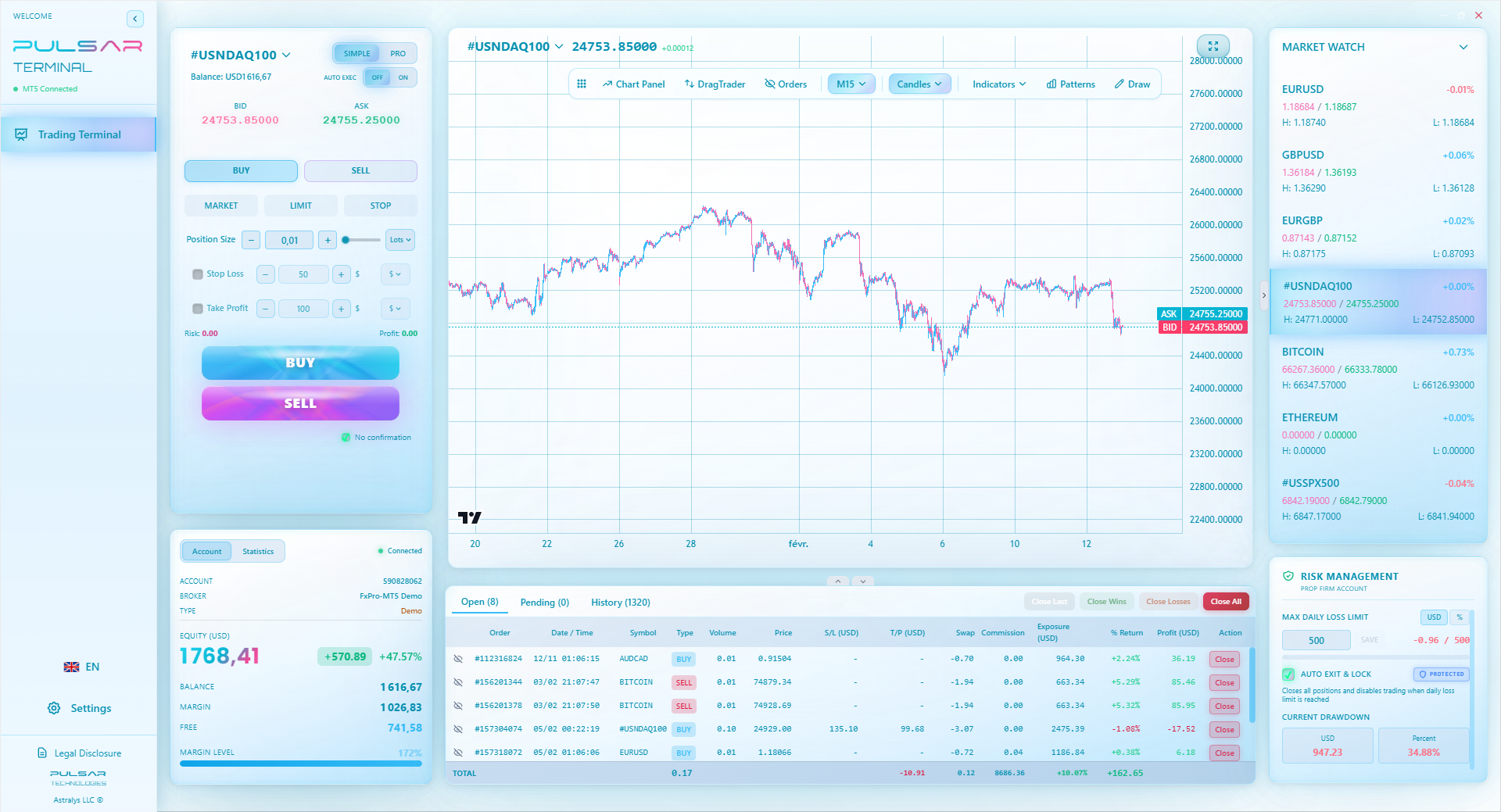
Building and testing a strategy from a book requires precise trade management, which Pulsar Terminal automates with drag-and-drop orders and multi-take-profit tools on MT5.
Pulsar Terminal
The all-in-one MT5 companion: drag-and-drop orders, multi-TP/SL, trailing stop, grid trading, Volume Profile, and prop firm protection. Used by 1,000+ traders daily.
“If a book's cover has a guy in a suit on a yacht, close it and walk away. The real stuff has boring covers and talks about losing.”
So you've read the good books. Now what? You don't copy; you synthesize.
Step 1: Find Your Timeframe Are you a full-time trader or doing this after hours? This decides everything. If you have a job, scalping strategy is a terrible idea. You might be better with end-of-day analysis for swing trades. Books will expose you to all timeframes; you must choose what fits your life.
Step 2: Pick One Core Concept Don't mix 10 indicators. From Murphy, maybe you take support/resistance. From Nison, you take the bullish engulfing pattern. Combine them: Look for a bullish engulfing pattern forming at a key historical support level on the daily chart. That's a clear, testable setup.
Step 3: Define Every Single Rule
- Entry: Bullish engulfing closes above prior candle's high, and price is within 1% of a marked support zone.
- Stop Loss: Below the low of the engulfing candle.
- Take Profit: At the next major resistance level (Risk:Reward of at least 1:2).
- Position Size: So that a stop-loss hit loses no more than 1% of my trading capital. (Use that position size calculator!).
Step 4: Paper Trade, Then Small Live Trade Test it for 50 trades in a simulator. Then trade it with 1/10th your normal size for another 20 trades. My biggest mistake was always jumping to full size after 3 winning paper trades. I paid for that education.
Step 5: Keep a Journal This is the most important step no book emphasizes enough. Write down every trade: the setup, your emotion, the outcome. After 100 trades, you're not reviewing the book's strategy, you're reviewing your strategy. You'll see your own biases (e.g., "I cut winners too early when up 1.5%"). That's real learning.

Trading strategies books are a starting point, not a destination. For the Indian trader in 2026, they provide the timeless principles - psychology, risk management, technical concepts. But the specific tactics must be filtered through the lens of SEBI regulations, our tax structure (STT, GST), and our market's character.
Start with Market Wizards and Trading in the Zone. Build your mind. Then, study Murphy for the technical framework. Forget the rest until you've mastered these.
Your edge will never come from a book someone else can buy. It will come from your unique application of those principles to the Indian market, combined with your own disciplined execution. The book gives you the map, but you still have to drive the car through Mumbai's traffic.
Now, go re-read one of the foundational books. But this time, read it with a notepad. Ask after every chapter: "How does this apply to my trading of Nifty, given my ₹5 lakh capital and my full-time job?" That's how you turn theory into rupees.

Example: Let's say a book suggests a 2% risk per trade. With a ₹5 lakh account, that's ₹10,000. If you're trading a stock where your stop-loss distance is ₹10, you can buy 1000 shares. But wait. Factor in brokerage (₹20), STT, etc. Your real risk is slightly higher. So maybe you buy 950 shares. That's the adaptation. That's real trading.

FAQ
Q1What is the single best trading strategies book for a complete beginner in India?
Hands down, Market Wizards by Jack Schwager. Don't start with a strategy book. Start with this book to understand the mindset, the diversity of approaches, and the brutal reality of the business. It will save you years of chasing the wrong things.
Q2How do I account for Indian taxes and fees when using a strategy from a book?
You must bake them into your risk-reward calculation. Before you take any trade, calculate your total cost: Brokerage (₹20 flat or %) + STT (0.1% delivery, 0.025% intraday sell) + GST (18% on charges). Your potential profit needs to be significantly larger than this sum. A common rule is to aim for a profit target at least 3x your total estimated costs to make the trade worthwhile.
Q3Are books on US options trading useless for Indian traders now?
Not useless, but they require heavy adaptation. Core principles like volatility (IV) and the Greeks (Delta, Gamma) are the same. However, specific strategies, especially those involving selling options, are heavily impacted by SEBI's increased margin rules (2025) and the new upfront premium rule. Use the books to learn the theory, but paper-trade extensively with current Indian margin calculators before risking real money.
Q4I want to be an algorithmic trader. Which books are relevant after SEBI's 2026 rules?
The technical books on algo design (like Algorithmic Trading by Ernest Chan) are still good for theory. However, the practical path is now extremely difficult for retail. The new rules require exchange approval for each strategy and place liability on brokers. Focus on the books that teach you how to develop and back-test a strong trading logic first. Understand that taking it live is now a regulatory and infrastructural challenge, not just a coding one.
Q5Can I still use candlestick patterns from books for Indian stocks?
Yes, but with a major filter: liquidity. Candlestick patterns work best with high, consistent volume. They are far more reliable on Nifty, Bank Nifty, or large-cap stocks like Reliance or TCS. On low-volume small or mid-caps, a single large order can create a perfect-looking pattern that is meaningless. Always combine candlestick signals with other factors like volume and key support/resistance levels.
Q6How many trades should I paper trade a strategy from a book before going live?
A statistically significant sample. Don't trust 5 or 10 trades. Aim for a minimum of 50 to 100 trades in your paper trading simulator. This should cover different market conditions (trending, ranging, volatile). After that, trade the strategy with a very small, insignificant amount of real money for another 20-30 trades. Only then consider scaling up to your normal position size.
Prof. Winston's Lesson
Key Takeaways:
- ✓Start with psychology books, not strategy books.
- ✓Filter every strategy through SEBI's 2025-26 rule changes.
- ✓Paper trade for 50+ trades before risking a single rupee.
- ✓Your brokerage fee and STT are silent strategy killers.
How useful was this article?
Click a star to rate
Weekly Trading Insights
Free weekly analysis & strategies. No spam.
About the Author
Rajesh Sharma
Senior Forex Analyst
Trading Indian and South Asian markets for over 10 years. Started with NSE currency derivatives before moving to international forex. Specializes in USD/INR and emerging market pairs.
Comments
Risk Disclaimer
Trading financial instruments carries significant risk and may not be suitable for all investors. Past performance does not guarantee future results. This content is for educational purposes only and should not be considered investment advice. Always conduct your own research before trading.
You Might Also Like

Cara Trading Forex Sukses: 7 Prinsip dari Trader Profesional
Cara trading forex sukses dengan 7 prinsip trader pro: manajemen modal, disiplin, journal trading, backtest. Data nyata, bukan janji profit palsu.
Jam Trading Forex Terbaik untuk Trader Indonesia: Panduan Lengkap dengan Tabel Waktu
Panduan jam trading forex untuk trader Indonesia. Tabel 4 sesi dunia, jam emas 20:00-00:00, sesi mana yang harus dihindari. Data akurat + tips dari trader berpengalaman.
Top 5 Sàn Forex Uy Tín Nhất 2026: Review Jujur dari Trader Indonesia
Top 5 sàn forex uy tín 2026 untuk trader Indonesia. Review jujur: spread, deposit, withdraw, dukungan lokal. Exness, XM, IC Markets & lebih.
Get Pulsar Terminal
All these calculators are built into Pulsar Terminal with real-time data from your MT5 account. One-click position sizing, automatic risk management, and instant calculations.
Get Pulsar Terminal