


Let's clear something up right away.

Olumide Adeyemi
West African Trading Pioneer ·  Nigeria
☕ 9 min read
What you'll learn:
- 1What 'UBA Forex Defaulters' Really Means (And It's Not What You Think)
- 2The CBN, Your Broker, and You: Navigating the Gray Areas
- 3The Real Default That Matters: Blowing Up Your Trading Account
- 4Building a Sustainable Trading Business, Not a Get-Rich-Quick Scheme
- 5Prop Firms: A New Frontier (With New Rules)
- 6Final Word: Trade Smart, Stay Safe
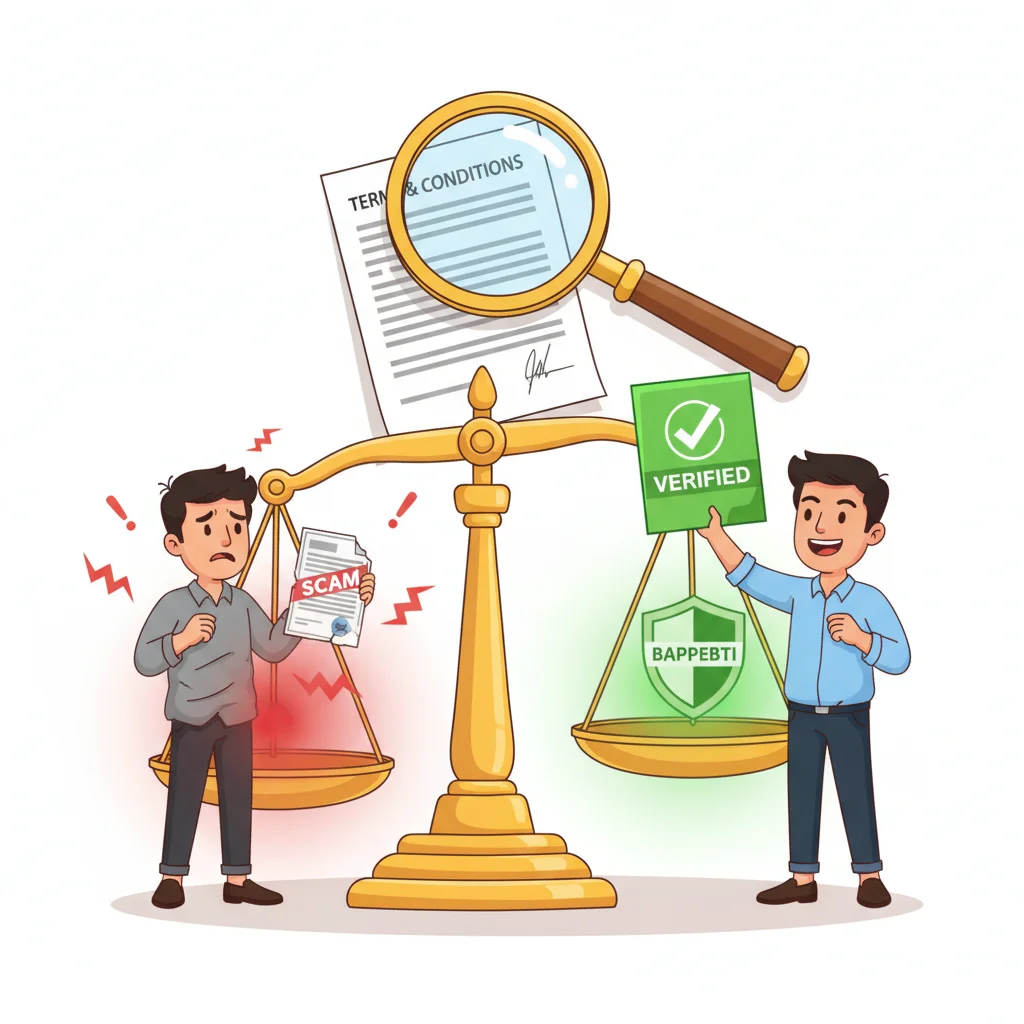
Let's clear something up right away. If you're searching for 'UBA forex defaulters,' you're probably looking for a loophole, a secret list, or a way to game the system. I get it. The allure of easy money is strong. But here's the hard truth I learned over a decade of trading: searching for shortcuts like this is the fastest way to blow up your account, or worse, get on the wrong side of the law. This isn't about fear-mongering. It's about setting the record straight on what 'forex default' really means in Nigeria, how the Central Bank of Nigeria (CBN) views retail trading, and how you can operate smartly within the rules to build real, sustainable wealth.
When people whisper about 'UBA forex defaulters,' they're not talking about retail traders like you and me who took a bad EUR/USD trade. That's a crucial distinction. In the formal banking and regulatory context, a 'forex defaulter' refers to an individual or corporate entity that received foreign currency (usually USD) from a Nigerian bank like UBA for a specific, CBN-approved purpose - like importing goods - and then failed to fulfill their obligation.
They might have diverted the funds, used them for unauthorized transactions, or simply didn't provide the necessary documentation (like the shipping documents for the imported goods). This is a breach of their Form M or Form A commitment to the bank and the CBN. The consequences are severe: blacklisting from the official forex window, legal action, and being barred from future access. This system is designed to prevent capital flight and ensure forex is used for genuine economic needs, not speculation.
As a retail trader, you are not accessing forex through this official bank channel. You're using an international broker. So, you can't technically be a 'UBA forex defaulter' in that sense. However, the broader lesson is about integrity and operating within defined systems. Trying to circumvent rules, whether CBN's or your broker's, always ends badly.

Warning: Don't confuse online forum gossip with regulatory reality. Using a friend's or company's Form M to try and access cheap forex for trading is illegal. It makes you part of the problem the CBN is trying to solve, and the penalties are no joke.

💡 Winston's Tip
A 'defaulter' is just someone who broke a promise. The most important promise you'll ever make in trading is the one you make to yourself about risk. Keep that one.
Here's the uncomfortable reality every Nigerian trader needs to stare down. The CBN's official position has historically been wary of retail forex trading for speculation. They haven't licensed international brokers like Exness, IC Markets, or Pepperstone to operate locally. This creates a legal gray area for you, the trader, not necessarily for the broker.
Your activity isn't illegal per se, but funding your international trading account can be a hurdle. This is where the temptation arises: people look for 'creative' funding methods that might skirt financial regulations. Let me be blunt: this is where you risk becoming a different kind of 'defaulter' - one who triggers anti-money laundering (AML) flags.
How Funding Actually Works (Safely)
Most serious Nigerian traders I know (myself included) use methods that are transparent. We fund our international brokers using debit/credit cards (naira cards that allow international transactions) or through approved cryptocurrency transfers. The broker converts the deposit at the prevailing rate. It's straightforward. The key is using a reputable broker with a clear track record of processing withdrawals back to Nigerian accounts. I've personally withdrawn profits multiple times from my account with IC Markets back to my Nigerian bank account without issue. It takes a few days, but it works.
The moment you try to use third-party payments, fake documents, or corporate forex allocations meant for imports, you're playing with fire. You're not just risking your trading capital; you're risking your entire banking profile.

Pro Tip: Before depositing with any broker, read their specific terms for Nigerian clients. Test the withdrawal process with a small amount first. This isn't distrust; it's basic operational security. A smooth withdrawal is more important than a fancy deposit bonus.

“Trying to circumvent rules, whether CBN's or your broker's, always ends badly.”
Forget about the CBN for a second. The most likely 'default' you'll face is against your own trading account. This is where I've seen countless traders, including a younger version of myself, fail spectacularly. A forex default in this context means your losses have exceeded your risk tolerance and wiped out your capital. It's a personal financial failure.
Let me give you a painful example from my early days. I had built a $2,000 account to about $3,500 using a scalping strategy on GBP/JPY. I got overconfident. I broke every rule. I didn't use a stop-loss on a single trade, convinced the market would turn. It didn't. I watched the loss grow from -$200, to -$500, to -$1,200. I was frozen. By the time I manually closed it, the loss was $1,800. I had effectively defaulted on my own risk management plan. That single trade wiped out over half my account's peak value and all my profits. The feeling wasn't anger; it was shame. I had broken a contract with myself.
This is the true danger. We get so obsessed with external rules (CBN, banks) that we ignore the internal ones that actually protect us. A margin call from your broker is just the technical endpoint. The real failure happens dozens of trades earlier, when you start ignoring your position size calculator and trading with emotion.
The brokers we use - like XM or Pepperstone - have systems to protect themselves from client defaults (i.e., negative balances). They'll close your positions automatically. Your job is to have a system to protect you from yourself long before that happens.
💡 Winston's Tip
If you're spending more time researching funding loopholes than price action, you've already lost. The market doesn't care how the money got there.

The way to avoid being any kind of defaulter - to the CBN, your broker, or yourself - is to treat trading as a serious business. This mindset shift changes everything. A business has a plan, keeps records, manages its cash flow, and understands its regulatory environment.
1. Legitimacy is Your Foundation: Use transparent funding methods. Pay any necessary taxes on your profits (consult a local accountant). This builds a financial history that works for you, not against you.
2. Risk Management is Your CEO: Your trading plan isn't about which MACD indicator setting to use. It's about how much you can afford to lose on any given day, week, or month. My rule now? No single trade risks more than 1% of my account. A bad day can't draw down more than 3%. This isn't restrictive; it's liberating. It lets you think clearly.
3. Withdrawals are Your Salary: Don't leave all your profits in your trading account. That's asking for trouble. Schedule regular withdrawals. This proves your system works in the real world and gets money into your Nigerian bank account, which is the whole point, right? If you can't consistently withdraw, you don't have a business; you have an expensive hobby.
4. Choose Your Tools Wisely: This is about more than just a broker. It's about the tools that enforce your discipline. This is where a proper trading journal and advanced trading software come in. Manual discipline is hard. Automated rules are easier.
For instance, a tool that lets you set a hard daily loss limit that automatically stops your trading is useful. It prevents that emotional spiral that leads to a blown account. It acts as your system's circuit breaker.

“A margin call is just the technical endpoint. The real failure happens dozens of trades earlier.”
The rise of proprietary trading firms presents a fascinating new dynamic. You're not trading your own money; you're trading the firm's capital for a split of the profits. This seems like a dream: no CBN funding hassles, access to larger capital. But here's the catch: prop firms have their own brutal version of 'default.'
You don't default on a loan; you default on their challenge rules. Violate their maximum daily loss, maximum overall drawdown, or trading rules, and your account is liquidated. You fail the challenge. I've seen traders become 'prop firm defaulters' repeatedly because they treat the challenge like a casino, not an audition for a job.
I passed a $100,000 challenge with a firm last year. The secret wasn't magical entries. It was treating their rules as absolute law. Their max daily loss was $2,500. I set my personal limit at $1,000. I used a trading platform add-on that could automatically track my running P&L for the day and lock me out if I hit my limit. I never even came close to their red line because I built my own fence well inside it.
This is the mindset. Whether it's CBN rules, broker terms, or prop firm challenges, your success lies in not just understanding the limits, but respecting them so deeply that you operate far within them. The goal is to survive and compound, not to test how close you can get to the edge without falling off.
💡 Winston's Tip
Your first profitable withdrawal is a more important milestone than your biggest winning trade. It proves the entire system works.

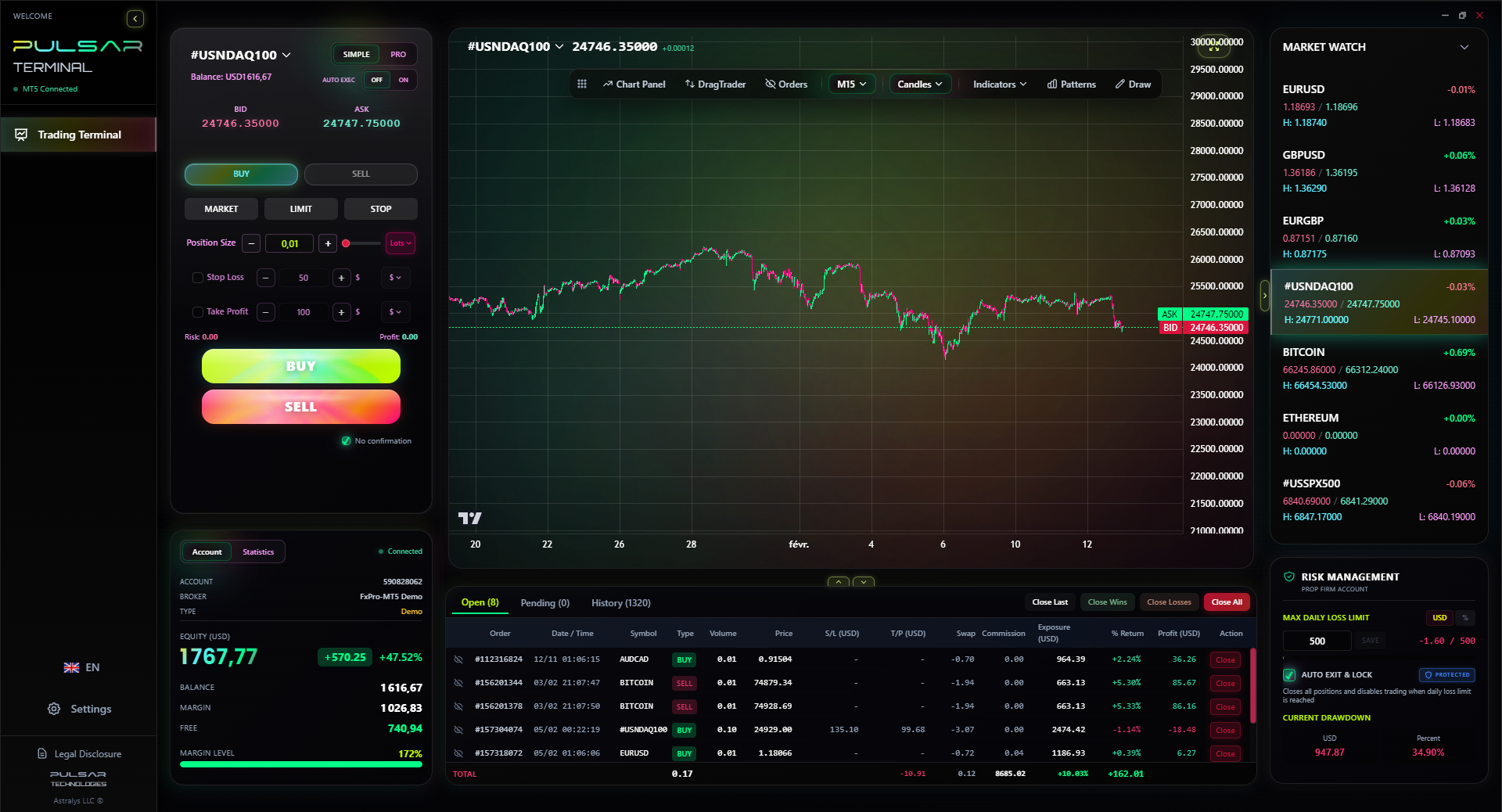
Passing a prop firm challenge requires ironclad discipline on daily loss limits, a task perfectly suited for automated tools like Pulsar Terminal that can enforce your rules directly on MT5.
Pulsar Terminal
The all-in-one MT5 companion: drag-and-drop orders, multi-TP/SL, trailing stop, grid trading, Volume Profile, and prop firm protection. Used by 1,000+ traders daily.
The narrative around 'UBA forex defaulters' is a distraction. It points to a world of manipulation and shortcuts that, even if you could access it, would corrupt your development as a trader. Real, lasting success in forex for a Nigerian trader is built on boring, disciplined foundations.
Choose a reputable international broker with a proven withdrawal record. Fund it cleanly. Develop a simple, rule-based strategy with strict risk management. Use tools that help you stick to those rules, especially when emotions run high. Withdraw your profits regularly.
Focus on becoming a consistently profitable trader, not on finding loopholes. The market is hard enough to beat on its own terms. Don't make it harder by fighting regulatory phantoms or engaging in practices that could jeopardize your entire financial life. Your greatest asset isn't your next trade idea; it's your ability to stay in the game. Protect that above all else.
Remember, the only default list you should care about is the one you create for yourself: a list of trading rules you default on never.
FAQ
Q1Can I really get into legal trouble for forex trading in Nigeria?
Trading forex with international brokers using your personal funds is in a regulatory gray area. The CBN doesn't endorse it, but individual traders aren't typically prosecuted. The real legal risk comes from how you fund your account. Using fraudulent methods, corporate forex allocations, or third-party payments to circumvent financial regulations can trigger serious anti-money laundering (AML) violations and lead to account freezes or legal action.
Q2What is the safest way to fund my international forex account from Nigeria?
The most transparent and safest methods are using a naira debit/credit card that allows international transactions (your bank will convert to USD at their rate) or using a cryptocurrency transfer (like Bitcoin or USDT) if your broker accepts it. Always test a small withdrawal first to ensure the process works smoothly back to your Nigerian bank account before committing large sums.
Q3I heard UBA blacklists forex defaulters. Does this affect me as a retail trader?
The UBA/CBN 'blacklist' for forex defaulters is for entities that misuse official forex allocations (e.g., for imports). If you are not applying for or receiving USD through the official CBN window via Form M, you are not in that system. Your retail trading activities with an international broker operate on a completely different channel and do not land you on that specific list.
Q4What's the biggest mistake Nigerian traders make with risk?
The twin killers are over-leveraging and not using a stop-loss. They see a small account, use extreme use (like 1:500) to try and grow it fast, and then a normal market move wipes them out. Always calculate your position size based on your account balance and a predetermined risk percentage (e.g., 1%). Never trade without a stop-loss order in place.
Q5Are prop firms a better option than using my own money?
They are different. Prop firms eliminate personal capital risk and CBN funding issues, but they impose extremely strict risk rules (daily loss limits, max drawdown). They are excellent for disciplined traders who can follow rules rigidly. However, they are not 'easier.' Many traders blow multiple challenges because they can't adapt to the rigid risk constraints, effectively 'defaulting' on the firm's rules.
Q6How can I enforce my own trading rules to avoid blowing up my account?
Discipline is hard. Use technology to help. This can be as simple as a detailed trading journal where you review every trade. Better yet, use trading software tools that can automate rule enforcement - like automatically closing all trades if you hit a daily loss limit, or preventing you from opening new positions if you've reached your max number of trades for the day. Don't rely on willpower alone.
Prof. Winston's Lesson
Key Takeaways:
- ✓A 'forex defaulter' to a bank is not a retail trader.
- ✓Funding must be transparent: use cards or crypto.
- ✓Risk more than 1% per trade, and you're gambling.
- ✓Test withdrawals before making large deposits.
- ✓Prop firm rules are non-negotiable law.
How useful was this article?
Click a star to rate
Weekly Trading Insights
Free weekly analysis & strategies. No spam.
About the Author
Olumide Adeyemi
West African Trading Pioneer
One of Nigeria's most active forex trading educators. 8 years of experience trading from Lagos. Specializes in low-capital strategies and prop firm challenges for African traders.
Comments
Risk Disclaimer
Trading financial instruments carries significant risk and may not be suitable for all investors. Past performance does not guarantee future results. This content is for educational purposes only and should not be considered investment advice. Always conduct your own research before trading.
You Might Also Like

Cara Trading Forex Sukses: 7 Prinsip dari Trader Profesional
Cara trading forex sukses dengan 7 prinsip trader pro: manajemen modal, disiplin, journal trading, backtest. Data nyata, bukan janji profit palsu.
Jam Trading Forex Terbaik untuk Trader Indonesia: Panduan Lengkap dengan Tabel Waktu
Panduan jam trading forex untuk trader Indonesia. Tabel 4 sesi dunia, jam emas 20:00-00:00, sesi mana yang harus dihindari. Data akurat + tips dari trader berpengalaman.
Top 5 Sàn Forex Uy Tín Nhất 2026: Review Jujur dari Trader Indonesia
Top 5 sàn forex uy tín 2026 untuk trader Indonesia. Review jujur: spread, deposit, withdraw, dukungan lokal. Exness, XM, IC Markets & lebih.
Get Pulsar Terminal
All these calculators are built into Pulsar Terminal with real-time data from your MT5 account. One-click position sizing, automatic risk management, and instant calculations.
Get Pulsar Terminal