


You've probably seen ads promising quick money from trading 'FX' or 'Forex.' Maybe a friend is talking about it.

Daniel Harrington
Head of Content
☕ 9 min read
What you'll learn:
- 1Forex Basics: It's Just Buying and Selling Money
- 2How It Works (And Doesn't Work) in Bangladesh
- 3A Tale of Two Trades: My Early Lessons
- 4Finding Your Style: Scalping, Swing Trading, and Analysis
- 5The Only Rule That Matters: Don't Lose All Your Money
- 6Your First Steps: A Realistic Roadmap
- 7Mistakes I See Every New Trader Make

You've probably seen ads promising quick money from trading 'FX' or 'Forex.' Maybe a friend is talking about it. You're curious, but also a bit skeptical. What is forex trading, really? Is it just gambling, or is there a real skill to it? I was in your shoes over a decade ago. Let's cut through the hype and look at what this actually involves, especially from our perspective here in Bangladesh.
At its core, forex trading is the simultaneous buying of one currency and selling of another. We call this a 'currency pair.' Think of it like this: you're not buying a stock in a company, you're making a bet on the relative value of one country's money against another's.
The most traded pair is EUR/USD. If you think the Euro will get stronger against the US Dollar, you buy EUR/USD. If you think it will weaken, you sell it. The price you see, like 1.0850, is the exchange rate. A move from 1.0850 to 1.0860 is a gain of 10 'pips,' which is the standard unit of movement. Understanding the pip definition is your first step to calculating profit and loss.
Here's the key thing most beginners miss: you're always trading on margin. This means you only put up a small fraction of the total trade's value. If your broker offers 1:100 use, you can control $10,000 with just $100 of your own money. This magnifies both gains and losses, which is why it's the number one reason new traders blow up their accounts. We'll talk about managing that risk later.

Warning: use is a double-edged sword. I've seen too many traders in Dhaka focus only on the potential profit. They forget that a 1% move against them on a 1:100 leveraged trade wipes out their entire deposit. It happens fast.

“use is a double-edged sword. A 1% move against you on a 1:100 trade wipes out your entire deposit.”
This is the practical part you need to understand. The global forex market is decentralized, meaning there's no single exchange like the Dhaka Stock Exchange. It runs 24 hours a day, five days a week, through a network of banks and brokers.
The Regulatory Reality
In Bangladesh, the Bangladesh Bank has historically been very cautious about retail forex trading due to the risks of capital flight and scams. While trading itself isn't explicitly illegal for individuals, operating an unlicensed brokerage or moving funds illegally for trading is. Most serious traders here use international brokers that accept Bangladeshi clients. You'll need to do your homework on funding methods, which can involve international bank transfers or digital payment gateways. Always check a broker's regulation with bodies like ASIC or FCA. I've had good experiences with platforms like IC Markets for their raw spreads, which is crucial for a scalping strategy.
The Cost of Trading
You don't trade for free. The main cost is the spread, which is the difference between the buy (ask) and sell (bid) price. If EUR/USD is quoted as 1.0850 / 1.0852, the spread is 2 pips. You start that trade 2 pips in the hole. Some brokers charge a commission on top of a tighter spread. Understanding the spread definition and comparing costs is your first real analysis before placing a single trade.

Example: Let's say you buy 1 standard lot (100,000 units) of EUR/USD at 1.0852 with a 2-pip spread. The price needs to move to at least 1.0854 for you to break even, excluding any other fees. That's $20 just to cover the cost of entering the trade.

💡 Winston's Tip
Your first 100 trades should be on a demo account. Your goal isn't profit, but to make every mistake possible with virtual money, not real cash.
“The win made me cocky; the loss made me a student.”
Talking about theory is one thing. Let me give you two real examples from my first year. The numbers are burned into my memory.
The Win (Mostly Luck): It was 2014. The Swiss National Bank was about to make a policy announcement. I had a tiny account, about $500. I bought USD/CHF on a pure gut feeling right before the news. The SNB shocked everyone and removed a currency peg. USD/CHF skyrocketed over 2,000 pips in minutes. My broker's platform froze, but when it came back, my trade was up over $1,200. I was ecstatic. I also had no idea why it happened or how to manage the trade. I got out purely from panic. That win taught me a dangerous lesson: that news trading could be easy. It's not.
The Loss (The Real Education): A few months later, trading GBP/USD, I got stubborn. I went short at 1.5550, convinced it would drop. It went up. I added to my losing position at 1.5600, trying to 'average down.' By 1.5650, I was in a deep hole but refused to admit I was wrong. I didn't use a stop-loss. The trade hit my margin call level at 1.5710. I lost $780, over 75% of my account, in one afternoon. That loss taught me everything: respect the market, always use a stop-loss, never add to a loser, and have a plan. The win made me cocky; the loss made me a student.
“The win made me cocky; the loss made me a student.”
You need a method, not just guesses. Most strategies fall into a few categories based on how long you hold trades.
Technical Analysis: This is about studying price charts and patterns. You're looking for clues in past movements to guess future ones. Tools like the RSI indicator (to spot overbought/oversold conditions) and the MACD indicator (to see momentum shifts) are staples. I spend most of my time here. For example, on the XAU/USD guide page, we break down how gold reacts to certain technical levels.
Fundamental Analysis: This looks at the big picture: interest rates, economic data (like US Non-Farm Payrolls), political events, and central bank policies. Why did my USD/CHF trade win? A massive fundamental shock. A good swing trading approach often blends fundamentals for direction and technicals for precise entry.
Scalping vs. Swing Trading:
| Scalping | Swing Trading | |
|---|---|---|
| Timeframe | Minutes to hours | Days to weeks |
| Goal (Pips) | 5-20 pips per trade | 50-300+ pips per trade |
| Mindset | Intense, screen-focused | Patient, analytical |
| Best For | Very disciplined, quick decision-makers | Those who can't watch screens all day |
I tried scalping strategy early on. It was exhausting and the tight spreads of brokers like Pepperstone were essential. I found my rhythm in swing trading, where I could analyze the EUR/USD guide trends more calmly.
💡 Winston's Tip
If you can't explain your trade setup in one simple sentence ('I'm buying because price bounced off the 200-day moving average with RSI oversold'), you shouldn't be in the trade.
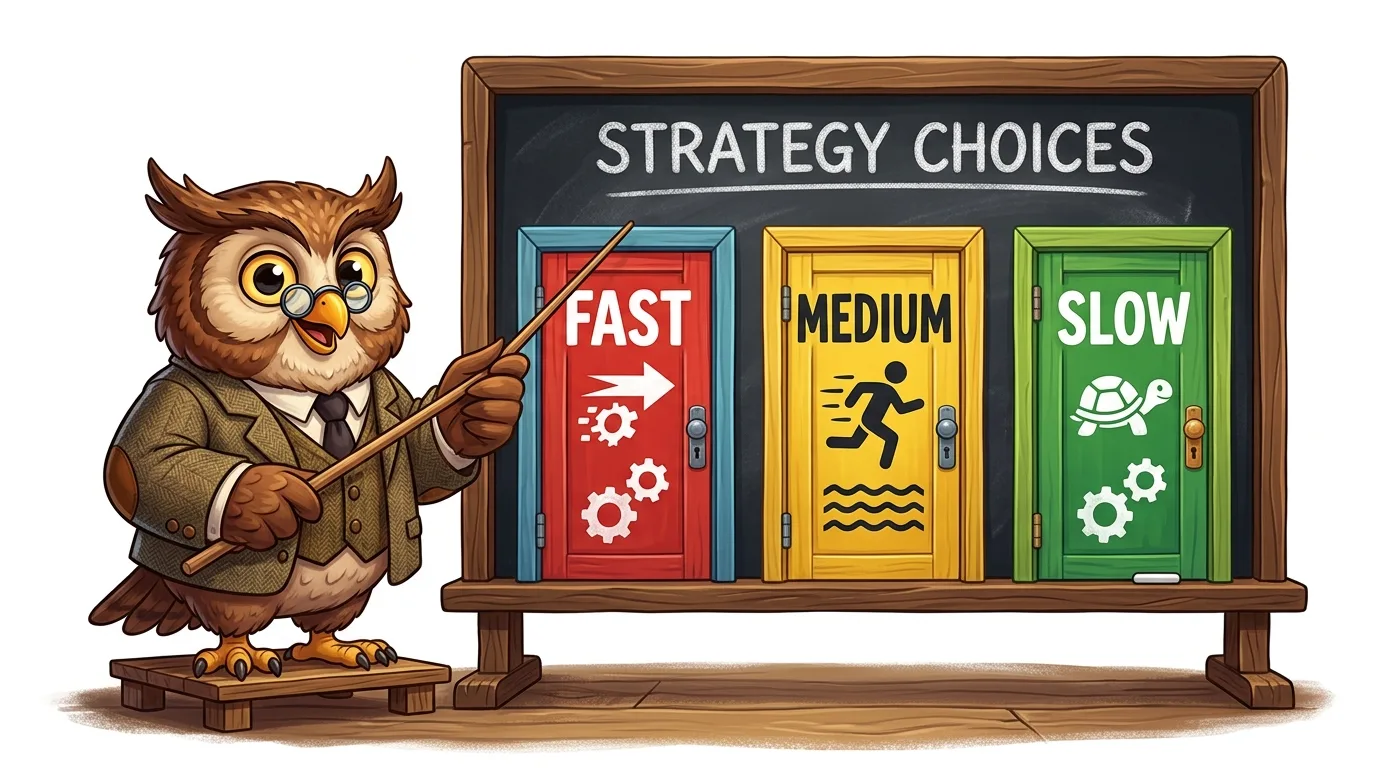
“Your first goal isn't to make money. Your first goal is to survive long enough to learn.”
If you remember one thing from this guide, let it be this section. Profitable trading is about risk management first, finding winning trades second.
The 1% Rule: Never risk more than 1% of your trading capital on a single trade. If you have a 100,000 BDT account (roughly $850), your maximum risk per trade is 1,000 BDT. This means if your stop-loss is 50 pips away, you must adjust your trade size so that a 50-pip loss equals 1,000 BDT, not more. Use a position size calculator every single time. This rule alone saved my career after that big GBP/USD loss.
Stop-Loss Orders: This is an order that automatically closes your trade at a predetermined loss level. It's your lifeline. Not using one is like driving without a seatbelt. Decide where it goes before you enter the trade, based on your chart analysis, not on how much money you're willing to lose.
The Psychology Trap: Greed and fear will ruin you. Greed makes you hold winners too long until they turn to losers. Fear makes you cut winners short or avoid good setups. The only antidote is a written trading plan with strict rules you follow mechanically. Your first goal isn't to make money. Your first goal is to survive long enough to learn.
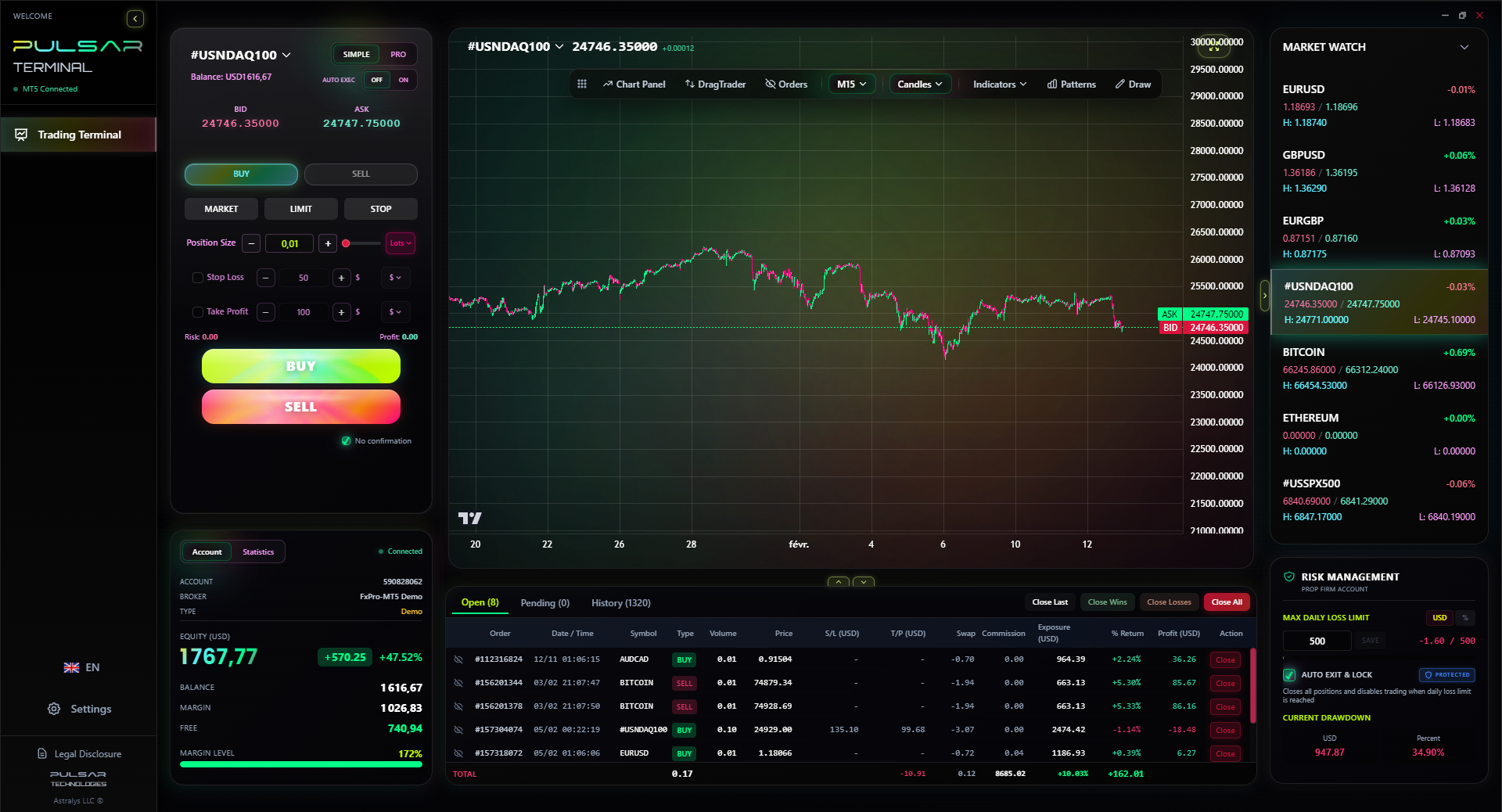
Sticking to a 1% risk rule and managing multiple trades is complex, but tools like Pulsar Terminal automate position sizing and stop-loss placement directly on your MT5 charts.
Pulsar Terminal
The all-in-one MT5 companion: drag-and-drop orders, multi-TP/SL, trailing stop, grid trading, Volume Profile, and prop firm protection. Used by 1,000+ traders daily.
“Your first goal isn't to make money. Your first goal is to survive long enough to learn.”
Okay, you're still interested. Here's how to start without lighting your money on fire.
- Educate, Don't Trade: Spend at least 2-3 months learning. Read articles like this, watch reputable traders, and understand economic calendars. Don't deposit a single taka yet.
- Open a Demo Account: Every major broker like XM or Exness offers free demo accounts with virtual money. This is your training simulator. Practice for at least three months. Try to be consistently profitable on demo. It's harder than it sounds.
- Develop a Simple Plan: Choose one currency pair (start with a major like EUR/USD). Choose one time frame (like the 4-hour chart). Choose two indicators (like RSI and a moving average). Write down exact rules for when you enter, where your stop-loss goes, and where you'll take profit.
- Start Absurdly Small: When you finally go live, start with a micro account. Risk literally 0.5% per trade, not 1%. The goal of your first real-money month is to execute your plan perfectly, not to make profit. The psychological pressure is completely different from demo.
- Keep a Journal: Write down every trade: the reason, the chart setup, your emotional state, the outcome. Review it weekly. This is how you find your personal weaknesses and improve.

Pro Tip: When choosing a broker, look beyond just the bonus offers. For us in Bangladesh, reliable deposit/withdrawal methods, customer support responsiveness, and execution speed (no requotes) are far more important. Check independent reviews.
💡 Winston's Tip
Keep a trading journal. The difference between a pro and an amateur is that the pro has a detailed record of every failure and success, and studies it.
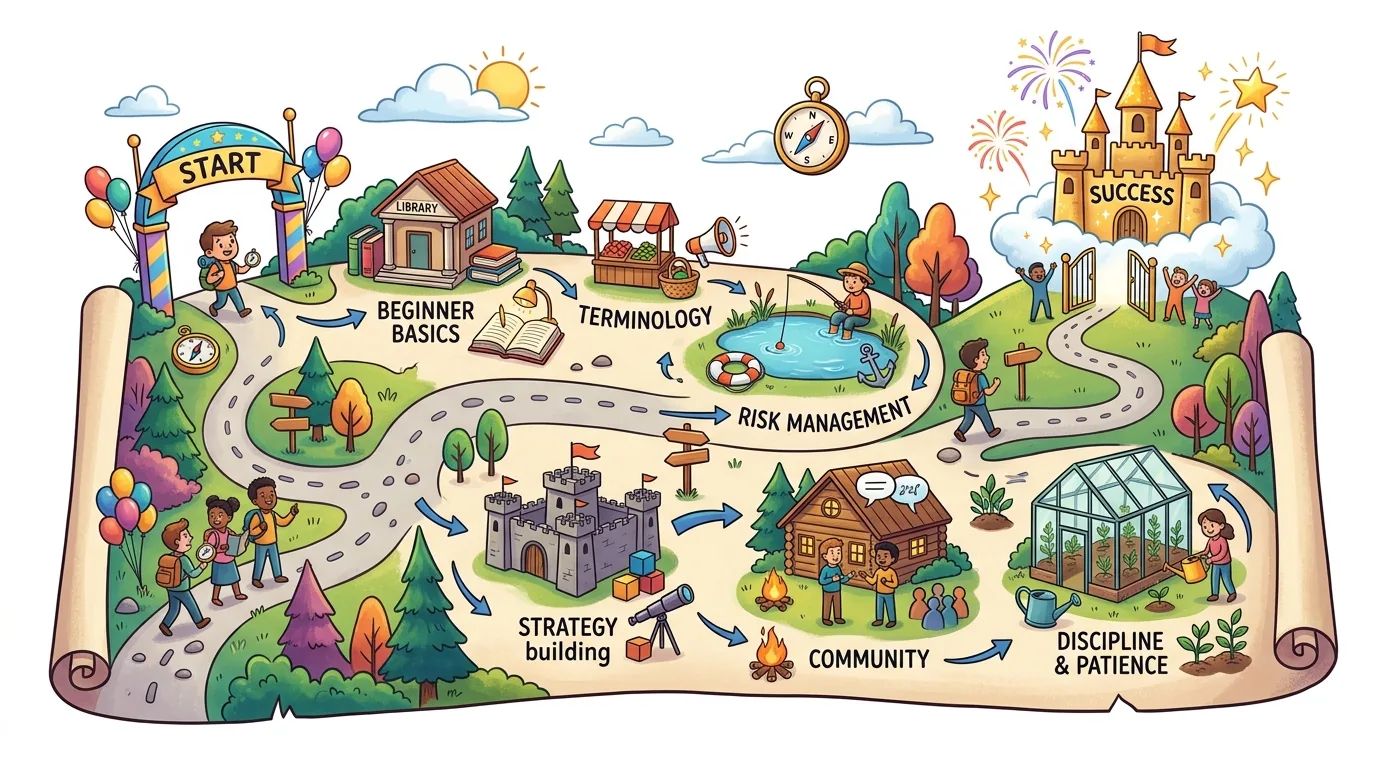
“Success comes from mastering a simple strategy and mastering yourself.”
Let me fast-forward you past the most painful learning curves.
Chasing the Holy Grail: There is no secret indicator or perfect strategy that prints money. I wasted years and thousands of dollars searching for one. Success comes from mastering a simple strategy and mastering yourself.
Overtrading: This is trading out of boredom, revenge trading after a loss, or taking low-quality setups just to be 'in the market.' Quality over quantity. Sometimes the best trade is no trade at all.
Ignoring Fundamentals: Even as a technical trader, you must know what's on the economic calendar. Trading blindly before a major central bank announcement is Russian roulette. I learned that by getting stopped out in 30 seconds flat.
Underestimating the Time: This isn't a side hustle you check once a day. To get good, you need to treat it like studying for a difficult professional degree. It demands hours of screen time, analysis, and review. If you're not willing to put in that time, your money is better off in a savings account or the stock market.
The path is hard, but for those who treat it with respect, discipline, and continuous learning, it can be incredibly rewarding. Not just financially, but in the discipline and self-awareness it forces you to develop. Start slow, stay safe, and always keep learning.

FAQ
Q1Is forex trading legal in Bangladesh?
The legality for individual retail traders is a gray area. Bangladesh Bank does not license international forex brokers for retail trading. Individuals are generally not prosecuted for trading, but you are responsible for ensuring your funds are transferred through legal channels. The risk lies with using unregulated platforms or illegal fund transfer methods. Always prioritize brokers regulated by major international authorities.
Q2How much money do I need to start forex trading in Bangladesh?
You can start with a very small amount. Many international brokers offer micro or cent accounts where you can start with as little as $10 or $50. However, I strongly advise you to start with a demo account for several months first. When you go live, start with an amount you can afford to lose completely - think of it as tuition fees for your education. A realistic starting capital for proper risk management is at least $500-$1000, but you must begin by risking only a tiny fraction (0.5-1%) per trade.
Q3Can I become rich quickly from forex trading?
No. Anyone who tells you that is selling a dream, not reality. Forex trading is a skill-based profession with a very high failure rate (over 80% of retail traders lose money). It takes years of dedicated practice, study, and emotional discipline to become consistently profitable. View it as a marathon, not a sprint. The goal is steady, risk-managed growth, not getting rich quick.
Q4What is the best time to trade forex from Bangladesh?
The most volatile and liquid sessions overlap with the European and US market hours. In Bangladesh Standard Time (BST), this is from around 2:00 PM to 12:00 AM. The London session (2:00 PM - 10:00 PM BST) and the overlap with New York (7:00 PM - 12:00 AM BST) typically see the highest volume and best trading opportunities for major pairs like EUR/USD and GBP/USD.
Q5What's the difference between a demo account and a live account?
A demo account uses virtual money, so there's no real financial risk. A live account uses your real money. The crucial difference is psychology. On demo, it's easy to take risks and follow rules because the fear of loss isn't real. On a live account, emotions like greed and fear directly impact your decisions, which is why most people who are profitable on demo fail initially on live. The goal of demo trading is to build a disciplined habit, not just to see a big virtual profit.
Q6Which currency pairs should a beginner start with?
Start with the 'major' pairs. They have the tightest spreads (lowest trading costs) and the most available analysis. The best one to begin with is EUR/USD. It's highly liquid, reacts predictably to news, and has endless learning resources. Avoid exotic pairs (like USD/TRY or EUR/SEK) as a beginner - their spreads are wide, and their movements can be erratic and harder to analyze.
Prof. Winston's Lesson
Key Takeaways:
- ✓Never risk more than 1% of capital per trade.
- ✓Always use a stop-loss order, no exceptions.
- ✓Master one pair and one timeframe first.
- ✓Demo trade for 3+ months before using real money.
- ✓Overtrading kills more accounts than bad analysis.
How useful was this article?
Click a star to rate
Weekly Trading Insights
Free weekly analysis & strategies. No spam.
About the Author
Daniel Harrington
Head of Content
Head of content at The Trading Mentor. Veteran trader with a passion for making complex trading concepts accessible. Covers global topics, strategies, and platform guides.
Comments
Risk Disclaimer
Trading financial instruments carries significant risk and may not be suitable for all investors. Past performance does not guarantee future results. This content is for educational purposes only and should not be considered investment advice. Always conduct your own research before trading.
You Might Also Like

Cara Trading Forex Sukses: 7 Prinsip dari Trader Profesional
Cara trading forex sukses dengan 7 prinsip trader pro: manajemen modal, disiplin, journal trading, backtest. Data nyata, bukan janji profit palsu.
Jam Trading Forex Terbaik untuk Trader Indonesia: Panduan Lengkap dengan Tabel Waktu
Panduan jam trading forex untuk trader Indonesia. Tabel 4 sesi dunia, jam emas 20:00-00:00, sesi mana yang harus dihindari. Data akurat + tips dari trader berpengalaman.
Top 5 Sàn Forex Uy Tín Nhất 2026: Review Jujur dari Trader Indonesia
Top 5 sàn forex uy tín 2026 untuk trader Indonesia. Review jujur: spread, deposit, withdraw, dukungan lokal. Exness, XM, IC Markets & lebih.
Get Pulsar Terminal
All these calculators are built into Pulsar Terminal with real-time data from your MT5 account. One-click position sizing, automatic risk management, and instant calculations.
Get Pulsar Terminal