


It was a Tuesday morning in October 2023, and the USD/NGN rate on my broker's platform was frozen at ₦770.

Olumide Adeyemi
Pionero del Trading en África Occidental ·  Nigeria
☕ 10 min de lectura
Lo que aprenderás:
- 1The Official Window vs. The Market You Actually Trade
- 2How These Operating Hours Impact Liquidity & Sentiment
- 3Practical Implications for Your Trading
- 4Broker Selection in the Nigerian Context
- 5Risk Management in a Dual-Rate System
- 6Essential Tools to Monitor the Gap
- 7The Future: Will Automation Change This?
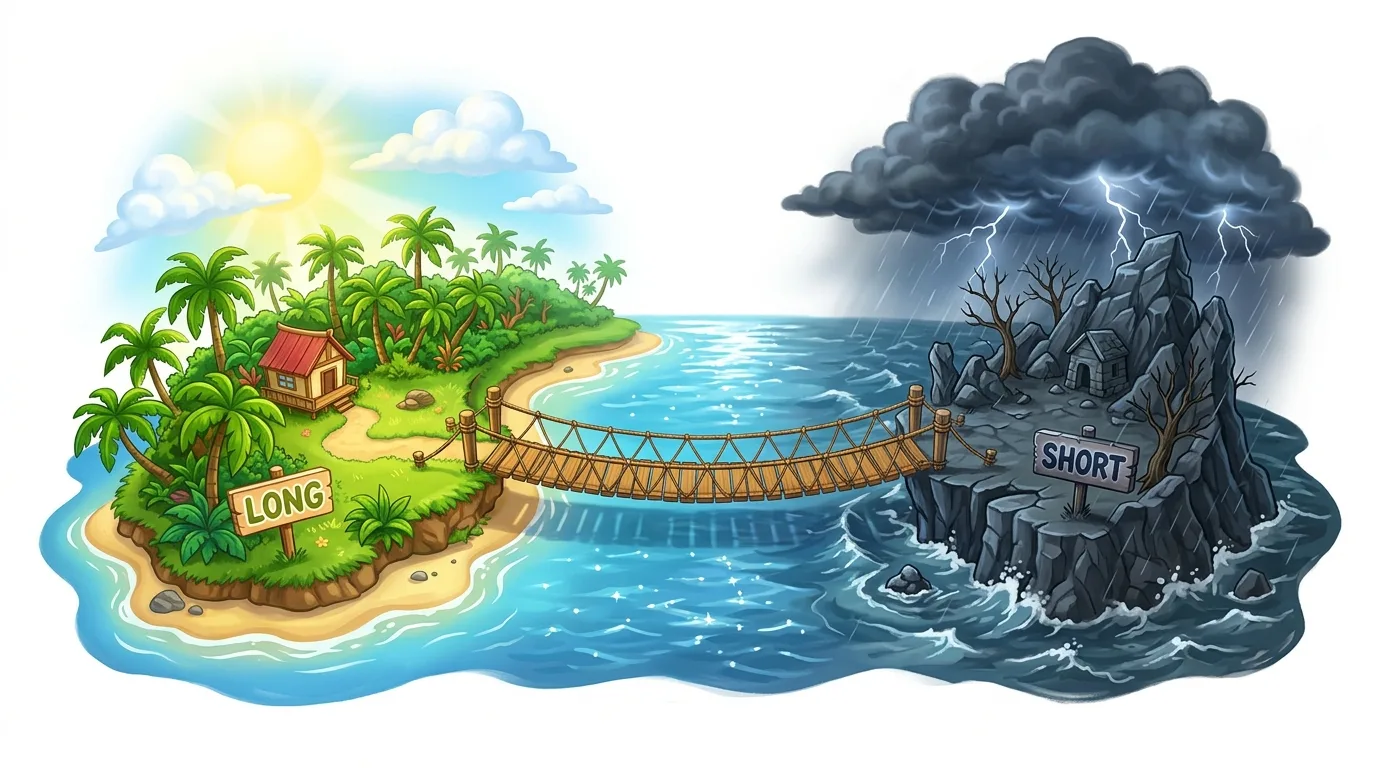
It was a Tuesday morning in October 2023, and the USD/NGN rate on my broker's platform was frozen at ₦770. Meanwhile, my phone was buzzing with messages from a parallel market dealer quoting ₦1,050. That 36% gap wasn't a chart glitch, it was the brutal reality of Nigeria's fragmented forex system. Your trading success here isn't just about your strategy, it's about understanding the official operating hours of the Central Bank of Nigeria (CBN), the Association of Bureaux De Change Operators of Nigeria (ABCON), and how they create the market you actually trade in. Let's cut through the noise.
Here's the first hard truth: as a retail trader using an international broker, you are almost never trading within the official CBN or ABCON operating hours or rates. Your platform shows the global, liquid forex market (like EUR/USD or GBP/USD), which runs 24/5. The Nigerian official windows are for specific, regulated transactions.
The CBN's official trading window for investors and exporters (the I&E window) typically operates on banking days, from around 9:00 AM to 4:00 PM WAT. ABCON-member BDCs are supposed to operate within official banking hours, often 8:00 AM to 5:00 PM, and are meant to sell forex obtained from the CBN to retail users for eligible transactions (like Personal Travel Allowance).
Your trading, however, happens in a different universe. When you're executing a scalping strategy on XAU/USD at 2 AM, you're in the global market. The importance of knowing the ABCON CBN BDC forex operating hours is indirect, but critical: it helps you anticipate local liquidity crunches and understand the massive parallel market premiums that affect Nigeria's economic sentiment, which in turn drives volatility in correlated assets.

Warning: Don't confuse the CBN's official NAFEX rate (say, ₦1,450/$) with the rate you'd get to fund a trading account or the rate priced into Nigerian assets. The parallel rate is the real benchmark for economic stress.
I learned this the expensive way. In 2021, I was long on the Nigerian Stock Exchange All-Share Index via a CFD, thinking a stable official rate was bullish. I ignored the widening parallel market gap. When the gap exploded, it triggered capital flight fears and a stock market sell-off. My position hit a margin call before my global market charts showed any major technical breakdown. The local reality smashed the technical picture.

💡 Consejo de Winston
The most important price in Nigeria isn't on a CBN screen. It's the one whispered by the guy on the street with a wad of dollars. That's the price that breaks economies and makes central bankers sweat.

The official hours create a predictable pattern of liquidity pulses and news flow that savvy traders can watch.
Liquidity Pulses Around Window Open/Close
Major bids and offers from Nigerian banks and corporates happen within the I&E window hours (9 AM - 4 PM WAT). If there's a CBN intervention or a large corporate demand for dollars, it often occurs here. This doesn't directly move EUR/USD, but it can cause sharp moves in African currency pairs or assets tied to Nigerian dollar liquidity. At 4:05 PM WAT, when the window closes, any unmet demand doesn't vanish, it spills into the parallel market, pushing that rate higher.
News and Announcement Timing
The CBN makes its major policy announcements (MPC decisions, rate changes, new forex guidelines) during business hours. ABCON also issues statements during this time. A headline like "CBN Injects $500 Million into I&E Window" at 11 AM WAT can cause a short-term rally in the Nigerian Naira futures or related assets. But you must ask: is this a one-off or a sustainable flow? Often, it's the former.
The Sentiment Bridge
This is the key link to your trading. A persistent, widening gap between the official and parallel rates is the single best indicator of forex pressure in Nigeria. When this gap grows, it signals scarcity, leading to:
- Negative sentiment towards Nigerian Eurobonds.
- Increased volatility in the shares of Nigerian banks (which you might trade as CFDs).
- Heightened risk aversion in the local equity market.
You're not trading the official rate, but you are trading the economic desperation it represents. Monitoring the outcome of those ABCON CBN BDC forex operating hours - specifically, the rate they fail to defend - is more important than the hours themselves.
“Your trading success here isn't just about your strategy, it's about understanding the official operating hours that create the market you actually trade in.”
So, what do you do with this information? You integrate it into your market analysis as a fundamental overlay.
1. Treat Parallel Market Data as a Key Indicator. I have a simple widget on my trading screen showing the Lagos parallel market rate from a reliable source. It's not a direct entry signal, but a gauge of stress. When it makes a new high (like breaking ₦1,500/$ when official is ₦1,450), I become cautious on any long positions in Nigerian assets. It's a warning light for broader risk-off moves.
2. Time Your Analysis of Nigerian Assets. If you trade NGSE30 index CFDs or shares of companies like Dangote Cement, do your fundamental reading and news monitoring after the official trading window closes. That's when the true picture of the day's dollar demand and supply emerges. The 5 PM WAT market gossip is often more valuable than the 10 AM CBN press release.
3. Understand Your Funding Reality. When you need to deposit or withdraw from your broker, you'll likely use a parallel market rate if you're sourcing Naira locally. That ₦50,000 you want to deposit could be worth $33 at the official rate but only $32 at the parallel rate - a real cost. Factor this into your risk management. A tool like a position size calculator is useless if you miscalculate your true capital base.

Pro Tip: The best trading opportunities often arise from the disconnect between the official story and street reality. If CBN officials are touting stability during window hours but the parallel rate is creeping up daily, the market is telling you who to believe. Bet on the street.

Your choice of broker is heavily influenced by this dual-rate system. You need a broker that offers reliable international market access while understanding the local funding hurdles.
What to Look For:
- Multiple Deposit Options: Brokers that accept direct USD transfers from Nigerian domiciliary accounts are golden. It lets you bypass the local rate chaos entirely, assuming you have the dollars. Otherwise, look for brokers with seamless integration with international payment processors.
- Local Support: A broker with a customer service team that understands the phrase "BDC rate" is valuable. They can help navigate deposit issues.
- Product Range: Can you trade instruments that reflect your Nigerian market view? Some brokers offer NGSE30 CFDs or even Naira non-deliverable forwards (NDFs).
Brokers like IC Markets and Pepperstone are popular for their raw spreads and MT4/5 access, which is where you'll do most of your global trading. Their strength is in execution, not local hand-holding. For a broker with a stronger regional presence, you might consider Exness, which has historically accepted a wide range of local payment methods. Always verify current deposit policies directly, as they change frequently due to CBN regulations.
The bottom line: your broker is your gateway to the 24/5 global market. The ABCON/CBN hours are a local phenomenon you observe from that gateway. Don't pick a broker based on local hours, pick one that gives you the cleanest escape from them.
💡 Consejo de Winston
Your trading platform shows you price. Your job is to understand value. In Nigeria, those two concepts are separated by a chasm called 'liquidity preference.' Trade accordingly.
“You're not trading the official rate, but you are trading the economic desperation it represents.”
This environment demands paranoid risk management. The volatility isn't always on your chart, it's in the economy fueling it.
Capital Erosion Risk: Your trading capital in Naira terms is constantly being revalued by the parallel market. A 10% depreciation in the Naira over a quarter means your profits in dollar terms need to be 10% just to break even in local purchasing power. This makes aggressive strategies with high win rates essential. Chasing 1:1 risk-reward trades becomes a losing game when inflation and devaluation are silent partners.
Event Risk Around Policy Changes: The CBN loves to announce new forex guidelines during its operating hours. A sudden change in BDC funding rules or eligible transactions can cause a knee-jerk spike in the parallel rate overnight. If you're swing trading a currency pair correlated with emerging market stress (like USD/ZAR or even XAU/USD as a safe haven), a Nigerian policy shock can be your stop-loss trigger.
My Mistake: I once had a beautiful technical setup shorting USD/NGN (the Naira future) based on oversold conditions on the RSI indicator. The official rate was stable. I risked 2% of my account. Then, a weekend CBN circular restricted BDC operations. The market opened Sunday night with a 15% gap against me. Wiped out the position and then some. I managed the chart risk but ignored the regulatory risk inherent in the system's operating hours.
You must size your positions knowing that the fundamental ground can shift outside of market hours, based on decisions made in an Abuja office between 9 and 4.

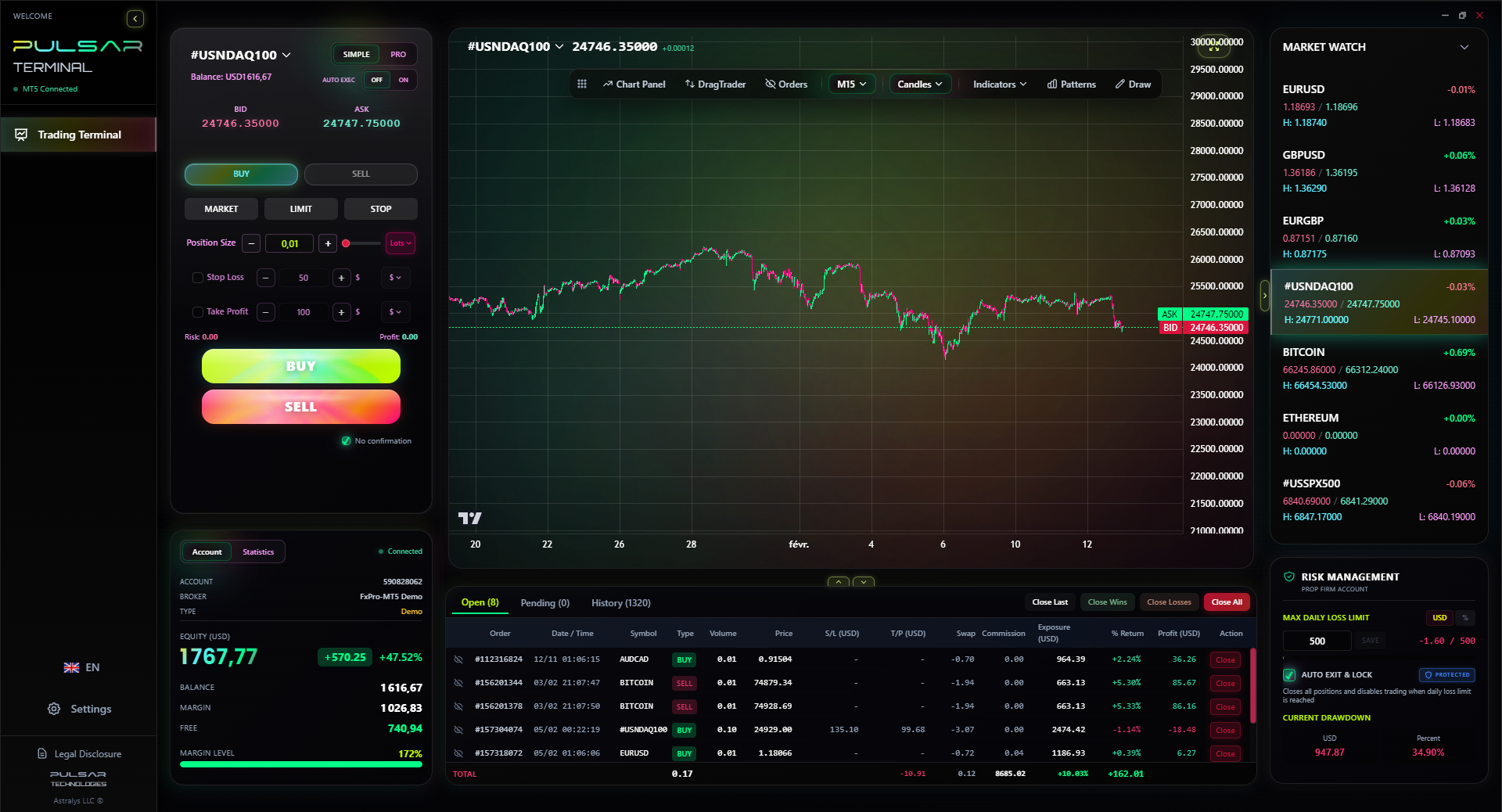
When trading in volatile environments shaped by policy shocks, managing multiple orders and risk levels manually is a headache; Pulsar Terminal's drag-and-drop order system and automated breakeven/trailing stop features let you lock in profits and manage downside faster than news travels.
Pulsar Terminal
La herramienta MT5 todo-en-uno: órdenes drag-and-drop, multi-TP/SL, trailing stop, grid trading, Volume Profile y protección prop firm. Usado por más de 1.000 traders diariamente.
You can't trade this blind. Here’s what I use to keep a finger on the pulse:
| Tool | What It Tells You | Why It Matters |
|---|---|---|
| Naira Rates Websites/Apps | Real-time & historical parallel market rates (Lagos, Abuja, Kano). | The true street price of dollars. The trend here is everything. |
| CBN Website (Financial Markets) | Official NAFEX (I&E Window) closing rates and volumes. | The official narrative. Volume shows if interventions are meaningful. |
| Financial News Wires | Reports on BDC allocations, CBN circulars, ABCON statements. | News flow during official hours that drives after-hours sentiment. |
| Broker Economic Calendar | Dates for CBN Monetary Policy Committee (MPC) meetings. | Scheduled volatility events. Rate decisions can widen or narrow the gap instantly. |
I have a separate monitor for this "Nigerian Fundamental Dashboard." It doesn't give me direct trade signals for EUR/USD, but it tells me the level of risk appetite or fear emanating from one of Africa's largest economies. When the gap widens, I reduce use overall. When it stabilizes or narrows significantly, I might look for opportunities in oversold Nigerian-linked assets.

Example: In early 2024, the official rate was ~₦1,450/$, parallel was ~₦1,520/$. Gap: ₦70 (4.8%). That's stressed, but not panic. When the gap blew out to ₦150 (over 10%) in late 2023, it correlated with a sharp sell-off in emerging market forex and bonds globally. That gap was the canary in the coal mine.

“The best trading opportunities often arise from the disconnect between the official story and street reality.”
You might wonder if technology will bridge this divide. The CBN has tried automated systems (like the Reuters FX trading system for the I&E window). But automation only solves efficiency, not scarcity.
Until Nigeria generates enough stable dollar inflows (from non-oil exports, for instance), there will be a fundamental shortage allocated by the CBN during its official hours. The unmet demand will always find an outlet, hence the parallel market. No app or platform can magic away a supply-demand imbalance.
For you, the trader, the automation that matters is in your own trading. Using tools that help you execute quickly and manage risk in the global market is key. Think about tools that automate stop-loss adjustments or allow for complex order types to capture volatility. If you're managing multiple positions, being able to move faster than the news spreading from the CBN building is your edge.
The ABCON CBN BDC forex operating hours framework will likely persist. Your job isn't to trade within its confines, but to trade in the much larger, 24-hour market that exists precisely because of its limitations.
FAQ
Q1Can I trade the official Nigerian Naira (NGN) rate on platforms like MetaTrader?
Generally, no. Most international brokers do not offer spot NGN pairs like USD/NGN to retail clients due to liquidity and capital controls. You might find Naira-based CFDs or Non-Deliverable Forwards (NDFs) on some platforms, but these are derivatives that cash-settle based on the official rate, not the parallel rate you hear about daily. You're not getting direct access to the CBN window.
Q2What time do BDCs in Nigeria actually open and close?
Officially, ABCON-member Bureaux de Change operate roughly within banking hours, typically 8:00 AM to 5:00 PM on weekdays, and sometimes Saturday mornings. However, parallel market dealers (the ones setting the street rate) operate far more flexible hours - often via phone and messaging apps - effectively 24/7. The official hours are for formal transactions; the real market never closes.
Q3How does the CBN's I&E FX window opening time affect the forex market?
The I&E window opening (around 9 AM WAT) can bring a burst of liquidity and set an initial benchmark rate for the day. If the CBN intervenes with a large dollar sale at the open, it can temporarily strengthen the official rate and improve sentiment. However, this effect often fades by the afternoon if underlying demand is strong, and it has minimal direct impact on the global forex pairs you trade on MT5.
Q4Should I avoid trading during Nigerian forex market hours?
Not at all. For global pairs (EUR/USD, GBP/JPY, etc.), Nigerian hours are irrelevant. For assets correlated to Nigerian risk (like certain South African bonds or emerging market ETFs), you should be more attentive during and immediately after the I&E window closes (4 PM WAT), as that's when the day's true dollar pressure becomes clear and can influence broader EM sentiment.
Q5What is the best way to fund my international trading account from Nigeria?
The most efficient way is via a domiciliary account bank transfer in USD directly to your broker. This uses the official rate for your existing dollars and avoids the parallel market premium. If you must source Naira, using broker-integrated payment processors is next best. Avoid informal transfers that violate your broker's terms. Always check your broker's latest accepted methods, as policies change.
Q6Does ABCON set the exchange rate for BDCs?
No. ABCON is an association, not a rate-setter. The CBN provides a weekly rate at which it sells dollars to licensed BDCs. However, the rate at which BDCs sell to the public is influenced by this official rate, their own costs, and most importantly, the street (parallel) market rate. In practice, the parallel market often leads, and the BDC rate follows.
Lección del Prof. Winston
Puntos clave:
- ✓The parallel market rate, not the CBN's, is the true sentiment indicator.
- ✓Size positions for regulatory shock risk, not just chart volatility.
- ✓Fund your account in USD if possible to avoid Naira erosion.
- ✓Monitor the official-parallel rate gap like a key technical indicator.
¿Te resultó útil este artículo?
Haz clic en una estrella
Análisis Trading Semanal
Análisis y estrategias semanales gratis. Sin spam.
Sobre el autor
Olumide Adeyemi
Pionero del Trading en África Occidental
Uno de los educadores de trading forex más activos de Nigeria. 8 años de experiencia operando desde Lagos. Especialista en estrategias de bajo capital y desafíos de prop firms para traders africanos.
Comentarios
Aviso de riesgo
El trading de instrumentos financieros conlleva un riesgo significativo y puede no ser adecuado para todos los inversores. El rendimiento pasado no garantiza resultados futuros. Este contenido tiene fines educativos únicamente y no debe considerarse asesoramiento de inversión. Siempre realice su propia investigación antes de operar.
También te puede interesar

Cara Trading Forex Sukses: 7 Prinsip dari Trader Profesional
Cara trading forex sukses dengan 7 prinsip trader pro: manajemen modal, disiplin, journal trading, backtest. Data nyata, bukan janji profit palsu.
Jam Trading Forex Terbaik untuk Trader Indonesia: Panduan Lengkap dengan Tabel Waktu
Panduan jam trading forex untuk trader Indonesia. Tabel 4 sesi dunia, jam emas 20:00-00:00, sesi mana yang harus dihindari. Data akurat + tips dari trader berpengalaman.
Top 5 Sàn Forex Uy Tín Nhất 2026: Review Jujur dari Trader Indonesia
Top 5 sàn forex uy tín 2026 untuk trader Indonesia. Review jujur: spread, deposit, withdraw, dukungan lokal. Exness, XM, IC Markets & lebih.
Obtener Pulsar Terminal
Todas estas calculadoras están integradas en Pulsar Terminal con datos en tiempo real de su cuenta MT5.
Obtener Pulsar Terminal