


Let's get this straight: 90% of the 'forex images' you see online from Nigeria are either fake, illegal, or dangerously misleading.

Olumide Adeyemi
Pionero del Trading en África Occidental ·  Nigeria
☕ 11 min de lectura
Lo que aprenderás:
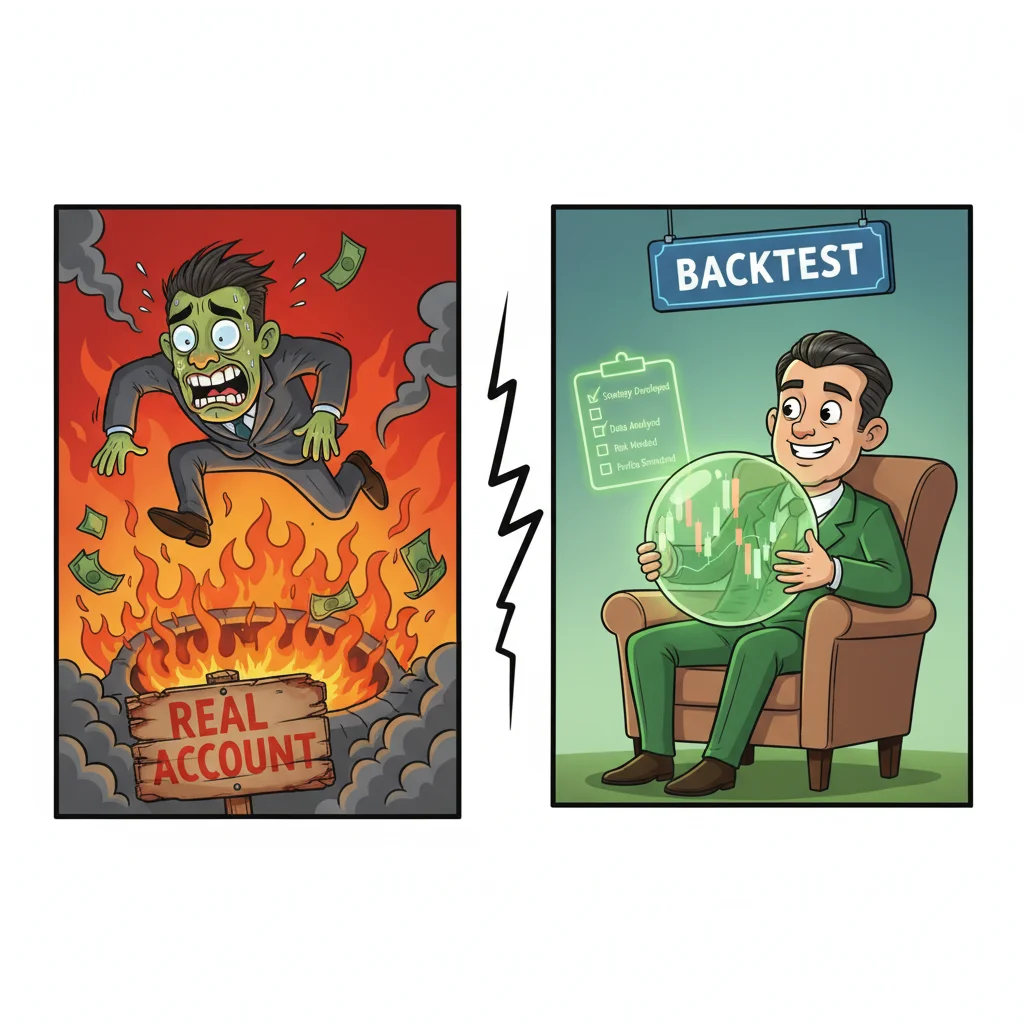
Let's get this straight: 90% of the 'forex images' you see online from Nigeria are either fake, illegal, or dangerously misleading. I'm talking about the Lamborghinis parked in front of a Lekki mansion, the screenshots of a $500,000 account balance, the 'mentors' promising you'll 'blow' in 30 days. It's a visual circus designed to separate you from your money. But behind that smoke and mirrors, there's a real, regulated, and brutally difficult market where serious Nigerians are making real money. This article isn't about pretty pictures. It's about showing you the actual snapshot of forex trading in Nigeria right now - the legal framework, the real costs, the strategies that work, and how to avoid becoming another sad statistic in someone else's fake success story.
When a Nigerian searches for 'forex images,' they're usually met with two completely different galleries. The first is the fantasy album: the glamour shots of luxury cars, wristwatches that cost more than a house in Ajah, and trading terminal screenshots with profit numbers that defy logic. These are almost exclusively marketing tools for signal sellers, fake prop firms, or outright Ponzi schemes. I've seen them all. A 'guru' once showed me a P&L statement claiming a 400% return in a month. When I asked for the trade history or a live screen recording, he blocked me. That's your first clue.
The second gallery is boring, technical, and truthful. These are the real forex images: charts with clean trendlines, a disciplined trading journal screenshot showing a 2% weekly gain, the SEC registration certificate of a legitimate broker, or the dense text of the new CBN foreign exchange code. This is the stuff that actually makes you money. No one gets rich from screenshots of riches; they get rich from understanding the mundane images of market structure. The gap between these two galleries is where most traders lose their shirts.

Warning: If a 'successful' trader's primary evidence is photos of material possessions, run. Real wealth from trading is first visible on a balance sheet, not in a car showroom. I learned this after nearly funding a 'masterclass' from a guy whose only verified skill was Photoshop.
Your job is to train your eye to appreciate the boring images. A well-drawn Volume Profile on a USD/NGN chart tells a more compelling story than any rented Ferrari. A screenshot of your consistent position sizing using a position size calculator is the most beautiful financial picture you can own.
Here's the part the flashy Instagram traders hope you never look up. The legal framework for forex in Nigeria has tightened like a vise since 2024. Ignorance isn't just bliss; it's a direct path to having your accounts frozen or facing penalties.
The New Sheriffs in Town: CBN & SEC
The Central Bank of Nigeria (CBN) and the Securities and Exchange Commission (SEC) are now deeply intertwined in the retail forex space. The CBN runs the wholesale show and sets the rules for the official market through systems like the new Electronic Foreign Exchange Matching System (EFEMS). The SEC, with its new powers under the Investments and Securities Act, 2025 (ISA 2025), is the hammer coming down on unregistered online platforms. As of April 2025, if you're trading on a platform not registered with the SEC, you're technically on the wrong side of the law. This is huge.
What This Means for You, the Trader
First, your broker matters more than ever. That offshore broker with the sexy 1000:1 use? If they aren't making serious moves to comply with SEC registration, your funds could be in limbo. I've started moving the majority of my capital to brokers with clear compliance pathways, like the ones reviewed in our Exness review and IC Markets review, who are actively engaging with local regulations.
Second, funding. The CBN has always been clear: you cannot use the official foreign exchange window (the CBN-subsidized rate) to fund a speculative trading account. Your Naira must come from your own pocket, converted at the I&E window or parallel market rate. Trying to game this system is a surefire way to attract very unwanted attention.

Example: Let's talk BDCs. The CBN's new 2025 rules show a controlled re-integration. Authorized banks can now sell cash FX to BDCs (max $25,000 per BDC weekly). For you, this means the parallel market might become slightly more formalized, but it doesn't change the core rule: your trading capital must come from legitimate personal sources.

💡 Consejo de Winston
The most important chart pattern in Nigeria isn't on MT5. It's the pattern of CBN circulars and SEC announcements. Read them. Your biggest losses will come from regulatory ignorance, not a bad trade.

“90% of the 'forex images' you see online from Nigeria are either fake, illegal, or dangerously misleading.”
Forget the fake account balances. These are the numbers that actually define your trading life in Nigeria. They're not glamorous, but they're real.
Tax Man Cometh: You make a profit? Fantastic. The FIRS wants 10% of your gross gains as Capital Gains Tax. That's not a maybe; that's the law. A N1,000,000 profit means N100,000 for the government. Factor this into your net profit calculations from day one. I didn't one year, and the reconciliation was a painful lesson in accounting.
The Naira's Wild Ride: Look at this volatility. In Q2 2024, the official rate went from N1,304/$ to N1,385/$. By September 2024, it hit N1,541/$. This isn't just news; it's the core of your trading reality if you're funding in Naira. A move of N50 in the USD/NGN pair can wipe out your trading profit or amplify it before you even place a trade on EUR/USD. Your funding currency is a trade in itself.
Market Growth & Reserves: While you're staring at charts, the big picture matters. Nigeria's FX market turnover jumped 56.4% to $8.6 billion in 2025. External reserves climbed from $38 billion in late 2024 to over $49 billion by February 2026. This growing liquidity is a double-edged sword: more opportunity, but also more sophisticated players entering the market. You're not just competing against other retail traders anymore.
| Metric | 2024 Figure | 2025/2026 Figure | What it means for you |
|---|---|---|---|
| FX Market Turnover | $5.5 billion | $8.6 billion | More liquidity, potentially tighter spreads on major pairs. |
| External Reserves | $38.06 billion (Sept '24) | $49 billion (Feb '26) | Improves national credit, can stabilize the Naira long-term. |
| BDC Minimum Capital | N35 million (General) | N2 billion (National) | Fewer, stronger BDCs. A more formal parallel market. |
These numbers paint the true forex images of the Nigerian economy's context. Trading without this backdrop is like driving with your eyes closed.
This is the most practical, and most frustrating, part of the Nigerian forex image. How do you get your Naira into a trading account without getting into trouble? The golden rule: Never use the official CBN window for trading. Your routes are limited but clear.
-
International Money Transfer: This is the cleanest method. You receive USD (or another foreign currency) from abroad - perhaps from freelance work, a diaspora relative, or export proceeds - into your domiciliary account. You can then transfer this directly to your broker. No Naira conversion drama. This is my preferred method for larger sums.
-
Naira Card Deposits (Cryptocurrency Bridge): This is the most common route, but it involves a middle step. You deposit Naira with a licensed crypto exchange (using your card or bank transfer), buy a stablecoin like USDT, transfer that to a crypto-friendly broker, and convert to USD on their end. It sounds convoluted, and it is. Fees add up at each step: bank charges, crypto exchange spread, blockchain network fees. I calculated it once: moving N500,000 cost me about N15,000 in total fees across the chain. That's a 3% haircut before you even place a trade.
-
Direct Broker Payment Methods: Some international brokers now offer direct Naira deposits via specific payment processors. The rates are usually based on the parallel market, and fees vary. Always check if your broker is SEC-registered or has a clear stance on the new laws before using this.

Pro Tip: Whatever method you choose, keep impeccable records. Bank statements, crypto transaction IDs, broker deposit confirmations. If you ever need to explain the source of your trading capital or prove your profits for tax purposes, this paper trail is your only defense. I keep a dedicated folder for this. It's boring, but it lets me sleep at night.
“Real wealth from trading is first visible on a balance sheet, not in a car showroom.”
The volatile Naira and our unique economic pressures create a specific trading psychology. The 'get-rich-quick' desperation makes you susceptible to reckless strategies. You need a method that suits the market and our temperament.
Forget 1,000-Pip Fantasies: Embrace Scalping & Swing Trading Given the volatility of pairs like GBP/NGN or even the indirect effect on majors, sitting in a trade for weeks is a great way to have your stop hit by a random CBN circular. I've found much more consistency in shorter timeframes.
- Scalping USD/NGN: This requires a broker that offers the pair with decent liquidity. The moves can be sharp and news-driven. A pure scalping strategy focusing on 5-15 minute charts, using order flow and minor support/resistance, can work. But the spreads are usually wider, so your edge must be precise. I once scalped 0.5% on a N500k position in 20 minutes around a CBN announcement, but it was high-stress and not my usual style.
- Swing Trading Majors (The Safer Play): This is where I park most of my capital. Trading EUR/USD or XAU/USD (gold) on 4-hour and daily charts. The volatility is lower than the Naira, the spreads are tighter, and you can apply classic technical analysis. A good swing trading plan using the MACD indicator for trend confirmation and the RSI indicator for overbought/oversold levels is a solid foundation. The key is patience - waiting 2-3 days for a setup to mature.
Risk Management is Your National Anthem With the Naira's value fluctuating, your risk per trade must be conservative. I never risk more than 1% of my account on a single trade. If your account is N1,000,000, that's N10,000 max risk. Use a position size calculator every single time. This non-negotiable rule has saved me more times than I can count, especially when a 'sure thing' trade on XAU/USD goes violently against me after a US jobs report.
💡 Consejo de Winston
Your first N1,000,000 profit is not for a new car. It's for your tax bill and to double your trading capital. Celebrate with pepper soup, not a Porsche.
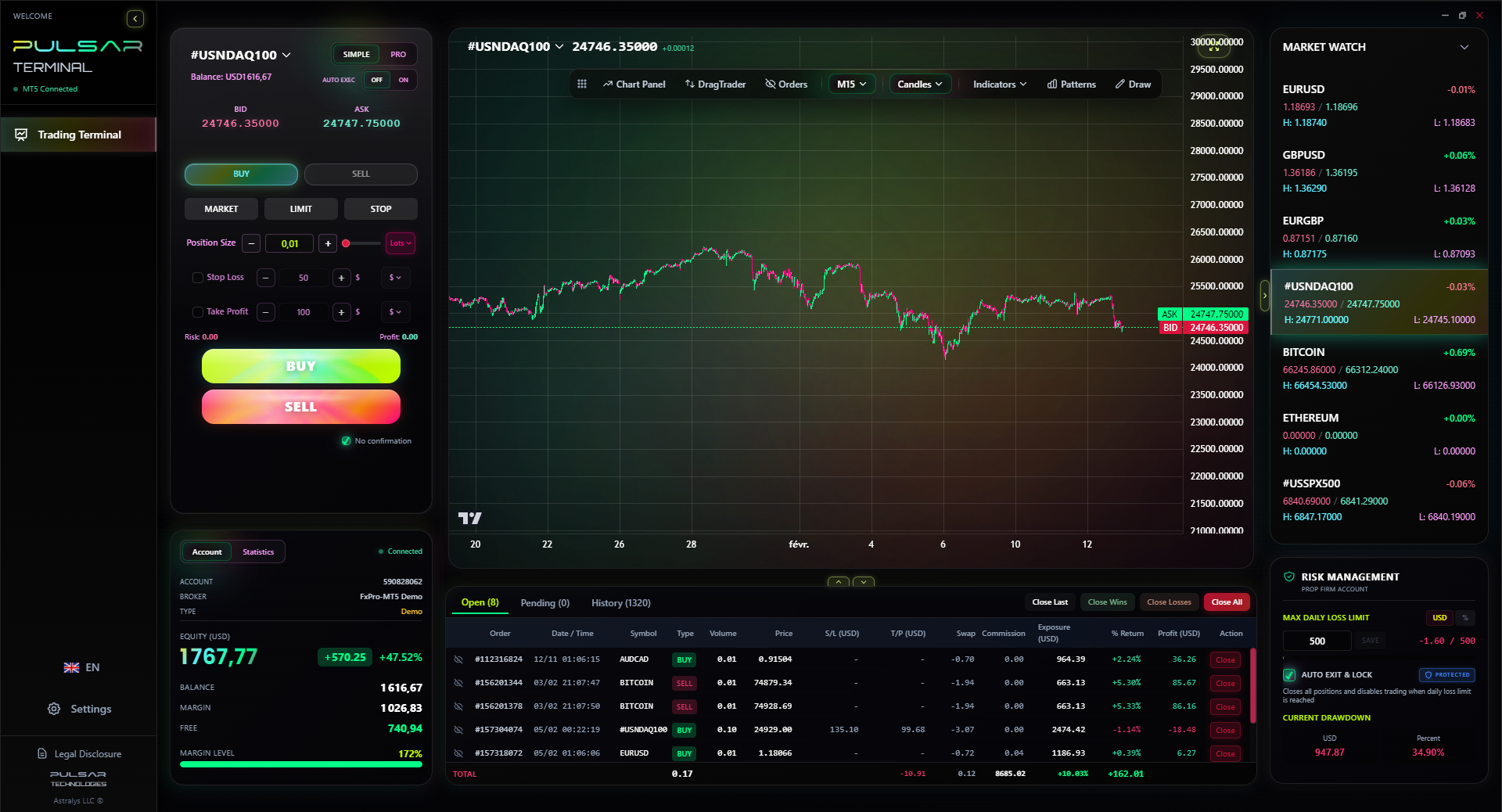
Managing multiple trades and strict risk rules in a volatile market is exhausting; Pulsar Terminal automates this with drag-and-drop orders, multi-TP/SL, and auto-breakeven directly on your MT5.
Pulsar Terminal
La herramienta MT5 todo-en-uno: órdenes drag-and-drop, multi-TP/SL, trailing stop, grid trading, Volume Profile y protección prop firm. Usado por más de 1.000 traders diariamente.
Your broker is your gateway. Picking the wrong one is the fastest way to turn real profits into fictional numbers. The landscape is shifting fast with SEC regulations.
The Offshore Question: Many of the brokers Nigerians have used for years - Pepperstone, IC Markets, XM - are top-tier internationally but are, as of now, offshore entities. Our detailed reviews (Pepperstone review, IC Markets review, XM review) break down their strengths: raw spreads, MT4/5 access, and reliable execution. However, the new SEC rule under ISA 2025 casts a shadow. The question isn't about their integrity, but about their future operational legality for Nigerian clients. Are they working on registration? You must ask them directly.
The Emerging Local/Regional Option: Some brokers are proactively seeking SEC registration or partnering with local financial institutions. These might offer more direct Naira funding solutions and operate fully within the law. The trade-off might be slightly higher costs or a different product range. This is the space to watch closely in 2026.
Red Flags (The 'Forex Images' Brokers): Avoid any broker whose marketing is solely based on images of luxury, promises of guaranteed returns, or 'Naira-only' accounts that seem too good to be true. If they're not transparent about their regulatory status (showing a real license number you can verify), if their client service is a WhatsApp number only, walk away. A real broker's most important image is their regulatory license, not their CEO's private jet.

“The profitable forex image is a spreadsheet, a chart with well-placed trendlines, and a bank statement showing steady, taxable deposits.”
So how do you build a trading reality worth photographing? It starts by ignoring everyone else's highlight reel.
Step 1: Education, Not Inspiration. Stop watching 'funded account challenge' videos. Start studying the pip definition and how the spread definition affects your bottom line. Read the CBN's FX Code. Understand what a margin call really means for your account. This knowledge is your foundation.
Step 2: Start Small, Painfully Small. Your first live account should be an amount you are 100% willing to lose. N50,000, N100,000. The goal of this account is not to make money. Its goal is to keep you alive in the market long enough to learn. The only forex image you should care about in month one is a chart of your equity curve, slowly learning to flatten the drawdowns.
Step 3: Create a Process, Not a Wish. Your trading plan is your bible. It must include: markets you trade (e.g., only EUR/USD and gold), your strategy entry/exit rules, your risk per trade (1%), your daily/weekly loss limits. Then, you journal. Screenshot every trade. Note why you took it, your emotion, the outcome. This boring documentation is the album of your progress.
Step 4: Scale with Paranoia. Only when you have 6 months of consistent, small profits do you consider adding capital. And you do it in increments. That first N1,000,000 deposit feels very different from N100,000. The psychology changes. Move slowly.
The profitable forex image is a spreadsheet, a chart with well-placed trendlines, and a bank statement showing steady, taxable deposits. It's not sexy. But it's real, and it's yours.
FAQ
Q1Is forex trading illegal in Nigeria?
No, it is not illegal for individuals to trade forex with their personal funds. However, the landscape is heavily regulated. The Central Bank of Nigeria (CBN) prohibits using official FX windows to fund accounts, and as of 2025, the SEC requires online trading platforms to be registered. Trading itself is legal; doing it through unregistered or non-compliant channels is where you run into legal risk.
Q2What is the best way to fund my forex account in Nigeria?
The two most common legal methods are: 1) Receiving foreign currency (e.g., USD) into your domiciliary account from abroad and transferring it to your broker, or 2) Using a licensed cryptocurrency exchange as a bridge (Naira -> USDT -> Broker). Direct Naira deposits via some broker payment processors are emerging. Avoid any scheme offering to get you official CBN rates for trading.
Q3How much tax do I pay on forex trading profits?
You are subject to a 10% Capital Gains Tax on your gross trading profits. This is a legal requirement. You should keep detailed records of all trades and profits to accurately calculate and declare this tax to the Federal Inland Revenue Service (FIRS).
Q4Are international brokers like IC Markets or Pepperstone safe for Nigerians?
They are safe from a financial integrity and execution perspective - they are top-tier global brokers. However, with the new SEC regulations (ISA 2025), their long-term operational status for Nigerian clients is a question you must ask them directly. Their safety as businesses is high, but the regulatory environment for you accessing them is changing.
Q5What's a realistic monthly return from forex trading?
Anyone promising a fixed monthly return is lying. A realistic, sustainable target for a skilled retail trader is 2-5% per month on average, net of all fees and taxes. Some months you'll lose. The key is consistency and risk management, not chasing astronomical gains. Aiming for 5% monthly consistently is an elite performance.
Q6What does 'forex images' actually refer to in trading?
In the context of Nigerian trading, 'forex images' has become a catch-all term for the visual representation of the trading life. This includes the deceptive glamour shots used for scams, but also the legitimate tools: price charts, technical analysis drawings, trade journal screenshots, and regulatory documents. The savvy trader learns to distinguish the fraudulent images from the educational ones.
Lección del Prof. Winston
Puntos clave:
- ✓Ignore luxury car forex images; they are marketing scams.
- ✓You must pay 10% Capital Gains Tax on all profits.
- ✓Never use official CBN FX windows to fund trading.
- ✓Risk a maximum of 1% of your capital per trade.
- ✓Sustainable returns are 2-5% per month, not 100%.
¿Te resultó útil este artículo?
Haz clic en una estrella
Análisis Trading Semanal
Análisis y estrategias semanales gratis. Sin spam.
Sobre el autor
Olumide Adeyemi
Pionero del Trading en África Occidental
Uno de los educadores de trading forex más activos de Nigeria. 8 años de experiencia operando desde Lagos. Especialista en estrategias de bajo capital y desafíos de prop firms para traders africanos.
Comentarios
Aviso de riesgo
El trading de instrumentos financieros conlleva un riesgo significativo y puede no ser adecuado para todos los inversores. El rendimiento pasado no garantiza resultados futuros. Este contenido tiene fines educativos únicamente y no debe considerarse asesoramiento de inversión. Siempre realice su propia investigación antes de operar.
También te puede interesar

Cara Trading Forex Sukses: 7 Prinsip dari Trader Profesional
Cara trading forex sukses dengan 7 prinsip trader pro: manajemen modal, disiplin, journal trading, backtest. Data nyata, bukan janji profit palsu.
Jam Trading Forex Terbaik untuk Trader Indonesia: Panduan Lengkap dengan Tabel Waktu
Panduan jam trading forex untuk trader Indonesia. Tabel 4 sesi dunia, jam emas 20:00-00:00, sesi mana yang harus dihindari. Data akurat + tips dari trader berpengalaman.
Top 5 Sàn Forex Uy Tín Nhất 2026: Review Jujur dari Trader Indonesia
Top 5 sàn forex uy tín 2026 untuk trader Indonesia. Review jujur: spread, deposit, withdraw, dukungan lokal. Exness, XM, IC Markets & lebih.
Obtener Pulsar Terminal
Todas estas calculadoras están integradas en Pulsar Terminal con datos en tiempo real de su cuenta MT5.
Obtener Pulsar Terminal