


Let's cut through the noise.

David van der Merwe
Trader de Mercados Emergentes ·  South Africa
☕ 10 min de lectura
Lo que aprenderás:
Let's cut through the noise. The biggest myth sold to new traders in South Africa is that paying for a forex mentorship is a shortcut to riches. Instagram is flooded with 'gurus' posing next to rented supercars, promising a secret system. I'm here to tell you that 95% of these programs are a complete waste of money, designed to profit from your hope, not your success. A real forex mentorship isn't about buying signals; it's about building an unbreakable process. This guide will show you the difference, what to actually look for, and how to protect your capital from the predators.
A real mentorship has nothing to do with Telegram groups firing off 'BUY EURUSD NOW!' alerts. That's not guidance; it's dependency. I learned this the hard way early on, paying R15,000 for a 'premium' course that was just a repackaged e-book and weekly pump-up calls.
True mentorship is accountability and process review. It's someone experienced looking over your shoulder, not to give you trades, but to question your decisions. Why did you enter there? Was your stop-loss based on volatility or just a random number? Did your profit target have a logical basis, or were you just being greedy? A proper mentor focuses on your trading journal, your psychology, and your risk management long before they ever critique your chart analysis.

Warning: If a 'mentor' cannot clearly explain the FSCA's regulations regarding financial advice or if they promise specific returns, run. The FSCA regulates advice, not general education. Anyone giving you personalized trade recommendations should be a licensed Financial Services Provider (FSP). Most Instagram gurus are not.
The core of it is this: a mentor helps you install the guardrails so you don't blow up your account. They can't drive the car for you. They teach you how to use a position size calculator correctly every single time, not just once. They make you define your risk per trade in Rands, not as a vague percentage.
“True mentorship is accountability and process review, not signal dependency.”
The local market has its own specific warning signs. You need to develop a skeptic's eye.
The Lifestyle Marketing: This is the biggest one. If their primary marketing material features luxury cars, watches, and 'closed-door meetings,' you're not buying education, you're buying a fantasy. I've never met a consistently profitable trader who had time for daily photoshoots. Real trading is boring. It's spreadsheets and journaling.
Vague on Costs & 'FOMO' Pricing: Legitimate mentors have clear, upfront pricing. Scams use limited-time offers, 'only 5 spots left!' countdowns, and tiered packages (Bronze, Silver, Gold) designed to upsell you. If they can't tell you the exact cost in Rand without a 'strategy call' first, be wary.
No Verifiable Track Record: Ask for a verified myfxbook or similar third-party audit of their live trading account over a significant period (12+ months). Not a demo account, not a screenshot. If they say it's 'private' or show you a one-month wonder run, it's likely fabricated. A real mentor, if they choose to share, will have evidence of consistent, risk-adjusted returns, not just a huge win streak.
Pressure to Use a Specific 'Broker': Be extremely cautious if the mentorship is tied to signing up with a specific, often unknown, broker. This is a huge red flag for a referral fee scam (or worse, a bucket shop). You should always choose your own regulated broker, like Exness or XM, based on your own research into their spreads and FSCA status.

Pro Tip: Search the mentor's name/company name plus 'scam', 'complaint', or 'FSCA warning' on Google and local forums like HelloPeter. You'd be surprised what you find. The FSCA maintains a public warning list for unauthorized entities - check it.

💡 Consejo de Winston
A mentor's most valuable skill isn't picking trades; it's spotting the repetitive, expensive flaws in your process that you're blind to.
“You can learn 90% of what you need for free. A paid mentorship becomes valuable after you've done the free grunt work.”
So, if you decide to invest in guidance, what should your Rands actually buy? Think of it as hiring a personal coach, not a magician.
1. Structured, Progressive Curriculum: It should start with absolute basics: what is a pip, how does use work, why the spread matters. Then it should move to risk management, then psychology, and finally strategy. Any program that jumps straight to 'here's my secret indicator setup' is skipping the foundational stuff that prevents account blow-ups.
2. One-on-One Review Sessions: This is the core of the value. You should have scheduled, recorded calls where you review your trades. Not them telling you what to do, but them asking you 'what was your plan here?' and 'how did your emotion affect this exit?' I once had a mentor point out that 80% of my losing trades were taken after 10 PM when I was tired. That single observation was worth the fee.
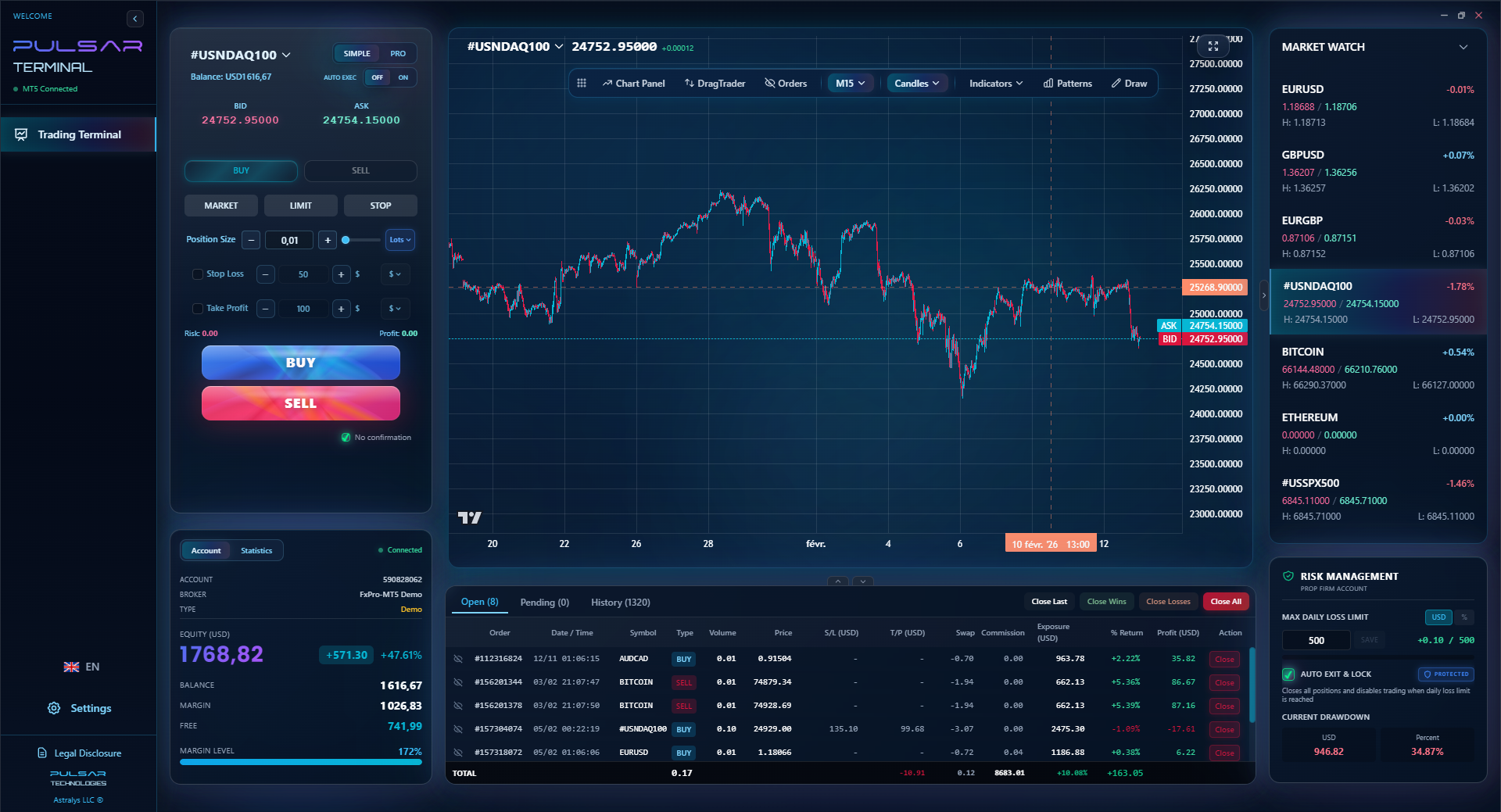
3. Focus on Tools & Discipline: A good mentor introduces you to the tools of the trade and the discipline to use them. This includes how to properly test a strategy, how to maintain a trading journal, and how to use trading platform features effectively. For instance, understanding how to set a trailing stop or manage multiple positions is a skill. Tools like Pulsar Terminal that integrate with MT5 can automate some of this discipline, but a mentor teaches you why and when to use such features, not just how to click the button.
4. Community Access (Maybe): A good community is a bonus, not the product. It should be a place for discussion and shared struggle, not a signal-pumping echo chamber. See if you can gauge the quality of discussion before buying.
“You can learn 90% of what you need for free. A paid mentorship becomes valuable after you've done the free grunt work.”
Let's talk numbers. In South Africa, you'll see everything from R500 'discord access' fees to R50,000+ 'mastermind' programs.
The Price Spectrum:
- Low-End (R500 - R5,000): Usually pre-recorded video courses, e-books, or basic Discord access. You get information, but zero personalization. It's like buying a textbook.
- Mid-Range (R5,000 - R20,000): Should include some level of personal interaction - weekly Q&A calls, maybe a monthly 1-on-1 review. This is where most legitimate coaching sits.
- High-End (R20,000+): Intensive, often small-group programs with frequent personal contact. Only consider this if you are dead serious and have already proven you can stick to a demo plan for 6 months.
The Free Path (It Exists): You can learn 90% of what you need for free. I'm not kidding.
- Broker Education: Regulated brokers like IG and Pepperstone offer extensive, free educational hubs, webinars, and articles. It's in their interest for you to be a smarter, longer-lasting client.
- Practice Relentlessly: Open a demo account. Trade it as if it were real money. Keep a journal. This is the single most important step, and it costs nothing.
- Learn the Classics: Read books on trading psychology (Mark Douglas's Trading in the Zone is essential) and risk management. The core principles haven't changed.
- Deconstruct Strategies: Learn what the RSI indicator or MACD indicator actually measures. Then test it yourself. Free charting platforms like TradingView are your lab.
The truth is, a paid mentorship becomes valuable after you've done the free grunt work and hit a specific, repetitive problem you can't solve alone.
💡 Consejo de Winston
The cost of a mentorship should be judged against the cost of the mistakes it prevents. One avoided margin call can pay for a lot of guidance.
“Never allocate more than 10% of your total trading capital to education.”
This is the million-Rand question. Should you pay or not?
Go Solo If:
- You're just starting out and haven't even mastered a demo account.
- You're disciplined enough to create and follow your own study plan.
- You learn best by doing and making your own mistakes (some of us do).
- Your budget is tight. Blowing R10,000 on a course instead of having it as trading capital is a bad trade.
Consider a Mentor If:
- You've been trading for 6-12 months, are consistently almost break-even, but can't get over the hump to profitability. You have a strategy, but your execution is flawed.
- You keep making the same psychological mistakes (revenge trading, moving stop-losses, taking profits too early) and can't self-correct.
- You need the structure and accountability of scheduled check-ins to stay disciplined.
- You have the capital to justify the investment. Don't spend your last R5,000 on a course. That money should be for surviving a margin call, not avoiding one.
My personal rule: Never allocate more than 10% of your total trading capital to education. If you have a R20,000 account, a R2,000 course is your max. This forces you to seek value, not magic.
“Never allocate more than 10% of your total trading capital to education.”
Let me give you two real examples from my own journey, with numbers.
The Expensive Lesson: In 2015, I paid $1,000 (about R15,000 at the time) for a 'high-frequency scalping' mentorship. The mentor preached a 5-pip scalping strategy on EUR/USD with an 80% win rate. On paper, it looked amazing. In reality, the spreads on my account were 1.2 pips on EUR/USD. To make 5 pips, price had to move 6.2 pips in my favor. The math was doomed from the start. I blew a $2,000 account in three weeks chasing this 'system.' The mentor's response? 'You're not following it correctly.' The lesson wasn't about scalping; it was about calculating real costs before you ever place a trade.
The Valuable Investment: Years later, after I had a solid swing trading foundation, I paid a respected trader $200/month for three months for bi-weekly reviews. We didn't discuss his trades. We dissected my journal. He noticed I was brilliant at picking XAU/USD (gold) entries but terrible at exits, leaving 40-50% of the move on the table. He forced me to backtest a simple 2:1 risk-reward exit rule versus my 'feel-based' exits. The data showed the rule would have increased my average win by R800 per trade. That mentorship didn't give me a new strategy; it fixed a massive leak in my existing one. That paid for itself in one good trade.
The difference between the two experiences was night and day. One sold a fantasy, the other diagnosed a reality.
💡 Consejo de Winston
If a mentor cannot clearly explain the mathematical edge of a strategy, including transaction costs, you are not a student, you are the product.
A mentor can teach you *why* to use a trailing stop, but a tool like Pulsar Terminal automates the discipline of actually doing it on every trade in your MT5 platform.
Pulsar Terminal
La herramienta MT5 todo-en-uno: órdenes drag-and-drop, multi-TP/SL, trailing stop, grid trading, Volume Profile y protección prop firm. Usado por más de 1.000 traders diariamente.
“The best mentor in the world can't stop you from clicking the buy button when you're scared or greedy. That part is always on you.”
Before you type in your credit card details, do this checklist:
- Regulation Check: Are they, or their company, listed on the FSCA's authorised FSP register? If they give advice, they should be.
- Transparency Test: Can you speak to a past student? Will they show you a sample curriculum or a recording of a typical coaching call?
- Value Alignment: Does their teaching philosophy match your goals? A day trader's mentorship is useless for a position swing trader.
- Trial Option: Do they offer a low-cost introductory module or a money-back guarantee period (even 7 days)? Legitimate educators often do.
- Your Readiness: Have you exhausted the free resources? Can you articulate the specific problem you need help with? If your answer is 'I want to make money,' you're not ready.
, a forex mentorship in South Africa is a tool, not a solution. It can accelerate your learning and help you avoid catastrophic, account-ending mistakes. But it cannot replace screen time, emotional control, or rigorous risk management. The best mentor in the world can't stop you from clicking the buy button when you're scared or greedy. That part is always on you.
Invest in knowledge, but be a ruthless value investor. Your trading account will thank you for it.
FAQ
Q1Is forex mentorship legal in South Africa?
Yes, but with a big caveat. Providing general forex education is legal. However, if a mentor gives you personalized financial advice or specific trade recommendations, they must be licensed as a Financial Services Provider (FSP) by the FSCA. Always check the FSCA's public register before paying anyone for advice.
Q2How much does a typical forex mentorship cost in South Africa?
Costs vary wildly from R500 for basic online courses to over R50,000 for exclusive 'masterminds'. A legitimate, interactive coaching program with some personal feedback often falls in the R5,000 to R20,000 range. Never spend money you can't afford to lose, and never allocate more than 10% of your trading capital to education.
Q3Can I become a profitable trader without a paid mentor?
Absolutely. Many successful traders are self-taught. It requires immense discipline, a love for self-study, and the ability to learn from your own mistakes. Use free broker education, demo accounts, books on trading psychology, and charting platforms to build your foundation first. A mentor is most useful later, to solve specific, persistent problems.
Q4What's the #1 red flag for a scam mentorship?
Lifestyle marketing. If their main sales pitch is photos of luxury cars, watches, and cash, they are selling a dream, not education. Real trading success is quiet, boring, and process-driven. A focus on guaranteed returns or specific profit amounts is another major red flag and likely illegal.
Q5What should a good mentorship program include?
Look for: 1) A structured curriculum from basics to advanced topics, 2) One-on-one or small-group review sessions focused on your trades, 3) A heavy emphasis on risk management and trading psychology, and 4) Clear, upfront pricing with no pressure tactics. It should feel like coaching, not a sales funnel.
Q6I'm a complete beginner. Should I get a mentor first?
No. Your first 'mentor' should be a demo account and free educational resources from regulated brokers. Trade on demo for at least 3-6 months, learn what a pip is, how use works, and keep a journal. Once you have a baseline understanding and specific questions, then consider if a paid mentor can help you refine your process.
Lección del Prof. Winston
Puntos clave:
- ✓Verify FSCA registration for any advisor.
- ✓Spend <10% of capital on education.
- ✓Demo trade for 6 months first.
- ✓Mentorship fixes process, not profits.
¿Te resultó útil este artículo?
Haz clic en una estrella
Análisis Trading Semanal
Análisis y estrategias semanales gratis. Sin spam.
Sobre el autor
David van der Merwe
Trader de Mercados Emergentes
Trader con sede en Johannesburgo con 11 años en divisas de mercados emergentes. Especialista en pares ZAR, trading regulado por la FSCA y análisis del mercado sudafricano.
Comentarios
Aviso de riesgo
El trading de instrumentos financieros conlleva un riesgo significativo y puede no ser adecuado para todos los inversores. El rendimiento pasado no garantiza resultados futuros. Este contenido tiene fines educativos únicamente y no debe considerarse asesoramiento de inversión. Siempre realice su propia investigación antes de operar.
También te puede interesar

Cara Trading Forex Sukses: 7 Prinsip dari Trader Profesional
Cara trading forex sukses dengan 7 prinsip trader pro: manajemen modal, disiplin, journal trading, backtest. Data nyata, bukan janji profit palsu.
Jam Trading Forex Terbaik untuk Trader Indonesia: Panduan Lengkap dengan Tabel Waktu
Panduan jam trading forex untuk trader Indonesia. Tabel 4 sesi dunia, jam emas 20:00-00:00, sesi mana yang harus dihindari. Data akurat + tips dari trader berpengalaman.
Top 5 Sàn Forex Uy Tín Nhất 2026: Review Jujur dari Trader Indonesia
Top 5 sàn forex uy tín 2026 untuk trader Indonesia. Review jujur: spread, deposit, withdraw, dukungan lokal. Exness, XM, IC Markets & lebih.
Obtener Pulsar Terminal
Todas estas calculadoras están integradas en Pulsar Terminal con datos en tiempo real de su cuenta MT5.
Obtener Pulsar Terminal